
Table of Contents
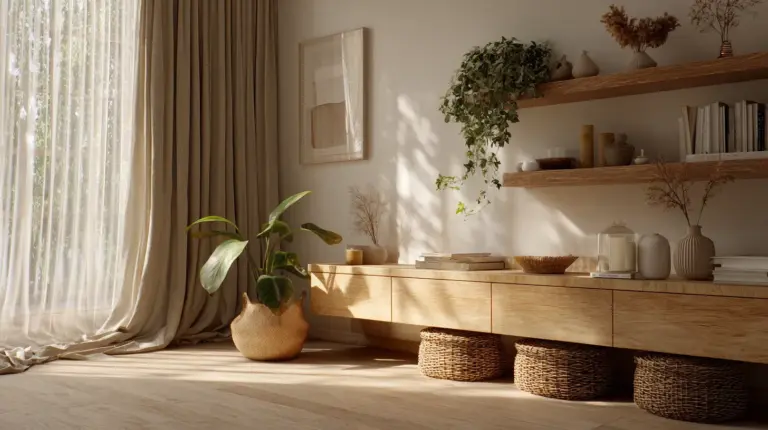
There is something quietly magnetic about a well-chosen coffee table. It sits at the heart of your living room — the surface where morning tea cools, where books get dog-eared, where candles flicker through long evenings. In a Japandi living room, that table becomes something more: a statement of intention.
Japandi is the design philosophy born from the meeting of Japanese wabi-sabi and Scandinavian hygge. It is not a trend. It is a way of choosing less, but choosing better. Natural wood. Clean lines. Stillness. Warmth without excess.
If you are building — or simply refining — a Japandi living room, the coffee table is one of the most powerful pieces you can get right. It anchors the conversation, defines the floor space, and sets the entire emotional tone of the room.
This guide will walk you through everything: what makes a Japandi coffee table feel right, how to choose the perfect size, which materials hold up best (especially in warm, humid climates), how to style it with intention, and how to do it beautifully without spending a fortune.
What Is a Japandi Living Room Coffee Table?
A Japandi coffee table is, at its simplest, a low-profile table built with honest materials and a calm, purposeful shape.
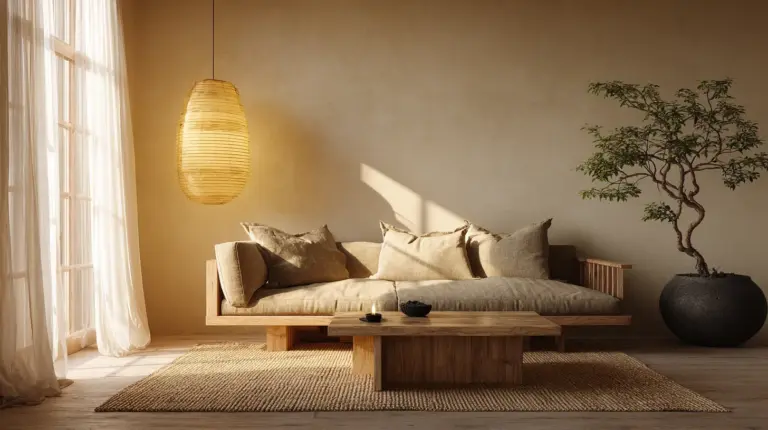
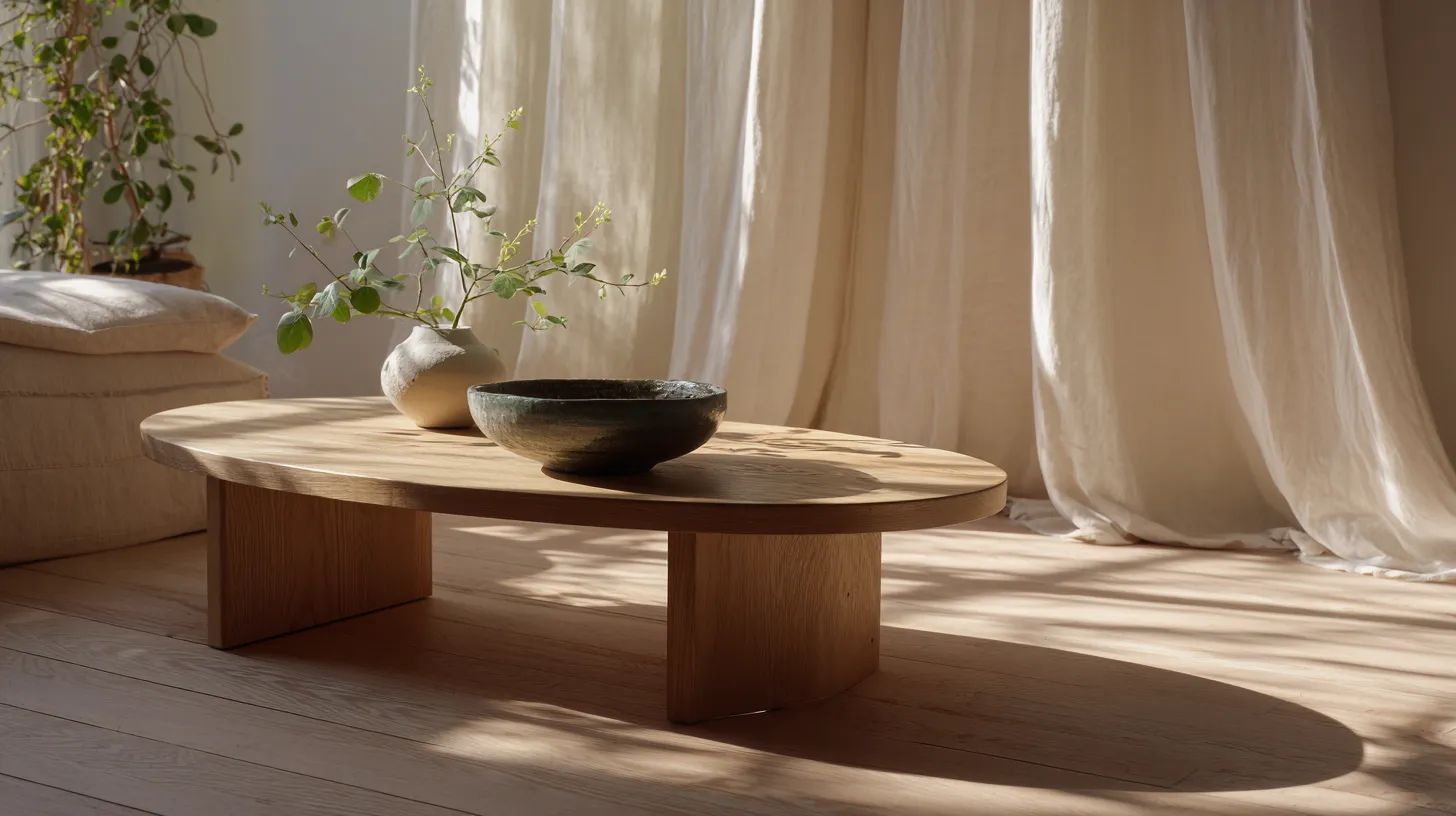
It does not try to impress. It invites. Think solid oak with a matte oil finish, or a slab of ash wood resting on tapered legs that barely touch the floor. Round, oval, or gently rectangular — never ornate, never shiny, never fussy.
Key visual traits include:
- Low height (typically 35–45 cm / 14–18 inches)
- Natural wood in warm neutrals: oak, ash, walnut, teak, acacia
- Matte or raw finish — never high gloss
- Clean, sculptural lines with no unnecessary decoration
- Occasional stone or concrete accents for texture contrast
- Open, airy leg designs that allow light and floor to breathe
The result is a piece that feels both minimal and deeply alive — like nature edited by a careful hand.
What Size Japandi Coffee Table Should I Choose?
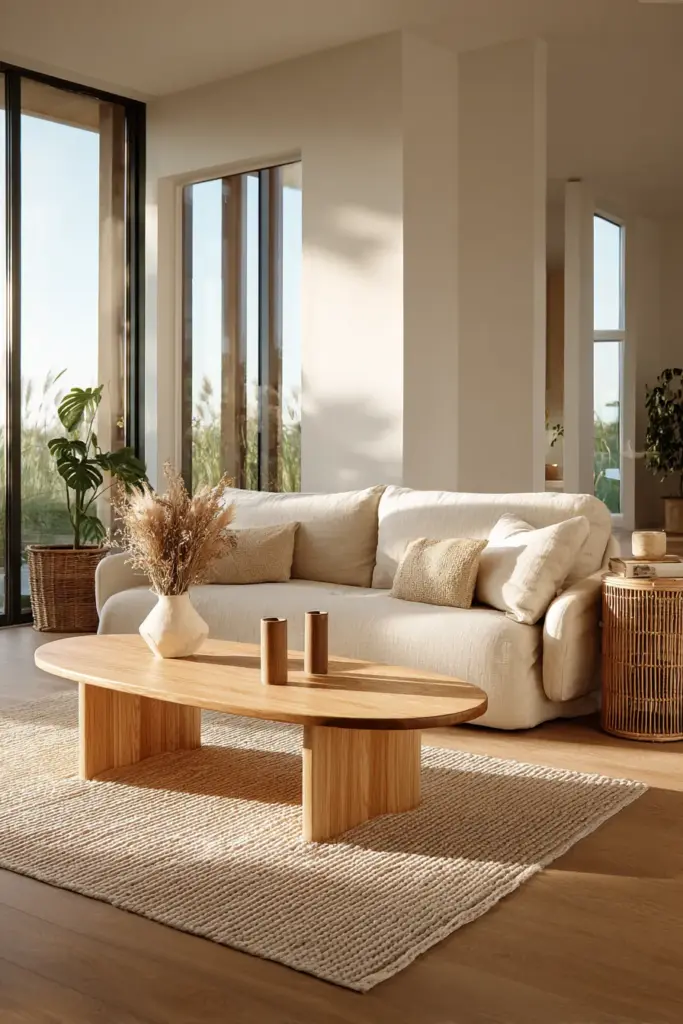
Getting the size right is where most people stumble. A table that is too large overwhelms the sofa. Too small, and it floats uselessly in space.
Japandi Coffee Table Size Guide by Room
| Room Size | Recommended Table | Shape |
|---|---|---|
| Under 15 m² (small studio or condo) | 60–80 cm round or oval | Round softens tight spaces |
| 15–20 m² (standard living room) | 80–100 cm round or 90 cm square | Either works — round feels roomier |
| 20–30 m² (open-plan or medium room) | 100–120 cm oval or rectangular | Oval maintains softness |
| 30 m² and above | 120–140 cm rectangular | Anchors large conversation zones |
Height and Clearance Rules
The table surface should sit 5–10 cm below your sofa seat height — this is the sweet spot for reaching your cup without leaning uncomfortably far. Most sofas sit at 43–48 cm, making a coffee table of 38–43 cm the ideal range.
Leave at least 45–60 cm of clear floor between the sofa edge and the table edge. This keeps the room from feeling cramped and allows you to move freely around the space.
In rooms under 18 m², nesting tables solve everything. Two or three small tables that tuck together when not in use — pulled apart for guests, tucked away for yoga or play.
What Materials Are Best for a Japandi Coffee Table?
Material choice is where Japandi coffee tables reveal their character. The surface you touch every day should feel real, warm, and honest.
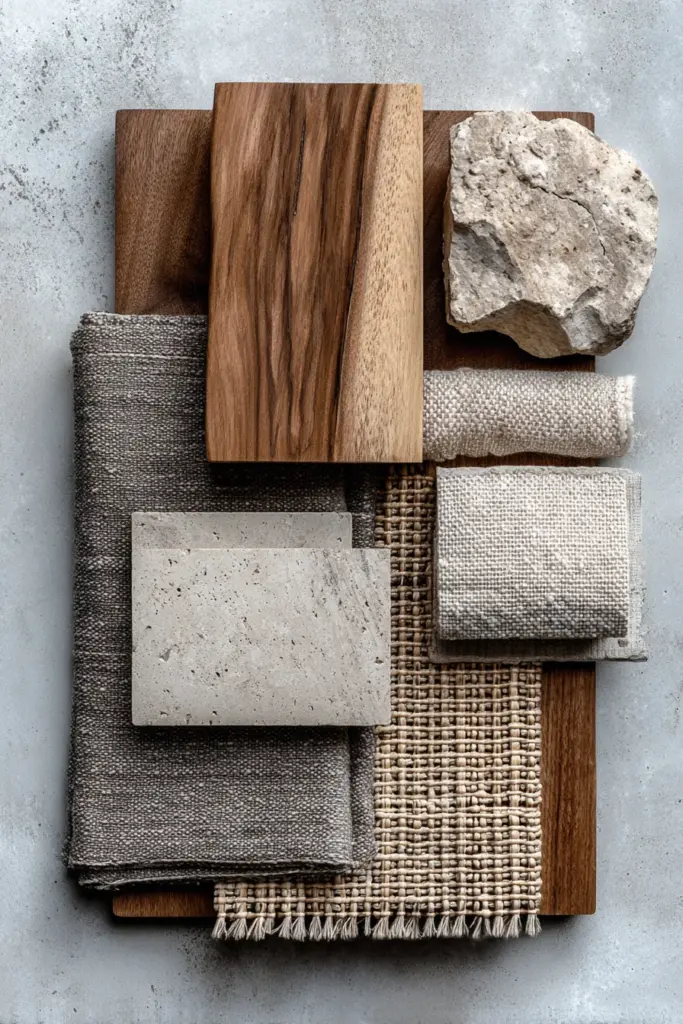
Solid Wood
Solid wood is the soul of Japandi. Oak is the most popular — its open grain and warm honey tones age beautifully and take matte oils well. Ash is lighter, almost silvery-blonde in certain lights. Walnut brings depth and drama without losing warmth.
For tropical climates — the Philippines, Southeast Asia, coastal homes — the species matters even more. Look for:
| Wood | Why It Works in Tropical Climates |
|---|---|
| Teak | Naturally oily, highly resistant to moisture and termites |
| Acacia | Dense, durable, locally abundant, ages with character |
| Mahogany | Stable in humidity, resists warping and cracking |
| Molave / Yakal (PH local) | Extremely hard and termite-resistant, beautiful grain |
Avoid loose veneers or MDF cores in humid homes. When moisture enters the edges, they swell and separate. Choose solid wood or, at minimum, thick plywood cores with sealed edges.
Stone and Concrete
A travertine-top or concrete-slab table brings textural contrast that feels very Japandi — cool and mineral against warm wood legs. Stone is also naturally humidity-friendly: it does not warp, swell, or absorb moisture the way wood does.
Concrete-topped tables are especially practical for families. They are heavy, stable, easy to wipe, and grow more beautiful with small imperfections over time.
Rattan and Bamboo
Rattan-shelf coffee tables — a solid wood top with an open rattan lower shelf — are a beautiful Japandi choice for warm climates. The woven shelf adds texture, allows airflow, and keeps the table feeling light and organic.
Bamboo, treated properly, handles tropical heat and humidity well. It is also one of the most sustainable materials you can choose.
Finish Matters
Whatever material you choose, the finish transforms the feeling.
- Raw linseed oil: warm, matte, food-safe, enhances grain
- Liming wax: light, cool, slightly whitened tone — beautiful on oak
- Matte water-based varnish: durable, low-sheen, humidity-resistant
- Avoid: high-gloss lacquer, dark stains, synthetic-looking polyurethane
A matte finish does not just look more natural — it hides small scratches and everyday marks, which makes your table feel lived-in rather than battered.
Japandi Coffee Table Shapes: Round, Square, or Oval?
Shape is not just aesthetic — it changes how the room feels and functions.
Round tables soften the room. They work beautifully in small or square living rooms, creating a gentle circulation path with no sharp corners. They feel inviting and social.
Oval tables are the most versatile. They give you length for styling without the hard corners of a rectangle, and they slide gracefully into narrow or asymmetric living rooms.
Rectangular tables define and anchor. In a long, open-plan room with a large sectional, a low rectangular table creates a clear conversation zone and visual grounding.
Organic, pebble-shaped tables — freeform curves, no two sides the same — are the most expressive Japandi choice. They reference natural stones and feel beautifully hand-made.
Avoid sharp right angles in small rooms. They interrupt flow and make tight spaces feel more rigid.
How to Style a Japandi Coffee Table
Styling a Japandi coffee table is an exercise in restraint. The goal is not a perfectly curated Instagram flat lay — it is a surface that feels considered, calm, and yours.
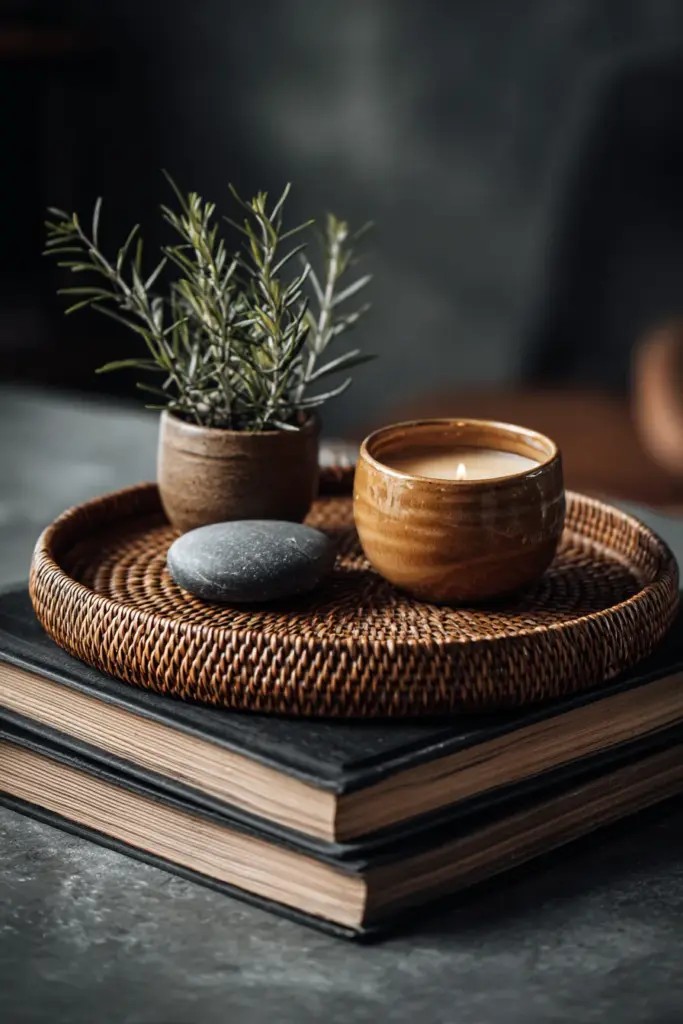
The Japandi Coffee Table Rule: 1 Tray + 3 Objects
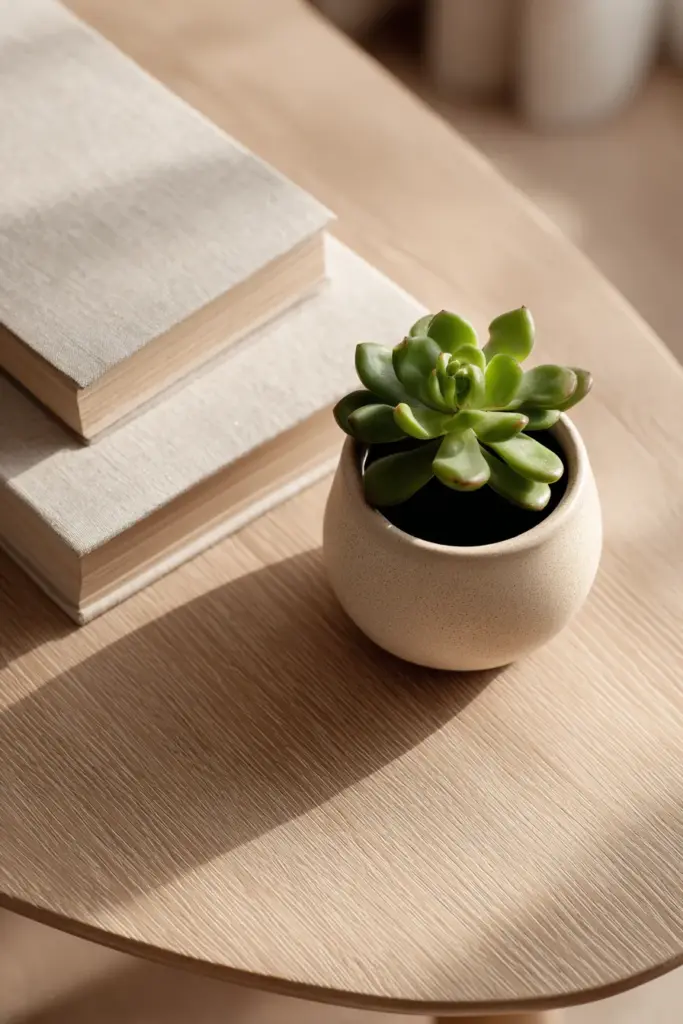
Start here. Place one tray — wood, stone, or woven — to anchor the composition. Within or beside it, allow only three to five objects:
- One plant: a small succulent, rosemary pot, or trailing vine in a ceramic planter
- One or two books: stacked flat, unread or re-read, chosen for their spines
- One object of weight: a ceramic bowl, a smooth stone, a beeswax candle
- One trivet or woven coaster: adds texture, absorbs sound (more on this below)
That is your starter kit. Resist the urge to add more.
The Japandi Coffee Table Starter Kit for Filipino Homes
You do not need imported European ceramics to create a Japandi coffee table. Some of the most beautiful objects are already around you:
- Local woven tray (bayong or rattan basket tray)
- Indigenous ceramic planter with a small herb — rosemary, pandan, or a tiny orchid
- Woven coaster set in natural abaca or bamboo
- A single smooth river stone as a paperweight or accent
- A wooden bowl turned from local acacia or mango wood
The Japandi philosophy was always about finding beauty in what is already there — honest materials, made by hand, chosen with intention.
Three Japandi Coffee Table Setups for Different Moods
Morning Coffee Ritual
Tray at center. Two ceramic cups. One small plant. One book, face-down, mid-read. Nothing else.
Evening Gathering
Tray with candles — beeswax, unscented. Small bowl of dried citrus or nuts. Woven coaster beneath each cup. The table says: sit, stay, slow down.
Family Night
Clear the tray. Store it with cards or a small game. The flat surface becomes the table — no clutter, no breakables, just space for the people in it.
Japandi Coffee Table and Lighting: A Quieter Room
No one talks about this enough, but your coffee table interacts directly with the light and acoustics of your living room.
Pairing Your Table with Light
A warm-toned floor lamp positioned beside the sofa casts a gentle glow across the table surface, making wood grain come alive at dusk. This is far more beautiful than overhead lighting, which flattens texture.
If your living room has a pendant above the table, keep it low — 50–60 cm above the surface — so it creates intimacy rather than illumination. Choose a pendant in rattan, paper, or linen for a Japandi feel.
Candlelight on a matte wood surface is the softest, most Japandi thing you can do with your coffee table. A single beeswax pillar in the evening transforms the room’s energy.
The Acoustic Benefit
This surprises people: the objects on your coffee table can soften the sound of your room.
A wool trivet under ceramic bases absorbs impact sound. A woven mat beneath a stack of books dampens echoes. Felt pads under everything — every cup, every bowl — eliminate the small clicks and scrapes that accumulate into noise.
Japandi is not just about how a room looks. It is about how it sounds when nothing is happening.
DIY Japandi Coffee Table: Budget-Friendly Ideas
A Japandi coffee table does not need to cost a fortune. The style is built on honest making — which means you can build one.
Simple DIY Options
Reclaimed wood slab on hairpin legs: Source a thick wood slab (25–35 mm) from a local salvage yard or timber supplier. Sand it smooth, apply two coats of raw linseed oil, and mount onto matte-black hairpin legs at 40 cm height. Total cost: often under ₱3,000–5,000.
Plywood base with linen-wrapped shelf: Cut plywood into a clean rectangle. Round the corners with a jigsaw. Sand thoroughly. Wrap the lower shelf in natural linen fabric and secure with a staple gun. Finish the top with matte varnish.
Upcycle a low side table: Find a low bedside table or a simple wooden stool at a thrift shop. Sand it, apply liming wax for a Japandi-pale finish, and you have a perfectly proportioned coffee table for under ₱800.
Quick Specs for DIY Japandi Tables
- Top thickness: 18–35 mm (thicker feels more grounded)
- Overhang from legs: 5–7 cm each side
- Ideal height: 38–43 cm
- Finish: Linseed oil, liming wax, or matte water-based varnish
- Hardware: Matte black or raw brass — nothing chrome
Are Japandi Coffee Tables Practical for Families?
Yes — with the right choices.
Round or oval shapes with no sharp corners are safer for children and create a more forgiving path through the room. Solid wood takes knocks better than veneer and develops a natural patina that hides minor scratches.
A table with a lower shelf or integrated tray drawer gives you a home for remote controls, coasters, and small clutter — keeping the surface clear without constant effort.
Concrete and stone tops are among the most family-practical surfaces: wipe-clean, scratch-resistant, and impossible to damage with a dropped cup.
Avoid tables with glass tops or very thin legs if small children are in the picture. The Japandi aesthetic is inherently forgiving — built for real life, not a showroom.
Quick Checklist Before Buying a Japandi Coffee Table
- Wood type: Solid or thick-core ply? (avoid loose veneer in humid climates)
- Finish: Matte, raw, or low-VOC? (no high gloss)
- Height: 5–10 cm below your sofa seat?
- Size: Does it leave 45–60 cm of clear floor around it?
- Shape: Does it suit your room’s geometry?
- Humidity: Is the material suited for your climate?
- Legs: Solid enough for daily use? (hairpin legs = lighter load only)
- Certification: FSC-certified or local sustainably sourced wood?
- Indoor vs. outdoor: Is the finish UV and moisture resistant if going outdoors?
Key Takeaways
- A Japandi coffee table is low, matte-finished, and made from natural materials — the opposite of glossy or ornate
- Size your table to your room: allow 45–60 cm of floor clearance and keep height 5–10 cm below sofa level
- In tropical climates, choose teak, acacia, mahogany, or local hardwoods over MDF-core or loose veneer
- Style with restraint: one tray, three to five objects, negative space is part of the design
- Lighting matters — a warm floor lamp beside the sofa makes your table glow; candles are the ultimate Japandi move
- You can DIY a beautiful Japandi coffee table for under ₱5,000 using local wood and simple techniques
- Round or oval tables suit small spaces; rectangular tables anchor large, open-plan rooms
Conclusion
A Japandi coffee table is not just furniture. It is a daily practice in choosing what matters.
When you clear the surface to just the essential — a warm cup, a book you are actually reading, a single plant reaching toward light — you are not decorating. You are editing your life toward something quieter, more intentional, more beautiful.
At ERYLIN, we believe that the most meaningful spaces are the ones that feel like an exhale. Your coffee table is where that exhale begins.
Choose honestly. Style gently. Let the table do its quiet, grounding work.
Frequently Asked Questions
What is a Japandi living room coffee table?
A Japandi coffee table combines Japanese minimalism and Scandinavian warmth into a low-profile, natural-material table. Key traits include solid or quality wood, a matte finish, clean lines, and a calm, uncluttered surface.
What size coffee table do I need for a small living room?
For rooms under 20 m², choose a round or oval table between 70–100 cm in diameter. Leave at least 45 cm of clear space between the table and your sofa, and keep the table height 5–10 cm below the sofa seat.
What materials are best for a Japandi coffee table in a tropical or humid climate?
Teak, acacia, and local hardwoods like molave or yakal are excellent choices. They are dense, moisture-resistant, and termite-resistant. Concrete and stone tops are also ideal. Avoid MDF cores or loose veneer, which swell and separate in high humidity.
What should I put on a Japandi coffee table?
Keep it to a tray, one plant, one or two books, and one textural object like a ceramic bowl or smooth stone. Use a woven trivet or mat to add texture and reduce surface noise. Negative space — the empty parts of the table — is as important as what you place on it.
Can I DIY a Japandi coffee table on a budget?
Absolutely. A reclaimed wood slab on matte hairpin legs, finished with raw linseed oil, is one of the most beautiful and affordable Japandi tables you can make. Local woods like acacia or mango, sourced from a timber yard or salvage shop, are ideal materials. Budget ₱3,000–8,000 for a solid, handmade piece.