
Table of Contents
By ERYLIN — Your Guide to Soulful, Considered Living
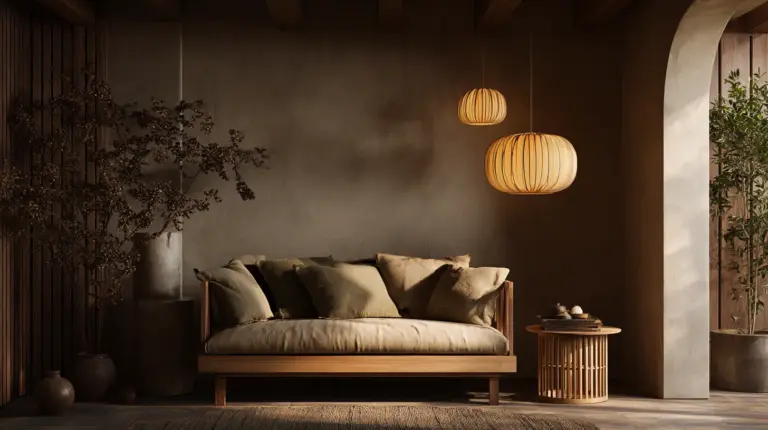
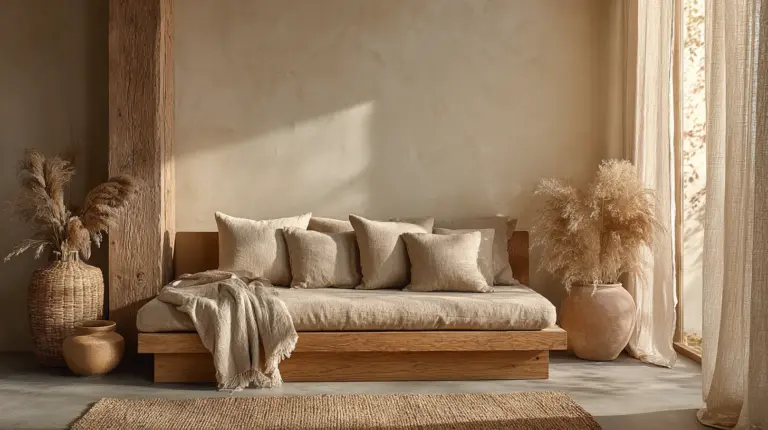
There is a particular kind of morning light that changes everything. It filters through woven bamboo, lands softly on a linen sofa, and turns an ordinary room into something that feels almost meditative. That is the promise of Japandi — and it begins, more than you might think, at the window.
Japandi living room window treatments are not simply about blocking light or adding privacy. They are about curating how light enters your space, what mood it creates, and how it speaks to everything else in the room. A well-chosen shade or curtain panel becomes part of the room’s soul.
This aesthetic — born from the marriage of Japanese wabi-sabi and Scandinavian hygge — calls for materials that breathe, textures that ground, and tones that whisper rather than shout. Think warm greige, soft taupe, earthy sage. Think linen that moves like a slow exhale.
Whether you are starting from scratch or refreshing a tired window corner, this guide will walk you through everything: materials, layering, budget options, climate tips, and common mistakes to avoid. Let’s bring that beautiful morning light inside — thoughtfully.
What Makes a Window Treatment Truly Japandi?
The Philosophy Behind the Fabric
Japandi is not a trend you chase. It is a feeling you cultivate. At its heart, it honors imperfection, simplicity, and the quiet beauty of natural materials. Your window treatments should reflect this same intention.
A Japandi-style window treatment favors organic over synthetic, muted over bold, and functional over decorative. Every element earns its place. A bamboo shade does not just filter light — it brings a whisper of forest into your living room.
The wabi-sabi influence means you welcome slight irregularities: the uneven weave of a jute blind, the gentle wrinkle of unhemmed linen. These imperfections are not flaws. They are character.
The Hygge Connection
From the Scandinavian side, hygge brings warmth, coziness, and a deep respect for comfort. Your window treatments should make the room feel like an embrace — especially on grey afternoons or humid evenings.
Layer sheer linen panels with heavier woven wood shades to create that layered warmth. Think of it as dressing your windows the way you would dress for a cool, cloudy morning: in soft layers that protect without smothering.
Best Window Treatments for Japandi Style
The best Japandi window treatments share a few key qualities: natural materials, neutral tones, clean lines, and light-filtering capability. Here is a breakdown of the top options.
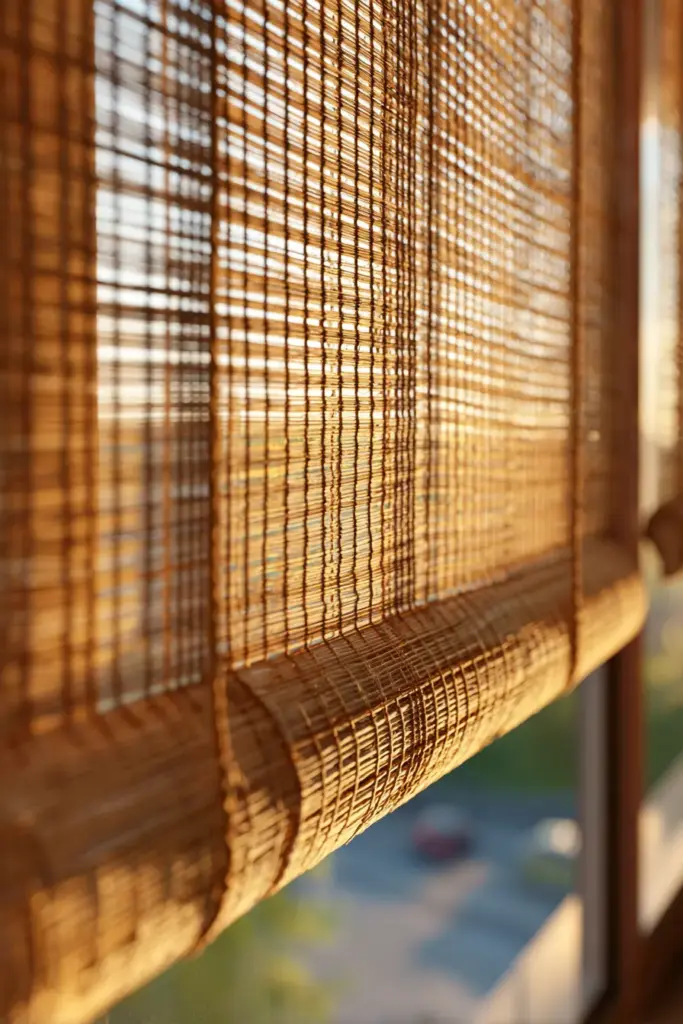
1. Woven Wood Shades and Bamboo Blinds
Woven wood shades are arguably the most quintessential Japandi window treatment. They bring texture, warmth, and an unmistakable connection to nature — all without competing with the rest of the room.
What to look for:
- Bamboo, rattan, jute, or reed weaves
- Warm honey, natural tan, or dark espresso finishes
- Light-filtering or room-darkening liner options
- Cordless or motorized lift systems for a clean, minimal look
Bamboo shades cast the most beautiful dappled light when the sun hits them mid-morning. The shadows they throw onto bare walls become almost like art.
2. Linen Curtains and Sheer Panels
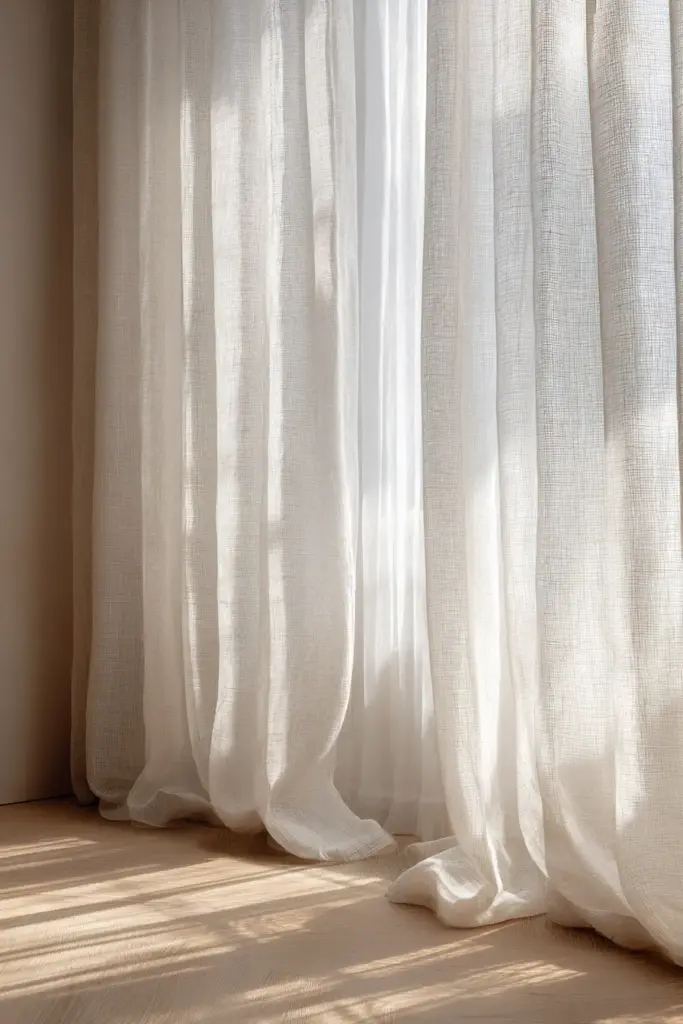
Linen is the fabric of Japandi interiors. It has that rare quality of being both casual and refined — it drapes beautifully, softens light without blocking it, and ages gracefully over time.
What to look for:
- 100% linen or linen-cotton blends for structure
- Sheer linen panels for soft, diffused light
- Floor-to-ceiling lengths that elongate the space
- Neutral tones: oatmeal, warm white, dusty sage, pale taupe
Hang linen curtains slightly wider than the window frame and let them pool gently at the floor. This small detail transforms a room completely.
3. Roller Shades in Natural Tones
For a more minimal, modern Japandi look, roller shades in earthy palettes deliver clean lines with quiet character. Solar shades made from sustainable materials are especially effective at reducing glare while preserving the view.
What to look for:
- Warm greige, stone, or off-white tones
- Eco-certified fabrics (recycled polyester, natural fiber blends)
- Cordless systems for a seamless silhouette
- Motorized options for smart home integration
Pair a roller shade with a linen side panel for a layered, sophisticated window vignette.
4. Plantation Shutters
Plantation shutters bring a sense of permanence and architectural calm to Japandi spaces. They offer unmatched light control — open the louvers wide for flooding afternoon sun, or tilt them slightly for soft, angled light.
Choose shutters in matte white, warm cream, or pale grey-beige. Wood or faux-wood options both work well, though solid wood carries more of that Japandi warmth.
| Treatment Type | Best For | Light Control | Japandi Vibe |
|---|---|---|---|
| Woven Wood / Bamboo Shades | Texture & warmth | Medium–High | ★★★★★ |
| Linen Curtain Panels | Softness & movement | Low–Medium | ★★★★★ |
| Roller Shades (natural tones) | Minimal, modern look | Medium–High | ★★★★☆ |
| Plantation Shutters | Light precision & structure | High | ★★★★☆ |
| Sheer Linen Panels | Diffused, dreamy light | Low | ★★★★☆ |
How to Choose Japandi Curtains for Your Living Room
Choosing the right curtain goes beyond color. Fabric weight, hang, and length all matter deeply in a Japandi space where every detail is intentional.
Consider the Light Direction
South-facing living rooms receive strong, sustained sunlight — ideal for a woven wood shade that softens but does not block. North-facing rooms may benefit from sheer panels that maximize every bit of available light without sacrificing the soft, filtered quality Japandi calls for.
East and west-facing windows bring dramatic morning or afternoon light. Here, a layered approach — a light-filtering bamboo shade paired with a linen panel — gives you flexibility across the day.
Proportion and Scale
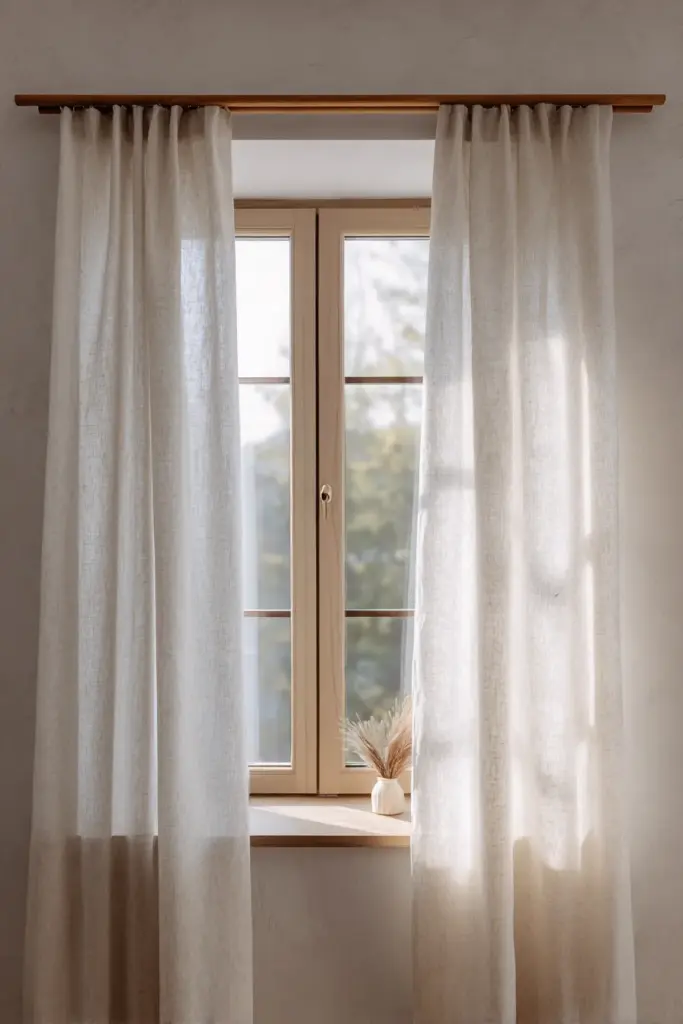
Mount your curtain rod close to the ceiling, not just above the window frame. This elongates the wall and gives the room a taller, more expansive feel — a hallmark of well-designed Japandi interiors.
Let the panels extend 15–20 cm on each side of the window when open. This frames the window architecturally and allows maximum light when the curtains are drawn back.
Color Palette Harmony
Stay within your room’s earthy, neutral palette. Japandi window treatments should blend into the room’s atmosphere rather than punctuate it. If your walls are warm white, choose oatmeal or sand linen. If your room leans towards cooler tones, dusty sage or soft stone works beautifully.
Avoid strong patterns. If you want visual interest, let it come from texture — the weave of the fabric, the grain of the wood — rather than print.
How to Reduce Heat While Keeping Japandi Aesthetics
This is a question ERYLIN hears often, especially from readers in warm, tropical climates like the Philippines. Beautiful aesthetics should never come at the cost of comfort.
Light-Filtering vs. Blackout: Finding the Balance
Light-filtering bamboo shades and solar roller shades reduce solar heat gain significantly while preserving that soft, luminous Japandi quality. They diffuse rather than block — which means the room stays cooler without going dark.
For rooms that face west and receive intense afternoon sun, consider a dual-layer system: a solar roller shade close to the glass (to block UV and reduce heat) with a linen curtain panel in front (for softness and aesthetics). This combination is both functional and beautiful.
Materials for Tropical Climates
If you live in a humid climate, material choice is critical for longevity and hygiene.
- Avoid heavy velvet or thick woven curtains that trap moisture and encourage mold
- Choose moisture-resistant linen blends treated for humidity resistance
- Opt for bamboo or rattan shades — natural, breathable, and mold-resistant when properly maintained
- Solar roller shades made from PVC-free, moisture-resistant fabrics are an excellent choice for high-humidity rooms
Clean your window treatments regularly with a dry brush or low-suction vacuum to prevent dust buildup, which accelerates fabric degradation in humid air.
Layering Window Treatments the Japandi Way
Layering is where Japandi window styling becomes genuinely artful. Done right, layers add depth without chaos. The key is restraint.
The Classic Japandi Layer: Sheer + Shade
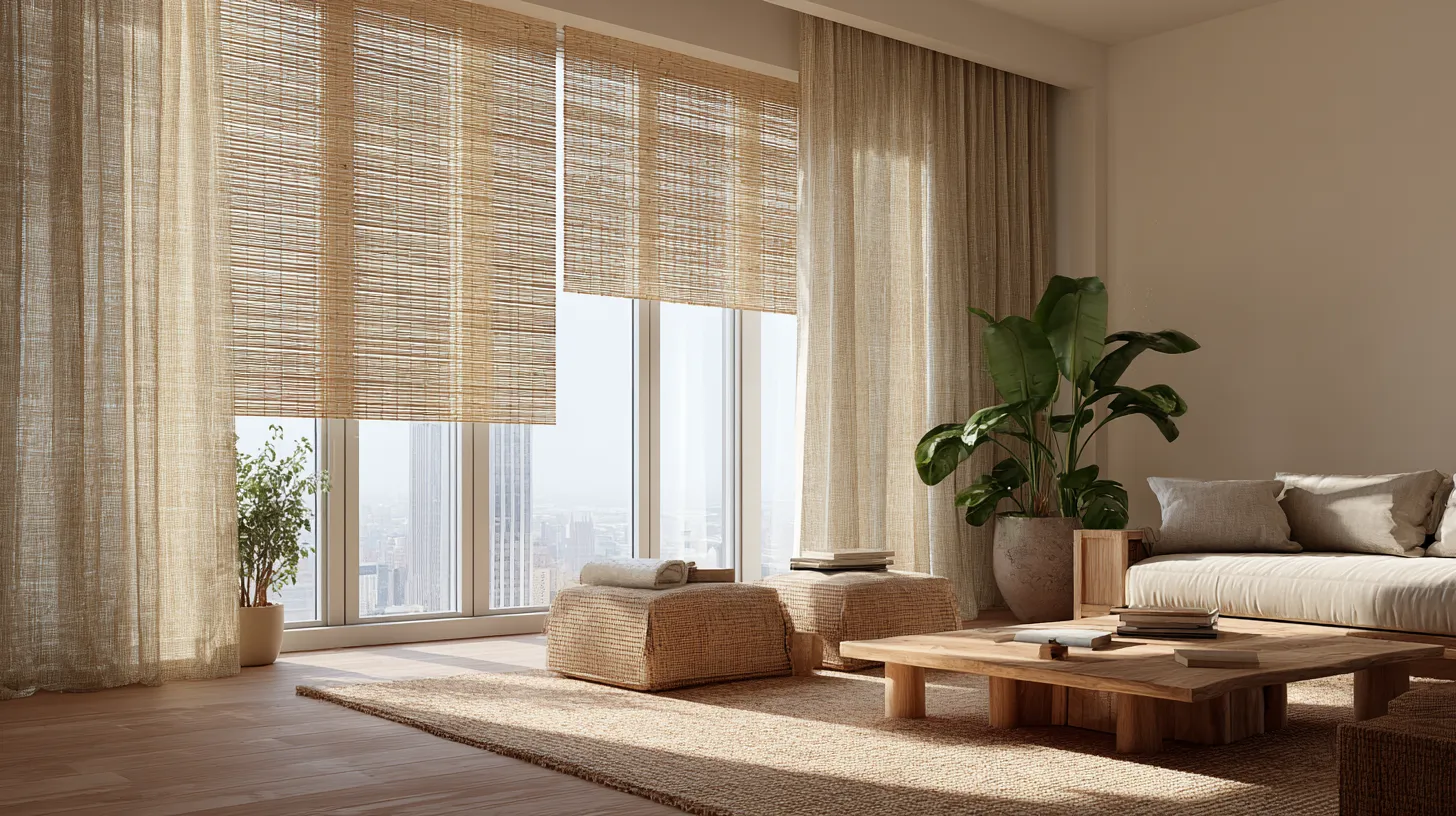
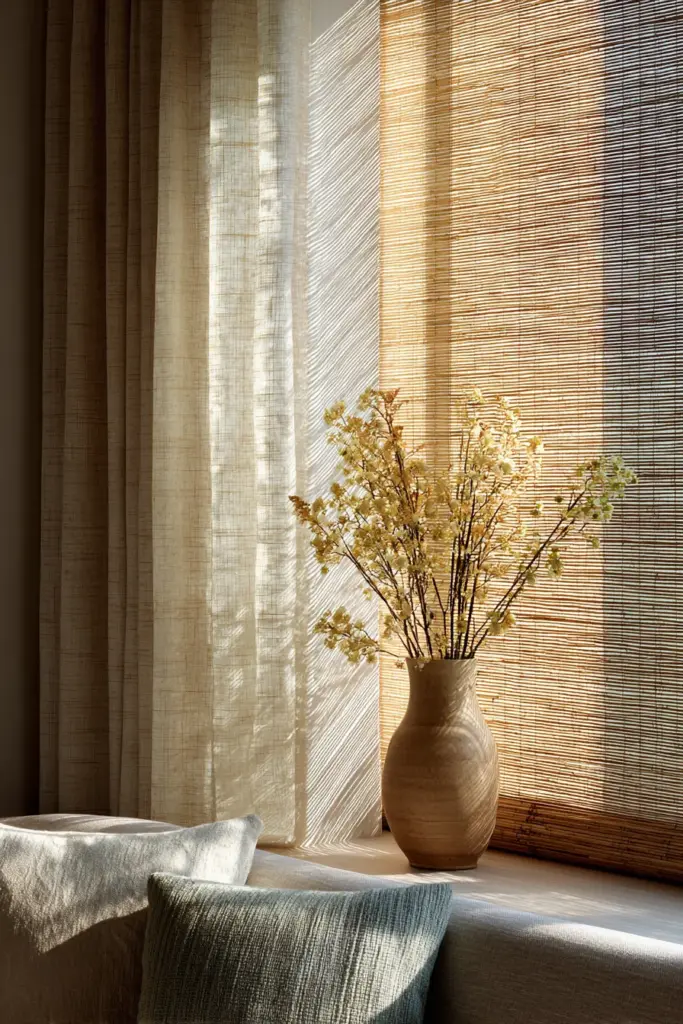
The most versatile layering combination in Japandi design is a sheer linen panel paired with a woven wood or bamboo shade.
Use the bamboo shade during the day to filter light and reduce glare. Draw the sheer linen panels in the evenings for privacy while maintaining that soft, glowing atmosphere. This two-layer approach gives you complete flexibility without cluttering the window.
Adding a Third Layer for Drama
For living rooms with high ceilings or a desire for more visual weight, add a third layer: floor-length linen drapes in a slightly deeper tone behind the sheer panels. Think warm taupe over soft oatmeal.
This tonal layering — different shades of the same earthy family — is deeply Japandi. It creates visual richness without noise.
Common Layering Mistakes to Avoid
- Blocking too much light by using blackout liners on all layers simultaneously — this kills the hygge atmosphere entirely
- Mixing too many textures — keep to two or three complementary materials
- Hanging panels too low — always mount the rod at ceiling height or close to it
- Using curtains that are too short — in Japandi interiors, curtains should always skim or gently pool at the floor
Biophilic Touches: Bringing Nature Into Your Window Vignette
One of the most overlooked opportunities in Japandi window styling is the integration of plants and natural elements around your window treatment.
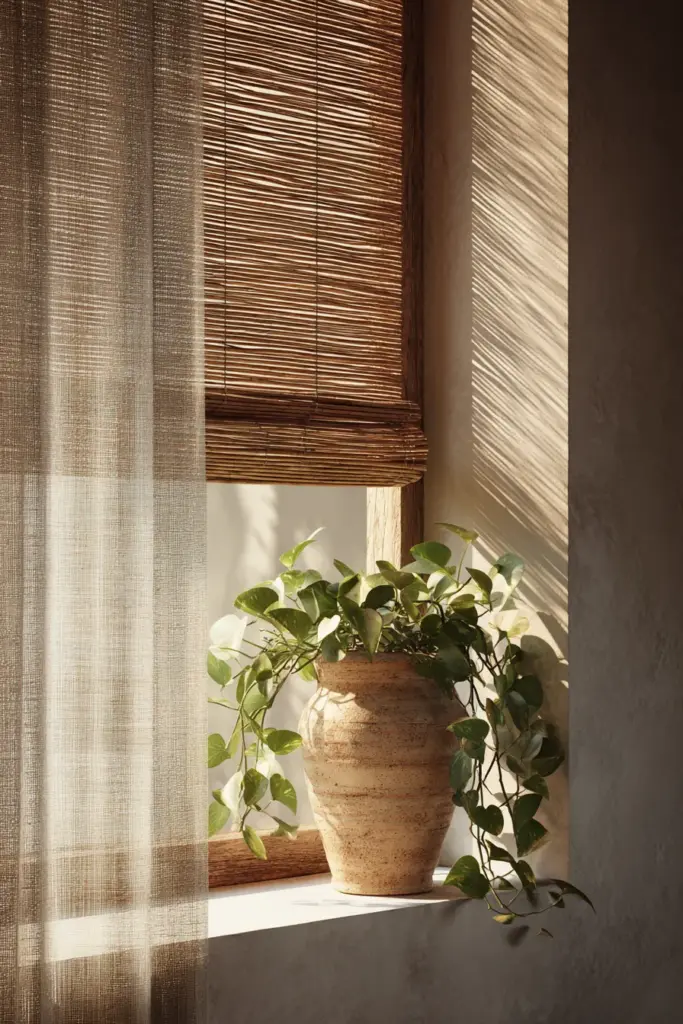
Place a trailing pothos or a delicate fern on the windowsill, partially framed by a sheer linen panel. The plant casts soft organic shadows onto the fabric, creating a living, breathing window scene that changes with the sun.
Consider hanging a small macramé or natural fiber plant hanger just inside the window frame, in front of a bamboo shade. The layering of textures — woven shade, hanging fiber, green leaves — is effortless and deeply Japandi.
Plant-safe shade choices for living rooms with trailing plants near windows:
- Sheer linen panels (won’t trap moisture against leaves)
- Bamboo and woven wood shades (breathable, non-toxic)
- Roller shades with open weave solar fabric (allows air circulation)
Budget Guide: Japandi Window Treatments at Every Price Point
Beautiful Japandi window treatments do not require a limitless budget. Intentionality is free.
| Price Range | Best Options | Where to Find |
|---|---|---|
| Budget (under ₱1,500 / $25) | Thrifted linen panels, DIY bamboo blinds, simple roller shades | Ukay-ukay, Shopee, local markets |
| Mid-Range (₱1,500–₱6,000 / $25–$100) | Ready-made linen curtains, basic woven wood shades | IKEA, local home stores, online |
| Premium (₱6,000+ / $100+) | Custom linen panels, motorized bamboo shades, plantation shutters | Interior suppliers, specialty retailers |
DIY Japandi Window Treatment Ideas
- Upcycle old bamboo mats into roll-up blinds using curtain rings and a wooden dowel
- Sew simple linen panels from unbleached linen fabric — no hem required for a raw, wabi-sabi edge
- Dye white curtains in a warm tea or coffee bath for an instant earthy, organic tone
Japandi Window Treatment Checklist
Before you shop or sew, run through this quick checklist to ensure your choices align with Japandi principles:
- Material: Is it natural or sustainably sourced? (bamboo, linen, jute, rattan, wood)
- Color: Does it stay within your earthy, neutral palette? (greige, taupe, sage, oatmeal, warm white)
- Light: Does it filter rather than block? Does it enhance the room’s natural light quality?
- Scale: Are your curtain rods mounted at ceiling height? Do your panels extend beyond the window frame?
- Layering: Have you considered at least two complementary layers?
- Climate: Are your fabrics appropriate for your local humidity and temperature?
- Maintenance: Can you clean and care for them easily?
- Simplicity: Does each element earn its place, or is something competing for attention?
Conclusion: Let the Light Lead You
A Japandi living room window treatment is not a purchase. It is a practice — of slowing down, noticing what your space needs, and choosing materials that honor both beauty and function.
When morning light falls through a woven bamboo shade and lands on your floor in warm, shifting patterns, you will understand why this style resonates so deeply. It is not about perfection. It is about presence.
Start with one window. Choose one fabric that makes you feel calm when you touch it. Let that quiet decision ripple through the whole room.
ERYLIN is here whenever you are ready to go further.
Frequently Asked Questions
What are the best window treatments for Japandi style?
The best Japandi window treatments are those made from natural materials in neutral, earthy tones. Woven wood shades, bamboo blinds, and linen curtain panels are the most popular choices. They filter light beautifully, add organic texture, and complement the minimalist, nature-forward Japandi palette. For a complete look, layer a bamboo shade with a sheer linen panel for flexibility and depth.
How do I choose Japandi curtains for my living room?
Focus on fabric, color, and proportion. Choose 100% linen or linen-cotton blend curtains in oatmeal, warm white, dusty sage, or pale taupe. Mount the rod at ceiling height and let panels extend slightly beyond the window frame on each side. Avoid bold patterns — let texture do the visual work. Floor-to-ceiling lengths always feel most intentional.
How can I reduce heat while maintaining Japandi aesthetics?
Use a dual-layer system: a solar or light-filtering roller shade close to the glass to reduce UV and heat gain, paired with a linen curtain panel in front for softness. For humid or tropical climates, choose moisture-resistant linen blends and breathable bamboo shades. Avoid heavy fabrics that trap heat and moisture.
What fabrics are best for Japandi window treatments?
Natural, breathable fabrics are ideal. Linen (or linen blends), jute, cotton, and bamboo are the most Japandi-appropriate choices. These materials age gracefully, filter light softly, and carry that organic, wabi-sabi imperfection that makes Japandi spaces feel alive. In humid climates, look for moisture-treated or quick-dry linen blends.
What are common mistakes in Japandi window curtain styling?
The most common mistakes are: hanging curtains too low (always mount at ceiling height), using blackout liners on every layer (which kills natural light and hygge atmosphere), mixing too many competing textures, choosing curtains that are too short, and ignoring scale — panels should always feel generous, not sparse. When in doubt, simplify.