
Table of Contents
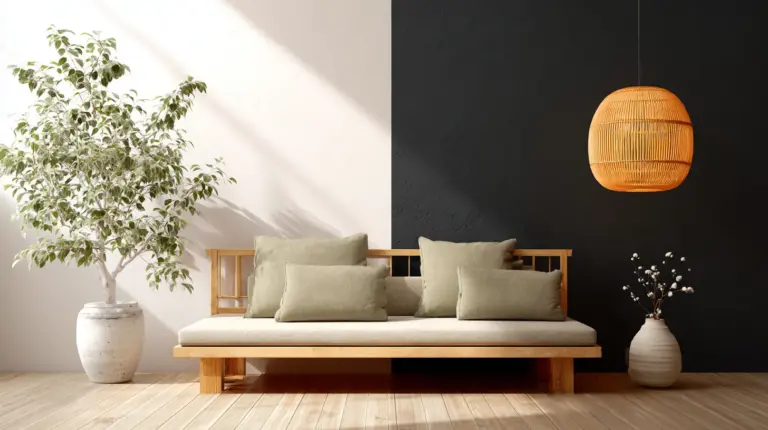
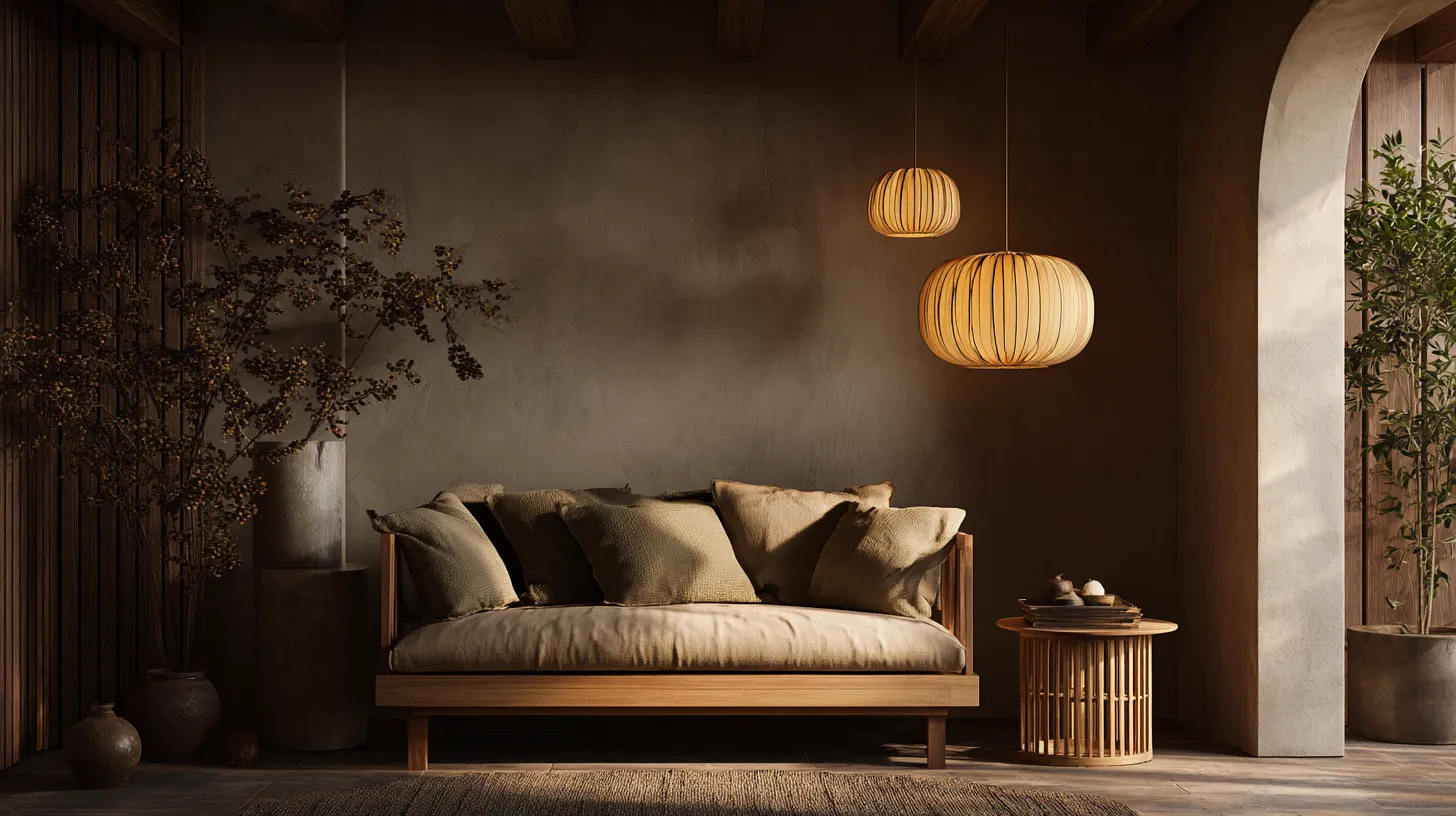
There is a particular kind of quiet that a well-lit room holds. Not silence exactly — more like a held breath. A feeling of everything in its place, of warm amber pooling softly on linen, of shadows that know their purpose. That is what Japandi living room lighting does when it is done right.
Japandi — the graceful marriage of Japanese wabi-sabi philosophy and Scandinavian hygge warmth — is less a trend and more a way of seeing. It asks us to strip away excess and let what remains speak clearly. And in lighting, that means every fixture, every bulb temperature, every source of glow has a reason for being there.
At ERYLIN, we believe your home should feel like it breathes with you. Lighting is not an afterthought. It is the mood, the texture, the story — and in a Japandi living room, it is the quiet anchor of everything beautiful.
This guide will walk you through every layer of light you need, the materials that feel truest to the style, smart ideas for small spaces, and even a few budget-friendly tricks for those of us sourcing beautiful things on practical budgets. Let us begin.
What Is Japandi Lighting Style?
Japandi lighting is defined by warmth, restraint, and natural materials. It leans away from harsh overhead floods and glittering chandeliers. Instead, it reaches toward diffused, layered light — the kind that wraps a room rather than exposes it.
The color temperature that defines Japandi is 2700K to 3000K: warm white, slightly golden, close to candlelight. It softens edges, flatters wood grain, and creates that unmistakable sense of ease that Japandi spaces are known for.
Materials matter just as much as the light itself. Bamboo, rattan, washi paper, linen, and raw wood are the soul of Japandi fixtures. They filter and scatter light gently, casting organic shadow patterns that make a wall feel like art.
This is lighting that knows when to whisper.
How to Layer Lighting in a Japandi Living Room
Layered lighting is the single most transformative technique in interior design — and Japandi executes it with particular grace. The goal is three heights of light: ambient (overhead), task (functional), and accent (atmospheric). Together, they create depth without drama.
Ambient Lighting: The Foundation
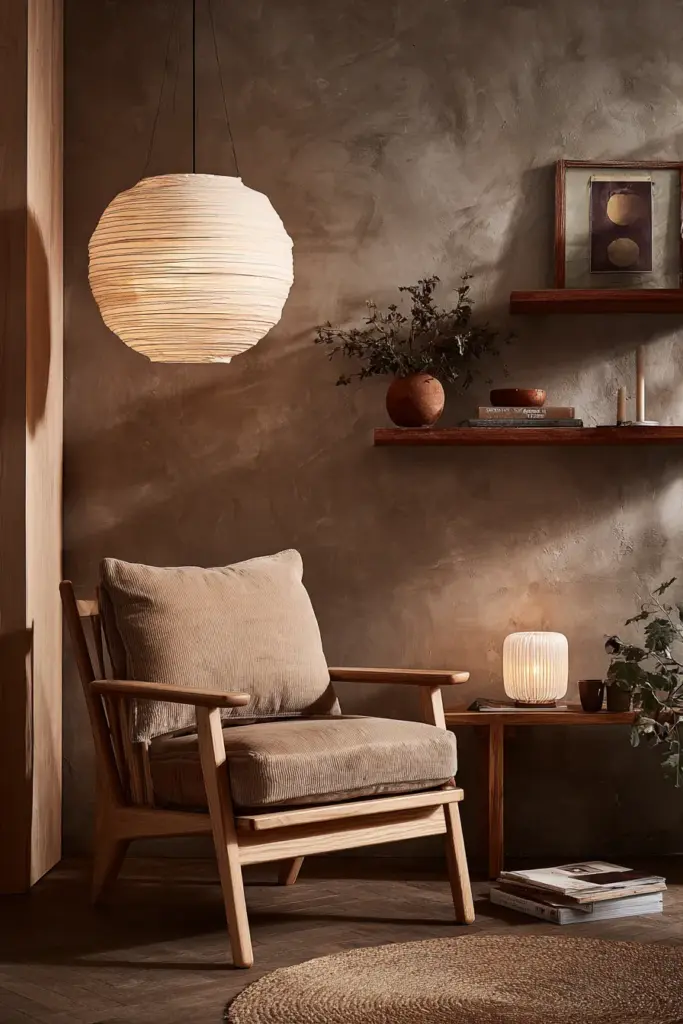
Your ambient layer is the room’s base glow — the light that says this is a living space, not a stage. In Japandi interiors, this means stepping away from glaring recessed downlights and choosing something with character.
A diffused pendant light over the center of the room — perhaps in washi paper or a linen drum shade — distributes light evenly and softly. It draws the eye upward without demanding attention. Pair it with a dimmer switch so you can lower the mood when the evening calls for it.
For rooms with low ceilings (a common concern in Philippine condominiums and compact UK flats alike), consider flush-mount fixtures with paper or fabric shades. They keep the ceiling open while still delivering that warm, filtered Japandi glow.
Task Lighting: Purposeful and Beautiful
Task lighting in a Japandi living room is not clinical. It is intentional. A floor lamp with a linen shade beside your reading chair does two things: it gives your eyes what they need and it gives the room what it feels.
Look for floor lamps with warm-toned wooden bases — oak, bamboo, or mango wood all work beautifully — and pair them with a 2700K LED bulb for that perfect amber warmth. Position the lamp so it lights the surface (your book, your coffee, your sketchpad) rather than washing upward.
Zen table lamps on side tables complete this layer. Choose ones with simple ceramic or stone bases and a fabric shade. They require almost no space but add enormous visual warmth.
Accent Lighting: Shadow and Soul
This is where Japandi lighting becomes truly poetic. Accent lighting is not about brightness — it is about contrast, texture, and the beauty of shadow.
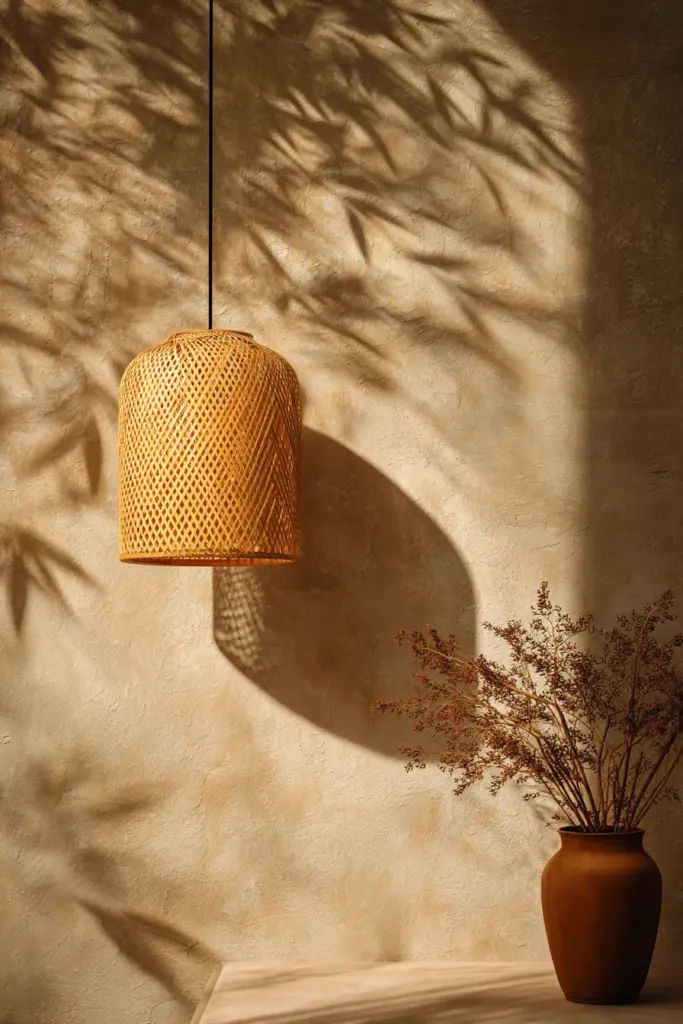
A small bamboo pendant hung low in a corner, a paper lantern on a low shelf, or warm LED strip lighting hidden behind a TV console all count as accent light. They are the details that make a room feel designed rather than decorated.
Candlelight — real or flameless — belongs here too. In wabi-sabi tradition, impermanence is beautiful. A candle flickering beside a ceramic bowl feels like philosophy made visible.
Best Japandi Lamps for Your Living Room
Choosing the right fixtures means thinking about form, material, and scale simultaneously. Here is a quick comparison of the most beloved Japandi lamp types to help you decide.
| Fixture Type | Best Material | Light Effect | Ideal Placement |
|---|---|---|---|
| Diffused Pendant | Washi paper, linen | Soft, even ambient glow | Center of room, above seating |
| Nordic Floor Lamp | Oak or bamboo base, linen shade | Warm directional task light | Beside reading chair or sofa corner |
| Zen Table Lamp | Ceramic, stone, or rattan | Intimate accent glow | Side tables, shelving |
| Bamboo Pendant | Natural bamboo strips | Dappled shadow patterns | Corners, dining nook, shelves |
| Wall Sconce | Brushed brass, matte black | Layered ambient warmth | Flanking artwork, hallway transitions |
When in doubt, choose fewer, better fixtures. One beautiful bamboo pendant speaks more clearly than five average ones.
Japandi Living Room Lighting for Small Spaces
Small spaces deserve the most thoughtful lighting — and fortunately, Japandi’s philosophy of less but better is perfectly suited to compact living rooms.
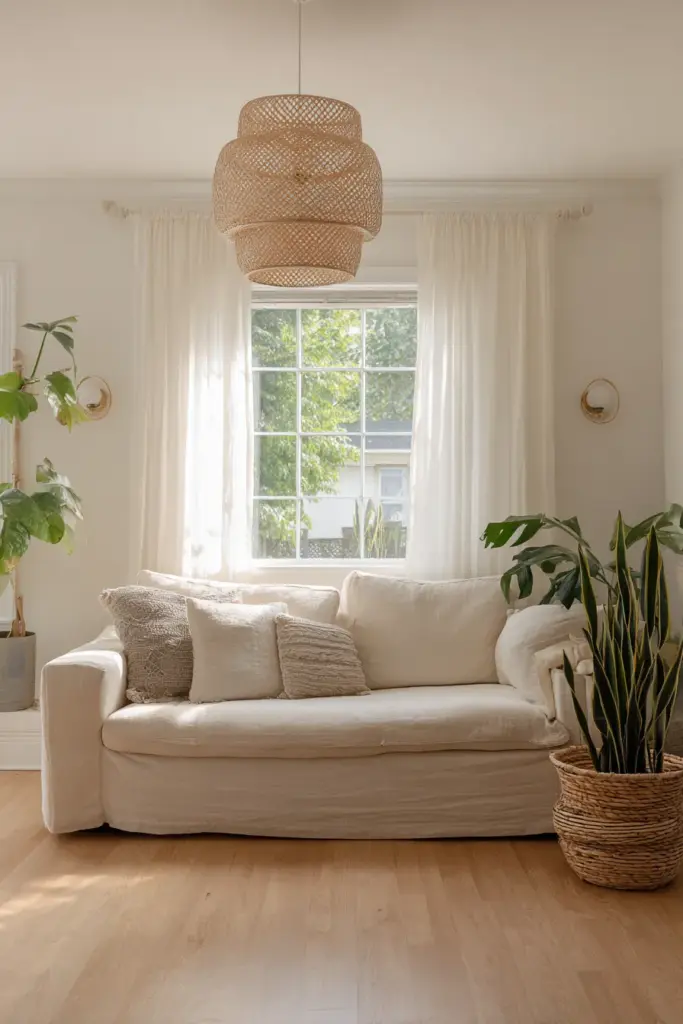
Use Wall Sconces to Free the Floor
Wall-mounted sconces eliminate the need for floor lamps, giving your room back its breathing room. Choose simple matte black or brushed brass sconces with fabric shades. Installed at eye level on either side of a sofa or artwork, they add warmth and architectural detail without taking a single square foot.
Let Natural Light Do More Work
Sheer linen curtains are a small-space Japandi essential. They filter afternoon light into something golden and diffuse — essentially a free ambient light source that changes beautifully throughout the day. Keep window treatments simple and pale: off-white, warm ivory, or undyed linen.
Choose Multifunctional Fixtures
A floor lamp with a built-in shelf gives you task lighting and display space in one. Look for designs in bamboo or pale oak with a fabric shade above and a small shelf below for books, a plant, or a ceramic object.
In Philippine homes with warm climates, rattan pendants from local palengke markets or Shopee can be beautifully functional — especially when paired with a smart warm-white bulb you can dim with your phone.
Smart Lighting in a Japandi Living Room
Here is something most Japandi guides overlook: smart lighting integration does not have to feel cold or technological. When done thoughtfully, it deepens the Japandi experience.
Philips Hue or Zigbee-compatible dimmers let you shift from bright afternoon light to warm 2200K evening glow with a single tap. Create scenes — morning ritual, evening reading, gathering — that shift your room’s mood the way seasons shift the light outside.
For those living in compact apartments, smart bulbs in existing fixtures mean no rewiring, no renovations. Just screw in, connect, and let your home breathe differently depending on the hour.
Pair smart lighting with your biophilic corner — that little cluster of low-maintenance plants near a window — and set your task light to 3000K to 4000K during the day to support plant growth without glare. At night, dim everything to 2700K and let the room settle.
Bulb Temperature Guide for Japandi Lighting
Choosing the right bulb color temperature is one of the most important decisions in Japandi lighting design. The wrong temperature can make a beautiful fixture feel sterile.
| Color Temperature | Feeling | Best Used For |
|---|---|---|
| 2200K | Candlelight, amber | Accent lamps, evening ambiance |
| 2700K | Warm white, golden | Main ambient and task lighting — the Japandi sweet spot |
| 3000K | Soft white | Reading lamps, kitchen-adjacent spaces |
| 3500K–4000K | Neutral white | Plant growth zones, home office corners |
| 5000K+ | Daylight, cool | Avoid in Japandi living rooms |
Always choose dimmable LED bulbs rated at 2700K for your primary fixtures. They are energy-efficient, long-lasting, and — crucially — they let you adjust the mood without changing a single piece of furniture.
Budget Japandi Lighting Ideas
Beautiful lighting does not require a designer budget. Some of the most soulful Japandi interiors have been assembled with patience, creativity, and an eye for honest materials.
- IKEA bamboo shades modded with rice paper inserts create beautiful washi-style diffusion for a fraction of the cost of specialty fixtures.
- Rattan pendants from Shopee or Lazada in the Philippines can be found for under ₱2,000 and pair perfectly with a warm-white smart bulb.
- Repurpose ceramic vessels as table lamp bases using an inexpensive lamp kit — the result is one-of-a-kind and deeply Japandi in spirit.
- LED fairy lights tucked behind a low shelf create beautiful indirect accent lighting without any wiring.
- Candles in simple ceramic holders cost almost nothing and deliver an atmosphere that no bulb fully replicates.
The spirit of wabi-sabi embraces imperfection and resourcefulness. Your lighting does not need to be expensive to be right.
Plant Synergy: Biophilic Lighting in Japandi Spaces
One of the most overlooked pleasures of Japandi living room lighting is its relationship with plants and living textures. Biophilic design — the practice of connecting indoor spaces with nature — is deeply aligned with both Japanese and Scandinavian philosophies.
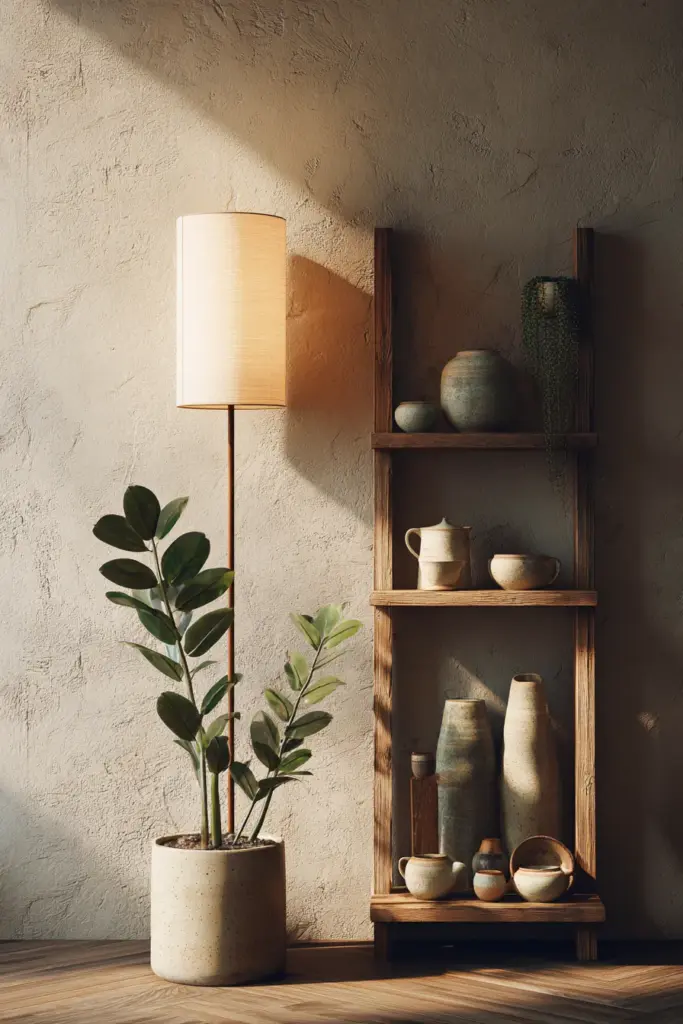
Position a snake plant or pothos near your task lamp, where it will catch the warm glow at 3000K to 4000K. The light supports growth without harsh exposure. The plant, in return, softens the lamp’s silhouette and adds that living, breathing quality no décor object can replicate.
Low-maintenance plants like ZZ plants, peace lilies, and bamboo palms thrive under warm artificial light and look extraordinary against a background of natural wood and linen — exactly the Japandi palette we love.
Sustainability and Energy Savings
Japandi’s philosophy of mindful consumption extends naturally to energy efficiency. Swapping incandescent bulbs for LED alternatives is not just economical — it is an alignment with the values the style embodies.
| Bulb Type | Average Lifespan | Energy Use (per hour) | Estimated Annual Savings |
|---|---|---|---|
| Incandescent (60W) | ~1,000 hours | 60W | — |
| LED Equivalent (9W) | ~15,000 hours | 9W | ~₱1,800/year (PH avg. rates) |
| Smart LED Dimmable | ~25,000 hours | 7–9W | ~₱2,200/year with dimming |
In humid climates like Calabarzon, LEDs also run cooler — reducing the ambient heat burden in small, warm rooms. Choose IP44-rated fixtures in areas near open windows or fans for added durability.
Japandi Lighting Checklist: Key Takeaways
- Layer three heights of light: ambient (pendant), task (floor/table lamp), accent (low glow sources)
- Use 2700K bulbs as your primary warm-white Japandi standard
- Choose natural materials: bamboo, washi paper, linen, rattan, raw wood
- Install dimmer switches on all main fixtures for mood control
- Keep fixtures simple — one beautiful pendant is worth more than five forgettable ones
- Add wall sconces in small spaces to free up floor area
- Use sheer linen curtains to amplify natural light during the day
- Consider smart bulbs for app-controlled temperature and dimming shifts
- Place plants near task lamps at 3000K–4000K for biophilic synergy
- Switch to LED for energy savings, longevity, and cooler operation
A Closing Thought
There is a Japanese concept called komorebi — the interplay of light and leaves, the way sunlight filters through a canopy and lands softly, in pieces, on the ground below. That is the feeling Japandi lighting chases. Not flood, not flash. Filter. Warmth. Intention.
When you stand in your living room at dusk, the pendant casting its amber pool, the floor lamp holding a quiet corner, a single candle breathing beside a plant — that is not just a well-lit room. That is a room that knows how to rest.
At ERYLIN, we help you find that feeling, one thoughtful detail at a time. Start with one layer of light. Let the rest follow.
Frequently Asked Questions
What is Japandi lighting style?
Japandi lighting combines Japanese minimalism with Scandinavian warmth through natural materials — bamboo, washi paper, linen — and warm-white bulbs at 2700K to 3000K. It prioritizes diffused, layered light that creates calm without clutter.
How do I layer lighting in a Japandi living room?
Start with a diffused pendant for ambient light, add a linen floor lamp or table lamp for task lighting, and finish with low accent sources — candles, paper lanterns, or hidden LED strips — for atmosphere. Aim for three distinct heights of light throughout the room.
What are the best Japandi lamps for a living room?
Look for zen table lamps with ceramic or rattan bases, Nordic-style floor lamps with fabric shades, and bamboo or washi paper pendants. Pair all of them with dimmable 2700K LED bulbs for the truest Japandi warmth.
What lighting works best for small Japandi living rooms?
Wall sconces free up floor space, sheer linen curtains amplify natural light, and multifunctional floor lamps with shelves serve double duty. In compact Philippine apartments, smart warm-white bulbs in rattan pendants are a practical and beautiful solution.
How do I maintain Japandi lighting fixtures?
Dust natural-material shades — washi paper, linen, bamboo — gently with a dry cloth or soft brush. Avoid moisture near paper fixtures. Replace LED bulbs only when needed (every 15,000–25,000 hours). Clean ceramic or wood bases with a slightly damp cloth and dry immediately.