
Table of Contents
There is a particular kind of stillness that lives in the most beautiful rooms. Not emptiness — presence. The kind you feel when you walk in and exhale without knowing why.
That is the gift of Japandi — a quiet marriage between Japanese minimalism and Scandinavian hygge. It is not a trend. It is a way of living that says: only what matters, beautifully placed.
If your living room feels cluttered, loud, or disconnected from the calm you crave, this guide is your roadmap. We will walk through every layer — walls, floors, furniture, light, and even daily rituals — so you can transform your living room into a Japandi style sanctuary that truly feels like you.
And if you live in a tropical home in the Philippines? We have woven in local material alternatives and climate-smart ideas so your transformation is both beautiful and genuinely livable.
Why Transform Your Living Room into Japandi Style?
Most of us do not realize how much our environment shapes our mood. A chaotic living room quietly raises cortisol. A serene one lowers it.
The Japandi living room transformation is not about spending more — it is about choosing better. Fewer pieces, stronger intention, warmer materials.
Before the transformation: a TV-dominated room, mismatched furniture, surfaces crowded with things you barely notice anymore.
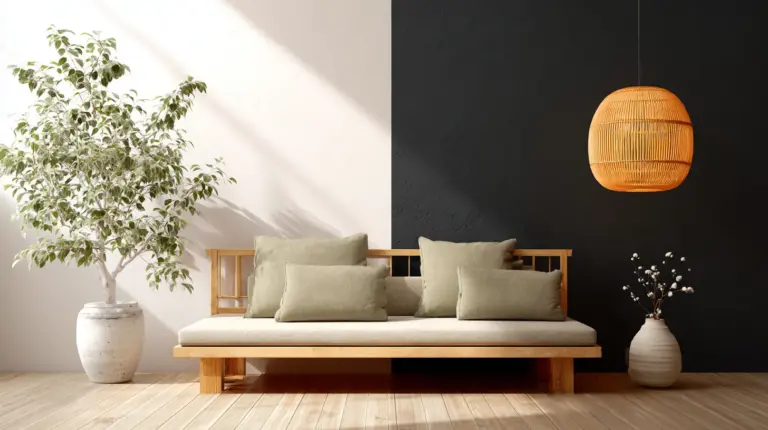
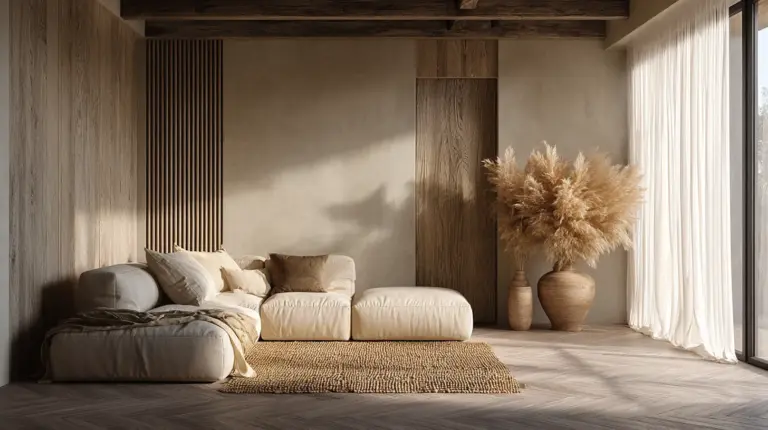
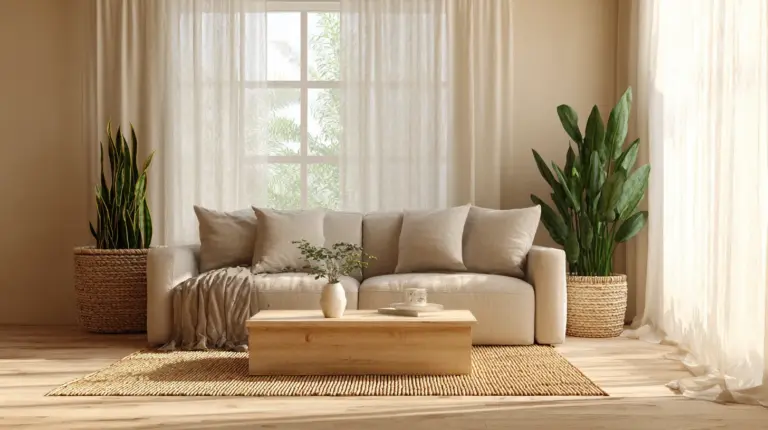
After: a reading nook in the corner, one statement plant by the window, warm wood tones on every surface, and a sofa that invites you to slow down.
That shift — emotional, not just visual — is what Japandi does best.
What Is a Japandi Living Room Style?
Japandi blends two deeply rooted design philosophies. Japanese minimalism contributes wabi-sabi — the beauty of imperfect, natural things. Scandinavian design brings hygge — warmth, comfort, and the art of cozy living.
Together, they create a living room that is:
- Neutral and grounded — earthy tones, muted greens, warm whites, soft charcoal
- Natural in material — linen, rattan, light wood, clay, stone
- Low and intentional — furniture sits close to the floor, nothing is decorative without purpose
- Soft in light — layered, warm, never harsh
A minimalist Japandi living room is not cold. It is edited. Every element earns its place.
How Do I Transform My Living Room into Japandi Style? A Step-by-Step Roadmap
Step 1 — Declutter First, Decorate Second
Begin with a Kondo-style edit of your living room. Remove every object and ask: Do I use this? Does it bring calm or chaos?
The Japandi rule is simple: only items you touch or see daily stay in the living room. Everything else finds a closed drawer, a basket, or a new home.
This single step will do more for your living room transformation than any furniture purchase.
Step 2 — Reset the Walls
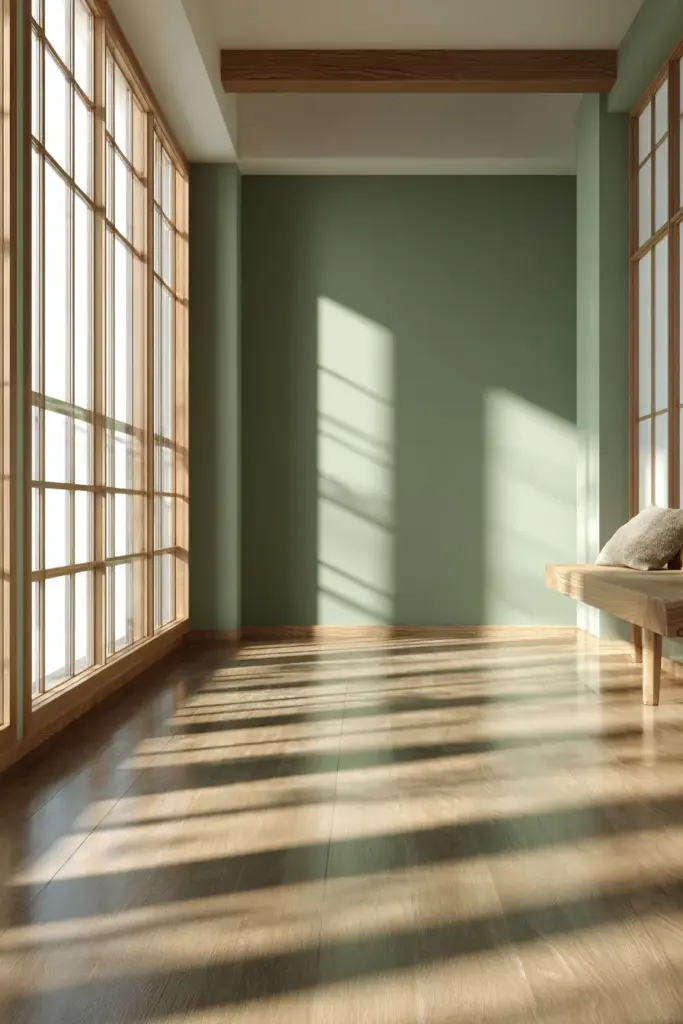
Paint is your fastest, most affordable transformation tool. Japandi walls favor:
- Warm white (creamy, not stark) — brightens small rooms without feeling clinical
- Soft sage green — earthy, calming, pairs beautifully with wood
- Warm greige or taupe — grounded and sophisticated
Avoid cool grays and bright whites — they work against the warmth Japandi requires. In Philippine homes where natural light is strong, a warm white like Navajo White or a muted clay tone reads beautifully without washing out.
Step 3 — Address the Floor
Light wood flooring or wood-look vinyl planks are the Japandi standard. In a Philippine condo or townhouse, consider:
- Bulacan-cut plywood panels sealed with matte varnish — warm, affordable, local
- Engineered wood in ash or light oak tones
- Vinyl plank flooring in warm birch or natural oak — humidity-resistant and budget-friendly
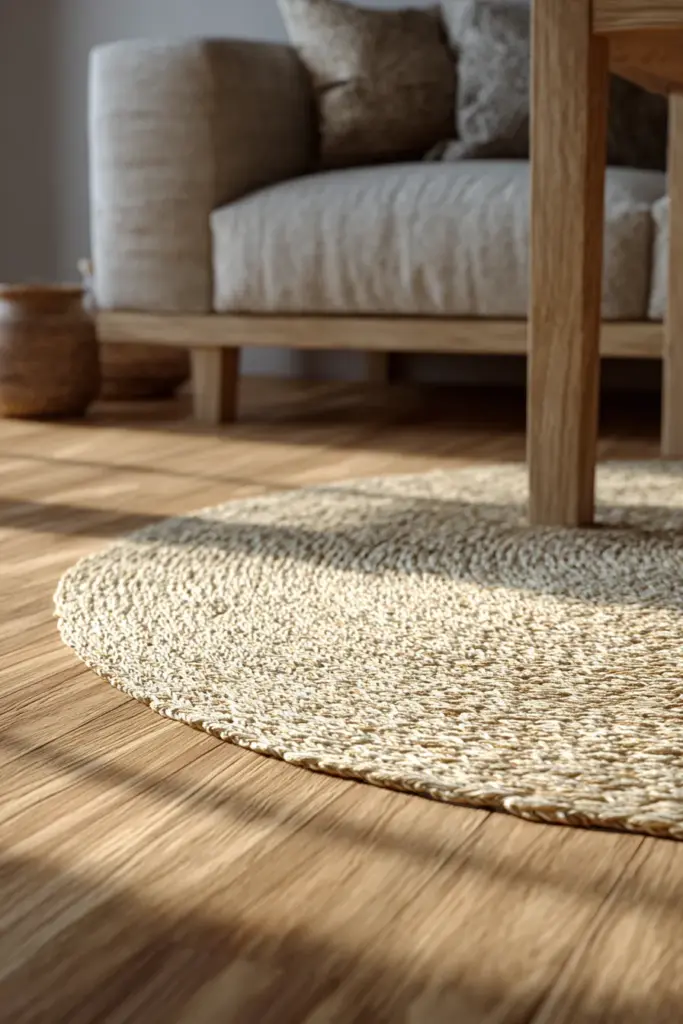
Layer a natural fiber rug — jute, abaca, or a flat-woven cotton blend — to define the seating zone and add texture underfoot.
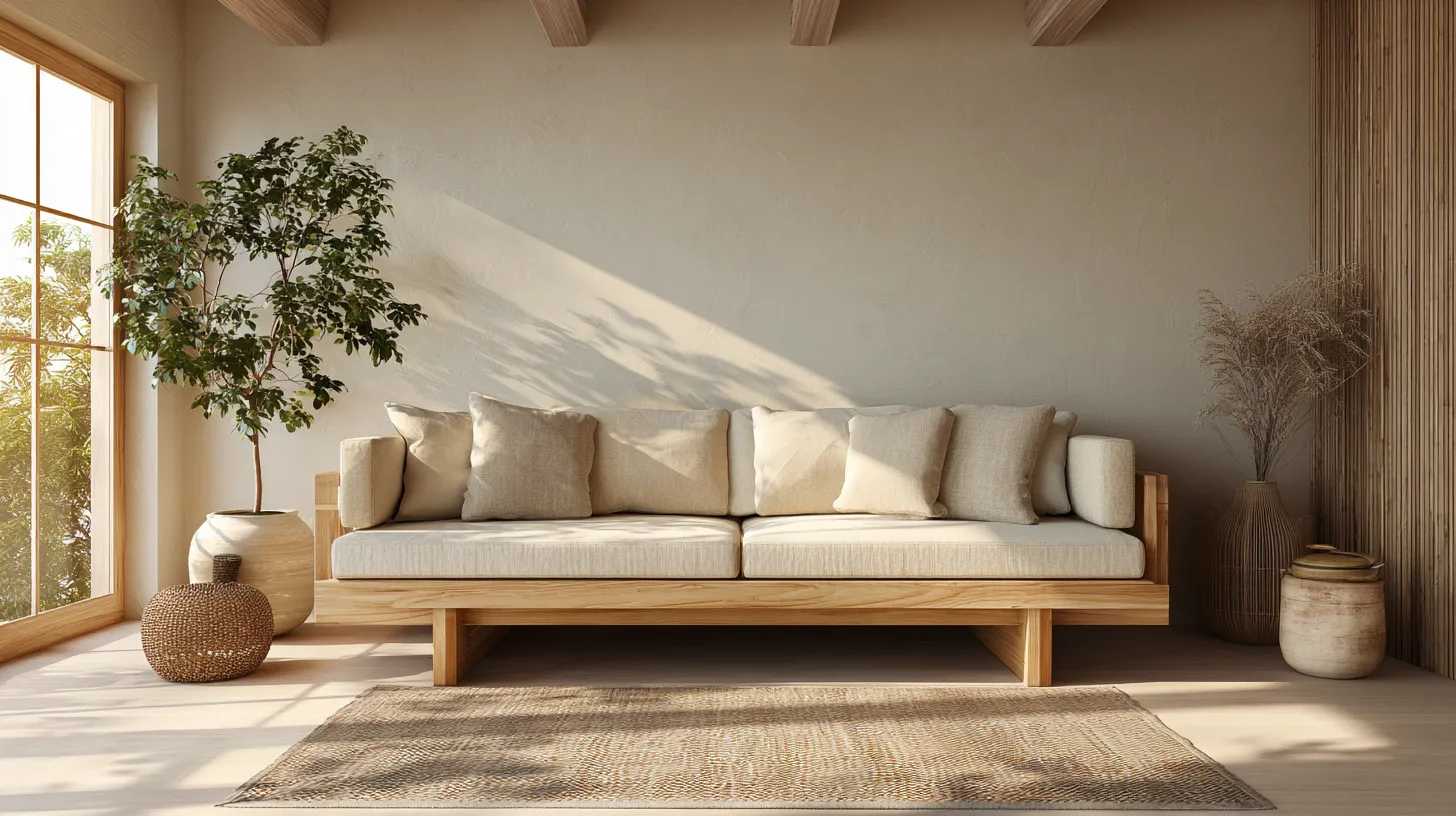
Step 4 — Choose a Low-Profile Japandi Sofa
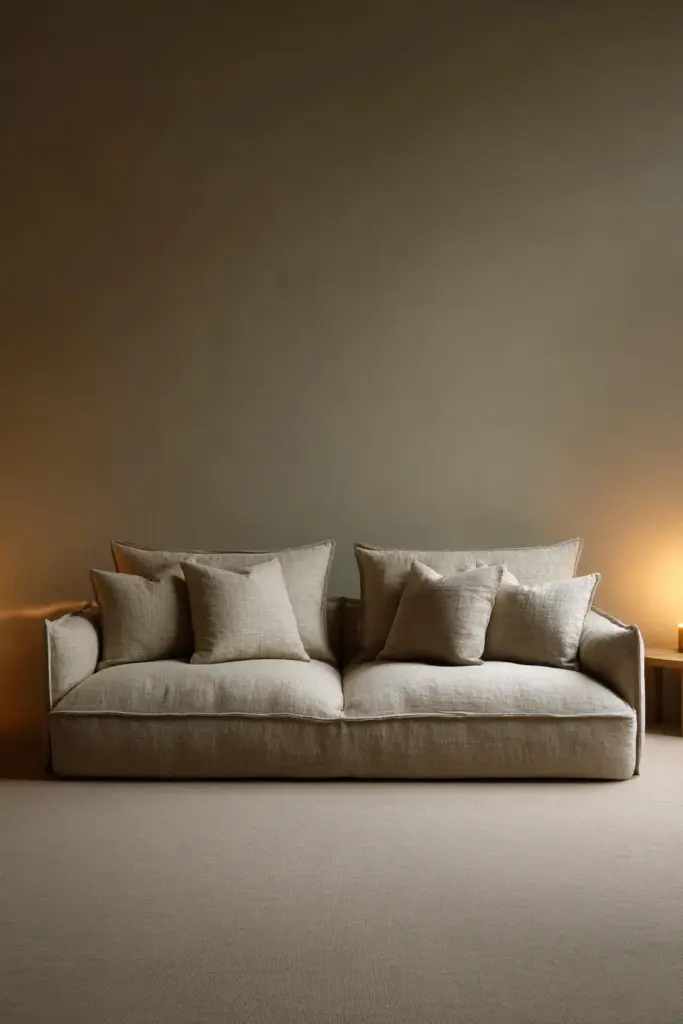
The sofa anchors your Japandi living room layout. Look for:
- Low legs or legless silhouette — the closer to the floor, the more grounded the room feels
- Neutral upholstery — oatmeal, warm ivory, soft charcoal, or muted terracotta
- Linen or cotton-blend fabric — natural, breathable, and beautiful in humidity
For small living rooms (such as a 4m x 5m condo unit), a two-seater sofa paired with a floor cushion or low rattan chair often works better than an L-shaped sectional. The breathing room matters.
Avoid leather in tropical spaces — it traps heat and contradicts Japandi’s tactile warmth.
Step 5 — Build a Layered Lighting Plan
Japandi living rooms are never lit by a single overhead bulb. Layered lighting is essential.
| Lighting Layer | Purpose | Japandi-Friendly Option |
|---|---|---|
| Ambient | General, soft illumination | Recessed warm LEDs, dimmable ceiling fixture |
| Task | Focused light for reading | Wooden arc floor lamp, desk lamp |
| Accent | Mood and texture | LED strip behind media unit, paper lantern, candle |
In Philippine homes, consider LED strips on warm 2700K–3000K color temperature — they are energy-efficient and power-outage-friendly with battery backup options. A Japanese washi paper pendant or rattan lamp shade adds Japandi character to any ceiling fixture.
Avoid cool-white (5000K+) bulbs. They flatten the warmth you have worked to build.
Step 6 — Select Furniture with Intention
Japandi living room furniture is functional, multi-use, and never excessive. For a sample Philippine living room (4m × 5m):
| Furniture Piece | Japandi Specification | Approx. Local Cost |
|---|---|---|
| Low-profile sofa | 2-seater linen, oatmeal tone | ₱8,000–₱18,000 |
| Coffee table | Solid mango or acacia wood | ₱3,500–₱9,000 |
| Media unit / TV wall | Low floating shelf, warm wood | ₱5,000–₱14,000 |
| Rattan accent chair | Natural rattan, cushion seat | ₱2,500–₱6,000 |
| Bookshelf | Open wood shelf, minimal items | ₱3,000–₱8,000 |
| Natural fiber rug | Jute or abaca weave | ₱1,800–₱5,000 |
Source locally from Divisoria for rattan and fabric, Wilcon Depot or AllHome for engineered wood, and small artisan shops on Carousell or Facebook Marketplace for handcrafted pieces.
Step 7 — Layer Textures and Wabi-Sabi Accessories
This is where the room breathes. Japandi accessories are handmade, imperfect, natural.
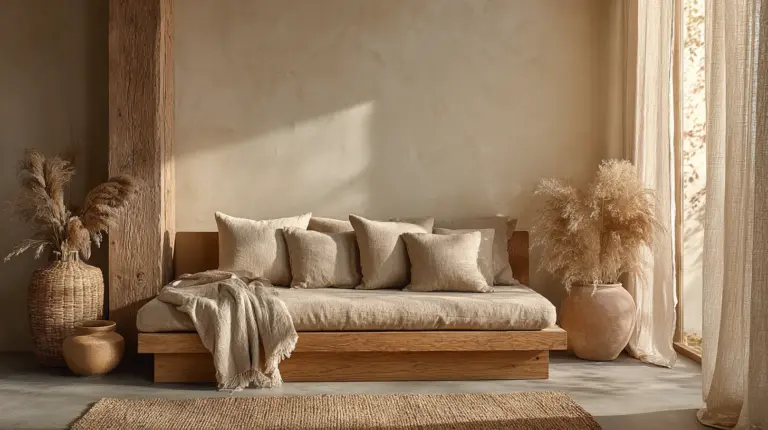
- A ceramic vase with a single dried stem or pampas grass
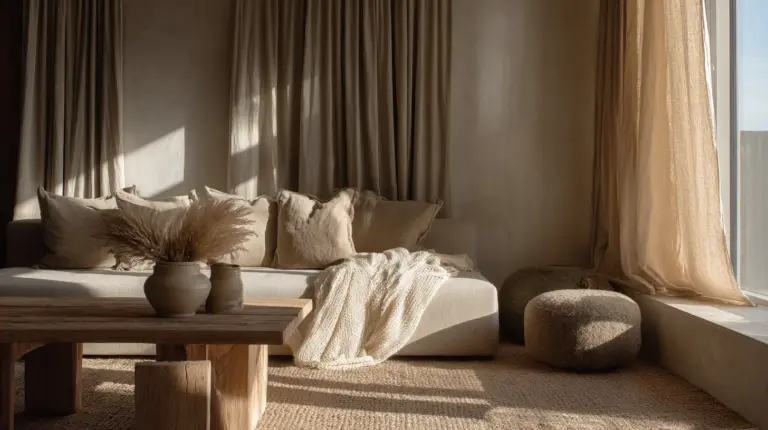
- A linen throw draped over the arm of your sofa
- Woven baskets for storage that is also decoration
- A wooden tray on the coffee table, holding only what you need: a candle, a small book, a cup
The golden rule: No more than 7 decorative objects in your entire living room. Each one must earn its place.
How to Create a Japandi TV Wall and Media Unit
The TV wall is often the most visually heavy element in a living room. In Japandi style, it becomes a calm focal point.
Mount your TV on a low floating shelf or media unit in warm wood tones — mango, acacia, or ash-look laminate. Frame it with:
- Open shelves holding only 2–3 curated objects (a small plant, a candle, a book)
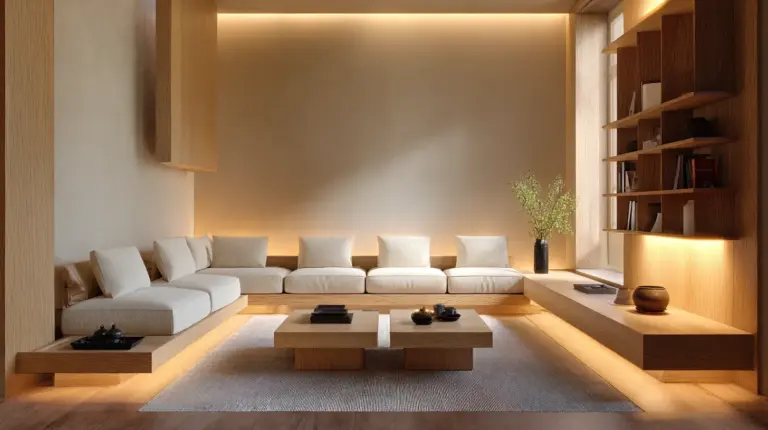
- Soft indirect light from an LED strip behind the unit in warm white
- No cables visible — route them through the wall or use a cable management box
Avoid gallery walls, colorful frames, or shelves crowded with decor. The Japandi TV wall should feel like a pause, not a statement.
What Plants Go in a Japandi Living Room? (Philippines-Friendly Guide)
Plants bring life into a Japandi space without cluttering it. The rule is: one to three statement plants maximum. Quality over quantity, always.
| Plant | Why It’s Japandi | PH Climate Notes |
|---|---|---|
| ZZ Plant | Deep green, sculptural, architectural | Thrives indoors, tolerates low humidity |
| Snake Plant | Upright form, graphic silhouette | Hardy, minimal watering needed |
| Peace Lily | Soft white bloom, lush leaves | Loves Philippine humidity |
| Pothos | Trailing, organic, effortless | Fast-growing, tolerates shade |
| Money Tree | Braided trunk, bold statement | Popular in PH, easy to find locally |
Place your statement plant in a matte ceramic or terracotta pot — no plastic, no shiny finishes. A wooden or rattan plant stand elevates it further. Let the soil breathe visibly; that imperfection is pure wabi-sabi.
How to Make a Japandi Living Room Feel Cozy (Not Cold)
Minimalism done wrong feels sterile. Japandi done right feels like a warm embrace.
The secret is sensory layering — engaging touch, sight, and even scent.
- Touch: Rough linen, smooth ceramic, grainy wood, soft wool
- Sight: Warm-toned light, natural shadows, organic shapes
- Scent: A reed diffuser with cedarwood, sandalwood, or hinoki cypress oil
Add a reading nook in a corner — a low chair, a floor lamp, a small side table, and a stack of two or three books. That corner will become the most-loved spot in your home.
In Philippine evenings, open the windows and let the breeze move through sheer linen curtains. The indoor-outdoor blur is deeply Japandi, and your tropical climate makes it effortless.
Budget-Friendly Japandi Living Room Transformation (PH Context)
You do not need imported Scandinavian furniture to achieve this look. The Philippines has everything you need.
- Bamboo and abaca are Japandi-grade materials — sustainable, beautiful, and locally abundant
- Local rattan from Cebu or Pampanga rivals anything from a design store
- Upcycled wood pallets sanded smooth and stained in a warm tone make excellent coffee tables or TV units
- DIY planters from unpainted clay pots, sealed and styled, cost under ₱150 each
- Secondhand furniture from online marketplaces, refinished in matte paint, becomes Japandi instantly
The transformation does not require a full budget overhaul. Start with decluttering (free), repainting one wall (under ₱1,000), and adding one quality natural element — a jute rug, a ceramic vase, a linen cushion.
Japandi Living Room Checklist: Your Transformation at a Glance
Use this as your room-by-room guide:
Walls & Floors
- Paint in warm white, sage, or greige
- Install light wood flooring or warm-toned vinyl plank
- Lay a natural fiber rug (jute, abaca, or cotton weave)
Furniture
- Replace or reupholster sofa in neutral linen or cotton
- Choose a solid wood coffee table with organic grain
- Use a low floating shelf for the TV wall
- Add one rattan or wooden accent chair
Lighting
- Install warm-white LED bulbs (2700K–3000K)
- Add a floor lamp for the reading nook
- Place LED strip behind TV unit for soft accent light
Accessories
- Limit to 7 decorative objects total
- Include one ceramic vase, one linen throw, one woven basket
- Add 1–3 statement plants in matte pots
Atmosphere
- Use a cedarwood or sandalwood diffuser
- Hang sheer linen curtains for soft, diffused light
- Create a dedicated reading nook corner
How to Keep Your Living Room Japandi Month After Month
The hardest part of any transformation is maintenance. Japandi is a living practice, not a one-time makeover.
Try this monthly Japandi reset:
- Declutter 1–2 items every month — donate, repurpose, or release
- Rotate only 3–5 decor pieces seasonally so the room feels fresh without feeling cluttered
- Clear every surface once a week — wipe clean, replace only what belongs
- Tend to your plants as a mindful ritual, not a chore
A Japandi morning routine helps too: a cup of tea at the coffee table, five minutes of quiet before the day begins. Your living room becomes not just beautiful, but used with intention.
Conclusion: Your Calm Corner Awaits
Transforming your living room into a Japandi style sanctuary is an act of self-care. It is choosing calm over chaos, beauty over busyness, meaning over more.
You do not need a bigger space, a bigger budget, or a bigger vision. You need a willingness to slow down — and the courage to let go of what no longer serves the life you want to live.
Start with one wall. One rug. One plant. One breath.
ERYLIN is here to guide every step of that transformation — warmly, practically, and with deep love for the spaces we call home.
Frequently Asked Questions
What is the difference between Japandi and minimalist Scandinavian design?
Both styles value simplicity and natural materials, but Japandi adds the Japanese philosophy of wabi-sabi — embracing imperfection and organic texture. Scandinavian minimalism tends to be brighter and crisper, while Japandi leans warmer, darker in accents, and more grounded in handmade elements.
How do I transform a small living room into Japandi style?
Choose a low-profile sofa to preserve visual space, use a single large natural fiber rug to define the zone, and keep surfaces completely clear. Mirrors in matte wood frames can open a small room without disrupting the calm. Limit plants to one statement piece, and use vertical shelving rather than wide furniture.
What colors work best in a Japandi living room?
Warm whites, creamy off-whites, soft sage green, muted taupe, warm greige, and deep charcoal as an accent. Avoid cool grays, stark whites, and bright or saturated colors. Wood tones — light ash, honey oak, warm walnut — act as the room’s natural color anchor.
Can I achieve a Japandi living room on a budget in the Philippines?
Absolutely. Local rattan, abaca, bamboo, and mango wood are Japandi-perfect and more affordable than imported alternatives. Begin with decluttering, a fresh coat of warm-white paint, and one or two natural accessories. Secondhand furniture refinished in matte tones transforms beautifully into Japandi style.
How do I layer lighting in a Japandi living room?
Use three layers: ambient (soft, warm overhead or recessed light), task (a floor lamp or table lamp near a reading chair), and accent (LED strip behind the TV unit or a candle cluster on the coffee table). All bulbs should be warm white — 2700K to 3000K — and dimmable where possible for full atmosphere control.