
Table of Contents
There is something quietly radical about a room that does more with less.
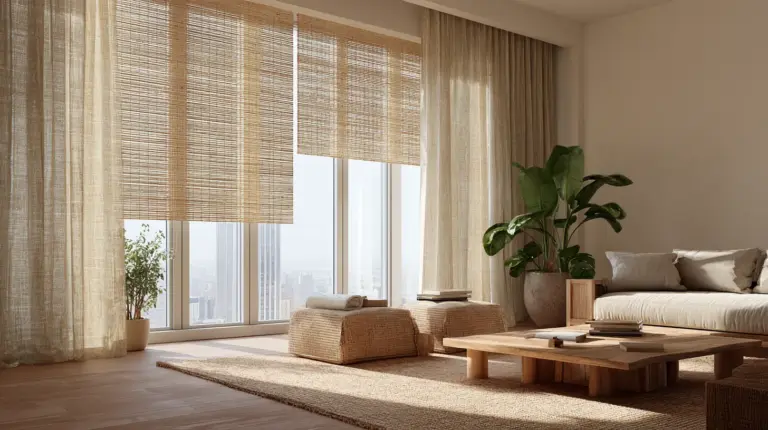
The Japandi living room has always been a study in restraint — warm wood grains, soft linen textures, the hush of natural light at golden hour. But in 2025 and beyond, this beloved aesthetic is evolving. Technology is finding its way in, not loudly, but gently — tucked behind shoji screens, humming softly inside bamboo-wrapped fixtures, responding to your voice before you finish the thought.
This is not a story about gadgets disrupting calm. It is a story about technology serving the soul of your space — invisible when you want it, present when you need it, always in harmony with the warmth around it.
Whether you are designing your first Japandi-inspired living room or refreshing a space you already love, this guide will help you integrate smart home technology in a way that feels entirely, beautifully intentional.
What Is Japandi Style — and Why Does It Welcome Smart Tech?
Japandi is the design marriage of Japanese wabi-sabi — the art of finding beauty in imperfection — and Scandinavian hygge — the pursuit of cozy, meaningful comfort. Together, they create living rooms that feel both refined and deeply livable.
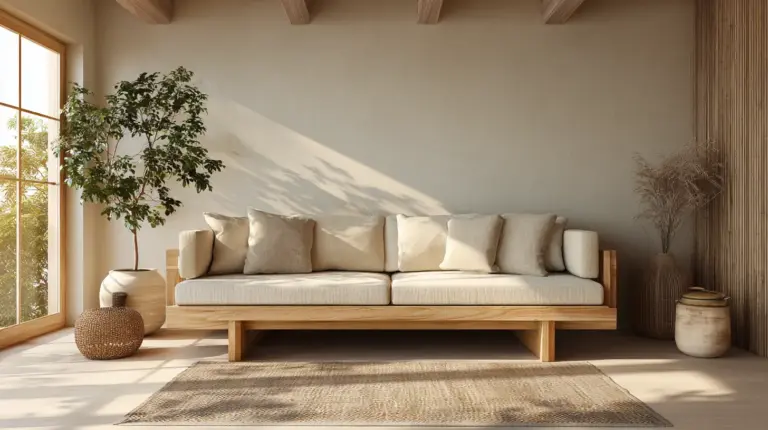
Natural materials anchor the palette: pale ash wood, raw linen, matte stone, handwoven rattan. Colors stay close to the earth — warm whites, clay, sage, charcoal. Every object earns its place.
This philosophy of intentionality is exactly why smart technology fits Japandi so naturally. When tech is hidden, multifunctional, and energy-conscious, it aligns perfectly with the aesthetic’s core values: nothing wasted, nothing excessive, everything purposeful.
Smart Lighting for Japandi Living Rooms
The Magic of Dimmable, Warm-Toned LEDs
Lighting is the soul of a Japandi room. It determines whether a space feels like a retreat or just a room.
The right smart lighting setup uses dimmable LED bulbs in warm white tones (2200K–2700K) — the color of candlelight, of late afternoon sun through rice paper. Brands like Philips Hue offer bulbs that shift from cool daylight for focused mornings to amber warmth for evening wind-downs, all controlled from your phone or by voice.
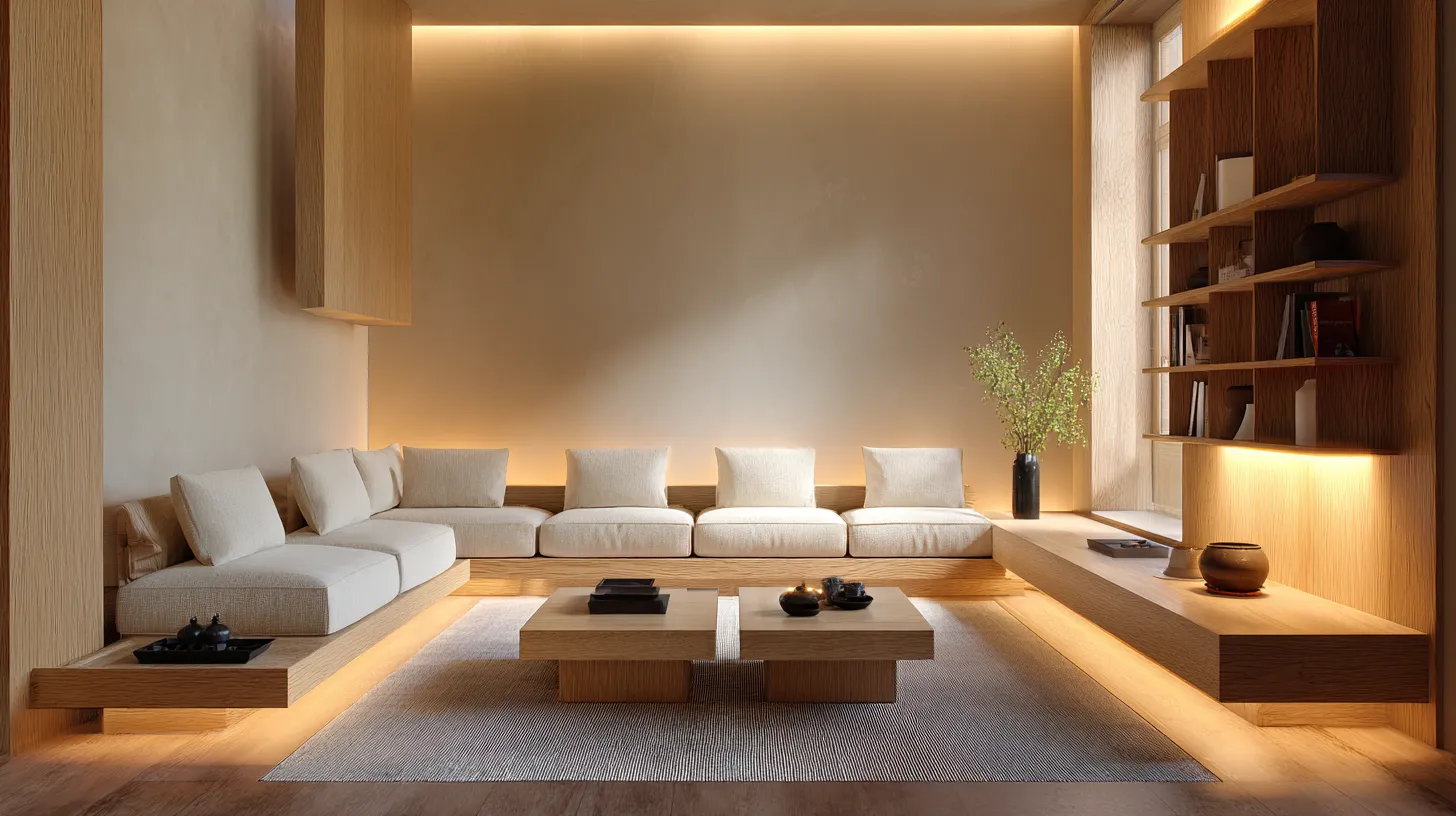
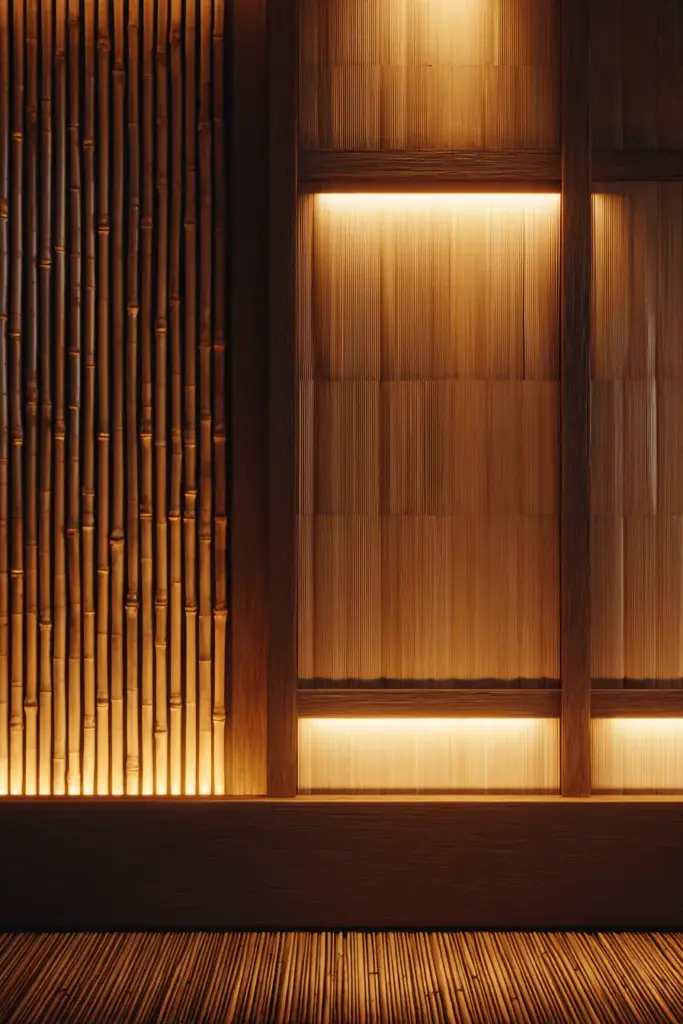
Concealing these lights is just as important as choosing them. Try tucking Philips Hue gradient strips inside bamboo channels along ceiling edges or beneath low console tables. The effect is a soft, sourceless glow that feels like the room itself is breathing.
Shoji Screens as Smart Light Diffusers
Shoji screens were designed to soften light long before electricity existed.
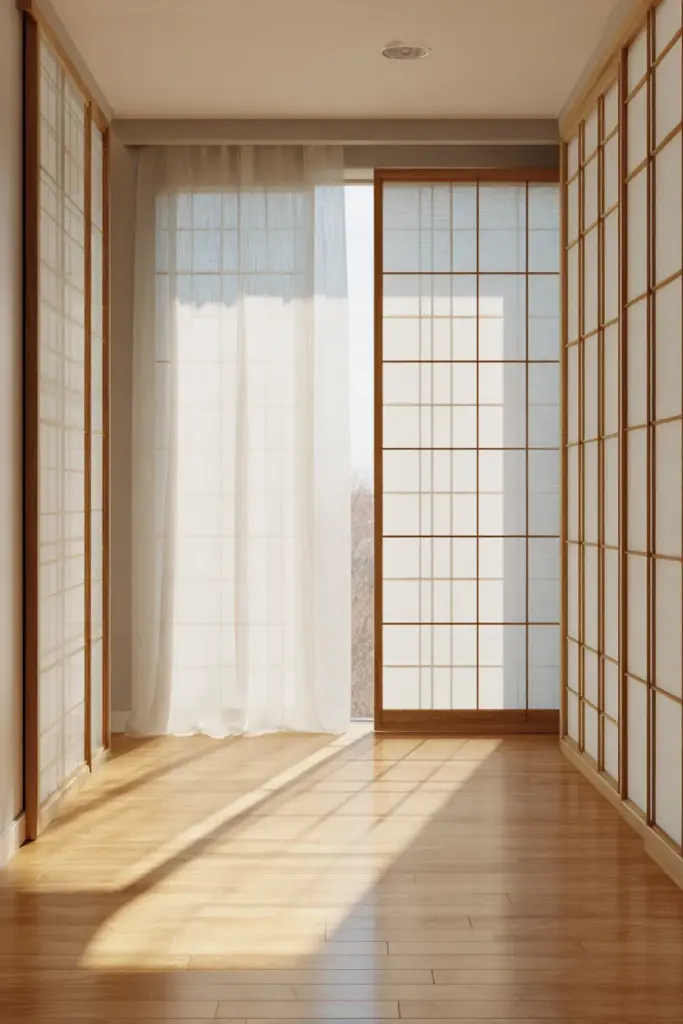
In a modern Japandi living room, shoji panels do double duty. Pair them with SwitchBot Curtain motorized systems — available on Lazada and Shopee — and you can program your screens to open at sunrise, filter midday glare, and close at dusk with a single command. The hardware disappears behind the frame. Only the ritual remains.
For those in the Philippines, particularly in Calabarzon where humidity runs high, look for humidity-resistant smart devices rated for tropical climates. Xiaomi’s ecosystem, widely available locally, offers reliable, affordable options that handle moisture without complaint.
AI-Powered Lighting and Biophilic Sensors
The newest wave of smart lighting goes further than schedules and scenes. Matter-compatible smart hubs — now supported across Apple HomeKit, Google Home, and Samsung SmartThings — allow your lighting, climate, and even your plant sensors to communicate seamlessly.
Biophilic sensors can detect the moisture needs of your indoor plants and signal your smart lights to shift spectrum, supporting both your pothos and your mood simultaneously. It is the kind of quiet intelligence that feels less like technology and more like a very attentive home.
Smart Climate Control: Invisible Comfort
Why a Smart Thermostat Belongs in a Japandi Space
Comfort should feel effortless — and in a well-designed Japandi room, it does.
A smart thermostat like the Google Nest or the Xiaomi Mi Smart Thermostat maintains the precise ambient temperature that makes a room feel like a sigh of relief. Studies suggest smart thermostats can reduce energy bills by up to 20% — a figure that aligns beautifully with Japandi’s sustainability ethos.
Mount it flush against a plastered wall in the same matte finish as your trim. It disappears. The comfort does not.
Air Quality and Humidity in Tropical Climates
For homes in the Philippines, humidity is not just a comfort issue — it is a preservation issue. High moisture can warp wood furniture, encourage mold, and make your living room feel heavy rather than serene.
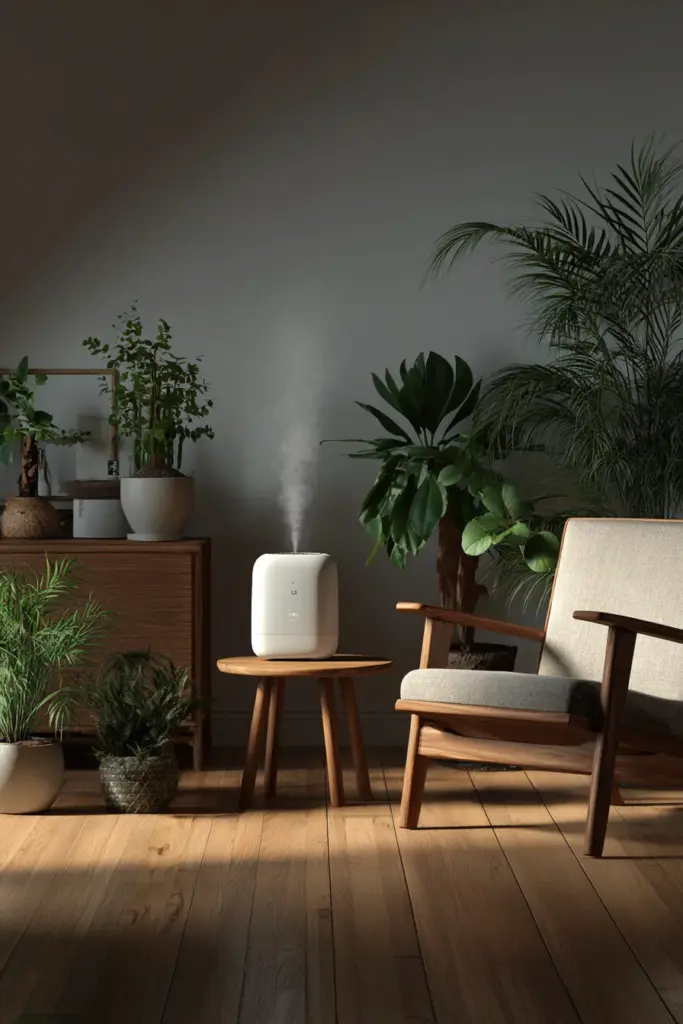
A smart air purifier with humidity monitoring — Xiaomi’s lineup is excellent and widely available — keeps your air clean, your wood safe, and your Japandi pieces ageing gracefully. Set it to run quietly on a schedule. You will never think about it. You will only feel the difference.
Hidden Technology: The Japandi Way
Concealment as a Design Principle
In Japandi design, what you choose not to show is as important as what you display.
The cardinal rule of integrating technology into a Japandi living room is this: if you can see it, hide it. Cords run inside furniture legs or beneath tatami mats. Speakers are built into shelving or disguised as sculptural objects. Charging stations live inside handcrafted wooden boxes with a discreet cutout.
A television, when present, might be mounted flush behind a sliding panel of natural oak. When the panel closes, the room returns to its quiet, analog self.
Multifunctional Furniture with Built-In Tech
The Japandi approach to furniture is inherently practical — a low wooden bench that opens for storage, a coffee table with a clean profile that holds a charging pad beneath its surface.
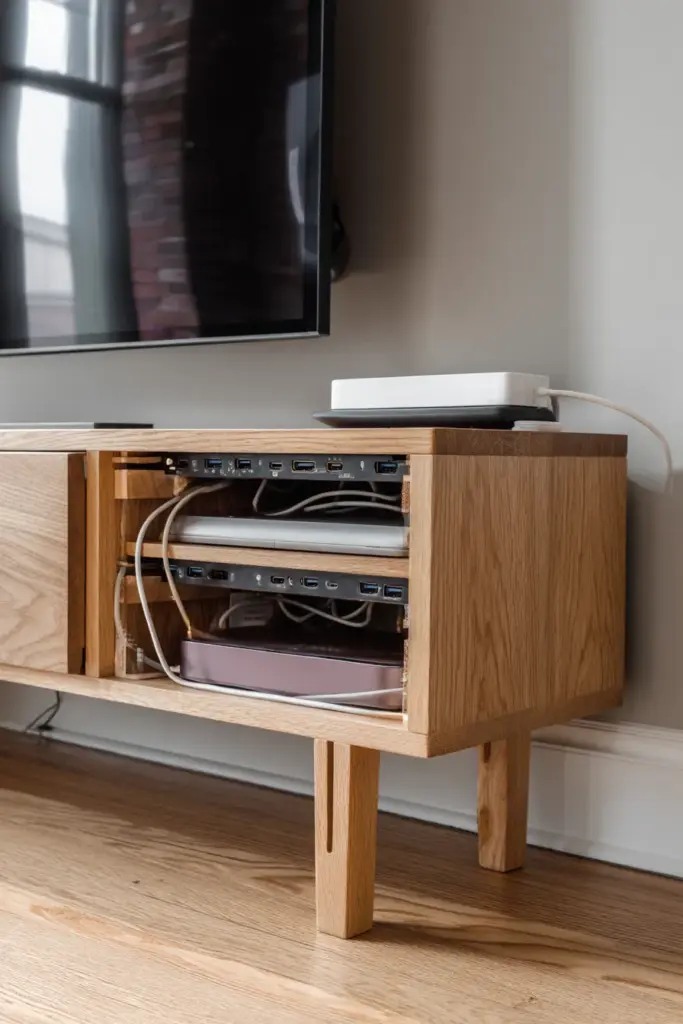
Look for pieces that marry craft and function: a solid oak media console with integrated cable management, or a handwoven rattan side table with a Qi wireless charging surface built into the top. These exist, and they are worth the search. ERYLIN’s curation philosophy is always to find pieces where beauty and utility cannot be separated.
Voice Assistants in a Quiet Space
Choosing the Right Voice Control Setup
A voice assistant in a Japandi living room should feel like a whisper, not a notification.
Amazon Echo (in Charcoal or Sandstone) or the Apple HomePod mini blend into neutral palettes without demanding attention. Place them on a shelf beside a small ceramic vase or a stack of design books. They become objects among objects — present, but not performative.
Set your assistant to control lighting scenes, morning routines, music (soft instrumental, always), and climate — so your living room responds to you with the same quiet grace you bring to it.
Voice Control for Accessibility and Flow
Beyond aesthetics, voice control has genuine daily-life value: adjusting lighting without leaving your reading nook, dimming the room when a child falls asleep, playing rain sounds during an afternoon rest. Technology, at its best, removes friction from the moments that matter most.
Budget-Friendly Japandi Tech Integrations (Under ₱10,000)
You do not need a full renovation budget to bring smart technology into your Japandi living room. Here are some affordable starting points available locally:
| Device | Approximate Cost (PH) | Where to Buy | Japandi Use |
|---|---|---|---|
| Philips Hue White Ambiance Starter Kit | ₱3,500–₱5,000 | Shopee, official stores | Warm dimmable lighting |
| SwitchBot Curtain (Rod type) | ₱2,500–₱3,500 | Lazada | Automated shoji/curtains |
| Xiaomi Smart Plug | ₱500–₱800 | Lazada, Shopee | Energy monitoring |
| Xiaomi Mi Smart Air Purifier | ₱4,000–₱6,500 | Lazada | Humidity + air quality |
| Amazon Echo Dot (4th Gen) | ₱2,000–₱3,000 | Lazada | Voice control hub |
Tip: Start with lighting. It is the single highest-impact change you can make, and smart bulbs require no rewiring.
Sustainability and Smart Technology: A Natural Pairing
Energy Monitoring as a Mindful Practice
Japandi is not just a visual aesthetic — it is an ethical one.
Smart plugs with energy monitoring let you see exactly how much each device consumes. Over time, this awareness becomes a kind of mindfulness practice — you begin to notice patterns, reduce waste, and appreciate what you truly need. Pair this with solar-powered motion lights along entryways or balconies, and your home begins to give back as much as it takes.
Choosing Eco-Smart Devices
When selecting smart home technology for a Japandi space, prioritize brands with transparent sustainability commitments. Look for devices with long product lifespans, recyclable packaging, and low standby power consumption. A beautiful room and a lighter environmental footprint are not competing goals — in Japandi design, they are the same goal.
Maintenance Tips for Smart Tech in a Japandi Home
- Clean hidden LED strips gently with a dry microfiber cloth — never wet wipes, which can loosen adhesive and cause moisture damage
- Dust smart speakers monthly, especially in plant-filled rooms where fine particles settle quickly
- Restart voice assistants seasonally to clear cached routines and update firmware — humid climates can occasionally cause connectivity drift
- Check bamboo channel adhesive every six months if you have LED strips installed; reapply with heat-resistant tape as needed
- Store charging cables in a small wooden box or linen pouch to prevent visible clutter between uses
Key Takeaways: Japandi Living Room Technology at a Glance
- Hide technology first — concealment is the foundation of Japandi tech integration
- Choose warm-toned, dimmable lighting and layer it for depth and mood
- Automate what you repeat — curtains, morning routines, climate settings
- Use Matter-compatible hubs for seamless cross-brand control
- Shop locally — Xiaomi, SwitchBot, and Philips Hue are accessible and humidity-appropriate for Philippine homes
- Start small and build intentionally — one smart device done well is better than five done haphazardly
- Let sustainability guide your choices — energy efficiency and Japandi values are deeply aligned
Conclusion
A Japandi living room with thoughtful technology is not a contradiction. It is an evolution.
The rooms we love most are the ones that understand us — that dim when we are tired, warm when we are cold, that seem to breathe at the same pace we do. This is what smart technology, when treated with the same care and intentionality as a handthrown ceramic or a piece of solid oak furniture, can offer.
You deserve a living room that is both beautiful and alive. One where the warmth you feel is not just from the materials, but from a space that has been designed — down to the smallest, most invisible detail — to hold you well.
This is the ERYLIN way: calm, considered, and quietly extraordinary.
Frequently Asked Questions
What smart technology fits Japandi living rooms?
The best smart tech for Japandi spaces is anything that can be concealed or blended into natural materials — dimmable LED lighting, smart thermostats, automated curtains, and discreet voice assistants in neutral tones. The rule of thumb: if you can see the technology more than you feel its effect, it needs to be hidden or reconsidered.
How do I integrate smart lighting in Japandi style?
Start with warm-toned dimmable bulbs (2200K–2700K) in fixtures made from natural materials — wood, rattan, or handblown glass. Use smart strips tucked into bamboo channels for ambient glow. Set scenes through an app or voice assistant: bright and cool in the morning, warm and dim by evening. Philips Hue is an excellent starting point for this layered approach.
What are the best smart home devices for Japandi design?
For a Japandi living room, consider: Philips Hue bulbs for lighting, Google Nest or Xiaomi thermostats for climate, SwitchBot Curtain for automated panels, and an Amazon Echo or Apple HomePod mini (in a muted colorway) for voice control. All can be found in the Philippines via Lazada or Shopee.
Can Japandi style really work with modern technology?
Absolutely — and beautifully so. Japandi’s philosophy of intentionality is a perfect framework for smart home design. When every device is chosen with purpose, hidden with care, and used to reduce friction rather than add spectacle, technology becomes an extension of the aesthetic rather than a departure from it.
What Japandi tech ideas are trending for 2026?
The most exciting 2026 trends include Matter-compatible smart hubs that unify all devices across brands, biophilic sensors that adjust lighting and humidity for both humans and houseplants, and solar-powered ambient lighting for eco-conscious homeowners. DIY integrations — like SwitchBot on shoji screens or LED strips in bamboo — are also gaining traction for their accessibility and low cost.