
Table of Contents
By ERYLIN — Your guide to calm, considered living.
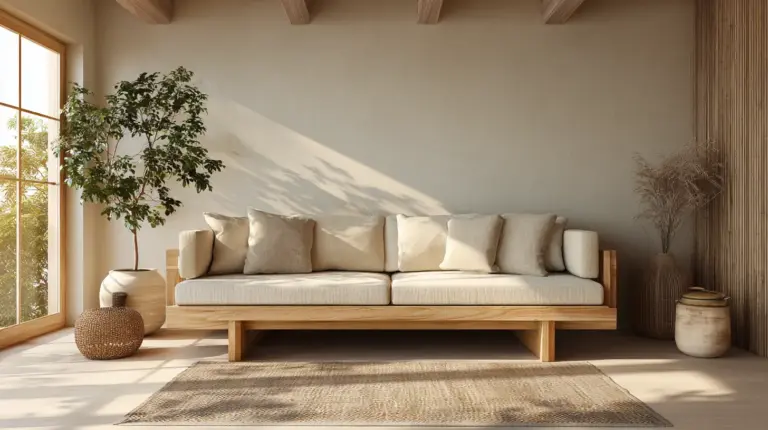
There’s a particular kind of quiet that settles into a room dressed in natural textiles. It’s not silence exactly — it’s the soft sound of linen catching afternoon light, the gentle weight of a wool throw draped across a sofa, the faint warmth of a jute rug underfoot. That feeling has a name: Japandi.
Japandi — the union of Japanese wabi-sabi minimalism and Scandinavian hygge warmth — is perhaps the most soulful design philosophy of our time. And nowhere does it breathe more beautifully than in the living room, where textiles become the language of comfort.
This guide is for you if you’ve ever reached for a soft cushion and thought: this is exactly right. We’ll walk you through the best fabrics for a Japandi living room, how to layer them with intention, where to source them sustainably, and how to care for them so they last for years — not seasons.
Pull your favorite chair close. Let’s begin.
What Makes a Textile Truly Japandi?
Not every neutral fabric earns a place in a Japandi living room. The philosophy runs deeper than beige.
Japandi textiles share three defining qualities: they are natural or sustainably sourced, they improve with age and use, and they carry a quiet visual texture — nothing loud, nothing synthetic, nothing that demands attention before comfort.
Think undyed linen that softens with every wash. Think hand-loomed wool that holds the warmth of the hands that made it. Think bamboo fiber so breathable it feels like a second skin. These are the fabrics that belong here.
The Wabi-Sabi Principle in Textiles
Wabi-sabi asks us to find beauty in imperfection and impermanence. In textiles, this means welcoming the natural slub of linen, the slight irregularities of hand-woven rattan, the gentle pilling of a well-loved wool throw.
A Japandi textile is not meant to be pristine. It’s meant to be lived in.
The Hygge Layer
From Scandinavia comes hygge — the art of coziness, of creating warmth around yourself with intention. In textile terms, this means layering: a sheepskin over a natural-fiber sofa, a chunky knit throw on the armchair, soft cushions that invite you to sink deeper into the moment.
These two philosophies don’t compete. They complete each other.
Best Fabrics for Japandi Living Rooms
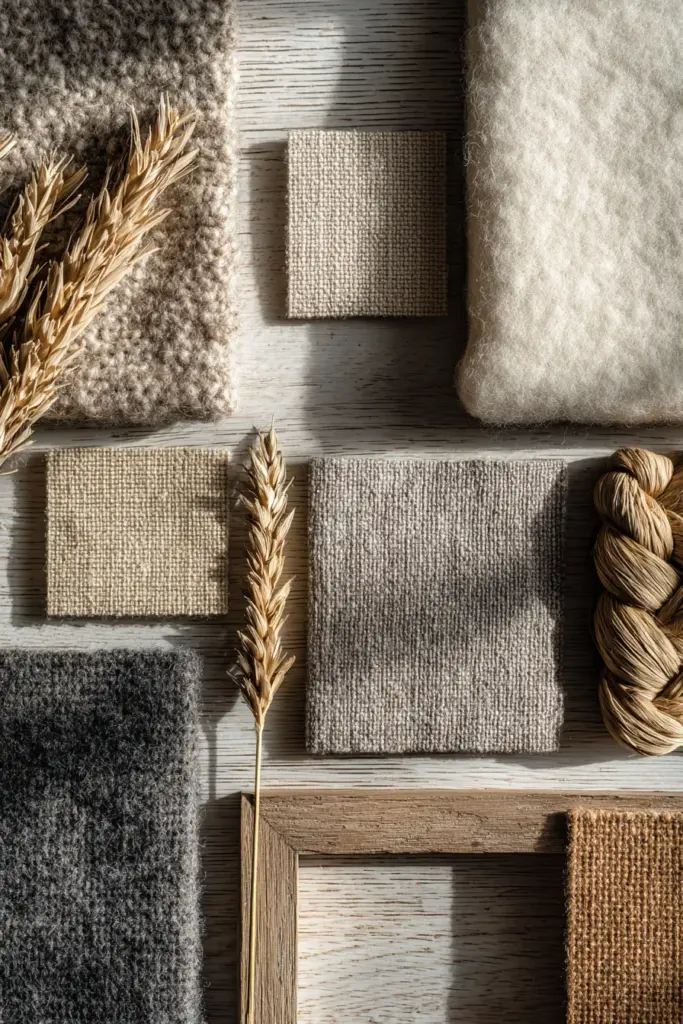
Choosing the right fabric is the foundation of a Japandi interior. Here’s a closer look at the materials that define the aesthetic — and how each one performs in daily life.
Linen: The Soul of Japandi
Linen is, without question, the most beloved textile in the Japandi world. It is breathable, durable, and grows more beautiful the more it is used.
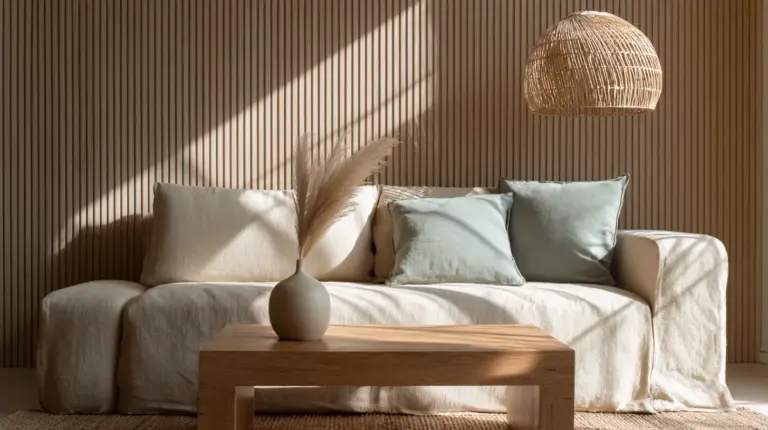
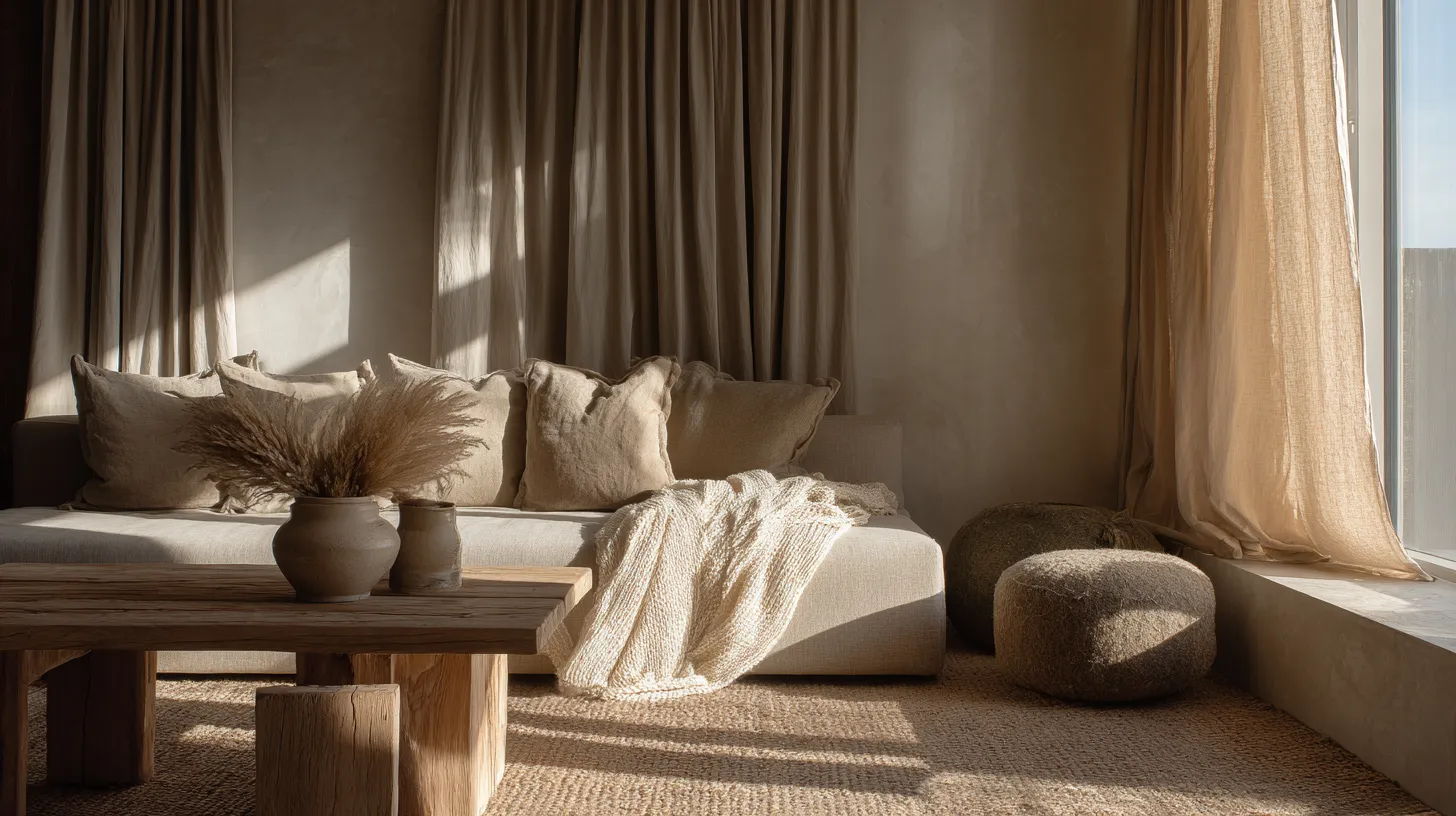
Its natural slub and slight texture give curtains a luminous quality — sheer linen panels filter morning light like rice paper, casting the room in the softest gold. On sofa cushion covers, linen in warm oat, stone, or sage reads as effortlessly sophisticated.
Linen care tip: Machine wash on a cool, gentle cycle. Hang dry to avoid shrinkage, and iron while still slightly damp to maintain that characteristic drape.
Average cost: $18–$45 per yard for quality linen fabric.
Wool: The Warmth Keeper
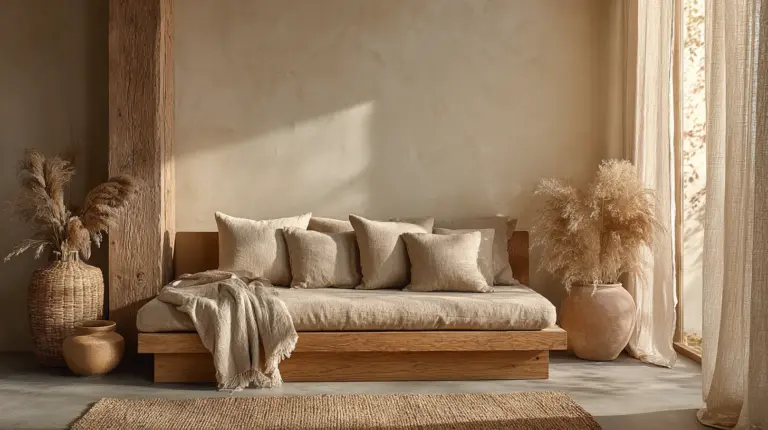
Wool brings depth and tactile richness to a Japandi living room. A chunky-knit wool throw in ivory or warm grey draped over the arm of a sofa is the kind of detail that makes a room feel genuinely inhabited.
Wool is naturally temperature-regulating, making it ideal for both warm and cool climates. It absorbs sound, too — a subtle acoustic quality that deepens the room’s sense of calm.
Wool care tip: Dry clean or hand wash in cool water with a gentle wool wash. Never wring — press out water gently and lay flat to dry.
Average cost: $25–$80 per yard for natural wool fabric.
Hemp: The Quiet Revolutionary
Hemp is having its moment — and deservedly so. As one of the most sustainable fabrics on earth, it requires no pesticides and regenerates soil as it grows.
In texture, hemp is slightly coarser than linen but softens beautifully over time. It works wonderfully as rug material, cushion cover fabric, and even as a base for curtain panels. Its earthy, muted tones feel deeply connected to the wabi-sabi spirit.
Average cost: $20–$55 per yard for organic hemp fabric.
Ramie and Abaca: The Underrated Gems
Ramie — a plant-based fiber known for its natural luster and durability — is often overlooked in Western design guides but is a Japandi dream. It drapes beautifully and resists moisture, making it ideal in humid climates.
Abaca, a fiber native to the Philippines and woven by hand in many local communities, is extraordinary as a rug or wall textile. Its warm golden tone and tight weave bring an unmistakable organic elegance to Japandi interiors — and sourcing it from local markets or Etsy weavers directly supports artisan communities.
Average cost: Abaca rugs, $30–$120 depending on size; ramie fabric, $15–$40 per yard.
Tencel and Bamboo: The Breathable Moderns
For those in humid tropical climates, Tencel (lyocell) and bamboo-derived fabrics offer a sustainable solution. Both are incredibly soft, moisture-wicking, and produced through closed-loop processes that minimize environmental impact.
Bamboo fiber curtains or cushion covers in soft white or warm blush feel light and airy — perfect for living rooms that receive strong afternoon sun.
Average cost: $12–$35 per yard.
Fabric Comparison Table
| Fabric | Durability | Breathability | Eco-Friendly | Avg. Cost/Yard | Best Used For |
|---|---|---|---|---|---|
| Linen | High | High | Yes (GOTS-certified options) | $18–$45 | Curtains, cushion covers, throws |
| Wool | Medium | Medium | Yes (if ethically sourced) | $25–$80 | Throws, rugs, accent cushions |
| Hemp | High | High | Yes | $20–$55 | Rugs, cushions, curtains |
| Ramie | High | High | Yes | $15–$40 | Cushion covers, light curtains |
| Abaca | Medium | Medium | Yes (artisan-woven) | $30–$120 | Rugs, wall textiles |
| Tencel/Bamboo | Medium | Very High | Yes | $12–$35 | Curtains, lightweight cushions |
| Cotton (organic) | Medium | High | Yes (GOTS-certified) | $10–$30 | Throws, layering, cushions |
How to Choose Japandi Textiles: A Sensory Framework
Choosing a textile isn’t just about aesthetics — it’s about how a room feels to live in. Before you purchase, ask yourself these questions.
Does it feel good in your hand? Hold the fabric, not just look at it. A Japandi textile should feel honest — slightly rough, deeply soft, or warmly textured. Not slippery. Not synthetic.
Does it improve with age? If the fabric looks best the day you buy it, it may not belong in a Japandi home. Choose materials that soften, that drape more beautifully, that carry time gracefully.
Does it come in nature’s palette? Japandi colors are drawn from the earth: warm white, oat, taupe, stone, sage, terracotta, charcoal, muted indigo. If a color could be found in a quiet forest, a sun-bleached coastline, or a misty morning garden — it belongs.
Japandi Living Room Curtain Ideas
Sheer Linen Panels for Biophilic Light
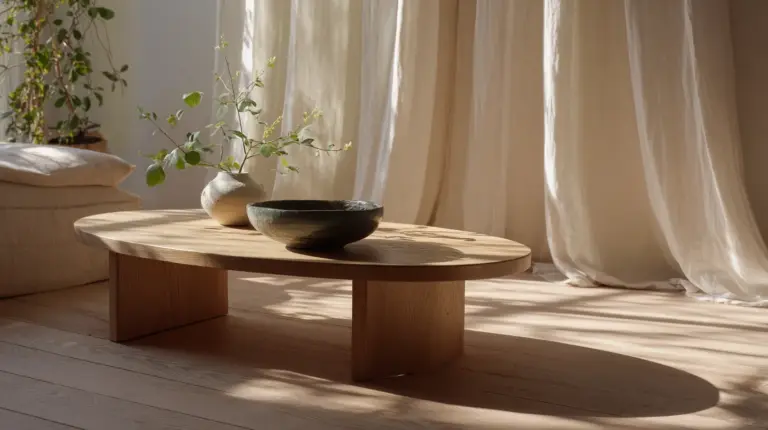
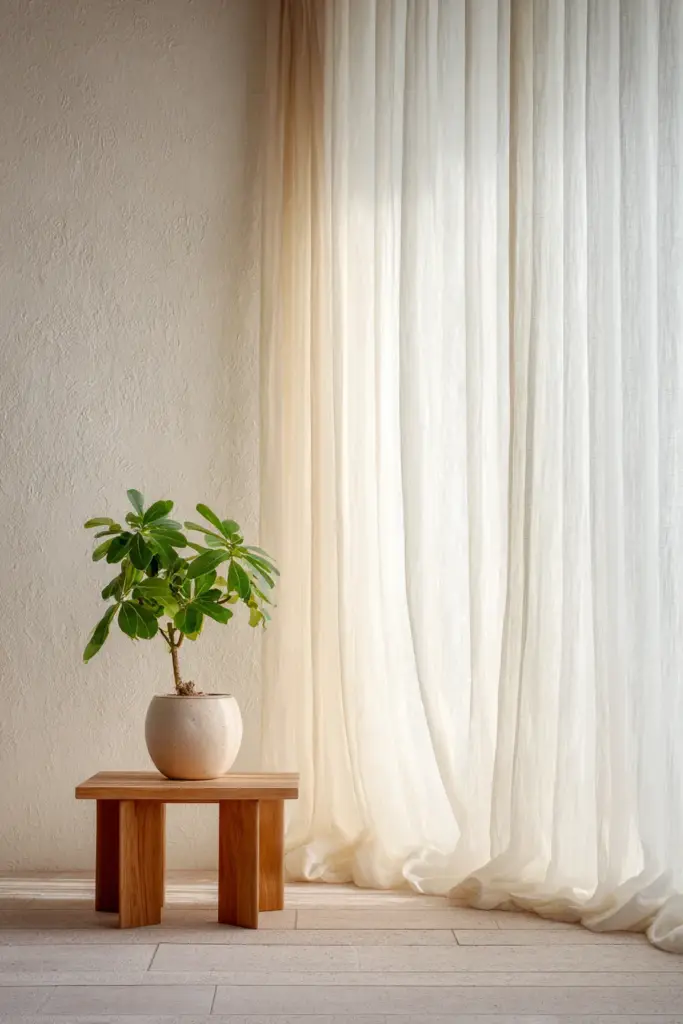
The best Japandi curtains do not block the world out — they translate it. Sheer linen panels in undyed natural fiber allow light to diffuse through them like sunlight through Japanese shoji screens. The effect is luminous, calming, and deeply connected to the natural world outside.
Hang them from simple wooden or matte black rods, pooling slightly at the floor for a soft, unhurried finish.
Layered Curtains for Depth
For rooms that receive direct sun or need occasional privacy, layer sheer linen panels with heavier hemp or cotton drapes in a slightly deeper tone. The interplay between the two layers — one translucent, one solid — creates gentle visual depth without heaviness.
Best Japandi curtain fabrics: Undyed linen, organic cotton muslin, lightweight hemp, bamboo-linen blend.
Japandi Rug Materials: Grounding the Room
A rug in a Japandi living room is the foundation — the visual anchor that holds everything together. It should feel substantial underfoot but not busy to the eye.
Sustainable Japandi Rug Options
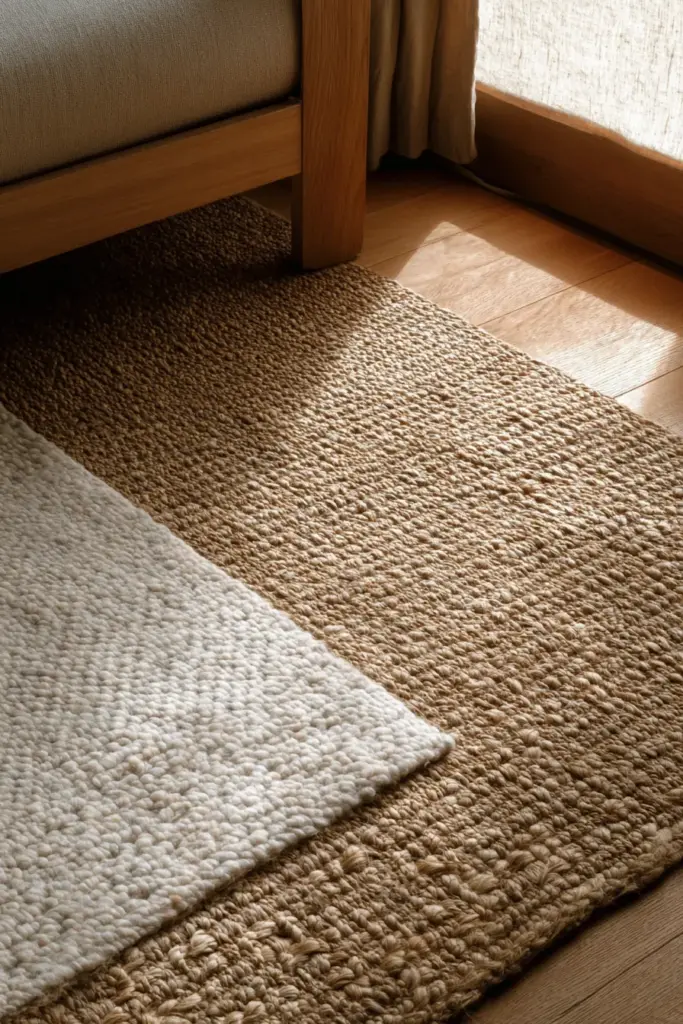
Jute and sisal rugs bring a warm, woven texture to the floor that photographs beautifully and ages even better. They work best in rooms with moderate foot traffic and pair naturally with low-profile furniture.
Wool rugs in flat-weave styles (Kilim-inspired or Berber-adjacent) offer warmth and durability in a Japandi-friendly profile. Choose muted tones — warm grey, undyed cream, dusty sage.
Abaca and hemp rugs offer an artisan quality that mass-produced rugs cannot match. Their slight irregularities are part of their beauty.
Pro styling tip: Layer a smaller wool or sheepskin accent rug over a larger jute or hemp area rug beneath your sofa. This creates visual depth and hygge warmth simultaneously.
Linen vs. Wool for Japandi Sofas: Which Is Right for You?
This is one of the most common questions we hear — and the answer depends on your climate, lifestyle, and the feeling you want to cultivate.
| Linen | Wool | |
|---|---|---|
| Climate | Ideal for warm, humid climates | Best for cooler temperatures |
| Feel | Cool, crisp, breathable | Warm, soft, insulating |
| Durability | Very high (improves with washing) | Medium (needs gentle care) |
| Aesthetic | Light, airy, understated | Cozy, textured, warm |
| Pet-friendly | Yes (lint-friendly surface) | Moderate (can trap pet hair) |
| Best for | Cushion covers, sofa throws, curtains | Throw blankets, accent cushions |
For tropical climates like the Philippines, linen or Tencel cushion covers are the most practical choice for sofas. Layer with a lightweight wool or cotton throw for hygge effect on cooler evenings.
Layering Japandi Textiles: The Art of Quiet Abundance
Japandi is not sparse — it is selective. There is a meaningful difference between an empty room and a quiet one.
The Three-Layer Method
Layer 1 — The Foundation: Begin with a large natural-fiber rug (jute, hemp, or wool flat-weave) that anchors the seating area. This grounds the room tonally and physically.
Layer 2 — The Softness: Add cushion covers in linen or cotton on your sofa and chairs. Vary slightly in tone — an oat cushion alongside a warm stone one, a sage accent beside warm white. Keep shapes simple: square, rectangular, or round.
Layer 3 — The Warmth: Drape a throw — wool, cotton, or a recycled-fiber blend — over the sofa arm or fold it neatly at the foot of a chaise. This is the layer that says come, stay a while.
Plant-Textile Pairings for Wabi-Sabi Balance
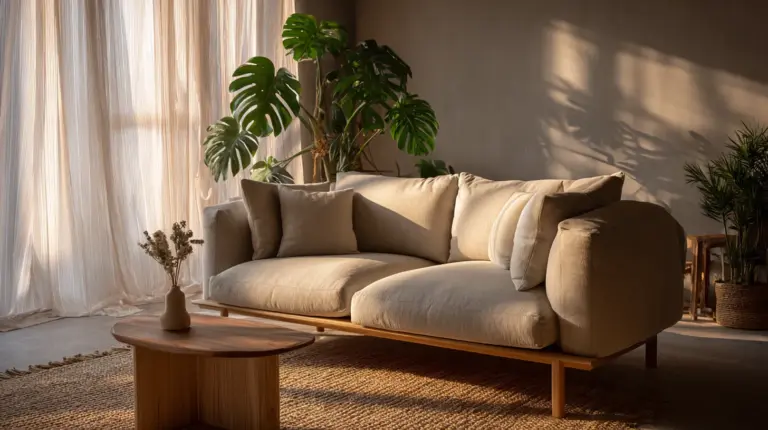
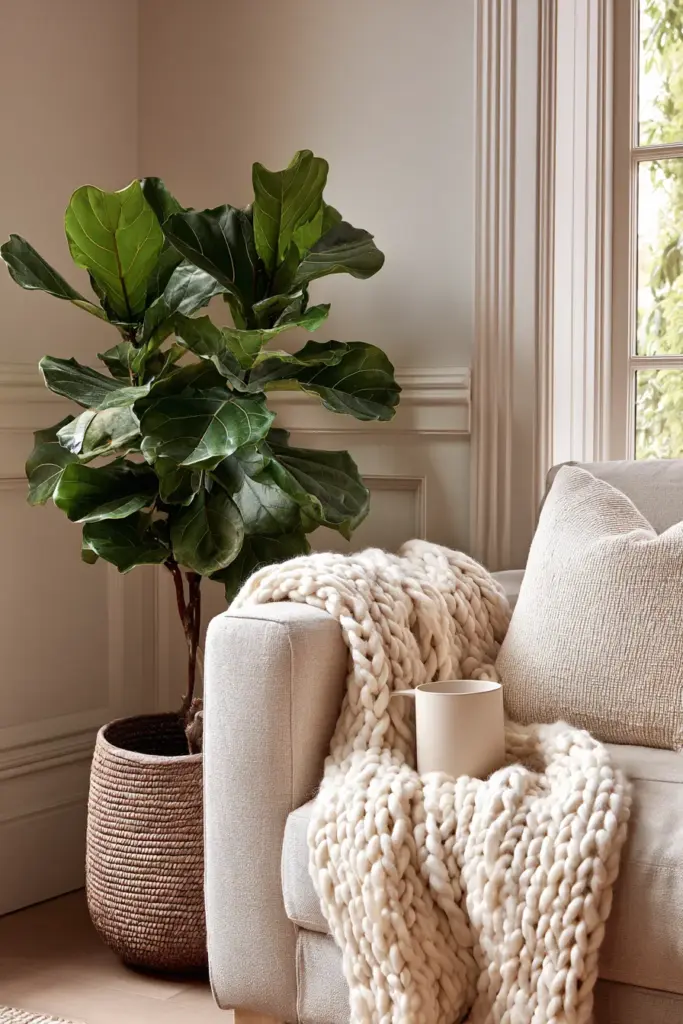
Textiles and living plants share a language in Japandi design. A chunky wool throw beside a fiddle-leaf fig. Hemp cushions alongside a trailing pothos. A jute rug beneath a tall bamboo palm.
The pairing creates conversation between the organic and the crafted — a dialogue that makes a room feel genuinely alive rather than decorated.
DIY Japandi Textile Ideas
Natural-Dyed Cotton Throws
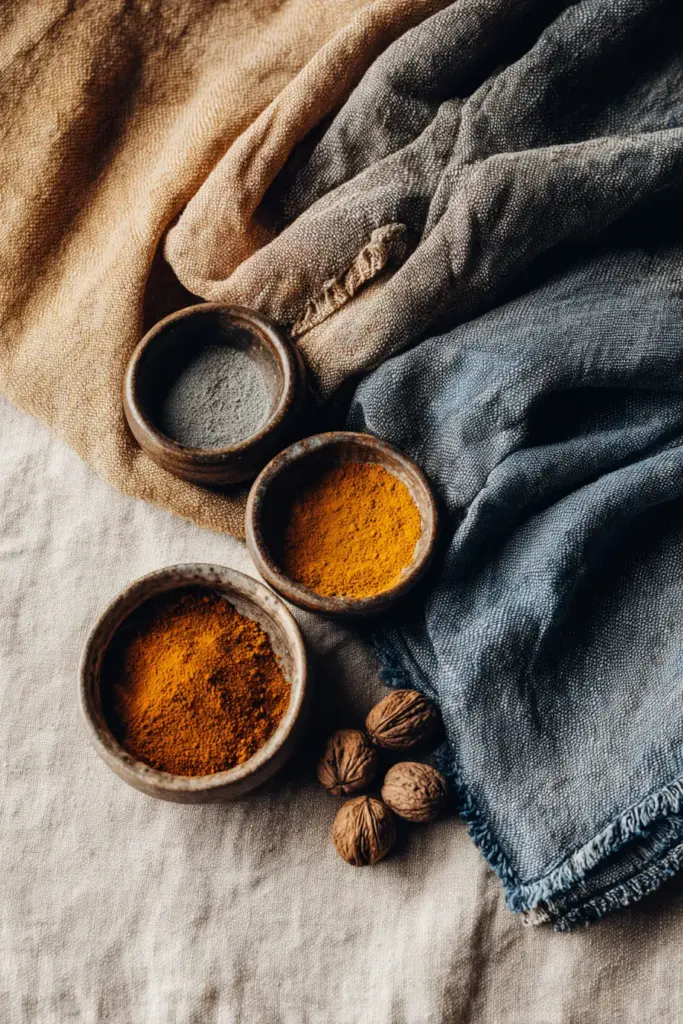
Cotton throws dyed with natural indigo, walnut husk, or turmeric create a warm, handmade quality that no store-bought textile can replicate. The slight variation in color across a naturally-dyed fabric is wabi-sabi made visible.
Simple natural dye guide:
- Taupe/warm beige: Black tea or walnut husk
- Soft yellow: Turmeric and water
- Dusty sage-grey: Iron water (ferrous sulfate) on cotton
- Muted indigo: Indigo powder and soda ash
Upcycled Cushion Covers
Vintage kimono fabric, antique linen grain sacks, or repurposed hemp burlap can all become extraordinary cushion covers. The history carried in the fabric adds a wabi-sabi depth no new textile can offer.
Check local vintage markets, Etsy sellers, or — for Philippine readers — Divisoria fabric stalls for raw linen and cotton at accessible price points.
Where to Buy Japandi Textiles
Online Sources
- Etsy: Search “organic hemp fabric,” “natural linen by the yard,” or “abaca handwoven rug” for artisan options.
- Shop Japandi (shopjapandi.com): Curated Japandi-specific textiles and home goods.
- IKEA: Surprisingly strong linen and cotton options at accessible price points — look for DYTÅG and GURLI throws.
Philippine-Specific Sources
- Divisoria, Manila: Excellent for raw linen, cotton muslin, and affordable natural fabrics sold by the meter.
- Habi Artisan Market: Philippine-made abaca and handwoven textiles.
- Tabora Street, Quiapo: Fabric stalls with natural fibers at local prices.
- Etsy PH sellers: Search “abaca rug Philippines” or “handwoven Filipino textile.”
Caring for Your Japandi Textiles
Natural fabrics reward attention. A few simple habits will keep your textiles beautiful for years.
- Linen: Machine wash cool, hang dry, iron damp. Do not tumble dry repeatedly — it weakens fibers over time.
- Wool throws: Hand wash in cool water with a wool-safe detergent. Lay flat to dry — never hang, as wet wool stretches.
- Jute and sisal rugs: Spot clean only. Vacuum regularly. Keep away from prolonged moisture.
- Hemp fabric: Machine wash cool. Hemp softens beautifully with each wash — expect this and welcome it.
- Tencel/Bamboo: Machine wash on delicate. Avoid high heat in the dryer.
- Abaca rugs: Spot clean with a damp cloth. Allow to air dry completely to prevent mold in humid climates.
Your Japandi Textile Checklist
Before you begin styling, use this quick checklist to curate your space with intention:
- Natural fiber foundation rug (jute, hemp, sisal, or wool flat-weave)
- Sheer linen curtain panels for light diffusion
- 3–5 cushion covers in linen, cotton, or ramie — warm neutrals with one subtle accent tone
- One generous throw in wool, cotton, or recycled fiber
- At least one artisan-made textile element (handwoven, naturally dyed, or upcycled)
- Fabrics certified GOTS-organic or sourced from verified artisan makers where possible
- A plant-textile pairing that brings organic life to the composition
Conclusion: The Room That Breathes
A Japandi living room dressed in natural textiles does something rare. It breathes.
It holds the morning light softly. It remembers the warmth of every person who has sat in it. It ages not into shabbiness but into character — the kind of beauty that only time and intention can create.
At ERYLIN, we believe that the most meaningful interiors are built slowly, chosen carefully, and loved generously. A single piece of honest linen, a handwoven abaca rug, a wool throw chosen for its weight rather than its trend — these are not just design decisions. They are the quiet architecture of a life well-lived.
Dress your living room the way you’d dress for a slow Sunday morning. With ease. With warmth. With exactly what you need, and nothing more.
Frequently Asked Questions
What fabrics are best for Japandi living rooms?
The best fabrics for Japandi living rooms are natural, breathable, and textured. Linen, wool, hemp, cotton, and ramie are the most commonly used. For humid climates like Southeast Asia, linen and Tencel are especially practical. Look for GOTS-certified organic fabrics wherever possible.
How do I choose Japandi textiles for my living room?
Choose textiles that feel honest in your hand, improve with age, and fall within nature’s palette — oat, stone, warm white, sage, taupe, and charcoal. Avoid synthetics and highly processed fabrics. Prioritize texture over pattern, and sustainability over trend.
What are the best Japandi living room curtain fabrics?
Undyed sheer linen is the gold standard for Japandi curtains. Organic cotton muslin, lightweight hemp, and bamboo-linen blends also work beautifully. Layer sheer panels with heavier cotton or hemp drapes for depth and light control.
Where can I buy Japandi textiles on a budget?
Etsy sellers offer organic and handwoven options at a range of price points. IKEA carries accessible linen and cotton pieces. For Philippine readers, Divisoria and Tabora Street in Manila offer natural fabrics at local prices. Abaca rugs from Filipino artisan markets are both sustainable and affordable.
Are there machine-washable Japandi textile options for humid climates?
Yes. Linen, organic cotton, hemp, and Tencel are all machine-washable on a cool, gentle cycle — making them ideal for tropical and humid environments. Avoid wool in extremely humid climates unless you can commit to careful hand-washing and flat-drying.