
Table of Contents
By ERYLIN — Where calm meets craft.
There is a particular kind of stillness that lives in a well-designed room. You walk in, and something inside you slows. The light feels intentional. The textures invite touch. The air itself seems to hold a quiet warmth.
That is the promise of Japandi — and when you bring a modern twist into the equation, the result is nothing short of extraordinary.
Japandi is the meeting of two beloved design philosophies: Japanese wabi-sabi, which honors the beauty of imperfection and transience, and Scandinavian hygge, which wraps everyday life in coziness and ease. Together, they create interiors that are serene without being sterile, minimal without feeling cold.
At ERYLIN, we believe your living room should feel like an exhale. This guide is your invitation to create exactly that — a Japandi living room with thoughtful modern touches that make it entirely, beautifully yours.
What Is a Japandi Living Room?
A Japandi living room is a space built on restraint and intention. Every object earns its place. Every material carries meaning.
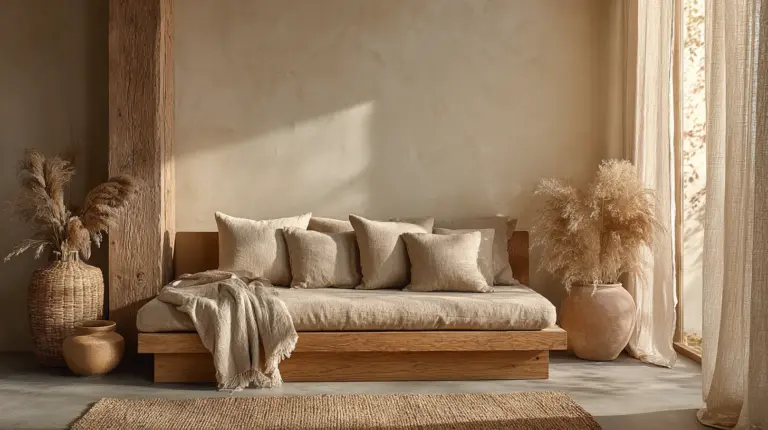
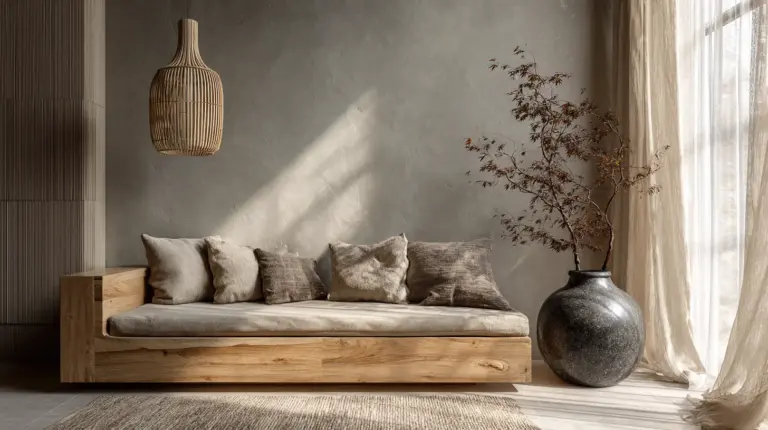
Think low-profile furniture that grounds the room. Natural wood grains that glow in afternoon light. Linen throws draped just so. A single ceramic vase holding one dried stem — and nothing more.
The modern twist elevates this foundation. It means introducing matte black metal legs on a rattan coffee table. LED lighting tucked behind a fluted wood panel. A modular shelf that doubles as a room divider. Smart technology woven invisibly into the calm.
It is tradition and innovation sharing the same quiet breath.
Japandi Colors for Your Living Room
The Base Palette: Earth, Air, and Stone
Color in a Japandi living room is never loud. It whispers.
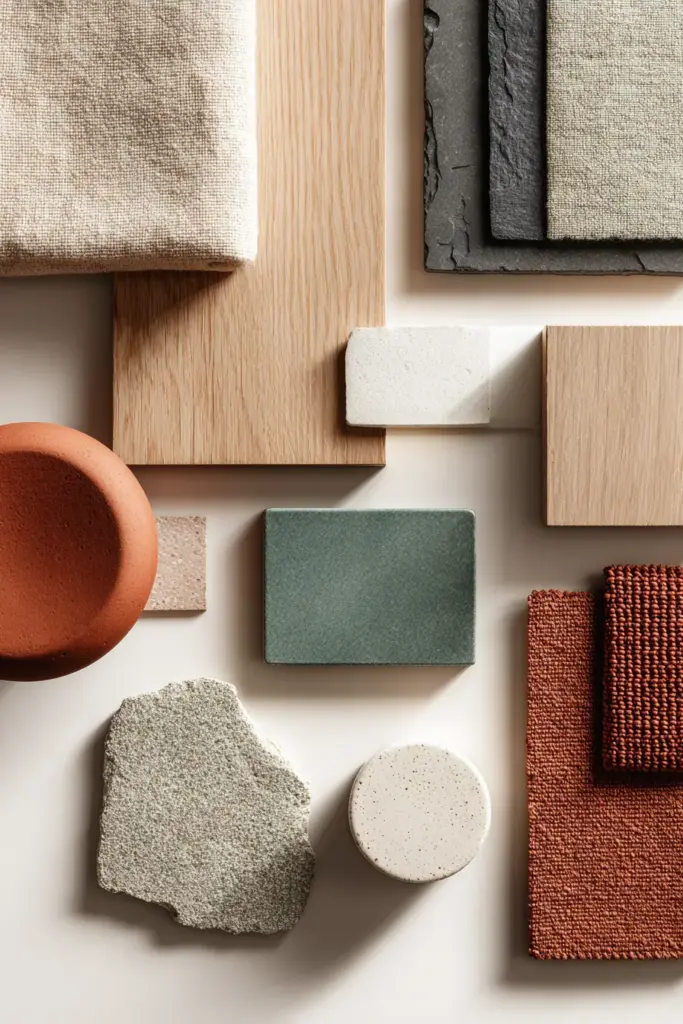
Your foundation shades are warm beige, soft greige, chalky white, and warm taupe — tones that mimic sand, linen, and dry clay. These create a visual silence that lets texture and form do the storytelling.
Layer in charcoal, slate, and deep mushroom for depth. These darker tones ground the space and add a sense of weight without heaviness.
The Modern Accent: Muted and Intentional
Here is where the modern twist breathes life into the palette.
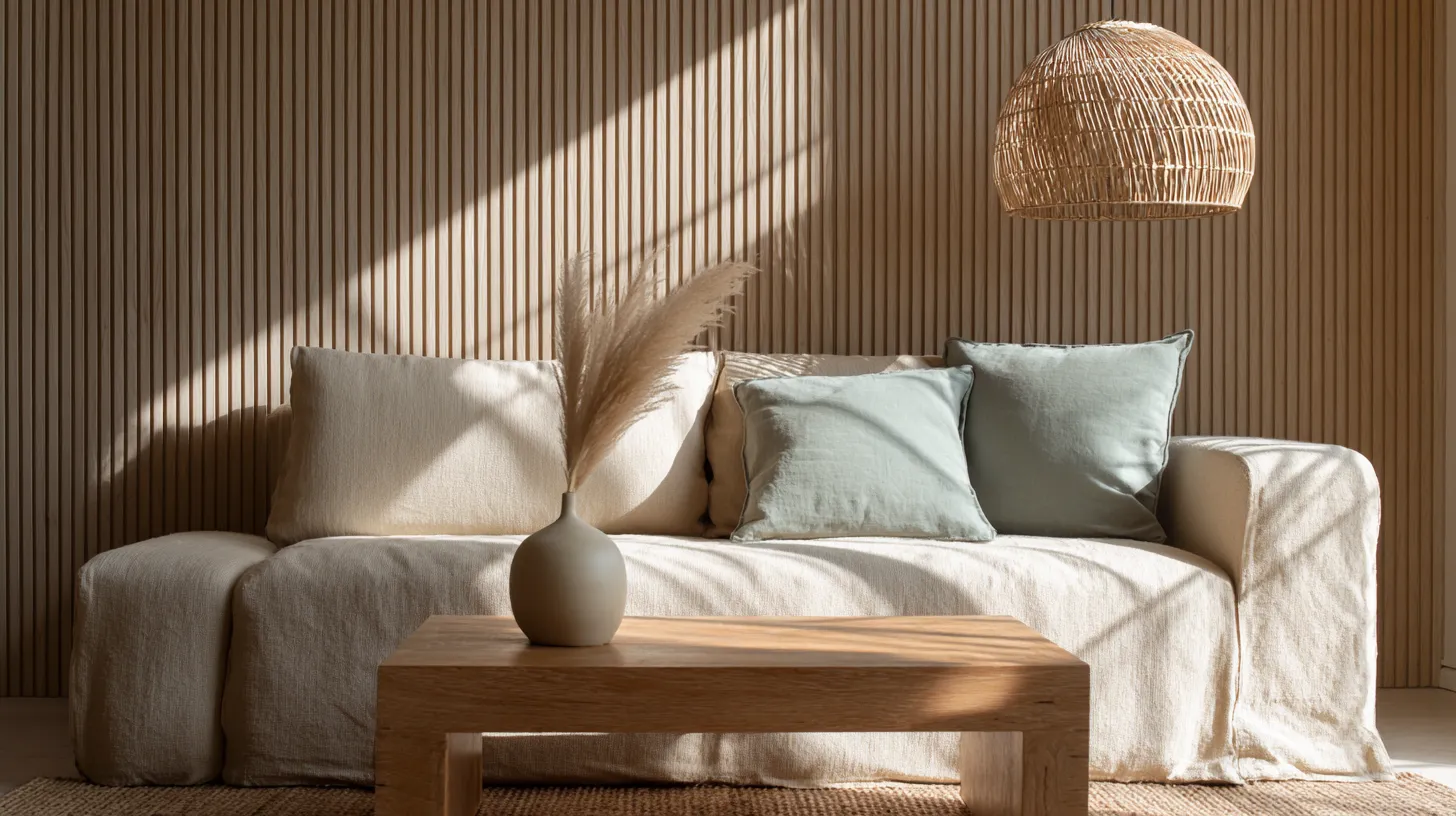
A muted teal cushion, a single dusty sage throw, or a terracotta pot in a warm burnt umber — these accents shift the room from neutral to nuanced. Think of them as low notes in a melody: subtle, but felt.
Avoid anything too saturated. The beauty of modern Japandi color lies in restraint. One or two accent tones, chosen with care, are far more powerful than a dozen competing shades.
| Palette Role | Colors to Use |
|---|---|
| Base | Warm white, beige, greige, warm taupe |
| Depth | Charcoal, slate, warm gray, deep mushroom |
| Modern Accent | Muted teal, dusty sage, terracotta, soft rust |
| Avoid | Bright primary colors, high-gloss finishes, cool neons |
Natural Materials: The Soul of Japandi Design
Wood: Warm, Honest, Alive
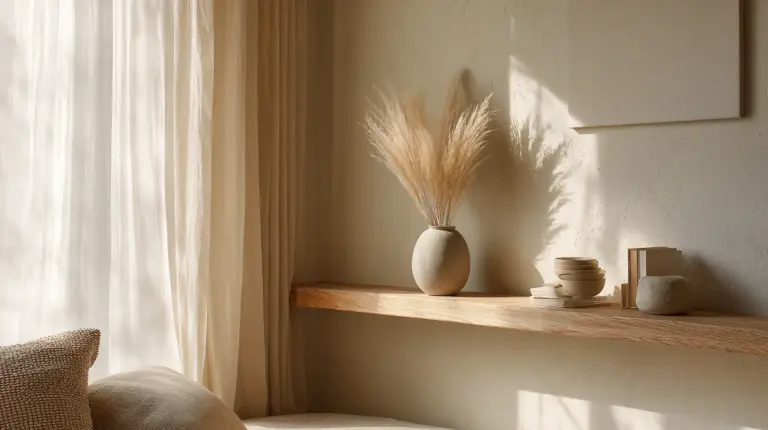
Light oak, ash, and walnut are the heartwoods of Japandi interiors. They carry warmth without trying. A low wooden coffee table, a floating shelf in natural oak, or a slatted wood accent panel — each one brings organic life into the room.
The modern twist here is fluted wood paneling. This architectural detail adds visual rhythm and tactile interest, transforming a plain wall into a quiet focal point. Paired with a matte finish, it feels contemporary and grounded all at once.
Rattan, Bamboo, and Woven Textures
Rattan side tables and bamboo pendant shades soften the clean lines of Japandi furniture with beautiful irregularity. They are nature’s reply to precision — and Japandi welcomes that tension.
Woven texture extends to your soft furnishings too. A chunky jute rug, a hand-woven basket, or a rattan tray on a linen ottoman — these pieces bring warmth underfoot and in the hand.
Stone and Ceramic
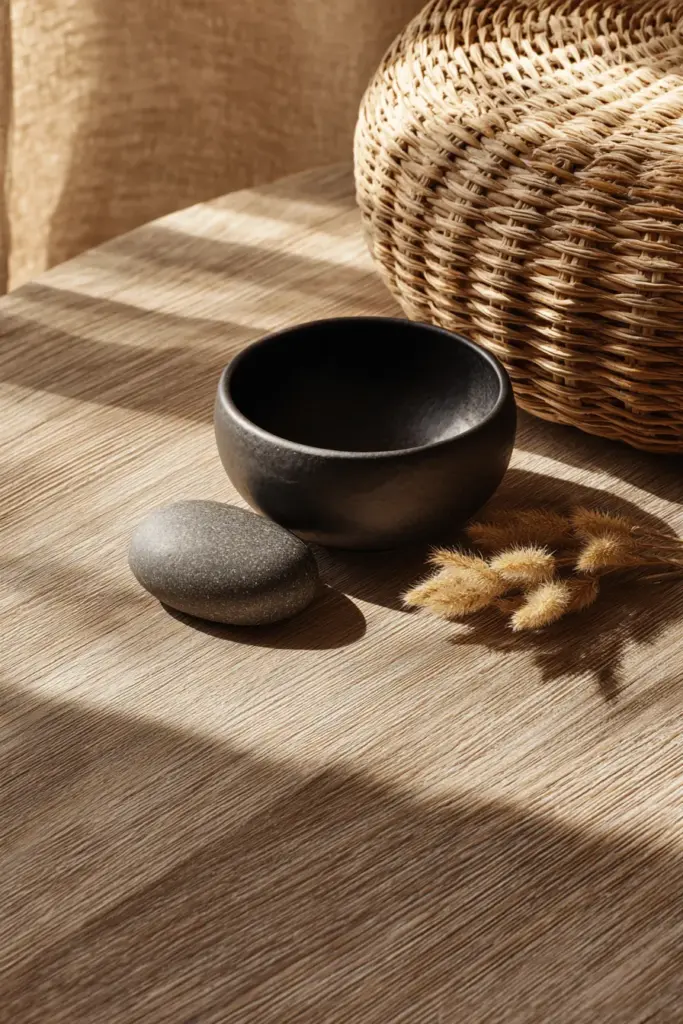
A stone tray, a matte ceramic lamp base, or a concrete side table introduces mineral texture that grounds the space. These materials age gracefully, developing their own quiet story over time — a quality that wabi-sabi deeply honors.
Japandi Living Room Furniture Ideas
Low and Grounded: The Japandi Silhouette
Japandi furniture sits close to the earth. This is deliberate — low furniture creates a sense of openness, calm, and ease that taller pieces simply cannot achieve.
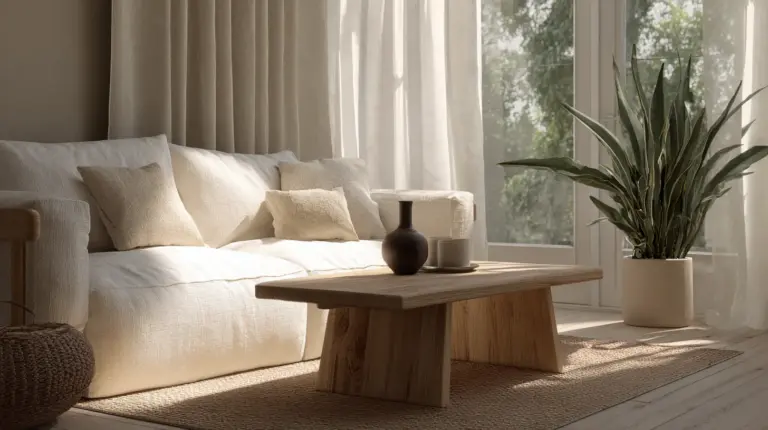
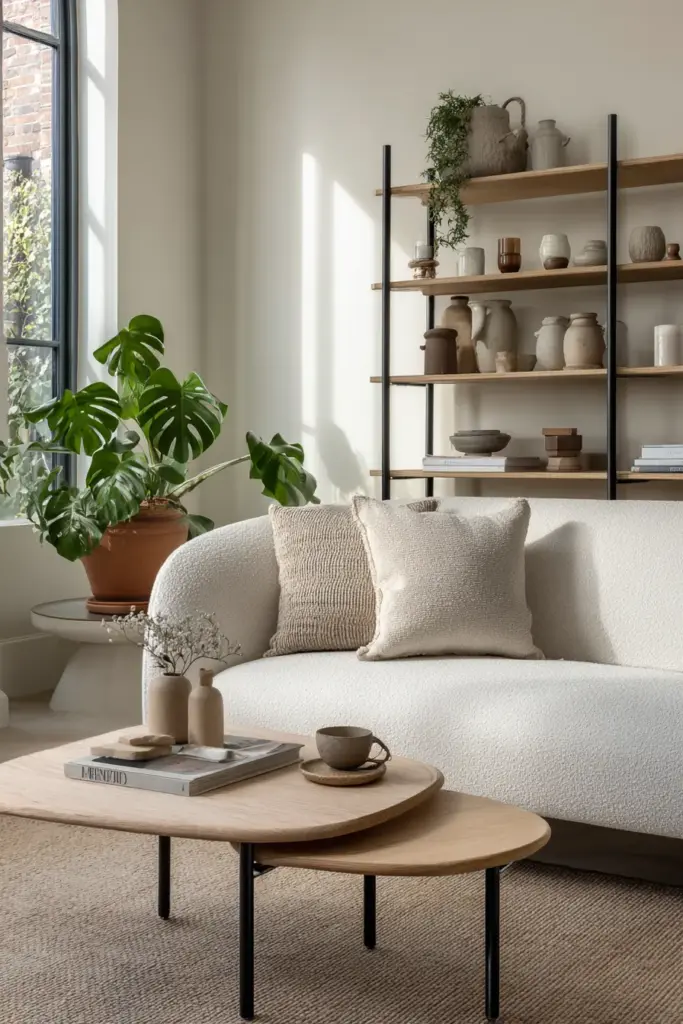
Look for a low-profile sofa in natural linen or wool as your anchor piece. Pair it with a low wooden coffee table — slightly asymmetric, or with tapered legs in natural oak. Add a floor cushion or pouf for that extra layer of casual warmth.
Multifunctional Pieces for Modern Living
One of the most exciting modern twists in Japandi design is the rise of multifunctional furniture. A storage ottoman that doubles as a coffee table. A modular shelving unit that also serves as a subtle room divider. A nesting table set in natural wood that tucks away when not needed.
These pieces honor the Japandi principle of intentionality — nothing is wasted, everything serves.
Accent Furniture with Modern Lines
Introduce matte black or brushed brass hardware on drawer pulls or cabinet legs to add a contemporary edge. A slim side table with sleek metal legs and a wooden top bridges the gap between Japandi warmth and modern precision beautifully.
| Furniture Piece | Japandi Choice | Modern Twist |
|---|---|---|
| Sofa | Low-profile, linen or boucle | Integrated USB charging ports |
| Coffee table | Natural wood, low height | Fluted wood detail or matte metal legs |
| Storage | Open wooden shelving | Modular, wall-mounted system |
| Seating | Floor cushions, rattan chairs | Slim metal-framed accent chairs |
| Lighting | Bamboo pendant, paper shades | LED dimmable, smart-controlled |
Lighting in a Japandi Living Room
Natural Light First, Always
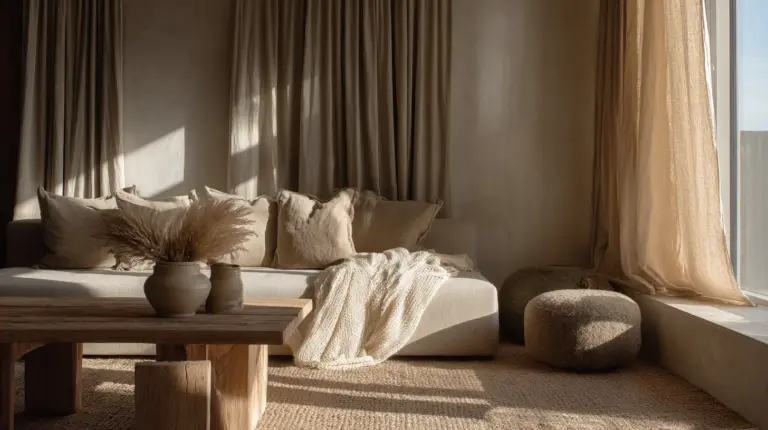
Japandi design reveres natural light as a material in its own right. Keep window treatments sheer and minimal — think unlined linen panels that filter light into a warm, gauzy glow rather than blocking it entirely.
Position your seating to catch morning or afternoon light. Let shadows fall naturally across textured surfaces. A slanted sunbeam crossing a wooden floor is one of the most Japandi things you will ever see.
Layered Artificial Lighting
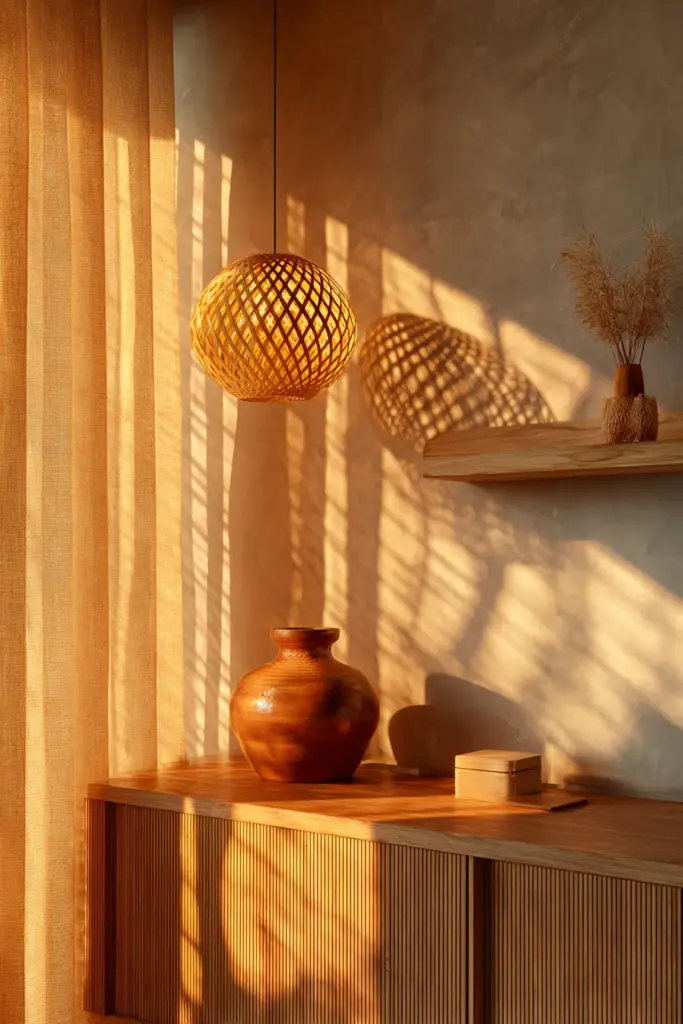
Good lighting design is layered: ambient, task, and accent working together. For a Japandi space, this means a paper or rattan pendant overhead, a sculptural ceramic table lamp in a corner, and warm LED strip lighting tucked behind a floating shelf or along a low cabinet.
The modern twist here is smart lighting. Philips Hue warm-white bulbs inside a rattan pendant give you the warmth of natural material with the precision of programmatic dimming. Set a scene for morning calm, golden-hour reading, or evening ease — all from your phone, all with the same soft light.
Biophilic Elements and Indoor Plants
Bringing the Outside In
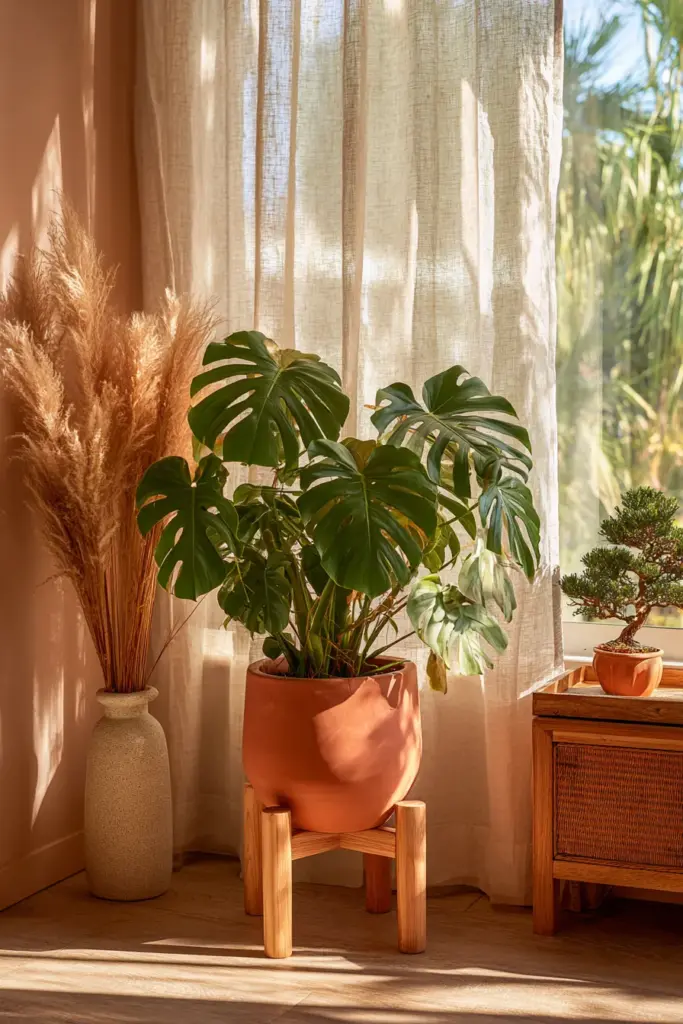
Japandi living rooms breathe because they include life. Indoor plants are not decoration here — they are essential. A single large monstera in a matte terracotta pot. A cluster of bonsai on a wooden tray. A trailing pothos from a woven hanging planter near the window.
The modern twist is biophilic technology: smart plant sensors that monitor soil moisture and light levels, keeping your green companions effortlessly thriving. These tools blend invisibly into your decor while ensuring your living room stays lush.
Dried and Sculptural Botanicals
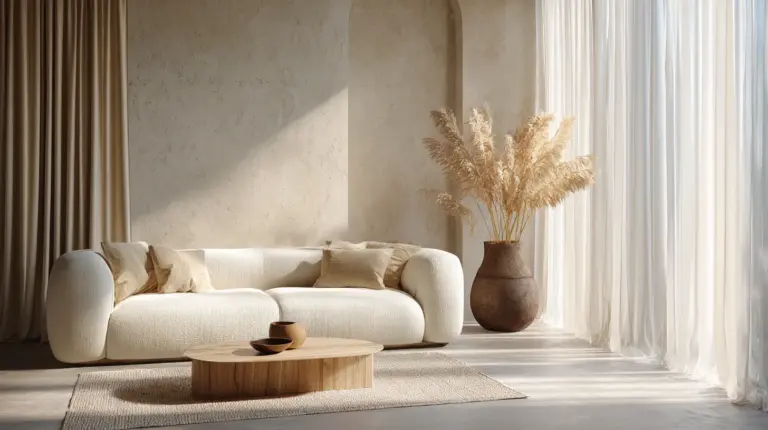
For lower-maintenance beauty, dried pampas grass, preserved eucalyptus, or bleached cotton stems in a simple ceramic vase offer texture and quiet drama without the need for water or sunlight.
These arrangements honor wabi-sabi — beauty in impermanence, form in the naturally faded.
Smart Tech Integration: The Modern Twist That Disappears
Technology That Serves, Not Intrudes
The best smart technology in a Japandi room is the kind you never see. Think recessed cable management behind a floating media console. A voice-controlled lighting system that responds without a single switch on the wall. A slim smart speaker wrapped in fabric that blends with your linen cushions.
The rule is simple: if the technology draws attention to itself, it does not belong. In a Japandi room, every element — including your smart devices — must serve the calm.
Multifunctional Walls for 2026
One of the most compelling emerging trends for Japandi spaces is the multifunctional wall: a single wall that houses shelving, hidden media storage, integrated lighting, and even a foldable desk — all within a unified, beautifully crafted wooden framework.
This is modern Japanese joinery meets Scandinavian utility. It is deeply Japandi, and deeply relevant.
Eco-Conscious Japandi: Sustainable Modern Twists
Choose Materials with Intention
True Japandi design has always been sustainable at its heart — fewer pieces, better quality, longer life. But modern eco-Japandi takes this further.
Seek out upcycled furniture: vintage wooden side tables sanded and re-oiled to reveal their original grain. Reclaimed wood shelving with the marks of its former life still visible. Low-VOC paints in your Japandi palette shades that keep your air as clean as your aesthetic.
DIY Upcycling for Budget Japandi
You do not need a large budget to create a Japandi living room. A simple wood stain in warm walnut transforms a flat-pack shelf into something that feels crafted. A thrifted ceramic vase sanded and sealed becomes a statement piece.
- Sand and re-oil any wooden furniture for an instant Japandi upgrade — under $20
- Replace standard hardware with matte black pulls for a modern-minimal edge — under $30
- Propagate trailing plants like pothos or string of pearls for free biophilic design
- Layer affordable linen cushion covers in earthy tones over existing sofa cushions — under $50
- Add a jute rug to define the seating zone and anchor the room — from $60
A complete Japandi living room refresh is achievable for under $500 when you work with what you have and source thoughtfully.
Your Japandi Living Room Checklist
Use this as your guide as you curate your space:
- Color palette: Warm neutrals as the base, one or two muted accent tones
- Furniture: Low-profile, natural materials, multifunctional pieces
- Textures: Linen, wool, rattan, jute, matte ceramic, natural wood
- Lighting: Layered — pendant, table lamp, and LED accent; smart-compatible
- Plants: At least one living plant, optional dried botanicals
- Technology: Hidden, voice-controlled, or fabric-wrapped
- Sustainability: Upcycled or reclaimed elements where possible
- Negative space: Leave room to breathe — not every surface needs an object
- One focal point: A fluted wood wall panel, a statement pendant, or a curated shelf arrangement
- Scent: A single candle or diffuser in cedarwood, hinoki, or white tea — the invisible layer of Japandi
Conclusion: The Room That Lets You Breathe
A Japandi living room with a modern twist is not a style exercise. It is an act of care — for your space, your senses, and the way you move through your days.
It is the warm grain of wood beneath your fingertips. The way afternoon light pools on a linen cushion. The quiet of a room that holds exactly what it needs, and nothing more.
At ERYLIN, we believe beauty lives in that careful edit. In the object you chose not to include. In the lamp that casts just the right warmth. In the plant that breathes alongside you.
Start with one corner. Choose one material. Light one candle. Your Japandi living room begins exactly where you are.
Frequently Asked Questions
What is a Japandi living room?
A Japandi living room blends Japanese minimalism and Scandinavian warmth into a single, cohesive aesthetic. It features neutral color palettes, natural materials like wood and rattan, low-profile furniture, and a careful balance of function and beauty. A modern twist adds elements like matte metals, smart lighting, and multifunctional furniture to keep the style relevant and livable.
How do I create a Japandi living room on a budget?
Start by editing what you already have — remove excess items and let negative space do the work. Upcycle existing wooden furniture with a warm wood stain, swap hardware for matte black pulls, layer affordable linen cushion covers, add a jute rug, and propagate plants from cuttings. A thoughtful Japandi refresh can be achieved for under $500.
What colors work best in a Japandi living room?
Warm beige, greige, chalky white, and warm taupe form the foundation. Layer in charcoal or slate for depth. For a modern twist, introduce one or two muted accent tones like dusty sage, muted teal, or soft terracotta. Avoid cool grays, bright whites, or saturated primary colors — Japandi color is always warm, soft, and intentional.
What furniture suits a Japandi living room?
Low-profile sofas in linen or boucle, natural wooden coffee tables, rattan accent chairs, and modular open shelving are all ideal. Look for pieces with clean lines and natural materials. For a modern edge, choose furniture with matte metal legs, integrated storage, or multifunctional design — a storage ottoman, nesting tables, or a wall-mounted shelving system.
Can I add smart technology to a Japandi living room?
Absolutely — the key is concealment. Choose smart lighting systems with warm-white bulbs inside natural material shades (rattan, paper, linen). Use recessed cable management behind media consoles. Opt for fabric-wrapped smart speakers that blend with your soft furnishings. In a Japandi room, technology should serve the calm, never interrupt it.