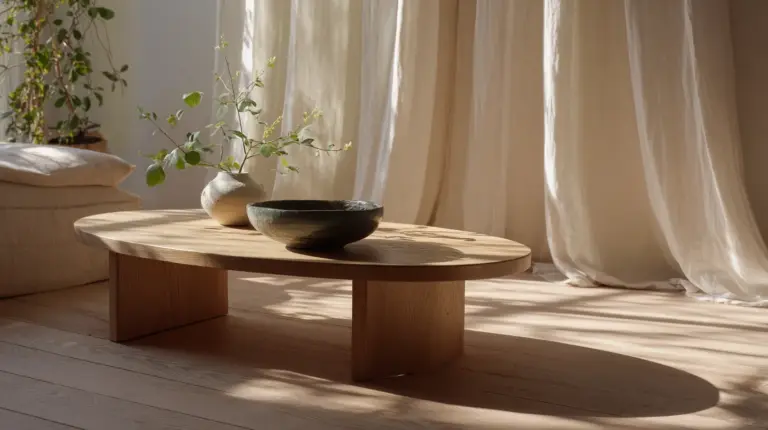


Table of Contents
There is something quietly profound about a Japandi living room — the way light settles on a pale oak shelf, the way a linen throw holds its shape, the way a single ceramic vase seems to breathe. This is a space designed with purpose, and it deserves to be cared for the same way.
Keeping a Japandi living room clean isn’t about rigid schedules or harsh products. It’s about small, rhythmic habits — a gentle wipe here, a mindful declutter there — that honor the natural materials and serene beauty you’ve worked so hard to curate.
At ERYLIN, we believe that a well-maintained home is a form of self-care. When your living room feels light and unhurried, so do you. And with the right routines, maintaining that calm doesn’t have to feel like a chore.
This guide walks you through everything — from daily rituals to seasonal resets — with eco-friendly solutions, material-specific care, and a few sensory touches that make the process feel as good as the result.
The Japanese Kiyomeru Principle: Clean While the Iron Is Hot
The Japanese concept of kiyomeru — loosely translated as “to purify” or “to cleanse in the moment” — is the foundation of effortless Japandi upkeep. Rather than letting messes accumulate into a weekend project, the idea is to address each small disruption as it happens.
A crumb on the linen sofa? Brush it away now. A water ring forming on the oak coffee table? Wipe it immediately with a dry cloth. This “strike while the iron is hot” philosophy keeps your living room in a near-constant state of ease.
When you pair this mindset with a Japandi home — where every object is chosen intentionally and clutter is inherently minimal — cleaning becomes less of a task and more of a quiet ritual. It is maintenance as meditation.
Quick Daily Cleaning Routine for a Minimalist Japandi Home
Total time: 10 minutes or less.
The Japanese are known for their efficient daily cleaning routines, and Japandi living rooms are perfectly designed for exactly this. With fewer objects on display and materials that repel rather than attract mess, a brief daily habit is all you need.
Your 10-Minute Morning Reset
| Step | Task | Time |
|---|---|---|
| 1 | Fold and fluff throws and cushions | 1–2 min |
| 2 | Wipe down coffee table and surfaces | 2 min |
| 3 | Sweep or dry-mop natural wood or tatami floors | 2–3 min |
| 4 | Dust shelves and décor with microfiber cloth | 1–2 min |
| 5 | Straighten books, bowls, and décor objects | 1 min |
This rhythm mirrors the Japanese soji tradition — a daily communal cleaning that restores harmony to a shared space. In a Japandi home, it feels completely natural.

Evening Wind-Down Tidy
Before you settle into the evening, spend five minutes returning objects to their place. A Japandi living room has a natural “resting position” — every cushion, tray, and plant has a home. Returning things to that order before bed means you wake up to calm.
How to Clean Japandi Furniture Without Damaging Natural Materials
Japandi design leans heavily on natural materials — raw oak, walnut, rattan, bamboo, and woven linen. These are beautiful precisely because of their organic texture, and they require gentle, thoughtful care.
Natural Wood Care: Oak, Walnut, and Ash
Avoid harsh chemical sprays on your wood surfaces. Instead, use a lightly dampened microfiber cloth for daily wiping, followed immediately by a dry pass to prevent moisture from soaking in.
For deeper cleaning, a few drops of mild dish soap diluted in warm water works beautifully on sealed wood. For unsealed or oiled wood, use a dedicated wood oil soap — it cleans while nourishing the grain.
- Avoid: bleach, ammonia-based sprays, silicone polishes
- Use: diluted castile soap, beeswax polish, food-grade mineral oil for conditioning
- Protect from sunlight: UV rays fade and dry natural wood over time; use sheer linen curtains to filter light
Rattan and Woven Accents
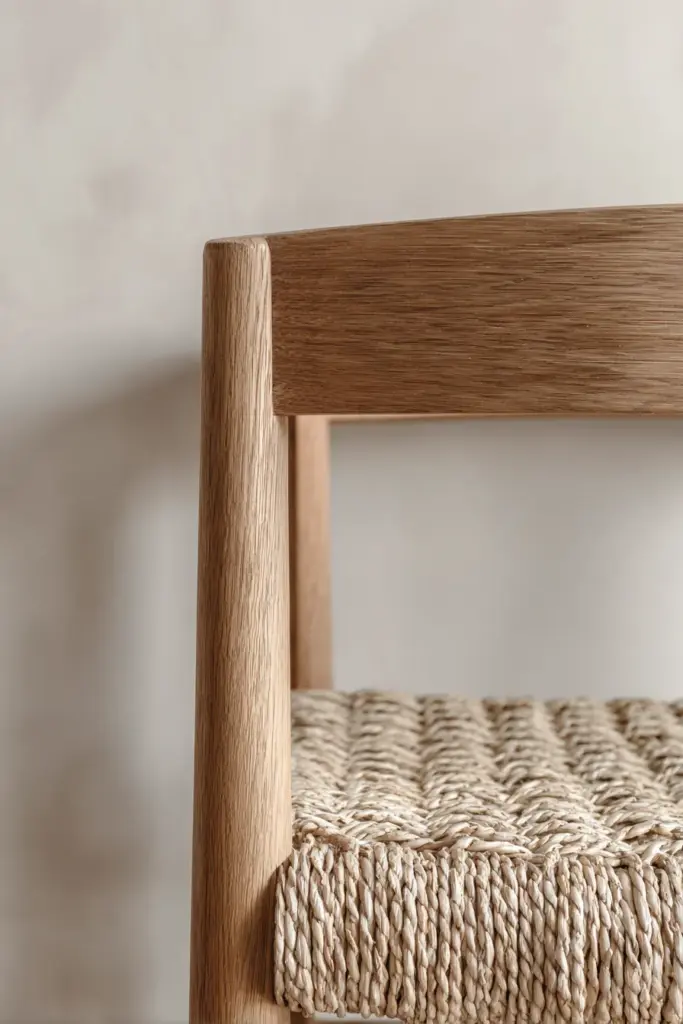
Rattan chairs, woven storage baskets, and bamboo shelving add incredible warmth to a Japandi room — but they’re dust magnets. Use a soft-bristled brush or vacuum attachment to lift dust from the weave without fraying the fibers.
For deeper cleans, wipe with a cloth dampened with a mild soap solution, then allow to air dry fully. Never soak rattan — moisture can cause warping or mold deep within the weave.
Linen and Natural Fabric Upholstery
Your linen sofa or boucle armchair is likely the most-used surface in the room. For daily upkeep, a lint roller or soft upholstery brush removes surface debris beautifully.
For spills, blot immediately — never rub. A solution of one part white vinegar to two parts water works well on most linen stains and won’t leave residue. For persistent marks, a small amount of diluted castile soap on a damp cloth, worked gently in circular motions, lifts most stains without harming the fabric.
Eco-Friendly Japandi Cleaners: DIY Recipes That Actually Work
Japandi living is inherently sustainable — and your cleaning products should match that ethos. Many commercial cleaners contain VOCs (volatile organic compounds) that can off-gas into your living space and dull the natural surfaces you’re working to protect.
These simple, low-VOC recipes keep your space clean without compromise.

All-Purpose Surface Spray
- 1 cup distilled water
- ½ cup white vinegar
- 10 drops tea tree essential oil
- 5 drops lavender essential oil
Mix in a glass spray bottle. Use on sealed wood, glass, and ceramic surfaces. The lavender adds a soft, clean scent that feels intentional — not chemical.
Baking Soda Paste for Stubborn Marks
Mix baking soda with just enough water to form a gentle paste. Apply to ceramic, stone, or sealed surfaces with a soft cloth, then wipe clean. This is particularly effective on the undersides of vases or plant trays.
Floor Care for Natural Wood and Tatami
For natural wood floors, a few drops of castile soap in a bucket of warm water used with a well-wrung mop is ideal. Avoid excess moisture — it’s the enemy of wood floors.
For tatami mats, a light mist of diluted white vinegar followed by a dry wipe removes surface dust and gently deodorizes. Always brush along the grain of the mat, not against it.
Biophilic Plant Maintenance in Japandi Spaces
One of the most distinctive — and often overlooked — elements of Japandi décor is the presence of living plants. A trailing pothos on a shelf, a sculptural fiddle leaf fig, or a cluster of ferns in a ceramic planter all bring life to the room.
But plants also bring soil, water rings, and fallen leaves. Managing this mindfully keeps your room serene.
Low-Maintenance Plant Picks for Japandi Rooms
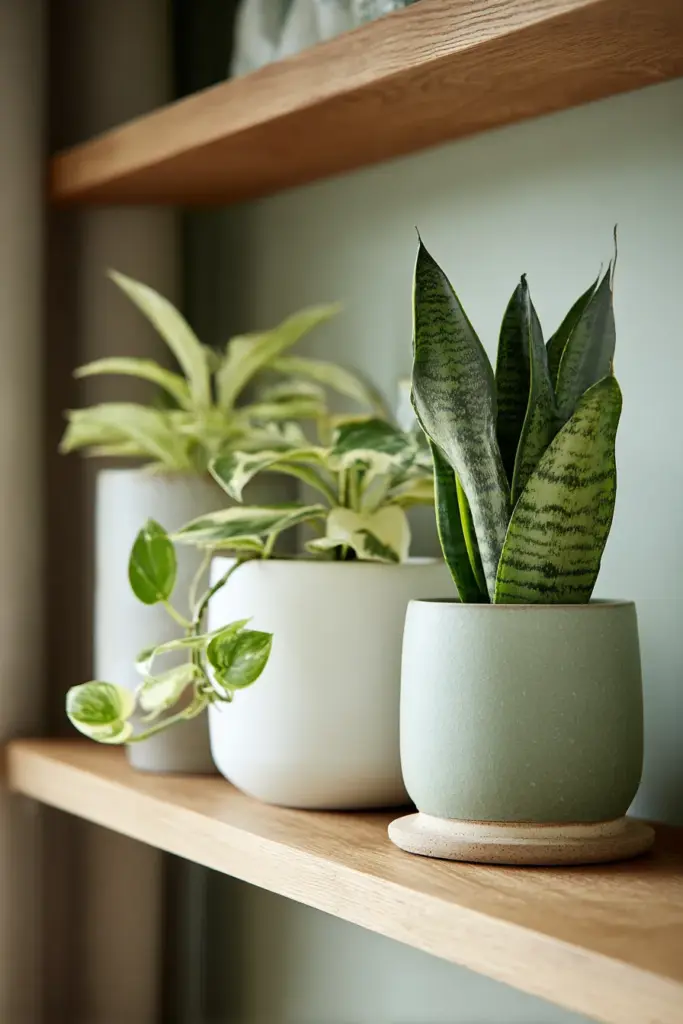
- Pothos — trailing, forgiving, and easy to dust
- Snake plant — architectural, sculptural, nearly zero mess
- Peace lily — soft and slightly moody; wipe leaves monthly
- Bonsai — meditative, minimal footprint
- Moss arrangements — sealed in glass or trays; no soil mess
Keeping Leaves Dust-Free
Over time, plant leaves accumulate dust — which not only dulls their appearance but also reduces their ability to photosynthesize. Use a damp cloth to gently wipe each leaf, supporting the stem with your other hand. A drop of neem oil diluted in water adds a subtle sheen and discourages pests.
The Pebble Tray Trick
For plants in ceramic pots near your living area, place the pot on a pebble tray with a little water beneath the stones. This keeps humidity consistent and eliminates water drips on your floor or furniture. Change the water weekly to prevent stagnation.
Layered Lighting Maintenance: Paper Shades, Brass Fixtures, and LED Care
Japandi lighting is quiet and intentional — paper pendant shades, warm Edison bulbs, muted brass sconces, and soft floor lamps that pool light rather than flood it. These fixtures are stunning, but they gather dust in ways that subtly dim your room.
Cleaning Paper and Washi Shades
Use a clean, dry paintbrush or soft makeup brush to lightly sweep dust from paper and washi lampshades. Never use a damp cloth — moisture warps the paper and can leave permanent marks.
If a shade has a light scuff or mark, a white artist’s eraser gently applied can lift surface marks without tearing the material.
Brass and Metal Fixtures
Brass naturally develops a warm patina over time — in Japandi style, this is desirable. To clean without stripping the patina, wipe with a dry microfiber cloth. For more buildup, a tiny amount of olive oil on a cloth, buffed gently, restores warmth and sheen.
Avoid commercial brass polishes unless you specifically want to return the fixture to a bright finish. In a Japandi room, the aged look is the point.

LED Bulb Refresh
Dust on LED bulbs subtly reduces light output. Every month or so, wipe bulbs with a dry or barely damp cloth when they are cool and switched off. This simple step noticeably brightens your room without changing a single setting.
Preventive Declutter: Seasonal Rotation for Japandi Living Rooms
Japandi philosophy embraces wabi-sabi — the beauty of impermanence. This makes seasonal rotation not just practical, but philosophically aligned with how the space is meant to be lived in.
What to Rotate Each Season
Rather than a full overhaul, think of seasonal rotation as refreshing the mood of your living room:
- Spring/Summer: Swap heavy throws for linen blankets; bring in lighter ceramic vessels; introduce fresh eucalyptus or dried flowers
- Autumn/Winter: Layer in heavier textures — wool throws, darker wood tones, warm amber candlelight; retire summer plants to brighter rooms
Multifunctional Furniture as a Cleaning Ally
Japandi rooms often feature furniture that does double duty — ottomans with storage, minimalist shelves, side tables that tuck away. These pieces make decluttering intuitive.
Use seasonal rotation as an opportunity to audit what’s actually being used. If an object has been sitting untouched for two seasons, it may be asking to leave the space. The kiyomeru principle applies to things as much as to dust.
Japandi Living Room Cleaning Checklist
Daily (10 minutes)
- Fold throws and fluff cushions
- Wipe down coffee table and surfaces
- Sweep or dry-mop floors
- Dust shelves with microfiber cloth
- Return objects to their resting place
Weekly
- Vacuum or brush upholstered furniture
- Wipe down wood furniture with diluted soap solution
- Clean plant leaves and check pebble trays
- Dust lighting fixtures and lamp shades
- Spot-clean any fabric stains
Monthly
- Deep-clean rattan and woven accents
- Condition unsealed wood with oil
- Wipe LED bulbs (cool and switched off)
- Refresh plant soil surface; check for pests
- Rotate décor objects; audit for clutter
Seasonally
- Rotate textiles, throws, and decorative plants
- Deep-clean upholstery with eco-friendly solution
- Check window hardware and curtains for dust
- Review and declutter storage furniture
Conclusion
A clean Japandi living room isn’t just visually beautiful — it feels like an exhale.
When every surface has been gently tended, every object returned to its place, every natural material treated with the care it deserves, the room becomes more than a space. It becomes a sanctuary — one that holds you, quiets you, and meets you exactly where you are.
These aren’t cleaning tips so much as they are love letters to your home. Small, daily, intentional acts that accumulate into a way of living — slowly, beautifully, and well.
At ERYLIN, we believe the spaces you inhabit shape the person you become. Tend yours with the same warmth you’d offer anything precious.
And enjoy the calm that follows.
FAQs: Japandi Living Room Cleaning Tips
How do you clean Japandi furniture without damaging natural materials?
Always use gentle, diluted solutions — a few drops of mild soap in warm water works for most sealed wood, rattan, and fabric surfaces. Avoid harsh chemical sprays, bleach, or abrasive scrubbers. After any damp wipe, follow with a dry cloth to remove moisture. For conditioning, beeswax or food-grade mineral oil keeps natural wood nourished and protected.
What are the best quick daily cleaning routines for a minimalist Japandi home?
A 10-minute morning reset covers the essentials: fold throws, wipe surfaces, dry-mop floors, dust shelves, and return objects to their place. This mirrors the Japanese soji tradition and works perfectly in a Japandi room because there’s minimal clutter to manage. Pair it with a brief 5-minute evening tidy and your room stays perpetually calm.
Which eco-friendly products work best for Japandi living rooms?
White vinegar, baking soda, castile soap, and essential oils cover nearly every cleaning need in a Japandi home. A diluted vinegar spray works on sealed wood, glass, and ceramics; baking soda paste lifts marks from stone surfaces; and castile soap is safe for linen upholstery and floors. These low-VOC options protect both your natural materials and your air quality.
How do I maintain indoor plants in a Japandi space without creating mess?
Choose low-maintenance varieties like pothos, snake plants, or peace lilies. Use pebble trays beneath pots to catch drips and maintain humidity without water damage to your floors or furniture. Wipe leaves monthly with a damp cloth to remove dust and keep them vibrant. Change pebble tray water weekly to prevent stagnation.
What is the Japanese Kiyomeru principle and how does it apply to living room tidying?
Kiyomeru means u0022to cleanse or purify in the momentu0022 — addressing mess immediately rather than letting it accumulate. In a Japandi living room, this looks like wiping a water ring right away, folding a throw the moment you leave the sofa, or removing a cup to the kitchen before sitting back down. This habit, practiced consistently, means your living room rarely needs a u0022big cleanu0022 at all — it simply stays in a state of quiet readiness.