
Table of Contents
There is a particular kind of stillness you feel stepping into a beautifully designed room — where nothing shouts and everything breathes. Two design philosophies have captured that feeling for modern homes: Japandi and Wabi-Sabi. Both are quiet. Both honor nature. Yet each tells a very different story about beauty, order, and what it means to feel at home.
If you’ve been scrolling through living room inspo and sensing a pull toward one or the other — or wondering if you could somehow have both — you’re in the right place.
At ERYLIN, we believe your home should feel like a slow exhale. So let’s walk through both worlds with fresh eyes, a soft touch, and the kind of detail that actually helps you make choices.
Whether you’re redesigning a compact condo in Manila or refreshing a suburban sala, this guide will help you find your style — and maybe even combine the two.
What Is Japandi Style? A Philosophy of Purposeful Calm
Japandi is the elegant child of two minimalist traditions: Japanese wabi sensibility and Scandinavian hygge warmth. It emerged as a design language that prizes clean lines, intentional simplicity, and quiet function.
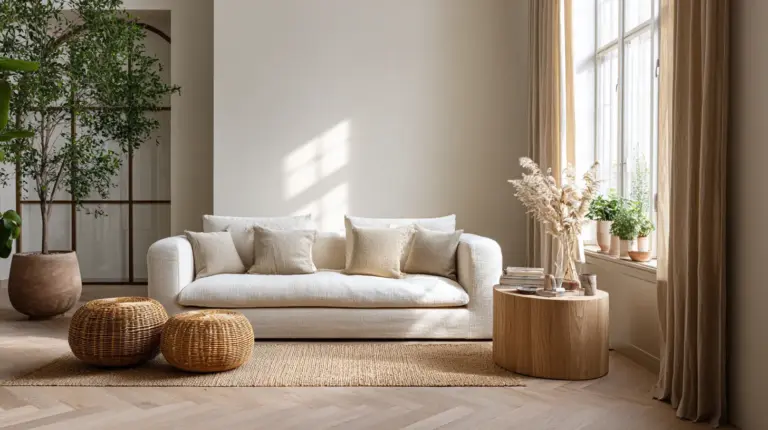
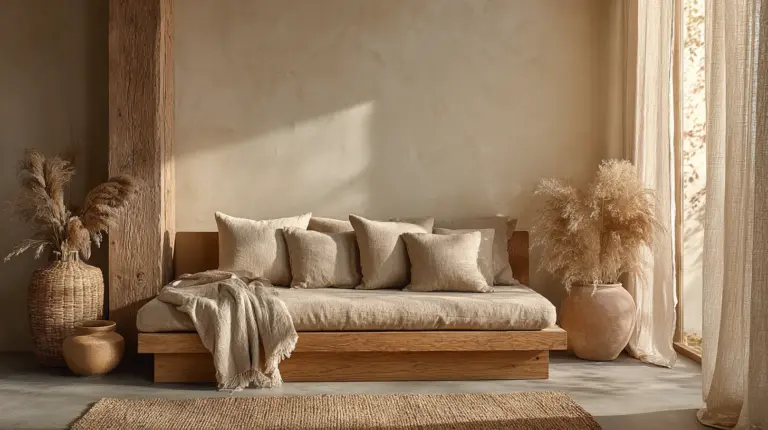
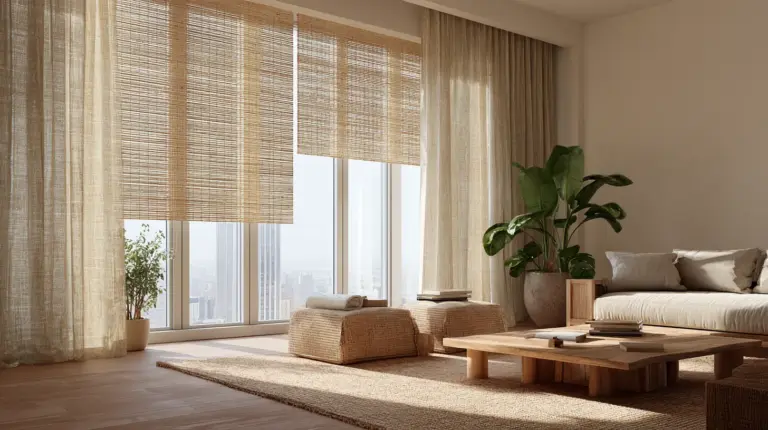
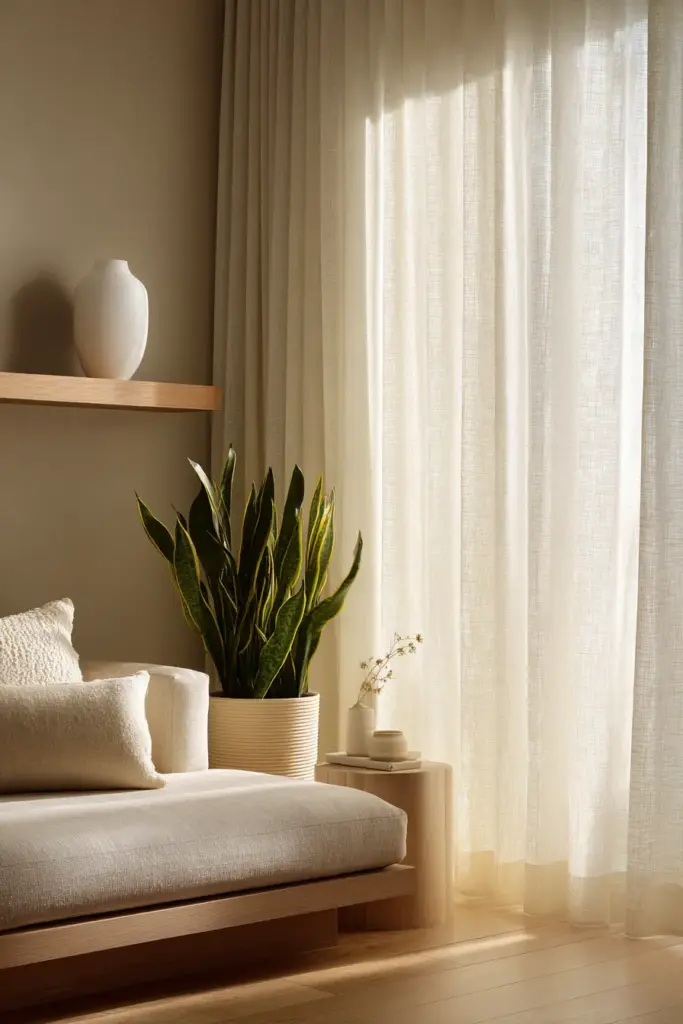
Think of a low-profile linen sofa with no visible hardware. A single ceramic vase on a pale oak shelf. Light that arrives softly through sheer curtains and settles like afternoon honey.
Japandi living rooms tend to feel curated — as if every object was chosen with care and nothing exists without a reason. The palette leans into warm neutrals: bone, greige, soft charcoal, dusty sage. There is order here, but it is never cold.
Core Elements of a Japandi Living Room
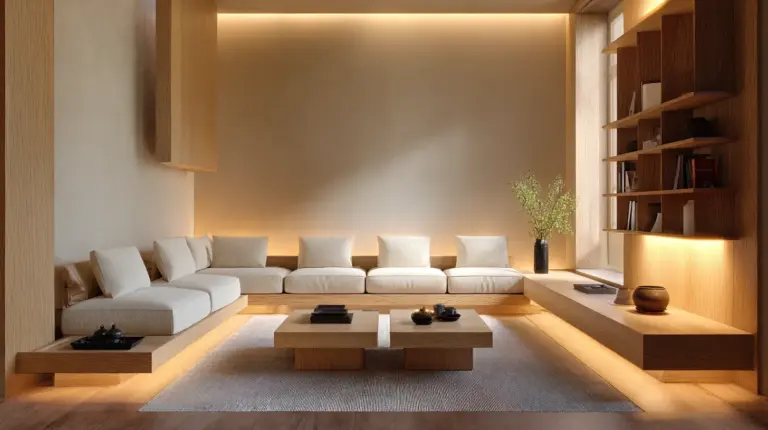
Furniture in Japandi is low, geometric, and grounded. Think platform sofas, tapered wooden legs, and multifunctional pieces that disappear neatly into the room. Storage is hidden. Clutter simply does not exist.
Materials favor natural warmth without roughness: light-toned oak, bamboo, smooth matte ceramics, and woven linen. The textures invite you to touch them — but they are refined, not raw.
Lighting is layered and intentional. Ambient LED strips along shelving, a rattan pendant over the coffee table, a small paper floor lamp in the corner — each source adds warmth without glare.
Plants in Japandi are structural and architectural. A single tall monstera. A snake plant in a matte planter. Biophilic elements are present, but they follow the same rule as everything else: one thing, chosen well.
What Is Wabi-Sabi Style? A Philosophy of Beautiful Imperfection
Wabi-Sabi is ancient, rooted in Zen Buddhist aesthetics. It finds beauty not in perfection but in the passage of time — in a cracked clay bowl, a weathered piece of driftwood, a linen cloth worn soft from years of use.
If Japandi is the art of editing, Wabi-Sabi is the art of accepting.
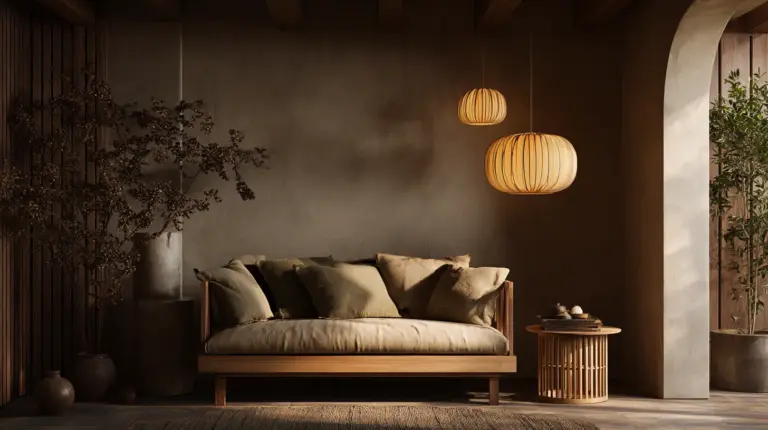
A Wabi-Sabi living room feels like a breath held gently — textured, a little worn at the edges, deeply human. It doesn’t try to be perfect. That’s precisely why it feels so comforting.
The palette here is earthier, deeper: raw terracotta, mossy green, rust, sand, and aged wood tones. Nothing is pristine. Everything has a story.
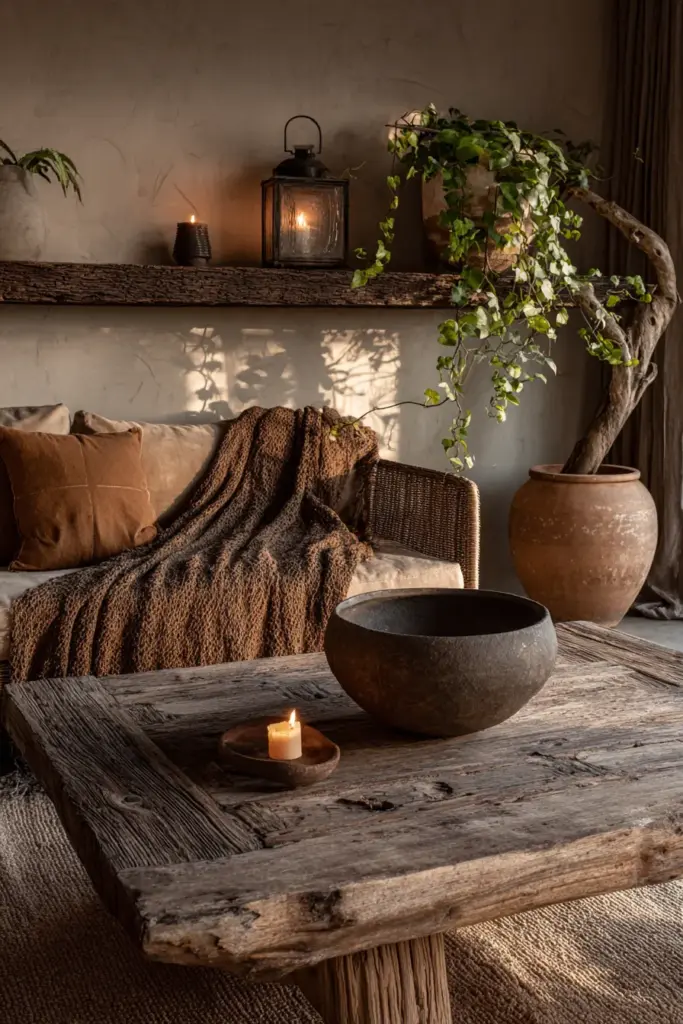
Core Elements of a Wabi-Sabi Living Room
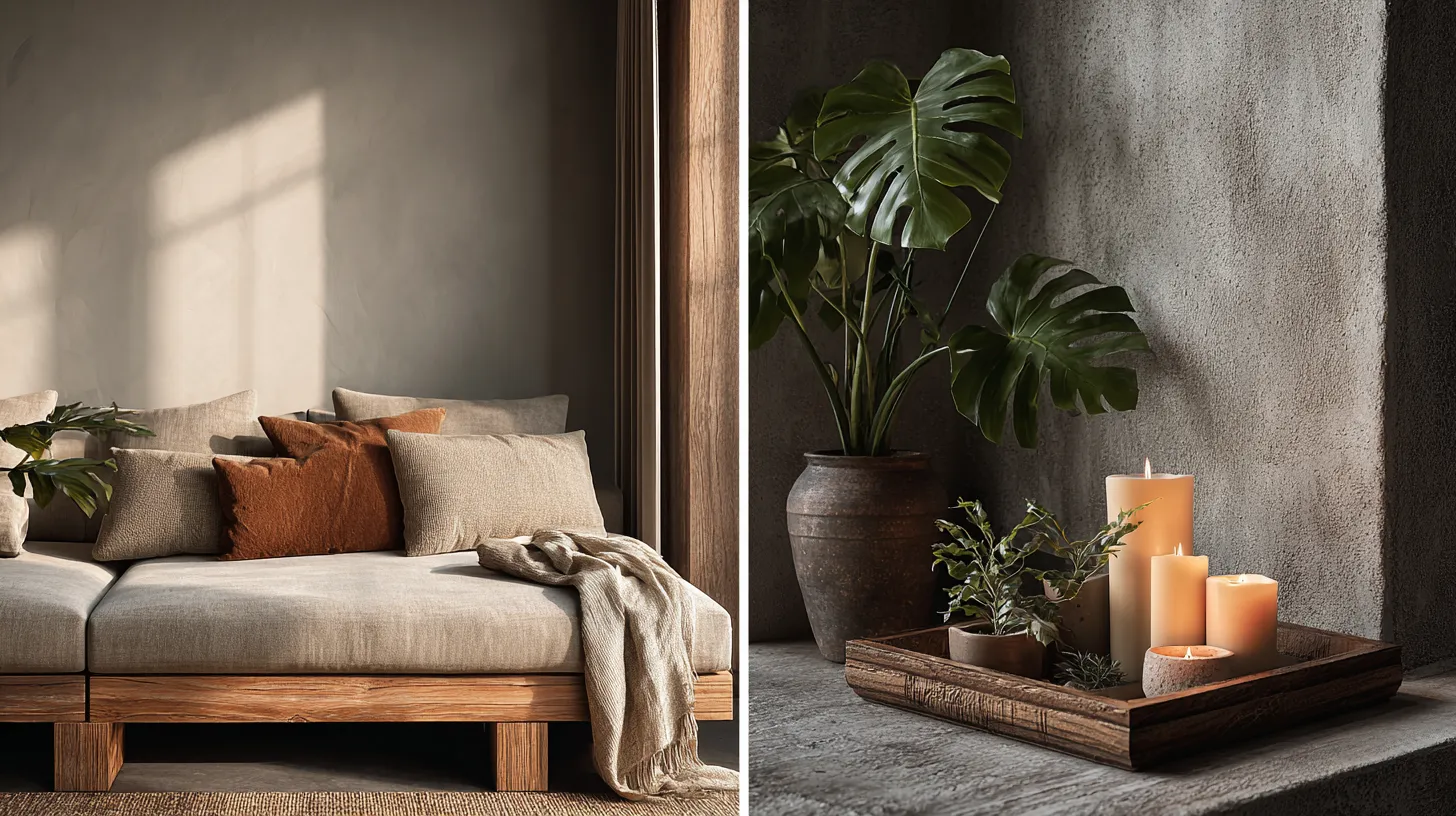
Furniture in Wabi-Sabi is handcrafted and organic. Rounded shapes. Uneven edges. A side table made from a raw-edge slab of reclaimed acacia. A sofa draped in chunky, undyed cotton throws. The cozy furniture here feels lived-in from the start.
Materials are prized for their natural aging: unglazed stoneware, rough linen, woven rattan, river stones, reclaimed timber. The beauty is in the imperfection — a kintsugi bowl repaired with gold seams, a cracked clay vase left as-is.
Lighting leans raw and warm. Paper lanterns. Beeswax candles. Edison bulbs in exposed sockets. The room glows rather than illuminates.
Plants in Wabi-Sabi are lush and untamed. Trailing pothos, hanging ferns, even a moss wall as a living backdrop. Nature here is not curated — it grows.
Japandi vs Wabi-Sabi: Side-by-Side Comparison
| Feature | Japandi | Wabi-Sabi |
|---|---|---|
| Philosophy | Mindful order, purposeful calm | Beauty in imperfection, acceptance of time |
| Palette | Warm neutrals — bone, greige, sage, charcoal | Earthy tones — terracotta, rust, sand, moss |
| Furniture Shape | Clean lines, low-profile, geometric | Organic, handcrafted, irregular edges |
| Materials | Oak, bamboo, smooth linen, matte ceramic | Raw clay, reclaimed wood, unglazed stoneware, rattan |
| Lighting | Layered LEDs, rattan pendants, paper lamps | Candles, paper lanterns, Edison bulbs |
| Plants | Architectural — monstera, snake plant | Lush and trailing — pothos, ferns, moss |
| Mood | Quiet, curated, elevated | Warm, textured, soulful |
| Maintenance | High — clutter must be controlled | Low — imperfection is welcome |
| Best For | Small, structured spaces | Relaxed, creative, layered rooms |
What Is the Main Difference Between Japandi and Wabi-Sabi?
This is the question at the heart of it all — and the answer is more philosophical than visual.
Japandi is about intentional order. It borrows Scandinavian functionality and Japanese restraint to create spaces that feel edited, elevated, and efficient. Every piece serves a purpose. The beauty comes from control.
Wabi-Sabi is about releasing control. It finds grace in the unfinished, the aged, the imperfect. A Wabi-Sabi room doesn’t ask you to manage it — it asks you to be in it.
Think of it this way: Japandi is the beautifully organized bookshelf. Wabi-Sabi is the vintage novel with a bent spine and a handwritten note inside. Both are beautiful. They just speak different languages.
Can You Mix Japandi and Wabi-Sabi in a Living Room?
Yes — and this is where the most interesting spaces live.
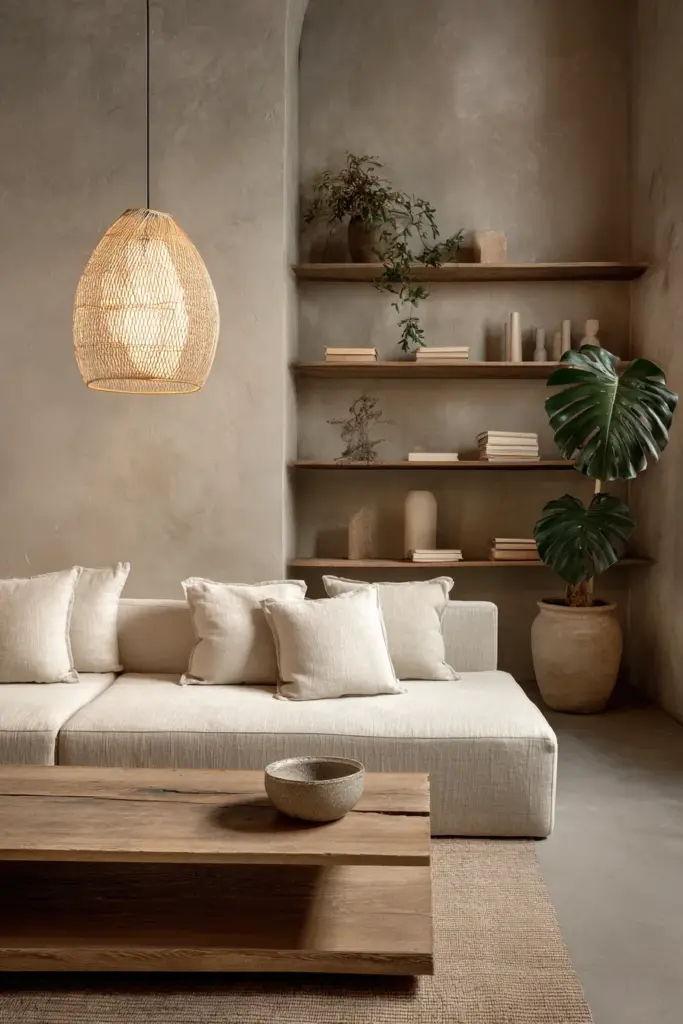
A hybrid Japandi-Wabi-Sabi room takes the clean lines and muted palette of Japandi and softens them with Wabi-Sabi’s raw textures and earthy soul. It’s the sweet spot between curated and lived-in.
How to Create a Japandi-Wabi-Sabi Fusion Room
- Start with Japandi bones: low sofa, clean furniture lines, minimal clutter, warm neutral walls.
- Layer in Wabi-Sabi soul: a handthrown ceramic lamp, a raw-edge coffee table, a chunky linen throw in undyed natural cotton.
- Choose a unified palette — warm stone, pale wood, and one earthy accent like terracotta or rust.
- Let one imperfect thing shine: a kintsugi bowl on the shelf, a reclaimed plank as a floating bench, a weathered rattan tray.
- Add biophilic layers: a monstera for structure (Japandi), trailing pothos for softness (Wabi-Sabi).
The result is a room that breathes — organized enough to feel restful, textured enough to feel alive.
Which Is Better for Small Living Rooms: Japandi or Wabi-Sabi?
For compact spaces, Japandi has the practical edge.
Its emphasis on low-profile, multifunctional furniture keeps the visual weight light. Hidden storage, slim silhouettes, and an intentionally minimal approach prevent small rooms from feeling crowded. A Japandi living room in a small condo feels airy and purposeful.
Wabi-Sabi, with its layers of texture, trailing plants, and organic shapes, can feel rich and cozy — but requires more square footage to breathe without tipping into cluttered.
Small Space Tips by Style
Japandi Small Living Room:
- Choose a low-platform sofa in greige or oatmeal linen
- Use floating shelves instead of bulky cabinets
- One statement plant — tall and slender
- Layer your lighting to create depth without adding furniture
Wabi-Sabi Small Living Room:
- Keep furniture to a minimum and let texture do the work
- Use a single large raw-edge coffee table as a focal point
- Opt for wall-mounted or hanging plants to save floor space
- Let soft candlelight warm the room in the evenings
Japandi vs Wabi-Sabi Living Room Ideas for 2026
Design in 2026 is moving toward sustainable hybrids — spaces that blend philosophy, function, and ecological awareness. Here’s where both styles are heading.
2026 Japandi Trends
- Bamboo-forward furniture — fast-growing, carbon-light, and naturally elegant
- Warm greige walls replacing stark white for a softer, more grounded look
- Integrated smart lighting — ambient LEDs that adjust by time of day, hidden in joinery
- Modular sofas in muted tones that reconfigure as the household changes
2026 Wabi-Sabi Trends
- Recycled clay and upcycled ceramics as statement décor
- Moss walls as a living, breathing focal point — both beautiful and air-purifying
- Natural linen in deeper tones: rust, ochre, sage — richer than before
- Kintsugi-inspired accents: visible repair as design philosophy, not just art object
Japandi vs Wabi-Sabi on a Budget: Practical Guide
Good news: both styles reward restraint, which means you don’t need to spend a lot to get them right.
| Element | Japandi Budget Pick | Wabi-Sabi Budget Pick |
|---|---|---|
| Sofa | Second-hand neutral linen sofa, re-upholstered | Vintage rattan loveseat with layered throws |
| Coffee Table | Flat-pack wood table in oak finish | Raw-edge acacia slab from a local woodshop |
| Lighting | LED strip under shelving + paper pendant | Cluster of beeswax pillar candles + rattan lamp |
| Ceramics | Matte white vase from tiangge or Divisoria | Handthrown stoneware from local potters |
| Textiles | Undyed linen cushion covers | Chunky cotton throws in natural cotton |
| Plants | Snake plant + single monstera | Trailing pothos + hanging fern |
In the Philippines, Divisoria, weekend markets, and local woodcrafters are goldmines for Wabi-Sabi finds. For Japandi, look for flat-pack furniture with clean lines and add warmth with natural textiles.
Checklist: Japandi vs Wabi-Sabi — Which One Fits Your Living Room?
Choose Japandi if you:
- Love a clean, organized, clutter-free space
- Prefer furniture that multitasks quietly
- Want a room that feels elevated and modern
- Enjoy editing and curating your space regularly
- Have a smaller room that needs visual lightness
Choose Wabi-Sabi if you:
- Feel most at home in textured, layered environments
- Appreciate objects that age and wear beautifully
- Want your space to feel deeply personal and imperfect
- Love organic shapes, raw materials, and handmade things
- Have a more relaxed approach to order and maintenance
Choose a Japandi-Wabi-Sabi Hybrid if you:
- Want clean structure with soulful warmth
- Love the look of both but can’t choose
- Are designing for comfort and visual calm
- Want a space that feels both elevated and lived-in
Conclusion: The Room That Feels Like You
In the end, both Japandi and Wabi-Sabi are asking the same question: what does it mean to truly rest?
Japandi answers with order — with the quiet confidence of a space where everything is in its place. Wabi-Sabi answers with acceptance — with the tender grace of a room that holds your imperfections alongside its own.
Neither is more beautiful. Neither is more correct. The most beautiful living room is the one that feels like an honest reflection of who you are — the part of you that longs for stillness, for nature, for the slow and the genuine.
At ERYLIN, we design for that feeling. Whether your home leans toward the curated calm of Japandi or the soulful textures of Wabi-Sabi, we’re here to help you find it — one thoughtful piece at a time.
Your home is already becoming what it’s meant to be. We’re just here to help you listen to it.
Frequently Asked Questions
What is the main difference between Japandi and Wabi-Sabi?
Japandi is rooted in minimalist order — clean lines, intentional curation, and the marriage of Japanese and Scandinavian design. Wabi-Sabi is rooted in the Japanese philosophy of imperfection — finding beauty in the aged, the irregular, and the worn. Japandi controls the space; Wabi-Sabi releases it.
Can you mix Japandi and Wabi-Sabi in a living room?
Absolutely. A Japandi-Wabi-Sabi fusion uses clean furniture silhouettes (Japandi) layered with raw textures, handmade ceramics, and organic materials (Wabi-Sabi). The result is a space that feels both composed and deeply warm — the best of both philosophies.
Which style is better for small living rooms?
Japandi generally works better in smaller spaces because of its emphasis on low-profile, multifunctional furniture and minimal visual clutter. Wabi-Sabi can work in small rooms too, but requires more restraint with layering to avoid feeling crowded.
How do I decorate a Wabi-Sabi living room on a budget?
Focus on natural and imperfect materials: raw-edge wood, unglazed ceramics, undyed cotton throws, and second-hand rattan. Local markets and artisan woodshops are excellent sources. A few handmade pieces and trailing plants can transform a room without a large investment.
What plants work best in Japandi vs Wabi-Sabi living rooms?
Japandi favors architectural plants — tall snake plants, structured monstera, or a single fiddle-leaf fig in a matte planter. Wabi-Sabi welcomes lush, untamed growth — trailing pothos, hanging ferns, air plants, and even moss walls that bring nature’s wildness indoors.