
Table of Contents
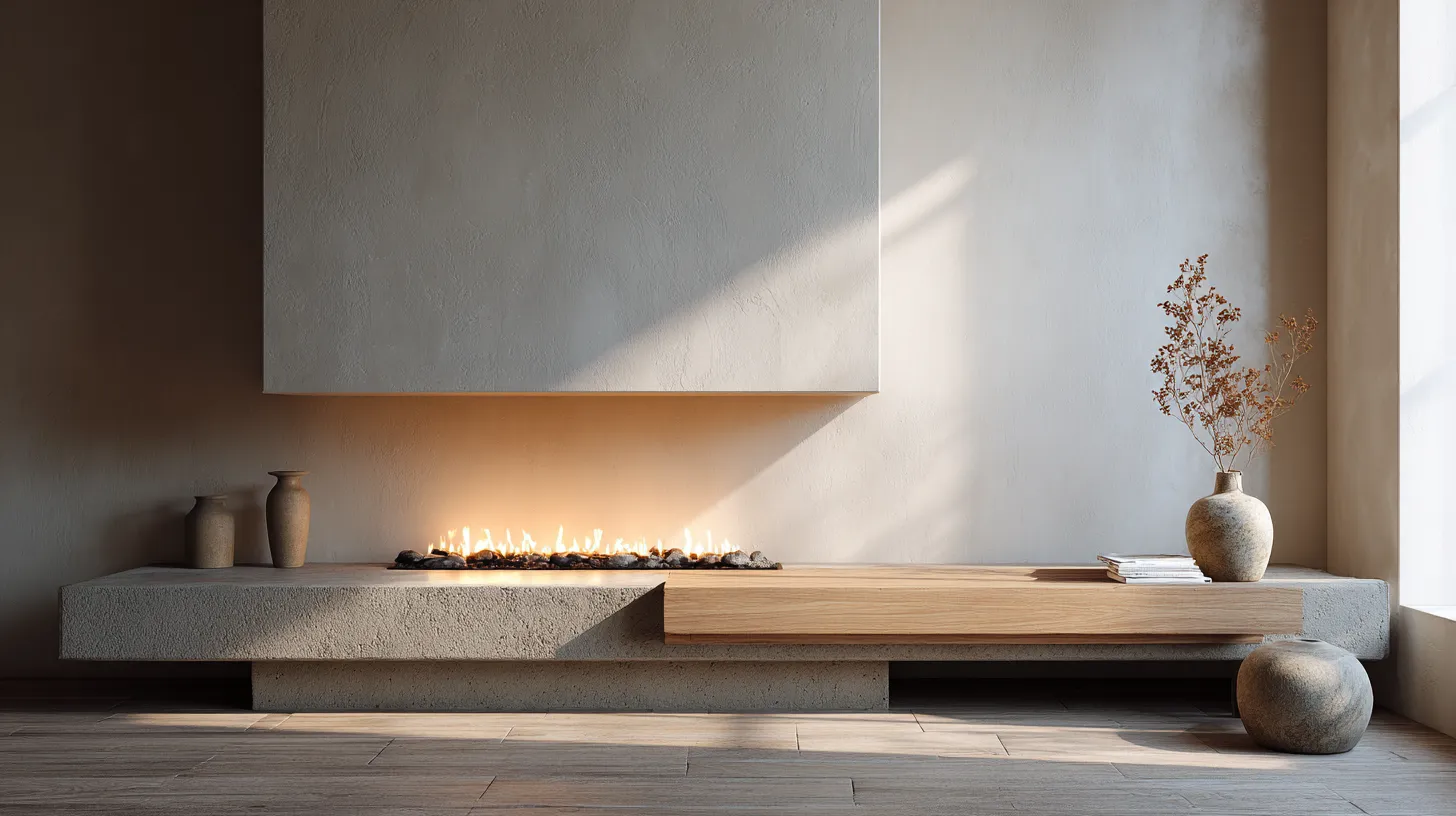
There is something quietly transformative about a fireplace in a Japandi living room. It is not just a heat source. It is an anchor — the place your eyes return to, the reason you linger a little longer on the sofa, the soft rhythm that sets the tone for an entire evening.
Japandi design, the beautifully considered marriage of Japanese minimalism and Scandinavian hygge, finds its most soulful expression around the hearth. Every material, every line, every flicker of light is intentional. Nothing is accidental. And yet, nothing feels rigid.
Whether you are drawn to a sleek linear gas fireplace framed in pale oak, a faux electric insert glowing softly in a tropical apartment, or a simple concrete surround with a single ceramic on the mantel — this guide will help you build a living room that feels both deeply calm and quietly alive.
This is ERYLIN’s gentle invitation to reimagine the heart of your home.
What Makes a Fireplace Japandi Style?
A Japandi fireplace is defined by restraint, not absence. It brings warmth without noise, beauty without clutter, and presence without drama.
The hallmarks are clean, unbroken lines — a surround that sits flush with the wall or extends only slightly. Materials stay natural and honest: pale oak, raw stone, smooth concrete, or soft white plaster. The palette is narrow and intentional — warm whites, light greys, muted greens or browns, and one quiet accent like deep charcoal or aged bronze.
Wabi-sabi, the Japanese philosophy of finding beauty in imperfection, is felt here more than seen. A fireplace with a slightly textured stone face, a wooden mantel with visible grain, or an aged metal frame each carry that gentle, lived-in quality that makes a space feel human.
Hygge, the Scandinavian concept of cozy togetherness, brings the warmth — both literal and emotional. A Japandi fireplace is never cold-looking, even in its simplicity.
Choosing the Right Fireplace Type for Your Japandi Living Room
Before styling, you choose the fire itself. And the right choice depends on your home, your climate, and your lifestyle.
Gas vs Electric vs Wood Fireplace for Japandi Style
| Type | Aesthetics | Maintenance | Heat Output | Best For |
|---|---|---|---|---|
| Gas | Clean, linear, modern | Low | High | Cooler climates, permanent homes |
| Electric | Flexible, flameless options | Very low | Low–medium | Tropical climates, rentals |
| Wood-burning | Most organic, authentic | High | Very high | Rural homes, large spaces |
| Bioethanol | Sleek, no chimney needed | Low | Medium | Apartments, modern interiors |
For most Japandi living rooms in the Philippines or similar tropical climates, an electric or bioethanol fireplace is the most practical and beautiful choice. The ambiance is everything — the heat is secondary.
The Best Materials for a Japandi Fireplace Surround
Material choice is where the Japandi philosophy is most tangible. You feel it when you walk into the room.
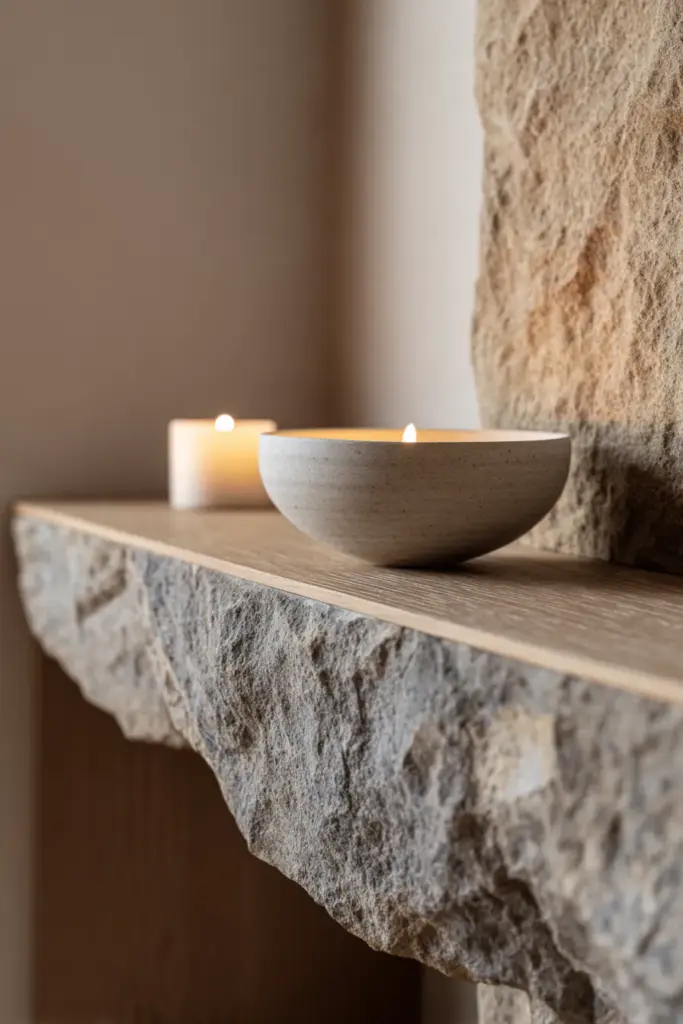
Light Wood + Stone: The Classic Pairing
Pale oak or ash wood paired with natural stone creates a surround that feels rooted and timeless. The wood brings warmth; the stone brings weight and permanence. Together, they balance each other without competing.
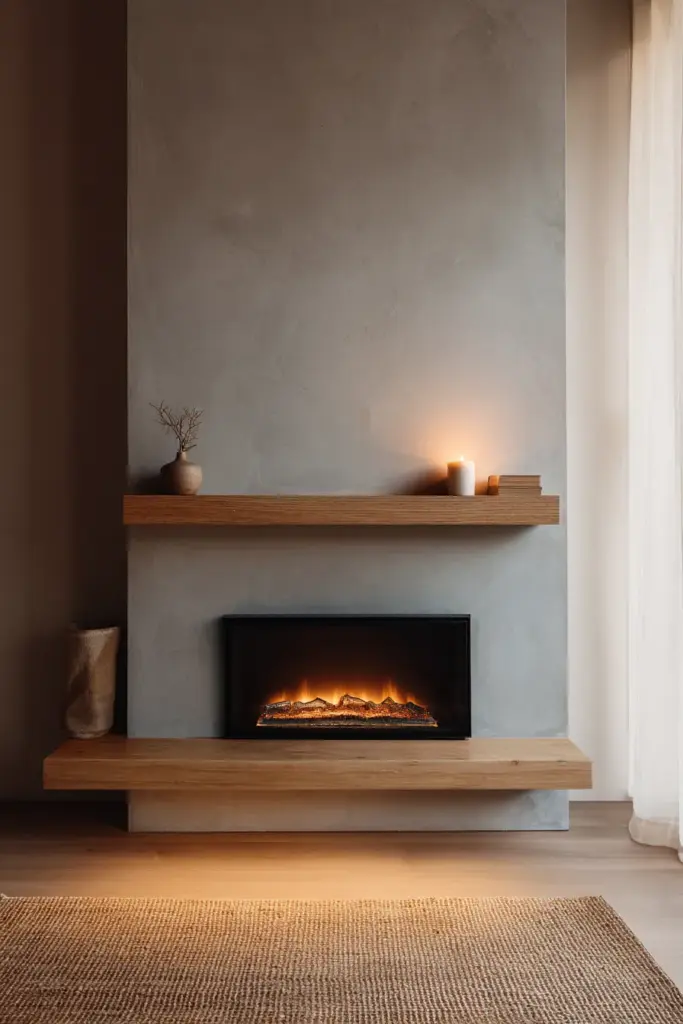
Choose a floating wooden mantel at a low height — around 120 to 140 centimeters from the floor — to keep proportions grounded and calm. Let the stone surround be simple: flat-faced, slightly textured, never ornate.
Concrete + Black Metal: The Contemporary Edge
For a more modern Japandi expression, smooth concrete paired with a slim black metal frame delivers quiet drama. Concrete’s cool, matte surface contrasts beautifully with the warmth of a glowing flame.
This combination works especially well with a linear, low-profile fireplace insert. Keep the concrete unsealed or lightly sealed to preserve its raw, honest character.
White Plaster + Natural Wood: The Softest Option
A plaster surround in warm white or soft linen, paired with a natural timber mantel, creates a fireplace that almost disappears into the wall — in the most beautiful way. It is understated. It lets the fire itself become the feature.
This is a particularly good choice for smaller living rooms, where you want presence without heaviness.
Design rule to live by: Choose one or two natural materials. Mixing three or more textures in a single surround creates visual noise — the opposite of Japandi intention.
Japandi Fireplace Layout Ideas for Every Living Room
Where your fireplace lives in the room shapes everything — how light moves, how people gather, how the space breathes.
The Centered Feature Wall
The most common and most commanding layout. A fireplace centered on the main wall becomes the undisputed focal point. Frame it with negative space — resist the urge to fill the walls on either side with artwork or shelves. Let the fireplace breathe.
If you do add flanking elements, choose built-in low shelves at the same height as the mantel. Keep them sparse: one ceramic vessel, a small stack of books, a trailing plant.
Japandi Corner Fireplace Ideas
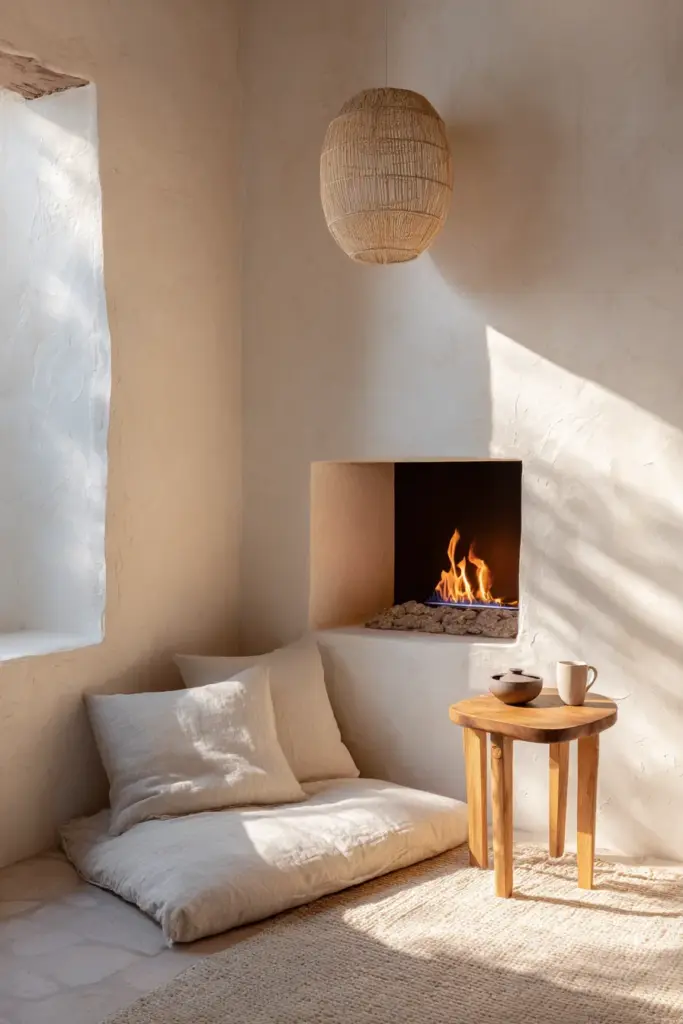
A corner fireplace is an underused gem in Japandi design. It creates an intimate nook, draws the eye diagonally across the room, and works especially well in square living rooms that need a sense of direction.
Style it with a low floor cushion or a single lounge chair angled toward the corner. Add a simple paper lantern overhead and a small side table for your evening tea. Suddenly, you have a sanctuary.
Japandi Media Wall Fireplace Ideas
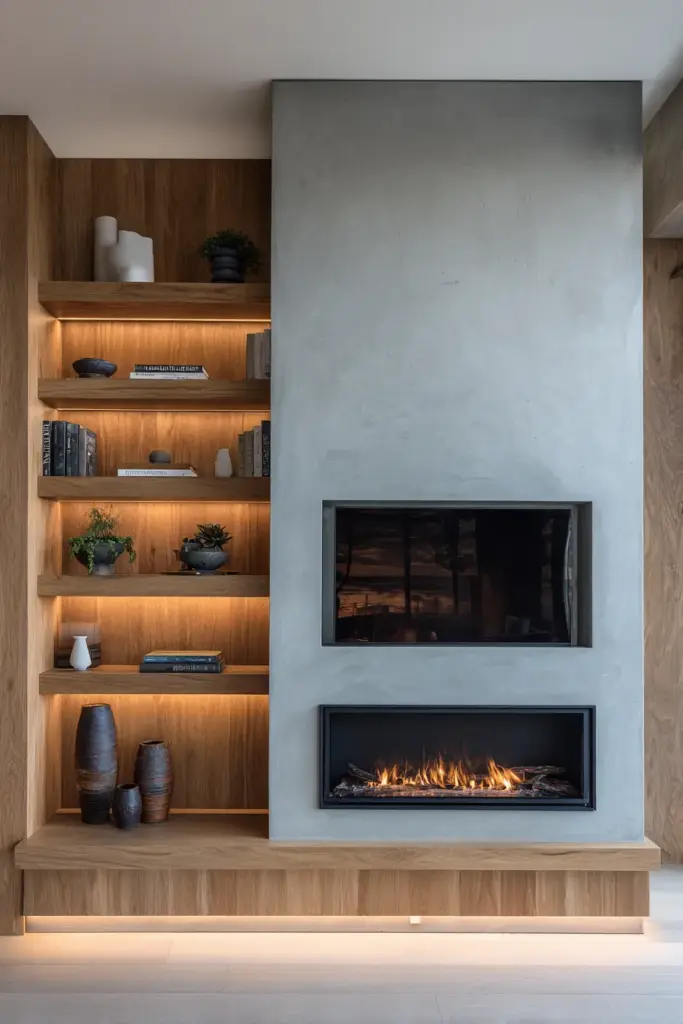
Combining a television and a fireplace in a single built-in wall is a natural fit for Japandi design — provided the execution is clean. Cable management must be invisible. The TV and fireplace should sit within the same architectural frame, separated by a horizontal band of oak or concrete.
Choose a matte black or dark grey television frame. Avoid glossy finishes; they interrupt the calm.
The Low-Profile Floating Fireplace
A wall-mounted, floating fireplace with nothing below it creates a sense of lightness and space. Particularly effective in smaller living rooms, this layout keeps the floor clear and the eye moving freely.
Pair it with a soft, low sofa and a natural fiber rug. The fireplace floats; everything else stays grounded.
How to Arrange Furniture Around a Japandi Fireplace
The furniture layout is the conversation your room has with itself. Get it right, and the whole space feels intentional.
Guiding principles:
- Arrange seating in a gentle semicircle or L-shape facing the fireplace — maximum three to four pieces
- Keep a clear walkway of at least 90 centimeters between seating and the fire
- Place a natural fiber rug (jute, wool, or cotton) to anchor the seating area and define the “hearth zone”
- Choose low-profile sofas and chairs — the fireplace should be visible from a seated position without craning
- Avoid pushing all furniture against the walls; pull pieces inward to create intimacy
A simple two-seater sofa, one lounge chair, and a low wooden coffee table is often enough. Less is more. Always.
How to Style a Mantel in a Japandi Living Room
The mantel is where many well-intentioned designs go wrong. The instinct is to fill it. The Japandi instinct is to edit ruthlessly.
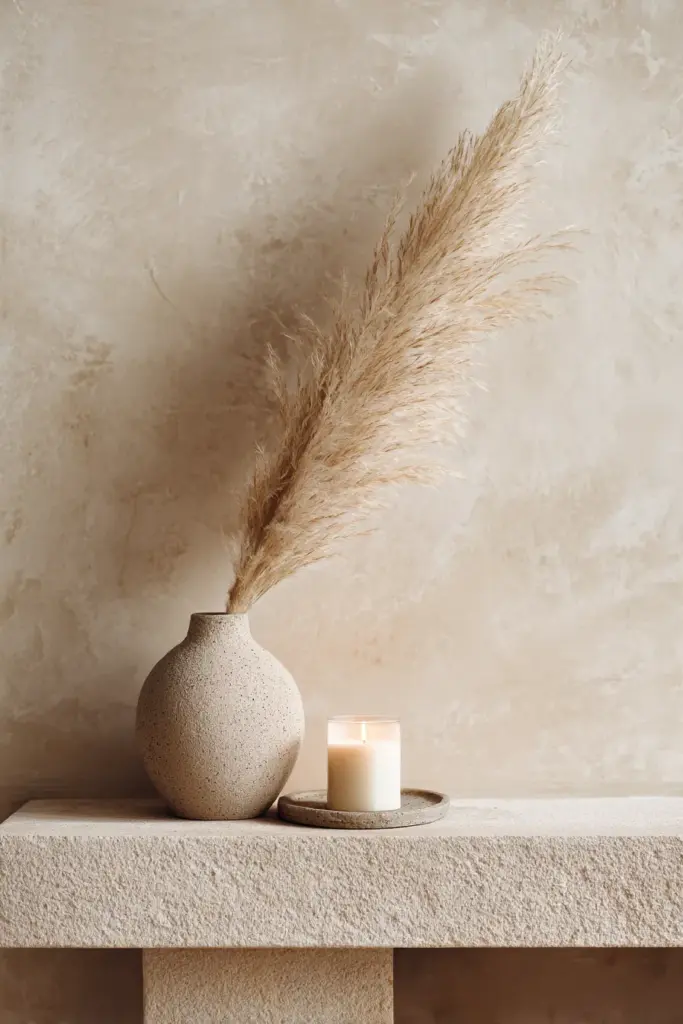
Choose one to three objects maximum. A single tall ceramic vase with a dried branch or single stem. One small candle in a natural wax. A small handmade bowl or a smooth river stone. That is enough. That is everything.
What to avoid on a Japandi mantel:
- Multiple framed photographs
- Symmetrical arrangements of identical objects
- Anything that sparkles, glitters, or is overly decorative
- More than one plant or trailing green element
The mantel should feel like a small pause — not a display.
Lighting Around a Japandi Fireplace
Lighting in a Japandi living room is layered, soft, and deliberate. It never announces itself.
Dimmable Ambient Lighting
Install dimmable LED strips behind the fireplace surround or along ceiling coves to create a warm, indirect glow that complements the flame. Set them to a warm white — around 2700K — for an evening atmosphere that feels like candlelight.
Paper Lanterns and Wall Sconces
A single Japanese-style paper lantern hung slightly to the side of the fireplace adds organic softness. Wall sconces in brushed brass or matte black, positioned at eye level on flanking walls, complete the layered effect.
Candlelight
Never underestimate actual candles. A cluster of varying-height candles on the hearth floor, in simple ceramic or concrete holders, creates a warmth that no LED fully replicates. Choose unscented or lightly scented options — cedarwood, white tea, or hinoki — to add another sensory layer without overwhelming the space.
Japandi Fireplace Ideas for Small Living Rooms
Small rooms deserve the same calm beauty — perhaps even more so. The key is proportion and restraint.
Are Fireplaces Good in a Small Living Room?
Absolutely — when chosen and positioned thoughtfully. An electric fireplace insert in a slim, built-in surround takes up no floor space and adds enormous visual warmth. A low-profile, wall-mounted bioethanol unit creates a focal point without dominating the room.
Tips for small Japandi living rooms:
- Keep the fireplace surround flush with or very close to the wall plane
- Choose a horizontal, linear format rather than a tall, vertical one
- Use a light-colored surround (white plaster, pale stone) to avoid visual weight
- Mirror or light-toned walls on either side will open the space
- Limit seating to two pieces — one sofa and one floor cushion is a complete Japandi arrangement
Japandi Electric Fireplace Ideas for Rental Homes
Can you have a Japandi fireplace in a rented apartment? Yes — and beautifully so.
An electric fireplace insert requires no gas line, no chimney, and no structural modification. Choose a slim, wall-mounted unit with a realistic flame effect. Frame it with a simple floating wooden shelf above and a concrete-look painted panel below. The result is indistinguishable from a built-in installation — and fully removable when you leave.
Renter’s checklist before installing:
- Confirm with your landlord that wall-mounting is permitted
- Check the circuit capacity for the electric insert you choose
- Use damage-free mounting strips or a freestanding surround if wall attachment is not allowed
- Ask about ventilation requirements for any bioethanol option
For purely tropical climates like the Philippines, where genuine heating is unnecessary, an electric fireplace is the ideal Japandi choice. It brings the ambiance — the warm glow, the visual stillness — without adding heat to an already warm room. Position it away from air conditioning vents, in a shadowed corner that captures natural light in the morning and glows softly in the evening.
Budget-Friendly Japandi Fireplace Ideas
A Japandi fireplace does not require a renovation budget. It requires good choices.
Affordable approaches:
- Wood-look tile + black metal frame: A simple black powder-coated metal frame around wood-look porcelain tile creates a convincing Japandi surround for a fraction of the cost of stone
- DIY floating mantel: Source a slab of local sustainable timber — molave or acacia work beautifully — and mount it directly to the wall. Finish with natural oil, not varnish
- Concrete-look paint: Apply a concrete-effect paint to an existing brick or drywall surround. The result is matte, cool, and deeply Japandi
- Refurbished electric insert: Source a second-hand electric fireplace unit, clean it, repaint the frame in matte black, and frame it with a new surround. New life, minimal cost
Japandi Micro-Rituals Around the Fireplace
This is where the philosophy becomes a practice. The Japandi fireplace is not just a design feature — it is the anchor for daily rituals of slowness and presence.
Morning: Begin the day with a cup of tea seated near the (switched-on) fireplace. No phone. Just warmth, steam, and light.
Evening: Keep a small journal on the side table. Five minutes of gratitude writing by firelight — or electric firelight — closes the day with intention.
Weekend: Create a reading nook with a low floor cushion and a soft wool throw. Let children curl up here with a book. Let the fireplace replace the screen for one hour.
These micro-rituals are the soul of Japandi living — the reason the design philosophy resonates so deeply beyond aesthetics.
Your Pre-Purchase Planning Checklist
Before you invest in a fireplace or begin a surround renovation, ask yourself:
- What natural materials are already in my room? Choose a surround that echoes, not competes.
- Will this be the main focal point or a secondary accent? If secondary, keep it smaller and simpler.
- How many seating pieces can I realistically fit without blocking circulation? Sketch a rough floor plan first.
- Gas, electric, or bioethanol? Consider your climate, rental status, and ventilation before aesthetics.
- What is my mantel styling limit? Commit to one to three objects and do not exceed it.
- Is my lighting layered? Plan for ambient, task, and accent lighting before the fireplace arrives.
Key Takeaways: Japandi Living Room Fireplace Ideas
- Choose one to two natural materials for your surround — wood, stone, concrete, or plaster
- Keep the mantel edited to one to three intentional objects
- Arrange seating in a semicircle or L-shape, maximum three to four pieces, with clear walkways
- Layer lighting: dimmable LEDs, wall sconces, paper lanterns, and real candles
- For tropical climates or rentals, electric or bioethanol fireplaces are the ideal Japandi choice
- Use negative space generously — the fireplace should breathe
- Incorporate daily micro-rituals around the fireplace to live the Japandi philosophy, not just display it
- Budget options like wood-look tile, DIY timber mantels, and concrete-effect paint deliver the same calm elegance
A Final Word from ERYLIN
The most beautiful living rooms we have ever encountered share one quality: they feel like someone lives in them — slowly, intentionally, and with great care.
A Japandi fireplace is not a renovation. It is a decision to create one place in your home where the pace softens, where the materials speak quietly, and where the light does the work that words cannot.
Whether your fire is real or electric, whether your mantel holds a single ceramic or a small candle, the intention behind it is what makes it Japandi. Start there. Let the design follow.
With warmth and stillness — ERYLIN.
Frequently Asked Questions
What colors go with a Japandi fireplace?
Warm whites, soft linen, light grey, muted sage green, and pale beige form the ideal Japandi palette. Add one quiet accent — deep charcoal, warm brown, or aged bronze — to create depth without disruption. Avoid cool blues, bright whites, or any high-contrast color that pulls attention away from the fireplace itself.
How do you make a fireplace the focal point without making it too busy?
Surround it with negative space. Resist the urge to fill flanking walls with artwork or shelving. If you do add built-in elements on either side, keep them low, sparse, and at the same horizontal level as the mantel. One or two carefully chosen objects on the mantel, and nothing else competing for attention, is the formula.
What lighting works best with a Japandi fireplace?
Soft, warm, and layered. Dimmable LED strips behind the surround or in ceiling coves set the ambient tone. Wall sconces in brushed brass or matte black add warmth at eye level. A paper lantern overhead brings organic softness. And always — always — a few real candles on or near the hearth for the kind of glow that electricity cannot quite replicate.
Are Japandi fireplace ideas suitable for small living rooms in 2026?
More than ever. The trend toward compact, intentional living spaces makes Japandi design — with its emphasis on proportion, restraint, and quality over quantity — perfectly suited to smaller rooms. A wall-mounted electric insert in a slim plaster or concrete surround takes up zero floor space, adds visual warmth, and keeps the room feeling open and calm.
Can I create a Japandi fireplace look without a real fire?
Absolutely. A high-quality electric fireplace with a realistic flame effect, framed in a carefully chosen surround with a spare, edited mantel, delivers the full Japandi aesthetic. In warm climates especially, the ambiance is the point — the warmth is incidental. Pair it with candlelight and soft lighting, and the experience is complete.