
Table of Contents
You found the apartment. You signed the lease. And now you’re staring at beige walls, builder-grade floors, and a tangle of exposed cords — wondering if it’s even possible to create something beautiful here.
It absolutely is. The Japandi aesthetic was practically made for moments like this — spare, intentional, and deeply grounded in what you already have. It asks less of your walls and more of your eye.
This guide is not just about inspiration. It’s a practical, renter-safe system for transforming any living room into a Japandi haven — no drilling, no painting, no deposit drama. Whether you’re in a studio or a small apartment, you’ll leave here with a clear plan.
Let’s begin.
What Is Japandi Style?
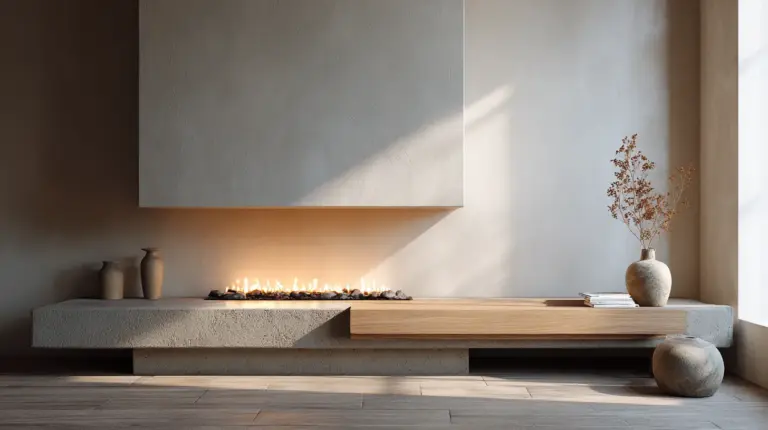
Japandi is the quiet conversation between Japanese minimalism and Scandinavian warmth. It borrows wabi-sabi — the Japanese acceptance of imperfection — and blends it with hygge, the Danish art of cozy contentment.
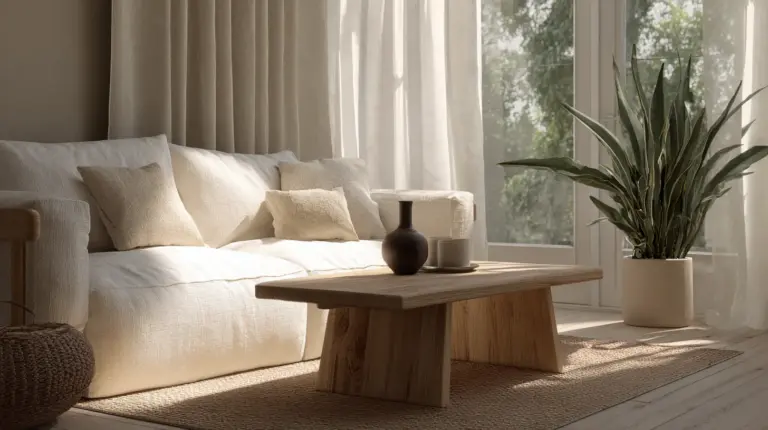
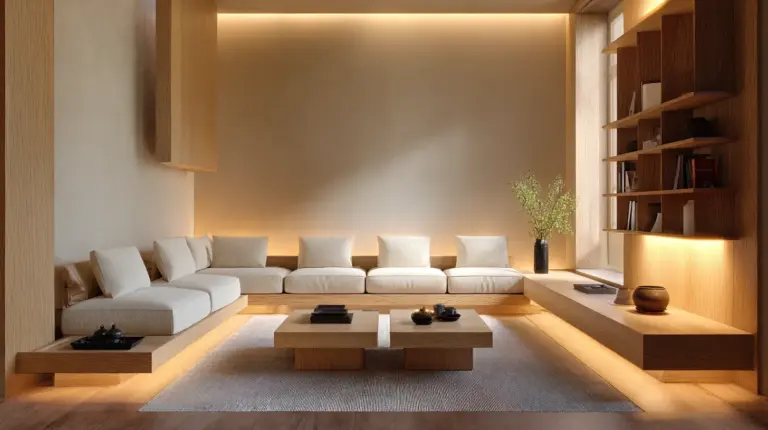
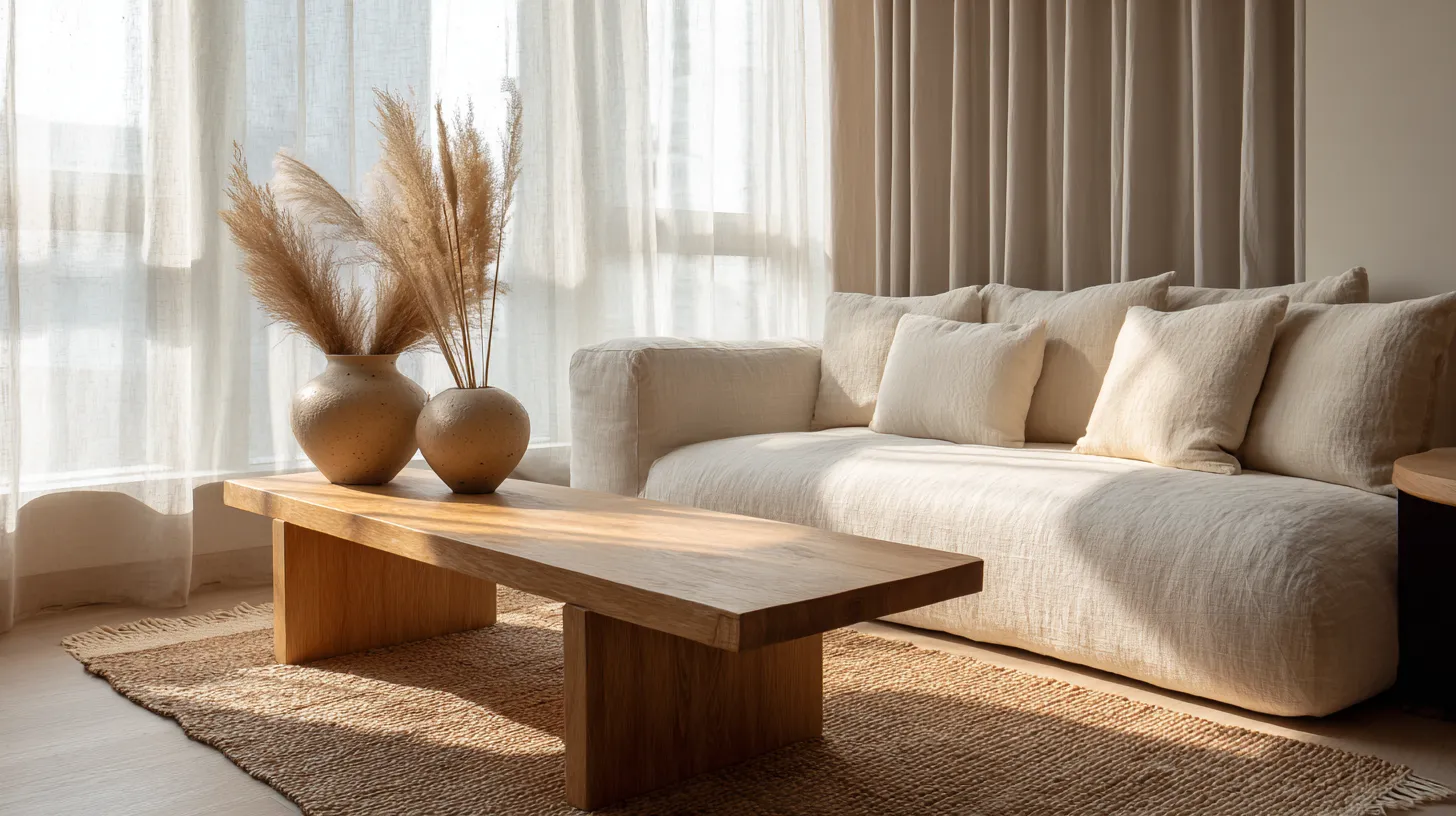
The result is a living room that feels both spare and soft. Clean lines paired with linen cushions. A low wooden coffee table beside a single ceramic vase. Nothing extra, but nothing cold.
For renters, Japandi is a dream aesthetic. It relies on furniture, textiles, and light — not walls. That means you can achieve the full look without touching a single surface that belongs to your landlord.
The Japandi Color Palette for Rentals
Keep It Warm and Grounded
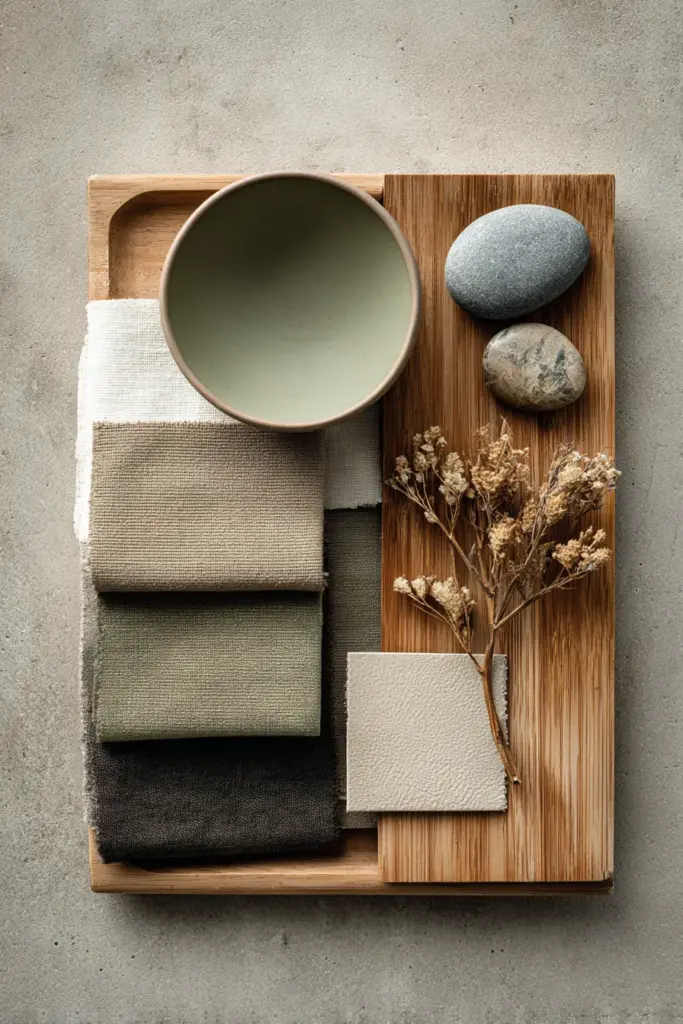
Japandi doesn’t mean white. It means warm neutral — the color of unbleached linen, dried clay, pale birch, and morning fog.
Think creamy whites, soft taupes, muted sage, warm charcoal, and earthy terracotta used as an accent. These tones layer beautifully together and never feel stark or clinical.
Working with Landlord Walls
If your walls are a cool, flat white or an unfortunate beige, don’t fight them — warm them. Layer in rust-toned throws, aged wood furniture, and amber-lit lamps to shift the whole mood of the room.
| Wall Color You Have | Best Japandi Tone to Add |
|---|---|
| Bright white | Warm ivory textiles, aged wood |
| Cool grey | Sage green accents, linen cushions |
| Beige/cream | Terracotta, dark walnut furniture |
| Off-white | Charcoal, muted black ceramics |
The goal is contrast with warmth, not contrast with drama.
Renter-Safe Wall Styling: No Drill, No Damage
Command Hooks and Strip Galleries
One of the biggest renter fears is a blank wall. Japandi loves a gallery moment — it just keeps it spare. Use removable adhesive strips (3M Command strips can hold framed art up to several pounds) to hang one or two meaningful pieces.
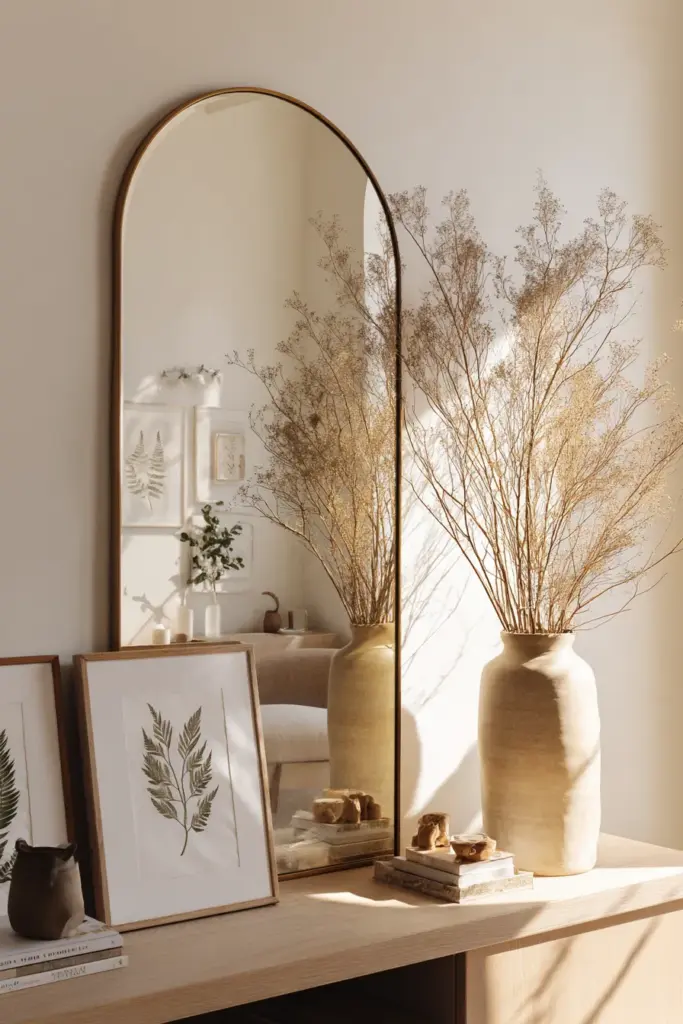
Choose frames in natural wood, black, or warm brass. Keep the art simple — a single ink brushstroke, a botanical print, a woven fiber piece. Less is genuinely more here.
Leaning Arrangements
Lean art, mirrors, and tall wooden panels directly against the wall. A large, arched mirror leaned in a corner adds light and dimension without a single hole. A set of framed prints leaned along a console shelf feels intentional, not lazy.
Peel-and-Stick Wallpaper Accents
For renters who want a little more texture, removable wallpaper has come a long way. A single accent section — behind your sofa or along a short wall — in a muted grasscloth or subtle geometric pattern can anchor the whole room. Most peel cleanly with no residue when done right.
Wall Shelves Without Permanent Damage
Floating shelves that use adhesive or tension mounting systems now hold significant weight. Style them simply: a small ceramic pot, a trailing plant, a single candle. Resist the urge to fill every inch.
Furniture for a Japandi Rental Living Room
Low, Light, and Moveable
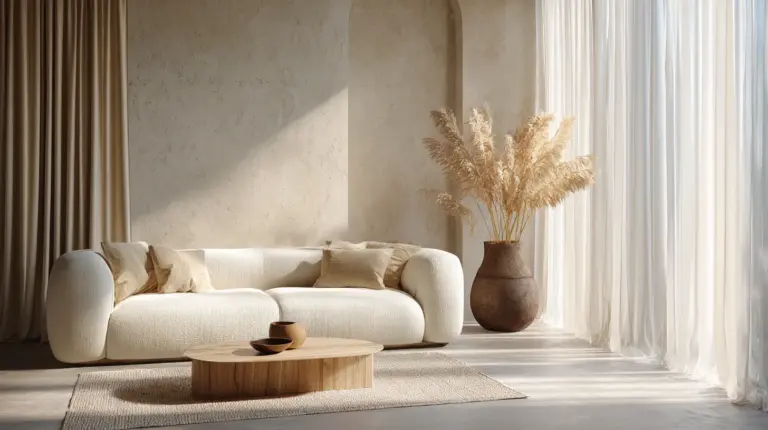
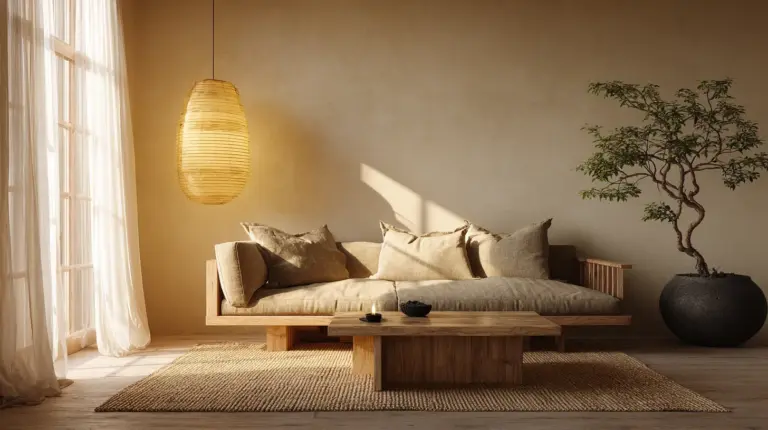
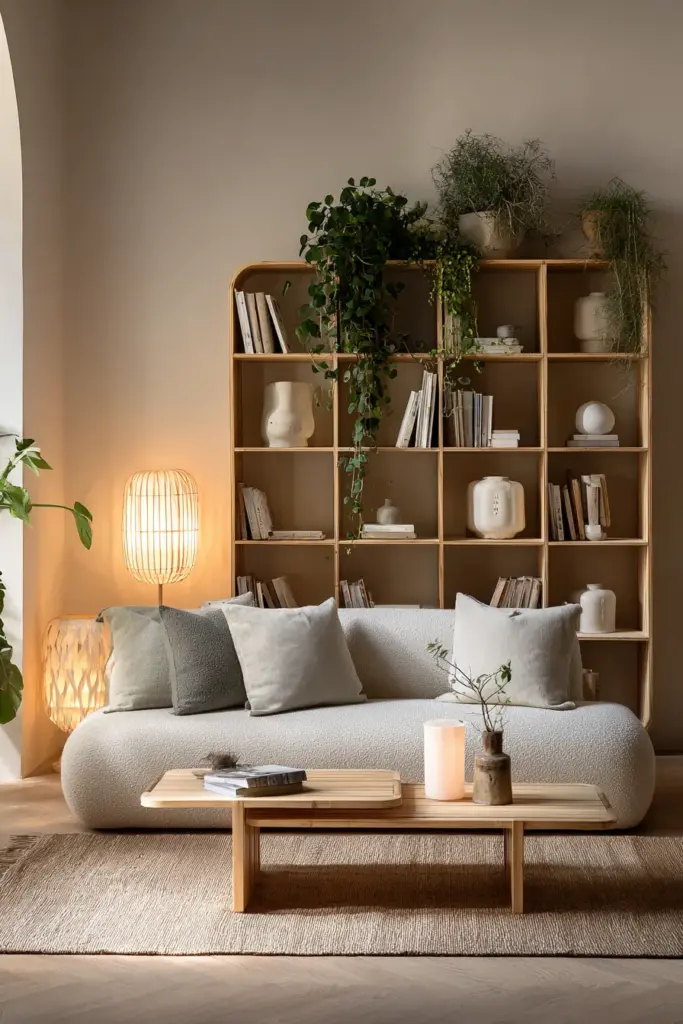
Japandi furniture sits close to the ground. Low-profile sofas in natural linen or boucle, platform-style coffee tables in light oak or bamboo, and floor cushions in muted tones all work beautifully. The visual effect is calm and grounded.
Choose pieces that are lightweight and easy to move — this matters both for rearranging and for moving day. Look for furniture with simple legs (not heavy bases) and neutral upholstery that won’t date.
Furniture That Works Twice
In a rental, every piece should earn its place. Consider:
- Storage ottomans in natural linen — seating, footrest, and hidden storage
- Modular shelving units — freestanding, adjustable, and portable
- A bench at the sofa’s end — extra seating and a surface for throws or trays
- Nesting tables — they tuck away when not in use, expand when needed
The Japandi Sofa
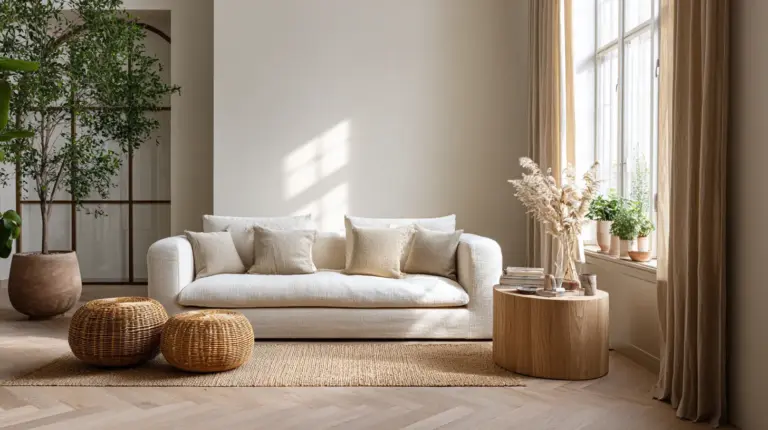
If you’re investing in one piece, let it be your sofa. Choose a low-arm style in warm grey, oatmeal, sage, or warm white. Linen and boucle age beautifully and feel luxurious without trying hard. Add a single chunky knit throw and two or three cushions in complementary earthy tones.
Dealing with Rental Flooring
The Rug-Layering Method
Builder-grade carpet or scuffed laminate floors are one of the most common renter frustrations. The Japandi solution is beautifully simple: layer rugs.
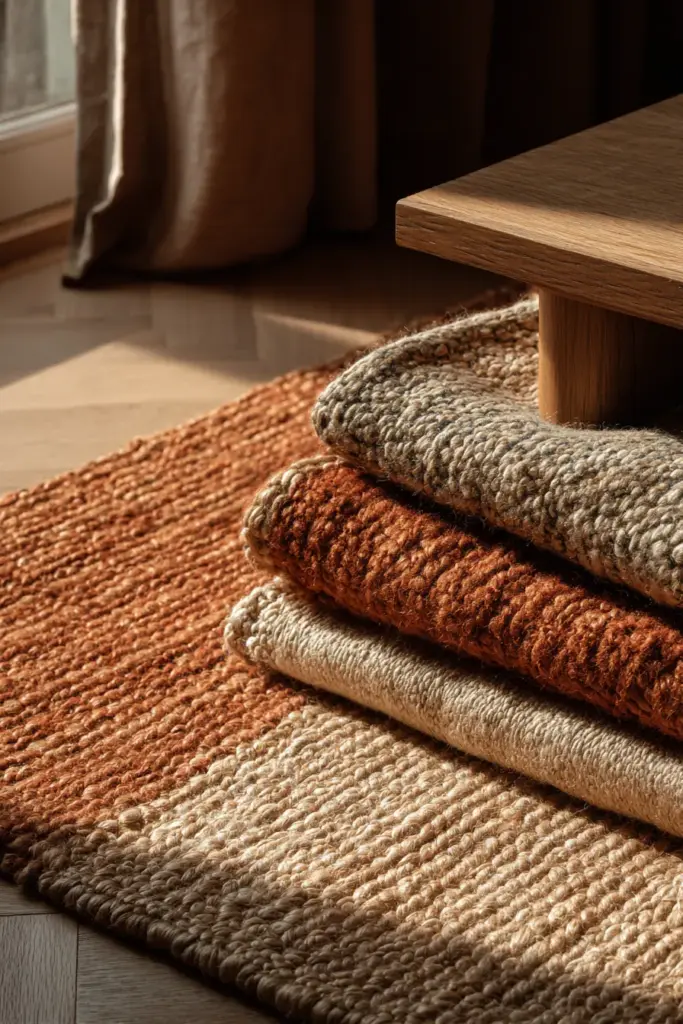
A large jute or sisal rug as a base adds instant warmth and texture. Layer a smaller, softer rug on top — a flatweave cotton or a vintage-style wool piece — and the floor becomes a design moment rather than an eyesore.
Temporary Floor Tiles
For hard floors with visible wear, peel-and-stick floor tiles in stone or wood-look finishes can cover problem areas entirely. They lift cleanly and leave no adhesive residue on most surfaces. Use them strategically in zones — under a dining nook or beside a reading chair.
What to Look For in Japandi Rugs
| Material | Vibe | Best Use |
|---|---|---|
| Jute or sisal | Raw, natural, textural | Large base layer |
| Wool flatweave | Warm, soft, durable | Mid-layer or accent |
| Cotton dhurrie | Light, casual, easy to clean | Small accent rug |
| Bamboo runner | Clean, minimal, fresh | Entryways or narrow spaces |
Lighting: The Most Powerful Renter Tool
Swap the Overhead Fixture
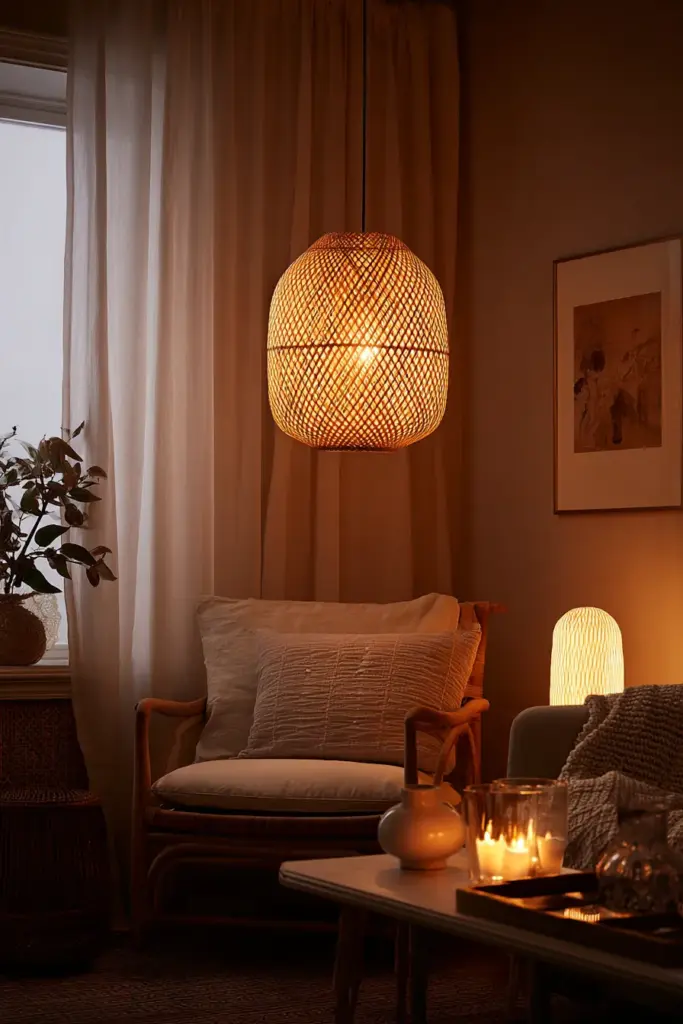
Most rentals come with harsh overhead lighting that immediately kills any sense of calm. If your landlord permits it (and most do, as long as you keep the original fixture), swap the pendant or ceiling light for a woven rattan shade, a paper globe, or a linen drum pendant. Keep the original to reinstall before you move out.
If swapping isn’t possible, simply leave the overhead off.
Build a Layered Lighting Plan
Japandi rooms glow rather than blaze. Aim for three sources of light in your living room:
- Ambient — a floor lamp with a warm-toned bulb (2700K–3000K)
- Task — a small table lamp beside your reading chair
- Accent — a candle cluster, a diffuser with a soft glow, or a string of warm Edison bulbs
Plug-In Sconces
For wall-mounted light without drilling, plug-in sconces are a game-changer. Thread the cord behind furniture or wrap it in a fabric cord cover for a finished look. They add architectural warmth at almost no cost.
Hiding Rental Eyesores the Japandi Way
Covering AC Units and Wires
An exposed wall unit or a tangle of TV cords breaks the calm immediately. Use a natural wood slat panel (freestanding) to create a screen in front of wall-mounted AC units. For cords, fabric cable sleeves or adhesive cord channels in a warm wood tone blend beautifully with Japandi interiors.
The Limited Window Problem
If your rental has small windows or poor natural light, don’t fight it — add mirrors. A large arched mirror across from your window doubles the light in the room. Sheer linen curtains (even in a rental) let light diffuse gently through the space, creating that soft, hazy glow that defines Japandi mornings.
Hang curtains using tension rods or over-door hooks where possible, or use removable curtain rod brackets with adhesive mounting.
Japandi Decor: The Small Details That Do the Most
Natural Materials Are Everything
The texture of Japandi is felt before it’s seen. Run your hands across a smooth ceramic bowl, a rough linen cushion, a worn wooden tray. These are the materials that make a room breathe.
Shop for:
- Ceramic vessels in matte white, earthy tan, or sage
- Bamboo or rattan trays for organizing surfaces
- Linen or cotton throws in oatmeal, charcoal, or warm rust
- A single potted plant — a fiddle leaf fig, a snake plant, or simple trailing ivy
The Scent of Japandi
A Japandi living room smells like cedarwood, hinoki, green tea, or clean cotton. Add a ceramic diffuser or a few beeswax candles. Let the scent be subtle — ambient, not perfumed.
What to Resist
Resist the urge to over-style. One vase, not five. One throw, not three. One plant, placed with intention. Japandi is editing as much as it is adding.
Budget Breakdown for a Japandi Rental Living Room
| Budget Level | Focus Areas | Estimated Spend |
|---|---|---|
| Low (₱3,000–₱8,000) | Textiles, candles, a rug, one mirror | Thrift stores, Shopee, Daiso |
| Mid (₱10,000–₱25,000) | Sofa styling, floor lamp, art prints, storage ottoman | IKEA, local home stores |
| Higher (₱30,000+) | Statement sofa, quality rug, plug-in sconces, modular shelving | Local furniture makers, curated home brands |
Start with textiles — they deliver the highest visual impact for the lowest cost and pack easily when you move.
Mistakes to Avoid in a Japandi Rental
- Going too cold — Japandi without warmth is just empty. Always add texture.
- Buying too much too fast — live in the space for a week before deciding what it needs.
- Ignoring scale — one oversized piece is better than three undersized ones.
- All-white everything — this reads sterile, not serene. Layer warm tones.
- Bright overhead lighting only — it flattens the room and removes all atmosphere.
- Cluttering the coffee table — keep it to three items maximum: a tray, a candle, a small plant.
Your Renter-Safe Japandi Checklist
- Swap harsh overhead light for a warm-toned alternative or supplement with lamps
- Add a large jute or sisal rug to ground the seating area
- Choose a sofa in oatmeal, sage, or warm grey linen or boucle
- Lean a large mirror against the wall to add light and depth
- Use Command strips or leaning arrangements for wall art
- Add one or two ceramic vessels or natural objects on surfaces
- Introduce at least one living plant
- Add a woven throw and two or three cushions in earthy tones
- Cover ugly cords with fabric cord sleeves or natural wood panels
- Style the coffee table with a tray, a candle, and one small object
- Use a storage ottoman or lidded basket to manage clutter
- Diffuse a subtle, natural scent — cedarwood, hinoki, or green tea
Closing Thoughts
The thing about Japandi is that it doesn’t ask you to have more — it asks you to need less.
A rental doesn’t have to feel temporary. With the right textures, the right light, and a little patience, it can feel like the most intentional space you’ve ever lived in. The landlord owns the walls. But the atmosphere? That’s entirely yours.
At ERYLIN, we believe that calm is something you build — one considered choice at a time. Whether you’re starting with a single throw or redesigning your whole living room, we hope this guide gives you a place to begin.
Begin softly. Begin with what you love.
Frequently Asked Questions
Can I do Japandi style in a rental apartment?
Absolutely. Japandi relies on furniture, textiles, and lighting — not permanent wall changes. You can achieve the full aesthetic without drilling, painting, or risking your security deposit.
What colors work in a Japandi living room?
Warm neutrals are the foundation: creamy whites, soft taupes, warm greys, muted sage, and earthy terracotta as an accent. Avoid cool, stark whites and neons. The palette should feel like a quiet morning, not a showroom.
How do I make a rental feel calm and minimal without it looking empty?
Layer your textures. A jute rug, a linen throw, a ceramic bowl, and a trailing plant will make even a sparse room feel intentional and warm. Japandi is minimal, not bare — the difference is in the quality and placement of what you keep.
What furniture works best in a small Japandi living room?
Low-profile sofas, lightweight coffee tables in natural wood or bamboo, floor cushions, and nesting side tables all work well. Choose pieces with slim legs to keep the floor visible — it makes small rooms feel larger. Prioritize furniture that doubles as storage.
How do I style walls in a rental without drilling?
Lean large mirrors and art panels directly against the wall, use removable adhesive strips for framed prints, or install peel-and-stick wallpaper on a single accent section. Plug-in sconces threaded behind furniture add wall-mounted warmth without a single hole.