
Table of Contents
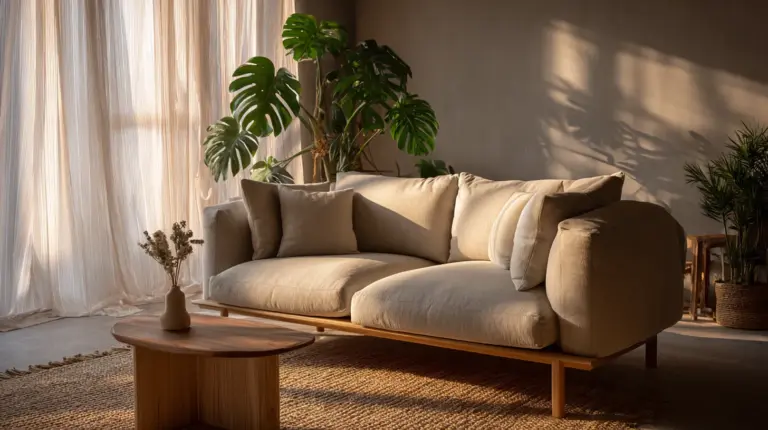
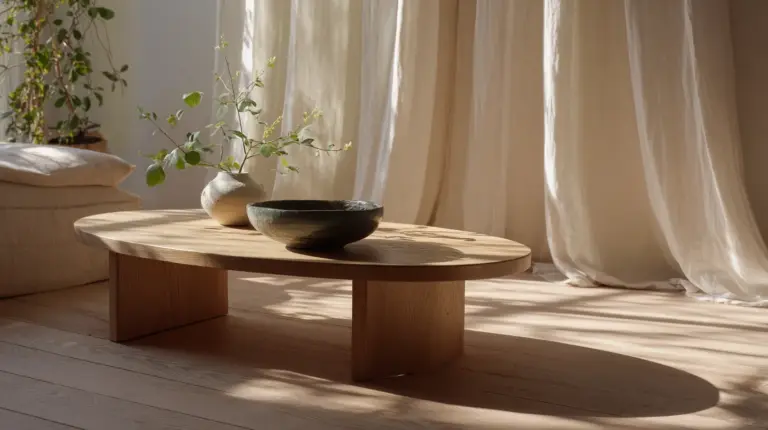
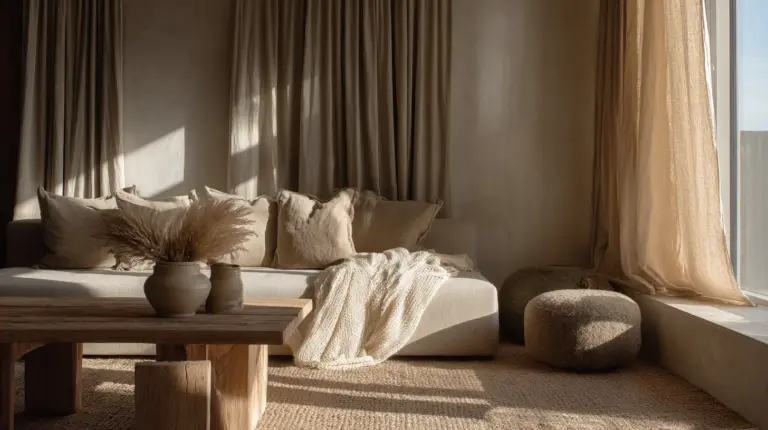
Imagine stepping into a room that breathes. The light is soft, diffused through unadorned windows, catching the grain of a pale oak shelf. There’s the faint scent of hinoki wood. A linen cushion sags just slightly — lived-in, unhurried, intentional.
That is Japandi. And it’s more than a trend. It’s a way of designing life.
This Japandi living room renovation guide walks you through everything — from stripping old walls to placing your last woven bowl. Whether you’re starting with a blank canvas or a tired apartment, every section here is a real, actionable step. No vague inspiration. Just the kind of calm, informed guidance a design-savvy friend would offer over slow coffee.
At ERYLIN, we believe that a beautiful space should feel yours — grounded, warm, and quietly extraordinary. Let’s build that together.
What Is Japandi Living Room Design?
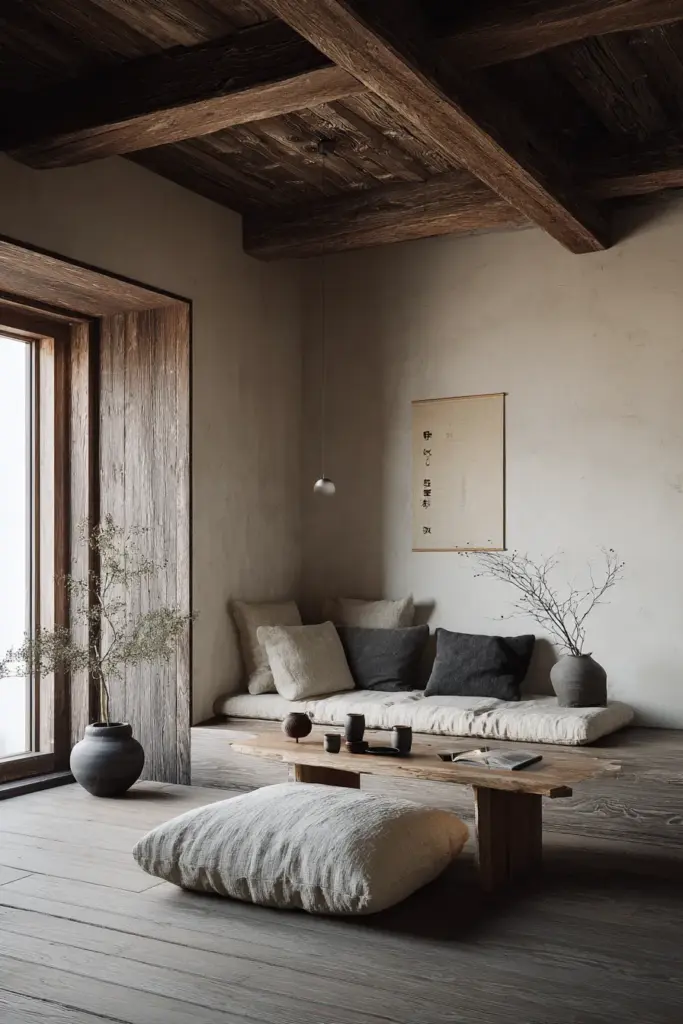
Japandi is the seamless marriage of Scandinavian-Japanese design philosophy. It pairs Scandinavian hygge — that feeling of warmth, simplicity, and togetherness — with the Japanese principles of wabi-sabi: the quiet beauty of imperfection, restraint, and natural aging.
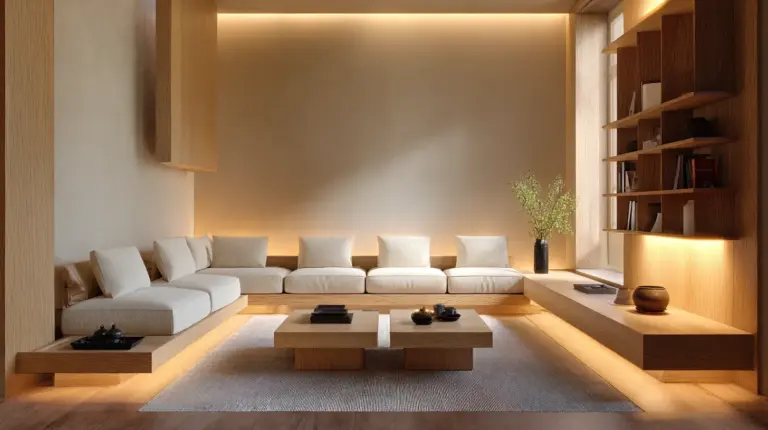
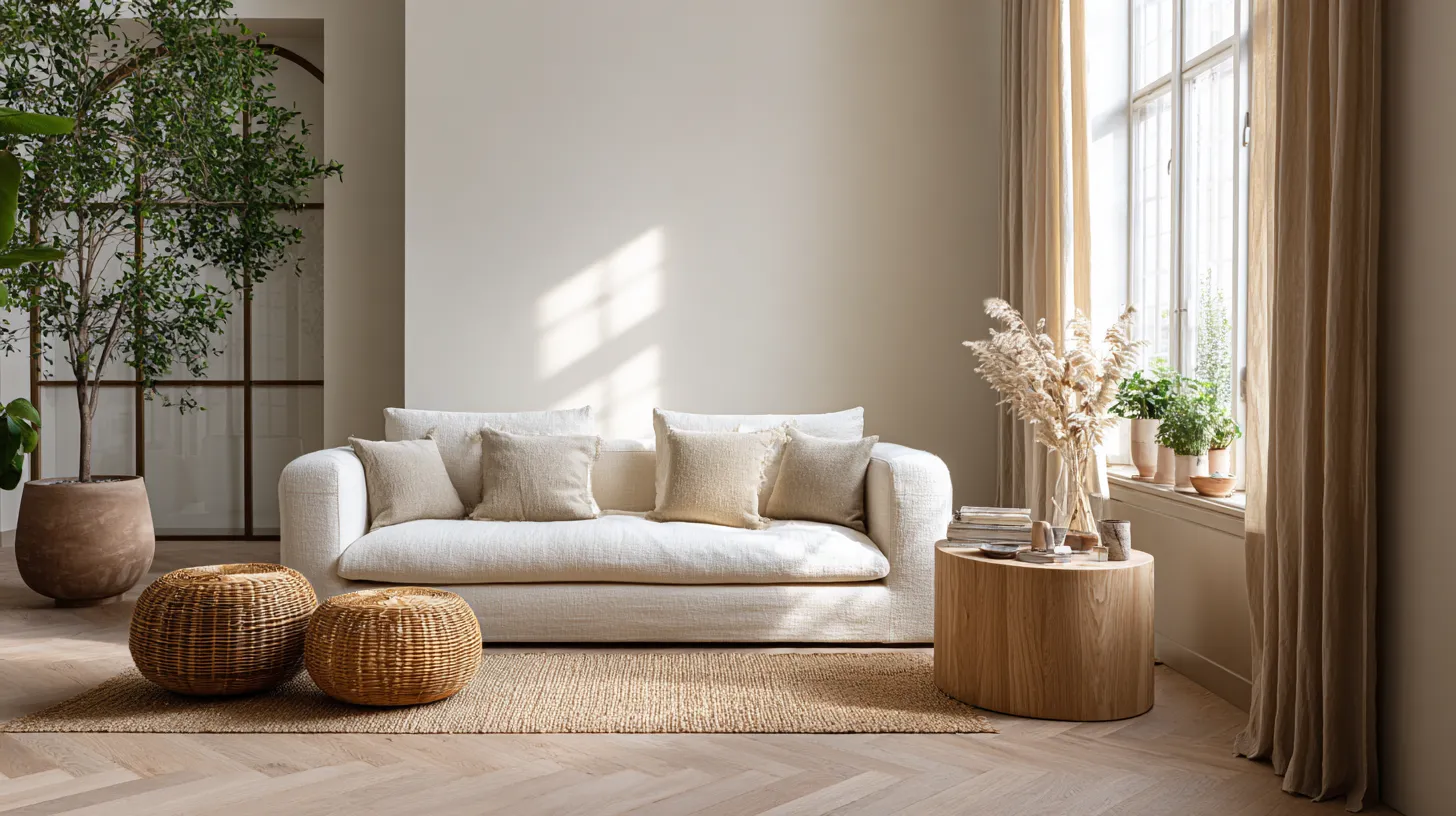
In a Japandi living room, every element earns its place. Low-profile furniture hugs the floor. A neutral color palette anchors the eye. Natural materials — bamboo, linen, stone, rattan — speak softly to each other across the room.
The result is a space that feels both minimal and alive. Sparse, but never cold.
Your Japandi Living Room Renovation: A 7-Step Project Plan
Good renovation starts long before the paint brush comes out. Here is a full workflow — from assessment to final styling — built specifically for a Japandi living room transformation.
Step 1: Room Assessment & Pre-Renovation Checklist
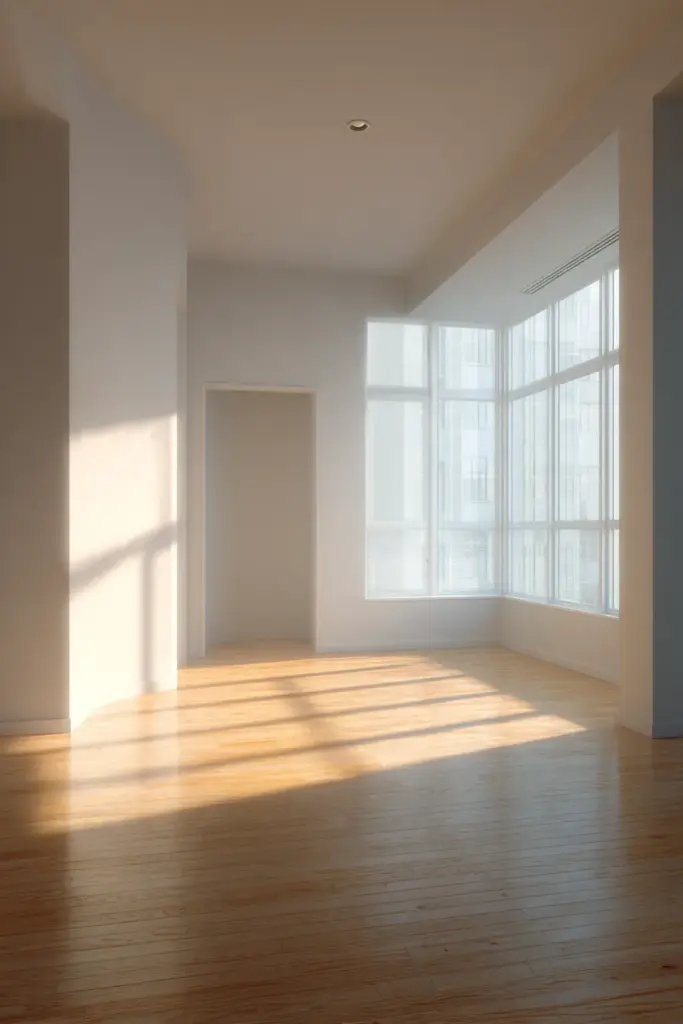
Before you move a single piece of furniture, walk your room with fresh eyes. Measure everything: floor-to-ceiling height, window widths, natural light angles at different hours of the day.
Ask yourself:
- Which walls receive the most natural light? (These become your lightest surfaces.)
- Where does clutter naturally accumulate? (These become your hidden storage zones.)
- What existing elements can stay? (A timber floor, a concrete wall — these are Japandi gifts.)
- What electrical points need relocating? (Plan lighting now, before any walls close up.)
Write it down. Take photographs. Japandi renovations reward those who plan slowly.
Step 2: Set Your Budget Tier
Japandi works beautifully across budgets. The philosophy is about restraint, not spending. Here’s how the tiers typically break down:
| Element | Budget Tier | Mid-Range Tier | Premium Tier |
|---|---|---|---|
| Wall finish | Low-VOC flat paint (DIY) | Limewash plaster | Hand-troweled lime render |
| Flooring | Vinyl plank (wood-look) | Engineered oak or bamboo | Solid hardwood, stone tile |
| Furniture | Secondhand + refinished | Mid-range solid wood brands | Custom or artisan-crafted |
| Lighting | Paper lanterns, cord sets | Washi pendant, floor lamps | Handblown glass, concealed LED |
| Textiles | IKEA linen, thrifted rugs | Natural jute, wool, cotton | Hand-loomed, artisan-dyed |
| Plants & decor | Propagated cuttings, thrift ceramics | Rubber plant, local pottery | Large-leaf statement plants, handmade objects |
Step 3: Space Planning & Layout
Japandi living rooms breathe through negative space. Avoid the instinct to fill every corner.
Draw a rough floor plan and mark your focal point — usually the wall where your sofa faces. From there, work outward.
Mini-tutorial — Sofa and Coffee Table Placement:
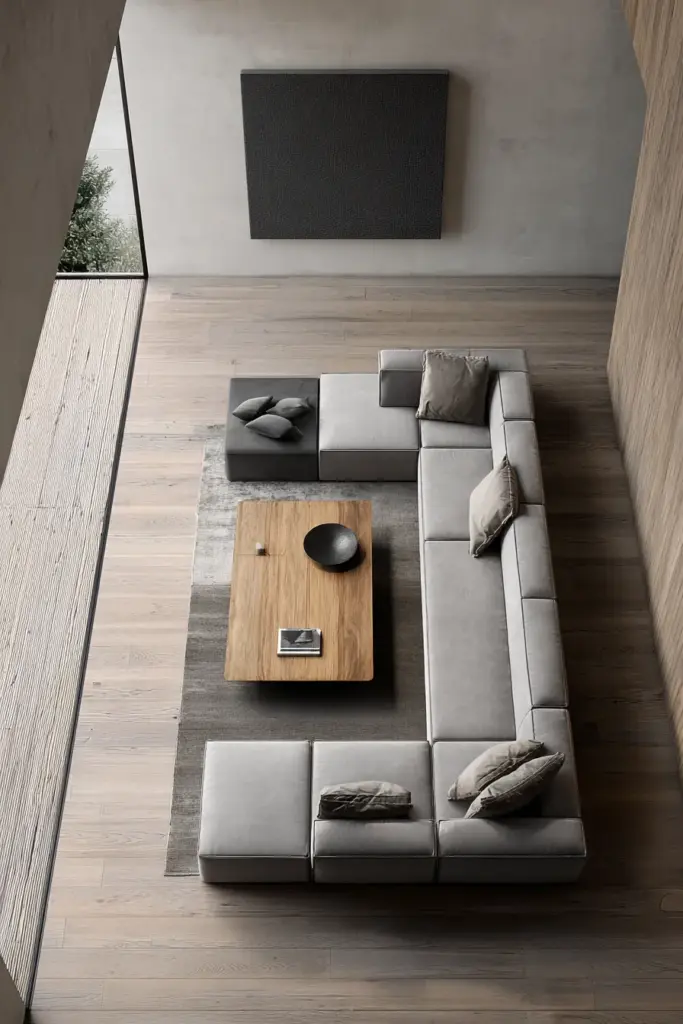
Position your sofa with at least 45 cm of clearance from the back wall. This prevents the room from feeling compressed. Place a low-profile coffee table 40–50 cm in front of the sofa — close enough to reach without leaning, far enough to walk comfortably through. Add a single accent chair at a slight angle. Resist filling the remaining space.
The goal is a room that flows, not one that’s full.
Step 4: Walls, Flooring & Structural Work
This is where the renovation truly begins. In a Japandi space, walls and floors do quiet, powerful work.
Walls
Japandi walls are soft, not stark. Think warm whites, pale sage, greige, or clay — never cold white or stark grey.
- DIY option: Apply a flat or matte finish paint in a warm neutral (look for undertones of yellow, pink, or beige — not blue). Low-VOC formulas are both sustainable and safer indoors.
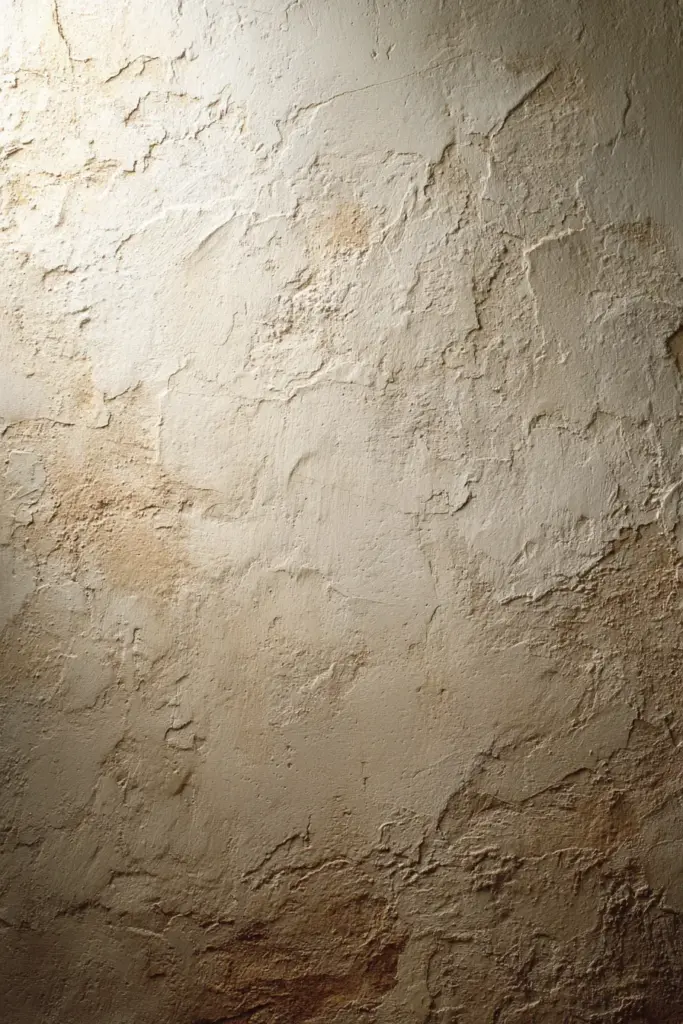
- Mid-range option: Limewash paint applied with a wide brush creates a beautiful, uneven depth that evokes wabi-sabi authenticity. It’s forgiving, painterly, and works especially well on accent walls.
- Premium option: Hand-troweled lime plaster or microcement gives walls an organic, gallery-like texture that no paint can quite replicate.
One accent wall — behind the sofa or the media unit — can carry a slightly deeper tone. Dusty terracotta, aged sage, or soft charcoal all work beautifully here.
Flooring
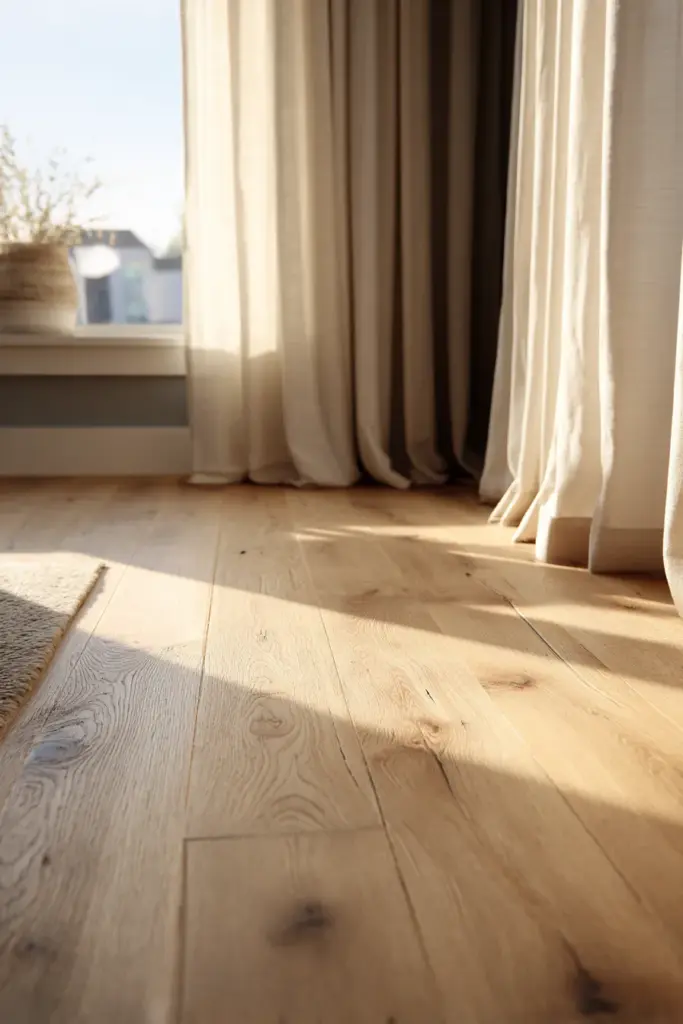
Light wood floors are the signature of Japandi living rooms. Pale oak, ash, or bamboo — wide planks, minimal graining — create a warm, uncluttered base.
- DIY/budget-friendly: Floating vinyl plank in a light oak tone is practical, durable, and surprisingly convincing in a Japandi space.
- Mid-range: Engineered bamboo or hardwood in a natural or whitewash finish. Bamboo is especially fitting for humid climates (like the Philippines) — it’s naturally moisture-resistant and sustainably sourced.
- Premium: Solid hardwood or honed limestone tiles, particularly around a reading nook or entryway.
Lay your flooring horizontally across the longest axis of the room — it makes small spaces feel longer and more expansive.
Step 5: Japandi Lighting Plan
Lighting is where a Japandi living room either comes alive or falls flat. The goal is layered, diffused, warm light — never a single harsh overhead source.
The Three-Layer Lighting Plan
Layer 1 — Ambient (ceiling): A paper or washi pendant light centered in the room creates an even wash of warm light. Pair with a dimmer switch — essential for Japandi moods. Aim for 150–250 lux in a general living area.
Layer 2 — Task (reading): A slim floor lamp beside the sofa or accent chair. Look for warm-toned bulbs (2700–3000K). Adjustable-arm lamps give you control without visual clutter.
Layer 3 — Accent (art, plants, shelves): Small LED spotlights or clip-on lights directed at a trailing pothos, a ceramic piece, or a low bookshelf. These create depth and draw the eye to the room’s quiet beauty.
Placement rules:
- Keep ceiling fixtures at least 30 cm from walls to avoid harsh shadows.
- Floor lamps should stand at shoulder height when seated — roughly 120–140 cm.
- Use warm-white bulbs throughout (never cool white — it strips all warmth from natural wood tones).
Step 6: Furniture Layout & Multifunctional Pieces
Japandi furniture is low, clean-lined, and purposeful. Every piece should serve a clear function — and ideally, more than one.
What to look for:
- Sofas: Low-profile, straight-backed, upholstered in linen, boucle, or cotton. No tufting, no ornate legs.
- Coffee tables: Solid wood or bamboo with a flat, unadorned top. Bonus if it has a lower shelf for storing trays and books.
- Storage: A sideboard with closed-door storage replaces open bookshelves. An ottoman with a lid replaces a second coffee table.
- Accent chair: A simple rattan or solid-wood chair — light enough to move, distinctive enough to anchor a corner.
Multifunctional pieces worth considering:
- Sofa with hidden under-seat drawers
- Nesting tables that tuck away when not in use
- Modular shelving with woven baskets for concealed storage
- Media console with full-door fronts (no open shelves for electronics)
Step 7: Post-Renovation Styling
The final layer — and the one most people rush. Take your time here.
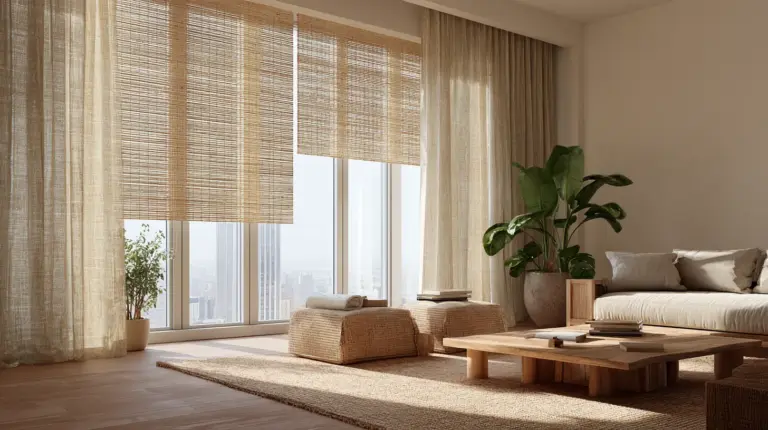
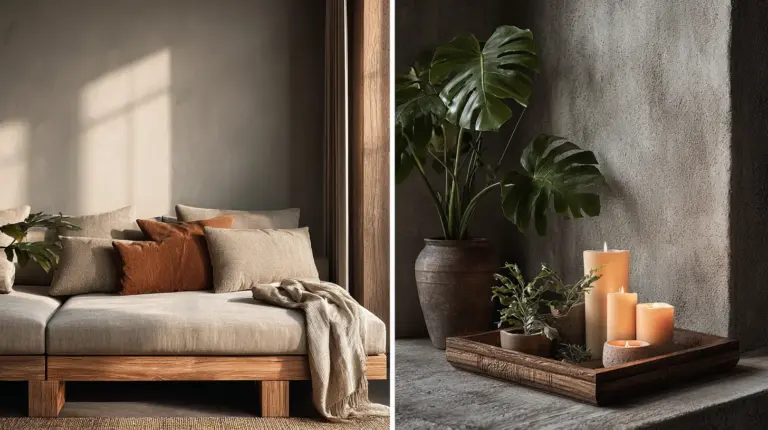
Start with textiles. A large, flat-woven jute or wool rug grounds the seating area. Add linen cushions in two or three tones from your wall palette. Drape a loosely-woven throw over one arm of the sofa — never both.
Then, plants. Then ceramics. Then nothing else.
The Japandi Color Palette: Choosing the Right Tones for Your Room
Color in a Japandi living room is never arbitrary. It is chosen the way you’d choose silence — with intention.
The Core Palette
The Japandi color palette lives in the quiet zone: warm whites, pale grays, soft clay, muted sage, and dark wood tones. It never shouts.
- Primary walls: Warm white, greige, or pale putty
- Accent wall or feature: Dusty terracotta, warm charcoal, or muted sage
- Furniture: Natural oak, walnut, bamboo, or rattan (these are your “colors” too)
- Textiles: Oatmeal, cream, stone, sand, soft taupe
- Ceramics & decor: Matte black, raw clay, aged white, moss green
Choosing Tones for Your Room Size & Light
Small, low-light rooms: Stay with the lightest tones — warm white walls, pale blonde flooring. Avoid dark accent walls. Use mirrors strategically to bounce natural light.
Large, sun-filled rooms: You can afford depth. A charcoal feature wall, darker rattan furniture, or terracotta accents will feel grounded rather than heavy.
Humid, tropical climates (like homes in the Philippines): Lean toward breathable tones — cool-adjacent whites and pale greens feel calmer in heat. Pair with natural ventilation rather than fighting warmth with cold-toned colors.
Best Natural Materials for a Japandi Living Room
Natural materials are the soul of Japandi design. They age well. They feel good underfoot and in the hand. And they connect your interior to the living world outside.
Core Material Palette
| Material | Best Used For | Regional Note |
|---|---|---|
| Bamboo | Flooring, shelving, furniture frames | Excellent for humid climates; locally available in Southeast Asia |
| Rattan | Chairs, pendant shades, trays | Lightweight, breathable, perfect for tropical Japandi |
| Linen | Cushions, curtains, upholstery | Relaxed drape, natural wrinkle — very wabi-sabi |
| Jute / Abaca | Rugs, baskets, tabletop decor | Abaca is native to the Philippines — beautifully Japandi |
| Stone / Concrete | Side tables, planters, tiles | Adds weight and contrast against warm wood |
| Unglazed ceramic | Vases, bowls, lamp bases | Matte texture and earthy tones anchor a neutral palette |
| Wool | Rugs, throws | Insulating, durable, rich texture without pattern |
How to Layer Textures Without Clutter
The secret is contrast of surface, not contrast of color. Pair smooth stone with rough linen. Pair polished bamboo with matte ceramic. Let each texture speak clearly by keeping the palette unified.
A Japandi living room with five different natural textures in the same tonal family feels rich. The same textures in five different colors would feel chaotic.
Japandi Storage & Clutter-Proofing Systems
Minimalism is not the absence of things. It is the management of them.
A beautiful Japandi living room doesn’t happen because people have less. It happens because they’ve built smart, hidden systems that make order easy to maintain.
Hidden Storage Solutions
- Under-sofa trays: Flat wooden trays on casters slide under low-profile sofas to hold magazines, remotes, charging cables.
- Coffee table with drawers: A coffee table with one shallow drawer hides what the surface doesn’t need to show.
- Media console with closed doors: Electronics, cables, and routers disappear behind solid-front panels. Only the screen is visible.
- Modular shelving with baskets: Open shelves feel cluttered within weeks. Line them with identical woven baskets to create hidden compartments with visual rhythm.
- Ottomans with lift-top storage: Replace a second chair or extra table with an upholstered ottoman that opens for blankets and seasonal items.
Daily Habits That Keep Japandi Alive
The one-in-one-out rule is non-negotiable. A five-minute evening reset — returning items to their storage home — maintains the calm you worked to create.
Use small, beautiful trays on every surface where things tend to land: keys, remotes, reading glasses. The tray contains the visual noise. The tray is the decor.
Plants and Nature in Your Japandi Living Room
In Japandi design, nature is not decoration. It is part of the structure.
A rubber plant in a raw clay pot beside the window. A trailing pothos along a bamboo shelf. A single stem of dried pampas in a narrow ceramic vase. Each one anchors the room in the living world.
Best plants for a Japandi living room:
- Rubber plant (Ficus elastica) — large leaf, glossy, sculptural
- Monstera deliciosa — dramatic but not fussy
- Pothos — trailing, low maintenance, beautiful on shelves
- Snake plant (Sansevieria) — vertical, architectural, air-purifying
- Bonsai — the quintessential Japanese living sculpture
For tropical homes in Southeast Asia: most of these plants thrive with minimal intervention. Choose terracotta pots over plastic — they breathe, and they look far more beautiful.
Japandi Comfort & Acoustics: The Often-Forgotten Layer
Most guides stop at the visual. But a Japandi living room is also a felt experience.
Hard floors and minimal furniture can make a room echo. Soft surfaces solve this beautifully — and they’re exactly what Japandi calls for anyway.
Acoustic-softening elements that also look beautiful:
- A large flat-woven wool or jute rug (minimum 200 x 300 cm for a standard living room)
- Linen curtains — floor to ceiling, hung high, pooling slightly at the floor
- Upholstered sofa and chair (choose tight-woven natural fabrics, not velvet or microfibre)
- Cushions with natural fill
- A low, fabric-covered ottoman
For tactile comfort, consider a tatami-style floor mat or meditation cushion in a reading corner. Slippers by the entrance. A textured throw within arm’s reach of every seat. These small gestures make Japandi liveable, not just lovely.
Budget-Friendly & DIY Japandi Renovation Ideas
You do not need a design studio budget to live beautifully. Here is how to achieve authentic Japandi style on a careful budget.
DIY Projects Worth Your Time
- Stain and refinish a secondhand wood coffee table in a pale, whitewash tone — it becomes Japandi instantly.
- Sew simple linen cushion covers from affordable fabric. The loose, imperfect seams are part of the wabi-sabi charm.
- Decant everything. Shampoos, dish soap, olive oil — in matte ceramic or glass vessels, ordinary objects become beautiful.
- Paint an accent wall yourself using limewash technique — YouTube tutorials make this accessible, and the result is stunning.
- Propagate your own plants. Pothos cuttings take root in water in two weeks. A propagation station on a bamboo shelf is both functional and visually arresting.
Sourcing Secondhand
Thrift stores and online marketplaces regularly surface solid wood furniture, rattan chairs, and ceramic pieces that were built before disposability became the norm. These pieces are often better-made than new budget furniture — and they carry that lived-in quality that wabi-sabi honors.
For Filipino & Southeast Asian Homes
Local markets and artisan workshops offer materials that are naturally Japandi: abaca baskets, woven capiz decor, bamboo shelving, handmade ceramic pots. These are not imitations of the style — they are the style. Japandi’s philosophy was always about honoring local craft and material authenticity.
Sustainability & Future-Proofing Your Japandi Living Room
A Japandi space is built to last. That’s the point.
Choose materials with longevity in mind. Solid bamboo flooring, properly sealed, outlasts vinyl. A well-made linen sofa recovers with cleaning and re-stuffing rather than replacement. Investing in two or three excellent pieces is always more sustainable — financially and environmentally — than ten forgettable ones.
Practical sustainability tips:
- Use low-VOC or zero-VOC paints — better for your air, your health, and the environment
- Treat bamboo furniture with natural oil annually to prevent cracking in dry seasons
- Choose beeswax or natural oil finishes for wood floors and furniture — they’re non-toxic and renewable
- Buy secondhand first; buy local second; buy new only when necessary
Japandi Living Room Renovation: Key Takeaways
- Start with assessment: Measure, photograph, plan before a single nail is moved.
- Embrace your budget tier: Japandi is achievable at every price point — restraint is the luxury.
- Layer your lighting: Ambient, task, accent — always on dimmers, always warm-toned.
- Choose natural materials: Bamboo, linen, rattan, stone, unglazed ceramic — layer textures, not colors.
- Build hidden storage first: Clutter-proofing is what makes the aesthetic last beyond moving day.
- Add plants last, art sparingly: One or two significant plants are more powerful than a dozen small ones.
- Design for your climate: Tropical homes need breathable materials and humidity-resistant finishes.
- Buy less, buy better: Every piece should earn its place — and hold it for years.
A Soft Closing
A Japandi living room is not completed on renovation day. It evolves — gently, patiently — as you live inside it. The rubber plant grows taller. The linen softens. The wood deepens. The room becomes more itself with time.
At ERYLIN, we believe that the most beautiful interiors are the ones that feel inhabited — not styled for a photograph, but arranged for a life. Quiet mornings with coffee. Slow evenings with candlelight. The sound of rain against wide windows.
That is what you’re building. Not just a living room. A place to return to.
Design it well. Live in it slowly.
Frequently Asked Questions
What is Japandi living room design?
Japandi is a fusion of Scandinavian and Japanese interior design philosophies. It blends Scandinavian warmth and functionality (hygge) with Japanese minimalism and the acceptance of natural imperfection (wabi-sabi). In a living room, it results in a calm, natural, uncluttered space built from honest materials, soft lighting, and purposeful furniture.
How do I renovate my living room into Japandi style?
Start with a room assessment — measure your space, note your natural light, and identify what stays. Then work through walls (warm neutrals, matte finish), flooring (light wood or bamboo), lighting (layered and warm), furniture (low-profile, multifunctional), and finally styling (plants, ceramics, textiles). Use the 7-step plan in this guide as your project roadmap.
What colors work best in a Japandi living room?
Warm whites, soft greige, pale sage, muted clay, and dark wood tones form the core Japandi color palette. Avoid cold whites or bold colors. Accent walls work well in dusty terracotta or warm charcoal. The goal is a cohesive, muted tonal range where natural materials provide the richest u0022color.u0022
Can I do a Japandi renovation on a budget?
Absolutely. Japandi’s philosophy is rooted in restraint, not expense. Focus on: DIY limewash paint, secondhand solid wood furniture, linen fabric from markets, propagated plants in thrifted pots, and local natural materials like bamboo and abaca. The result can be just as beautiful as a high-budget renovation — often more so, because the imperfections are part of the aesthetic.
How do I maintain a Japandi living room?
The key is daily habit, not occasional deep cleaning. A five-minute evening reset returns items to their storage homes. Use the one-in-one-out rule for new purchases. Dust natural surfaces weekly. Oil wood furniture seasonally. Replace cushion covers rather than full cushions. A Japandi room rewards consistency — small, regular attention keeps it beautiful without effort.