
Table of Contents
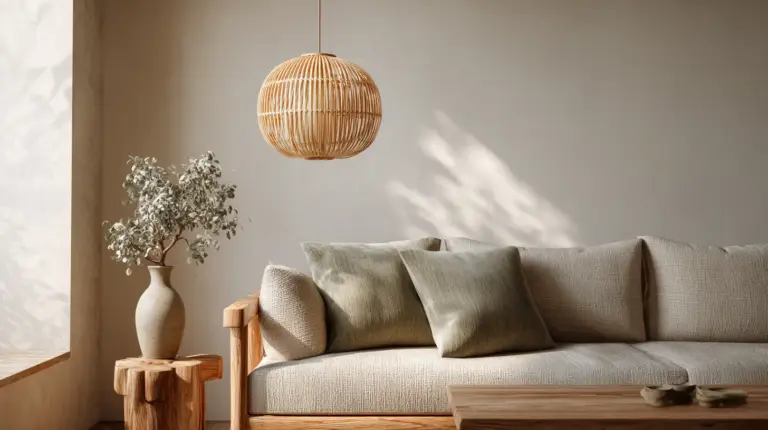
There is a kind of quiet that a room can hold — one that feels intentional, unhurried, and deeply alive. That is the feeling Japandi living design chases, and the sofa is where it either comes together or falls apart.
Japandi is not a trend. It is a philosophy woven from two powerful design traditions: Japanese wabi-sabi, which finds beauty in imperfection and impermanence, and Scandinavian hygge, which wraps everyday life in warmth and ease. When these two meet in a living room, the result is something rare — a space that breathes.
Your sofa sits at the center of that breath. It is where morning light lands softly, where you curl up with tea, where guests settle in and conversations slow down. Choosing the right Japandi sofa is not about following rules. It is about understanding what the space needs to feel like you, only calmer.
This guide will walk you through everything — from materials and proportions to placement, budget, and how to make what you already own work beautifully.
What Makes a Sofa Japandi Style?
Before anything else, you need to recognize the signature of a true Japandi sofa. The wrong choice can make a room feel either too sparse or too busy — both of which work against the Japandi ideal.
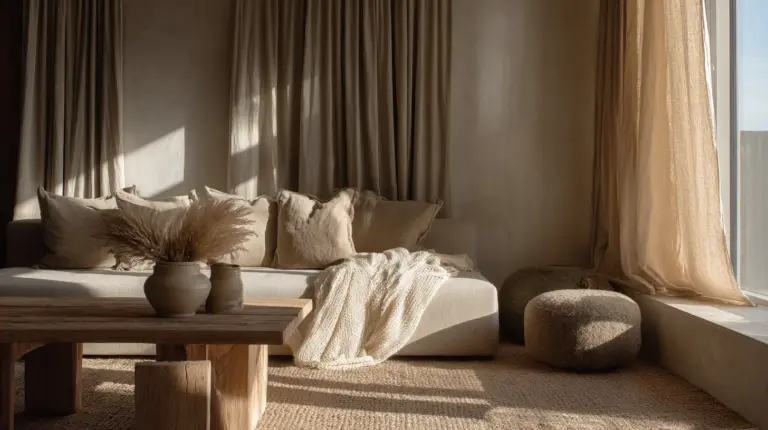
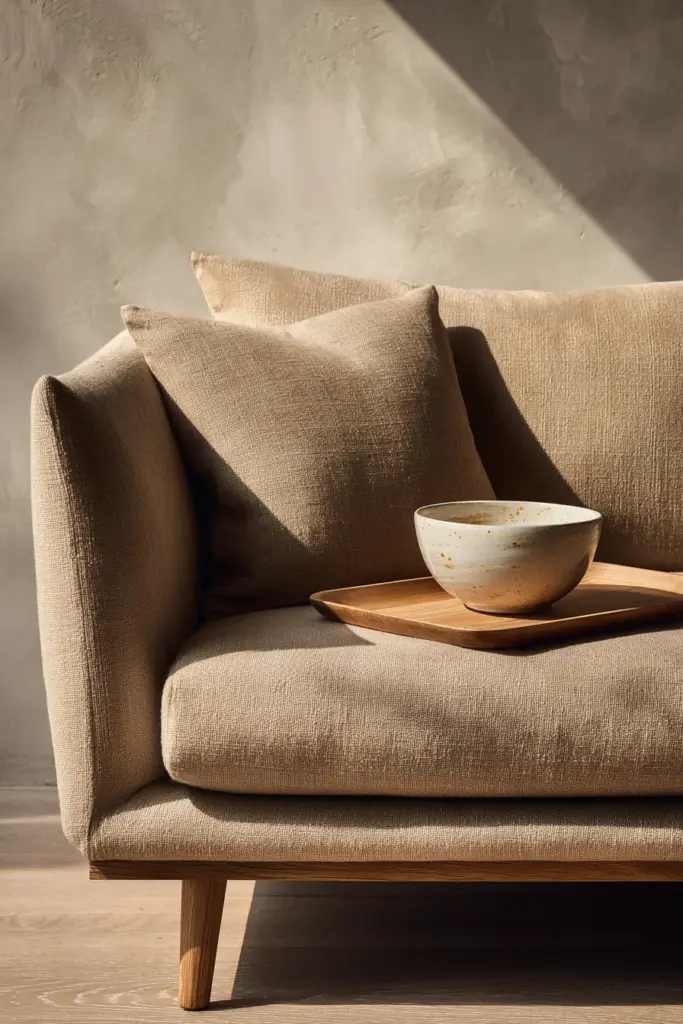
A Japandi sofa is defined by clean, honest lines. No overstuffed cushions. No curved, baroque arms. No glossy finishes fighting for attention. Think structured silhouettes that feel grounded and deliberate.
The Core Japandi Sofa Traits
- Low profile: Seat height between 15–18 inches from the floor. This keeps the visual weight low and the room feeling open and airy.
- Natural wood legs: Oak, ash, and walnut are the trinity of Japandi woodwork — warm, honest, never painted or chrome-finished.
- Neutral upholstery: Warm beige, taupe, soft ivory, warm gray. These shades absorb light beautifully and age gracefully.
- No bulky arms: Slimmer arms or completely armless designs let the sofa breathe within the room.
- Organic materials: Linen, cotton-linen blends, and wool-like performance fabrics are the preferred covers.
| Feature | Japandi Ideal | What to Avoid |
|---|---|---|
| Seat height | 15–18 inches | Over 20 inches (too throne-like) |
| Leg material | Oak, ash, walnut | Chrome, black metal, painted wood |
| Upholstery color | Warm beige, taupe, ivory | Bright white, cool gray, navy |
| Arm style | Slim or armless | Rolled, tufted, or oversized |
| Cushion fill | Firm, structured | Super-plush, loose-fill |
How to Choose the Right Japandi Sofa for Your Space
This is where most guides stop at “go low-profile and neutral.” We go further.
If You Have a Small Living Room
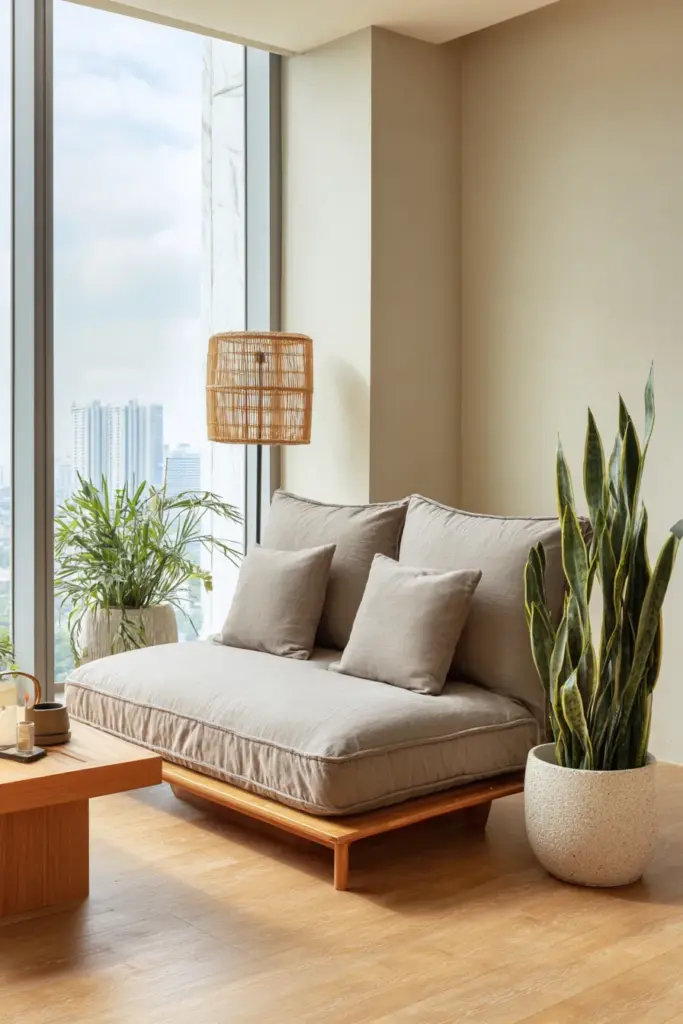
Compact spaces need sofas that earn their place. Look for armless designs or a two-seater with slim proportions, and pair with a low wooden coffee table and a single pouf instead of a loveseat-plus-armchair combo.
- Choose a sofa under 80 inches wide.
- Opt for legs rather than a skirted base — legs allow light to pass underneath, making the room feel taller.
- A modular sofa is your best friend: configure it small now, expand it later.
If You Have Kids or Pets
The Japandi look can absolutely be family-friendly — it just takes the right fabric strategy.
- Cotton-linen blends with a tight weave are more forgiving than pure linen.
- Look for removable, washable covers — several Scandinavian-influenced brands now offer these in Japandi-friendly neutrals.
- Lean toward darker neutrals: warm taupe and mushroom tones hide texture and light wear better than ivory or off-white.
- Avoid loose-weave or open-texture linens in high-traffic spaces — they snag and pill faster.
If You Need a Guest-Friendly or Studio Solution
A Japandi sleeper sofa sounds contradictory, but it does not have to be. Look for a platform-style sofa bed with a low profile and a linen or microfiber cover. The key is keeping the frame clean and avoiding bulky mechanical arms.
A long sofa paired with a daybed in the same neutral palette also works beautifully for studio living — it reads as intentional, not improvised.
Best Fabrics for a Japandi Sofa
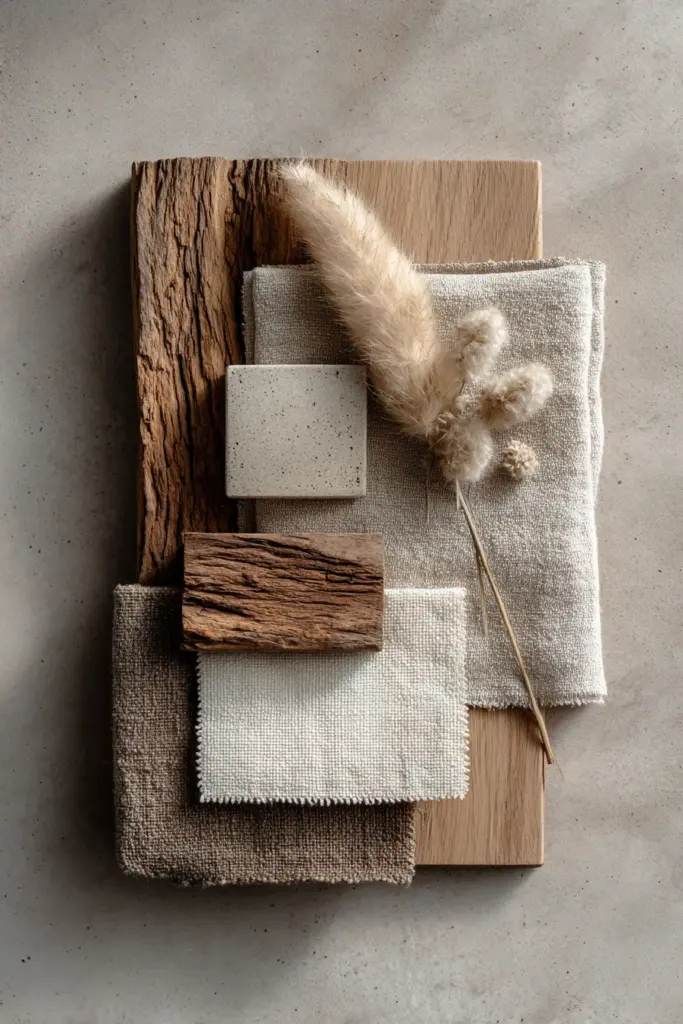
Fabric is where the sensory experience of Japandi living is either won or lost. Run your hand across the right material and the room feels warmer before a single candle is lit.
Linen
Pure linen is the Japandi fabric ideal — textured, breathable, and beautifully imperfect in the way wabi-sabi loves. It softens over time rather than wearing out. The downside: it wrinkles easily and is not the most forgiving with spills.
Best for: Adult households, cooler climates, those who embrace a slightly lived-in look.
Cotton-Linen Blend
The practical middle ground. It has the texture and warmth of linen with more durability and slightly better stain resistance. This is the most versatile Japandi fabric for most households.
Best for: Families, warm climates, everyday use.
Performance Fabric (Wool-look or Microfiber)
Many performance fabrics now mimic the texture of wool or linen while offering significant durability and cleanability. In warm climates like the Philippines, a light-colored performance fabric or open-weave cotton is worth prioritizing — heavy linen or wool can trap heat on a low-profile sofa.
Best for: Pets, kids, humid or hot climates, high-traffic spaces.
A Note on Climate
If you live somewhere warm and humid, choose lighter-weight, breathable fabrics in soft ivory or warm sand tones. These reflect heat and keep the sofa comfortable even in the afternoon. Avoid dark neutrals in consistently hot rooms — they absorb warmth, both visually and physically.
Japandi Sofa Colors: What Works and What Quietly Ruins the Room
Color in a Japandi living room is not decoration. It is atmosphere.
Warm neutrals are the foundation. Warm beige, oat, sand, dusty taupe, and soft terracotta are deeply compatible with the natural wood tones Japandi relies on. They glow under warm lighting and feel grounded against natural textures.
Cool grays are a quiet trap. A cool gray sofa reads as Scandinavian-modern, not Japandi. If gray is your preference, choose a warm greige (gray-beige) instead of anything with blue undertones.
Can I Use a Dark Sofa in a Japandi Living Room?
Yes — with intention. A deep charcoal, dark mushroom, or moody forest green sofa can work beautifully in a Japandi room if the rest of the space stays light and airy. The key is balance: light wood legs, neutral walls, and warm-toned plants (think snake plant or olive tree) keep the room from feeling heavy. A dark sofa in a Japandi space reads as quiet drama, not maximalism.
Sofa Placement and Layout: Where the Japandi Balance Lives
This is the section most guides skip entirely, and it matters more than almost any other decision.
Float the sofa when possible. In Japandi design, pushing a sofa against the wall closes off the room’s energy. Even a few inches of space behind it creates a sense of intention and openness. If your room is very small and floating is not possible, use a low credenza or a console table behind the sofa to create a visual boundary instead.
Placement Principles
- Distance from coffee table: 12–18 inches is the sweet spot — close enough to reach your cup, far enough to feel spacious.
- Distance from TV wall: If the sofa faces a focal wall or TV, allow at least one-third of the room’s depth between the two.
- Rug placement: A Japandi rug should extend at least 6–8 inches beyond the sofa on each side. This grounds the seating area and makes the sofa feel intentionally placed, not floating in space.
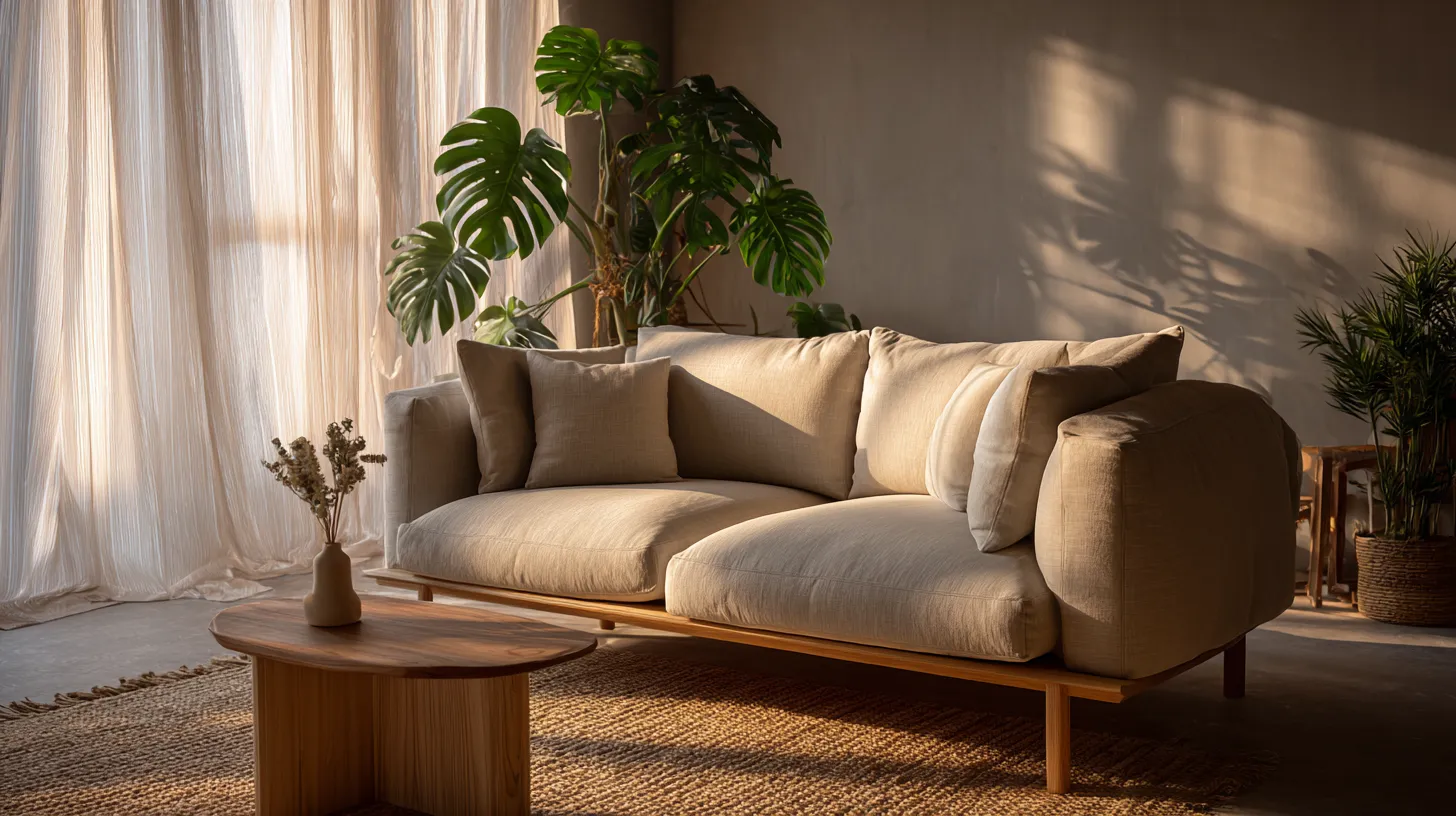
- Corner sofa in Japandi style: If you use a corner sofa, keep it low-profile and avoid anything that wraps more than two walls. Style the corner with a single tall plant and a bamboo or paper floor lamp to anchor the space.
How to Style a Japandi Sofa with Plants and Lighting
The sofa does not live alone. What surrounds it determines whether the whole room breathes or just sits there.
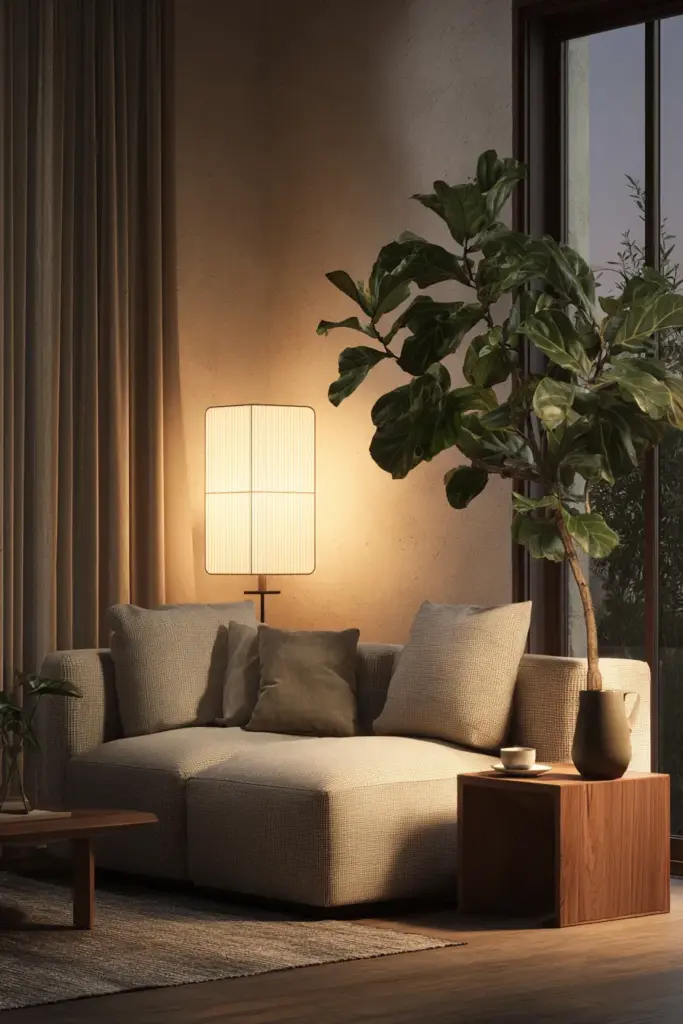
Lighting color is everything. Choose bulbs between 2700–3000K — this warm white temperature makes linen upholstery glow golden rather than reading flat or cool. A floor lamp with a bamboo, rattan, or washi paper shade placed beside the sofa is the most Japandi lighting choice you can make.
Plants are living texture. A single large-leaf plant — a monstera, a rubber tree, a fiddle-leaf fig — beside or behind the sofa adds life without clutter. For smaller spaces, a ceramic pot with a snake plant or trailing pothos on the coffee table achieves the same organic warmth.
Layer softly. One or two linen or wool-blend throw pillows in a tonal palette (one slightly darker than the sofa, one in a natural fiber like jute or boucle) is all you need. Japandi styling does not layer for abundance. It layers for texture and quiet contrast.
Budget-Friendly Ways to Get a Japandi-Style Sofa
Not everyone starts from scratch. And that is perfectly Japandi — resourcefulness is part of the philosophy.
| Budget | Approach |
|---|---|
| Affordable | IKEA base sofa + replacement oak legs + linen slipcover in neutral tone |
| Mid-range | Solid wood-framed sofa from local timber brands or Etsy artisan sellers |
| Investment | European or Japanese-made minimal sofas with natural oak frames and linen upholstery |
How to “Japandi-ify” a Sofa You Already Own
- Replace the legs. Oak or walnut furniture legs are widely available online and can transform a generic sofa into something that reads as Japandi-adjacent.
- Add a slipcover. A fitted linen-look slipcover in warm beige or oat instantly shifts the sofa’s mood.
- Style the surroundings. A low wooden coffee table, a woven rug, a single floor lamp, and one or two plants can make even a basic sofa feel curated.
You do not have to spend a fortune. You have to spend with intention.
Japandi Sofa Checklist
Before you buy or commit to a styling direction, use this as your guide:
- Seat height between 15–18 inches ✓
- Leg material: oak, ash, or walnut ✓
- Upholstery: linen, cotton-linen blend, or performance fabric ✓
- Color: warm beige, taupe, ivory, or warm greige ✓
- Arm style: slim or armless ✓
- No tufting, no rolled arms, no overstuffed cushions ✓
- Sofa floated or styled with visual boundary behind ✓
- Warm-tone lighting (2700–3000K) nearby ✓
- One statement plant beside or behind ✓
- Rug extending at least 6 inches beyond sofa edge ✓
Conclusion
A Japandi living room sofa is not just furniture. It is the anchor of a feeling — one that says slow down, you are welcome here, nothing is in a hurry.
When you choose a sofa with honest materials, human proportions, and a color that works with light rather than against it, you are not just decorating. You are creating a daily experience of calm. And that is what ERYLIN has always believed design is for.
Start with what you love. Layer with intention. Let the room breathe.
Frequently Asked Questions
What makes a sofa Japandi style?
A Japandi sofa has a low profile (15–18 inches seat height), natural wood legs in oak or walnut, neutral upholstery in linen or cotton-linen blend, slim or armless silhouettes, and clean lines with no bulky or decorative detailing.
What is the best fabric for a Japandi sofa in a warm climate?
In warm or humid climates, opt for a lightweight cotton-linen blend or open-weave cotton in a light neutral tone. These fabrics breathe well and stay comfortable on low-profile sofas even in afternoon heat.
Can I mix a Scandinavian sofa with Japanese decor?
Yes. Japandi is itself a blend of both traditions. A Scandinavian-style sofa with clean lines, natural wood legs, and neutral upholstery integrates seamlessly with Japanese-inspired decor elements like washi paper lamps, ceramic vessels, and low wooden furniture.
How do I make a Japandi sofa work with kids and pets?
Choose a tight-weave cotton-linen blend or performance fabric in a warm mid-tone neutral like taupe or mushroom. Look for removable, washable covers. Avoid open-weave linens or very light colors in high-traffic spaces.
Can I repaint or replace my existing sofa legs to make it more Japandi?
Absolutely. Replacing legs with solid oak or walnut furniture legs (widely available online) is one of the most affordable ways to shift a sofa toward a Japandi aesthetic. Pair with a linen slipcover and warm surroundings for a full transformation.
How should a Japandi sofa be placed in the living room?
Float it away from the wall when possible, with 12–18 inches between the sofa and the coffee table. Place a rug underneath that extends at least 6–8 inches beyond the sofa on each side. Add a floor lamp with a paper or bamboo shade beside it and a single plant nearby to complete the composition.