
Table of Contents
There is a moment, when you walk into a beautifully textured Japandi living room, where something in you simply settles.
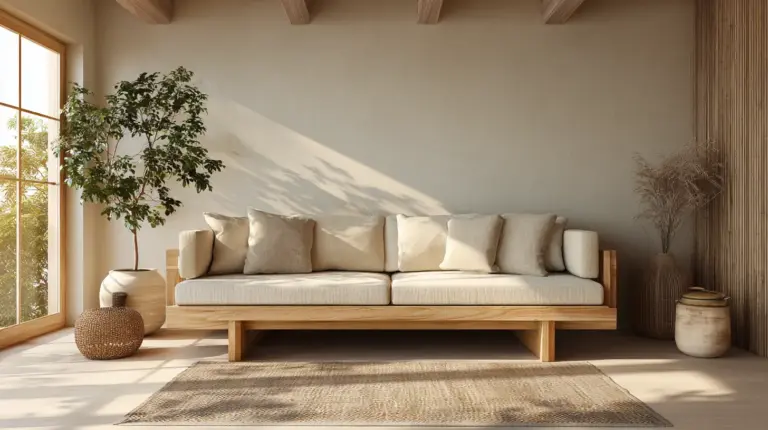
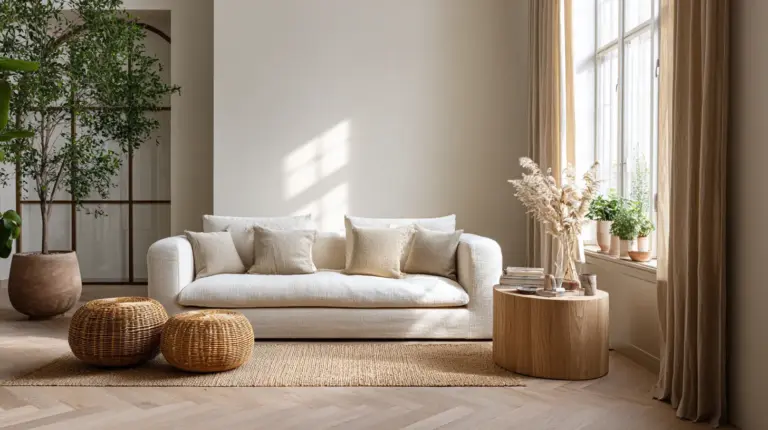
It is not the colour on the walls or the furniture arrangement that does it. It is the quiet conversation between surfaces — rough linen against smooth oak, cool ceramic beside a woven jute rug, a knit throw folded softly over a low wooden bench. Texture, in Japandi design, is the language the room speaks before you even sit down.
Japandi — the unhurried marriage of Japanese wabi-sabi philosophy and Scandinavian hygge warmth — finds its truest expression not in grand gestures but in the feeling of a surface beneath your fingertips. Every material is chosen with intention. Every layer earns its place. And yet, for all its restraint, the result feels deeply generous.
Whether you are starting from scratch or gently refining a space you already love, this guide will walk you through the textures, materials, and layering techniques that make a Japandi living room feel not just beautiful to look at — but beautiful to live in.
This is ERYLIN’s gentle invitation to feel your way home.
What Makes Japandi Living Room Texture Different?
Most design styles use texture for visual interest. Japandi uses it for feeling.
The goal is never a maximalist patchwork of competing materials. It is a curated conversation between natural surfaces — wood speaking to linen, rattan answering stone, jute grounding everything underfoot. Every texture carries sensory weight: rough alongside smooth, warm alongside cool, matte against the occasional quiet sheen of ceramic or aged brass.
What sets Japandi texture apart is its deliberateness. Nothing is accidental. Nothing is purely decorative. Every surface that your eye rests on, and every surface your hand grazes, is there because it belongs.
The 3 Principles of Japandi Texture Layering
1. Natural over synthetic. Every material should have an origin story — a forest, a field, a riverbed. Synthetic surfaces break the spell that natural ones work so quietly.
2. Restraint over abundance. Three to five distinct textures, chosen with care, create more richness than ten competing surfaces. Editing is an act of confidence, not limitation.
3. Function through beauty. Every textured element — the woven rug, the knit cushion, the slatted wall panel — should earn its place by being useful as well as lovely. Decoration for its own sake is not Japandi.
Choosing the Right Textures for Your Japandi Living Room
Before you layer, you choose. And the right textures depend on your space, your climate, and the feeling you want the room to carry.
Natural Wood vs. Woven vs. Soft Textiles: Which Texture Leads?
| Texture Family | Sensory Feel | Best Used For | Sustainability Note |
|---|---|---|---|
| Natural wood grain | Warm, smooth, grounding | Flooring, wall panels, furniture frames | FSC-certified oak, ash, or reclaimed timber |
| Linen and cotton | Soft, breathable, slightly rumpled | Upholstery, curtains, cushion covers | GOTS-certified organic linen available |
| Rattan and cane | Fine-woven, lightweight, airy | Side tables, pendant shades, baskets | Rapidly renewable, biodegradable |
| Jute and sisal | Coarse, earthy, grounding | Area rugs, cushion covers | Fully biodegradable |
| Ceramic and stone | Cool, matte, tactile | Vessels, decorative objects, trays | Low carbon when locally sourced |
| Knit and bouclé | Chunky, plush, inviting | Throws, accent cushions | Wool or recycled fibre options available |
For most Japandi living rooms in the Philippines or similar warm climates, linen, rattan, and ceramic textures do the most work — breathable, beautiful, and perfectly suited to open, naturally lit spaces.
The Best Textures for a Japandi Living Room
Material choice is where the Japandi philosophy becomes most tangible. You feel it before you consciously see it.
Natural Wood Grain: The Foundation of Everything
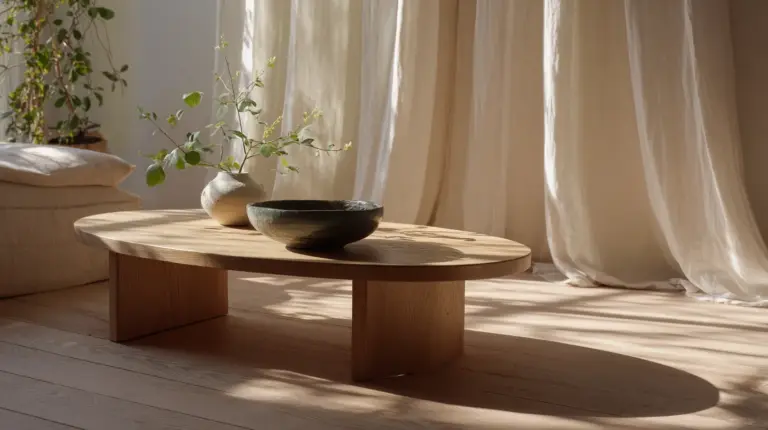
Wood is the backbone of Japandi texture. It anchors the room and provides a warmth that no synthetic surface can replicate.
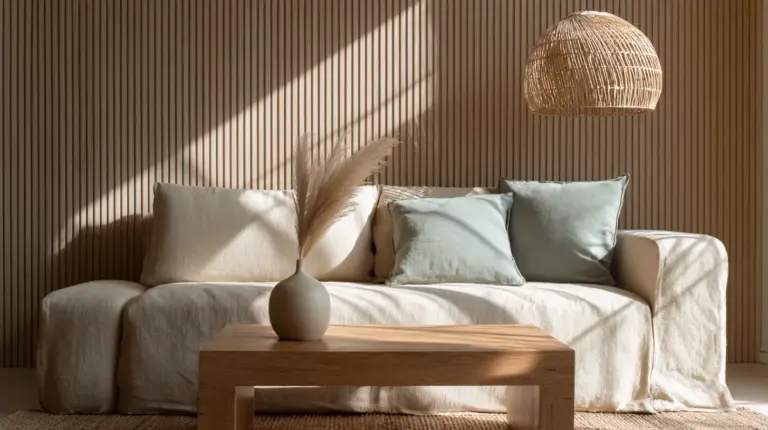
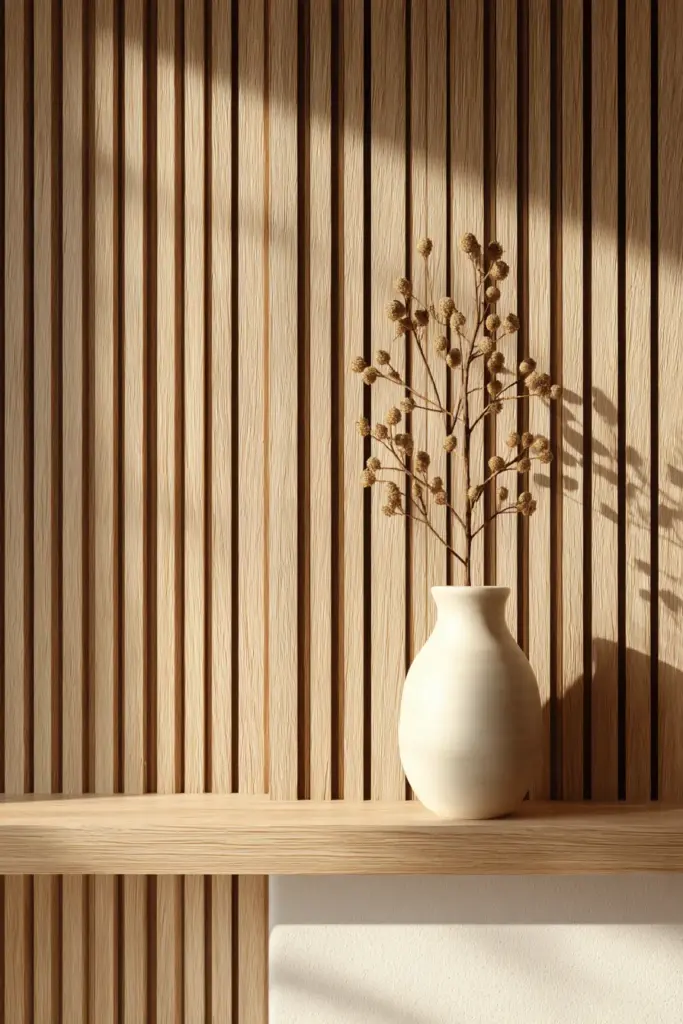
Reach for oak, ash, or walnut in matte or lightly oiled finishes — never high-gloss varnish, which breaks the spell of organic calm. Slatted wood panels on a feature wall are one of the most searched Japandi ideas of 2026, and for good reason: they add vertical rhythm, shadow play, and quiet depth without a single additional accessory.
For flooring, wide-plank timber with visible grain is ideal. Let the knots and natural variation remain. In Japandi philosophy, imperfection is not a flaw — it is the mark of authenticity.
Design tip: If budget is a concern, distressed wood panels from reclaimed sources bring even more character. Sand lightly, seal with a low-VOC matte oil, and let the history of the wood show through. The result is more Japandi than any showroom finish.
Linen and Woven Fabrics: Softness You Can See
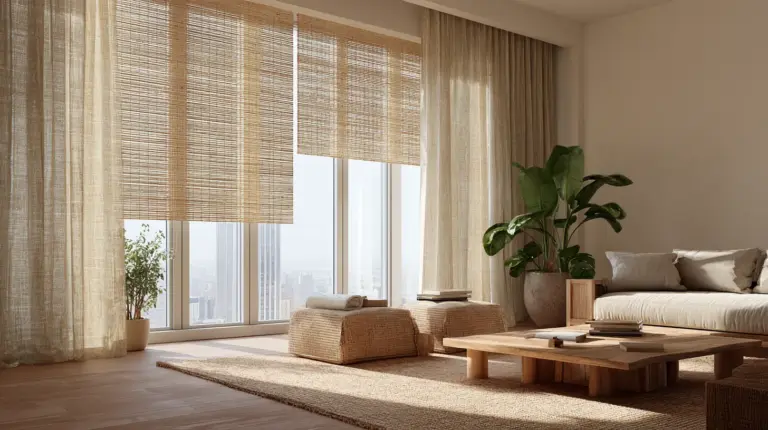
If wood is the skeleton of a Japandi room, linen is its skin. Linen upholstery on a low-profile sofa, linen curtains pooling softly at the floor, linen cushion covers in warm oat and stone tones — each layer adds a breathable, lived-in softness that synthetic fabrics simply cannot achieve.
Woven textiles deepen this effect. A chunky knit throw folded over a wooden bench. A bouclé cushion nestled in the corner of your sofa. These are not just comfort objects — they are textural anchors that signal rest to anyone who enters.
Look for GOTS-certified organic linen where possible. Beyond the environmental benefit, certified linen tends to soften more beautifully with each wash, developing that characteristic gentle rumple that looks effortlessly, honestly Japandi.
Rattan and Jute: The Woven Middle Ground
Rattan and jute occupy a special place in Japandi texture layering. They are neither as structural as wood nor as soft as linen — they sit between the two, adding a fine-grained weave that the eye reads as warmth without visual weight.
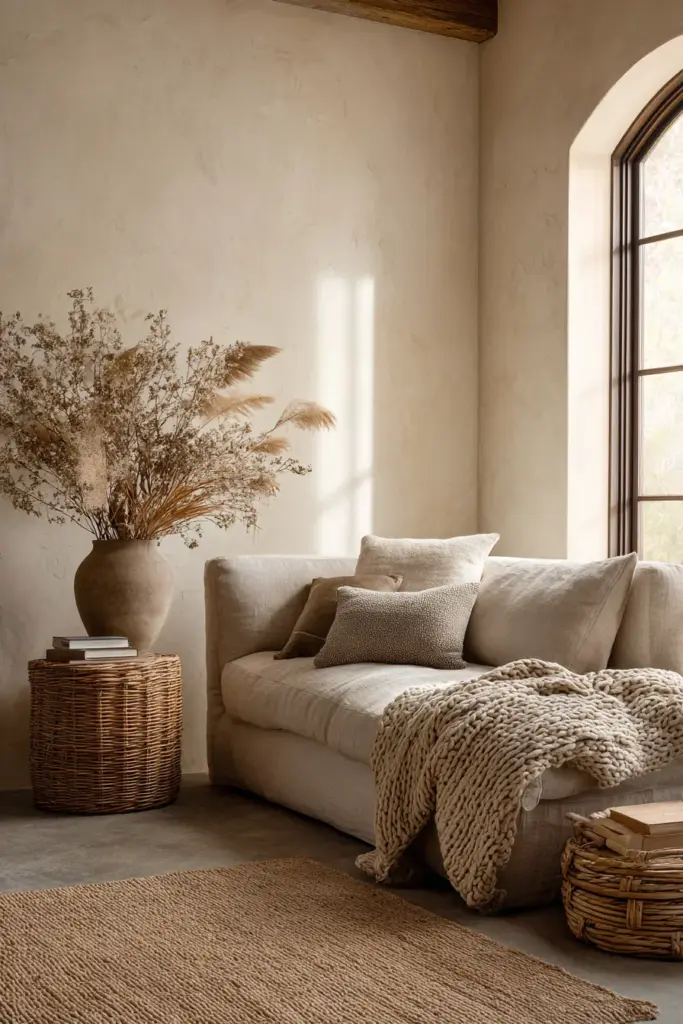
A rattan side table or pendant shade introduces lightness without crowding the room. A jute area rug anchors the seating zone with an earthy, slightly rough underfoot sensation that grounds the whole space. Together, they complete the natural material story that wood and linen begin.
Ceramics and Stone: Cool, Quiet Contrast
Every warm Japandi room needs a moment of coolness — and ceramics deliver it beautifully.
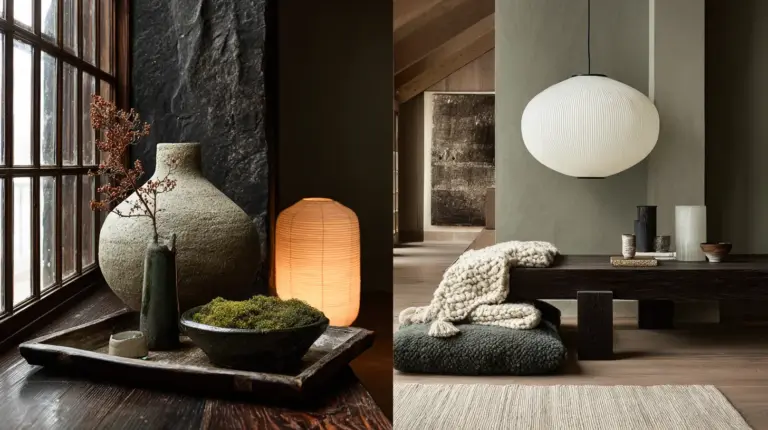
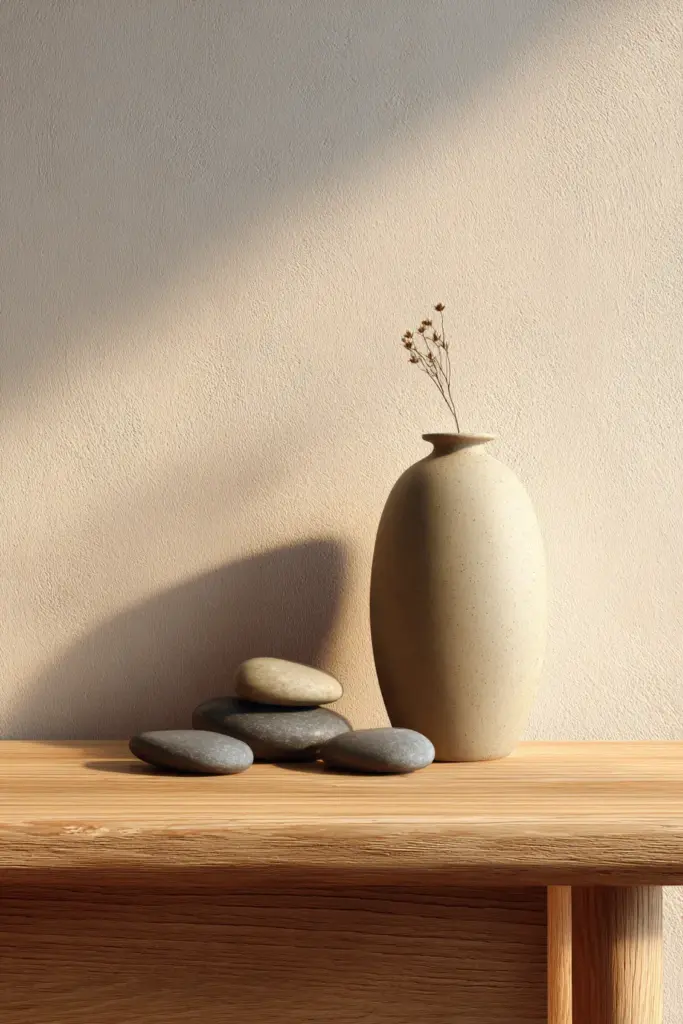
A matte stoneware vase on a low console. A rough-cast ceramic bowl holding a few dried pampas stems. A smooth river stone used as a candleholder or simply displayed on its own. These touches introduce a tactile contrast that makes the surrounding warmth feel even more pronounced — the same way a single cool breath makes you notice how warm the room already is.
Stone — whether slate tiles near an entryway or a simple marble tray on a coffee table — brings geological calm. It has weight and permanence that balances the softness of textile layers without competing for attention.
Japandi Texture Layout Ideas for Every Living Room
Where your textures live in the room shapes everything — how light falls, how the eye moves, how the space breathes.
The Layered Feature Wall
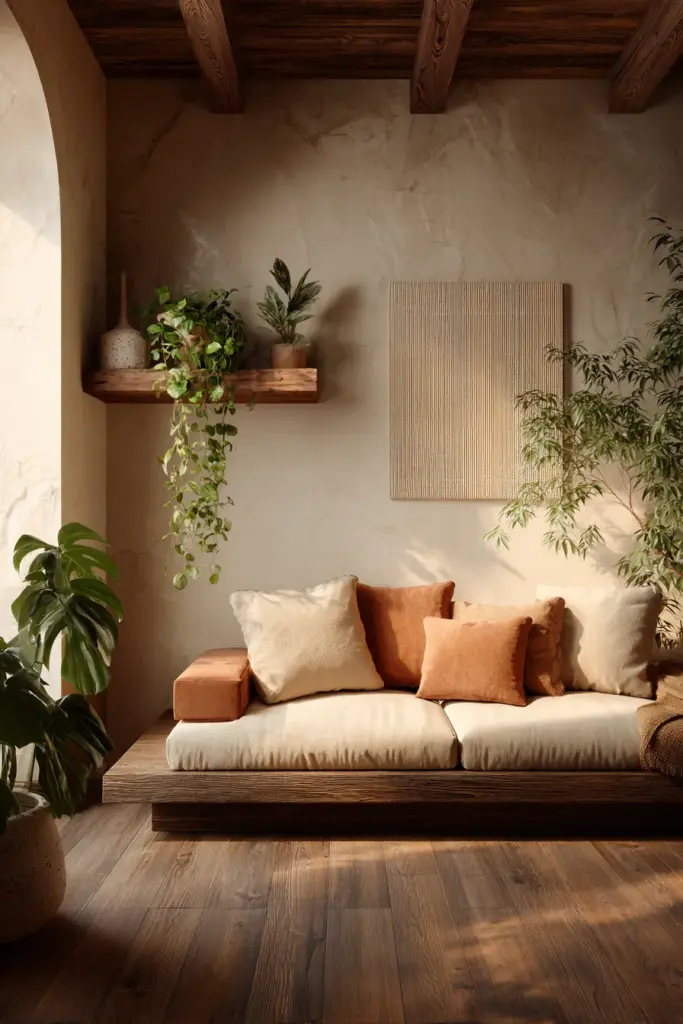
The most impactful Japandi texture statement. A slatted wood panel wall — or a combination of smooth plaster and a single reclaimed timber shelf — creates a focal point that does the work of an entire gallery wall without the noise.
Frame it with restraint. One ceramic on the shelf. A small trailing plant. Negative space on either side. Let the texture breathe.
Japandi Texture in a Small Living Room
In compact spaces, vertical slatted panels are your greatest ally. They draw the eye upward, creating the impression of height, while adding the wood grain depth that Japandi demands — without consuming floor space.
Pair vertical panels with low-profile furniture: a platform sofa, a low coffee table. The panels reach; everything else stays grounded. The room feels taller, calmer, and more considered.
Japandi Texture with a Neutral Palette
Combining three to five natural textures within a narrow neutral palette — warm white walls, oat linen, pale oak, natural jute — creates the kind of room that photographs beautifully but, more importantly, feels beautiful to be in every single day.
Introduce one deeper tone — smoked oak, warm charcoal, terracotta — as a single accent across one textured element. That contrast is what gives the neutral palette its quiet drama.
The Low-Profile Texture Floor Moment
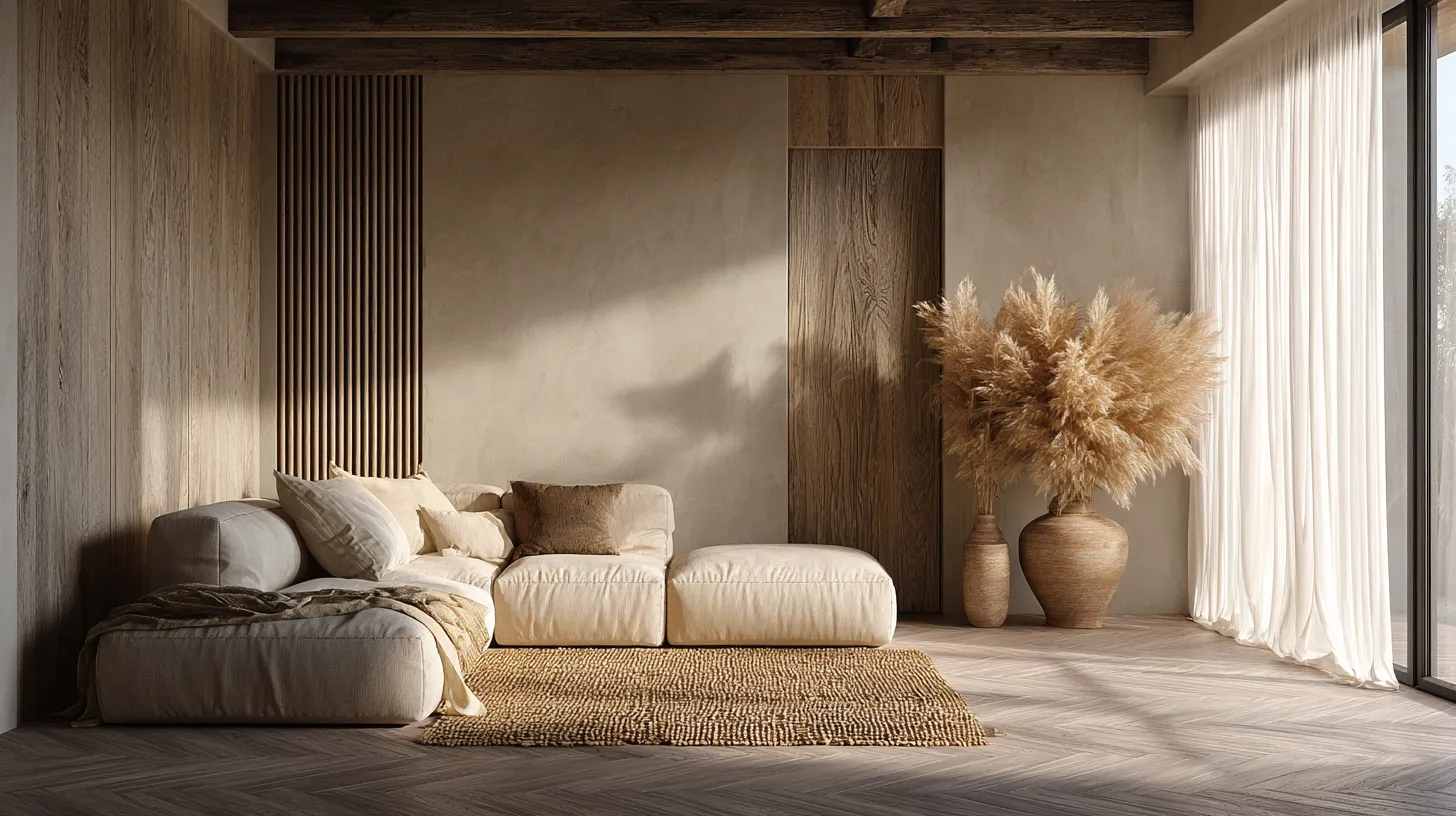
A generously sized natural fibre rug layered beneath a low wooden coffee table and surrounded by floor cushions or a low platform sofa creates a Japandi “hearth zone” without a fireplace. The rug is the anchor. The texture is the warmth.
Choose a rug large enough to sit beneath all four legs of your sofa — undersized rugs interrupt the visual calm of a Japandi room.
How to Layer Textures Without Creating Clutter
This is the question we hear most often at ERYLIN. And the answer is simpler — and more liberating — than you might expect.
The 3–5 Texture Rule for Any Japandi Space
In a Japandi living room, three to five distinct textures is the sweet spot. More than five and the room begins to feel busy; fewer than three and it risks feeling flat and impersonal.
Choose your textures in this sequence:
- One dominant texture — usually wood, in flooring or wall panels
- One soft texture — linen sofa upholstery or floor-length curtains
- One woven texture — a jute rug or rattan element
- One tactile accent — a knit throw or bouclé cushion
- One cool contrast — a ceramic vessel, stone tray, or aged metal accent
Each texture plays a specific role. None competes. All of them converse.
Design rule to live by: Once you have identified your five textures, do not introduce a sixth — no matter how beautiful it is on its own. Restraint is what makes the composition work.
Can I Use Dark Textures in a Japandi Living Room?
Yes — with intention and proportion.
Dark walnut wood, smoked oak, matte charcoal ceramics, and deep slate stone can anchor a Japandi room beautifully when used as deliberate accents rather than dominant surfaces. The key is contrast ratio: keep 80% of your textures in warm neutrals — cream, oat, sand, warm white — and reserve 20% for deeper tones.
A single dark wood coffee table against a linen sofa and pale oak floor creates striking depth without visual heaviness. A dark ceramic pendant shade paired with warm rattan baskets beneath it feels grounded, rich, and intentional.
In small rooms, limit dark textured elements to one per zone. One piece. Chosen well. That is enough.
Plant Texture: Biophilic Layers That Breathe
Plants are texture too — and Japandi living rooms are quietly incomplete without them.
The structural silhouette of a snake plant against a slatted wood panel creates a living contrast that no decorative object can replicate. The trailing softness of a pothos on a high shelf introduces organic movement. A dried grass or pampas arrangement in a ceramic vessel adds earthy, papery texture without requiring any care at all — particularly beautiful in humid tropical climates.
For warm, humid spaces like those in the Philippines, choose plants that thrive in moisture: ferns, peace lilies, and philodendrons all make ideal companions for rattan and linen rooms. Their deep green tones intensify the warmth of every neutral surface around them.
Japandi Texture Trends for 2026
The Japandi aesthetic is evolving — and texture is leading the shift into what designers are calling Japandi 2.0.
Rustic earth tones are replacing the cooler, greyer palettes of early Japandi interiors. Think terracotta-edged linen, rust-touched ceramics, and warm amber wood stains that feel less like Scandinavian winter and more like golden-hour autumn. This shift makes Japandi feel more accessible in warmer climates and more personal in smaller homes.
Tactile wall art is emerging as one of the defining trends of 2026 — woven fibre pieces, carved wooden panels, and hand-formed ceramic wall objects that function as both art and texture. These replace the need for a gallery wall while adding far more sensory dimension to a flat surface.
Moss walls and living panels are appearing in higher-end Japandi interiors, pairing biophilic texture with slatted panels for a truly immersive experience. Even a small framed moss panel beside a bookshelf brings this energy into a modest space.
Japandi Texture Micro-Rituals: Living the Philosophy, Not Just Displaying It
This is where the design philosophy becomes a daily practice. A beautifully textured Japandi room is not only meant to be looked at — it is meant to be felt.
Morning: Run your hand along the oak shelf as you pass it. Notice the grain beneath your fingers. Let that small act of awareness slow the start of your day.
Evening: Reach for the knit throw before reaching for your phone. Wrap yourself in its weight. Sit with your tea. Let the textures of the room — the woven rug underfoot, the cool ceramic in your hands — bring you back into your body.
Weekend: Spend one hour in your Japandi living room with no screens. Read. Sketch. Sit. Let the layers of texture you have chosen do what they were designed to do — create a space where rest feels natural, not forced.
These micro-rituals are the soul of Japandi living. They are why the design resonates so deeply beyond aesthetics.
Caring for Natural Textures: Making Beauty Last
Natural materials are honest. They ask for a little care in return for their beauty.
- Linen softens with every wash. Use cold water, air dry, and embrace the gentle wrinkle — it is not a flaw, it is character
- Rattan can dry out in low-humidity environments. Mist lightly with water occasionally, or place a small humidifier nearby during dry seasons to prevent brittleness
- Jute rugs are vulnerable to sustained moisture. In humid climates, use a breathable rug pad underneath and rotate seasonally to prevent uneven wear
- Wood panels and furniture benefit from an annual application of natural oil — linseed or tung oil — to prevent drying, cracking, and fading over time
- Ceramics need very little: a damp cloth is enough. Avoid harsh chemical cleaners on unglazed or matte surfaces, which can strip the natural finish
Budget-Friendly Japandi Texture Ideas
A beautifully textured Japandi living room does not require an interior designer or a large renovation budget. It requires good choices and patience.
Affordable approaches:
- Reclaimed wood panels: Source locally from salvage yards or demolition sites. Sand lightly, oil with a natural finish, and mount as a feature wall. The result is more authentic — and more wabi-sabi — than anything purchased new
- DIY linen cushion covers: Buy fabric by the metre from a local supplier and sew simple envelope-back covers. Local markets in the Philippines often stock beautiful woven cotton and near-linen blends at a fraction of boutique prices
- Concrete-effect paint: Apply to an existing wall or a plain piece of furniture. The matte, cool result is deeply Japandi and costs far less than real concrete
- Secondhand rattan pieces: Source pre-loved rattan baskets, side tables, and pendant shades from thrift stores or online marketplaces. Clean gently, refresh with a light coat of natural oil, and place with intention
- Dried botanicals in ceramic vessels: Pampas grass, dried eucalyptus, or foraged branches arranged in a thrifted ceramic vase deliver the full Japandi texture moment for almost no cost at all
Your Pre-Styling Planning Checklist
Before you begin layering textures in your living room, ask yourself:
- What natural materials are already present? Choose new textures that echo, not compete with, what you already have
- Which texture will be dominant? Decide on your wood or linen anchor before adding anything else
- How much floor space does your rug need to cover? Sketch a rough floor plan and measure before purchasing
- Are you working within three to five texture families? Count before you commit
- Is your lighting soft and warm? Natural textures need warm, directional light to reveal their depth — cooler lighting flattens them
- Have you planned for one cool contrast element? Ceramic, stone, or aged metal completes the composition
- What is your plant plan? Even one structural plant lifts the entire room
Key Takeaways: Japandi Living Room Texture Ideas
- Choose three to five distinct textures — no more, no fewer
- Wood is your foundation; linen is your softness; jute or rattan is your middle ground
- Add one ceramic or stone accent for cool contrast against warm naturals
- In small rooms, use vertical slatted panels to add texture without consuming floor space
- Keep 80% of your palette in warm neutrals and reserve 20% for one deeper tone
- Rustic earth tones and tactile wall art define the Japandi 2.0 direction for 2026
- Budget alternatives — reclaimed wood, DIY linen, dried botanicals — deliver the same calm elegance as higher-end pieces
- Care for your natural textures with natural methods: oil for wood, cold washing for linen, misting for rattan
- Incorporate daily micro-rituals around your textured space to live the Japandi philosophy fully
A Final Word from ERYLIN
The most beautiful rooms we have ever encountered share one quality: they feel like someone lives in them — slowly, attentively, and with great care for the surfaces they touch every day.
A Japandi living room texture is not a design project. It is a quiet act of choosing what you want to feel when you come home. The grain of the wood beneath your fingertips. The weight of a linen cushion in your arms. The cool smoothness of a ceramic bowl held in both hands.
These sensations accumulate. Over days and seasons, they become the feeling of home itself.
Whether you begin with a single jute rug or restyle your entire feature wall, the intention behind each texture is what makes it Japandi. Start there. Layer slowly. Trust what you feel.
With warmth and stillness — ERYLIN
Frequently Asked Questions
How do you incorporate textures in a Japandi living room?
Begin with your largest surfaces — flooring and walls. Establish one dominant wood texture as your foundation, then layer softer textiles (linen cushions, a knit throw) and a woven rug. Add one ceramic or stone accent last. Work in odd numbers: three or five textures layer more naturally than even numbers, and always edit rather than add when a room begins to feel busy.
What textures are best for a Japandi living room?
The five most essential Japandi textures are natural wood grain, linen, rattan, jute, and matte ceramic. Together, they cover the full sensory spectrum — structural, soft, woven, earthy, and cool — without competing with each other. Start with whichever feels most natural to your existing space and layer outward from there.
How many textures can I use in a small Japandi living room without it looking cluttered?
Three to five is the ideal range for any size room. In smaller spaces, keep your dominant texture — wood or linen — very consistent throughout, and use vertical elements like slatted panels to add depth without consuming floor space. The discipline of limiting yourself to five textures is exactly what keeps a small room feeling calm rather than cramped.
Can I use dark textured pieces in a small Japandi living room?
Yes — when used sparingly and intentionally. One dark textured element per zone (a walnut coffee table, a charcoal ceramic vessel) adds beautiful depth without overwhelming a compact room. The key is keeping 80% of your textures in warm neutral tones and treating the darker piece as a deliberate focal accent, not a repeating theme.
What materials add texture to Japandi style sustainably?
FSC-certified oak and ash timber, GOTS-certified organic linen, rapidly renewable rattan, biodegradable jute, and locally sourced ceramics are all excellent sustainable choices. Reclaimed and upcycled wood is particularly aligned with the wabi-sabi principle of finding beauty — and value — in materials that already carry history and age.