
Table of Contents
There’s a particular kind of stillness that comes from a well-designed room.
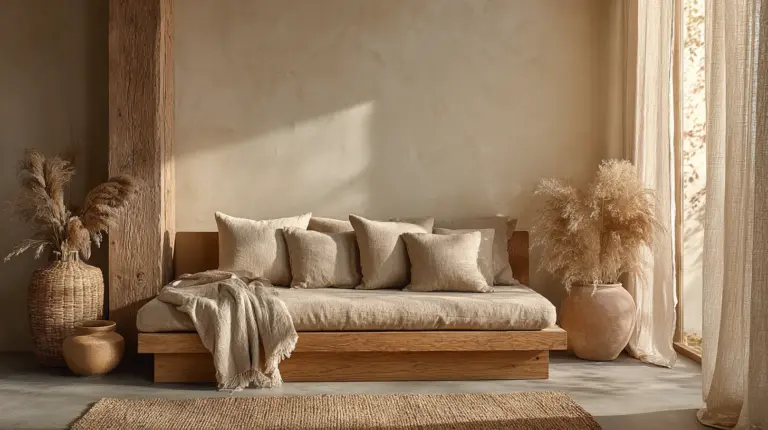
It’s the feeling you get when morning light filters through a linen curtain and falls across a smooth oak table. It’s the quiet satisfaction of bare feet on cool stone, the gentle rustle of a potted snake plant near an open window. That feeling has a name — and it lives at the intersection of two philosophies: the Japanese art of wabi-sabi and the Scandinavian spirit of hygge.
Welcome to the Japandi living room.
In this guide, ERYLIN walks you through the world of Japandi living room natural elements — the materials, textures, lighting, and plants that make this style feel less like a trend and more like a way of life. Whether you’re working with a compact apartment or a spacious sala, these ideas will help you create a space that breathes.
What Are Japandi Living Room Natural Elements?
At its heart, Japandi design is about bringing the outside in — deliberately, beautifully, without clutter.
Natural elements in a Japandi living room include organic materials like solid wood, stone, bamboo, rattan, linen, and wool. These aren’t decorative afterthoughts; they are the architecture of the room’s soul.
Each material tells a story. A walnut coffee table carries the memory of a forest. A river stone vase holds centuries of slow patience. A seagrass rug whispers of coastlines. When you layer these elements thoughtfully, the room starts to feel alive.
The Foundation: Wood as the Heart of Japandi Design
Choosing the Right Wood Tones
Wood is non-negotiable in a Japandi living room. It grounds the space, adds warmth, and brings in the natural grain patterns that make every piece feel one-of-a-kind.
The most-loved wood tones for Japandi interiors are oak, maple, and walnut — each with its own personality. Oak is light and airy, perfect for small spaces that need to breathe. Maple offers a clean, almost porcelain-smooth grain. Walnut runs deeper, richer, and more dramatic.
In the Philippines, locally sourced acacia and molave are beautiful Japandi-compatible alternatives that also support local craftsmanship and reduce your carbon footprint.
Multifunctional Wood Pieces
Japandi living rooms don’t just celebrate wood — they use it wisely.
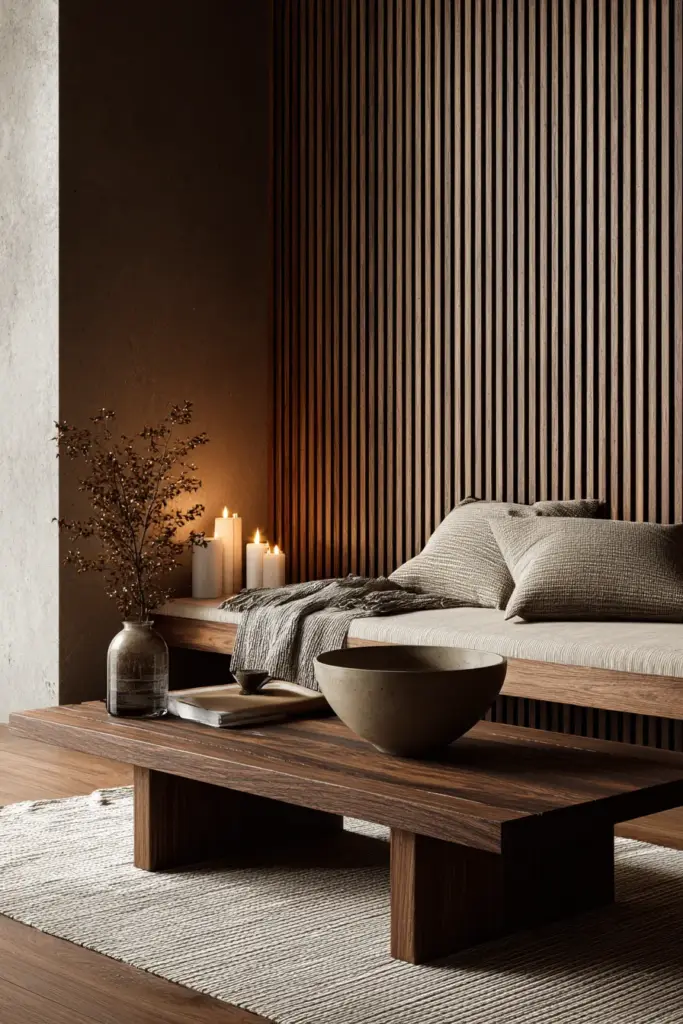
Look for multifunctional wood pieces like a solid oak bench that doubles as a storage unit, or a low-profile media console with sliding panels. These pieces honor the Japandi ideal of function as form — nothing decorative that isn’t also useful.
Vertical slatted wood panels on an accent wall can add depth and texture to a smaller room without overwhelming it. This is especially powerful in urban Philippine apartments where square footage is precious.
Stone, Rattan, and Bamboo: Layering Organic Textures
Stone Accents That Ground the Room
Stone brings a primal, unhurried energy into any space.
You don’t need a full stone wall to make an impact. A single stone vase on a shelf, a river rock tray on the coffee table, or a matte ceramic pot in warm gray — these quiet details anchor the room in something timeless.
For a more elevated look, consider a stone-look console table or a marble tray as a serving surface. The key is restraint: one or two stone pieces speak louder than a collection.
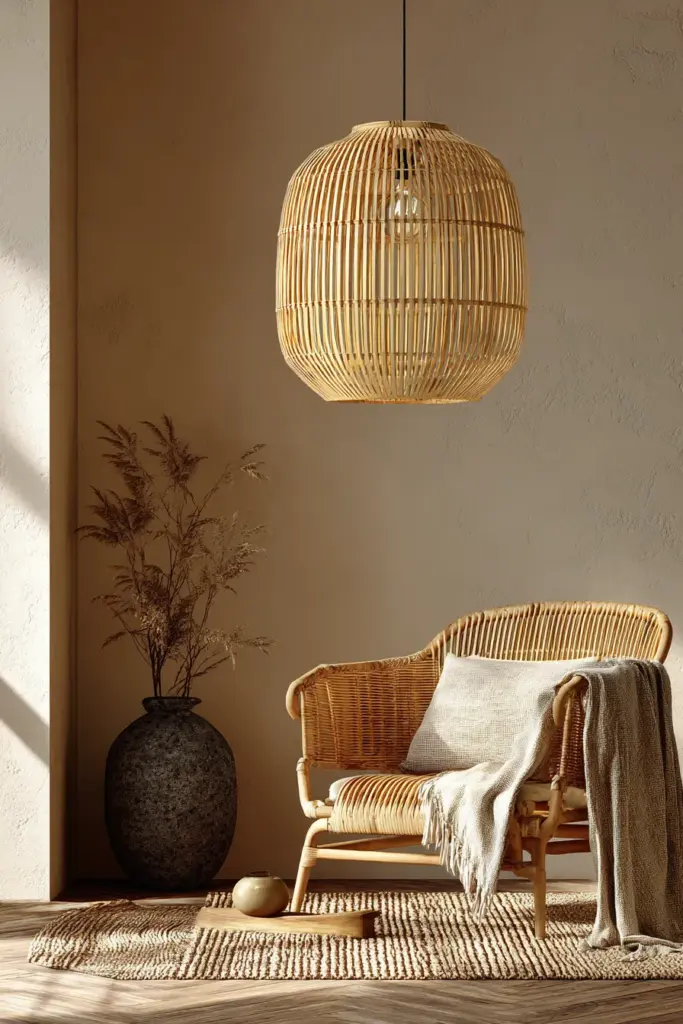
Bamboo and Rattan: Japandi’s Tropical Soul
Here’s where Japandi design meets its Philippine moment.
Bamboo lampshades and rattan accent chairs are not just aesthetically aligned with Japandi — they’re practically native to our climate. Local bamboo is sustainable, fast-growing, and naturally humidity-resistant, making it ideal for homes in tropical regions.
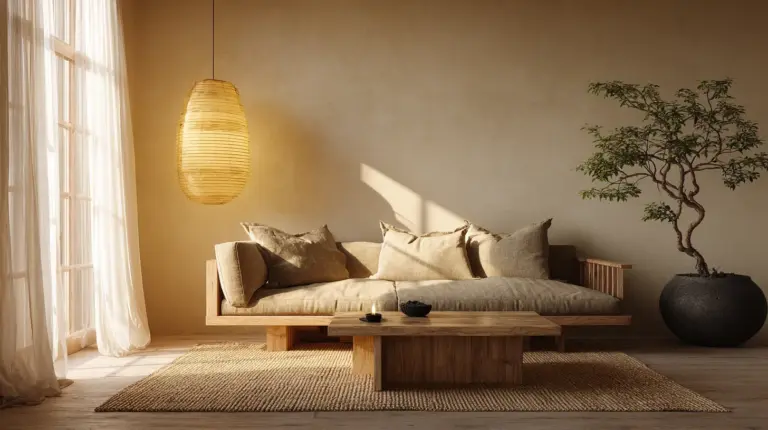
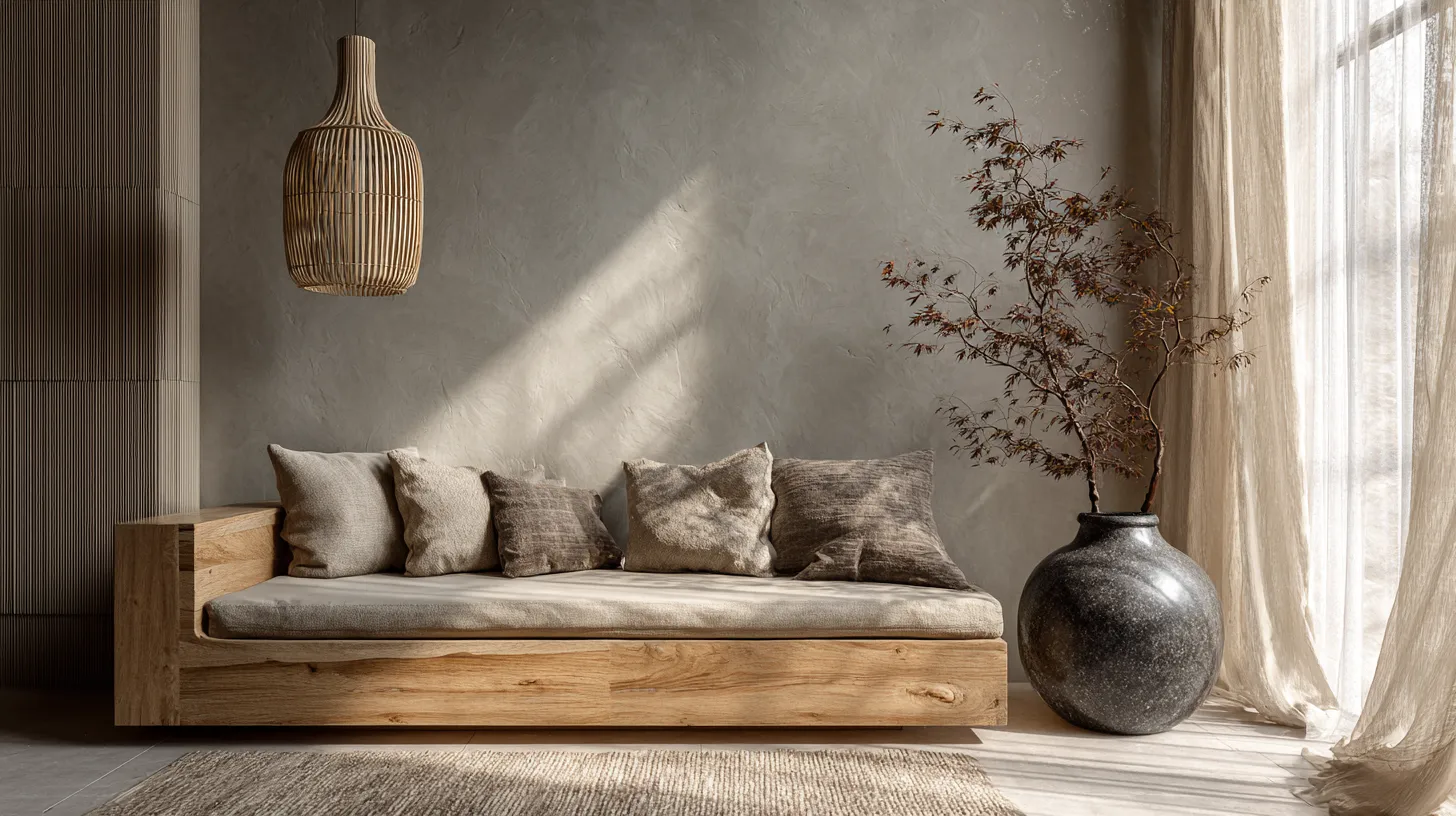
A hanging bamboo pendant light over a low wooden table creates that signature Japandi glow: warm, diffused, like candlelight softened by nature itself. Pair a rattan side chair with a chunky linen throw, and the room practically exhales.
| Material | Japandi Role | Local PH Option |
|---|---|---|
| Oak / Walnut | Primary furniture | Acacia, Molave |
| Bamboo | Lighting, accent furniture | Native Philippine bamboo |
| Rattan | Chairs, trays, baskets | Locally woven rattan |
| Stone | Vases, trays, decor | River rock, volcanic stone |
| Linen | Upholstery, curtains | Handwoven local fabrics |
Textile Soul: Linen, Wool, and the Art of Tactile Comfort
Why Linen Is the Ultimate Japandi Fabric
If wood is the skeleton of a Japandi room, linen is its skin.
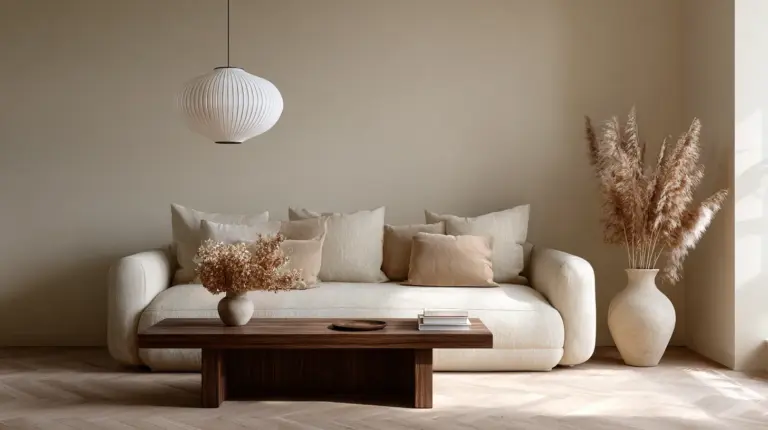
Linen curtains that pool gently at the floor. Linen throw pillows in warm ecru and soft taupe. A linen sofa cover that softens with every wash. The beauty of linen is that it improves with age — it wrinkles, it breathes, it develops a patina that feels lived-in and loved.
In a warm, humid climate like the Philippines, linen’s natural breathability makes it even more practical than it looks.
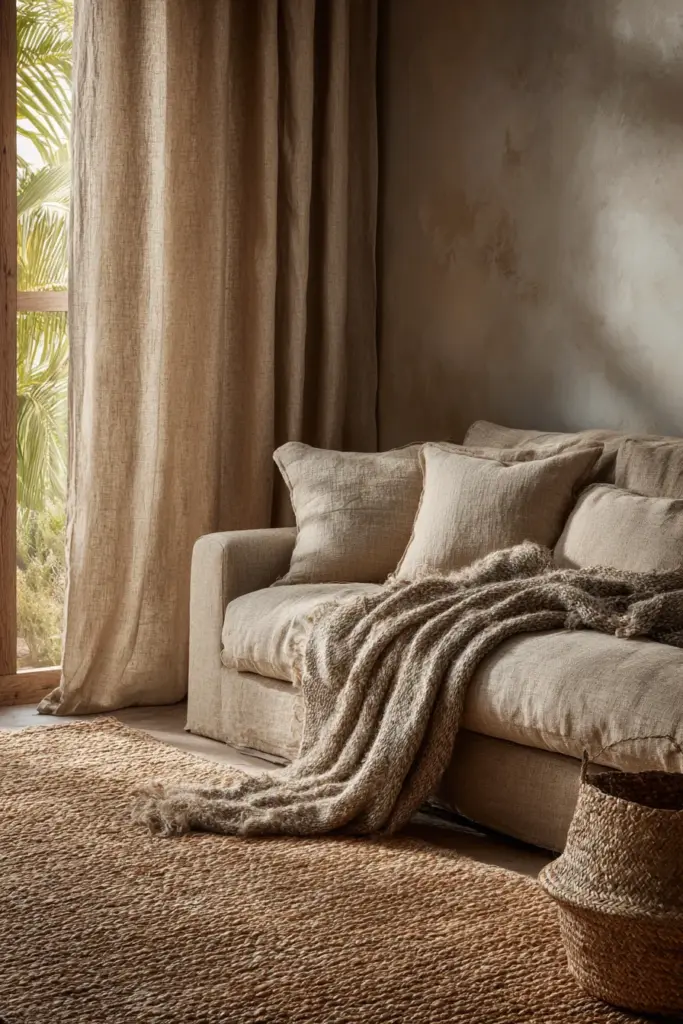
Wool and Textured Weaves for Depth
For cooler evenings or air-conditioned interiors, wool throws and chunky-knit cushions add that layer of tactile softness that Japandi rooms are known for.
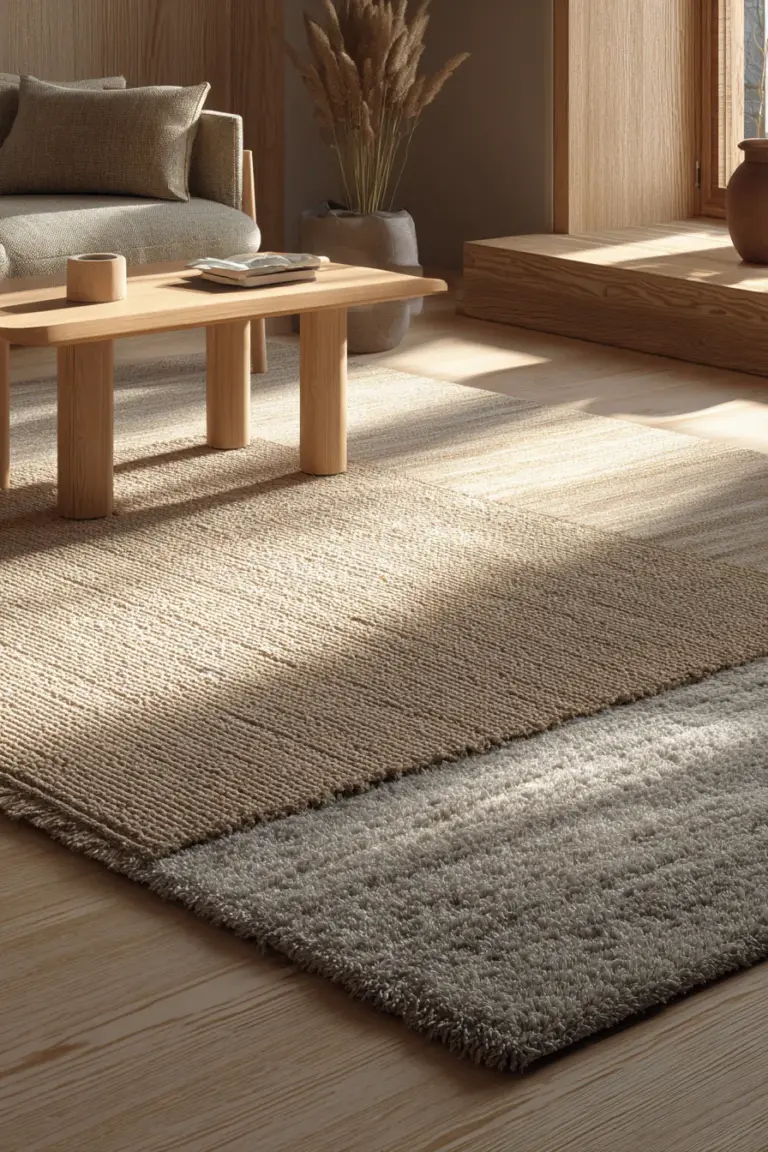
A Moroccan-style wool rug in warm gray or sand tones grounds the seating area beautifully. If budget is a concern, a seagrass rug is an excellent and affordable alternative — it adds organic texture without the price tag.
Japandi Lighting: Where Natural Fiber Meets Warm Glow
Layering Light the Japandi Way
Lighting in a Japandi room isn’t about brightness — it’s about quality of light.
The goal is warm, layered illumination that mimics the rhythm of natural daylight. Start with warm LED bulbs (2700K–3000K) as your base. Then layer in natural fiber diffusers — think bamboo pendant lights, washi paper sconces, or rattan table lamps — to soften and scatter the light beautifully.
This approach, sometimes called circadian-aligned lighting, supports your body’s natural sleep-wake rhythm. It’s wellness design in the most understated way.
Positioning Light for Atmosphere
Place a table lamp in a dim corner near a bookshelf or plant to create a warm pocket of light. Use a floor lamp with a linen shade beside the sofa for reading. Let natural light do its morning work through sheer curtains, then transition to warm artificial light as evening settles.
The result is a room that feels different — and better — at every hour of the day.
Biophilic Charm: Plants That Belong in a Japandi Living Room
Low-Maintenance Plants for Philippine Humidity
Plants are essential in a Japandi living room — but not every plant suits our tropical climate.
The best choices are low-maintenance, humidity-tolerant varieties that also purify the air. In the Philippines, these thrive beautifully indoors:
- Snake Plant (Sansevieria) — architectural, nearly indestructible, and one of the best air purifiers
- ZZ Plant (Zamioculcas zamiifolia) — glossy, sculptural, thrives in low light
- Peace Lily — elegant white blooms, filters indoor air pollutants
- Pothos — trailing vines that add softness to shelves and high spots
- Fiddle Leaf Fig — a dramatic focal point for rooms with indirect natural light
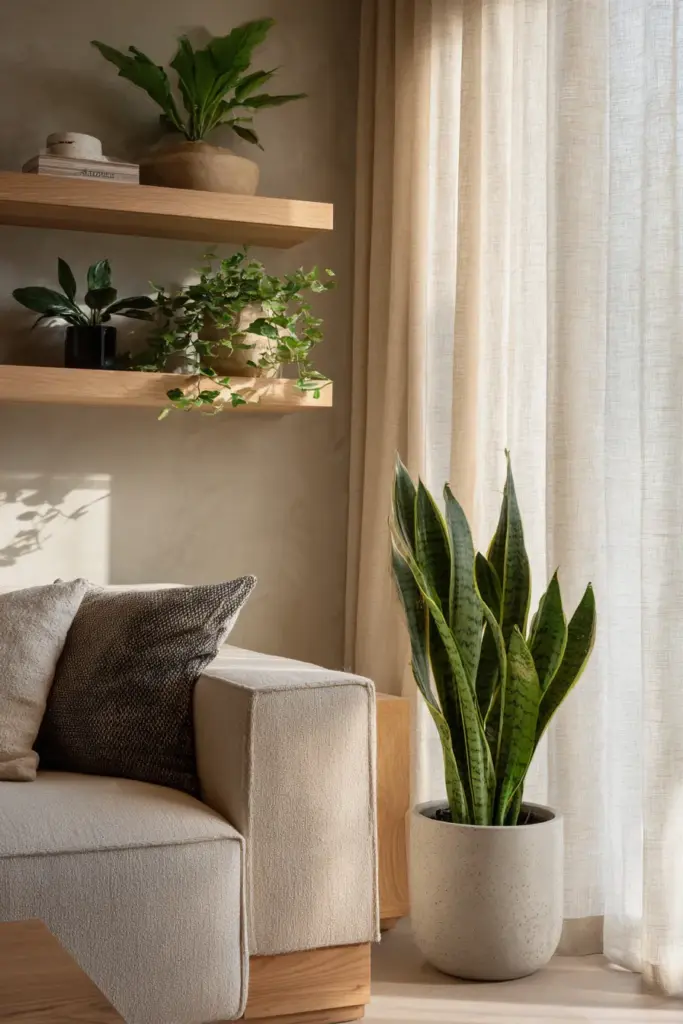
How to Style Plants the Japandi Way
Placement matters as much as the plant itself.
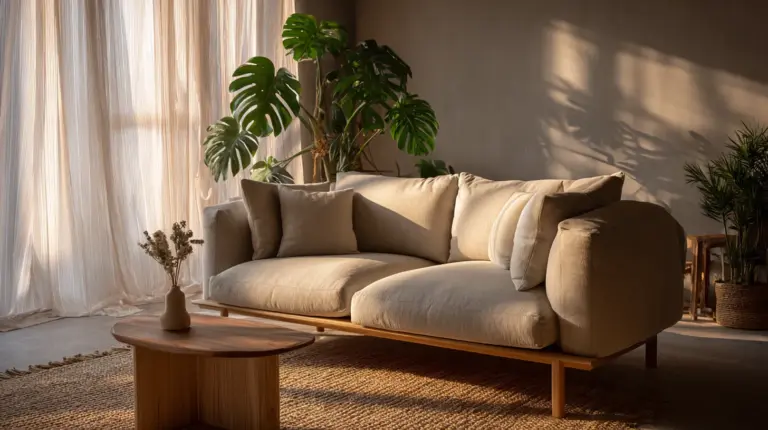
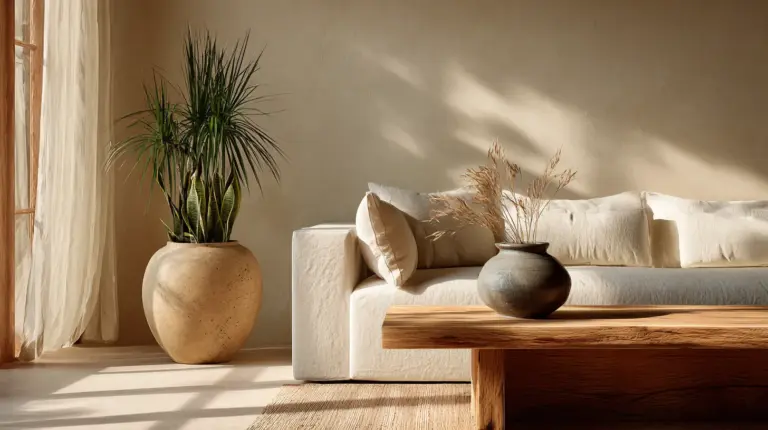
A single tall snake plant in a matte stone pot beside a low sofa creates a visual anchor without visual noise. A trailing pothos on a floating shelf softens hard lines. A fiddle leaf fig near a bright window becomes a living sculpture.
Avoid overcrowding. In Japandi design, one meaningful plant has more presence than five competing for attention.
Budget DIY: Upcycling for a Japandi Living Room
Repurpose, Don’t Replace
Japandi design was never meant to be an expensive overhaul. Its roots are in simplicity and intentionality — and that philosophy extends to budget.
Some ideas for sustainable, budget-friendly Japandi transformations:
- Repaint or sand existing furniture to reveal natural wood grain
- Reupholster a tired armchair in natural linen or a textured fabric
- Upcycle old rattan pieces with a light coat of natural stain
- Use reclaimed wood from local lumber yards for floating shelves or a media console
- Swap out synthetic throw pillows for ones in cotton, linen, or jute
The goal is always the same: bring materials closer to nature, and closer to something that feels truly yours.
Small Space Hacks for Japandi Natural Elements
You don’t need a sprawling sala to live the Japandi way.
In small apartments, vertical design is your best friend. Slatted wood wall panels draw the eye upward and add architectural interest. Modular linen storage — think cube shelves lined with woven baskets — keeps the room tidy without sacrificing warmth.
Choose furniture with low profiles and clean lines to keep the visual floor clear. A low wooden sofa platform, a flat coffee table, a minimal entertainment unit — these keep the room feeling open, calm, and intentional.
Japandi Natural Elements: A Design Checklist
Before you begin styling, here’s what to gather:
- Wood: One or two solid wood furniture pieces in oak, walnut, acacia, or molave
- Stone: A stone vase, ceramic pot, or river rock tray
- Bamboo/Rattan: A pendant lamp, side chair, or woven storage basket
- Linen: Curtains, throw pillows, or a sofa slipcover
- Plants: At least one low-maintenance, air-purifying species
- Warm Lighting: Layered LEDs with natural fiber diffusers
- Neutral Palette: Beige, warm gray, taupe, warm white as your base colors
- Textures: Combine smooth (stone, wood) with soft (linen, wool) for tactile depth
- Restraint: Leave breathing room — negative space is part of the design
Conclusion: The Room That Breathes With You
A Japandi living room with natural elements isn’t just beautiful — it’s kind.
It’s kind to your nervous system, which finds rest in organic textures and warm light. It’s kind to the planet, which benefits from sustainable materials and mindful sourcing. And it’s kind to the moments of your life — the quiet mornings, the unhurried afternoons, the evenings that ease gently into stillness.
At ERYLIN, we believe that the most beautiful rooms are the ones that feel like they’ve always been there, waiting for you to come home.
Start with one piece. Let the rest unfold naturally.
Frequently Asked Questions
What materials are used in Japandi living room natural elements?
The core materials in a Japandi living room are wood (oak, walnut, maple, or locally sourced alternatives like acacia), bamboo, rattan, stone, linen, and wool. These organic materials are chosen for their texture, sustainability, and the sense of calm they bring into a space. In the Philippines, native bamboo and rattan are especially well-suited because they’re humidity-resistant and locally available.
How do I incorporate natural elements into a Japandi living room?
Start with a solid wood furniture piece as your anchor — a coffee table, media console, or low bench. Add a bamboo or rattan light fixture for warm, diffused illumination. Layer in linen textiles through curtains or throw pillows, then introduce one or two potted plants in matte stone pots. The key is to layer textures gradually and leave negative space between elements.
What colors work best with Japandi natural materials?
Japandi interiors favor a neutral palette: warm beige, soft taupe, warm white, and muted gray. These tones allow the natural variation of wood grain, stone, and linen to take center stage. Warm wood tones in tan and honey pair especially well with cool stone accents and cream-colored textiles. Avoid stark white or cold grays — Japandi warmth comes from organic undertones.
What plants are best for a Japandi living room in the Philippines?
Low-maintenance, humidity-tolerant plants work best in Philippine Japandi interiors. The snake plant, ZZ plant, pothos, and peace lily are excellent choices — they thrive in indoor conditions, require minimal care, and many are proven air purifiers. Style them in matte ceramic or stone pots and keep placement intentional: one or two well-chosen plants create more impact than a crowded collection.
Can I create a Japandi living room on a budget?
Absolutely. Japandi design is rooted in simplicity and intentionality, not luxury spending. Focus on upcycling — sand down existing furniture to expose wood grain, reupholster pieces in natural linen, or repurpose local rattan items with a fresh stain. Shop local lumber yards for reclaimed wood shelving and source plants from neighborhood nurseries. The philosophy is about quality of attention, not price tag.