
Table of Contents
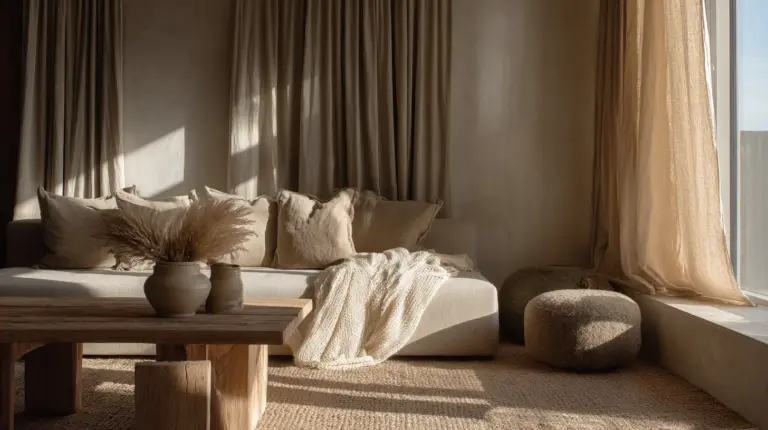
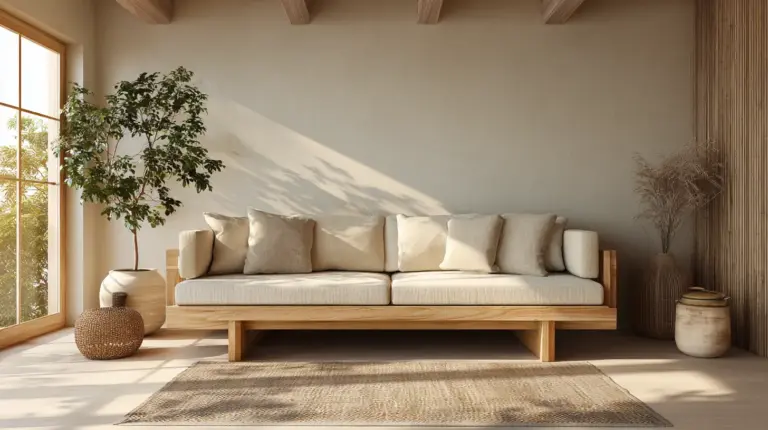
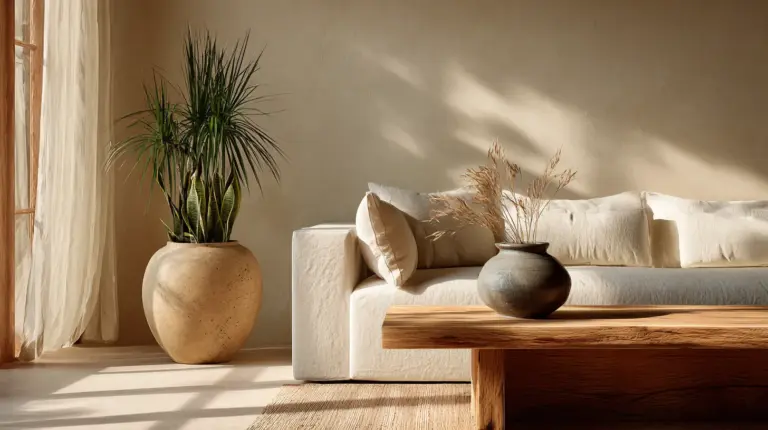
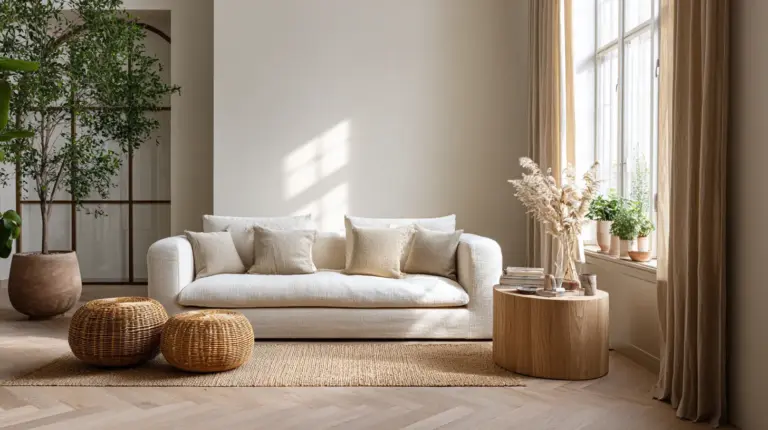
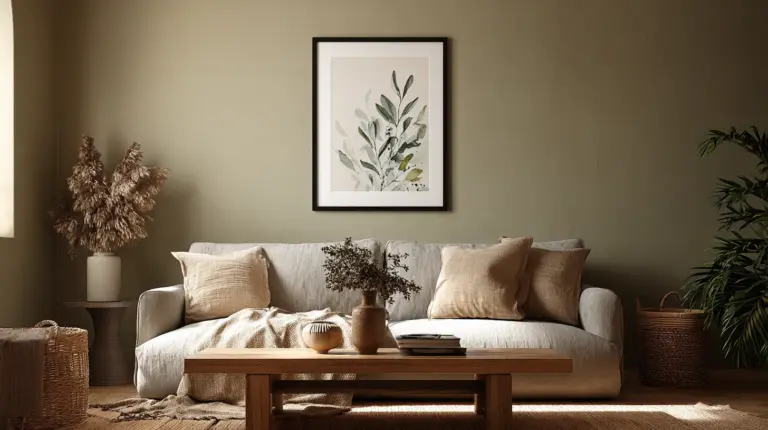
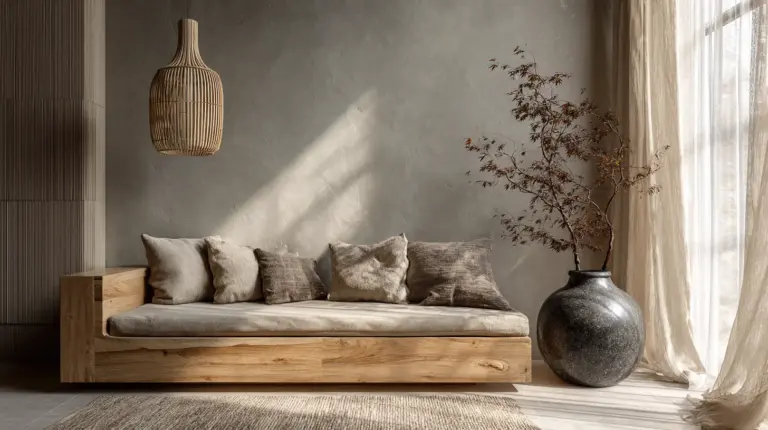
There is something quietly magnetic about a Japandi living room. The pale linen sofa. The low wooden table. The single ceramic bowl catching afternoon light. And then — the rug beneath it all, grounding every element like a breath held softly in place.
Choosing the right rug for a Japandi space is not complicated, but it is intentional. It asks you to slow down, to feel the texture between your fingers before you commit, to imagine how morning light will settle across the weave.
At ERYLIN, we believe a rug is never just a floor covering. It is the warmth your bare feet find first, the quiet anchor that tells every piece of furniture where it belongs. Done right, a Japandi rug transforms a room from arranged to alive.
This guide walks you through everything — from understanding the philosophy behind the style, to choosing material, color, and size, to layering with confidence and caring for your rug long after the novelty of newness has softened into something even better: home.
What Is Japandi Style?
Japandi is the marriage of Japanese and Scandinavian design sensibilities — two cultures that, despite their distance, share a reverence for simplicity, craftsmanship, and the beauty found in imperfection.
From Japan, it borrows wabi-sabi: the acceptance of impermanence, the appreciation of raw edges and aged surfaces. From Scandinavia, it draws hygge: that untranslatable coziness that lives in candles, soft textiles, and unhurried evenings.
The result is a style that is minimal without being cold, natural without being rustic, and serene without being empty. Every object earns its place. Every texture carries meaning.
A rug in a Japandi living room, then, must embody all of this — quietly and completely.
What Colors Are Best for Japandi Rugs?
Japandi lives in the in-between colors — not quite white, not quite brown, not fully grey. Think warm cream, aged linen, soft sage, dusty clay, and muted charcoal.
The palette works because it never fights for attention. A warm beige rug under a pale oak coffee table feels inevitable, like they were always meant to meet. A soft grey rug beneath a walnut sofa adds depth without drama.
Matching Rug Undertones to Your Floor and Furniture
Getting the undertone right is where most people stumble. Here is a simple guide:
| Floor Type | Rug Undertone | Why It Works |
|---|---|---|
| Light oak / ash | Warm beige or cream | Keeps the space luminous and cohesive |
| Dark walnut | Warm taupe or soft grey | Adds contrast without visual weight |
| Concrete / polished grey | Warm oatmeal or dusty sand | Softens the coolness of the floor |
| Marble / white tile | Warm ivory or natural jute | Grounds the room without competing |
A warm rug always softens a cool floor. A cool-toned rug on a dark floor creates elegant contrast. The mistake to avoid is pairing a cool grey rug with cool grey concrete — the room loses its soul.
For metal finishes: black iron and matte bronze pair beautifully with warm-toned rugs. Brass and aged gold feel richest against creamy ivory or soft sand.
What Material Is Best for Japandi Rugs?
Material is where Japandi gets deeply sensory. Run your hand across a handwoven jute and you feel the earth in it — dry, honest, grounding. Press your palm into a thick wool pile and you feel something else entirely: weight, warmth, the slow exhale of a long day ending.
Natural fibers are always the first language of Japandi. But not every fiber suits every situation.
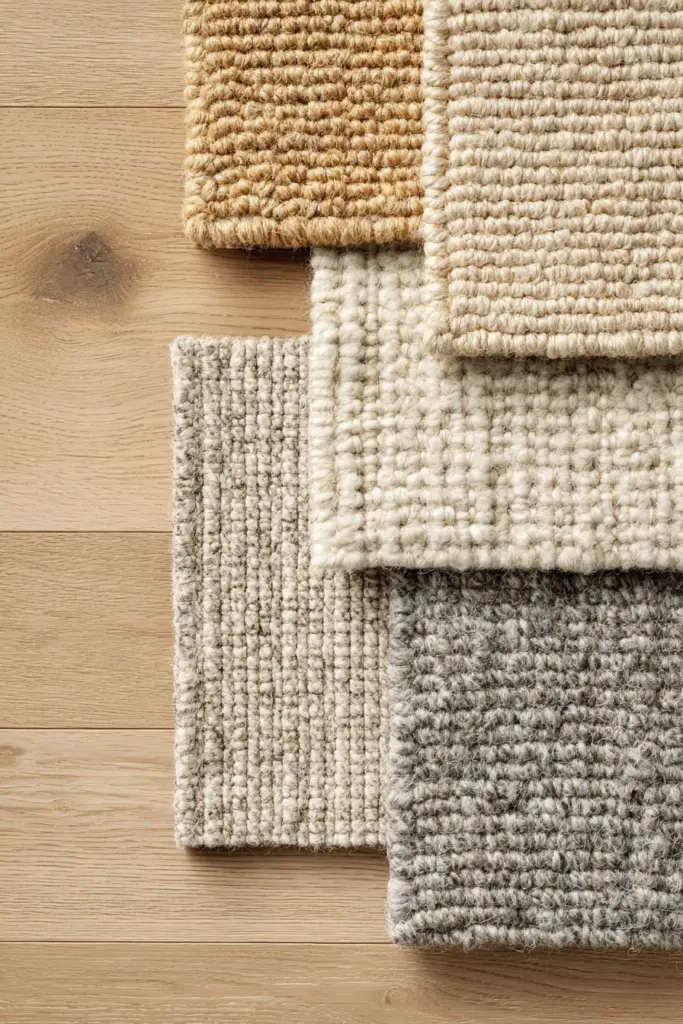
Natural Fiber Guide
Wool is the gold standard. It is warm underfoot, naturally stain-resistant, and ages with a quiet dignity. A low-pile wool rug in warm oatmeal is perhaps the most versatile Japandi choice you can make.
Jute and sisal carry an earthy, textured quality that reads as deeply organic. They work beautifully in living rooms that get strong natural light — the fibers seem to absorb and warm the sun. Note that jute is not moisture-friendly, so keep it away from high-spill zones.
Cotton and linen blends offer lightness. They are flatter in profile, easier to clean, and ideal for warmer climates or rooms that feel like they need breathing room rather than weight.
Bamboo silk adds a subtle luminosity — a gentle sheen that catches light without announcing itself. It brings an elevated, tactile quality to minimal spaces.
Budget Tiers at a Glance
| Budget | Material | What to Expect |
|---|---|---|
| Low | Polypropylene (natural look) | Durable, washable, rental-friendly; lacks warmth of natural fiber |
| Mid | Blended wool, jute, or cotton | Better texture, more breathable, long-lasting |
| High | Hand-woven wool, bamboo silk, wabi-sabi weaves | Heirloom quality, unique imperfections, rich tactility |
Even at a lower budget, choose a rug with a matte, textured surface. Glossy or high-sheen rugs are the first sign a space is not truly Japandi.
What Size Rug Should I Get for a Japandi Living Room?
Rug size is where intention becomes architecture. Too small and the rug floats, disconnected, like a postage stamp on a blank wall. Too large and it overwhelms the furniture, swallowing the clean negative space that Japandi depends on.
The golden rule: your rug should extend 25–30 cm beyond the sofa on all sides, and sit at least 30 cm from the wall in a compact room.
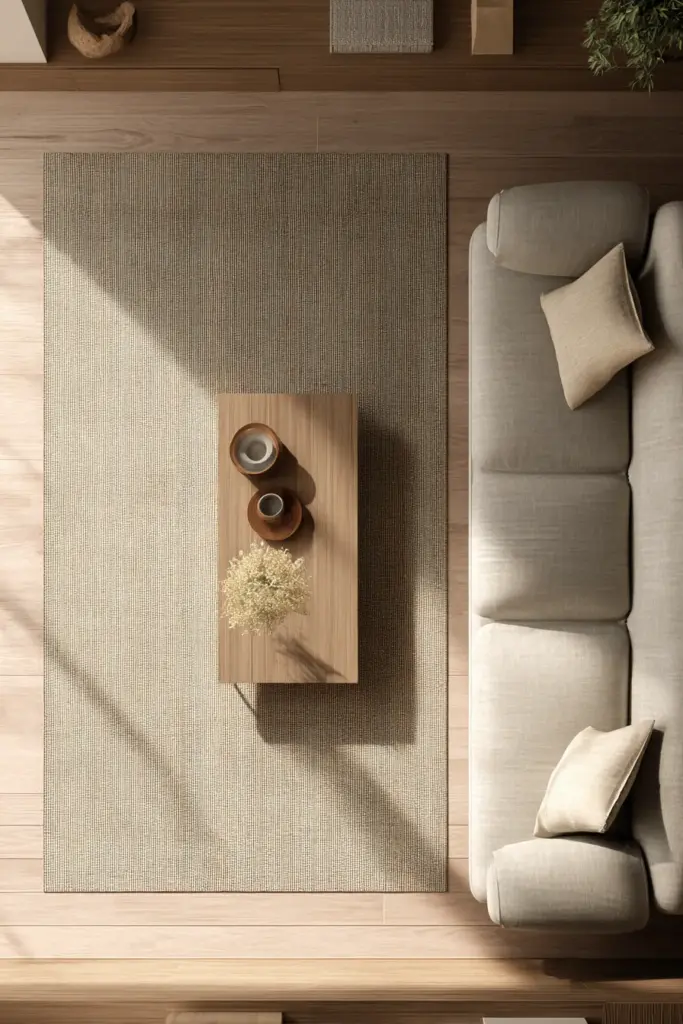
Size by Room Footprint
| Room Size | Rug Size | Layout Notes |
|---|---|---|
| Micro-apartment (20–25 m²) | 160 × 230 cm | All front legs on rug; keeps visual flow open |
| Mid-size living room (30–40 m²) | 200 × 290 cm | All legs on rug for a grounded, composed feel |
| Open-plan space (50+ m²) | 250 × 350 cm or larger | Rug defines the lounge zone within the larger room |
Furniture Placement Scenarios
3-seat sofa + coffee table + 2 accent chairs:
A 200 × 290 cm rug works best, with all front legs on the rug and the coffee table centered.
2-seat sofa + side table (compact room):
A 160 × 230 cm rug with only the sofa’s front legs anchored is clean and proportional.
Open-plan with dining zone visible:
Use a rug large enough to sit entirely under the sofa and chairs — this clearly delineates the living area without needing walls to do the work.
How to Choose a Rug That Matches Your Japandi Furniture
The rug does not just lie beneath the furniture — it speaks to it. Every wood tone, every metal finish, every textile carries an undertone. Your rug should respond to those undertones quietly but deliberately.
Wood Tone Pairings
Oak and beech (light, golden): Pair with warm ivory, natural jute, or oatmeal wool. The warmth mirrors and amplifies the golden grain.
Walnut (dark, rich): Pair with warm taupe, soft grey, or dusty linen. The contrast is refined, never jarring.
Ash and whitewashed wood (cool, pale): Pair with very light cream or a barely-there natural fiber. Keep it airy.
Pattern Logic
Japandi patterns must whisper, not speak. The safest choices are subtle geometric weaves, tonal stripes in similar values, or plain textured weaves where the pattern is the texture.
Avoid directional motifs, high-contrast medallions, or anything that creates visual movement. The eye should rest, not roam.
How to Layer Japandi-Style Rugs
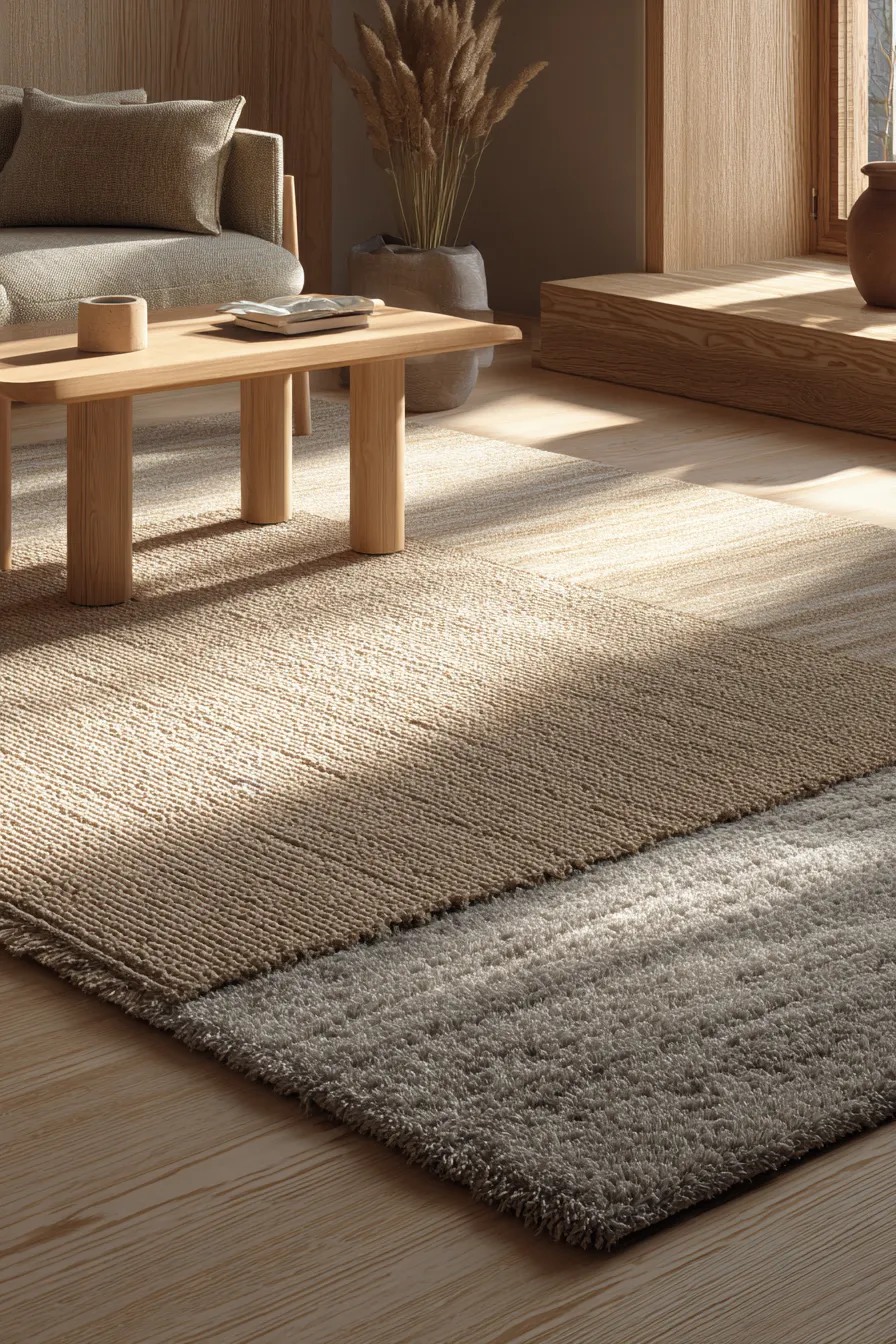
Layering adds depth, warmth, and an intentional layered quality that feels curated rather than decorated. But in a Japandi space, layering has rules.
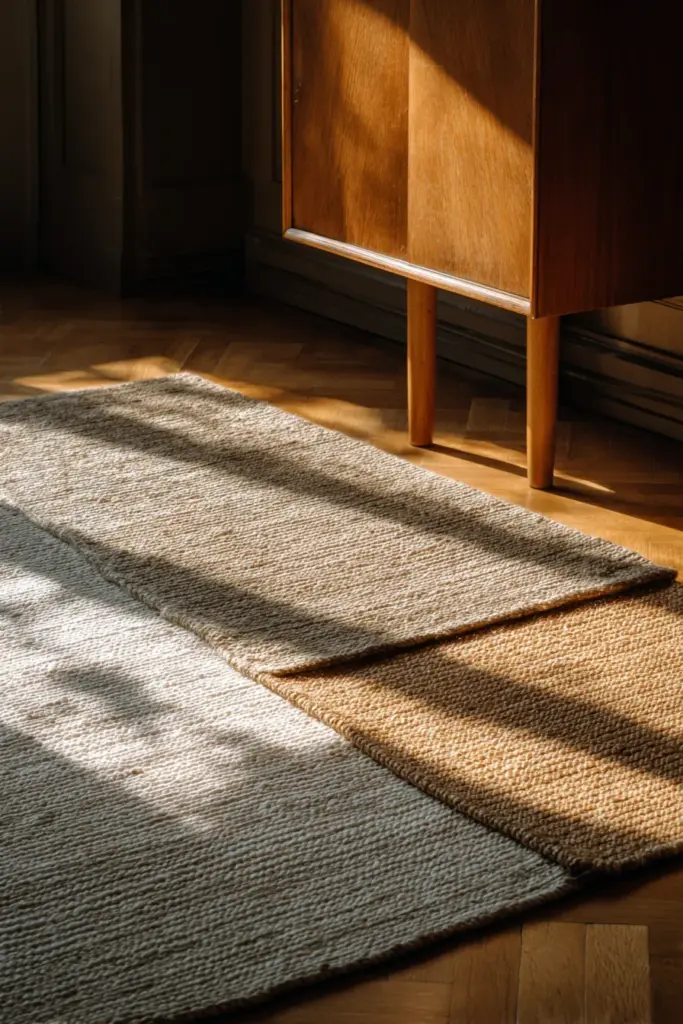
The Layering Workflow
Step 1 — Base rug: Choose a large, flat, neutral rug as your foundation. Natural jute, flatweave cotton, or a low-pile wool in cream or warm grey works beautifully. This is your canvas.
Step 2 — Top accent rug: Layer a smaller rug — perhaps 120 × 180 cm — over the base. Choose something with subtle texture: a slightly nubby wool, a gentle geometric, or a handwoven weave with natural variation. Keep it tonal — within two shades of the base rug.
Step 3 — Keep it Japandi: No more than two rugs. No color clash. No busy patterns on the top layer. The layered look should feel like you uncovered it, not assembled it.
The two rugs together should still feel like one quiet, considered moment on the floor.
Japandi Rugs for Rentals, Condos, and High-Traffic Homes
Not everyone has permanent floors. Many of us live in rented apartments with hardwood or laminate that we cannot mark, scratch, or stain. Japandi can absolutely live here — you just need to be thoughtful.
Always use a quality rug pad. It protects floors from scratches, prevents slipping, and adds a subtle cushion underfoot that transforms a flat rug into something genuinely comfortable.
Choose low-pile rugs. They are easier to vacuum, less likely to trap dust or allergens, and sit flat without curling — ideal for rental environments.
Consider washable rugs for high-traffic homes, homes with children, or pet-friendly spaces. Modern washable options now come in flatwoven, muted tones that read as entirely Japandi. They resist stains without compromising the aesthetic.
Sound matters too. In condos and apartments with thin floors, a dense rug over a thick pad absorbs foot traffic noise meaningfully. This is a comfort you feel before you consciously notice it.
Japandi Rugs for Multi-Function Living Rooms
The modern living room is rarely just a living room. It doubles as a home office, a reading nook, a meditation corner, a play space. A good Japandi rug should hold all of these moments without breaking.
For work-from-home setups, a flatweave rug under a desk chair rolls smoothly, stays flat, and is easy to clean. Keep the rug large enough that the chair and desk both sit within it.
For meditation or yoga corners, a thick wool or cotton rug in a calm neutral defines the space without requiring furniture. The rug is the room within the room.
For families with young children or pets, lean toward washable polypropylene rugs with a natural texture and muted tone, or look for wool rugs with a tight, low pile that resists staining. Avoid open-weave jute in these zones — small fingers and paws catch in the fibers.
How to Clean and Maintain Japandi Rugs
A beautiful rug cared for well becomes more beautiful over time. Natural fibers develop a patina. Wool softens. Jute warms.
Vacuum gently and regularly — once or twice a week for high-traffic areas. Use a suction-only setting on natural fiber rugs; beater-bar attachments can damage delicate weaves.
Rotate your rug every 3–6 months to ensure even wear and prevent one area from fading faster under sunlight.
Spot clean immediately. Blot — never rub — liquid spills with a clean cloth. For wool or natural fiber rugs, use a mild soap and cold water. Let it air dry completely before replacing furniture.
Professional cleaning once a year (or every two years for low-traffic rooms) is worth the investment, especially for handwoven or high-budget rugs.
Store rugs rolled, not folded, wrapped in breathable fabric — never plastic. Plastic traps moisture and invites mildew.
Japandi Rug Red Flags: What to Avoid
Sometimes knowing what not to choose is the clearest guide.
- Glossy or polished surfaces — they catch light in a way that feels synthetic and busy
- High-contrast or novelty patterns — tribal, geometric in bold contrast, or oversized motifs all break the visual calm
- Bright accent colors — even a pop of mustard or terracotta, unless very muted, pulls the eye away from rest
- Rugs that are too small — they float beneath the furniture and make the whole room feel unsettled
- Synthetic sheen without texture — cheap polyester piles that reflect light and flatten the sensory experience of the room
- Overly directional patterns — arrows, strong lines, or asymmetric motifs that create visual movement rather than stillness
Your Japandi Rug Checklist
Use this as a final self-check before you commit:
- Is the color in the earthy-neutral family — cream, beige, warm grey, taupe, dusty sage?
- Does the pattern use fewer than three colors, and are they low-contrast?
- Is the surface texture rather than glossy?
- Are there no loud logos, novelty motifs, or strongly directional patterns?
- Will the rug extend at least 25 cm beyond the sofa on all sides?
- Is the material natural or natural-looking, with a matte, tactile quality?
- Does it feel grounding rather than decorative?
If you answered yes to most of these, you have found your rug.
Conclusion
A Japandi living room rug is not the loudest thing in the room. It was never meant to be. It is the thing that makes everything else feel more like itself — the sofa more settled, the light more golden, the space more yours.
The best rug is the one you stop noticing as a rug and start experiencing as part of the room’s quiet breath. It is underfoot when you wake up early and pad barefoot to the kitchen. It is there when afternoon light crosses the floor at an angle that makes everything look like a photograph. It holds the room together the way good design always does — gently, completely, without calling attention to itself.
Choose slowly. Choose well. And when you find the one that feels right, trust that feeling.
With warmth,
ERYLIN
Frequently Asked Questions
What is Japandi style, and how does it affect rug choice?
Japandi blends Japanese minimalism and Scandinavian coziness into a style that values natural materials, muted tones, and thoughtful simplicity. For rugs, this means choosing natural fibers, neutral palettes, and subtle or no patterns — pieces that ground the room without competing with it.
What colors are best for a Japandi living room rug?
Warm neutrals work best: cream, oatmeal, warm beige, soft grey, dusty taupe, and muted sage. Avoid bright colors or high-contrast combinations. The rug should feel like a natural extension of the floor and furniture, not a statement on its own.
What material is best for a Japandi rug?
Wool is the most versatile and durable choice. Jute and sisal bring organic earthiness. Cotton and linen blends offer lightness and breathability. Bamboo silk adds subtle luminosity. For rentals or high-traffic homes, look for washable options with a natural-looking, matte texture.
What size rug should I get for a Japandi living room?
As a general rule, your rug should extend 25–30 cm beyond the sofa and sit at least 30 cm from the wall. For a mid-size living room (30–40 m²), a 200 × 290 cm rug is ideal. For a micro-apartment, a 160 × 230 cm rug keeps the space open. In open-plan spaces, go larger to define the living zone clearly.
How do I layer Japandi-style rugs without visual clutter?
Start with a large, flat neutral rug as your base. Add a smaller accent rug in a complementary tone with subtle texture. Keep both rugs within two shades of each other, use no more than two layers, and avoid any pattern that draws the eye. The layered result should feel discovered, not decorated.