
Table of Contents
By ERYLIN — Your calm guide to beautiful, intentional living.
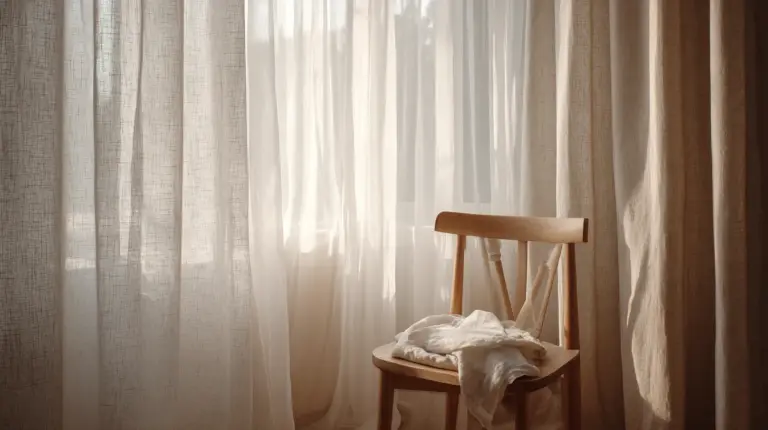
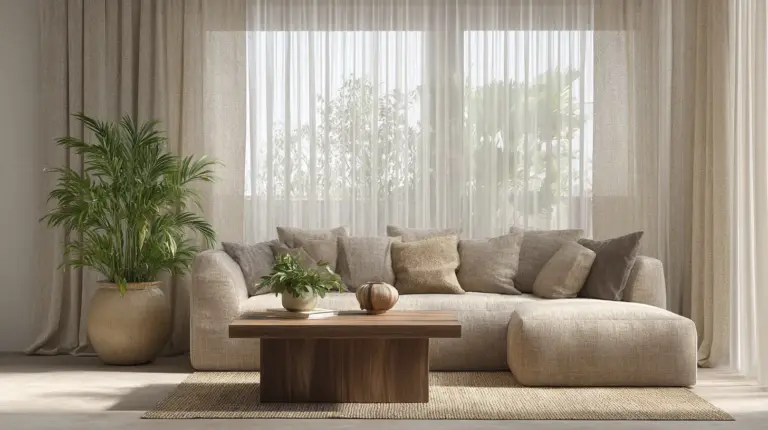
There is something quietly magical about the right curtain. It softens the sharp edge of a window frame, wraps a room in gentle light, and whispers that someone here cares about how beauty feels — not just how it looks.
Japandi style understands this deeply. Born from the slow-living philosophies of Japan and Scandinavia, it prizes simplicity, natural materials, and the kind of warmth that does not need to shout. A good Japandi curtain does not perform. It simply belongs.
The best part? You do not need a big budget to bring that feeling home. Whether you live in a breezy Silang apartment, a Makati condo, or a small house in the province, there are real, affordable ways to dress your windows the Japandi way — and we are here to show you how.
This is your full guide: what to buy, where to find it, how to DIY it, and how to style it so your home exhales.
Your Japandi Curtain Budget Checklist
Before you spend a single peso, pause and answer three questions. Your answers will shape every decision — and save you from the most common budget mistake: buying the wrong thing twice.
- What is your maximum budget per window? (₱500, ₱1,000, ₱3,000, or more?)
- What are your window measurements? (width × height in centimeters — measure twice)
- What light and privacy do you need? (sheer for soft glow, semi-sheer for filtered daylight, blackout for deep rest)
Keep these answers handy. Every section below maps back to them.
What Makes a Curtain Truly Japandi?
The Fabric Comes First
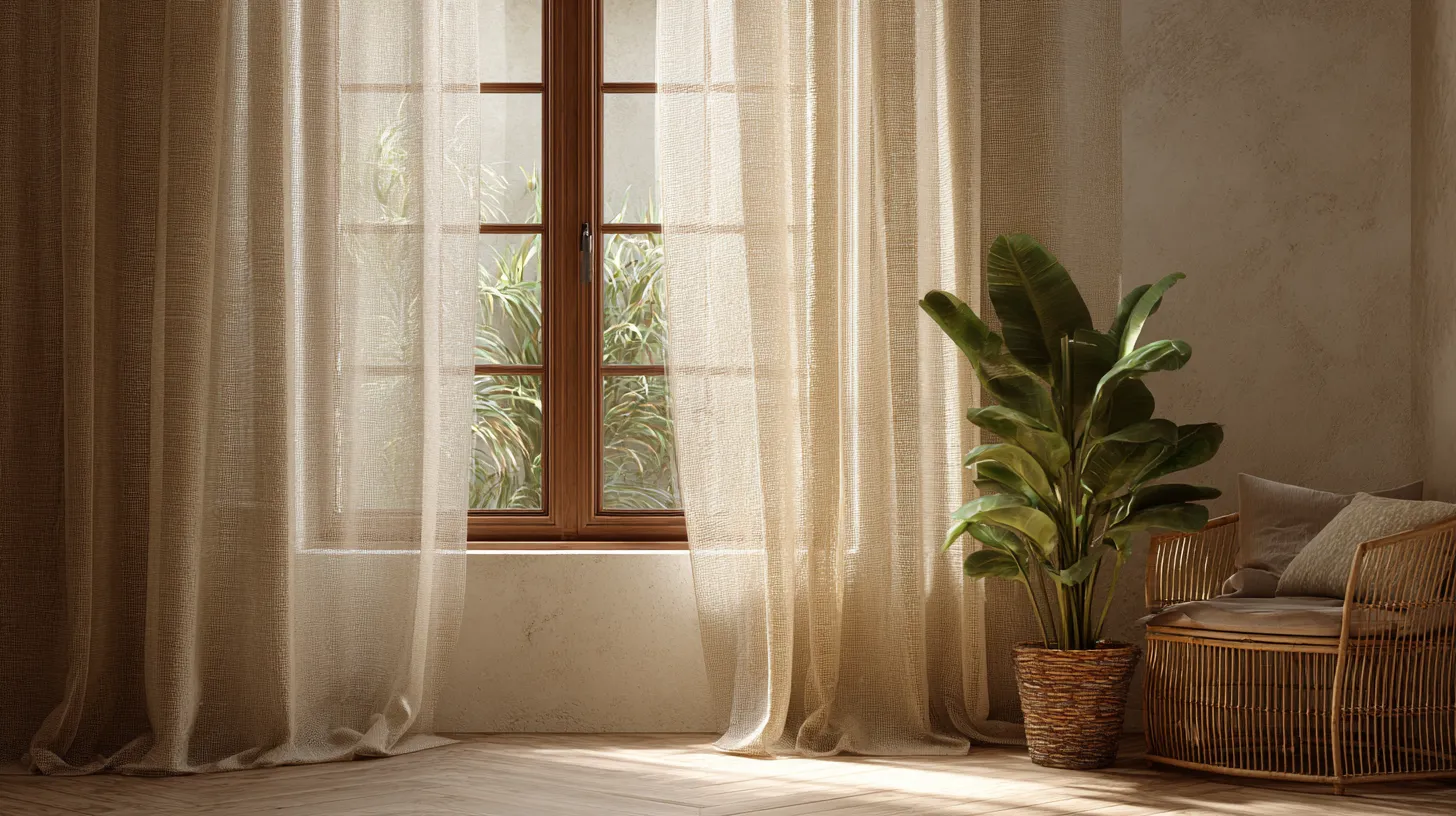
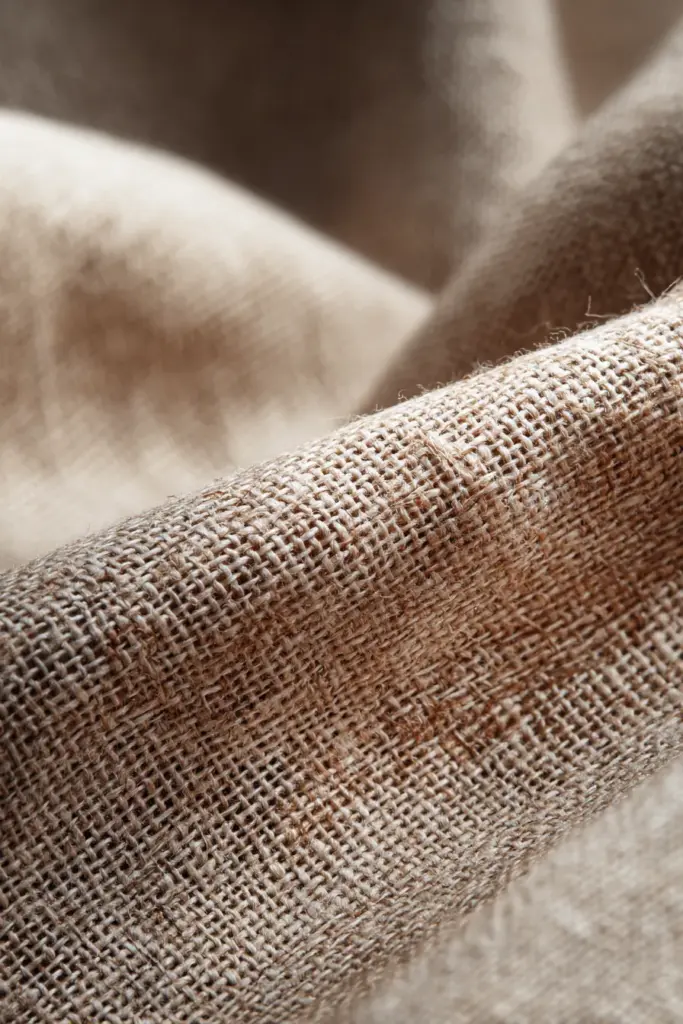
Japandi curtains live and breathe in natural textures. Linen is the gold standard — it catches morning light with a subtle slub, drapes with effortless weight, and improves with every wash. Cotton runs a close second: softer to the touch, easier to care for, and widely available in the Philippines.
Linen-cotton blends give you the best of both worlds at a gentler price point. They have the warmth of linen without the full cost, and they hold their shape well in our humid climate.
Avoid shiny polyester or heavily synthetic fabrics. In Japandi spaces, plasticky sheen reads as noise. If it looks too perfect — too flat, too bright, too cheap — it breaks the calm you are trying to build.
Color Is Quietude
Japandi curtains live in a narrow, beautiful palette. Think warm beige, oatmeal, taupe, warm grey, ivory, and soft clay. These are not boring neutrals — they are colors that hold light, breathe with the seasons, and make every other element in the room feel intentional.
Avoid cool whites (they feel sterile), bold patterns (they shout), and ruffles or heavy trims (they belong to a different design language entirely).
The Right Length Changes Everything
Japandi curtains should always just kiss the floor or pool very slightly — 1 to 2 cm of gentle contact. In small rooms with low ceilings, hang the rod as high as possible (close to the ceiling) to draw the eye upward and make the room feel taller. Width matters too: panels should be at least 1.5× to 2× the width of your window for that full, soft drape.
Buying curtains that are too narrow is one of the most common budget mistakes. Flat, skimpy panels look poor even in expensive fabric.
How Much Do Japandi Curtains Cost? A Real Price Guide
Let us talk real numbers — not vague “affordable” promises.
| Curtain Type | Estimated Cost (Philippines) | Best For |
|---|---|---|
| Ready-made polyester panels (Shopee/Lazada) | ₱150–₱400 per panel | Temporary or starter setups |
| Ready-made linen-look panels (online PH) | ₱500–₱1,200 per panel | Small bedrooms, renters |
| Local tailor-made linen-cotton | ₱800–₱2,000 per panel | Custom sizing, long-term investment |
| DIY from fabric (no-sew method) | ₱300–₱700 total | Budget maximizers, crafters |
| Imported Japandi curtains (Dolcewe, etc.) | ₱1,500–₱4,000+ per panel | Those wanting premium fabric |
For a standard 100 cm wide window in the Philippines, a pair of panels (2 panels) will cost roughly:
- Budget tier: ₱600–₱1,000 (ready-made linen-look)
- Mid-range tier: ₱1,500–₱3,000 (local tailor or quality online)
- Premium tier: ₱4,000+ (imported natural linen)
The good news: the budget tier, done right, looks nearly identical to the premium tier from across the room.
Where to Buy Japandi Curtains Cheap: Online + Local Philippines Finds
Online: Shopee and Lazada
Search for “linen curtain beige”, “minimalist curtain taupe”, or “sheer curtain oatmeal” on Shopee. Avoid listings with overly bright photos — those often indicate synthetic fabric. Look for shops with reviews mentioning “soft,” “natural feel,” or “nice drape.”
Price range to target: ₱350–₱900 per panel for decent linen-look fabric. Order a sample panel first if buying for multiple windows.
Local Fabric Markets
For DIY curtains, fabric markets are your best ally. In Metro Manila, Divisoria and Baclaran carry linen-cotton blends at ₱80–₱180 per meter. In Cavite and nearby provinces, check local tiangge markets or sewing supply shops — Tagaytay-area and Silang fabric sellers often carry plain cotton and canvas that dyes beautifully into Japandi neutrals.
You will need approximately 3–4 meters of fabric per panel for a standard floor-length curtain (depending on your ceiling height). At ₱120/meter, that is roughly ₱360–₱480 in fabric alone — well under budget.
Facebook Marketplace and Groups
Search Facebook groups like “Home Décor Philippines Buy and Sell” or “Ukay Ukay Home” for secondhand curtain panels in neutral tones. Many sellers offer nearly-new linen or cotton curtains for ₱100–₱300 per panel. This is an overlooked goldmine.
Etsy (for Inspiration and Occasional Purchase)
Etsy carries beautiful Japandi-style curtain panels, but shipping to the Philippines adds significant cost. Use Etsy as a visual reference — screenshot the panels you love, note the fabric type and color, then recreate locally.
How to DIY Japandi Curtains for Under ₱1,000
This is where the magic happens. A pair of gorgeous, floor-length Japandi curtain panels — for less than the cost of lunch for two.
What You Need
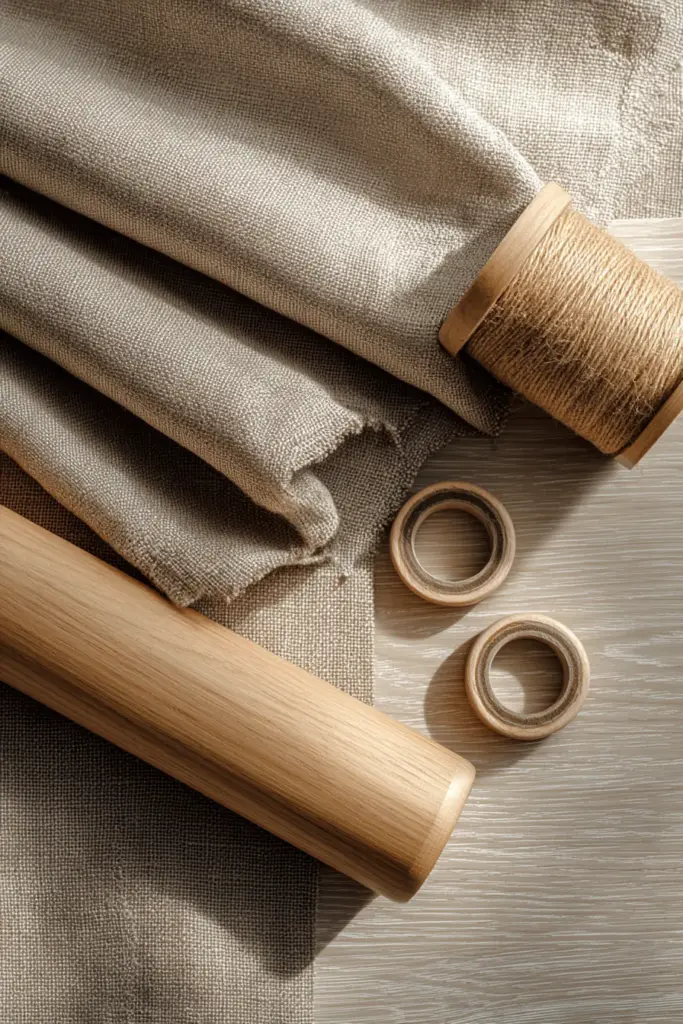
- Fabric: 6–8 meters of plain linen-look cotton or canvas in beige, oatmeal, or warm grey (₱80–₱150/meter from Divisoria or local markets)
- Curtain tape or grommet kit (₱80–₱200 from fabric stores or Shopee)
- Curtain rod: Simple matte black or natural wood dowel (₱150–₱500 depending on length)
- Scissors and fabric glue (for no-sew method) or a basic sewing machine
No-Sew Method (Easiest)
Step 1: Cut your fabric to your desired panel length plus 15 cm for the top fold and 10 cm for the bottom hem.
Step 2: Fold and press the top 15 cm down. Apply iron-on hem tape along the fold — this creates your rod pocket or tape channel without a single stitch.
Step 3: Attach curtain tape to the top using fabric glue, following package instructions. Allow to dry fully (usually 30–60 minutes).
Step 4: Fold and press the bottom hem (10 cm) and secure with hem tape.
Step 5: Hang on your rod, gently shake out the folds, and let gravity do the rest.
Total cost for two panels: approximately ₱650–₱900, depending on your fabric choice.
The Repurpose Method
Old ivory or beige bed sheets — king or queen size — can become stunning Japandi curtain panels. Wash them well, cut to length, and finish the edges with hem tape. If the color is too white, a quick dip in light tea or diluted coffee creates a warm, aged linen tone at zero cost.
Old canvas drop cloths (available at hardware stores for ₱200–₱400) are another beloved DIY secret. They are already in perfect Japandi beige, have beautiful texture, and are durable enough to last years.
Style Tips: Room-by-Room Japandi Curtain Guide
Japandi Living Room Curtains on a Budget
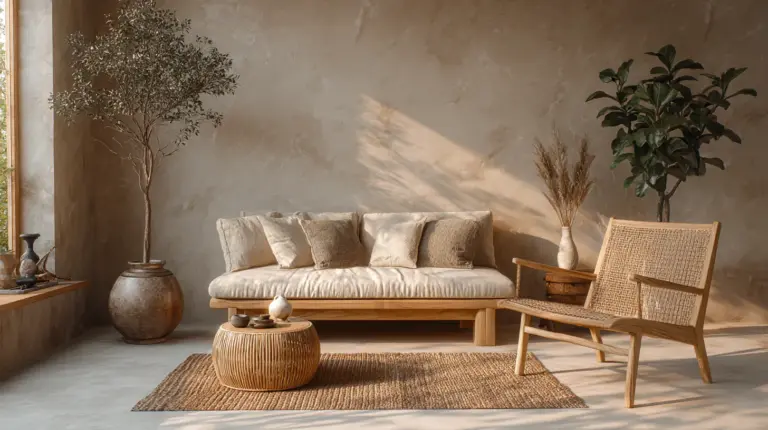
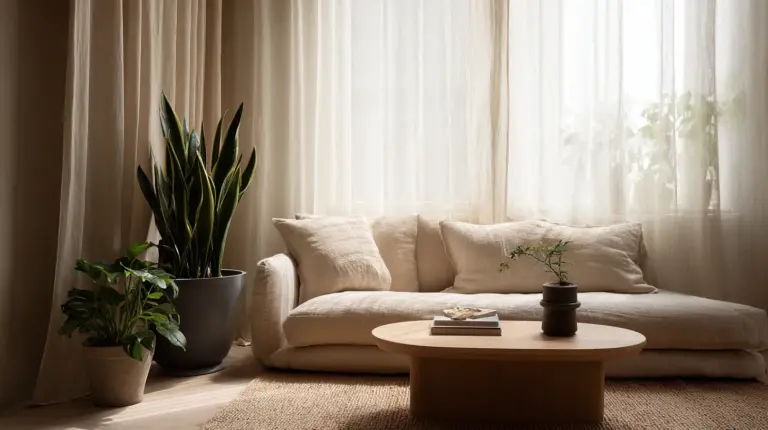
In the living room, floor-to-ceiling panels create the most impact. Use light-filtering linen-look fabric during the day — it diffuses sunlight into that warm, honeyed glow Japandi spaces are known for. Pair with rattan furniture, low wooden coffee tables, and a few trailing plants for a room that feels considered and calm.
If your living room has limited natural light (north-facing, or shaded by buildings), choose the lightest possible fabric — ivory or warm white linen lets in maximum brightness without sacrificing the palette.
For a small living room with low ceilings, mount the rod 5–10 cm below the ceiling and let panels run all the way to the floor. This single trick adds visual height that no furniture rearrangement can match.
Japandi Bedroom Curtains with AC
Bedrooms present a specific challenge in the Philippines: the AC. Heavy blackout curtains trap cool air and block harsh afternoon sun — but they can feel oppressive in a Japandi space.
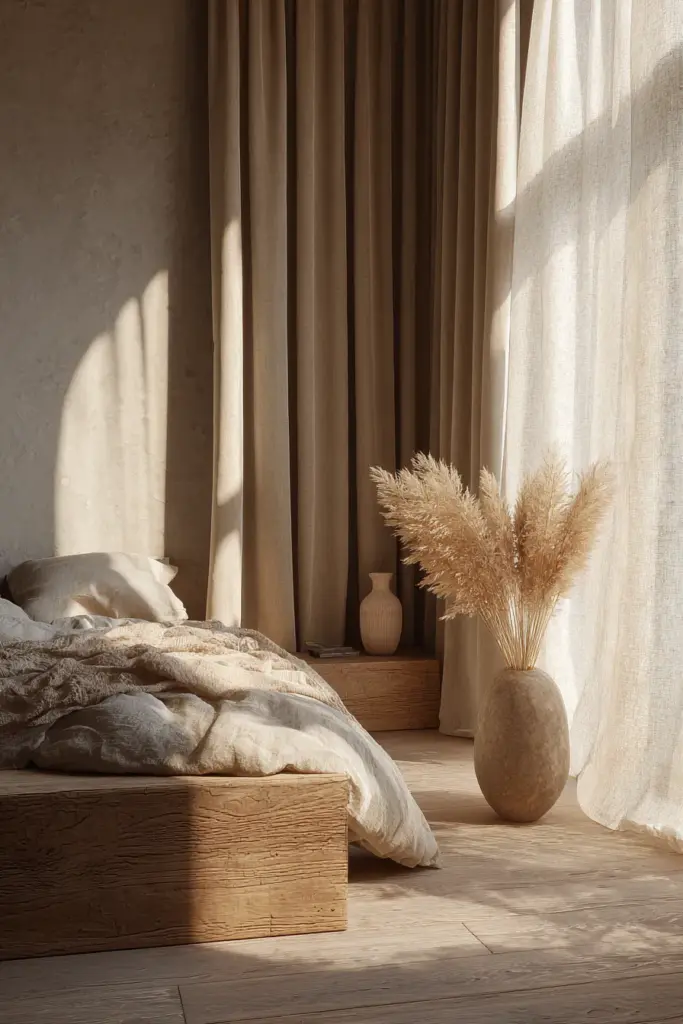
The solution is layering. Use a sheer linen panel on the inside for daytime softness, and a medium-weight cotton blackout panel on the outer layer for evening privacy and thermal control. Both hung on the same rod (double bracket) gives you full flexibility — sheer by day, blackout by night.
For AC efficiency, linen also offers a natural advantage: it is a poor conductor of heat, which means it helps keep the room cooler than synthetic curtains without sacrificing style.
Japandi Curtains for Sliding Glass Doors
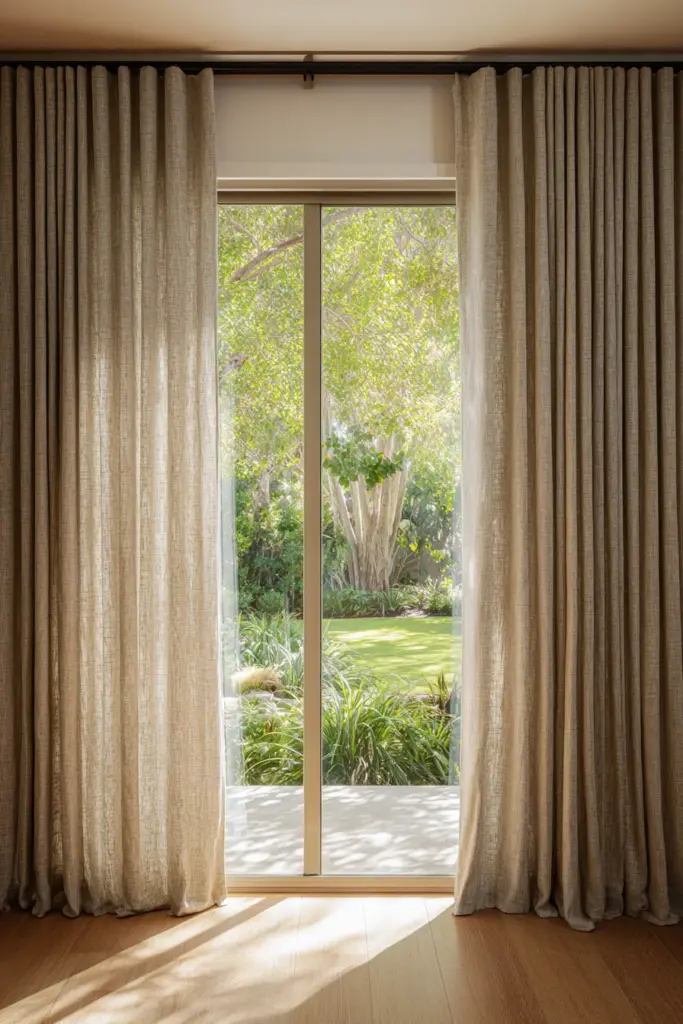
Sliding doors need wide, generous coverage. Use panel track curtains — these are wide, flat panels that slide along a track system and create clean, architectural lines perfectly suited to Japandi aesthetics.
A budget alternative: hang a single extra-wide curtain panel (or two standard panels) on an extendable rod positioned past the door frame on each side. When open, the curtains stack neatly at the sides and leave the full door clear. This approach costs as little as ₱800–₱1,500 in total, including the rod.
Japandi Curtains for Small Apartments
In small spaces, keep it simple and uninterrupted. One or two long panels of the same fabric create a clean vertical line that expands the room visually. Avoid multiple short panels, heavy layering, or bold trims — these chop up the eye’s path and make small spaces feel smaller.
Natural fabric in warm neutrals is your best friend here. It absorbs sound slightly, adds tactile warmth, and grounds the space without crowding it.
Japandi Curtain Mistakes to Avoid on a Budget
Even the best intentions can go sideways. Here are the most common errors — and how to sidestep them.
- Buying panels that are too narrow. If your panels do not have enough width to gather softly, they will look flat and cheap regardless of fabric quality. Always aim for 1.5–2× your window width in total curtain width.
- Choosing cheap synthetic fabric. Polyester panels catch light badly and drape poorly. Even at a similar price point, a cotton-poly blend will always look more natural and intentional.
- Over-decorating the header. Ruffles, tassels, heavy pom-pom trims — these belong to maximalist spaces, not Japandi ones. Keep the top clean: simple grommets, curtain tape, or a rod pocket in a matte or natural finish.
- Ignoring hem length. Curtains that hover above the floor look incomplete in Japandi rooms. Let them just touch — or pool very slightly. That 2 cm of contact reads as intentional luxury.
- Using stark white or cool grey. These tones feel clinical in Japandi spaces. Always lean warm: warm white, oatmeal, warm grey, or beige.
Caring for Your Japandi Curtains in Philippine Climate
Humidity is real, and mildew is a genuine threat to natural fabric curtains in the Philippines. A few simple habits keep your panels looking fresh for years.
Wash linen and cotton curtains every 4–6 weeks in cool water on a gentle cycle. Hang to dry — never machine dry linen, as it shrinks. If mildew appears, a solution of diluted white vinegar (1:4 with water) removes it without damaging the fabric.
In very humid rooms (bathrooms, ground-floor bedrooms), consider linen-cotton blends with a mildew-resistant treatment, available from specialty fabric stores. Or simply choose a polyester-linen blend (not full polyester) — it resists moisture better while still draping naturally.
Keep curtains away from direct AC airflow when possible. The constant blast of cold, humid air is harder on fabric than warm ambient humidity.
Key Takeaways: Your Japandi Curtain Budget Checklist
- Use natural or natural-look fabrics — linen, cotton, linen-cotton blends
- Stick to warm neutrals: beige, oatmeal, taupe, ivory, warm grey
- Always hang panels high and long — close to ceiling, just touching the floor
- DIY panels cost as little as ₱650 using local fabric markets and no-sew methods
- Layer sheers + blackout for bedroom comfort and AC efficiency
- Avoid narrow panels, synthetic fabric, and decorative trims
- Wash regularly and dry-hang to prevent mildew in humid climates
- Source fabric from Divisoria, Baclaran, local tiangge, or Shopee for the best prices
- Use old sheets, canvas drop cloths, or dyed fabric to repurpose and save
Frequently Asked Questions
How much do Japandi-style curtains cost in the Philippines?
Ready-made linen-look panels start at around ₱350–₱500 per panel on Shopee or Lazada. Tailor-made linen-cotton panels from a local seamstress range from ₱800–₱2,000 per panel depending on size and fabric. A full DIY pair using local fabric can cost as little as ₱650–₱900 for two panels.
What fabric is best for Japandi curtains on a budget?
Linen-cotton blends are the ideal budget choice — they drape naturally, filter light beautifully, and are more affordable than pure linen. Plain cotton canvas is another excellent option, widely available in the Philippines at ₱80–₱150 per meter in neutral shades.
Are sheer or blackout curtains better for a Japandi room?
Both have a place. Sheers create the airy, light-filled softness central to Japandi aesthetics during the day. Blackout panels offer privacy, sleep quality, and AC efficiency at night. The best approach — especially for bedrooms — is to layer both on a double bracket for full flexibility.
Should Japandi curtains touch the floor?
Yes — always. Panels that hover above the floor feel incomplete in Japandi spaces. Let them graze the floor gently (1–2 cm of contact) or pool very slightly for an effect that reads as quietly luxurious, even on the most modest budget.
Can I make Japandi curtains without sewing?
Absolutely. Using iron-on hem tape, curtain tape, and grommet kits available at fabric stores or Shopee, you can create beautiful floor-length Japandi panels with no sewing at all. Old bed sheets, canvas drop cloths, or neutral-dyed fabric are all fair game — and the results can be stunning.
What colors are best for Japandi curtains?
Warm beige, oatmeal, taupe, ivory, warm grey, and soft clay. These tones hold natural light beautifully and harmonize with the wood, rattan, and stone textures typical of Japandi interiors. Avoid cool whites and bold patterns.
How wide should Japandi curtain panels be?
Your total curtain width (all panels combined) should be 1.5× to 2× the width of your window. For a 100 cm window, you want 150–200 cm of total curtain fabric. Skimping on width is the single easiest way to make good curtains look cheap.