
Table of Contents
By ERYLIN — where calm meets craftsmanship.
There is a particular kind of stillness that settles over a room when everything in it belongs. Not by accident, but by intention. That is the quiet promise of Japandi design — a philosophy born from two cultures that have always known how to find beauty in restraint.
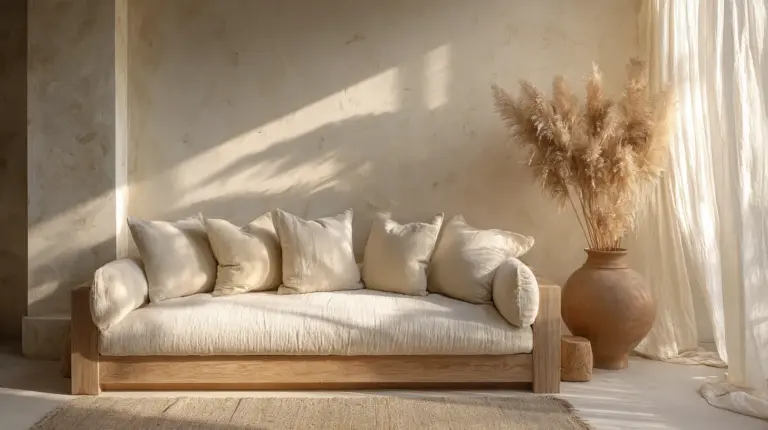
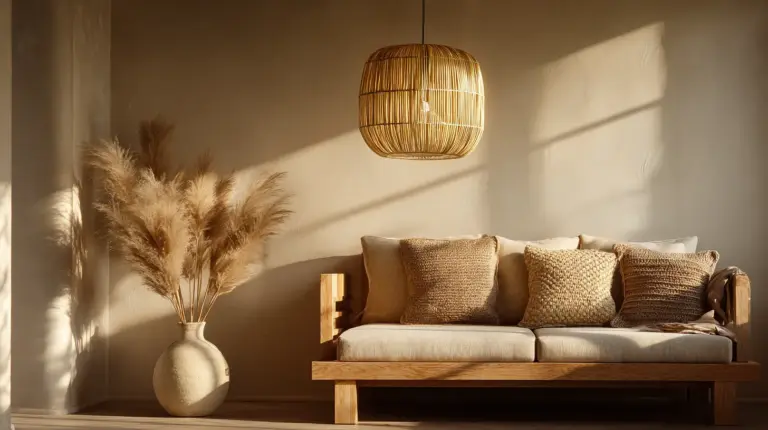
Japandi is the graceful meeting of Japanese wabi-sabi and Scandinavian hygge. It is the warmth of a linen throw draped over a low-profile sofa. It is the scent of hinoki wood and the way afternoon light falls across a smooth ceramic bowl. It is, at its heart, a way of living slowly and well.
If your living room feels cluttered, cold, or somehow disconnected from the life you want to live in it, this guide is for you. We are not here to tell you to buy everything new. We are here to help you see your space differently — and transform it, thoughtfully and affordably.
Let us begin.
What Is Japandi Style, Really?
More Than Minimalism
Many people confuse Japandi with stark minimalism — bare white walls, empty shelves, the feeling of a space that no one actually lives in. But Japandi is warmer than that. It is softer.
Where minimalism strips away, Japandi curates. It keeps what matters and removes what creates noise. The difference is the warmth factor: organic textures, natural imperfections, a candle burning on a walnut side table.
The Philosophy Behind the Look
Wabi-sabi is a Japanese aesthetic that finds beauty in imperfection and transience. A cracked ceramic mug, a weathered wood beam, the way moss grows along a garden stone — these are not flaws to correct, but truths to honor.
Hygge (pronounced hoo-gah) is the Danish and Norwegian concept of coziness, togetherness, and well-being. It is warm lighting, soft blankets, the feeling of being held by a room.
Together, they create something remarkable: a living space that is calm without being cold, minimal without being empty, beautiful without being precious.
The 6 Key Elements of a Japandi Living Room
| Element | What to Look For | What to Avoid |
|---|---|---|
| Color Palette | Warm whites, sand, clay, sage, charcoal | Cool grays, bright whites, bold primaries |
| Materials | Light oak, walnut, bamboo, linen, wool, ceramic | Synthetic fabrics, shiny chrome, heavy ornate wood |
| Furniture | Low-profile, clean lines, multifunctional | Bulky legs, ornate carvings, visual clutter |
| Lighting | Warm amber tones, layered sources | Harsh overhead fluorescents |
| Plants | Architectural, slow-growing, low-maintenance | Overcrowded arrangements, fussy blooms |
| Accessories | One or two intentional objects | Collections, mismatched décor, excessive art |
Step 1: Start With Your Color Story
Choose a Neutral Base
The Japandi palette is a conversation between earth and air. Start with a warm white or soft greige on the walls — something that shifts slightly golden in natural light. Think warm sand, pale clay, or a soft mushroom tone.
Avoid cool blues or stark whites. The goal is a hue that wraps around you, not one that distances you from the room.
Add Depth With Accent Tones
Layer in deeper tones through textiles and furniture: charcoal, forest green, dusty terracotta, or muted navy. These accents should feel grounded, like stones at the base of a river.
A single dark accent — a charcoal linen cushion, a deep walnut shelf — is enough to give the room presence without weight.
Step 2: Curate Your Furniture With Intention
Go Low and Slow
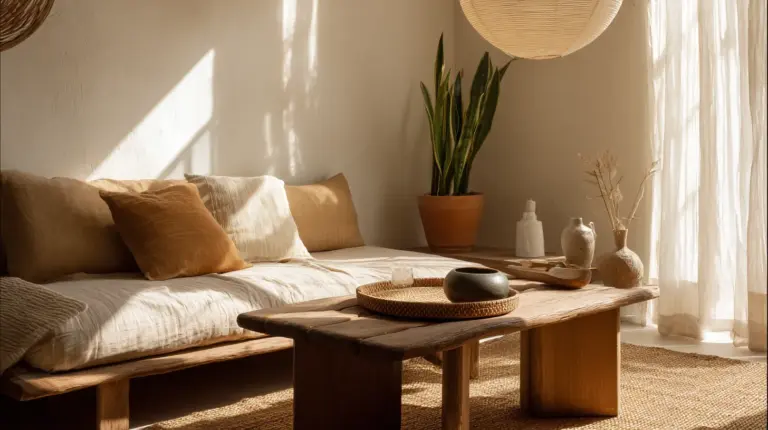
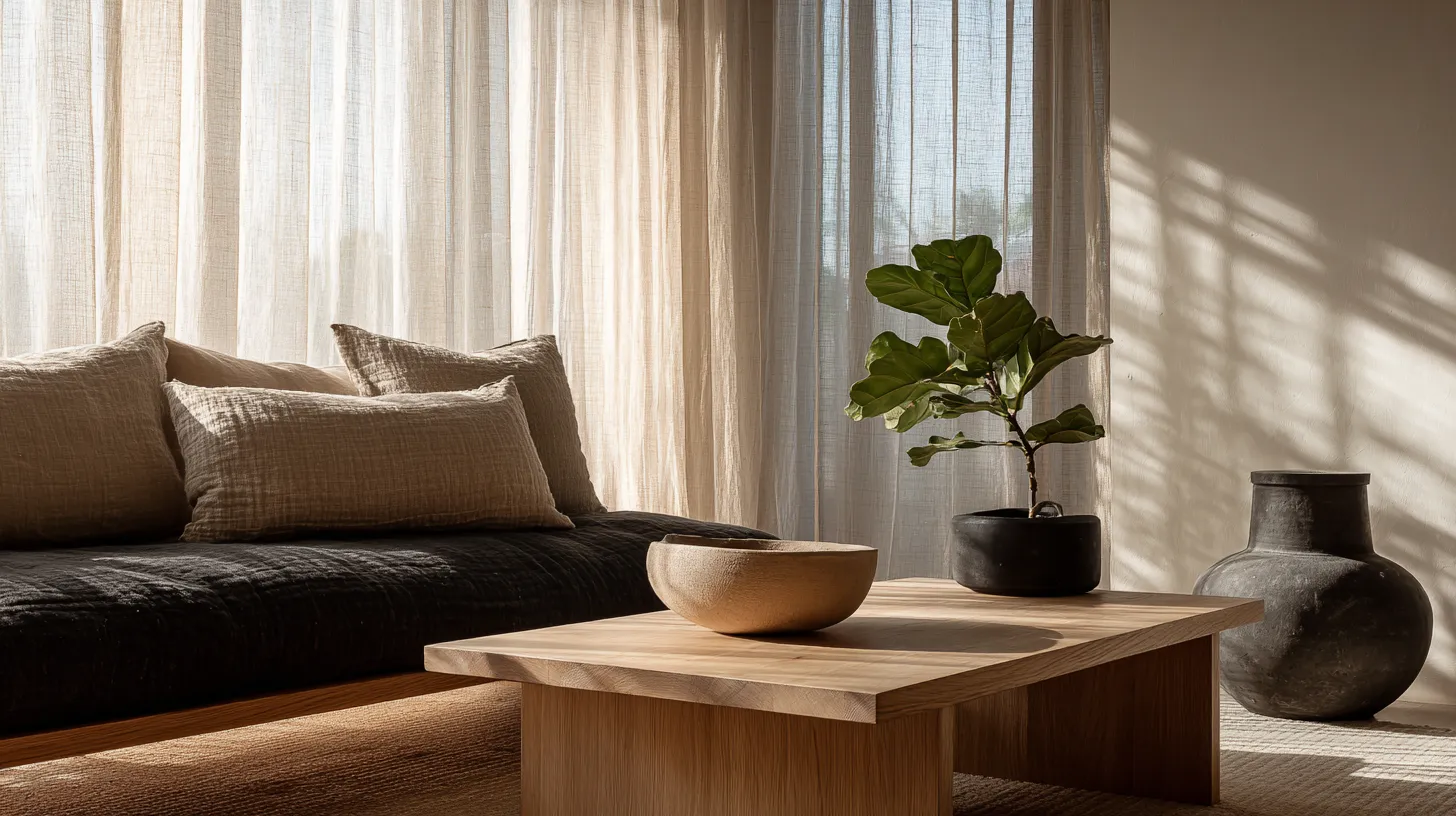
One of the most transformative things you can do for a Japandi living room is lower its visual center of gravity. Swap a tall, bulky sofa for a low-profile seating arrangement with clean, tapered legs. Choose a coffee table that sits close to the floor.
This shift alone makes a room feel more expansive and more at ease. It is the visual equivalent of taking a deep breath.
Multifunctional Pieces Are Your Allies
In a Japandi space, every piece earns its place. Look for storage ottomans that double as seating, minimalist shelving that holds both books and ceramics, or a bench that serves as both entryway seating and extra living room storage.
For smaller apartments, this principle becomes even more essential — and more liberating. You do not need more furniture. You need smarter furniture.
The Budget-Conscious Approach
You do not need to buy everything new. In fact, Japandi actively resists that impulse.
Here is how to balance high and low:
- Invest in one statement piece — a quality linen sofa or a solid oak coffee table.
- Upcycle what you already own. Sand and oil an old wooden side table. Replace hardware on dated storage units with simple matte black or brass pulls.
- Shop secondhand for ceramics, baskets, and low wooden trays. These imperfect, one-of-a-kind finds embody wabi-sabi better than anything bought new.
- Use affordable rattan or bamboo accessories to bring in texture without breaking the budget.
Step 3: Master the Art of Japandi Lighting
Most design guides mention natural light and stop there. But lighting is one of the most powerful — and most overlooked — tools in creating a Japandi atmosphere.
Maximize Natural Light First
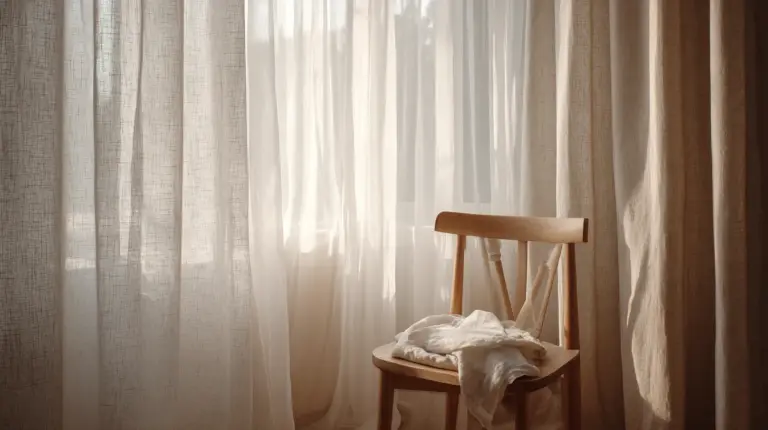
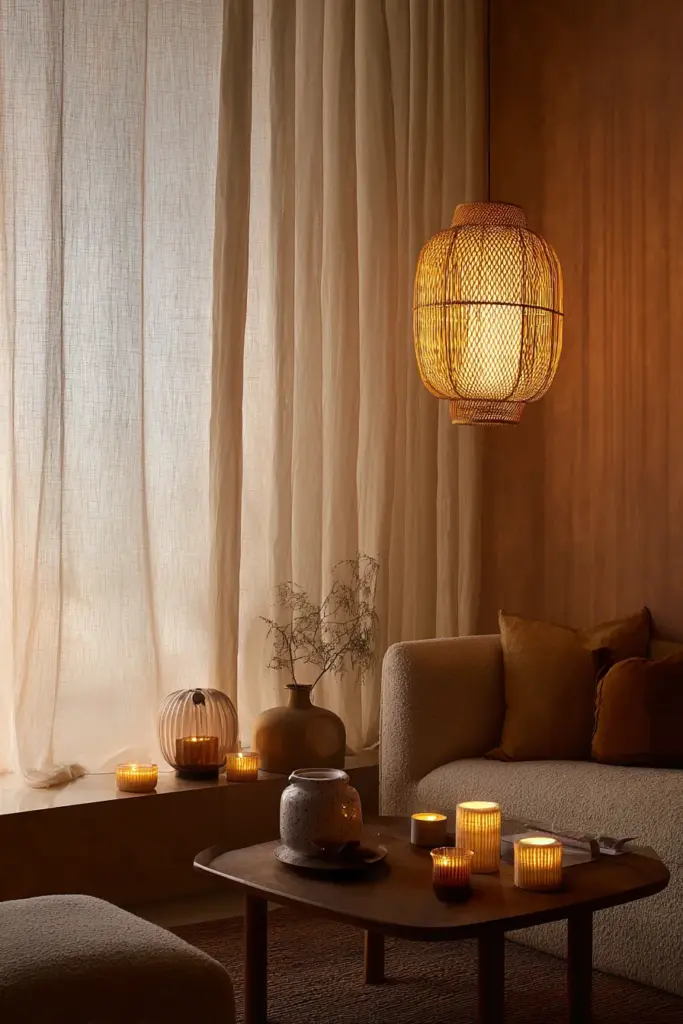
Remove heavy curtains and replace them with sheer linen panels in ivory or ecru. These filter light without blocking it, casting the room in a soft, diffused glow that changes beautifully throughout the day.
Keep windowsills clean and uncluttered. Let the light land on something worth landing on — a smooth ceramic bowl, a trailing plant, bare wood.
Layer Your Artificial Lighting
This is where Japandi living rooms truly come alive after sundown. Think in three layers:
- Ambient lighting — a warm overhead source, ideally with a dimmer. Choose bulbs with a color temperature between 2700K and 3000K for that golden, candlelit quality.
- Task lighting — a simple arc floor lamp beside your reading chair, or a slim table lamp on your side table. Look for lighting ideas with natural materials like rattan, linen shades, or matte ceramic bases.
- Accent lighting — a few tea lights in low ceramic holders, or a small LED strip tucked beneath a floating shelf. This layer creates warmth and visual depth that overhead lights simply cannot.
Avoid harsh white bulbs. Avoid spotlights that create theatrical shadows. The goal is light that feels like it belongs to the room, not imposed upon it.
Step 4: Bring in Natural Materials and Texture
The Tactile Language of Japandi
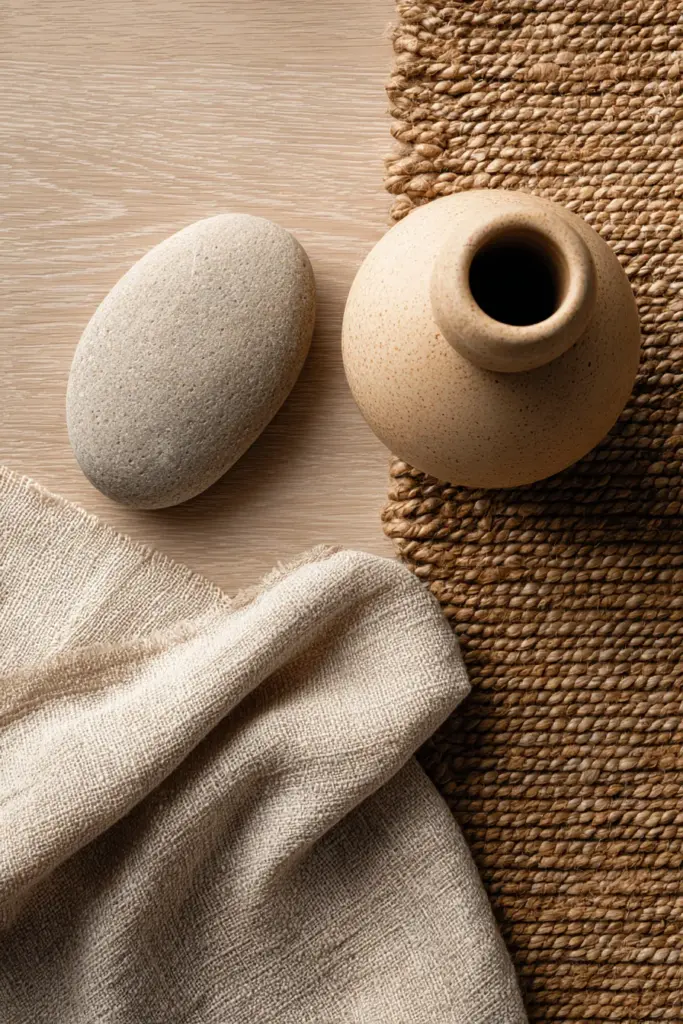
Japandi speaks in textures. Run your hand along a rough linen cushion cover. Feel the cool smoothness of a stoneware vase. Notice the fine grain of a light oak surface. These sensory details are not decoration — they are the substance of the style.
Layer materials thoughtfully:
- Wood: Light oak or walnut for furniture and shelving. Bamboo for smaller accessories. Avoid wood that is too orange or too red — opt for cooler, natural tones.
- Textiles: Linen and cotton in neutral tones for cushions and throws. A chunky wool blanket draped over your sofa arm. A jute or seagrass rug to anchor the space.
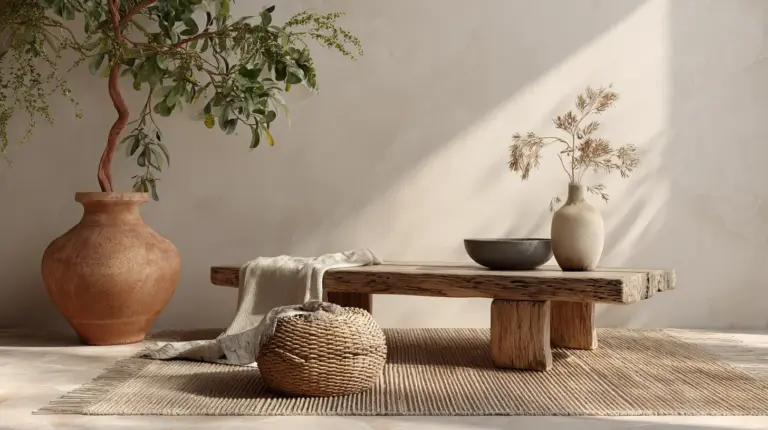
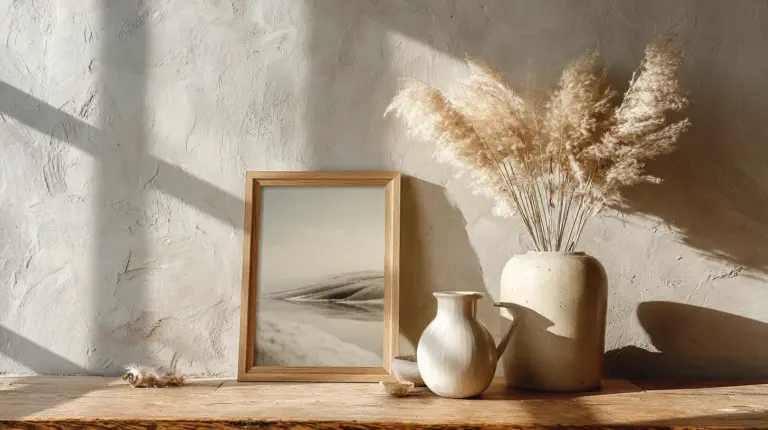
- Ceramics: Handmade or hand-finished pieces with organic shapes and muted glazes. A single sculptural vase, a set of simple bowls used decoratively.
- Stone: A marble tray, a smooth river stone used as a bookend, a slate coaster set.
DIY Texture: Simple Upgrades That Make a Big Difference
You do not need to renovate to add texture. A few targeted DIY projects can transform your walls and surfaces:
- Limewash or clay paint on a single accent wall adds depth and a soft, organic finish.
- Simple wood slat paneling — thin strips of pine or MDF painted in a warm neutral — creates visual interest and a distinctly Japandi sensory quality.
- Refinishing old wood furniture with a natural oil finish revives tired pieces and deepens their grain beautifully.
Step 5: Style Your Plants Like an Architect
Biophilic Design, Done Intentionally
Plants are essential to the Japandi living room — but not in the way you might think. This is not the jungle aesthetic. This is studied, considered, architectural greenery.
Choose plants that make a statement without demanding attention:
- Fiddle leaf fig — tall, sculptural, naturally commanding.
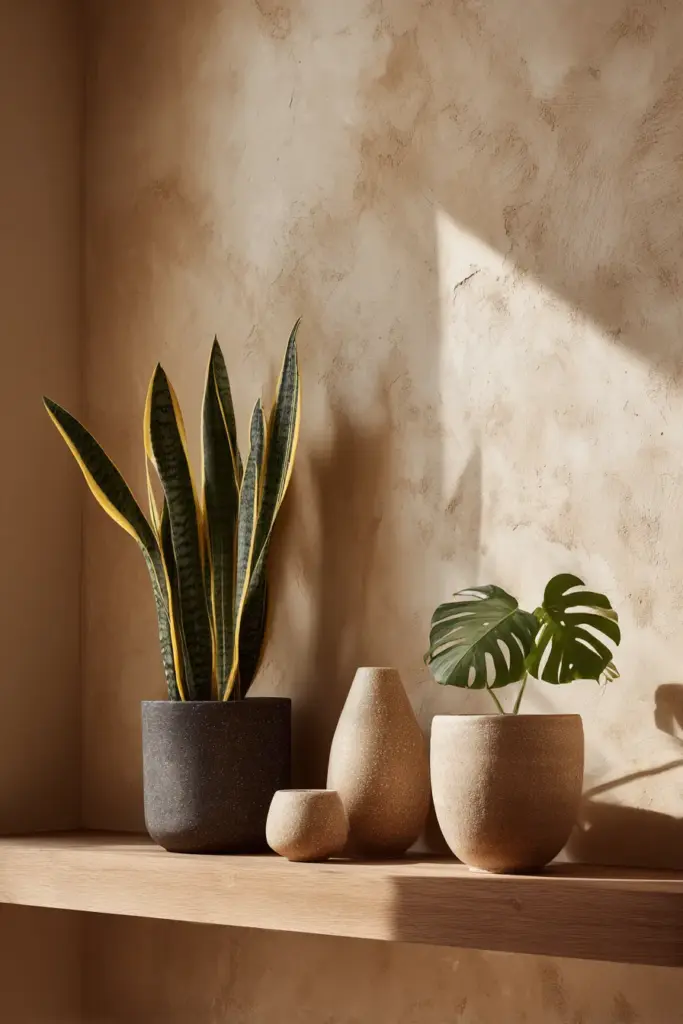
- Snake plant (Sansevieria) — upright, graphic, nearly indestructible.
- Monstera deliciosa — bold leaves, easy care, deeply satisfying.
- Bonsai — the ultimate Japandi plant. Slow, intentional, ancient.
- Pothos or philodendron — for a trailing softness placed high on a shelf.
Choose pots in matte ceramic, raw clay, or woven rattan. Avoid plastic nursery pots unless hidden. The container matters as much as the plant — it is part of the composition.
Place one or two plants with intention rather than scattering many throughout. Let them breathe.
Step 6: Edit Ruthlessly, Then Stop
The Practice of Negative Space
In Japanese design, ma (間) refers to negative space — the intentional emptiness between objects that gives meaning to what remains. Japandi living rooms honor this principle.
Look at your shelves. Remove two-thirds of what is on them. What remains should be beautiful, useful, or deeply meaningful. Ideally, all three.
Your Japandi Styling Checklist
Use this before and after your upgrade:
- Clear surfaces of anything not intentional
- Choose one to three decorative objects per surface maximum
- Ensure every textile has a natural fiber composition
- Confirm your lighting has at least two warm layers
- Remove any items that feel visually loud or stylistically mismatched
- Add one architectural plant in a quality pot
- Check that wood tones throughout the room feel harmonious
- Confirm your color palette stays within three to four tones
Does Japandi Work in Small Living Rooms?
Absolutely — and in many ways, it thrives there.
Small spaces benefit enormously from the Japandi approach. Low-profile furniture keeps the room feeling open. A neutral palette expands perceived square footage. Multifunctional pieces reduce visual clutter while increasing utility.
In tight spaces, be especially intentional about your coffee table — a low, open-frame design lets the eye travel through it, making the room feel larger. Use vertical wall space wisely with one or two slim floating shelves rather than bulky storage units.
The key is restraint. Less, but better.
A Soft Conclusion: Your Space, Your Sanctuary
Upgrading your living room to Japandi is not about achieving a look. It is about cultivating a feeling — the particular quiet that comes from a room that has been tended, not just decorated.
It is the scent of wood in the morning. The way light moves across a linen cushion in the late afternoon. The peace of a surface with nothing on it that does not belong.
This is what ERYLIN believes about the spaces we live in: they should restore us. They should feel like coming home, even when we never left.
Begin with one change. Sand the coffee table. Hang the linen curtain. Light a candle in a simple ceramic holder. The rest will follow — slowly, beautifully, in your own time.
Frequently Asked Questions
How can I make my living room look Japandi on a budget?
Start by decluttering and removing items that feel visually heavy. Then upcycle what you already own — refinish wood surfaces, replace hardware, and add natural textiles. Invest in one quality statement piece and fill in the rest with secondhand ceramics, rattan accessories, and simple linen cushion covers.
What are the key elements of a Japandi living room?
The foundation is a warm neutral color palette, low-profile furniture with clean lines, natural materials like light oak, linen, and ceramic, layered warm lighting, and a curated approach to accessories. Negative space — the intentional emptiness between objects — is just as important as what you include.
How is Japandi different from minimalism?
Minimalism prioritizes emptiness and stark simplicity. Japandi prioritizes warmth within simplicity. The addition of natural textures, soft lighting, organic imperfections, and cozy textiles gives Japandi a livable, soulful quality that pure minimalism often lacks.
What plants work best in a Japandi living room?
Choose architectural, low-maintenance plants: snake plants, fiddle leaf figs, monstera, bonsai, or trailing pothos. Place them in matte ceramic or raw clay pots and keep arrangements sparse. One or two well-chosen plants carry far more presence than a crowded collection.
What lighting temperature is best for a Japandi living room?
Aim for bulbs between 2700K and 3000K — this produces a warm, amber-toned light that mimics candlelight and reinforces the calm, intimate quality of Japandi design. Layer ambient, task, and accent lighting for depth and flexibility throughout the day and evening.