
Table of Contents
By ERYLIN — Where beauty meets the way you actually live.
There is something quietly sacred about a reading nook. It is not a room. It is not a renovation. It is simply a corner of your living room that says: this space is yours.
We often think that creating one requires extra square footage, a bay window, or a complete redesign. But in truth, a reading nook is born from intentional furniture placement — a chair turned toward the light, a lamp angled just right, a small shelf within arm’s reach. Simplicity, arranged with care.
At ERYLIN, we believe your living room should hold space for more than one kind of gathering. The sofa is for evenings together. The reading nook is for mornings alone, for slow afternoons, for the particular pleasure of getting lost in a book while the rest of the world carries on.
This guide will walk you through exactly how to arrange your living room furniture to carve out a reading nook that feels intentional — not like leftover space.
Where Should a Reading Nook Go in a Living Room?
Placement is everything. The wrong location turns a beautiful chair into an awkward obstacle. The right one makes the whole room feel more purposeful.
The Corner Placement
A corner is the most natural home for a reading nook. It offers two walls for support, a sense of enclosure, and visual separation from the main seating area — without requiring a dividing wall.
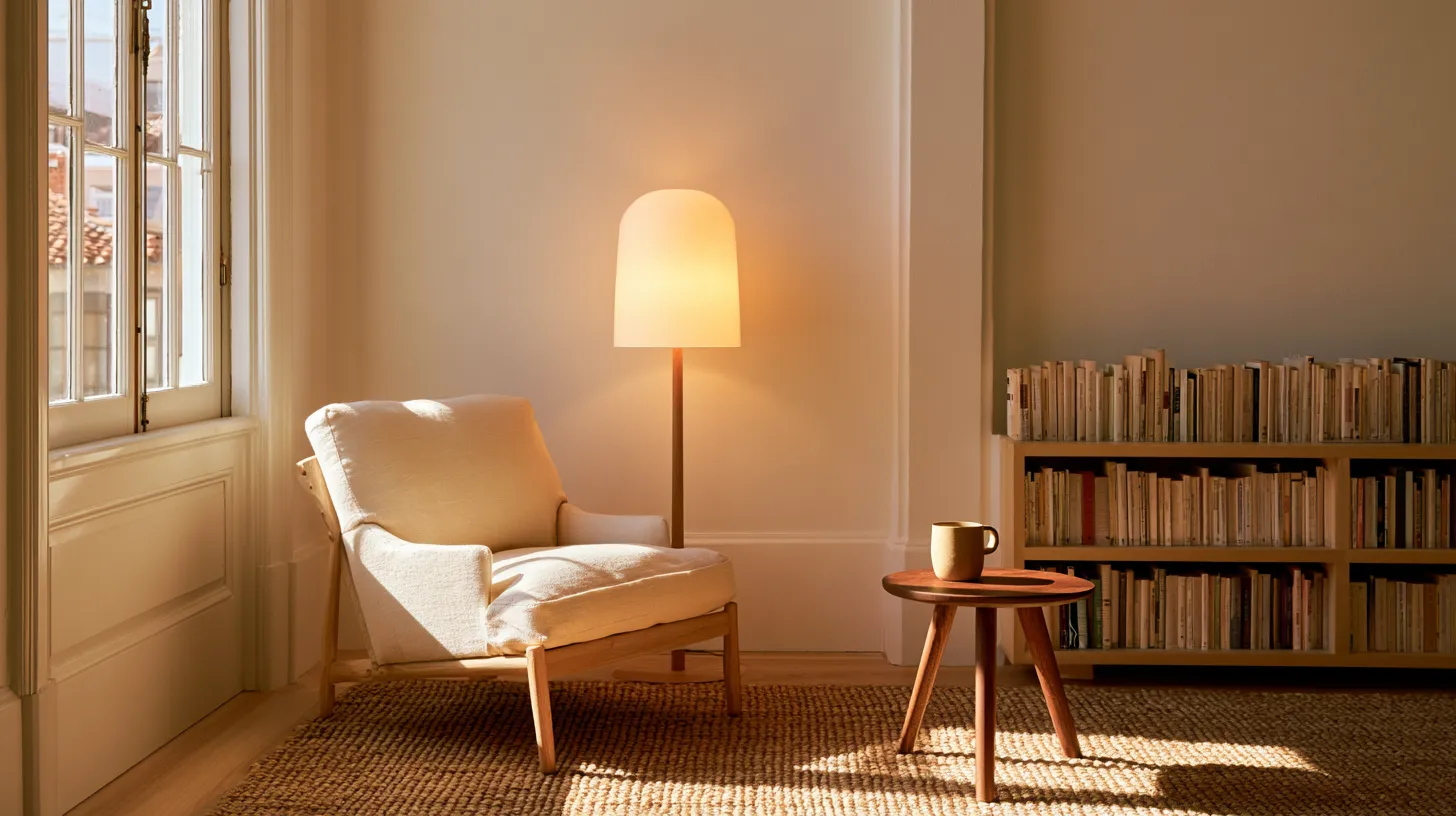
Place your chair at a 45-degree angle facing inward, with a floor lamp tucked behind it and a small side table beside the armrest. This diagonal positioning softens the geometry of the room and keeps traffic flowing freely through the center.
Best for: Square living rooms, apartments, and rooms with a sofa and TV arranged on one axis.
The Window Seat or Window-Adjacent Placement
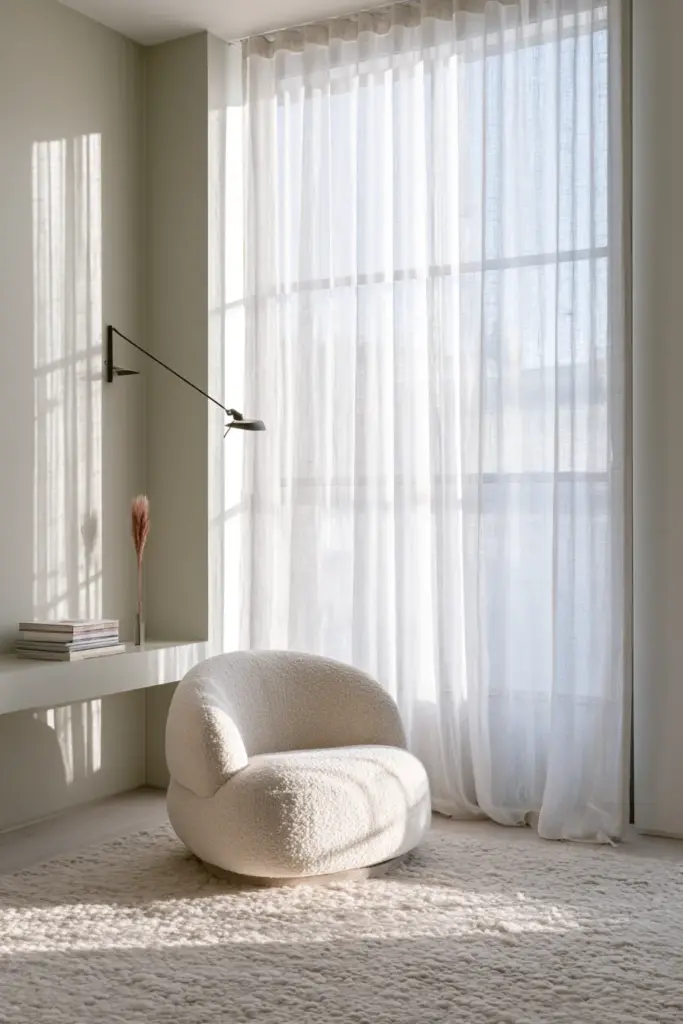
Natural light is the most flattering reading companion. If your living room has a window that doesn’t face direct harsh afternoon glare, position your reading chair beside or just in front of it.
Keep at least 18–24 inches between the chair and the window wall so you can draw curtains or open the sash freely. A linen Roman shade in warm white diffuses light beautifully without blocking it entirely.
Best for: Rooms with east- or north-facing windows, cottages, and open-plan living areas.
The Alcove or Recessed Wall
If your living room has a built-in recess, an architectural indent, or even just a wall that sits slightly behind the main layout — claim it. These spaces were made for reading nooks.
A loveseat or narrow chaise tucked into an alcove creates instant coziness. Add floating shelves above for books and a wall sconce for light, and you have a fully functional nook without a single inch of floor space lost.
Best for: Older homes, rooms with uneven wall planes, and anyone who wants the nook to feel like a built-in feature.
The Room-Divider Placement
In open-plan living rooms, a bookcase or tall plant placed perpendicular to the wall can visually separate the reading zone from the main seating area. This approach works beautifully in modern and Japandi-inspired interiors where clean zones feel intentional rather than cramped.
Position the chair on the quieter side of the bookcase — facing away from the TV, toward a wall or window — so the nook has its own sense of direction.
Best for: Open-plan homes, studio apartments, and spaces that need functional zones without physical walls.
What Furniture Do You Need for a Reading Nook?
You do not need much. The best reading nooks are edited, not accumulated.
Seating: The Heart of the Nook
| Seating Type | Best For | Approx. Footprint |
|---|---|---|
| Accent armchair | Classic nook, small spaces | 30–34″ wide × 32–36″ deep |
| Loveseat | Wider alcoves, couples reading | 48–60″ wide × 32–36″ deep |
| Chaise lounge | Lounging, feet-up reading | 58–65″ wide × 28–32″ deep |
| Floor cushion/pouf | Minimalist, Japandi, kids’ nooks | 24–30″ wide × 24–30″ deep |
| Window bench | Built-in look, storage below | Custom to window width |
For posture and comfort, choose a chair with firm seat support, a slightly reclined back angle (between 100–110 degrees), and armrests at a height where your elbows rest naturally. Your feet should touch the floor, or rest on a small footstool.
A seat height of 17–19 inches works for most adults. If you are creating a reading nook for older family members, prioritize chairs with higher seats (18–20 inches) and solid armrests for easy standing.
The Side Table
A side table should be within easy reach without leaning — ideally at the same height as your armrest or 1–2 inches above it. Look for a small round table (16–20 inches in diameter) or a nesting set that tucks away when not in use.
Leave room for: a mug, a pair of glasses, a bookmark. Everything else belongs on the shelf.
Lighting: Task Lighting That Flatters
Good reading light is non-negotiable. The lamp should illuminate the page without casting shadow or glare into your eyes.
- Floor lamp: Position just behind and slightly to the side of the dominant reading shoulder. Look for adjustable-arm styles for precise direction.
- Table lamp: Ideal on a side table at armrest height. The bulb base should be at roughly eye level when seated.
- Wall sconce: A swing-arm sconce is the most space-efficient option — it mounts at the wall, frees the side table, and can pivot to direct light exactly where needed.
- Natural light: Always prioritize it in the morning and afternoon. Layer with warm artificial light for evenings.
Use bulbs in the 2700K–3000K range — soft white, warm, and easy on the eyes during long sessions.
Storage: Books Within Reach
The nook should hold your current reads, not your entire library.
- A narrow bookcase or etagere placed beside or behind the chair keeps books visible and accessible.
- Wall-mounted shelves above the chair use vertical space without expanding the nook’s footprint.
- A basket or woven tote on the floor beside the chair works beautifully for a rotating reading pile, blankets, or magazines.
How to Arrange Living Room Furniture Around a Reading Nook Without Losing Space
The most common fear is that adding a reading nook will make the living room feel cluttered or smaller. It will — if the arrangement ignores circulation and visual balance.
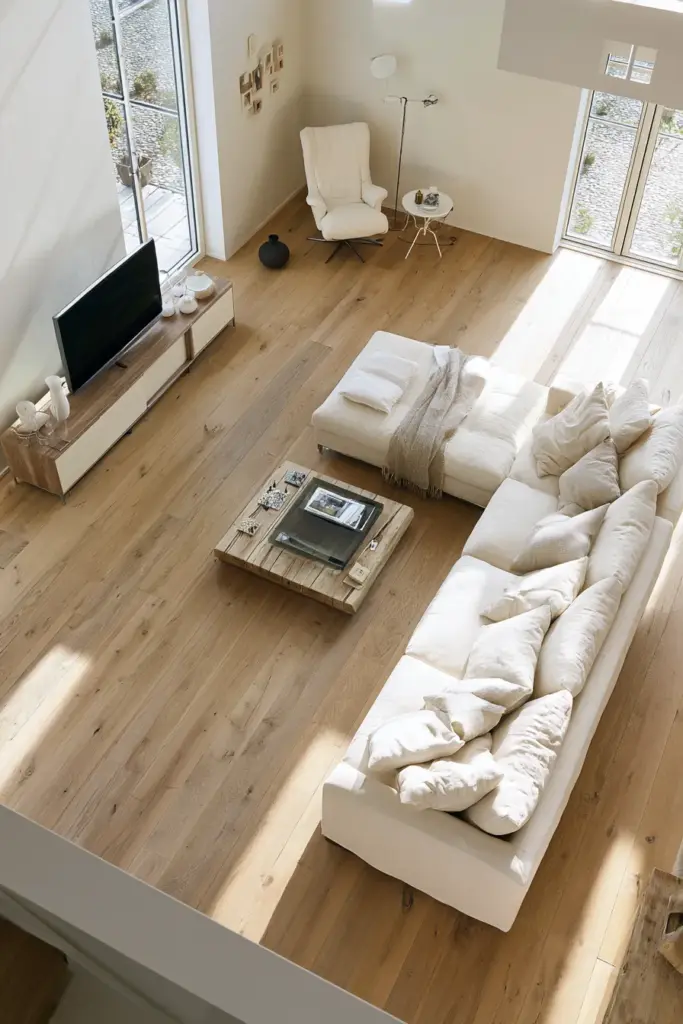
Clearance Rules to Follow
| Zone | Minimum Clearance |
|---|---|
| Between reading chair and sofa | 30–36 inches |
| Between reading chair and coffee table | 18–24 inches |
| Main traffic path (doorway to sofa) | 36–48 inches |
| Between chair and wall (window side) | 18–24 inches |
| Lamp reach from chair | 12–18 inches behind/beside shoulder |
Keep the nook out of the primary traffic path. If someone walks between the front door and the sofa, the reading chair should not be in that line.
Layout by Room Shape
Narrow living room: Place the reading chair at one end of the room, facing the length of the space. This avoids blocking the main axis and gives the nook its own territory at the far end.
Square living room: Use a corner placement with the chair angled diagonally. This softens the box-like feel and creates two distinct zones — the main seating area and the nook — without dividing the room.
Open-plan living room: Use a bookcase or large plant as a soft room divider. The reading chair sits on the quieter side, facing away from the main living and dining area.
L-shaped living room: The short arm of the L is a natural reading nook. Tuck the chair into that space with a lamp and a shelf, and the longer arm remains open for the main seating group.
Visual Balance Between the Nook and Main Seating Area
The nook should feel like it belongs, not like it was squeezed in after the fact.
- Match one material or color between the main seating area and the nook. If your sofa is linen, choose a linen throw for the reading chair. If your coffee table is walnut, use a walnut side table in the nook.
- Anchor the nook with a small rug. A 4×6 or 5×7 rug underneath the chair defines the zone without over-claiming space.
- Mirror the lamp scale. If your main seating area has a tall floor lamp, echo that height in the reading nook rather than introducing a dramatically different scale.
How to Make a Reading Nook Cozy
Coziness is not decoration — it is material, texture, and the memory of warmth.
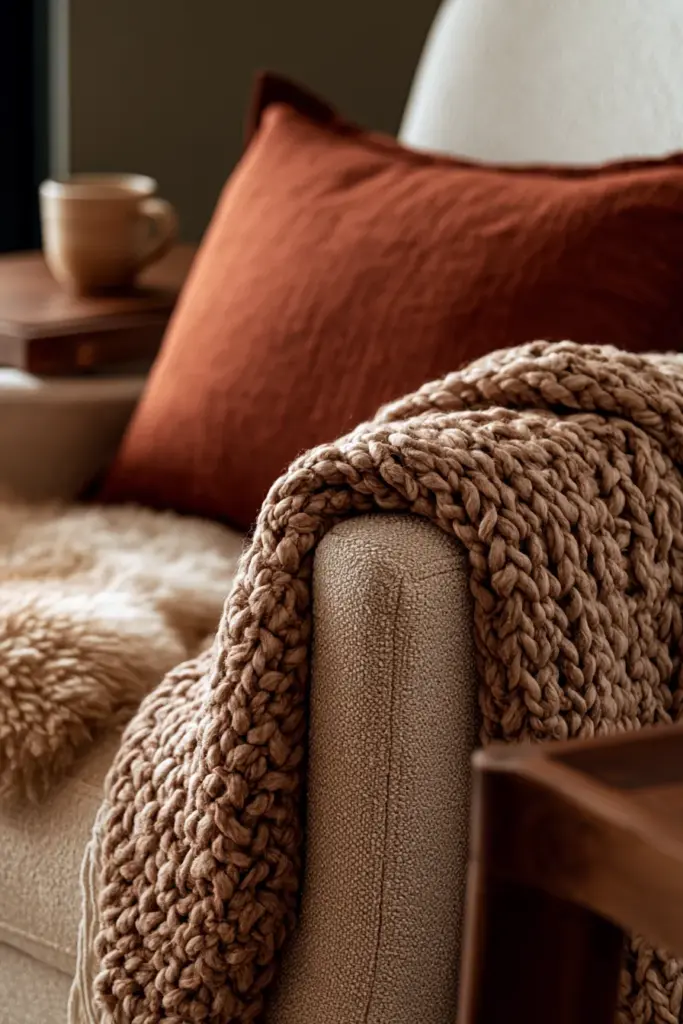
Layered Textiles
Begin with the chair itself. Choose upholstery in natural fibers — boucle, linen, cotton velvet, or washed cotton canvas — that soften with use rather than showing wear. Then layer:
- A throw blanket draped over the arm or back. Wool, cotton knit, or waffle-weave all hold heat without weight.
- A lumbar pillow for lower-back support. This is both practical and a moment of texture.
- A small sheepskin or woven seat pad if your chair has a firm cushion.
The Right Rug
A rug beneath the reading chair grounds the nook and muffles sound. Choose one that extends at least 12 inches beyond each side of the chair so it feels generous rather than pinched. Natural fibers — jute, wool, cotton flatweave — read as warm and textural without competing with the rest of the room.
Personal Touches That Belong
The nook is one of the few places in a living room where personal objects feel genuinely at home. A small ceramic vase on the side table. A candle (LED is fine — the flicker matters, not the flame). A worn stack of your current reads. These are the details that make a nook feel like yours.
Style Variants: Finding Your Reading Nook Aesthetic
Modern Rustic Elegance
Natural wood, warm whites, and soft wool. An oak-framed armchair in oatmeal linen, a rattan side table, a warm-toned linen shade floor lamp. The palette stays light and earthy — no dark drama, just quiet warmth.
Japandi Minimal
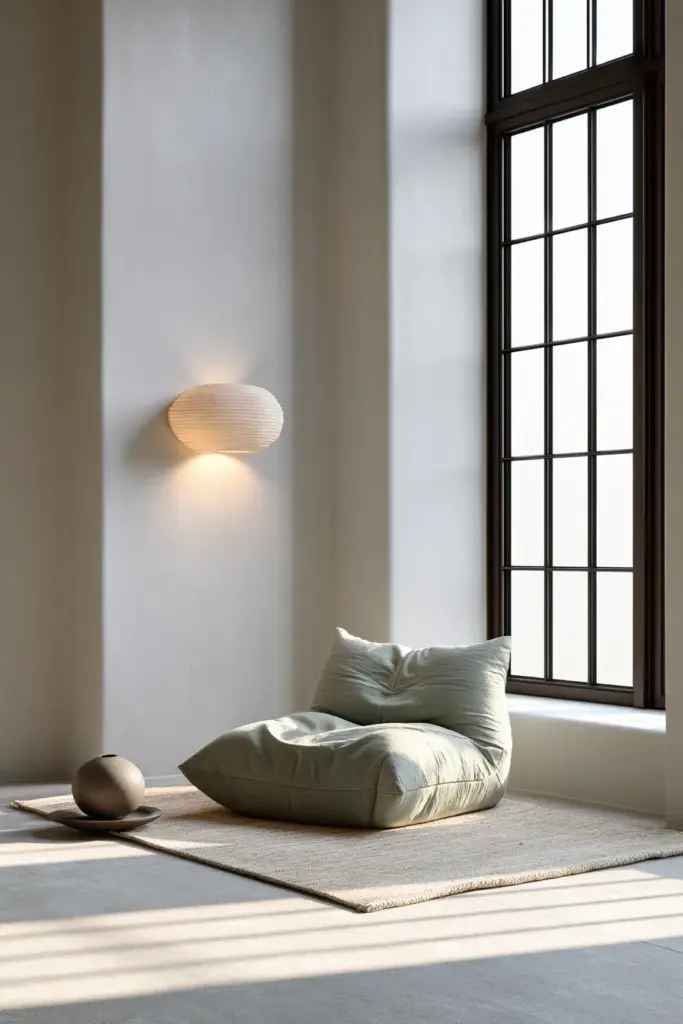
Restraint is the luxury here. A low-profile chair in a muted sage or clay tone, no side table (a floor tray works beautifully), a single wall sconce with a paper shade, and one carefully chosen ceramic object on the shelf. Nothing extra. Every piece earns its place.
Cozy Maximalist
This is the version that leans into abundance. A deep-seat wingback in a rich emerald or dusty rose, stacked with pillows and a heavy throw, flanked by a tall bookcase filled with spines and small objects. The lamp is generous and warm. The rug is layered. It feels like a hug.
Budget Setup
A thrifted armchair reupholstered in canvas fabric, a clip-on reading lamp ($15–40), a wooden crate repurposed as a side table, and a basket for throws. The bones do not need to be expensive — the styling makes it intentional.
Reading Nook Quick-Setup Checklist
Before you buy a single piece of furniture, run through this:
- The nook is out of the main traffic path
- The chair has at least 30 inches clearance from the sofa
- Natural light falls beside the chair, not directly behind or in front of your eyes
- A task light is within 12–18 inches of your reading shoulder
- A surface for a drink is within arm’s reach without leaning
- Storage for current reads is nearby (not the whole library)
- The nook is anchored visually — rug, defined corner, or bookcase behind
- At least one textile element (throw, pillow, or cushion) adds warmth
- The chair’s seat height allows feet flat on the floor or on a footstool
- The nook matches at least one material or tone from the main seating area
Conclusion
A reading nook is not a luxury. It is a small act of self-respect — a corner carved out of the everyday, furnished with just enough to make you want to sit down and stay a while.
It does not need to be large. It does not need to be perfect. It needs only to feel like yours.
At ERYLIN, we believe that the most beautiful interiors are the ones that hold space for all the ways you actually live — including the quiet ones. Start with one good chair, one warm light, and one surface for your tea. The rest will follow.
Frequently Asked Questions
How do I create a reading nook in my living room?
Choose a corner, window-adjacent wall, or the quieter end of your living room. Place a comfortable chair there — angled slightly inward or toward the window — and add a lamp, a small side table, and a place to store a few books. That is the full structure. Style layers on top of function.
What do I need for a reading nook?
The essentials are: one comfortable seat (armchair, loveseat, or chaise), one task light (floor lamp, table lamp, or wall sconce), one surface for a drink or glasses, and nearby book storage. A small rug anchors the space. Everything else is personal.
What chair is best for a reading nook?
Look for a chair with a seat height of 17–19 inches, a back angle between 100–110 degrees, and firm seat cushioning. An accent armchair or wingback works well for most spaces. If you love to read with your feet up, a chaise lounge or a chair paired with an ottoman is ideal.
How do I light a reading nook?
Use a floor lamp positioned just behind and to the side of your reading shoulder, or a swing-arm wall sconce mounted at head height. Choose bulbs in the 2700K–3000K range for warm, eye-friendly light. Layer with natural light during the day, and always position the light source so it illuminates the page without casting shadow across it.
How can I make a reading nook in a small space?
Use a narrow accent chair (30–32 inches wide), a wall-mounted sconce instead of a floor lamp, and floating shelves above the chair for storage. A small round side table (16 inches in diameter) takes minimal floor space. Anchor the nook with a small rug (4×4 or 4×6) to define the zone without spreading into the rest of the room.