
Table of Contents
Walk into a thoughtfully designed living room, and your eyes naturally know where to land.
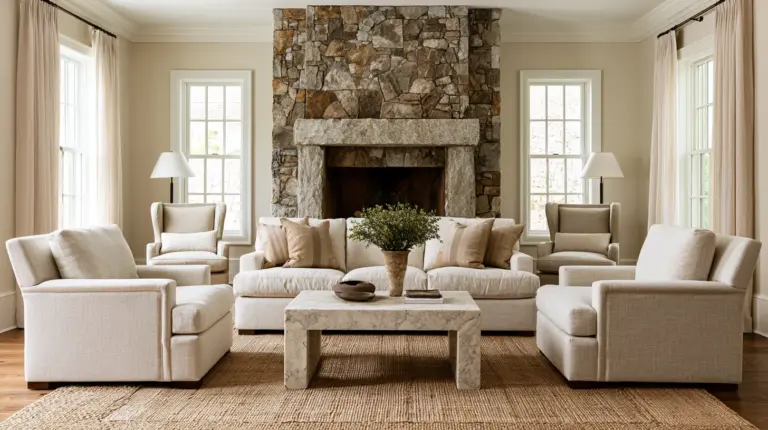
Perhaps it’s a glowing stone fireplace framed by warm oak shelves. Maybe it’s a wall of windows washing the room in golden afternoon light. Or it could be a beautifully styled console beneath a large piece of artwork that quietly commands attention.
These visual anchors are called living room furniture arrangement focal points, and they influence everything from furniture placement to traffic flow, comfort, and atmosphere.
A strong focal point creates order. It gives the room purpose. Instead of feeling scattered or overwhelming, the space feels calm, intentional, and welcoming.
At ERYLIN, we believe every living room deserves a focal point that feels both beautiful and deeply personal. Whether you’re decorating a compact apartment, a Japandi-inspired retreat, or a multifunctional family room, understanding focal points can completely transform how your space feels.
Quick Answer: How Many Focal Points Should a Living Room Have?
The ideal number depends on the size of the room.
| Room Size | Recommended Focal Points |
|---|---|
| Under 200 sq ft | Maximum 2 focal points |
| 200–400 sq ft | 2–3 focal points |
| Large open-plan spaces | Up to 3 focal points per zone |
Too many focal points compete for attention and create visual clutter.
Too few can make a room feel directionless.
The goal is balance.
What Is the Focal Point of a Living Room?
A focal point is the feature that naturally draws the eye first when entering a room.
Think of it as the visual heartbeat of the space.
Everything else—from seating arrangements to rugs and lighting—should support that central feature.
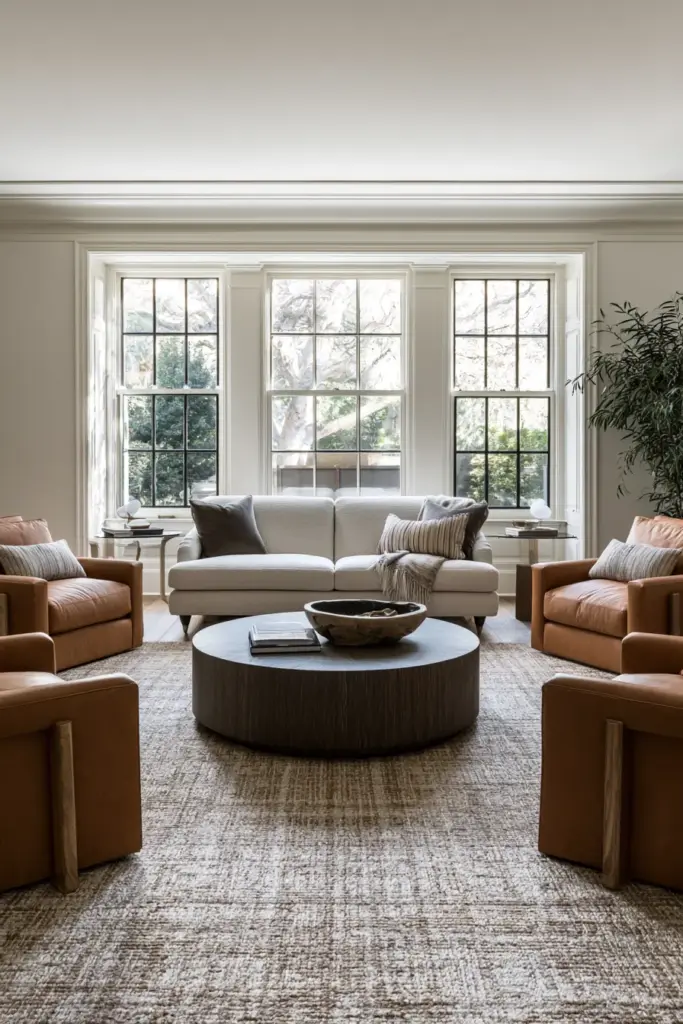
Common Living Room Focal Points
Some rooms come with built-in focal points:
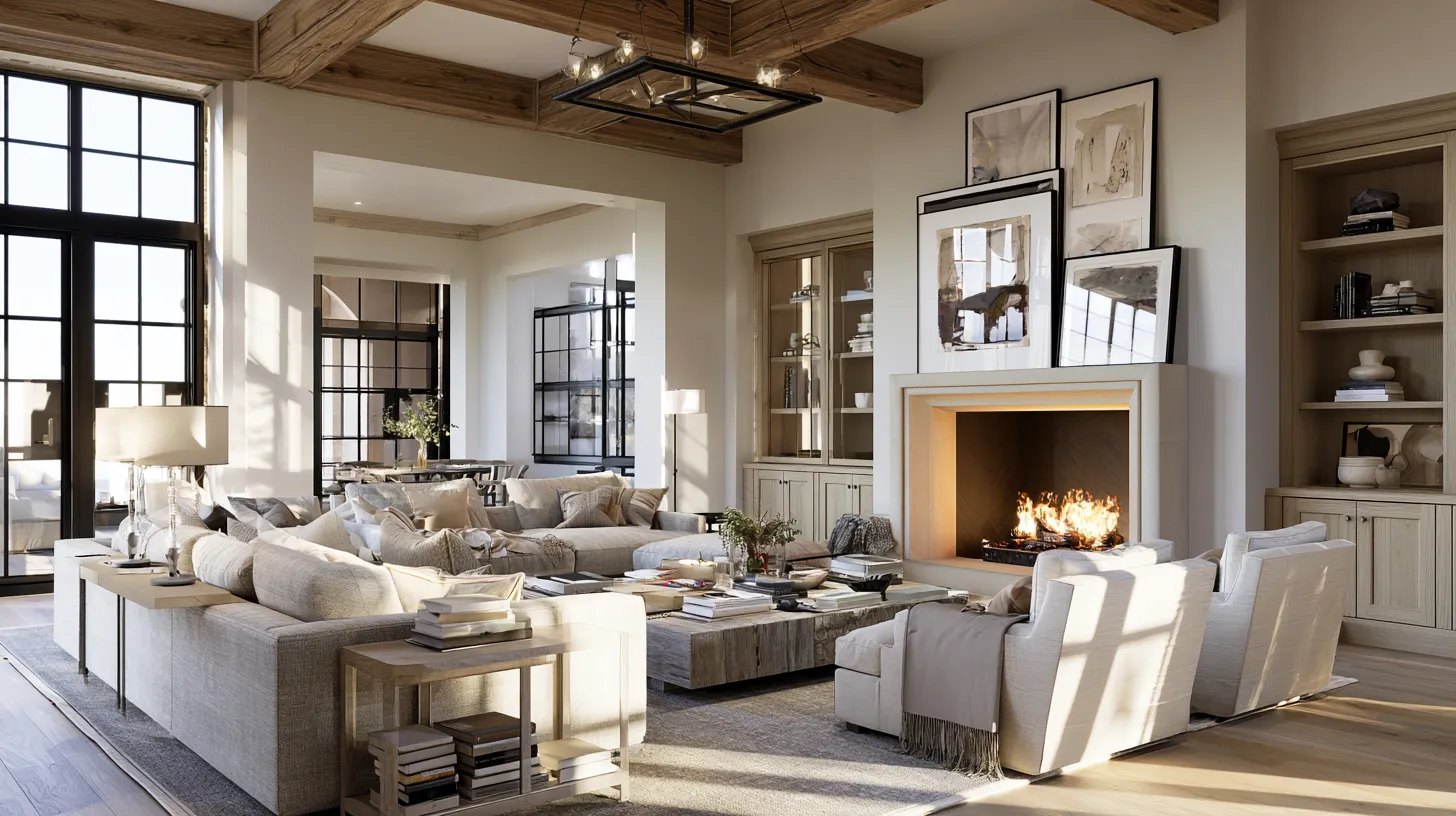
- Fireplace
- Large window
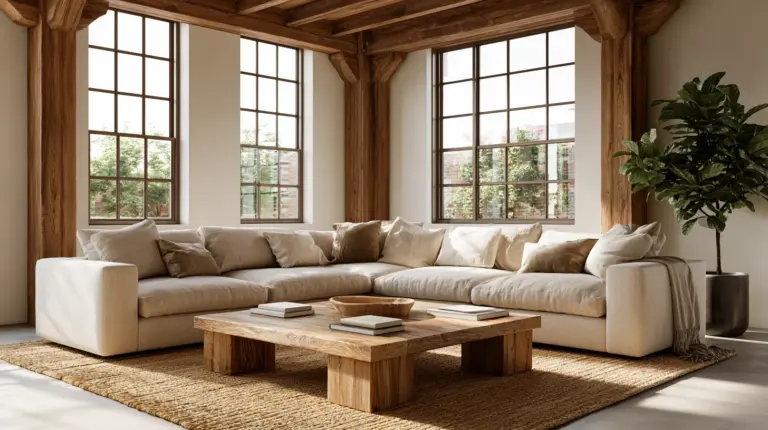
- Architectural beam
- Built-in shelving
- Media wall
- Statement artwork
Others require a little creativity.
You can create a focal point with:
- A dramatic mirror
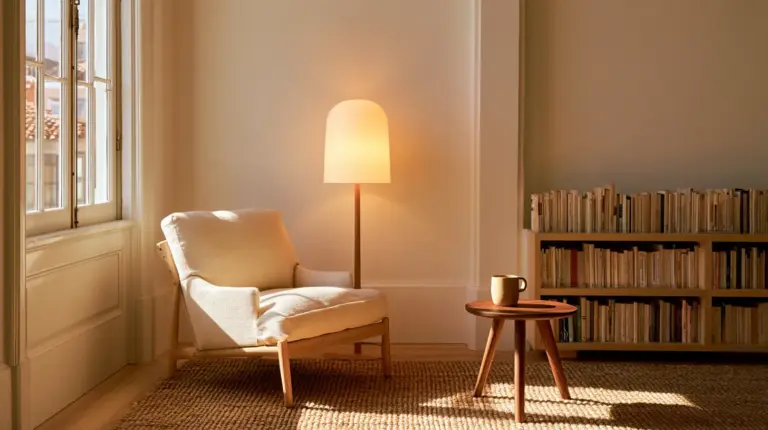
- A sculptural floor lamp
- A gallery wall
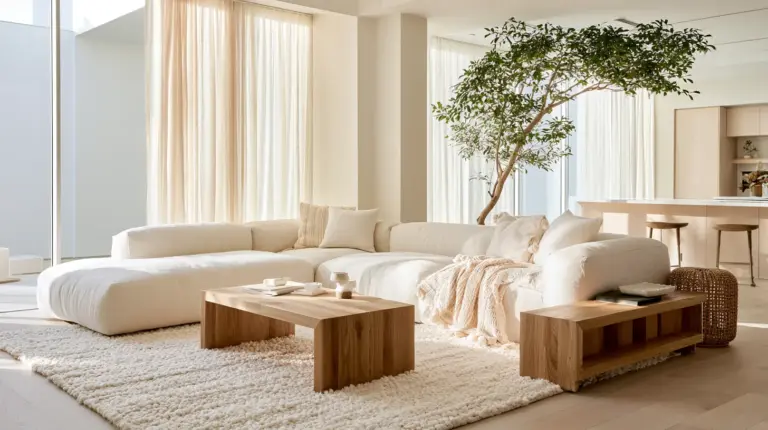
- A large indoor plant
- An accent wall
The most effective focal points feel natural rather than forced.
Why Focal Points Matter Psychologically
Our brains seek visual order.
A focal point reduces cognitive load by giving the eye a place to rest.
Instead of scanning multiple competing elements, the brain immediately understands where attention belongs.
The result feels calm, organized, and emotionally comforting.
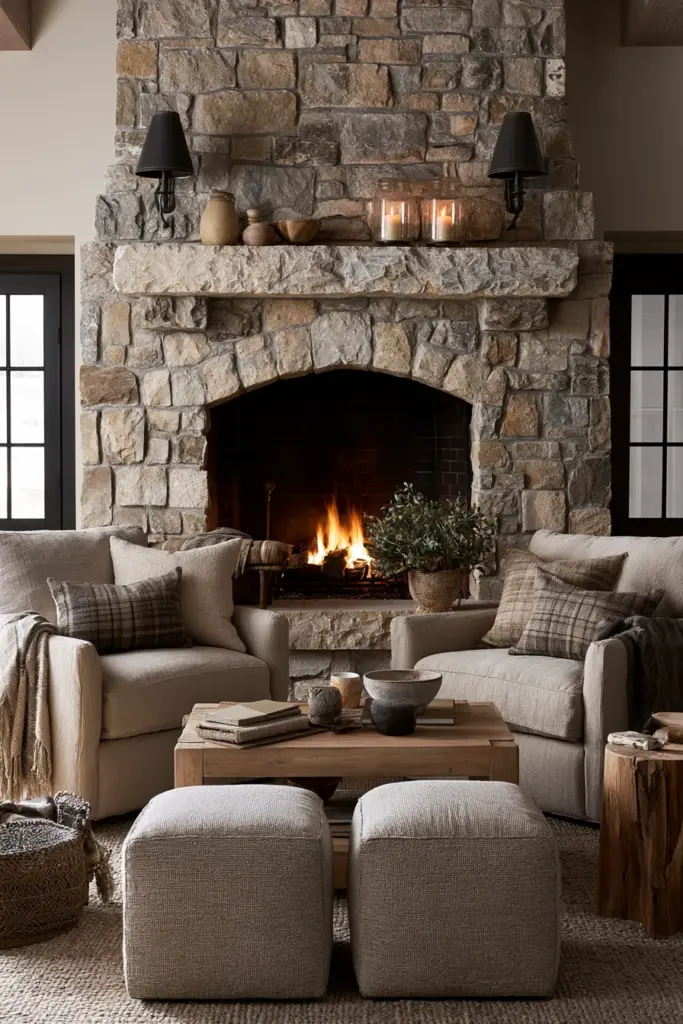
How to Identify Your Dominant Focal Point
Before arranging furniture, stand at the room’s main entrance.
Notice what you see first.
This is often your dominant focal point.
The First-Facing Wall Rule
In many homes, the first wall directly opposite the entry becomes the strongest visual anchor.
That wall might contain:
- A fireplace
- Television
- Large artwork
- Window grouping
- Decorative shelving
Once identified, position your primary seating around that feature.
Let Architecture Lead
Natural architectural elements often make the strongest focal points.
Examples include:
- Exposed stone
- Vaulted ceilings
- Arched windows
- Wood beams
- Floor-to-ceiling glass
These features already command attention, so furniture should support them rather than compete with them.
How Do You Arrange Furniture in a Living Room With Two Focal Points?
This is one of the most common decorating challenges.
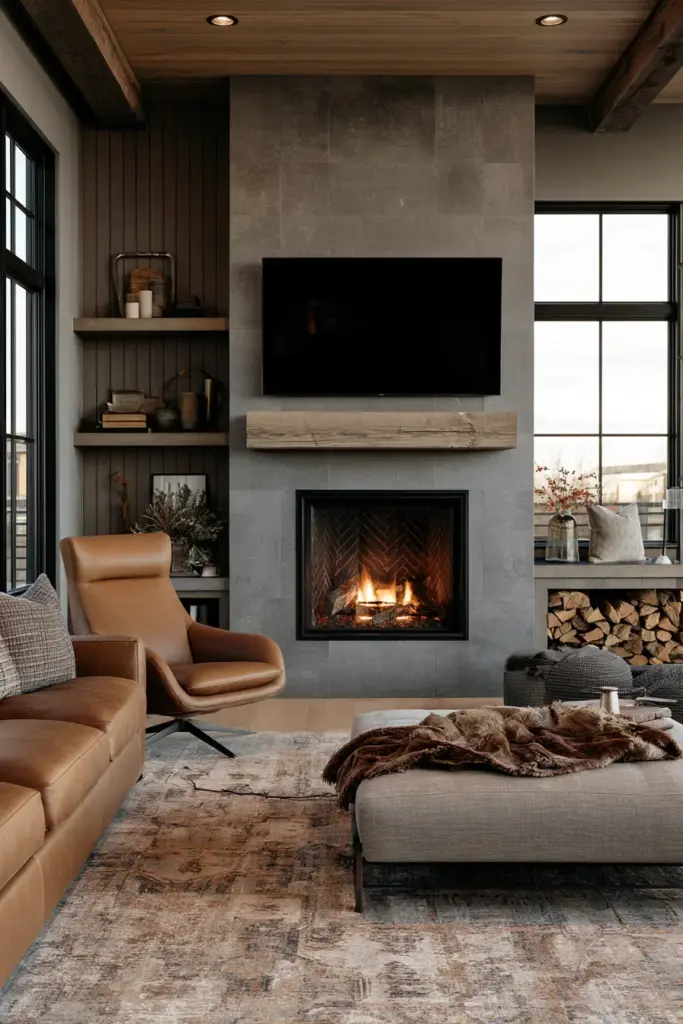
A fireplace and TV often compete for attention.
Large windows and a media wall can create similar conflicts.
Fortunately, balance is possible.
Align Both Focal Points on One Visual Axis
When possible, place focal points on the same wall.
This allows furniture to serve both functions simultaneously.
For example:
- Fireplace below TV
- Artwork above console
- Window adjacent to shelving
The eye experiences them as one unified composition.
Use Swivel Chairs
Swivel chairs are one of the most overlooked design solutions.
They allow flexible viewing angles without disrupting the layout.
A pair of linen swivel chairs can comfortably face the fireplace during conversations and rotate toward the television when needed.
Create Separate Zones
Open-concept spaces often benefit from zoning.
A console table, area rug, or shelving unit can help define distinct seating areas while maintaining visual flow.
Should the TV Be the Focal Point of the Living Room?
The answer depends on how you live.
If movie nights, sports, and gaming are central to your lifestyle, the TV can absolutely serve as the primary focal point.
However, thoughtful integration matters.
How to Make a TV Feel Intentional
Instead of allowing the screen to dominate the room:
- Frame it with built-ins
- Add balanced shelving
- Incorporate artwork
- Use warm lighting nearby
- Hide cables completely
This approach softens the visual impact while maintaining functionality.
Balance Technology With Natural Elements
A television can sometimes feel visually cold.
Counteract this with:
- Wood textures
- Woven baskets
- Linen upholstery
- Indoor plants
- Natural stone accents
The room instantly feels warmer and more inviting.
How Do You Create a Focal Point Without a Fireplace?
Many modern homes and apartments lack traditional architectural anchors.
The good news is that focal points can be created affordably.
Create an Accent Wall
A single wall painted in a deeper tone immediately attracts attention.
Consider:
- Soft charcoal
- Warm greige
- Muted olive
- Earthy clay
The contrast creates depth without overwhelming the room.
Use Large-Scale Artwork
Oversized artwork works particularly well in minimalist spaces.
One substantial piece often feels more impactful than several smaller pieces.
Style a Gallery Wall
Keep the arrangement centered on one visual axis.
Consistent spacing creates a polished appearance.
Add a Statement Mirror
Mirrors amplify light while creating visual interest.
A large thrifted mirror can become an affordable focal point under budget constraints.
The Best Furniture Arrangement for Small Living Rooms
Small rooms require extra discipline.
Too many focal points quickly create visual noise.
Follow the Two-Focal-Point Rule
For living rooms under 200 square feet:
- One dominant focal point
- One supporting focal point
No more.
This keeps the room feeling open and organized.
Keep Sightlines Open
Choose:
- Low-profile sofas
- Slim armchairs
- Open-leg furniture
- Floating shelves
Open sightlines make small rooms feel larger.
Small Space Measurements That Work
| Element | Recommended Distance |
|---|---|
| Sofa to coffee table | 14–18 inches |
| Main walkways | 24–36 inches |
| Frequent pathways | 36 inches minimum |
| Seat to side table | 12–18 inches |
These measurements improve comfort without wasting precious space.
What Focal Point Works Best for Japandi Living Rooms?
Most design guides overlook Japandi interiors entirely.
Yet focal points are especially important in minimalist spaces.
Choose One Quiet Statement
Instead of a fireplace or oversized TV, Japandi rooms often center around:
- Sculptural floor lamps
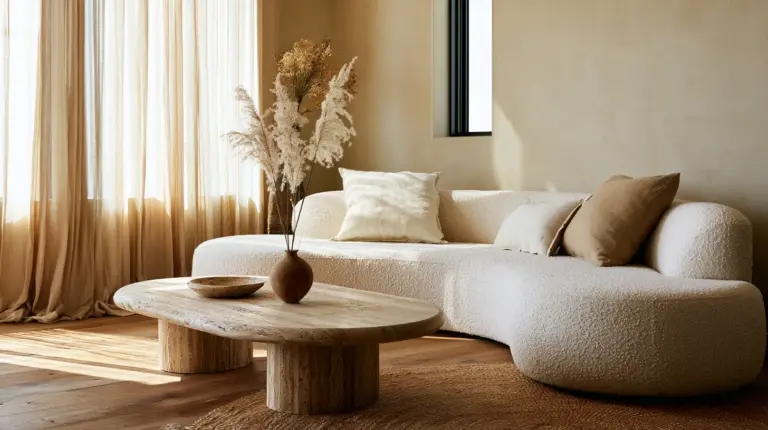
- Handmade ceramics
- Natural wood furniture
- Textural artwork
- Organic plant arrangements
The focal point feels calm rather than dramatic.
Keep Surfaces Two-Thirds Empty
Negative space is essential.
Allow furniture and décor room to breathe.
This simplicity highlights the focal point naturally.
Focus on Natural Materials
Beautiful Japandi focal points often feature:
- Oak
- Walnut
- Linen
- Wool
- Stone
- Clay
Texture becomes the visual attraction.
Can You Have Three Focal Points in a Living Room?
Yes—but only when the room is large enough.
Small Spaces
Limit yourself to two focal points maximum.
More than that creates visual confusion.
Larger Living Rooms
Three focal points can work when arranged intentionally.
For example:
- Fireplace
- Large artwork
- Window wall
Each should support the others rather than compete.
Think of them as a visual triangle guiding the eye through the room.
Does the Focal Point Change From Day to Night?
Absolutely.
One of the most overlooked aspects of interior styling is how focal points evolve throughout the day.
During Daylight
Large windows often become the dominant focal point.
Natural light naturally attracts attention.
During Evening Hours
Once darkness arrives, windows lose their visual impact.
The focal point often shifts toward:
- Artwork
- Mirrors
- Fireplaces
- Lamps
- Shelving displays
Create a Day-to-Night Transition
The most successful rooms include a secondary evening focal point.
Examples:
- Window + artwork
- Window + floor lamp
- Window + fireplace
This ensures visual interest at any hour.
Budget Focal Point Ideas Under $100
Beautiful focal points don’t require major renovations.
Budget Focal Point Hierarchy
| Budget | Idea |
|---|---|
| $0–50 | Rearrange furniture, add warm lamp |
| $50–150 | Large plant, removable wallpaper |
| $150–400 | Statement chair, oversized art |
| $400+ | Built-ins, fireplace surround |
Easy DIY Projects
Try:
- Painting a shelf above the TV
- Creating a gallery wall
- Styling a thrifted mirror
- Installing removable wallpaper
- Adding a large indoor olive tree
Small changes often deliver dramatic results.
Biophilic Design Focal Points
Nature creates some of the most beautiful focal points.
A large plant introduces movement, texture, and life.
Best Plants for Living Room Focal Points
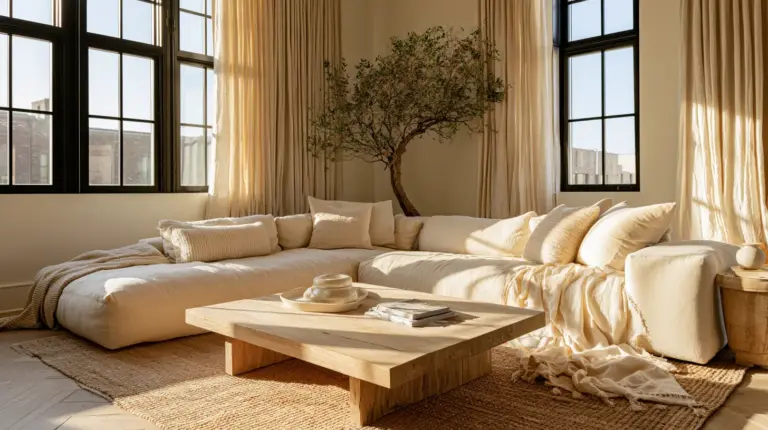
- Olive tree
- Fiddle leaf fig
- Bird of paradise
- Rubber plant
- Kentia palm
Place plants where they frame rather than block views.
Softening Technology
Plants work especially well beside televisions.
They reduce the visual harshness of large screens and create balance.
Where Do You Put the Rug Relative to the Focal Point?
A rug should reinforce the focal point.
Not compete with it.
Rug Placement Guidelines
Center the rug within the seating area.
Allow it to connect the furniture grouping visually.
Ideally:
- Front legs of all furniture sit on the rug
- The rug extends beyond the coffee table
- The arrangement points toward the focal feature
This creates cohesion and visual balance.
Open-Plan Living Rooms and Focal Point Zoning
Open layouts require multiple focal points.
Each zone should have one clear purpose.
Example Layout
Living Zone:
- TV wall
Dining Zone:
- Statement chandelier
Shared Zone:
- Large artwork between spaces
This arrangement maintains flow while preventing visual clutter.
Living Room Focal Point Measurement Cheat Sheet
| Design Element | Recommended Measurement |
|---|---|
| Sofa to coffee table | 14–18 inches |
| Seat to side table | 12–18 inches |
| Conversation seating | 2.15–3 meters |
| TV viewing distance | 2–3x screen diagonal |
| Main circulation path | 90 cm minimum |
| Walkways | 60–90 cm |
Living Room Furniture Arrangement Focal Points Checklist
Before finalizing your room, ask yourself:
- Is there one dominant focal point?
- Does furniture support the focal point?
- Are traffic paths clear?
- Is the rug properly anchored?
- Do focal points feel balanced?
- Is there an evening focal point?
- Have you limited small spaces to two focal points?
- Are sightlines open?
- Do plants soften hard surfaces?
- Does the room feel calm and inviting?
Conclusion
A beautiful living room doesn’t begin with furniture. It begins with focus.
When you thoughtfully choose and support your focal point, every other design decision becomes easier. Furniture feels naturally placed. Traffic flows effortlessly. The room gains a sense of purpose and calm.
Whether your focal point is a glowing fireplace, a wall of windows, a sculptural Japandi lamp, or a beloved piece of artwork, it becomes the quiet anchor that brings everything together.
As evening light softens across textured linen, warm wood, and layered lighting, the room feels complete—not because every detail is perfect, but because every element knows where it belongs.
FAQs
What is the focal point of a living room?
A focal point is the feature that naturally attracts attention first, such as a fireplace, television, large window, or statement artwork.
How far apart should furniture be in a living room?
Leave approximately 14–18 inches between a sofa and coffee table, and maintain walkways of 24–36 inches whenever possible.
Should furniture face the TV or the fireplace?
Prioritize the feature most important to your lifestyle. Conversation-focused rooms often center on fireplaces, while entertainment spaces typically face the television.
What distance should you sit from a TV?
A comfortable viewing distance is generally 2–3 times the screen’s diagonal measurement.
How do you anchor a living room without a focal point?
Create one using an accent wall, oversized artwork, a statement mirror, layered lighting, or a large indoor plant.