
Table of Contents
A beautifully designed living room often feels effortless. The furniture seems to belong exactly where it is. Light moves gently through the space. Conversations flow naturally. Every piece feels connected.
That sense of harmony is rarely accidental.
At the heart of many timeless interiors lies living room furniture arrangement symmetry—a design principle that creates visual balance, order, and comfort. Whether you’re styling a spacious family room, a compact apartment, or a cozy Japandi-inspired retreat, symmetry can transform an ordinary layout into one that feels calm and intentional.
The beauty of symmetry isn’t about perfection. It’s about creating a rhythm the eye can easily follow. When furniture, lighting, textures, and decorative elements work together in balanced ways, the entire room feels more welcoming.
In this guide, we’ll explore how to arrange furniture symmetrically, how to adapt symmetry for small spaces, renters, families, and modern lifestyles, and how to avoid the common mistakes that disrupt visual balance.
Why Is Symmetrical Furniture Arrangement So Important?
Our brains naturally seek patterns.
Symmetry creates predictability, which reduces visual stress and helps a room feel organized. Even before guests consciously notice your design choices, they often experience the room as more relaxing and inviting.
In interior design, symmetry provides:
- Visual balance
- A stronger focal point
- Better furniture flow
- A sense of elegance and structure
- Improved conversation areas
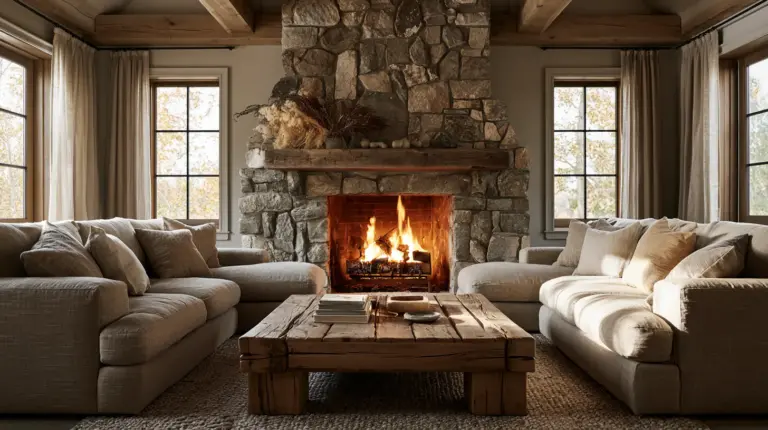
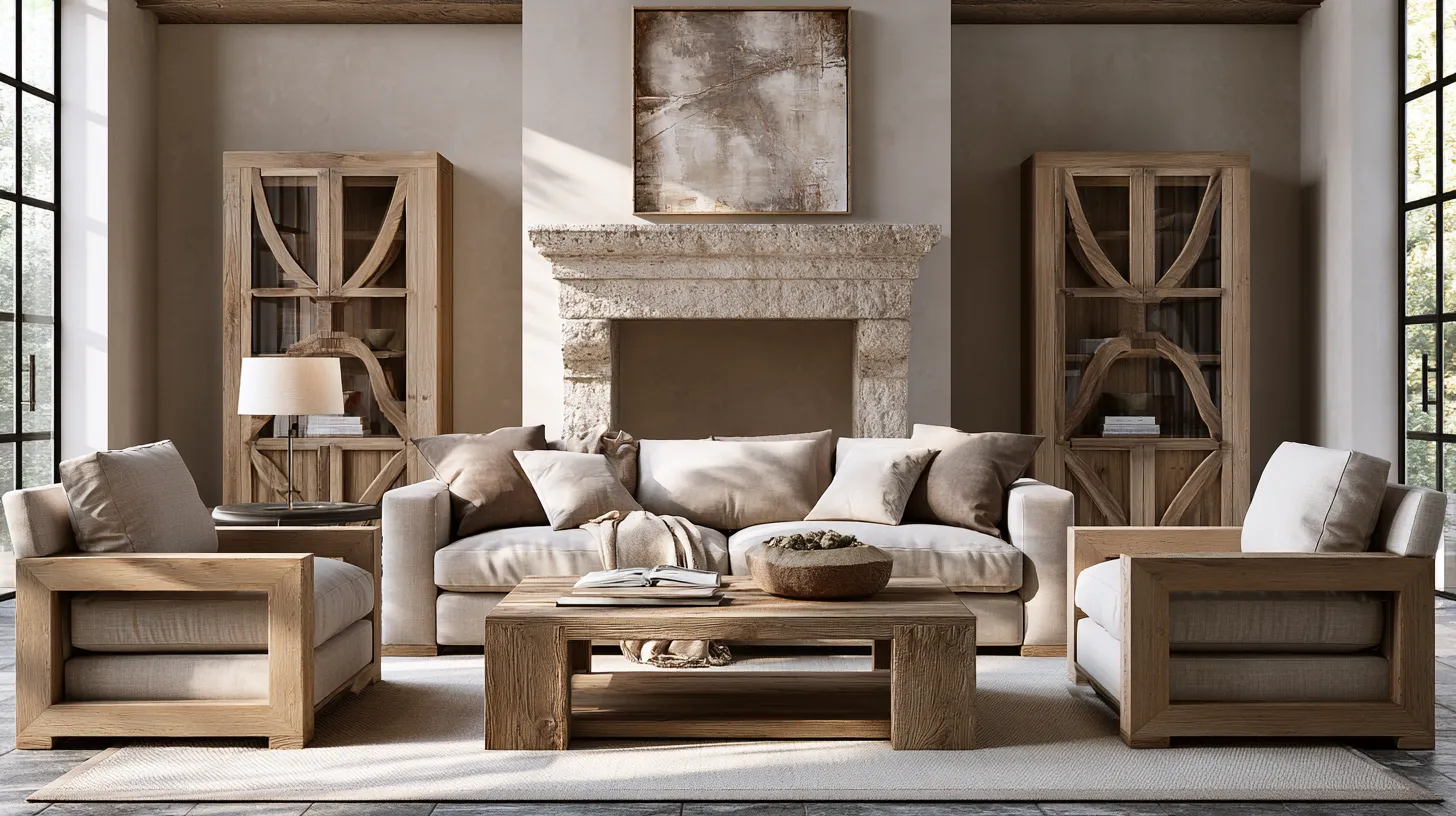
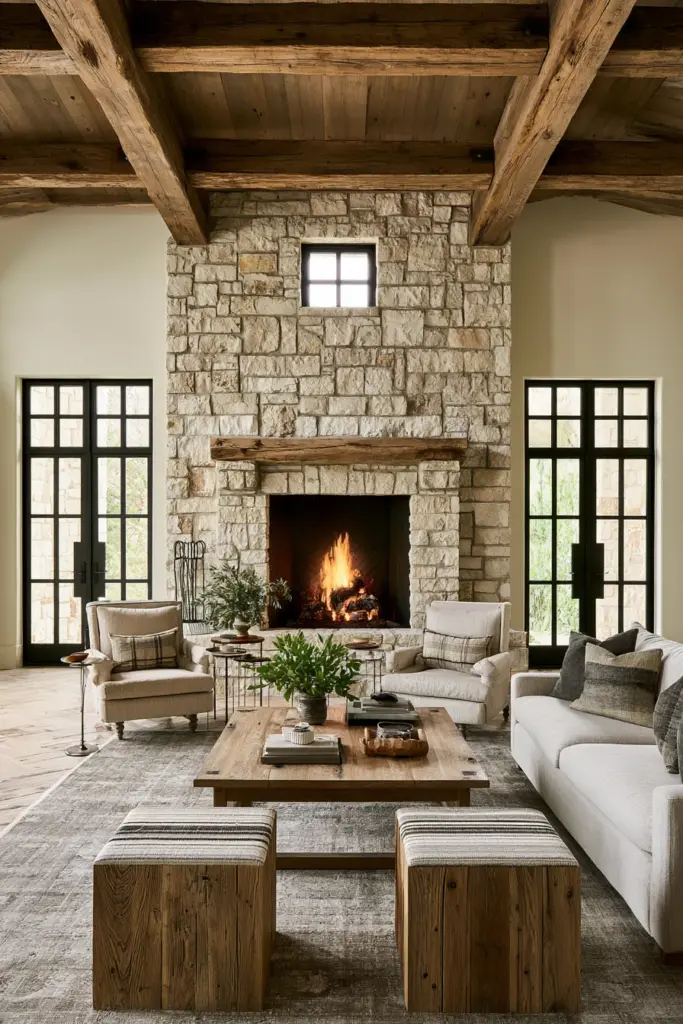
Imagine a fireplace framed by matching armchairs, identical lamps, and balanced artwork. The room instantly feels grounded and complete.
Even in casual spaces, symmetry creates a comforting sense of order that supports everyday living.
Understanding Living Room Furniture Arrangement Symmetry
At its simplest, symmetry means mirroring elements across a central axis.
The focal point acts as the center, while furniture and décor balance each side.
Common focal points include:
- Fireplace
- TV wall
- Large window
- Built-in shelving
- Statement artwork
- Architectural feature
The goal isn’t necessarily identical furniture. It’s creating equal visual weight on both sides.
Symmetry vs. Asymmetrical Balance
Many homeowners confuse balance with symmetry.
| Symmetrical Layout | Asymmetrical Layout |
|---|---|
| Matching elements on both sides | Different elements balanced visually |
| Formal and structured | Relaxed and casual |
| Easy to organize | More creative and flexible |
| Creates instant calm | Creates visual interest |
| Ideal for traditional and modern classic interiors | Ideal for eclectic and contemporary spaces |
The most successful living rooms often combine both approaches: symmetrical foundations with carefully layered asymmetrical accents.
How Do You Arrange Furniture Symmetrically in a Living Room?
Start by identifying the room’s strongest focal point.
Everything else should support that anchor.
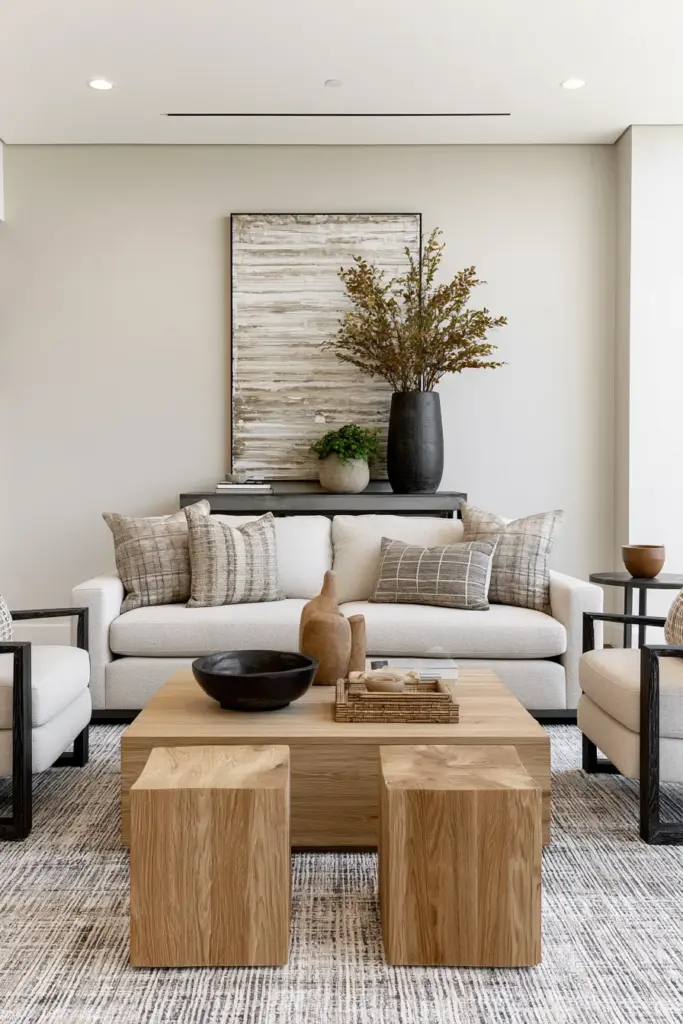
Step 1: Establish the Focal Point
Choose one dominant feature.
Examples include:
- A stone fireplace
- A media wall
- Floor-to-ceiling windows
- A dramatic piece of artwork
Avoid competing focal points whenever possible.
Step 2: Center the Largest Furniture Piece
Typically, this is the sofa.
Place it directly facing the focal point whenever space allows.
The sofa becomes the visual anchor around which the rest of the room is arranged.
Step 3: Mirror Supporting Pieces
Balance the arrangement using:
- Matching armchairs
- Side tables
- Floor lamps
- Table lamps
- Bookcases
- Plants
This creates immediate visual harmony.
Step 4: Anchor Everything With a Rug
The rug should reinforce the symmetry rather than disrupt it.
Center the rug on the focal point, not necessarily the room itself.
For best proportions:
- Front legs of all furniture should sit on the rug at minimum.
- Larger rooms can accommodate all furniture legs on the rug.
What Is the Best Focal Point for a Symmetrical Living Room Arrangement?
The strongest focal point is typically the room’s most permanent feature.
Fireplace Symmetry
A fireplace naturally invites symmetrical layouts.
Arrange:
- Sofa opposite fireplace
- Matching chairs on both sides
- Identical side tables
- Coordinated lighting
This classic arrangement creates timeless elegance.
TV as a Focal Point
Many modern living rooms center around entertainment.
A TV can work beautifully with symmetry when thoughtfully integrated.
Try:
- Built-in cabinets on both sides
- Matching shelving units
- Symmetrical speaker placement
- Balanced artwork surrounding the media wall
The key is making the television feel intentionally incorporated rather than visually dominant.
Window-Centered Layout
Large windows provide natural focal points.
Frame them with:
- Matching curtains
- Coordinated seating
- Balanced lighting
- Identical greenery
The result feels bright, open, and connected to nature.
Does Symmetry Work in Small Living Rooms?
Absolutely.
In fact, symmetry can make compact rooms feel larger and more organized.
Many top design guides focus on large formal spaces, but small rooms benefit tremendously from balanced layouts.
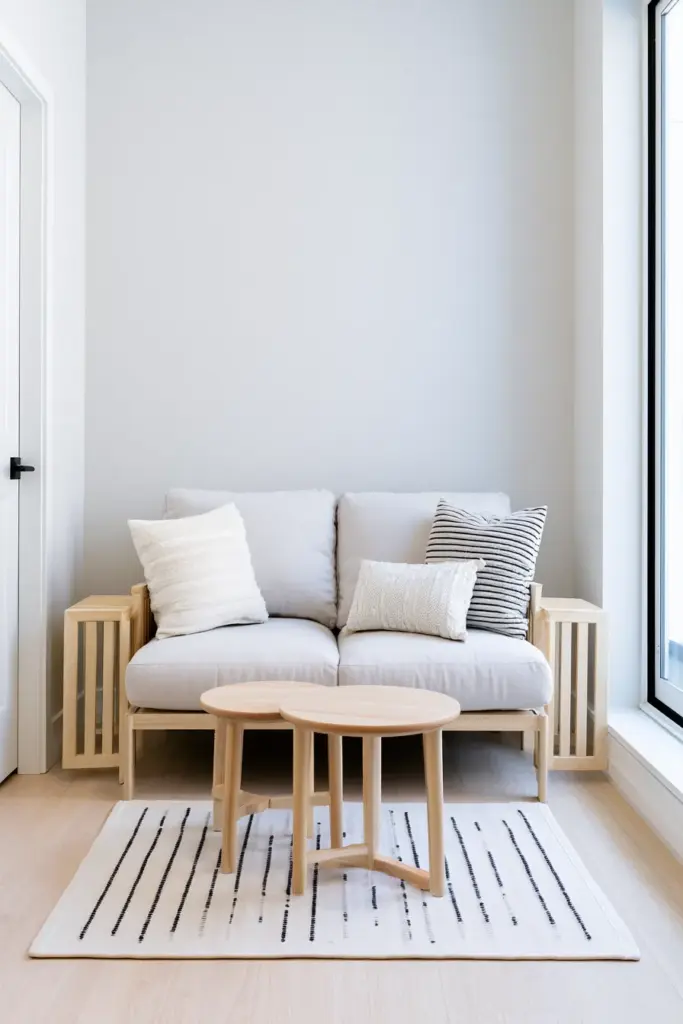
Small Living Room Symmetry Under 150 Square Feet
Keep the arrangement simple.
A successful layout might include:
- One loveseat centered on the focal wall
- Two compact accent chairs
- One centered coffee table
- Matching lamps
Avoid overcrowding.
The empty space becomes part of the design.
Space-Expanding Symmetry Tricks
Use:
- Mirrors to reflect light
- Low-profile furniture
- Floating shelves
- Light natural wood finishes
- Consistent color palettes
These elements maintain visual balance while preserving openness.
Japandi Style and Symmetrical Living Room Design
One overlooked approach is combining symmetry with Japandi design.
Japandi interiors celebrate simplicity, natural materials, and quiet beauty.
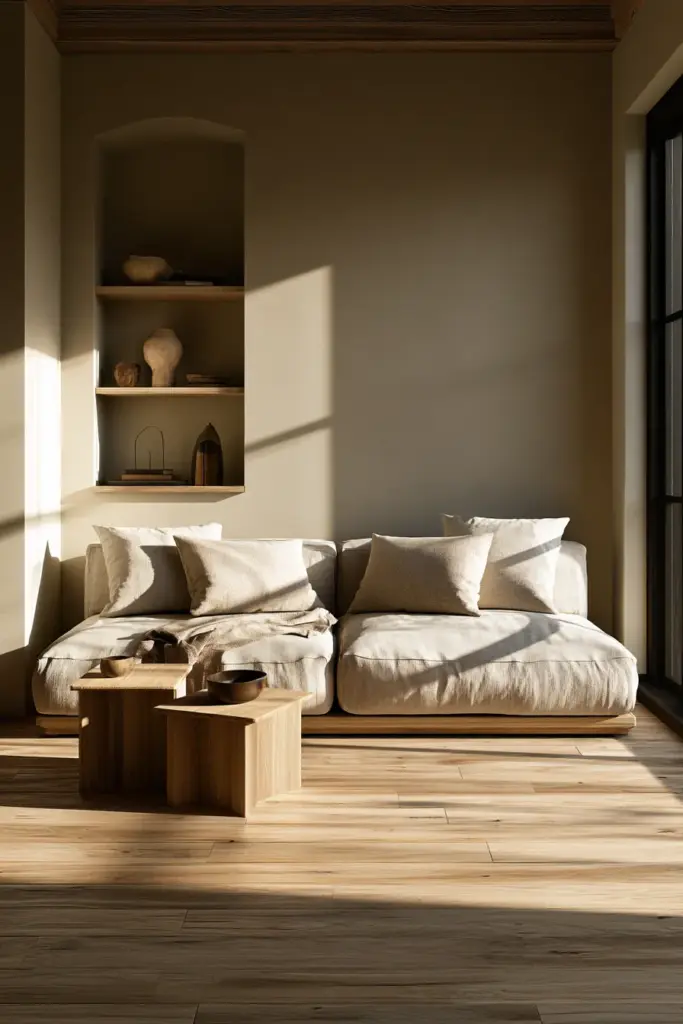
Symmetrical Bones, Organic Layers
Start with:
- Centered sofa
- Matching side tables
- Balanced lighting
Then soften the symmetry through:
- Handmade ceramics
- Linen textiles
- Natural wood grain
- Organic plant forms
This creates structure without rigidity.
Materials That Enhance Calm
Consider:
- Oak wood
- Walnut accents
- Linen upholstery
- Wool rugs
- Stone accessories
- Matte finishes
The result feels serene rather than formal.
How Do You Create Balance Without Perfect Symmetry?
Real homes rarely support perfect mirror-image layouts.
Fortunately, balance matters more than exact matching.
Visual Weight Is Everything
Dark colors feel heavier.
Large furniture feels heavier.
Textured materials often appear heavier than smooth surfaces.
For example:
A charcoal velvet chair may visually balance two smaller light-colored stools.
The eye perceives overall weight rather than exact measurements.
The “Matching Bones” Approach
Maintain symmetry in:
- Sofa placement
- Lighting
- Major furniture
Allow variation in:
- Throw pillows
- Decorative objects
- Artwork
- Plants
This creates a lived-in elegance.
Budget-Friendly Symmetry Hacks
Creating symmetry doesn’t require purchasing matching furniture collections.
Some of the most charming rooms achieve balance through creativity.
Paint Mismatched Pieces
Two thrifted side tables can feel cohesive when painted the same color.
Matte black, warm beige, or soft greige work beautifully.
Use Matching Lamp Bases
Different shades can still feel intentional when lamp bases match.
This creates structure while adding personality.
Repeat Materials
Even unmatched furniture can feel balanced when materials repeat.
Examples:
- Two oak pieces
- Matching woven baskets
- Similar linen fabrics
- Coordinated metal finishes
Symmetry for Renters
Renters often face challenges such as immovable fireplaces, awkward walls, or limited installation options.
Fortunately, symmetry remains achievable.
Floating Sofa Layouts
Instead of pushing furniture against walls:
- Float the sofa
- Center the arrangement on the room
- Use area rugs to define zones
This often improves balance dramatically.
Temporary Symmetry Solutions
Try:
- Leaning mirrors
- Plug-in wall sconces
- Matching floor lamps
- Portable shelving
No permanent modifications required.
Kids, Pets, and Real-Life Symmetry
Perfect symmetry isn’t practical for most families.
And that’s okay.
Create Symmetrical Foundations
Keep:
- Main seating balanced
- Lighting consistent
- Large furniture aligned
Allow flexibility in:
- Toys
- Pet beds
- Everyday accessories
The room remains visually organized despite daily activity.
Choose Durable Matching Pieces
Look for:
- Washable slipcovers
- Performance fabrics
- Rounded edges
- Stain-resistant materials
Beauty and practicality should coexist.
Lighting Symmetry: The Measurements That Matter
Lighting often determines whether symmetry succeeds or fails.
Table Lamp Placement
A useful guideline:
- Lamp height = seat height + approximately 24 inches
This keeps lighting comfortable and proportional.
Side Table Positioning
Place side tables:
- 16–18 inches from the sofa arm
This creates easy reach while maintaining balance.
Wall Sconce Placement
Install sconces:
- 57–60 inches from the floor to center
This generally aligns with eye level and feels naturally balanced.
The Role of Rugs in Symmetrical Layouts
A rug acts like a visual frame.
When the rug is too small, symmetry breaks down immediately.
Rug Sizing Rules
For most living rooms:
- Front furniture legs should rest on the rug.
- Larger rooms can fit all furniture legs on the rug.
- Center the rug on the focal point.
Never center the rug solely based on room dimensions if the focal point sits elsewhere.
Biophilic Symmetry: Bringing Nature Into Balance
Plants are powerful design tools.
Yet they are often overlooked when planning symmetrical layouts.
Matching Plant Pairings
Try:
- Two olive trees
- Matching fiddle-leaf figs
- Identical ceramic planters
Position them on either side of:
- Fireplace
- Media wall
- Window
- Console table
The effect feels fresh and grounded.
Vertical Symmetry
Tall plants can function similarly to floor lamps.
They create height, softness, and natural balance simultaneously.
Common Symmetry Mistakes and How to Fix Them
Even beautifully furnished rooms can feel slightly off.
Often, one of these issues is responsible.
Mistake 1: Wrong Coffee Table Size
A tiny coffee table weakens visual balance.
Fix:
Choose a table approximately two-thirds the sofa length.
Mistake 2: Uneven Lighting
One lamp creates imbalance.
Fix:
Add a matching fixture or visually equal alternative.
Mistake 3: Ignoring Scale and Proportion
Furniture that is too large or too small disrupts harmony.
Fix:
Maintain proportional relationships between all major pieces.
Mistake 4: Too Many Competing Focal Points
A fireplace, TV, oversized artwork, and gallery wall all fighting for attention creates confusion.
Fix:
Choose one primary focal point.
Mistake 5: Forgetting Traffic Flow
Beautiful layouts fail when movement feels awkward.
Fix:
Maintain clear pathways of at least 30–36 inches where possible.
Simple Floor Plan Ideas for Different Room Shapes
Rectangular Living Room
- Sofa facing focal point
- Two matching chairs opposite
- Centered coffee table
- Balanced lighting
Square Living Room
- Sofa centered
- Two chairs facing inward
- Large rug anchoring arrangement
- Side tables mirrored
Open-Concept Layout
- Rug defines seating zone
- Sofa acts as divider
- Matching chairs maintain symmetry
- Consistent lighting reinforces boundaries
Small Apartment Living Room
- Loveseat centered
- Compact matching side tables
- One coffee table
- Minimal accessories
Rental-Friendly Layout
- Floating sofa
- Portable lighting
- Leaning mirrors
- Symmetrical accessories
Living Room Furniture Arrangement Symmetry Checklist
Before finishing your room, ask yourself:
- Is there a clear focal point?
- Is the sofa properly centered?
- Do both sides feel visually balanced?
- Is the rug correctly sized?
- Does lighting feel even?
- Are traffic paths unobstructed?
- Do plants contribute to balance?
- Does technology integrate cleanly?
- Are scale and proportion consistent?
- Does the room feel calm and welcoming?
If most answers are yes, your layout is likely working beautifully.
Conclusion
The most memorable living rooms rarely rely on expensive furniture or perfect design formulas. Instead, they create a feeling—one of comfort, clarity, and quiet beauty.
Living room furniture arrangement symmetry offers a timeless path toward that feeling. Through balanced furniture placement, thoughtful lighting, natural materials, and intentional focal points, a room begins to breathe more easily.
Whether you’re styling a compact apartment, a family-friendly gathering space, or a serene Japandi retreat, symmetry helps every element feel connected.
As evening light settles across soft linen upholstery, warm wood tones, and carefully placed lamps, the room becomes more than a collection of furniture. It becomes a place of belonging.
FAQs
Why is symmetrical furniture arrangement so important?
Symmetry creates visual balance and reduces visual clutter. It helps living rooms feel calmer, more organized, and more inviting.
How do you arrange furniture symmetrically in a living room?
Start with a focal point, center the sofa, and balance furniture, lighting, and décor evenly on both sides.
Does symmetry work in small living rooms?
Yes. Symmetry often makes small spaces feel larger by creating order, reducing visual noise, and improving furniture flow.
What’s the difference between symmetrical and asymmetrical living room arrangements?
Symmetrical layouts mirror elements across a central axis, while asymmetrical layouts use different objects that balance visual weight.
Can you have symmetry with a TV as the focal point?
Absolutely. Built-ins, shelving, matching lamps, and balanced décor can help a television become part of a cohesive symmetrical design.
Where should lamps be placed in a symmetrical living room?
Place matching lamps on either side of a sofa, fireplace, console, or media unit. Side tables should generally sit 16–18 inches from seating.
What furniture pieces should match for symmetry?
The most impactful pieces include chairs, side tables, lamps, shelving, and large decorative accessories.
How do you arrange furniture in an odd-shaped living room?
Focus on creating a symmetrical seating zone around a focal point, even if the room itself is asymmetrical. Rugs and lighting can help define balanced areas.