
Table of Contents
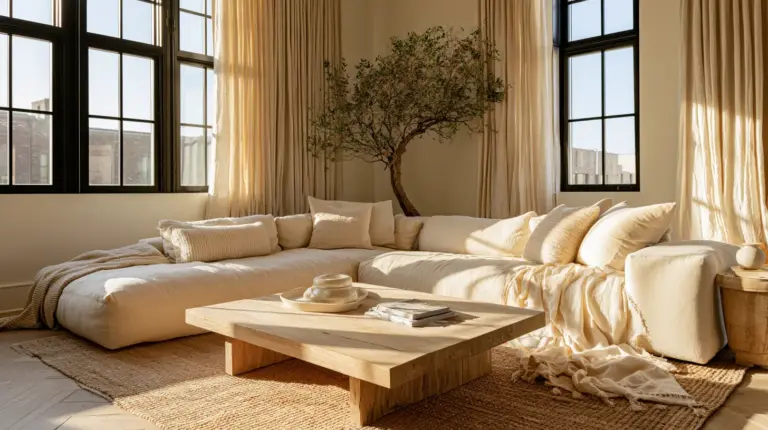
There is a moment — usually mid-morning — when the light comes through your windows just right. It pools across the floor, catches the grain of a wooden table, and makes everything feel possible. That moment doesn’t have to be accidental.
The way you arrange your furniture either invites that light in or quietly blocks it out. Most of us never think about it. We place the sofa where it fits, push the bookcase where it won’t be in the way, and wonder why the room never quite feels the way we imagined.
At ERYLIN, we believe your living room should feel like a soft exhale. Light, texture, warmth — all working together. This guide will walk you through exactly how to arrange your furniture to make the most of your natural light, whether you’re working with a small apartment window or a sun-drenched open plan.
Let the light in. Intentionally.
Understanding How Natural Light Moves Through Your Space
Natural light isn’t static. It shifts with the hour, the season, and the direction your windows face. Before you move a single piece of furniture, spend one full day observing where the light falls — morning, noon, and late afternoon.
How Window Direction Affects Your Layout
The direction your windows face changes everything about how you should arrange your room.
- East-facing windows flood the room with soft golden morning light. Arrange your primary seating to face east so you can enjoy breakfast light and quiet reading hours.
- South-facing windows give you the most consistent daylight throughout the day. This is your most valuable light source — keep the area in front of these windows completely clear.
- West-facing windows bring warm, amber afternoon light. Place your main relaxation zone here — a reading chair, a low sofa — for that golden-hour feeling every evening.
- North-facing windows offer cool, diffused light all day. This is gentle and flattering but lower in intensity, so pair it with mirrors and light-reflective surfaces to amplify it.
Time-of-Day Light Mapping
Think of your room in three phases:
| Time of Day | Light Direction | Best Furniture Placement |
|---|---|---|
| Morning (7–10 AM) | East walls and floors | Breakfast nook, reading chair facing east |
| Midday (11 AM–2 PM) | Overhead, south-facing | Keep south windows clear; avoid tall furniture blocking them |
| Afternoon (3–6 PM) | West walls, low angles | Seating near west windows; use sheer curtains to soften glare |
This is the kind of detail that most articles skip. But mapping your light changes how you live in your space — not just how it looks in photos.
The Golden Rules of Furniture Placement for Natural Light
Keep Your Windows Clear
This sounds obvious, yet it’s the most common mistake. Tall bookshelves, bulky sectionals, and oversized curtains quietly steal your light. The area within 18–24 inches of any window should remain open and low-profile.
If storage is a concern near windows, choose floating shelves mounted at least 6 inches above the window frame — storage without shadow.
Float Your Sofa Away from the Wall
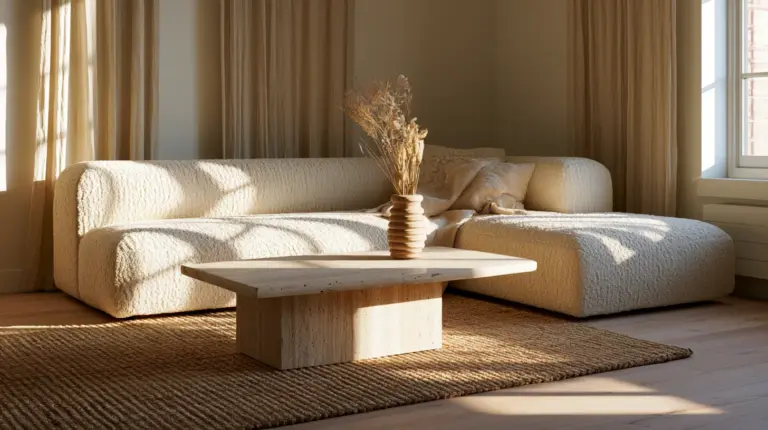
A sofa pushed flat against the wall feels safe, but it’s not doing your space any favors. Pull it 12–18 inches forward. This creates a natural flow of air and light around the piece, and it makes the room feel more curated — like a boutique hotel rather than a waiting room.
The gap also allows light to travel further into the room rather than being absorbed against a dark wall.
Place Furniture Perpendicular — Not Parallel — to Windows
Arrange your sofa and chairs perpendicular to your main windows rather than facing directly into or away from them. This lets light flow alongside your seating rather than being blocked or blinding.
Think of light as a river. You want your furniture to sit beside it, not across it.
Choose Low-Profile Furniture
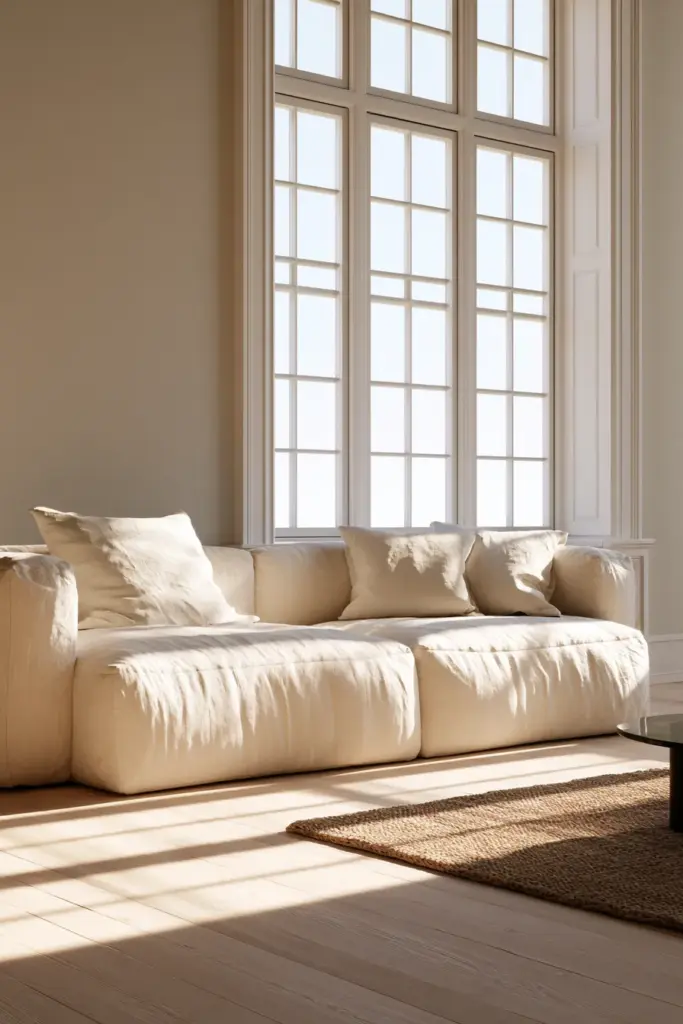
Sofas and chairs with backs under 30 inches high don’t interrupt your light path — especially important if windows sit lower on the wall. This is one of the core principles of Japandi living room design, where open sightlines and low, grounded furniture create a sense of restful spaciousness.
A sofa back taller than 36 inches near a window of 60 inches or under will visibly reduce the light entering the room. Go low. Go light.
Window Treatments: What Actually Lets Light In
Not all curtains are created equal. The wrong window treatment can block up to 90% of your natural light — even when “open.”
Window Treatment Comparison
| Treatment Type | Light Transmission | Best Use Case |
|---|---|---|
| Sheer linen curtains | 70–80% | South/east-facing rooms; everyday softness |
| Light-filtering roller blinds | 40–60% | West-facing rooms; afternoon glare control |
| Blackout curtains | 0–5% | Bedrooms; not for living rooms seeking light |
| Woven wood shades | 30–50% | Texture-forward spaces; warm filtered light |
| Smart automated blinds (Lutron, Vue Blinds) | Adjustable | Rooms with changing light needs throughout the day |
For most living rooms, sheer linen or voile panels mounted high (at ceiling height) and wide (beyond the window frame) will make your windows look larger and keep the room luminous without sacrificing privacy.
Furniture to Avoid Near Windows
Some pieces quietly rob you of light every single day. These are the ones to reconsider:
- Tall bookcases placed beside windows create shadow walls. Move them to interior walls instead.
- Bulky sectional sofas with high backs near windows block light at the source. Opt for a compact two-seater or L-shape with a low back profile.
- Dark, heavy curtains hanging directly in the window path. Even when drawn back, they eat into the light zone.
- Oversized entertainment units placed directly across from south-facing windows create glare on screens and block the light from bouncing deeper into the room.
The general rule: anything taller than your window sill should not live within two feet of a window.
Mirrors, Glass, and Light-Amplifying Materials
The Mirror Rule
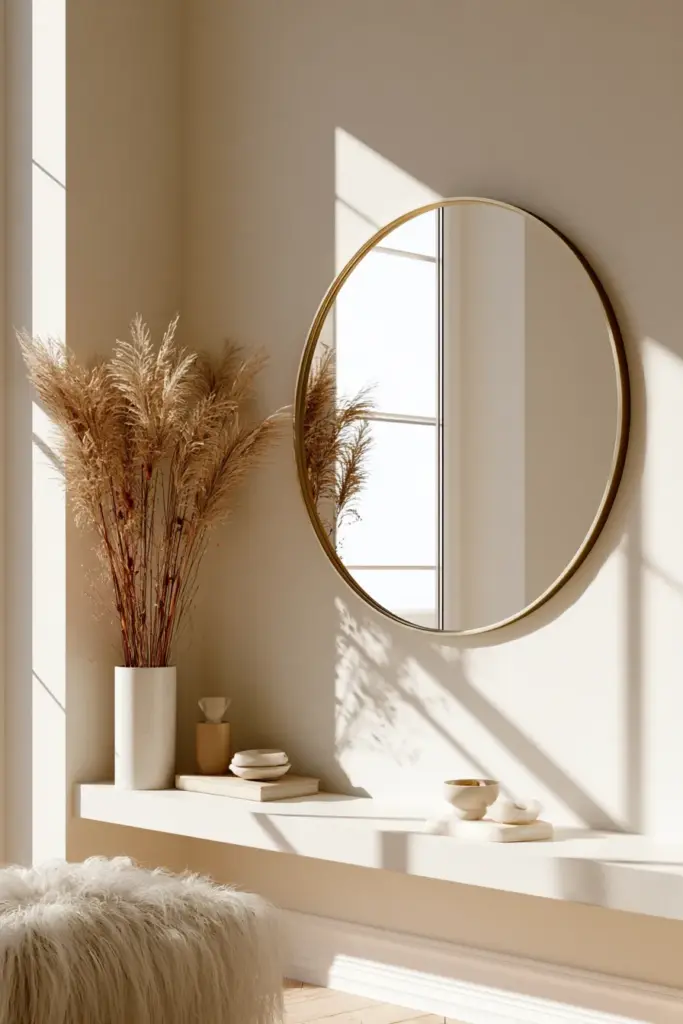
A mirror placed directly across from a window — at the same height — essentially doubles your natural light. It reflects the window back into the room, creating depth and brightness simultaneously.
Choose a large, simple-framed mirror in warm brass, matte black, or natural wood. Place it on the wall opposite your primary light source. You will feel the difference within minutes.
Glass and Acrylic Furniture
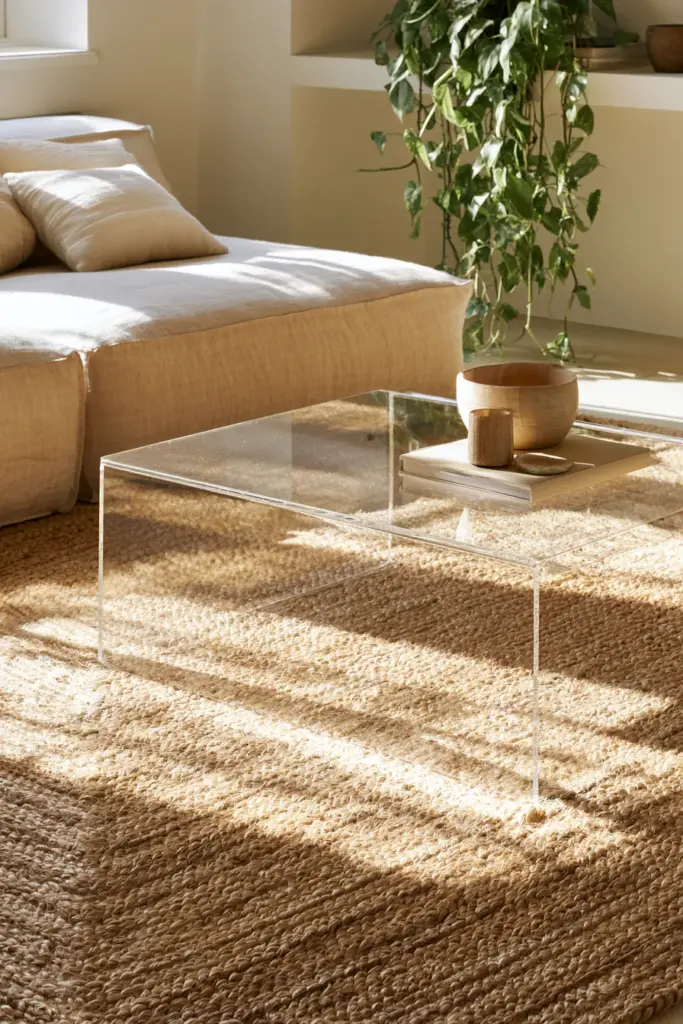
A glass or acrylic coffee table transmits light rather than absorbing it. Where a solid wood table creates a visual block, a glass-topped piece lets light pass through to the floor — keeping the room airy and open. This is particularly effective in small living room layouts where every inch of visual space matters.
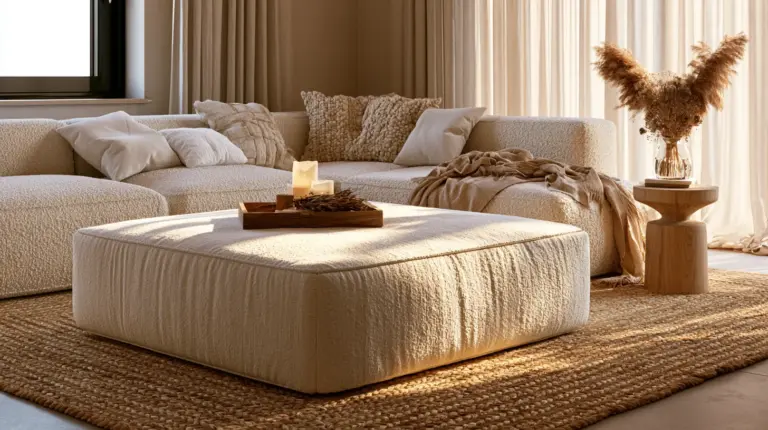
Pair a glass coffee table with a natural-fiber rug underneath — jute, sisal, or a light wool — to warm the space while keeping the light flowing.
Furniture Leg Height
Pieces raised on legs (4–6 inches minimum) allow light to travel underneath them, reducing visual weight and making the room feel more open. A sofa on slim tapered legs, a console table elevated off the floor — these small details change the entire character of a space.
Paint and Surface Sheens: The Forgotten Light Boosters
Paint Colors That Reflect Light
Light-reflective paint colors do exactly what they sound like: they bounce light around the room. These tones work best for living rooms designed around natural light:
- Warm white (Benjamin Moore White Dove, Farrow & Ball All White)
- Soft sand and greige tones that read warm without absorbing light
- Pale sage and blush for a slightly richer feel while maintaining brightness
- Matte walls with a slight sheen on woodwork — painting window frames, baseboards, and trim with a satin or eggshell finish helps reflect light at the edges of the room where it matters most
The Sheen Trick
This is a detail most people miss: your trim and window frames respond to sheen far more visibly than your walls do. A satin-finish paint on window frames reflects light softly outward into the room. It’s one of the easiest upgrades with the most noticeable effect.
Screen and TV Placement: The Glare Problem
If your TV faces a window directly, glare is almost guaranteed — especially during afternoon hours. The solution isn’t to block the light. It’s to reangle the screen.
The 45° Rule: Place your TV at a 45-degree angle from the nearest window rather than directly across from it. This eliminates direct glare while still keeping the room open to light.
Add bias lighting (a soft LED strip behind the TV) to reduce contrast between the bright screen and the room — gentler on the eyes, and it makes the space feel intentionally designed.
Biophilic Design: Plants That Thrive in Natural Light Living Rooms
Plants belong in your living room — not just for beauty, but because they complete the sense of a light-filled, living space. Here are five plants that flourish near bright windows:
| Plant | Light Tolerance | Ideal Window Distance |
|---|---|---|
| Fiddle Leaf Fig | Bright indirect | 3–5 feet from south window |
| Pothos | Low to bright indirect | 2–6 feet from any window |
| Bird of Paradise | Bright direct | Within 2 feet of south/west window |
| ZZ Plant | Low to moderate | 4–8 feet; tolerates north-facing rooms |
| Snake Plant | Low to bright indirect | 2–8 feet; extremely adaptable |
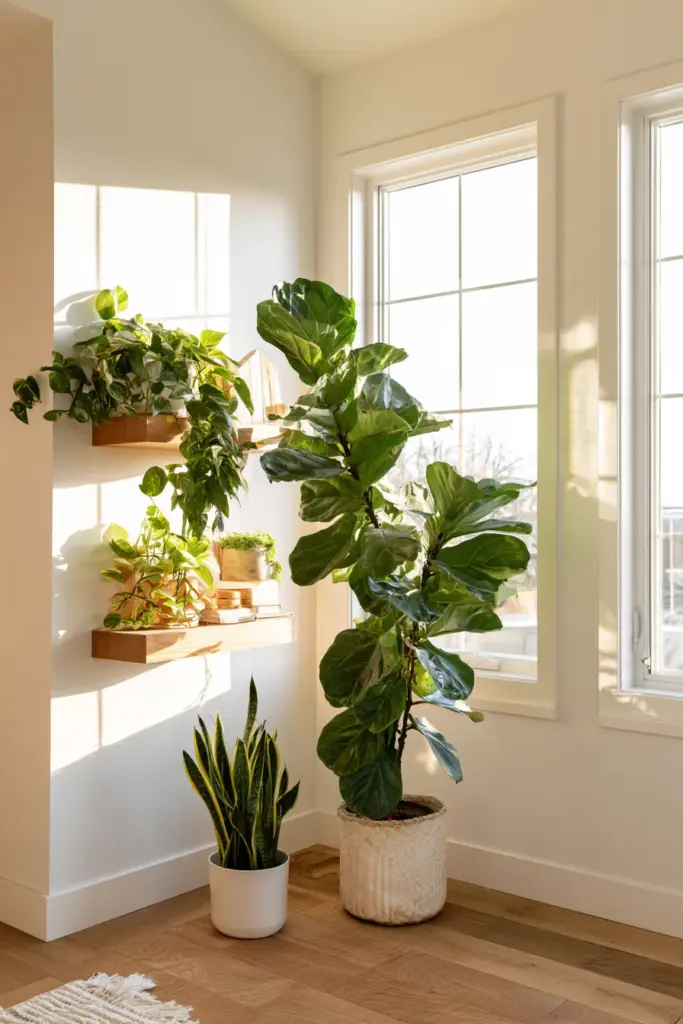
Position plants at varying heights — a tall floor plant near the window, a trailing pothos on a floating shelf, a small succulent on the windowsill. This layering of greenery creates depth and draws the eye naturally toward your light source.
Layout Templates by Room Size
Every room is different, but these starting points will give you a structure to work from:
10 × 12 ft room: One compact 2-seat sofa perpendicular to the window, one accent chair on the opposite side, a glass or acrylic round coffee table in the center. Keep the wall opposite the window clear for a large mirror.
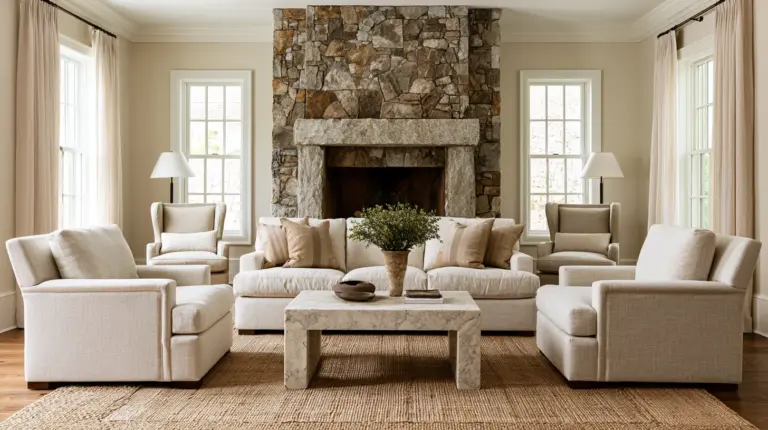
12 × 15 ft room: A low-back 3-seat sofa floated 15 inches from the wall, two accent chairs arranged in an open U-shape, a round or oval coffee table. South or east window kept completely clear of furniture.
15 × 18 ft room: Full conversation area centered in the room (not pushed to walls), sofa perpendicular to the main window, a second seating zone near the west window for afternoon use. Use a large natural-fiber rug to anchor the primary zone.
Quick Reference: Natural Light Furniture Checklist
- Float sofa 12–18 inches from the wall
- Keep the area within 18–24 inches of windows clear and low-profile
- Place furniture perpendicular to windows, not parallel
- Choose sofa backs under 30 inches near lower windows
- Hang curtains at ceiling height and wider than the window frame
- Use sheer linen or light-filtering treatments — never blackout in a living room
- Place a large mirror opposite your primary window
- Choose glass or acrylic coffee tables to let light through
- Select furniture raised on 4–6 inch legs
- Paint trim and window frames in satin or eggshell for light reflection
- Position your TV at a 45° angle from the nearest window
- Add plants at varied heights near your light source
- Use warm-toned, light-reflective paint on walls
Conclusion
Natural light isn’t a luxury — it’s the foundation of a room that feels truly alive. When your furniture works with the light rather than against it, everything shifts. The room breathes. The textures show up. The colors do what they were meant to do.
Start with one change. Float your sofa away from the wall. Swap the heavy curtains for something sheer. Place a mirror where the light will find it. You don’t need to redesign everything at once. You just need to start listening to what the light is already trying to tell you.
At ERYLIN, we design spaces that hold light the way a good morning holds promise — gently, warmly, and without effort.
Frequently Asked Questions
What is the best furniture arrangement for a room with many windows?
In a room with multiple windows, keep all window zones clear of tall furniture and arrange seating in the center of the room rather than pushed against walls. A circular or U-shaped seating arrangement works well, allowing light to enter from all sides and flow naturally through the space.
Should I face my sofa toward or away from the windows?
Neither directly toward nor directly away is ideal. Place your sofa perpendicular to the main window so light travels alongside the seating rather than into your eyes or being blocked entirely. This is the most flattering and practical arrangement for everyday living.
What type of furniture blocks natural light the most?
Tall bookcases, high-back sectional sofas, and bulky entertainment units are the biggest light blockers. Any piece taller than your window sill placed within two feet of a window will significantly reduce the natural light entering your room.
Should I use curtains or blinds to maximize natural light?
Sheer linen curtains hung at ceiling height and wider than the window frame transmit the most light — between 70–80%. Light-filtering roller blinds are a good option for west-facing rooms where afternoon glare is an issue. Avoid blackout treatments in any room where natural light is a priority.
What color furniture reflects natural light best?
Light, warm-toned furniture in cream, oat, warm white, pale wood, and natural linen reflects light most effectively. Avoid dark upholstery or very saturated colors near windows, as they absorb light rather than bouncing it back into the room.