
Table of Contents
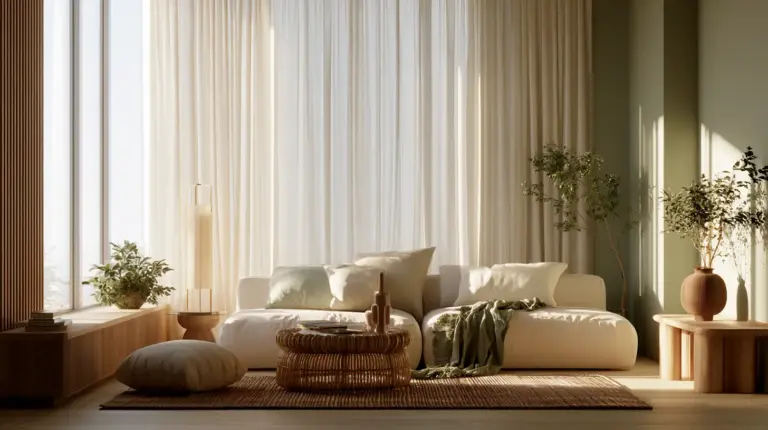
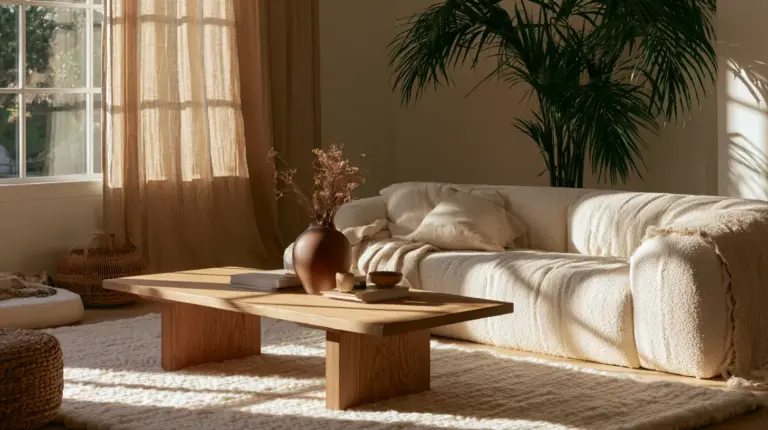
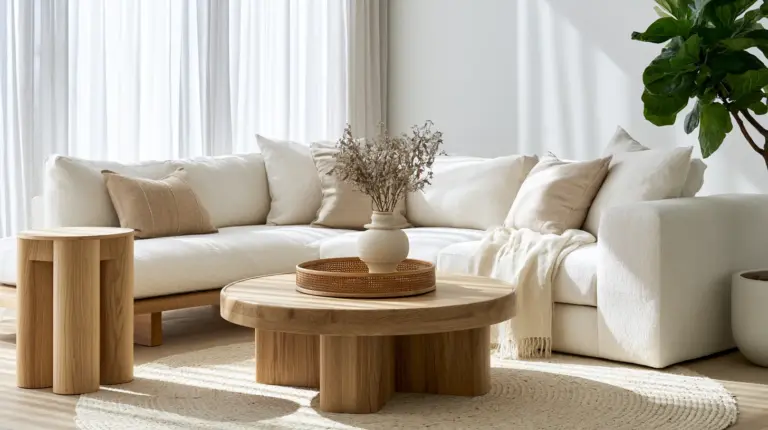
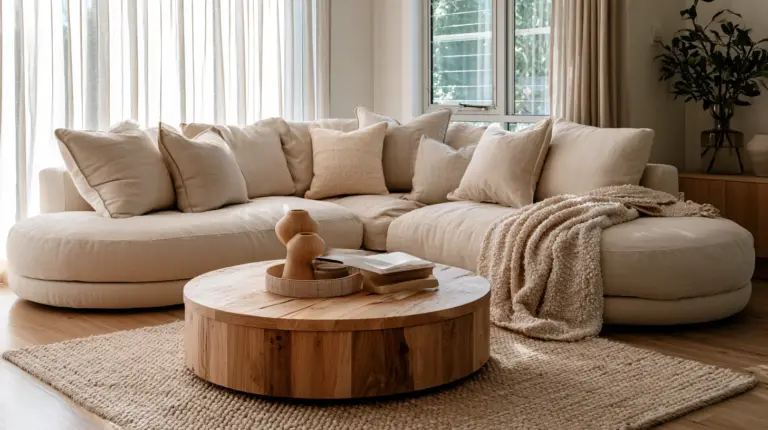
There’s a particular kind of stillness that settles into a room when everything is placed just right. The sofa sits at ease. The coffee table breathes. And beneath it all, a rug holds the space together like a quiet anchor — soft underfoot, warm to the eye, grounding in a way you feel before you even notice it.
That feeling doesn’t happen by accident. It happens when your living room furniture arrangement and rug work together — in proportion, in purpose, and in beauty.
Whether you’re starting fresh or rethinking a room that’s never quite felt right, this guide walks you through everything: sizing, placement, proportion, Japandi-inspired layouts, and the small-space tricks that make even the coziest rooms feel considered and calm.
This is the ERYLIN approach — practical, poetic, and always intentional.
Start With the Rug: Your Room’s Foundation
Most people buy the furniture first and shop for a rug last. We’d gently suggest flipping that sequence — or at minimum, thinking about them together.
A rug isn’t just an accessory. In a well-designed living room, the rug is the foundation. It defines the conversation zone, anchors the seating, and signals where the room begins and ends. Everything else arranges itself around it.
Think of it like setting a table before placing the dishes. The rug lays the canvas.
Choosing the Right Rug Size
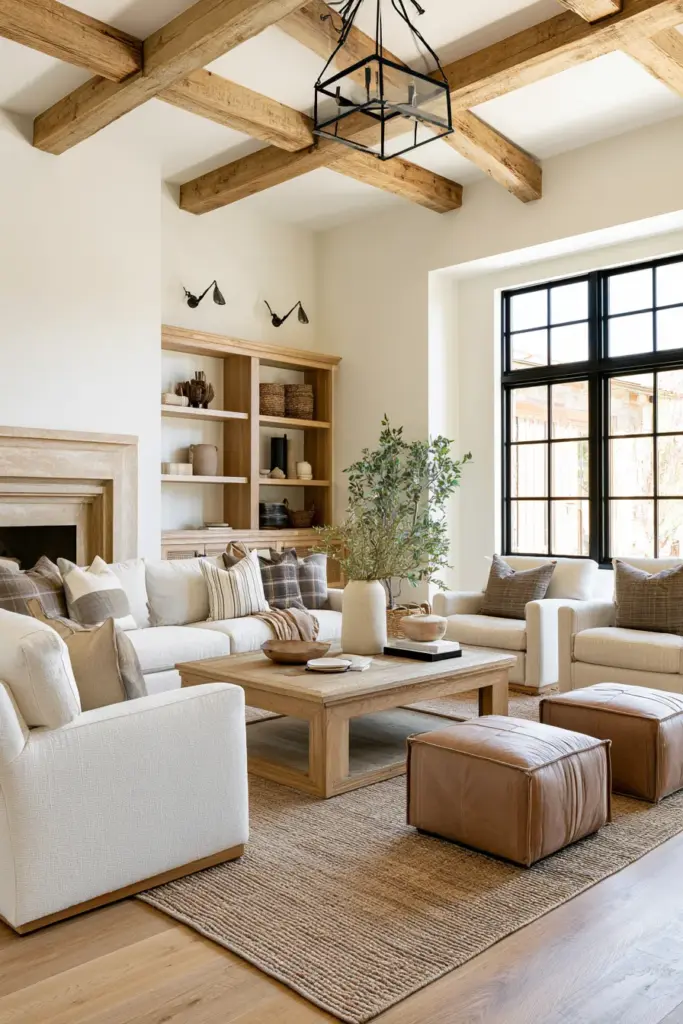
The most common mistake in living room furniture arrangement is choosing a rug that’s too small. A rug that floats in the center of your seating area — untouched by any furniture leg — creates a visual disconnect that the eye registers as imbalance, even if you can’t quite name why.
Here’s a quick guide to help you choose:
| Room Size | Recommended Rug Size |
|---|---|
| Small (under 12×12 ft) | 8×10 ft |
| Medium (12×15 ft) | 9×12 ft |
| Large (over 15×20 ft) | 9×12 ft or larger |
| Open floor plan | Layer or go oversized |
In rooms under 12×12 feet, an 8×10 rug almost always outperforms a 5×8 — the larger size fills the space proportionally and keeps furniture from looking marooned. When in doubt, size up.
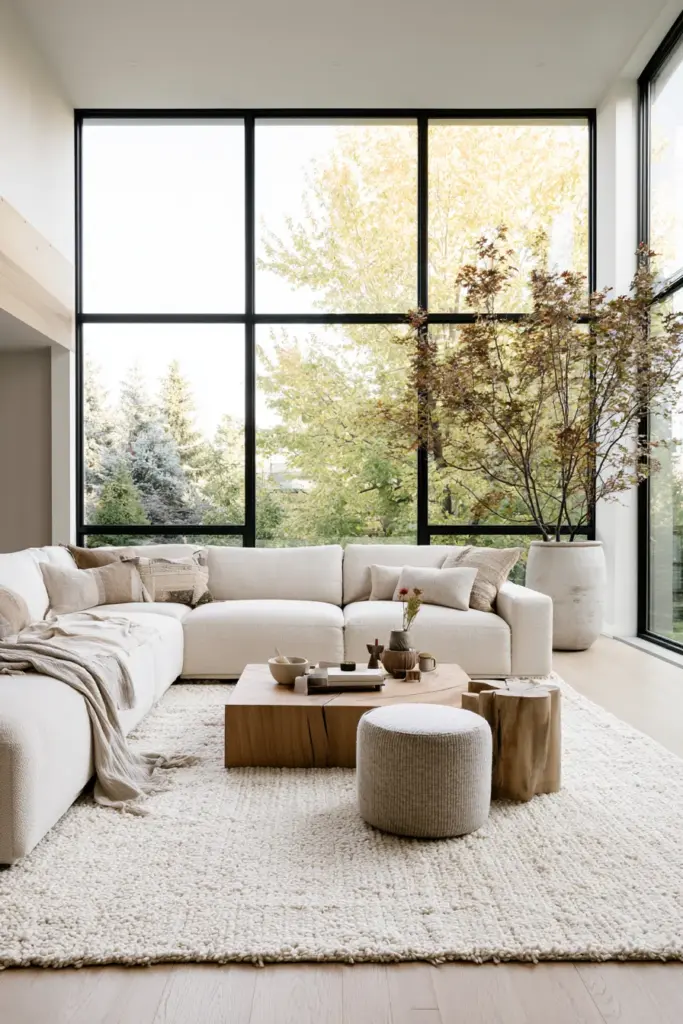
How Much Floor Should Show?
Leave 12–18 inches of bare floor visible between the rug’s edge and your walls. In smaller spaces, 8 inches of clearance is perfectly acceptable and still looks intentional. What you want to avoid is a rug that bleeds into the baseboards — it makes the room feel smaller and the layout feel unresolved.
The Three Layouts: Which One Is Yours?
Every great living room furniture arrangement falls into one of three rug placement styles. Each creates a different mood.
All Legs On
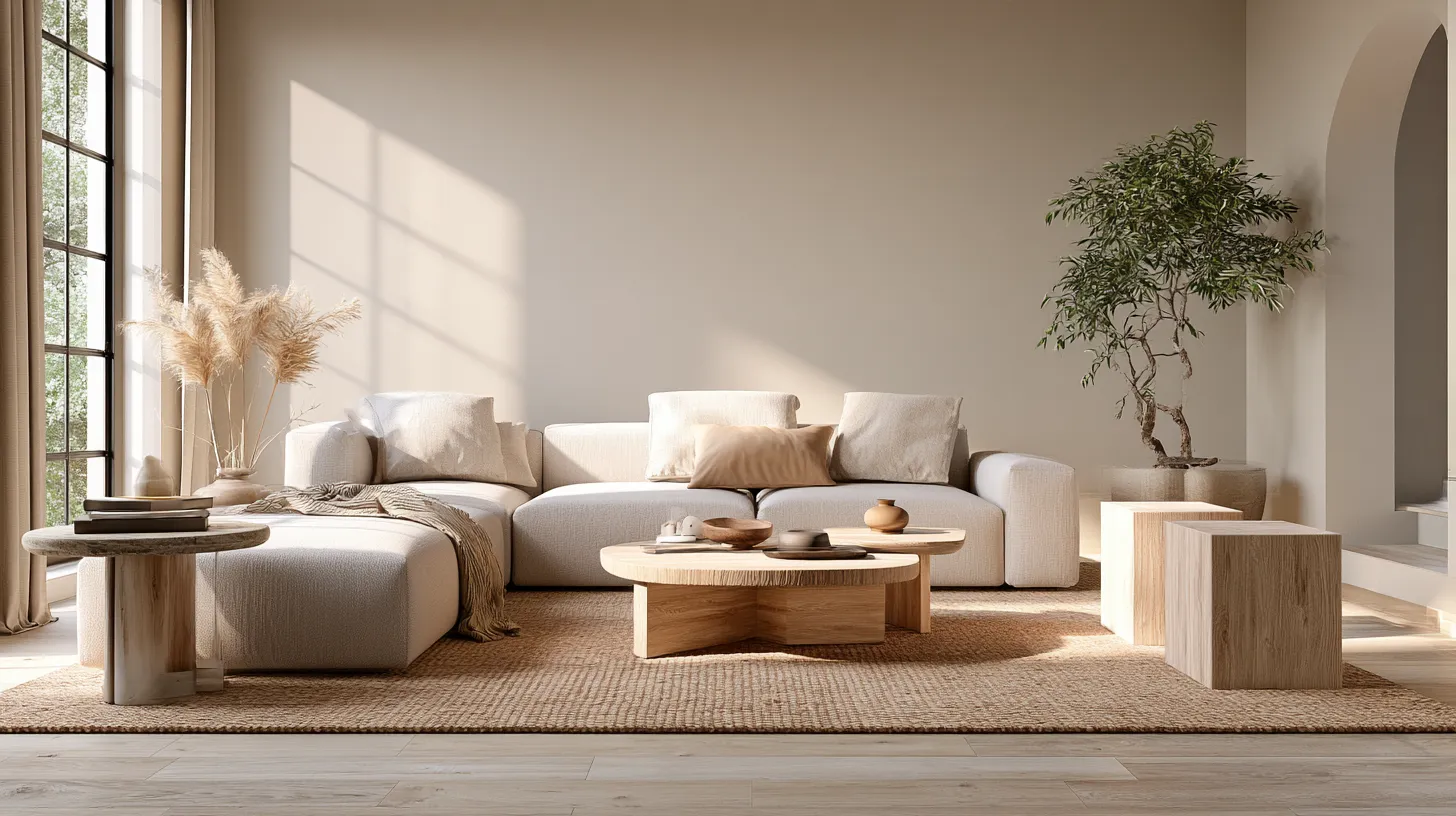
When all furniture legs rest on the rug, the room feels unified and expansive — like one cohesive conversation zone. This works beautifully in larger living rooms and open-plan spaces where the rug defines a distinct area within a bigger room.
Choose a rug large enough that no leg is left hovering at the edge. The visual weight should feel even, grounded, settled.
Front Legs On
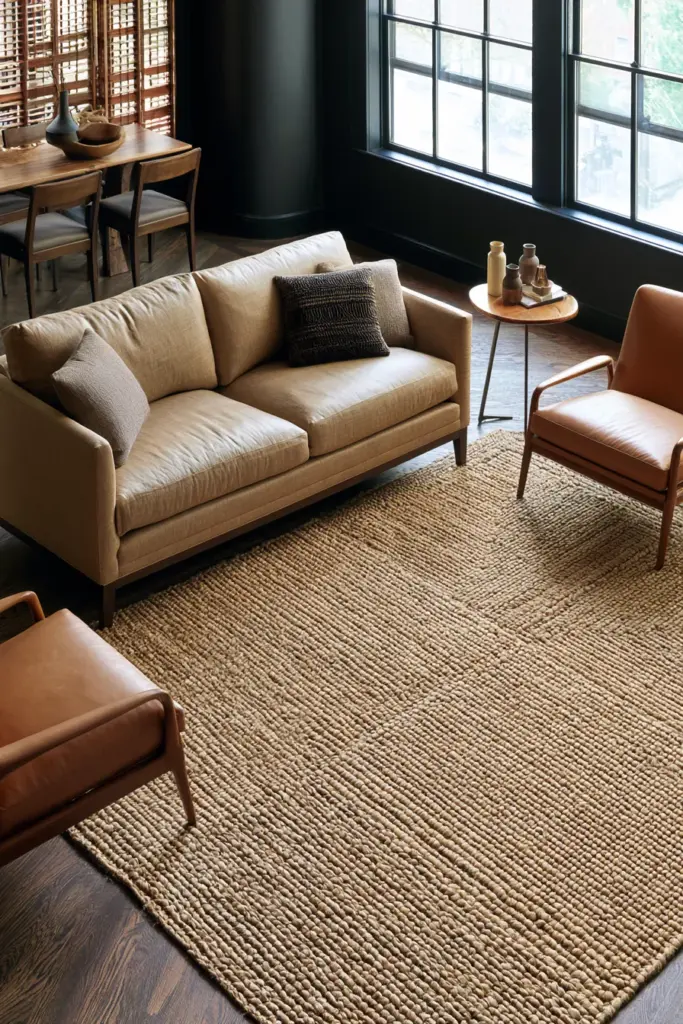
The most versatile approach for everyday living. Place the front two legs of your sofa and accent chairs on the rug, while the back legs rest on bare floor. This creates a visual connection between the furniture and the rug without requiring an enormous footprint.
It feels effortless — pulled together without being rigid. The Edward Martin rule of thumb: front legs on, cohesive space achieved.
Floating Rug
In this layout, the rug sits between the furniture without any legs touching it. It works in rooms where the furniture is arranged close together and the rug serves more as a visual pause — a soft surface underfoot rather than a structural anchor.
Use this layout carefully. A floating rug that’s too small can feel adrift. Make sure the rug is large enough to visually belong to the seating area, not drift beneath it.
Living Room Furniture Arrangement: The Layout Principles
A beautiful rug deserves a thoughtful arrangement around it. Here’s what makes a living room feel considered rather than cluttered.
The Floating Arrangement (Not Pushed to Walls)
One of the biggest layout regrets in living room design? Pushing every piece of furniture against the wall. It’s a natural instinct — more floor space, more openness — but it actually has the opposite effect.
Furniture pulled away from the walls and arranged around the rug creates intimacy, flow, and the illusion of a larger room. The space between the sofa and the wall becomes breathing room, not wasted space. This is especially transformative in small rooms.
The Triangular Arrangement
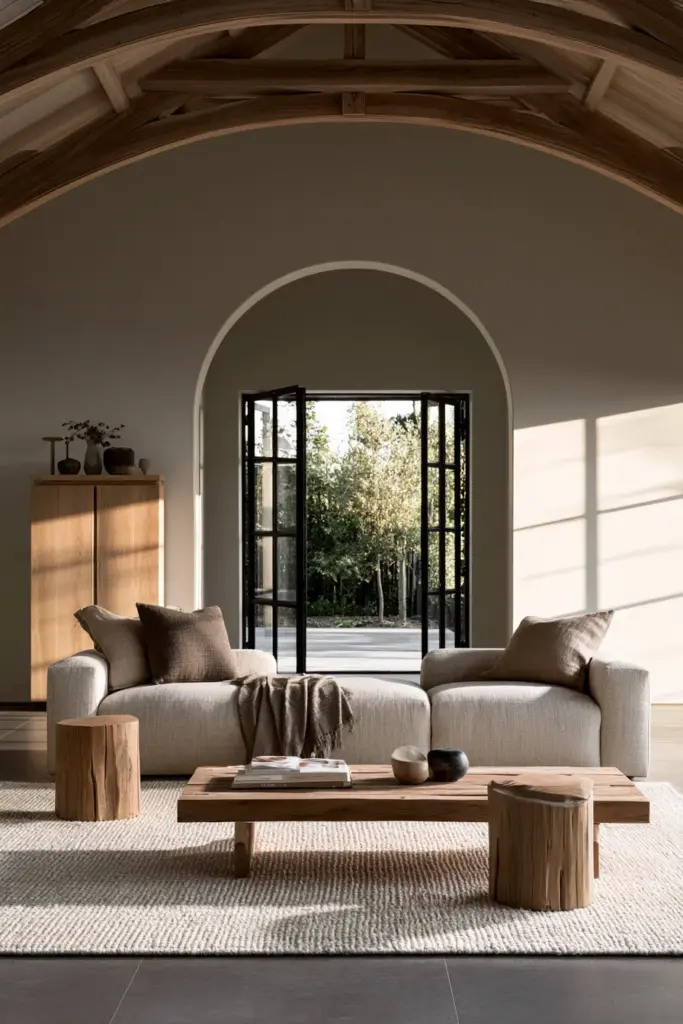
For rooms with a sofa and two accent chairs, the triangular arrangement — sofa on one side, chairs angled on either side of the coffee table — is one of the most balanced layouts in interior design. It encourages conversation, frames the rug beautifully, and feels naturally welcoming.
The rug anchors the triangle from below, tying all three seating pieces into one visual family.
TV and Window Positioning
Position your TV perpendicular to windows to minimize glare. This often influences your entire layout — once the TV placement is fixed, the sofa follows, the rug follows, and the room arranges itself with more ease than you’d expect.
Always check door swing clearance before finalizing rug placement near entry points. A rug that catches on a door every time it opens is a quiet daily frustration worth avoiding.
Japandi Rug Placement: Calm, Grounded, Intentional
Japandi design — the meeting of Japanese minimalism and Scandinavian warmth — has a particular relationship with rugs and floor space.
In a Japandi-inspired living room, the rug isn’t just practical. It’s part of the rhythm of the room. Low-profile furniture — platform sofas, streamlined coffee tables, floor cushions — pairs naturally with large, natural-fiber rugs that anchor the space without overwhelming it.
The 30% Rule
In Japandi interiors, leave approximately 30% of your floor space visible. The rug defines the seating area; the bare floor around it is intentional negative space. This principle — borrowed from Japanese spatial philosophy — keeps the room from feeling heavy and gives the eye places to rest.
Material and Texture
Choose rugs in wool, jute, sisal, or cotton in muted, earthy tones. Warm beige, undyed cream, soft gray, pale sage. Avoid bold patterns or high-contrast geometrics — Japandi favors texture over pattern, subtlety over statement.
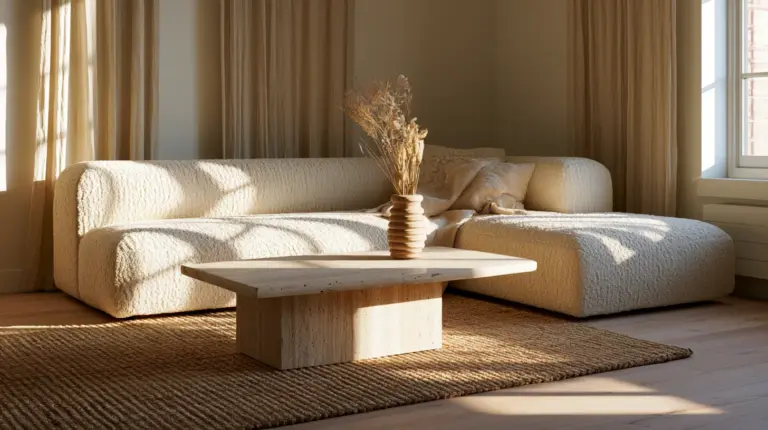
A jute rug beneath a low linen sofa, soft morning light pooling across the weave — that is the feeling we’re after.
Tatami and Floor Cushion Alternatives
In very small spaces or highly minimal rooms, consider tatami mats or woven floor cushions as rug alternatives. They sit flat, define space, and bring the same natural warmth without the bulk. Layered with a small wool runner or a single textured mat near the coffee table, they create a floor composition that’s both functional and beautiful.
Small Space Rug Strategies
Small living rooms have their own logic — and their own quiet magic.
The goal in a small space isn’t to minimize the rug. It’s to choose and place it with precision so the room feels larger, not smaller.
Size Up, Not Down
Counter-intuitively, a larger rug makes a small room feel bigger. In a room under 12×12 feet, an 8×10 rug will serve you better than a 5×8. The larger footprint creates continuity, makes the ceiling feel higher, and gives your furniture something generous to anchor into.
8 Inches of Clearance Is Enough
In small spaces, the standard 12–18 inch clearance recommendation can feel impossible. 8 inches of visible floor around the rug edges is perfectly acceptable — and often looks more intentional in compact rooms. What matters is consistency: if you have 8 inches on one side, aim for a similar margin on the other.
Furniture Away from Walls
In tight rooms, this matters even more. Pull the sofa forward — even 6–8 inches away from the wall — and let the rug define the center. The space created behind the sofa reads as breathing room, not wasted floor. The whole room exhales.
Budget-Friendly Rug Ideas (Without Compromising the Look)
Good design doesn’t require a large budget. It requires a good eye.
Layer Thrift-Store Finds
One of the most effective budget rug strategies: layer two smaller rugs for a custom-size effect. A neutral flatweave as the base, a smaller textured or patterned rug on top — the combination feels intentional, editorial, and completely personal.
Check thrift stores, Facebook Marketplace, and estate sales for natural-fiber rugs in neutral tones. Lightwood-toned floors pair beautifully with muted beige, cream, and warm gray.
IKEA and Accessible Sources
IKEA’s natural-fiber and flatweave rugs are underrated design workhorses. In the right colorway — oatmeal, undyed jute, warm ivory — they sit beautifully in a Japandi or modern rustic space and hold their own next to more expensive furniture.
Pair with a quality rug pad (always), and the result feels considered regardless of the price tag.
DIY: The Finishing Touches
Seal unfinished pine side tables with a matte or satin finish for an earthy, Japandi-adjacent look. Add a simple ceramic lamp, a linen throw, a trailing plant — and suddenly the budget rug looks like it was always meant to be there.
Rug Mistakes That Break the Flow
Even a beautiful rug can undermine a room if it’s placed incorrectly. Here are the most common mistakes — and how to sidestep them.
- Rug too small: Creates a cramped, disconnected layout where furniture feels scattered rather than unified.
- Sofa in the center of the room with nothing behind it: One of the most common layout regrets. The sofa needs a wall, a console, or an intentional reason to float — not just empty space.
- Rug floating between pieces: When no furniture touches the rug, it loses its anchoring function and reads as an afterthought.
- Ignoring door clearance: A rug that bunches against a door disrupts the room’s flow every single day.
- No rug pad: Always use an anti-slip underlay — especially important in homes with children or pets. It prevents movement, protects your floors, and extends the life of the rug significantly.
Biophilic Layering: Bringing Nature Into the Layout
Rugs and plants speak the same design language — organic, textural, alive.
Layer your natural-fiber rug with plants positioned at the edges of your seating area. A large fiddle-leaf fig in the corner, a trailing pothos on a side table, a cluster of low succulents near the floor — these additions create texture depth that photographs beautifully and feels even better in person.
Use the rug to visually separate your sitting area from high-traffic pathways. A jute rug that defines the sofa zone, with bare hardwood leading to the kitchen or hallway, creates a quiet sense of order that makes the whole home feel more intentional.
Your Quick-Reference Checklist
- Choose a rug sized for your room — when in doubt, size up
- Leave 12–18 inches of bare floor around rug edges (8 inches minimum in small spaces)
- Place front legs of sofa and chairs on the rug to unify the seating zone
- Pull furniture away from walls to create flow and spaciousness
- In Japandi-inspired spaces, leave 30% of floor visible
- Choose natural fibers (wool, jute, cotton) in muted, earthy tones
- Always use an anti-slip rug pad
- Layer rugs for custom sizing on a budget
- Position TV perpendicular to windows to reduce glare
- Check door swing clearance before finalizing rug placement
- Add plants at the edges of your rug for biophilic texture depth
A Final Word from ERYLIN
A well-placed rug changes more than the floor. It changes how you feel in the room — more rooted, more comfortable, more at home. It invites you to sit down, slow down, stay a little longer.
When your living room furniture arrangement and rug work in harmony, the space stops being a collection of pieces and becomes a place. That’s what we’re always designing toward — not perfection, but presence.
Take it one layer at a time. The room will tell you when it’s right.
Explore more with ERYLIN: Japandi Style Guides, Small Space Lighting Ideas, Cozy Furniture for Small Living Rooms.
FAQs
What size rug is best for a living room?
An 8×10 rug works for most average-sized American living rooms. Rooms under 12×15 feet do well with a 6×9, while larger rooms (over 15×20 feet) call for a 9×12 or bigger. When in doubt, always size up — a larger rug makes the space feel more cohesive and intentional.
Should a living room rug go under the sofa?
The most widely used approach is front legs on, back legs off — the front two legs of the sofa and accent chairs rest on the rug, anchoring the furniture visually without requiring a very large rug. In bigger rooms, placing all legs on the rug creates an even more unified look.
How much floor should show around a rug?
Leave 12–18 inches of exposed flooring between the rug and the walls if your room allows it. In smaller spaces, 8 inches is completely acceptable. The key is visual balance — both extremes (rug touching walls or floating in the center of a large room) tend to feel off.
What shape rug is best for a living room?
Rectangles work in most spaces and align naturally with standard furniture arrangements. Organic or irregular shapes work beautifully in open floor plans, Japandi interiors, and minimal spaces where a softer silhouette adds personality. Round rugs can work under a circular coffee table or in a reading nook.
Can I use multiple small rugs instead of one large one?
Yes — layering is a design-forward approach that also solves the small-budget problem. Use a larger neutral rug as the base and layer a smaller textured or patterned rug on top. The key is contrast in texture or tone, not pattern on pattern. This technique works especially well in Japandi and modern rustic interiors.
Do I need a rug pad?
Yes, always. A quality rug pad prevents slipping (essential with pets or children), protects your floors from friction, and extends the lifespan of the rug itself. It also adds a subtle layer of cushioning that makes the rug feel more luxurious underfoot — a small investment with real daily impact.