
Table of Contents
There is something quietly beautiful about a home that loves its animals back. The worn corner of a linen sofa, the soft indent where a dog has curled every evening — these are not flaws. They are signatures of a life fully lived.
But loving your pets and loving your home do not have to be in conflict. With a few thoughtful choices — the right fabrics, a generous layout, a little behavioral wisdom — your living room can be both sanctuary and playground.
At ERYLIN, we believe the best interiors are designed around the lives being lived inside them. That means your golden retriever. Your two cats. Your senior rescue who moves a little slower these days.
This guide will walk you through everything: from reading your pet’s behavior before you move a single piece of furniture, to choosing scratch-resistant materials that still feel beautiful, to building zones that keep the whole household — two-legged and four — genuinely at ease.
Start Here: The Pet Behavior Audit
Before you rearrange anything, watch first.
Spend a week observing where your pet naturally gravitates. Where does your dog nap in the afternoon light? Where does your cat scratch, leap, or bolt when startled? This is information your furniture plan desperately needs — and it is the step most guides skip entirely.
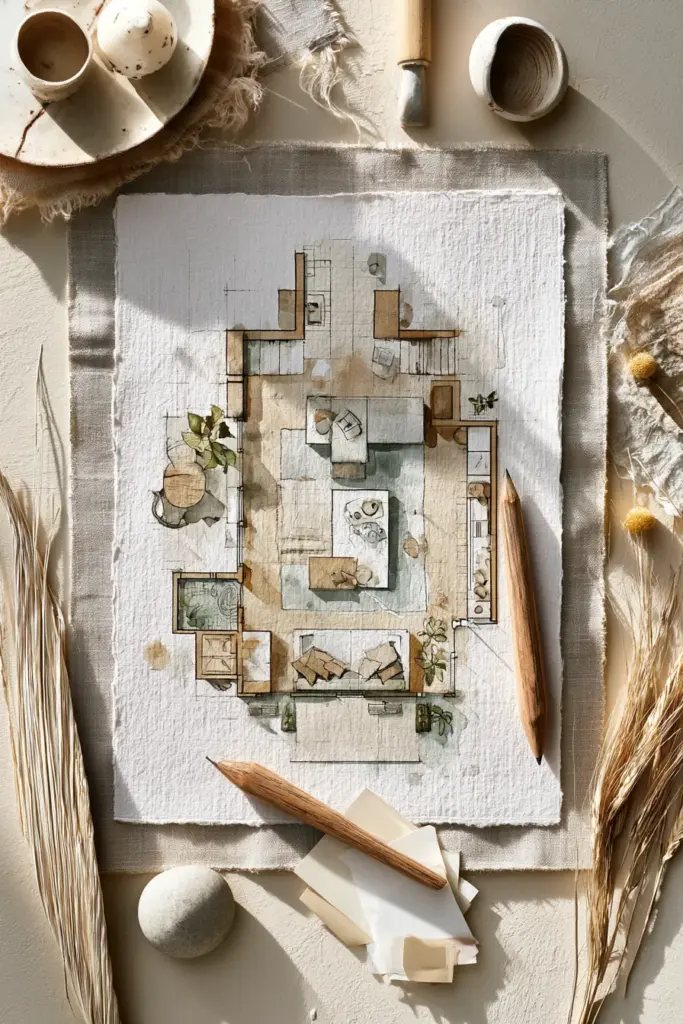
Mark your observations on a simple floor sketch. Note resting spots, play corridors, feeding areas, and any anxiety triggers like HVAC vents, noisy entryways, or windows with heavy street traffic. These become the anchors of your layout.
Pet Stress Zones to Map
- Entry noise zones — avoid placing pet beds near front doors; sudden sounds create anxiety
- HVAC and draft zones — cold air vents disturb light-sleeping pets; keep rest areas away from floor vents
- High-traffic corridors — pets need clear, unobstructed paths between their key spots
- Window perches (cats) — these are not optional; they are essential vertical territory
Once you know how your pet actually moves through the space, your furniture arrangement becomes an act of care rather than guesswork.
How Do You Arrange Furniture in a Living Room with Pets?
The golden rule: leave the pathways open.
Pets — especially dogs — need clear corridors to move between rest, play, and feeding areas without navigating an obstacle course. Aim for at least 900–1100mm of clear walkway through main routes. This is also the width recommended for mobility-impaired and senior pets who need steady, unobstructed footing.
Anchor your seating arrangement to the walls where possible. A sofa against the wall frees the center of the room — and gives your pet a wide-open runway that feels safe and legible.
Key Furniture Placement Principles
- Float sofas and chairs only when you have ample square footage; in smaller rooms, wall-hugging layouts give pets more usable floor space
- Position pet beds and crates before finalizing your furniture layout, not after
- Avoid blocking natural light with large pieces — pets regulate mood and sleep cycles through daylight exposure
- Create a clear sightline from your pet’s resting spot to the room’s main entry point; this reduces vigilance anxiety in dogs especially
Cat Layout vs. Dog Layout: A Practical Comparison
Most guides treat cats and dogs as the same design problem. They are not.
| Design Element | Cats | Dogs |
|---|---|---|
| Vertical space | Essential — shelves, perches, cat trees | Not needed |
| Floor runway | Moderate | Wide, open corridors |
| Hiding/bolt holes | Yes — behind sofas, under tables | Rarely needed |
| Feeding zone | Elevated or separated from dog areas | Floor level, separated from cat areas |
| Scratching surfaces | Must be provided or furniture suffers | Not applicable |
| Resting preference | Warm, high, enclosed | Soft, low, open |
| Multi-pet buffer | Vertical escape routes from dogs | Separate floor zones |
If you share your home with both cats and dogs, the most important thing you can add is vertical architecture for cats — wall-mounted shelves, a tall cat tree near a window, or a bookcase cats can climb. This gives them refuge and reduces interspecies tension considerably.
What Is the Best Living Room Layout for Dogs and Cats?
For dogs, the best layout is a clear, looping floor plan — a sofa group arranged so there is a natural circuit around the room. Dogs feel secure when they can patrol and return to their spot easily.
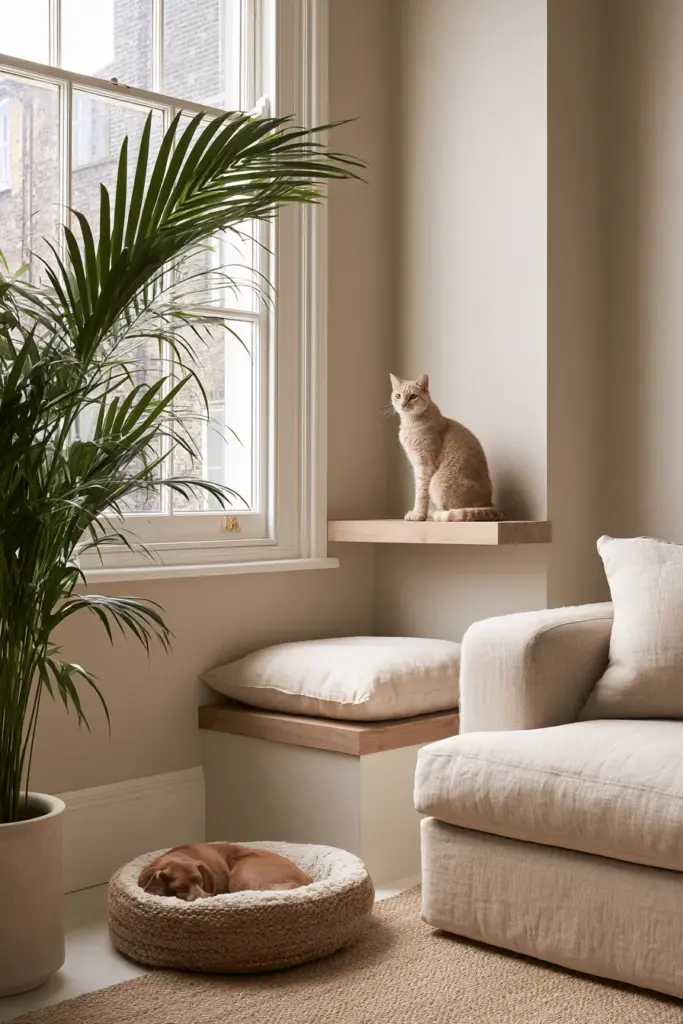
For cats, the ideal layout includes at least one elevated resting surface within the main living area, positioned near a window for enrichment. A dedicated scratching post placed at a corner where cats naturally stretch (often beside the sofa they would otherwise scratch) saves your upholstery quietly and elegantly.
Multi-Pet Households: Resource Guarding Prevention
In homes with two or more pets, spatial separation is emotional safety.
- Place food and water stations in visually separated corners — animals should not feel they must compete for access
- Provide one resting spot per pet, plus one extra; crowded rest areas create tension
- If you have a dominant and a submissive animal, give the submissive pet a resting spot closer to an exit route — this reduces anxiety significantly
- Use a low bookcase, a console table, or an open-back shelving unit as a soft visual divider between pet zones without closing off the room
How Do I Make My Living Room Pet-Friendly Without Sacrificing Style?
The answer is in the materials. Choose intentionally, and the aesthetic follows.
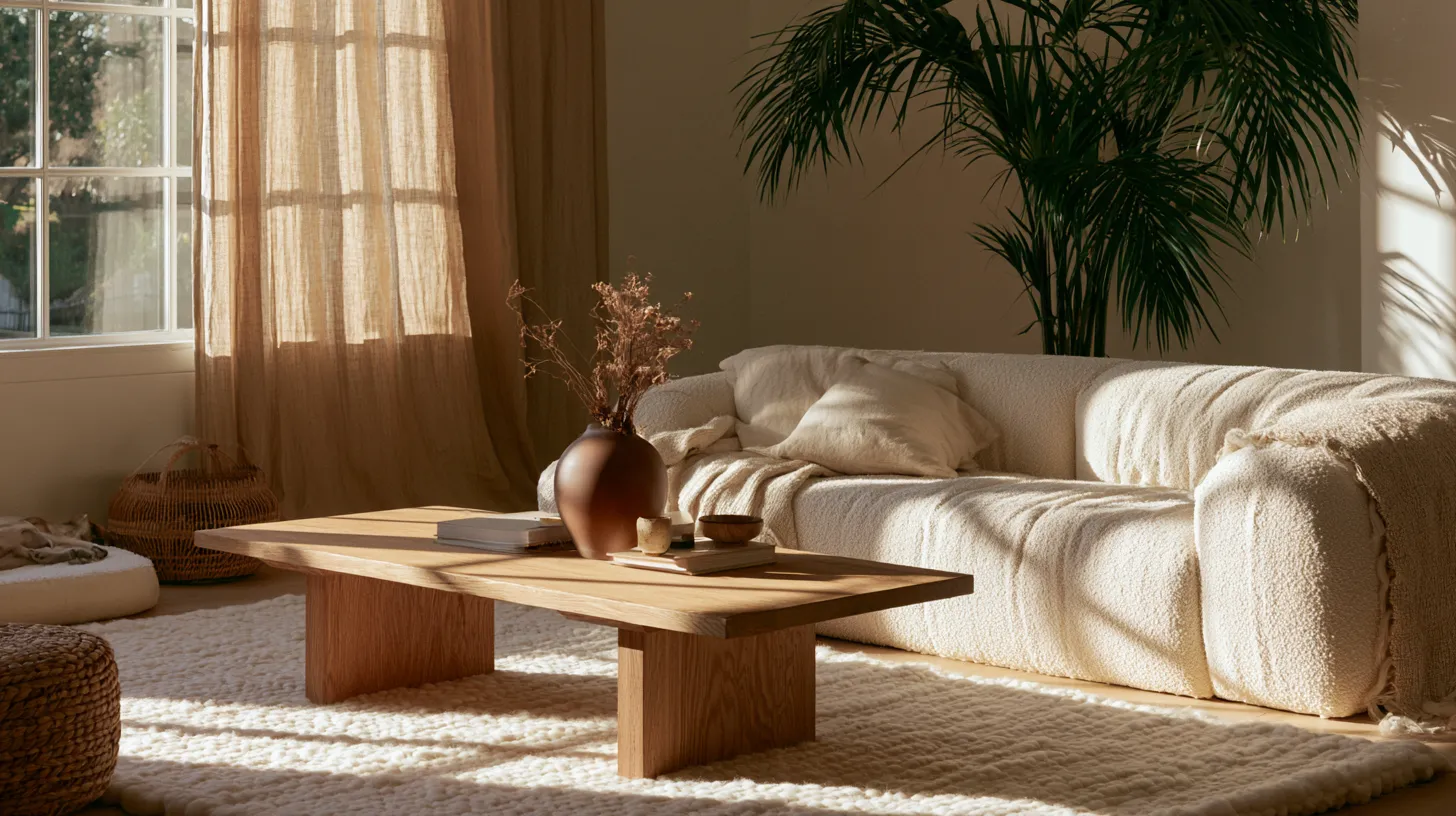
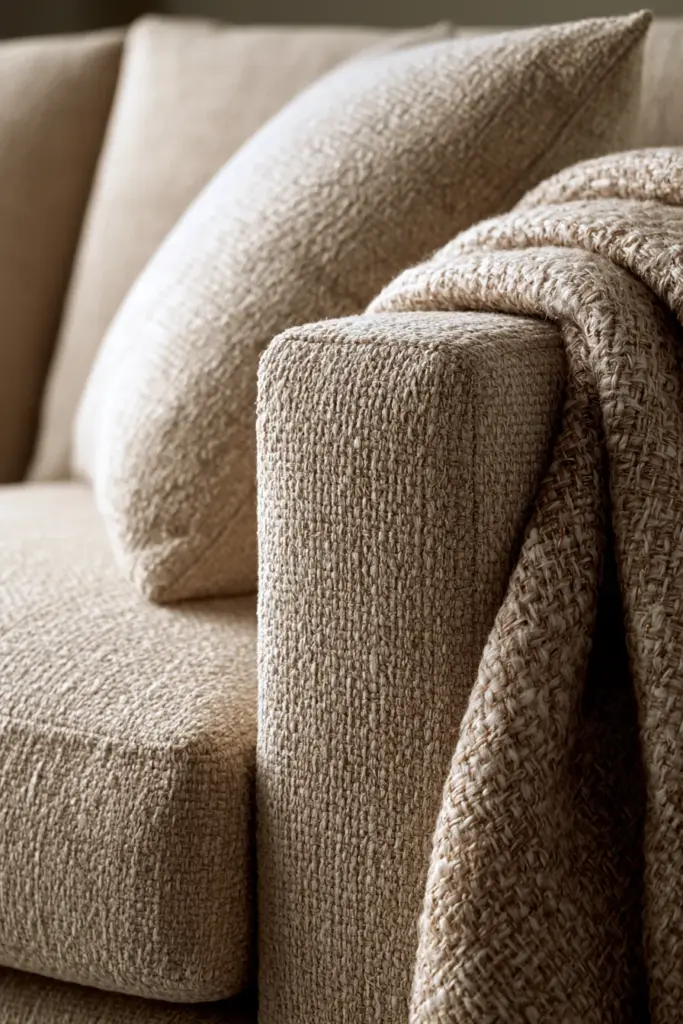
A sofa in warm-toned performance fabric — a tightly woven microfiber, a technical bouclé, a treated linen blend — can look just as beautiful as a delicate piece while standing up to years of paws and fur. The key is texture over sheen: matte, nubby, or brushed fabrics hide wear far better than smooth or glossy finishes.
Natural wood side tables and coffee tables in oak, walnut, or acacia develop character with use — minor scratches read as patina rather than damage. Pair them with furniture legs in darker tones to minimize visible scuff marks.
The ERYLIN Approach: Japandi Pet Integration
Our signature aesthetic — warm minimalism with natural texture — is actually ideal for pet owners.
- Built-in or concealed crates flush with cabinetry keep dog crates from dominating the room
- Woven baskets hold toys and supplies while adding organic texture to the space
- Low-profile furniture with clean lines has fewer crevices for fur to collect
- Earthy, warm neutrals — oat, sand, warm grey, terracotta — conceal pet hair from most coat colors beautifully
The goal is a room that does not announce it belongs to pets, but welcomes them completely.
What Furniture Is Best for a Living Room with Pets?
Think in terms of durability that does not look durable.
The best pet-friendly furniture hides its resilience behind beautiful surfaces. Here is what to look for:
Sofas and Seating
- Performance microfiber — tightly woven, stain-resistant, wipeable; softer than most alternatives
- Full-grain leather — scratches buff out over time; develops a rich patina; easy to wipe clean
- Crypton or Sunbrella fabrics — commercial-grade performance woven into residential aesthetics
- Removable, washable slipcovers — the most practical choice for households with heavy shedders
- Avoid velvet, open-weave linen, and loosely woven fabrics; they attract fur and snag easily under claws
Tables and Storage
- Solid wood coffee tables with a matte finish over high-gloss lacquer
- Metal-framed side tables — claw-proof and easy to wipe down
- Ottomans with removable covers that double as pet-adjacent seating
Rugs
Layer your rugs thoughtfully. A flatweave cotton or wool rug underneath a thicker jute or sisal layer gives warmth without trapping fur deep in the pile. Choose patterns — geometric, abstract, or botanical — that absorb visual noise from pet hair between vacuums.
How Do You Prevent Pets from Damaging Furniture in the Living Room?
Prevention is mostly about giving pets better alternatives.
A cat that scratches your sofa needs a scratching post that is taller, more satisfying, and better positioned. A dog that chews furniture legs is often under-exercised, under-enriched, or anxious. Address the behavior root, then protect the furniture.
Practical Protection Strategies
- Place sisal scratching posts at the corners and edges where cats naturally stretch — this is where they want to scratch anyway
- Use furniture corner protectors in materials that blend with your décor (clear adhesive options exist for renters)
- Apply double-sided tape to upholstery sections where cats scratch; they find the texture aversive
- Washable throw blankets draped over pet-favored sofa corners protect fabric and can be laundered weekly
- Cord concealers in wood-tone or white keep cables out of reach of chewing puppies without looking clinical
Renter-Friendly, Budget-Friendly Fixes Under $50
- Removable fabric protectors (no adhesive, tuck-in style)
- Woven baskets for toy storage that look intentional, not desperate
- Adhesive cord channels along baseboards in matching paint tones
- Clip-on furniture leg protectors in brushed brass or matte black
Where Should I Put My Pet’s Bed in the Living Room Layout?
Your pet’s bed is furniture. Treat it that way.
Position it with the same care you give a side table or a reading chair. The ideal placement is in a corner or against a wall — not in the middle of a walkway — where your pet can rest without feeling exposed. A corner gives them a clear sightline of the room while protecting their back and sides.
For dogs, choose a spot away from HVAC vents and entryway noise. For cats, an elevated perch near a sunny window is often more valued than any floor bed.
For senior pets with limited mobility:
- Position the bed on the same side of the room as their food and water to minimize walking distance
- Add a low ramp (angle no steeper than 15°, tread depth at least 30cm) if they share the sofa
- Use a non-slip mat or rug runner between bed and feeding station for confident footing
What Flooring Is Best for a Living Room with Pets?
The ideal pet-friendly floor is hardwearing, easy to clean, and warm underfoot.
| Flooring Type | Pet-Friendliness | Notes |
|---|---|---|
| Luxury Vinyl Plank (LVP) | Excellent | Waterproof, scratch-resistant, warm aesthetic |
| Engineered Hardwood | Very Good | More resistant than solid wood; some scratching possible |
| Solid Hardwood | Moderate | Beautiful but shows scratches; choose harder species (hickory, ash) |
| Porcelain Tile | Good | Very durable; cold underfoot; use with rugs |
| Laminate | Moderate | Scratch-resistant surface; not waterproof at seams |
| Carpet | Poor | Traps fur, absorbs odors; avoid in main pet areas |
Add non-slip area rugs over hard floors — they give pets traction, define zones visually, and anchor your furniture groupings with warmth.
How Do You Create Pet Zones in a Living Room?
A pet zone is simply a defined area where your pet’s needs are honored — and where their belongings live intentionally.
Define zones with furniture rather than barriers. A low bookcase, a console table behind the sofa, or an area rug in a distinct texture can create a visual boundary between the human seating area and the pet’s resting corner without installing anything permanent.
A Simple Three-Zone Framework
- Rest Zone — pet bed or crate, tucked against a wall or in a corner; add a small basket for their blanket
- Play Zone — open floor area with a toy basket nearby; this zone should connect naturally to outdoor access if possible
- Feeding Station — slightly separated from the rest zone; use a mat underneath to catch spills; keep water accessible but not in a high-traffic corridor
If you have multiple pets, duplicate the rest and feeding zones. Shared spaces breed tension; personal spaces breed calm.
Are There Pet-Safe Plants for Living Rooms?
Yes — and they are genuinely beautiful ones.
| Pet-Safe Plant | Light Needs | Style Notes |
|---|---|---|
| Calathea | Low to medium | Stunning patterned leaves; excellent for corners |
| Spider Plant | Medium | Trailing form; ideal for elevated shelves out of reach |
| Parlor Palm | Low to medium | Lush, tropical; adds vertical interest |
| Boston Fern | Medium to high | Full, textural; thrives in humidity |
| Areca Palm | Bright indirect | Architectural; beautiful beside a sofa |
| Peperomia | Low to medium | Compact; dozens of leaf textures and tones |
Always place plants out of reach even if they are listed as pet-safe — cats especially will chew and knock over plants as enrichment behavior. Wall-mounted planters, high shelves, and hanging macramé planters are elegant solutions that serve both aesthetic and safety goals.
Avoid entirely: pothos, philodendron, peace lily, snake plant, and ZZ plant — all are toxic to cats and dogs.
How Do You Hide Pet Toys and Supplies in a Living Room Design?
The secret is intentional storage that looks like décor.
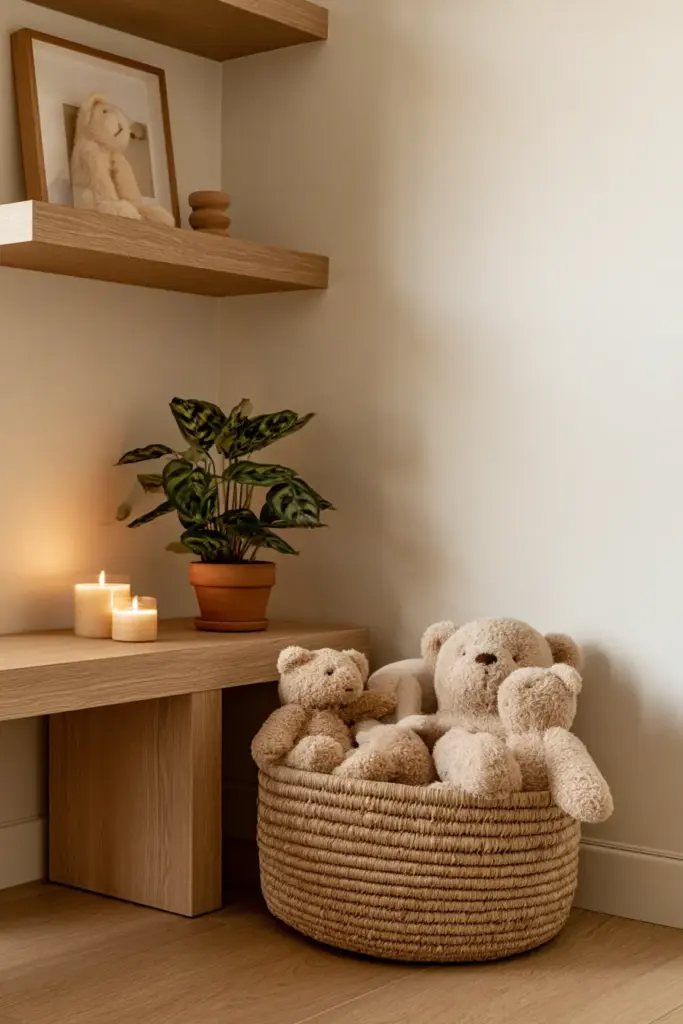
- Large woven baskets in natural rattan, seagrass, or cotton hold an entire toy collection while reading as textural accent pieces
- Ottoman with interior storage conceals supplies when guests arrive and doubles as a footrest
- Built-in lower cabinet in a media unit dedicated to pet supplies keeps everything in one place
- Tray styling on a console table — a small tray holding a candle, a plant, and a leash hook looks curated, not cluttered
- Drawer inserts in a sideboard keep grooming tools, treats, and medications organized and out of sight
The goal is for everything to have a home. A toy basket in the corner of the room, placed as deliberately as a side table, sends the message that this is a considered space — for everyone in it.
Seasonal Layout Adjustments
Your living room should breathe with the seasons — and so should your pet’s comfort.
Warmer months: Move pet beds away from south-facing windows during peak afternoon heat. Add a cooling mat in a shaded floor area. Ensure airflow is not blocked by furniture pushed against walls — allow at least 15cm of clearance.
Cooler months: Position pet beds closer to (but not directly under) interior walls for warmth. A heated orthopedic mat for senior pets placed near the sofa creates a warm, connected rest spot without requiring the pet to jump. Use heavier throw blankets over pet-favored furniture sections for added insulation and easy laundering.
Key Takeaways: Your Pet-Friendly Living Room Checklist
- Audit before arranging — map your pet’s natural pathways and rest zones first
- Keep corridors clear — 900–1100mm walkways for confident, stress-free movement
- Choose performance fabrics — microfiber, leather, Crypton, or Sunbrella for seating
- Provide scratching alternatives before cats find their own
- Use zoning without walls — rugs, low furniture, and baskets define territory softly
- Separate multi-pet feeding and resting zones to prevent resource guarding
- Add vertical space for cats — at least one elevated perch or cat tree in the main room
- Plan for senior pets — ramps, non-slip surfaces, shorter pathways
- Store supplies in intentional vessels — baskets, ottomans, built-in cabinetry
- Choose pet-safe plants and position them out of reach
Conclusion
A home designed for your pets is, in the end, a home designed for you. For the version of you that comes home to wagging tails and rumbling purrs. For the mornings spent with a warm animal weight against your legs. For the particular quiet of a house where every creature feels held.
At ERYLIN, we believe your living room can carry all of this — the elegance, the life, the love — without apology and without compromise. Every choice you make, from the fabric on your sofa to the basket in the corner, is a small act of care. And in a beautifully arranged room, those acts accumulate into something that feels, unmistakably, like home.
Frequently Asked Questions
How do you arrange furniture in a living room with pets?
Start with a pet behavior audit — observe where your animals naturally sleep, play, and travel before moving anything. Then prioritize open pathways of 900–1100mm, position pet beds against walls or in corners, and anchor furniture arrangements so the center of the room remains accessible. Layer in zone definition using rugs and low furniture rather than walls or barriers.
Can I have white or light-colored décor with pets?
Yes, with intention. Warm whites and creams in performance fabrics (microfiber, technical linen blends) are surprisingly forgiving — fur is less visible on warm neutrals than on cool greys. Use washable slipcovers, layer patterned rugs that absorb visual noise between cleans, and keep a lint roller in a decorative vessel near the sofa. The key is surfaces that are easy to maintain, not necessarily ones that hide everything.
What is the best furniture for homes with both cats and dogs?
For seating: full-grain leather or tightly woven performance microfiber. For tables: solid wood with matte finish or metal-framed pieces. For storage: baskets, ottomans with removable lids, and sideboards with deep drawers. For flooring: luxury vinyl plank or engineered hardwood with non-slip area rugs. The priority is wipeable, scratch-tolerant, and washable wherever possible.
How often should I deep clean a pet-friendly living room?
A practical rhythm: vacuum and spot-wipe surfaces daily; launder throws and removable covers weekly; deep clean rugs and upholstery monthly; and do a full seasonal refresh — moving furniture, cleaning underneath, reassessing zones — every three to four months. HEPA filter vacuums make a notable difference in air quality and allergen management.
How do I create pet zones without making my living room look like a kennel?
The key is using design objects as zone markers rather than pet products. A beautiful woven basket defines a toy zone. A natural-fiber rug anchors a rest corner. A low side table beside a pet bed creates a vignette that reads as styled, not improvised. When your pet’s belongings are housed in objects you would choose anyway, the room stays coherent — and the love is simply woven in.