
Table of Contents
There’s a certain magic that happens when a living room finally feels right. The sofa lands in just the right spot. The television doesn’t dominate — it belongs. Light moves softly across natural textures, and every seat invites you to stay a little longer.
Getting there takes more than guesswork. It takes intention.
Whether you’re styling a cozy apartment or refreshing a larger space, how you arrange your furniture around the TV shapes everything — the flow, the mood, the comfort of every evening you spend there. And the good news? You don’t need to drill a single hole to make it beautiful.
This guide walks you through the principles, the measurements, and the quiet details that transform a living room into a sanctuary — for watching, talking, and simply being.
Start with a Focal Point (and Decide What It Is)
Every room tells a story from one central moment. That’s your focal point — the element your eye finds first when you walk in.
In most modern living rooms, the TV serves as the primary focal point. But in some spaces, a fireplace, a picture window, or a striking art wall earns that role. The key is choosing one anchor and building your arrangement around it with calm confidence.
When the TV Is the Star
Place your sofa directly across from the screen, facing it squarely. Keep sightlines clean and unobstructed. Flank the TV console with tall plants, warm lamps, or textured baskets to soften its presence and give it a sense of intention.
When You Have Both a TV and a Fireplace
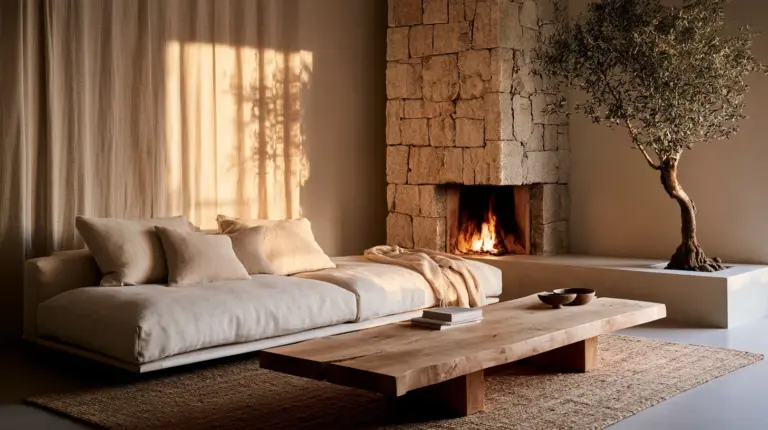
This is one of the most common layout dilemmas. Resist the urge to wall-mount the TV above the fireplace — it forces your neck into an uncomfortable upward angle and places the screen far too high for relaxed viewing.
Instead, position the TV on an adjacent wall, angled slightly so both the fireplace and screen are visible from the seating area. A swivel TV stand or console lets you shift focus effortlessly between warmth and entertainment.
The Golden Measurements Every Layout Needs
Great furniture arrangement isn’t just aesthetic — it’s ergonomic. These numbers are the quiet foundation beneath every beautiful room.
Viewing Distance by TV Size
Getting this right protects your eyes and elevates your experience. Too close feels overwhelming; too far loses clarity.
| TV Screen Size | Ideal Viewing Distance (1080p) | Ideal Viewing Distance (4K) |
|---|---|---|
| 40–43 inches | 5–7 feet | 4–5.5 feet |
| 50–55 inches | 6–8 feet | 4.5–6.5 feet |
| 65 inches | 8–10 feet | 5.5–8 feet |
| 75 inches | 9–12 feet | 6.5–9.5 feet |
For 4K screens, the rule of thumb is 1.0–1.5 times the diagonal screen measurement. You can sit noticeably closer without losing image quality — a gift for smaller spaces.
TV Height: Where Your Eyes Should Land
Mount or place your TV so the center of the screen sits approximately 30 inches from the floor when you’re seated. This keeps your gaze level and your neck relaxed through even the longest evenings.
The Gaps That Matter
- Coffee table to sofa: 14–18 inches — close enough to reach your cup without stretching, far enough to move freely
- Coffee table length: Aim for two-thirds the length of your sofa for visual balance
- Traffic flow clearance: Leave at least 30–36 inches of open pathway for comfortable movement through the room
12 Living Room TV Layout Ideas for Every Space
Layout 1: The Classic Symmetrical
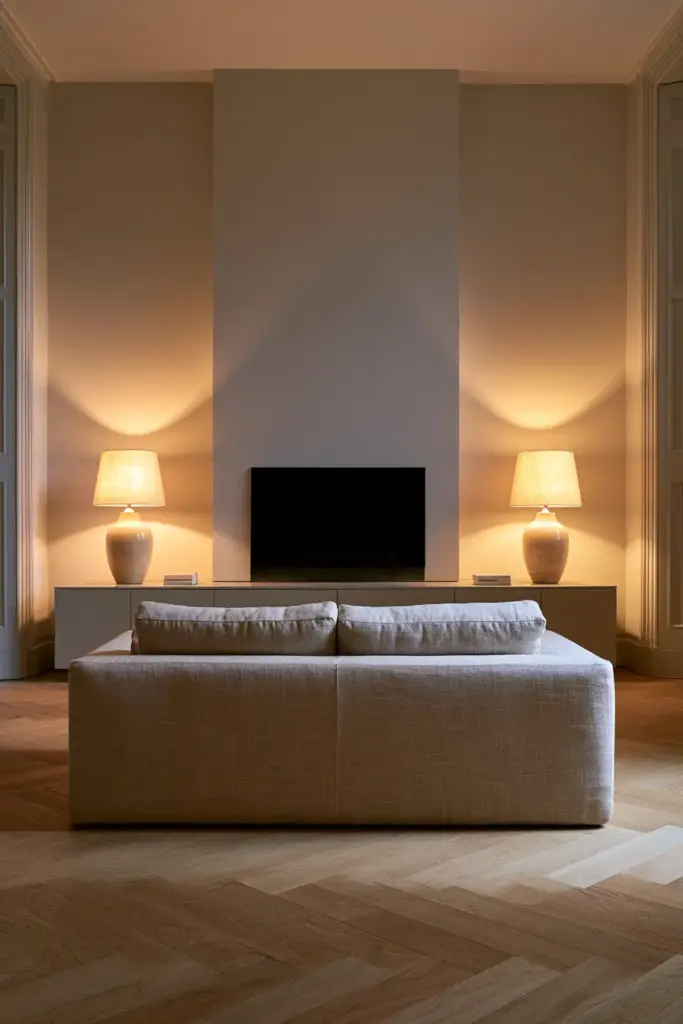
The sofa faces the TV directly, flanked by two matching armchairs or side tables. This arrangement feels grounded and elegant — ideal for rooms with clearly defined walls and a strong sense of order.
Layout 2: The L-Shaped Conversation Corner
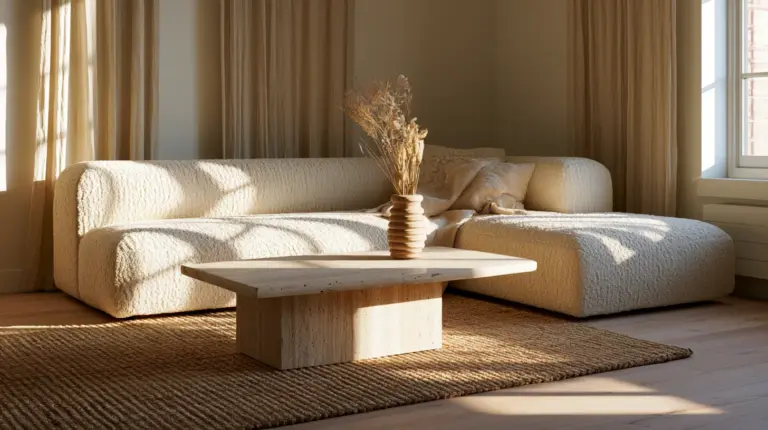
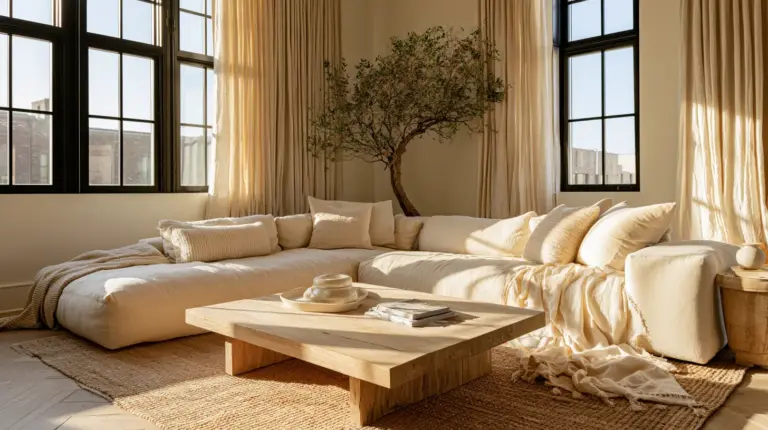
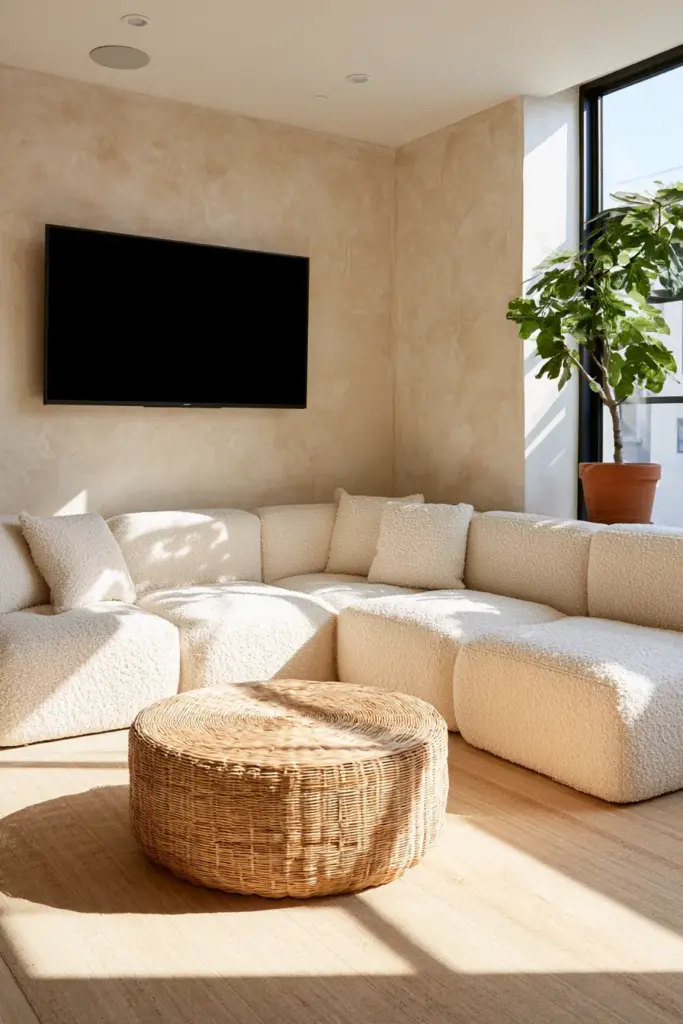
An L-shaped sectional wraps around a coffee table, with the TV positioned at the open end. This layout excels at dual purpose: it holds space for intimate conversation and comfortable viewing without either feeling compromised.
Layout 3: The Floating Arrangement
Pull your sofa away from the wall and let it float in the center of the room. This creates depth, improves acoustics, and signals intentionality. Style the back of the sofa with a narrow console table and a trailing plant.
Layout 4: The Swivel Chair Setup
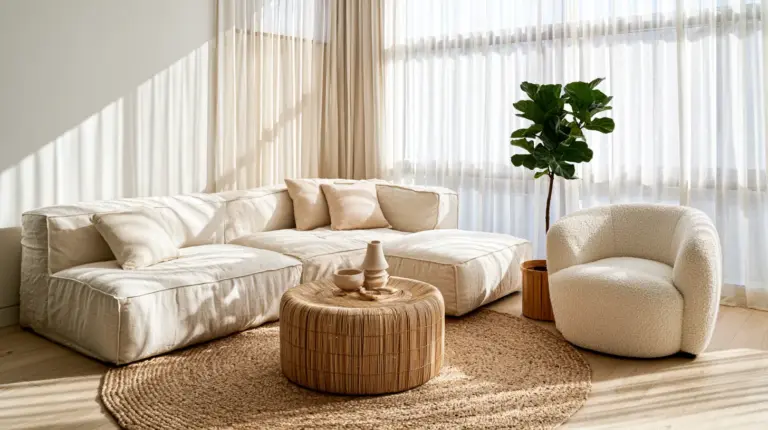
Position your main sofa facing the TV, then add one or two swivel accent chairs nearby. When guests arrive, chairs pivot toward the conversation. When the evening calls for a film, they rotate back. Flexible, considered, quietly brilliant.
Layout 5: The Apartment Studio Diagonal
In very small or awkward spaces, placing the sofa on a diagonal can open up the room visually and improve sightlines to a corner-mounted TV. Anchor the arrangement with a round rug to soften the geometry.
Layout 6: The Japandi Minimalist Console
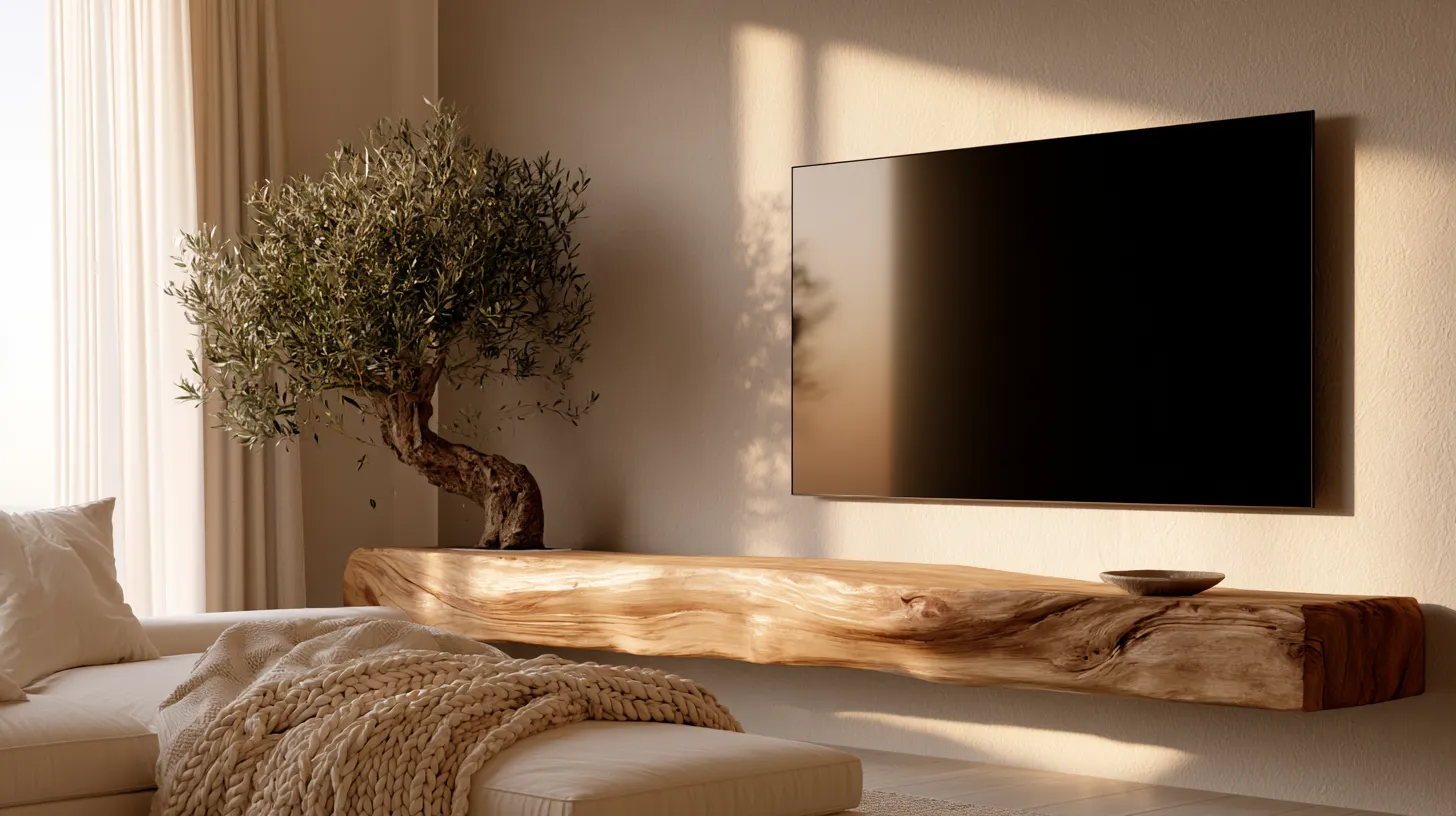
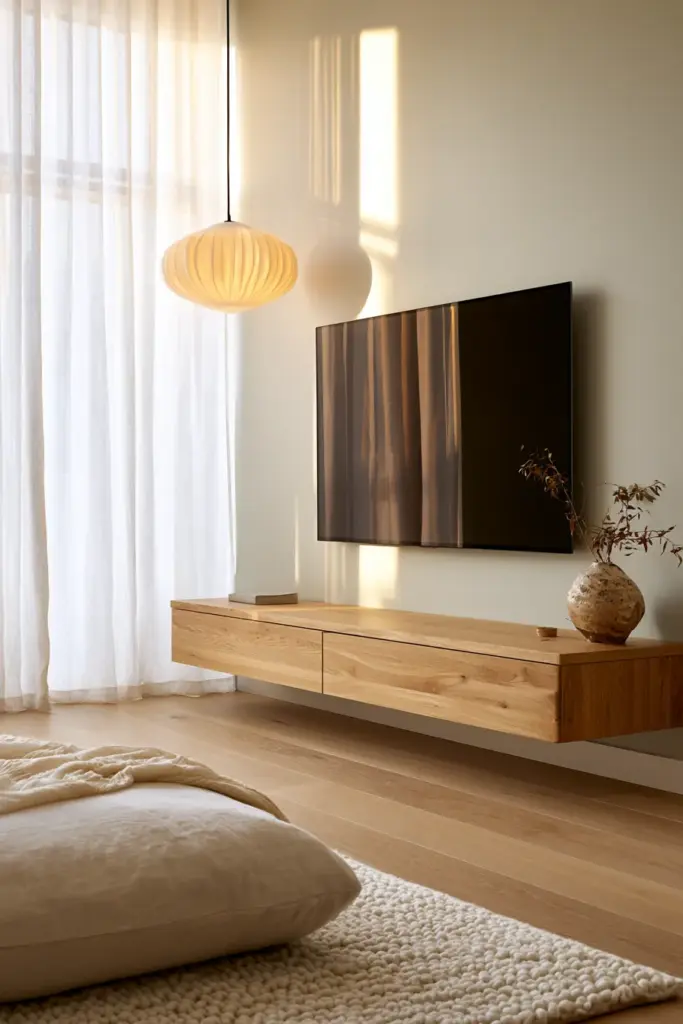
For those who prefer their TV to recede rather than dominate, a low floating media console in natural wood keeps the screen close to eye level and removes visual clutter from the room. Pair with linen curtains and warm pendant lighting for a calm, pared-back atmosphere.
Layout 7: The TV Lift Cabinet
A beautifully crafted cabinet that conceals the TV entirely when not in use. When you want to watch, the screen rises gracefully into view. This is the ultimate solution for those who love a living room that breathes differently at different hours.
Layout 8: The Media Curtain
Hang a simple linen or velvet curtain panel in front of the TV wall. Slide it open for movie nights; close it during dinner parties. This approach works especially well in eclectic, Japandi, or maximalist interiors where the TV would otherwise interrupt the visual narrative.
Layout 9: The Rental-Friendly No-Drill Setup
For renters who can’t wall-mount, a freestanding TV stand with built-in cable management is your best friend. Look for stands with back panels to hide cords, and use removable adhesive cable clips along the baseboard for a clean finish — no damage, no deposit concerns.
Layout 10: The Open-Plan Divider
In open-concept spaces, position a low media console with the TV facing the living area, effectively creating a visual division between the lounge and dining zones. The back of the console can face the dining area and double as a sideboard.
Layout 11: The Acoustic Small Room Setup
In narrow or small rooms, sound matters as much as sight. Place your soundbar directly below or above the screen. If you’re using surround speakers, position them slightly behind and to the sides of your main seating — even bookshelf speakers at ear height on side tables can transform the experience without requiring permanent installation.
Layout 12: The AI-Planned Layout
Before moving a single piece of furniture, use a free AI room planner (such as RoomSketcher, Planner 5D, or ReimagineHome) to test your arrangement digitally. Upload your room dimensions, add your furniture pieces, and visualize sightlines, traffic flow, and scale — all before lifting anything. This step alone saves hours and protects floors.
Controlling TV Glare: The Detail Everyone Overlooks
Glare ruins the most thoughtfully arranged room. And yet almost no one accounts for it before moving their sofa.
Position your TV on a wall that runs perpendicular to your main windows — not directly opposite them. This eliminates the sun-behind-the-screen effect that washes out your picture and strains your eyes.
Bias Lighting: The Quiet Upgrade
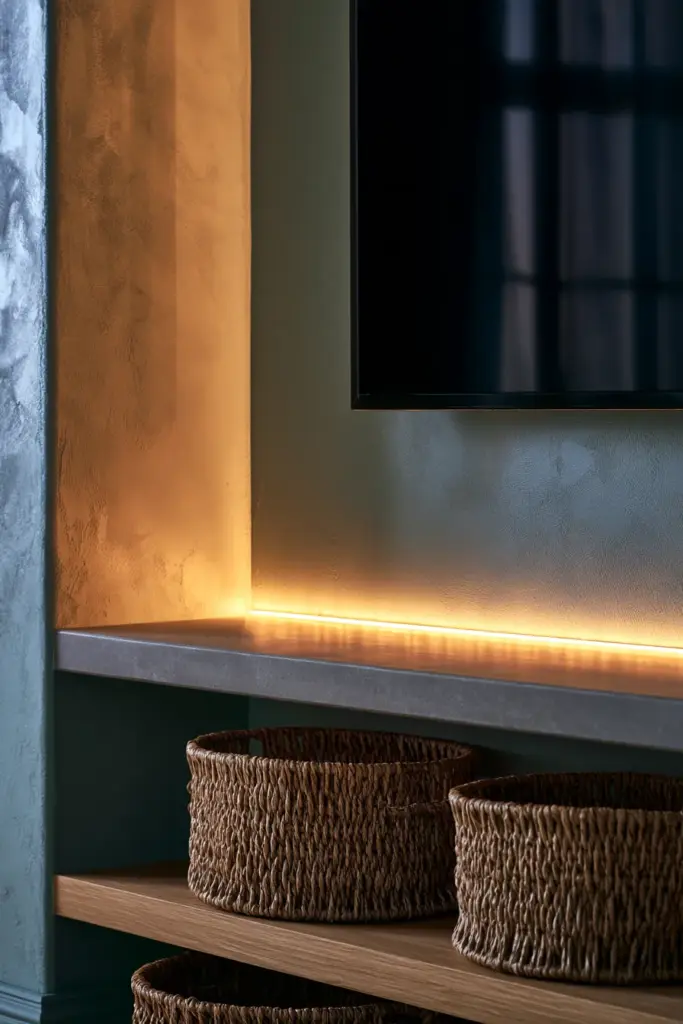
Place a soft LED strip light along the back edge of your TV or media console. This gentle ambient glow — known as bias lighting — reduces eye strain, makes colors appear richer, and gives the room a warm, considered atmosphere. Warm white (2700–3000K) tones work beautifully in rustic or natural interiors.
Curtain and Blind Positioning
If afternoon glare is an issue, sheer linen curtains diffuse sunlight without darkening the room entirely. They also add beautiful, light-filtering texture that feels both practical and poetic.
Cable Management for Renters (No Damage Required)
Visible cables are the single fastest way to undermine a beautiful arrangement. Here are deposit-friendly solutions that work in any rental:
- Removable adhesive cable clips — attach to walls or baseboards without nails
- Fabric cord covers — wrap bundles of cables in linen or braided sleeves that become part of the décor
- Cable management boxes — tuck power strips and excess cord inside a woven or wooden box near the console
- Behind-furniture routing — guide cables along the back edges of sofas and rugs, hidden in plain sight
- In-console cable channels — many modern TV stands include built-in rear panels designed specifically for this
A tidy room feels calmer. It simply does.
Quick Checklist: Living Room TV Arrangement Essentials
- Choose one clear focal point before placing any furniture
- Position sofa directly facing the TV for primary viewing comfort
- Set TV screen center at approximately 30 inches from floor (eye level when seated)
- Maintain 1.5–2.5× the TV’s diagonal measurement as your viewing distance
- Leave 14–18 inches between sofa and coffee table
- Allow 30–36 inches for traffic flow pathways
- Place TV perpendicular to windows to reduce glare
- Add bias lighting behind the TV for comfort and ambiance
- Use removable cable management solutions for rental spaces
- Test your layout digitally with a free AI room planner before moving furniture
- Consider swivel chairs for dual-purpose TV and conversation spaces
- Use a low floating console or TV lift cabinet if you prefer a screen-free aesthetic
A Soft Word on Imperfection
The perfect layout doesn’t come from following every rule flawlessly. It comes from understanding the principles and then trusting your instincts — the way light falls through your windows at 5pm, where you naturally gravitate to sit, what the room feels like to walk through.
Start with the sofa. Let the TV find its place. Adjust slowly, and let the space teach you what it needs.
At ERYLIN, we believe a well-arranged room is one of life’s quiet pleasures — something that works so seamlessly, you stop thinking about it entirely, and simply feel at home.
Frequently Asked Questions
How far should the sofa be from the TV?
The general guideline is 1.5 to 2.5 times the diagonal measurement of your TV screen. For a 55-inch TV, that places your sofa between approximately 7 and 11 feet away. For 4K screens, you can sit closer — about 1.0 to 1.5 times the diagonal — without losing picture quality.
How do I arrange living room furniture for both TV and conversation?
Use swivel accent chairs alongside your main sofa. The chairs rotate toward the TV for viewing and pivot back toward guests for conversation. An L-shaped sectional also works beautifully, as it naturally creates both a viewing axis and a conversational curve without requiring you to choose between the two.
Can I put the TV above the fireplace in a living room?
It’s best avoided if possible. Mounting a TV above a fireplace raises the screen higher than eye level, which causes neck strain over time. Heat and soot from the fireplace can also affect the screen. Instead, place the TV on an adjacent wall, angled so both the fire and screen are accessible from your seating area.
What lighting is best for a living room with a TV?
Layered lighting works best. Use ambient light at lower levels during viewing (dimmed overhead fixtures or floor lamps), and add bias lighting behind the TV to reduce eye strain. Avoid bright lights directly behind you or facing the screen, as they create glare and reduce contrast.
How do I make a small living room look bigger with a TV?
Wall-mount the TV if possible to free up floor space, or choose a low-profile floating media console. Use a light-coloured sofa, a round rug, and mirrors to open up the space visually. Pull furniture slightly away from the walls rather than pushing everything to the perimeter — counterintuitively, floating arrangements make small rooms feel larger.