
Table of Contents
Whether you’re signing a short-term lease or settling into a forever home, the way you arrange your living room shapes everything — how light moves through a space, how conversation flows, how rest feels at the end of a long day.
There is something quietly powerful about a well-arranged room. It doesn’t shout. It simply welcomes you, holds you, and lets you breathe. At ERYLIN, we believe your living space should feel like that — intentional, warm, and unmistakably yours.
The challenge is that most of us are arranging furniture within real constraints: rental restrictions, limited square footage, or budgets that make every piece count. This guide is for all of you — the renters arranging around landlord rules, the new homeowners starting from scratch, and everyone navigating the beautiful in-between.
Let’s walk through it together.
Rent vs. Buy: Start With the Right Question
How long are you staying? That single question shapes every furniture decision that follows.
If you’re renting for less than two years, buying a full living room set may cost more than it’s worth — especially when you factor in delivery, assembly, and the hassle of moving large pieces. Renting furniture for that same period averages significantly less upfront, with included maintenance and no resale headaches.
If you’re settling in for three years or more, owning almost always wins. Modular, repairable pieces made from solid wood or performance fabric hold their value, age gracefully, and can move with you when life changes again.
| Situation | Recommended Approach | Why It Works |
|---|---|---|
| Stay under 12 months | Rent furniture | Low upfront cost, flexible return |
| Stay 12–24 months | Rent or rent-to-own | Break-even point varies by set |
| Stay 2+ years | Buy quality modular pieces | Better long-term value and comfort |
| Uncertain timeline | Start with rental, reassess at 6 months | Keeps options open |
Quick Decision Tree
- Under 1 year + tight budget → Rent a curated set
- 1–2 years + want flexibility → Rent-to-own with upgrade option
- 2+ years + building a home → Invest in timeless, modular furniture
- Uncertain + minimalist → Buy 1–2 anchor pieces, rent the rest
How to Arrange Furniture in a Living Room: The Foundations
Good arrangement isn’t about following rules — it’s about understanding how people actually move through and live in a space.
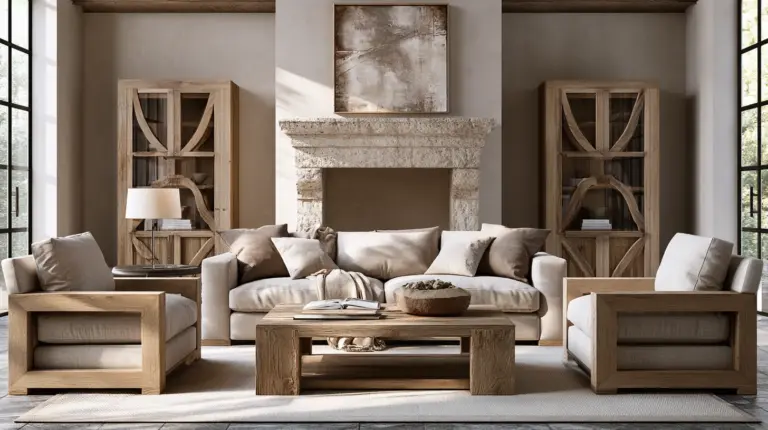
Before moving a single piece of furniture, do two things: measure your room, and identify your focal point. The focal point is the anchor — a fireplace, a window with a view, or your television. Everything radiates outward from there.
For traffic flow, maintain at least 30–36 inches for your main circulation path and 18 inches between your sofa and coffee table. These aren’t arbitrary numbers; they’re the difference between a room that feels open and one that feels like an obstacle course.
Should You Float Your Furniture?
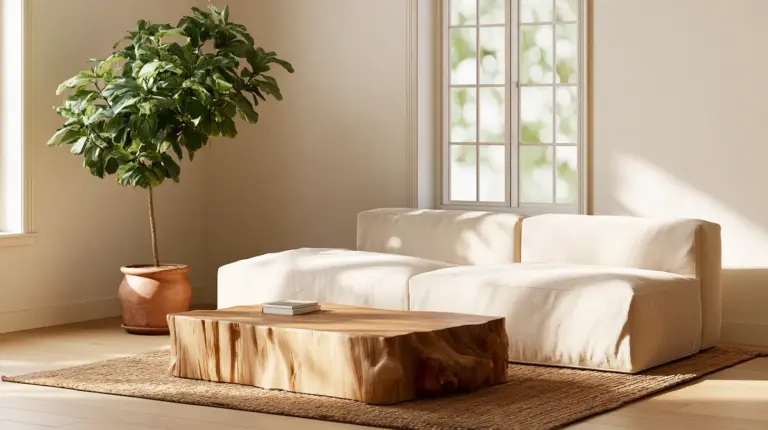
Floating furniture — pulling pieces away from the walls — almost always makes a room feel larger and more intentional. It creates intimacy, defines zones, and allows light to wrap around each piece.
Push furniture against the walls only in very narrow rooms (under 10 feet wide) where floating would block all movement. In most spaces, even pulling the sofa 4–6 inches from the wall transforms the entire feeling of the room.
How Far Should a Sofa Be From a TV?
The ideal viewing distance depends on your screen size. A general rule: multiply your TV’s diagonal measurement by 1.5 to 2.5 for the comfortable distance range.
- 55-inch TV → sit 7–11 feet away
- 65-inch TV → sit 8–13 feet away
- 75-inch TV → sit 9–15 feet away
Mount your TV so the center of the screen sits 42–48 inches from the floor — eye level when seated, not standing.
Layout Templates for Every Room Size
Your room’s shape is not a limitation. It’s a starting point.
Small Square Living Room (Under 150 sq ft)
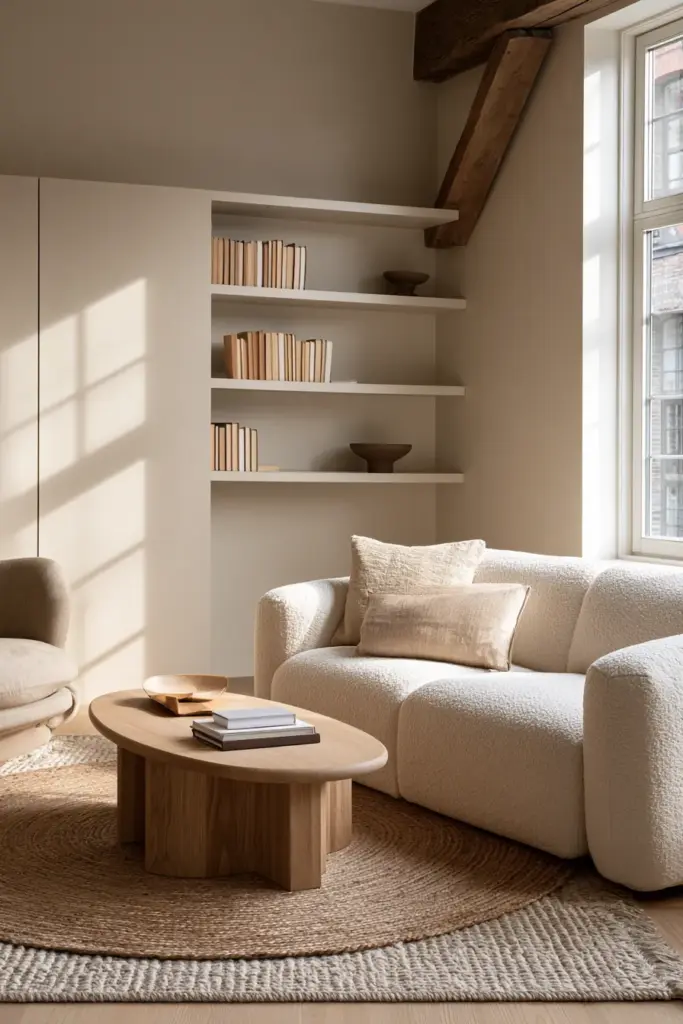
Choose a loveseat or apartment-sized sofa (72–84 inches wide) rather than a full three-seater. Face it toward your focal point with an armchair or small accent chair at a 45-degree angle to complete the conversation area.
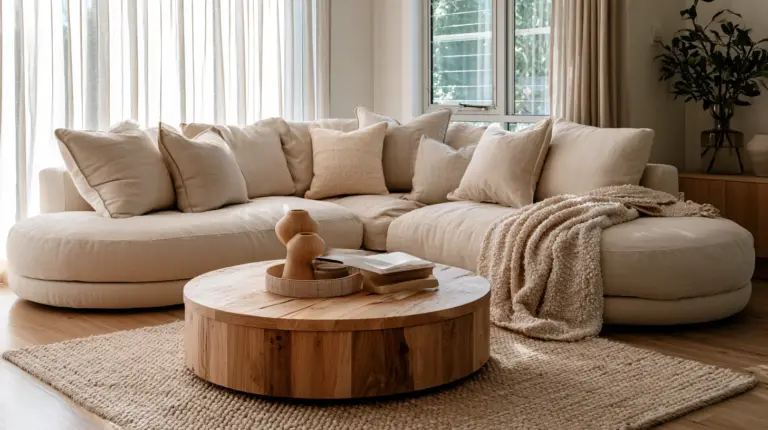
Keep your coffee table round or oval — it softens the room and eliminates sharp corners in tight spaces. A 36–40 inch diameter works well here.
Renter tip: Use a large area rug (at least 5×8) to anchor the seating zone. No drilling required, and it completely redefines the space.
Narrow Rectangular Room (Under 11 ft Wide)
Resist the urge to line furniture along both long walls — it creates a hallway effect. Instead, create one strong seating zone at one end of the room, using the opposite end for a reading nook, a small desk, or a console with plants.
A chaise sofa or small-scale L-shaped sectional (under 100 inches total) works beautifully here when placed perpendicular to the long wall. Pair it with a narrow console table rather than a bulky media unit to preserve visual breathing room.
Open-Plan Living Room (150–300 sq ft)
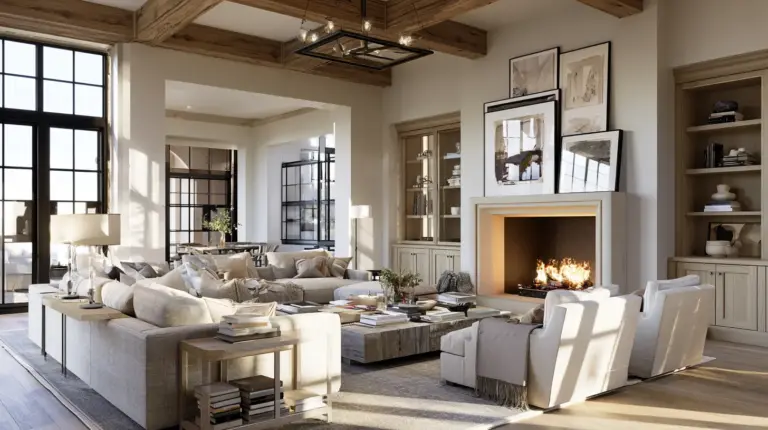
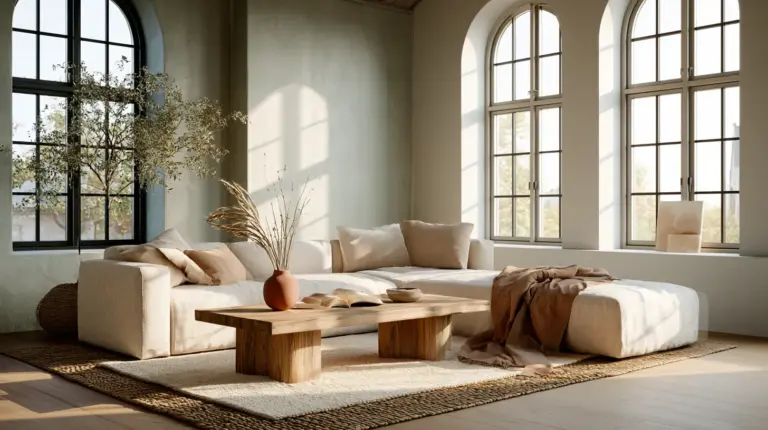
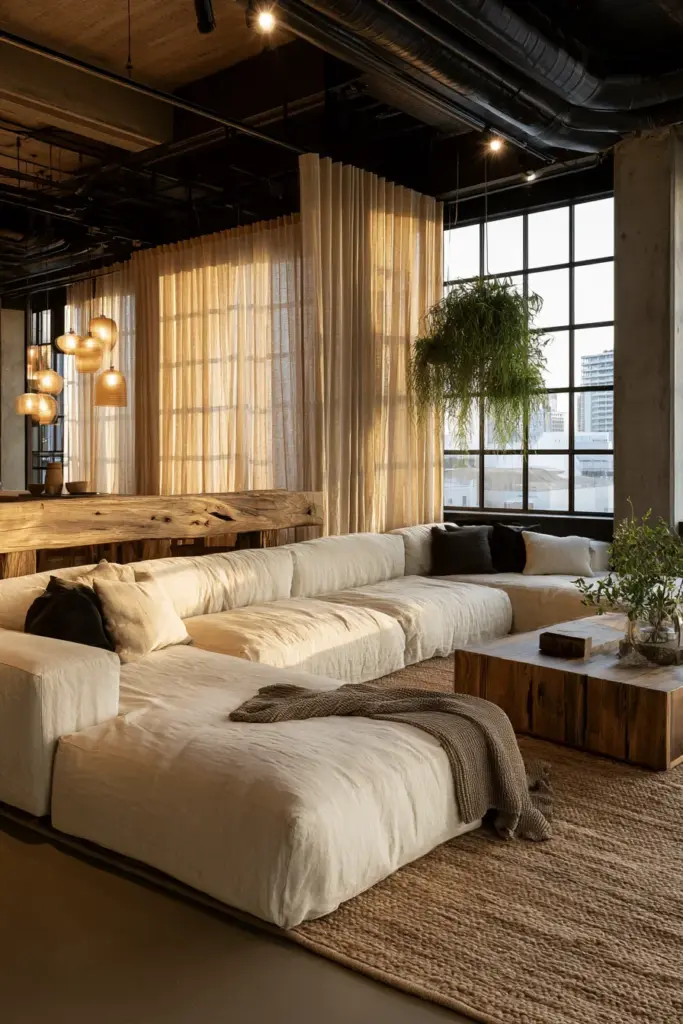
Use your furniture to define zones where architecture doesn’t. A sofa’s back can serve as a soft divider between the living area and a dining space. A large area rug (8×10 or 9×12) anchors the seating zone and signals where gathering happens.
In open-plan spaces, floating all furniture is almost always the right move. Anchor pieces toward the center, and let pathways form naturally around them.
Sectional placement tip: Place the chaise end away from the main entry — it creates a sense of depth and draws the eye into the room rather than stopping it at the door.
Studio or One-Room Living
Use a daybed or sofa bed along one wall to serve double duty as seating and sleeping. A low-profile bookshelf or open room divider (no taller than 54 inches) separates living from sleeping without closing off light.
A small round dining table tucked near the window does triple duty: dining surface, work desk, and morning coffee spot.
Furniture Arrangement for Renters: No-Drill Solutions
Renting doesn’t mean settling. It means being creative with what you can control.
Landlord restrictions are real — no anchoring to walls, no permanent fixtures, no painting. But the right approach transforms these constraints into design opportunities.
Renter-Friendly Installation Guide
For wall art and large mirrors:
- Adhesive picture strips (Command strips rated 12–16 lbs) handle frames up to 24 inches wide
- Tension rod display systems work beautifully for lightweight tapestries and fabric art
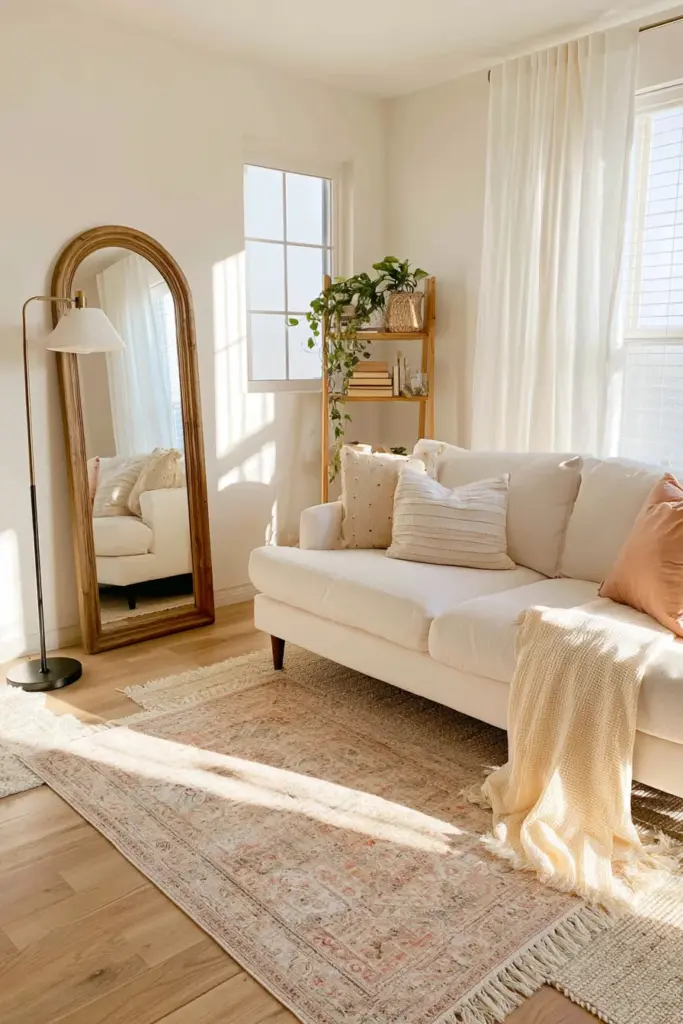
- Lean large mirrors and artwork against the wall — it’s a design choice, not a compromise
For lighting:
- Floor lamps in corners create ambient warmth without ceiling fixtures
- Plug-in pendant lights with cord covers give the look of hardwired pendants with zero commitment
- Battery-operated puck lights under shelves add warmth and depth with no wiring
For storage and shelving:
- Freestanding shelving units (bookcases, ladder shelves, modular cubes) require no drilling and move with you
- Over-door organizers and removable adhesive hooks handle everyday items without marking walls
For room definition:
- Large area rugs define zones more powerfully than walls
- Open-back bookshelves and decorative screens serve as soft dividers
- Curtains on tension rods hung floor to ceiling create the illusion of permanent architecture
Renter Damage and Deposit Protection Checklist
- Photograph walls before and after any hanging
- Use felt pads under all furniture legs to protect floors
- Avoid rubber-backed rugs on hardwood — they can stain over time
- Check adhesive weight limits before hanging anything heavier than 5 lbs
- Keep original packaging for rental furniture when possible
What Size Rug Should I Get for My Living Room?
The rug is the foundation. Get it wrong and the whole room feels unmoored.
The most common mistake in living room rugs is going too small. A rug that only fits under the coffee table makes furniture float awkwardly with no visual connection.
Rug placement options:
- All legs on the rug — Creates a cocooned, intimate feel; best in large rooms
- Front legs only on the rug — The most versatile arrangement; anchors the seating group without needing an enormous rug
- No legs on the rug — Only works in very small spaces where the rug is purely decorative
Minimum rug sizes by room:
| Room Size | Minimum Rug Size |
|---|---|
| Small living room (under 150 sq ft) | 5×8 ft |
| Medium living room | 8×10 ft |
| Large or open-plan | 9×12 ft or larger |
| Sectional arrangement | 10×14 ft |
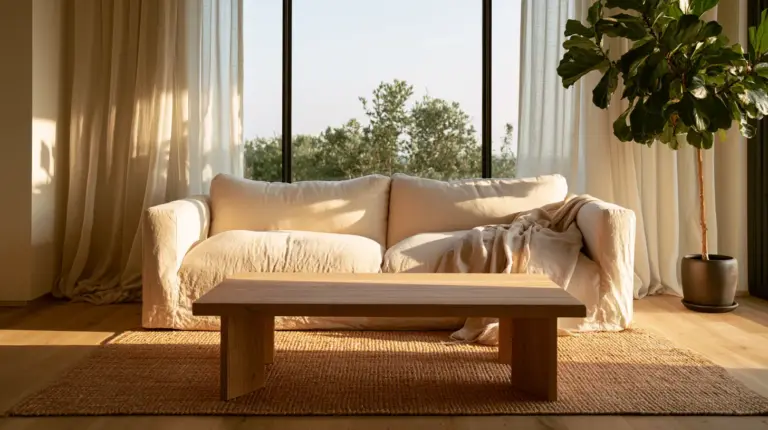
Choose natural fiber rugs — jute, wool, or cotton — for a warm, textural base that improves with age.
Multifunctional Living Room Layouts
The best small-space furniture doesn’t just sit there. It works.
Modern living requires rooms to shift roles — from home office by morning to entertainment space by evening, to guest room by night. The right furniture makes these transitions seamless.
Work-From-Home Integration
A console table behind the sofa becomes a standing desk that disappears visually into the room. Pair it with a backless stool that tucks underneath when not in use.
Alternatively, a narrow writing desk positioned perpendicular to a window keeps natural light on your face without becoming a dominant visual element in the room.
Guest-Ready Living Rooms
A sofa bed or daybed with a quality mattress topper handles overnight guests without a dedicated guest room. Look for models with hidden storage underneath for bedding.
A folding screen or large plant cluster creates a sense of privacy for guests without permanent partition walls — ideal for renters and owners alike.
Maintenance, Warranties and the Cost of Owning vs. Renting
The true cost of furniture isn’t the price tag. It’s everything that comes after.
Renting Furniture: What to Know
Rental furniture typically includes delivery, assembly, maintenance, and repair at no extra cost. If a cushion tears or a leg wobbles, it’s the rental company’s responsibility, not yours. This is the quiet advantage of renting that most people overlook.
Read the damage policy carefully before signing. Most companies distinguish between normal wear and accidental damage — you’re responsible for the latter, so confirm whether your renters insurance covers furniture.
Owning Furniture: Protecting Your Investment
When you buy, you’re responsible for maintenance. Here’s what extends the life of quality pieces:
- Rotate cushions monthly to prevent uneven wear
- Use upholstery cleaner specific to your fabric type — performance fabric, velvet, linen, and leather each have different care needs
- Tighten leg hardware every six months — loose joints are the main cause of wobbling
- Keep wood furniture away from direct sunlight and heating vents to prevent cracking
Resale value tip: Choose pieces with removable, replaceable cushion covers and solid wood frames. These resell for 40–60% of their purchase price rather than 10–20%.
Key Takeaways
- Measure first, always — know your room dimensions before buying or renting anything
- Identify your focal point — arrange everything in relationship to it
- Float your furniture — pulling pieces from the wall creates depth and intimacy
- Size up your rug — when in doubt, go larger; front legs on the rug is the most versatile arrangement
- Rent if you’re staying under 2 years — the math almost always favors it
- Buy modular if you’re staying longer — repairable, rearrangeable pieces give lasting value
- Renters: use floor lamps, freestanding shelves, and adhesive strips — you can create a beautifully designed space without touching a single wall permanently
- Protect your deposit — felt pads, photography, and gentle adhesives go a long way
- Keep traffic flowing — 30 inches minimum clearance on main paths, 18 inches between sofa and coffee table
Conclusion
A living room arranged with intention is one of the gentlest forms of self-care.
It doesn’t matter if you own your walls or borrow them for a season. What matters is how the light falls in the late afternoon, how the sofa holds you at the end of a hard day, and whether your space feels like it belongs to you.
At ERYLIN, we believe that beauty and practicality are never at odds — they’re the same thing, seen from different angles. Whether you’re renting your first apartment or arranging a room you’ll live in for decades, the principles are the same: know your space, work with it honestly, and let warmth lead every decision.
Your home is already waiting to become exactly what you need it to be.
Frequently Asked Questions
How do I arrange furniture in a small living room?
Start with your largest piece — usually the sofa — and face it toward your focal point (TV, fireplace, or window). Choose an apartment-sized sofa (72–84 inches), float it slightly away from the wall, and use a round coffee table to maximize flow. A 5×8 rug anchors the space without overwhelming it.
How do I arrange furniture in a rental without drilling?
Use Command strips rated for your art’s weight, lean large mirrors against the wall, install freestanding shelving units, and hang curtains on tension rods. For lighting, floor lamps and plug-in pendants give a polished look with zero commitment. Define zones with area rugs instead of architectural changes.
Should I float my furniture away from the walls?
Yes, in almost every case. Floating furniture — even just 4–6 inches from the wall — creates a more intimate, intentional space and makes the room feel larger. Reserve wall-hugging arrangements for rooms narrower than 10 feet where circulation requires it.
Is renting furniture worth it?
If you’re staying for under two years, yes. Rental furniture includes delivery, assembly, maintenance, and repair, which eliminates hidden costs. For stays longer than two to three years, buying modular, quality pieces typically offers better long-term value.
What size rug should I get for my living room?
For most living rooms, an 8×10 rug is the minimum comfortable size. Place the front legs of all seating pieces on the rug to anchor the arrangement. If your room is large or features a sectional, step up to a 9×12 or 10×14 for a grounded, cohesive look.