
Table of Contents
There is a moment — right before a room feels finished — when something quietly clicks into place. The sofa lands exactly where it should. The light falls softly across a natural wood surface. You walk in and exhale.
That moment is not accidental. It is the result of intentional furniture arrangement, and right now, the trends shaping how we lay out our living rooms are more thoughtful, more livable, and more beautiful than ever.
Whether you are reimagining a compact city flat, zoning an open-plan space, or finally fixing the awkward corner that has bothered you for years, this guide brings together the most inspiring living room furniture arrangement trends with practical measurements and style-specific solutions for real homes.
This is not just about what looks good in a magazine. This is about what feels good every single day.
Why Furniture Arrangement Matters More Than You Think
Most people decorate their living rooms by filling walls and corners first. But the best-looking rooms are arranged from the center outward — anchored by a rug, defined by a seating group, and breathing with intentional empty space.
The way furniture sits in a room determines how conversations flow, how light moves, and how your body feels when you enter. It shapes whether a space feels welcoming or chaotic, expansive or cramped.
The best arrangement is the one that serves both beauty and life.
7 Living Room Furniture Arrangement Trends Worth Knowing
1. The Conversation-First Layout
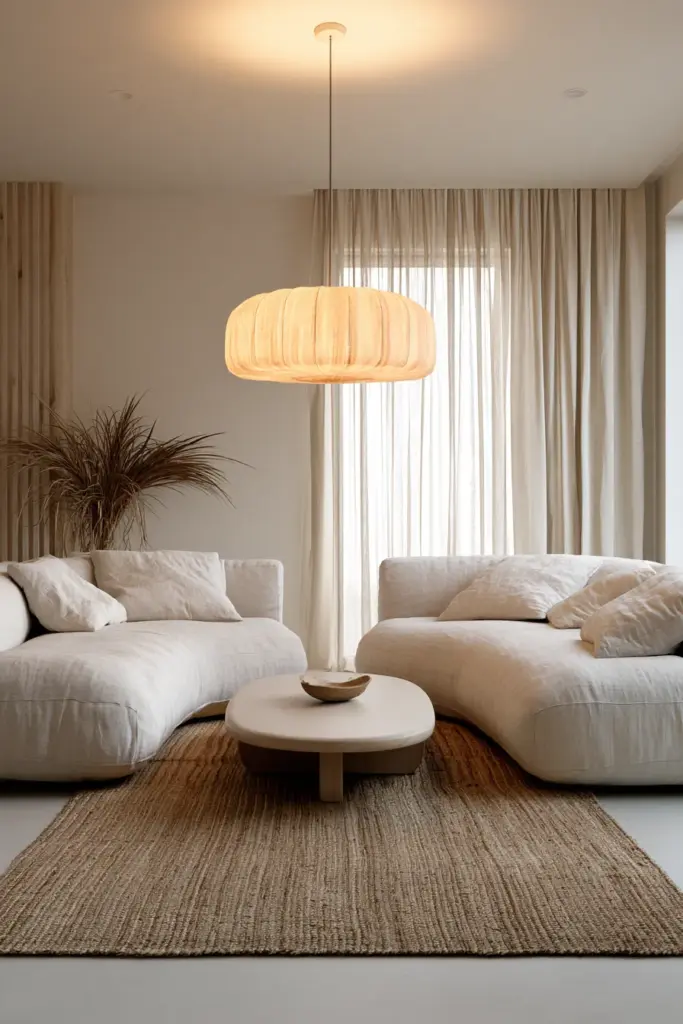
The most prominent trend moving through interiors right now is designing around conversation, not the television. Sofas and chairs face each other rather than a screen, pulling the room’s energy inward.
Think of two sofas positioned across from each other with a low oval coffee table between them. Add a pair of linen armchairs at an angle, a natural jute rug beneath everything, and warm pendant lighting overhead. The room becomes a place where people actually want to sit and stay.
Ideal spacing: Leave 90–120 cm between facing sofas. Too close and it feels like a waiting room. Too far and the conversation dies.
2. Curved Furniture and Soft Silhouettes
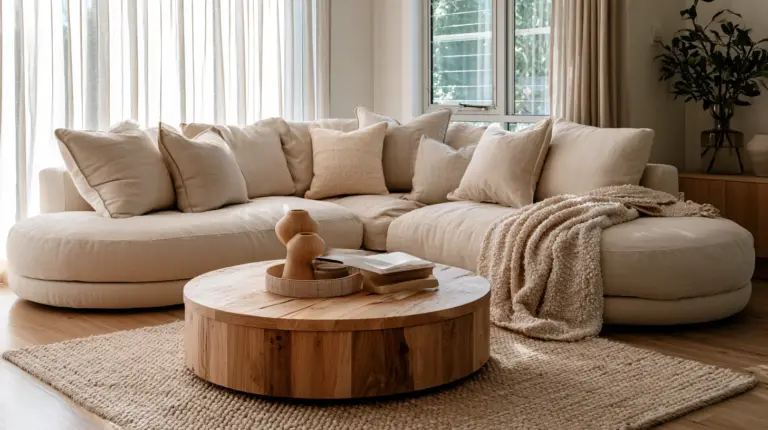
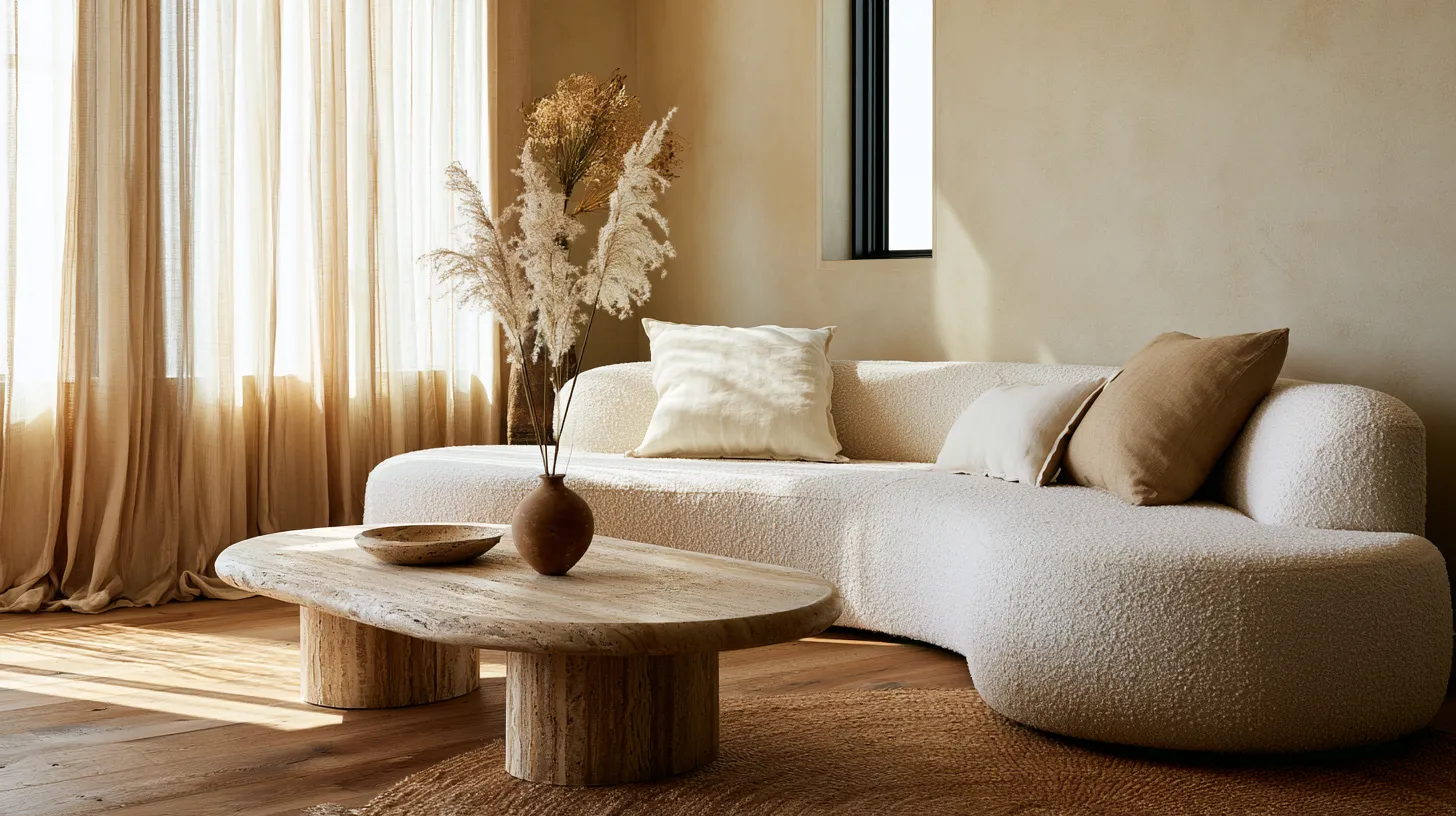
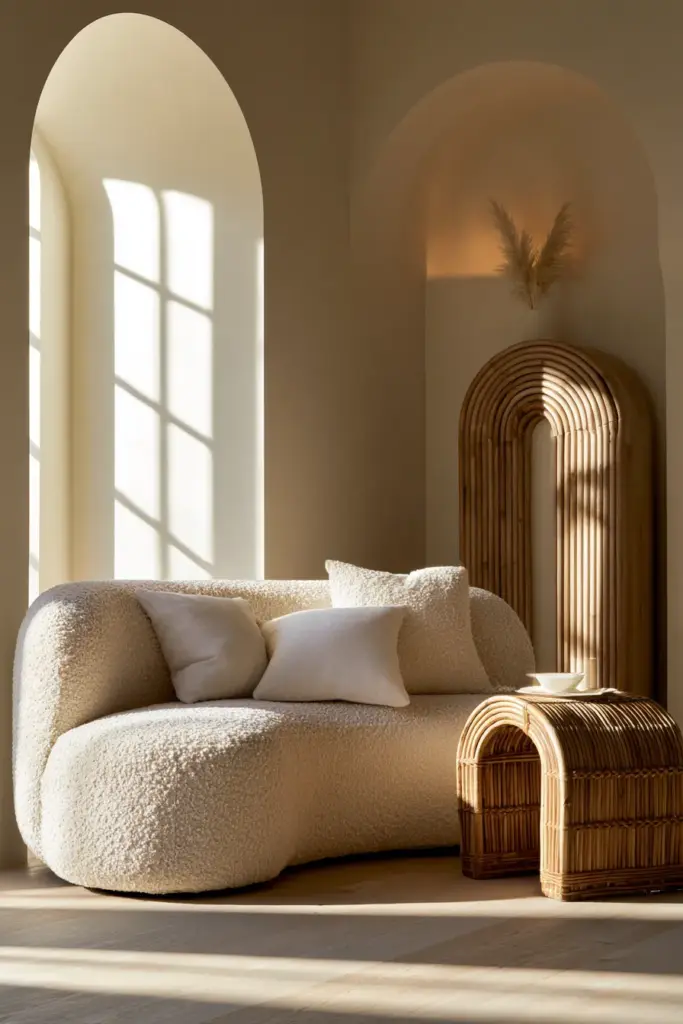
Straight lines and sharp corners are giving way to curves. Rounded sofas, arched side tables, and oval rugs are replacing boxy arrangements, softening the geometry of modern homes.
Curved furniture also solves a practical problem — it creates natural flow. Traffic moves around a curved sectional more easily than a rigid L-shape, which makes curved pieces especially useful in smaller living rooms where every centimeter of walkway matters.
Key pieces to consider: Bouclé curved sofas, rattan rounded chairs, travertine oval coffee tables.
3. The Two-Sofa Arrangement
One of the most searched living room layout ideas right now involves placing two sofas facing each other. This arrangement works beautifully in medium to large rooms and creates an immediate sense of symmetry and generosity.
The key to making it look intentional is scale. Both sofas do not need to match, but they should be roughly the same height and visual weight. Layer in texture contrast — a smooth linen sofa opposite a velvet one, for example — and anchor the whole grouping with a large area rug.
4. Low, Continuous Furniture Lines
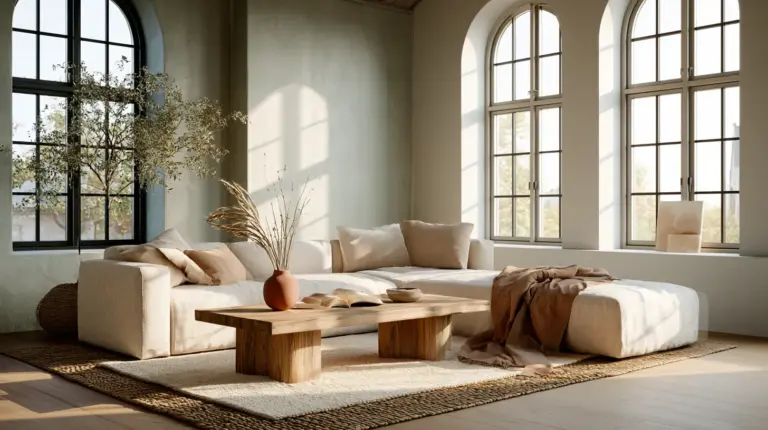
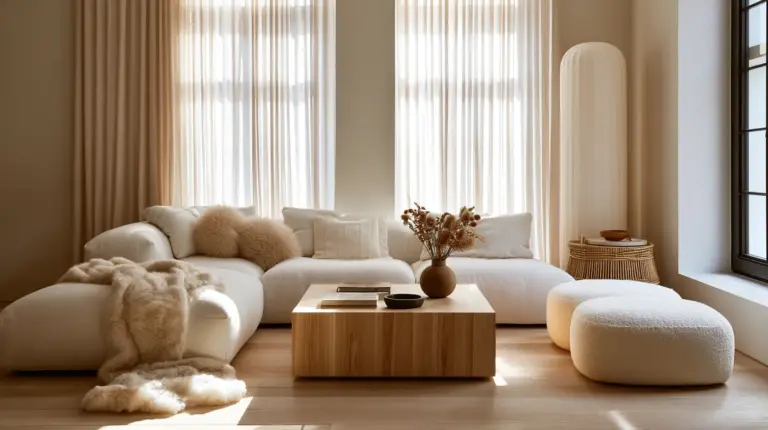
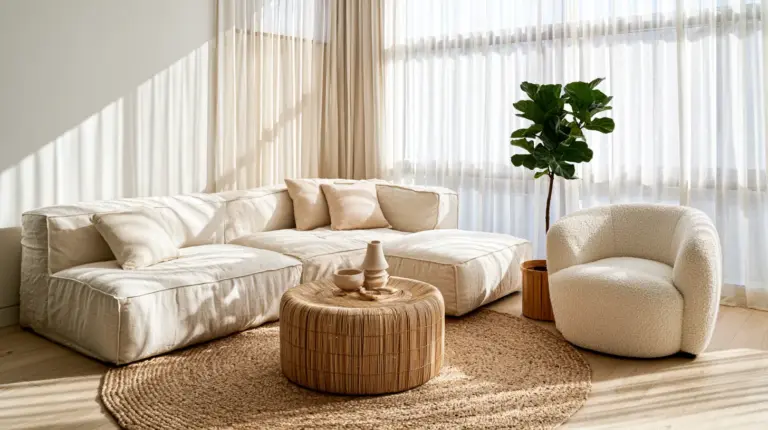
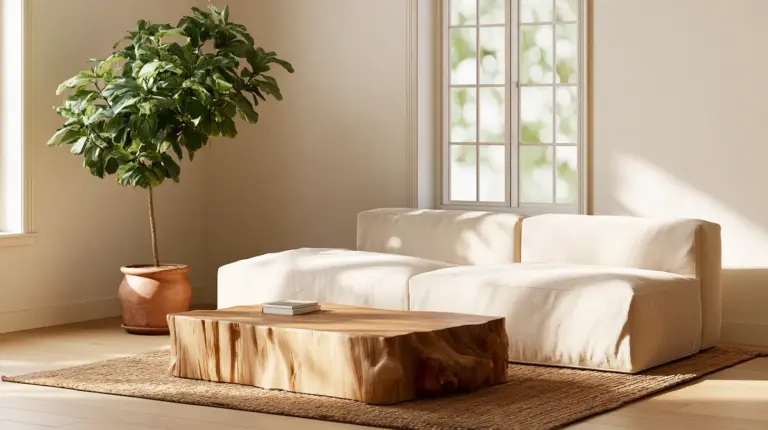
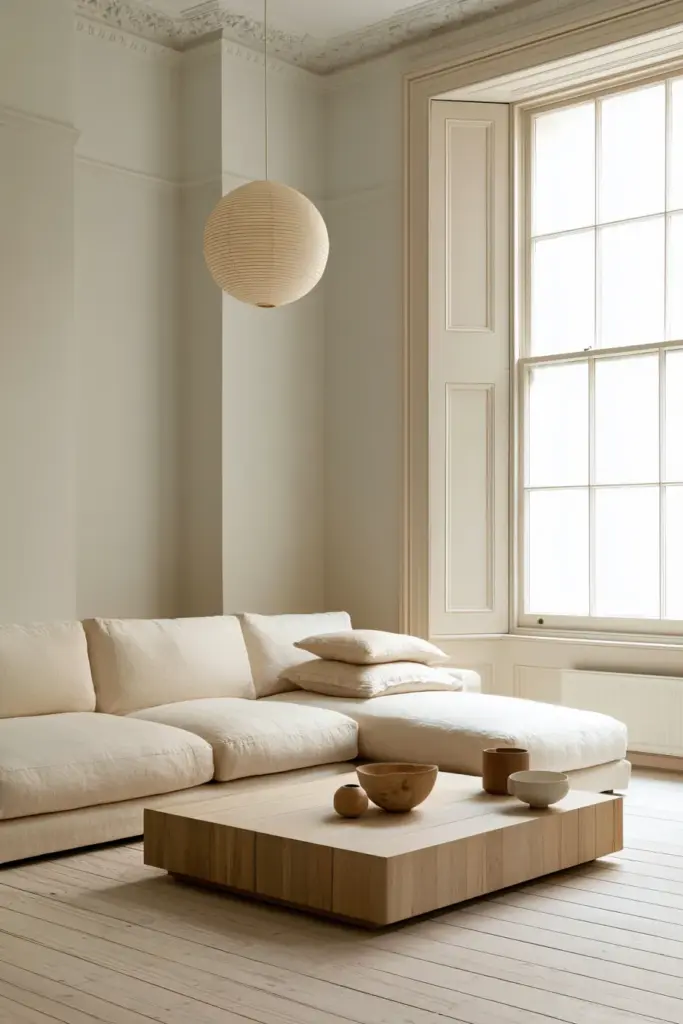
Furniture that sits low to the ground and flows in one continuous visual line is having a significant moment, particularly in Japandi and minimalist interiors. Low-profile sofas, elongated media consoles, and flat-stacked cushions all contribute to a calm, uninterrupted horizon line.
This arrangement style works exceptionally well in rooms with high ceilings — the low furniture makes vertical space feel generous and airy. It also pairs beautifully with natural materials like light oak, washi paper, and undyed linen.
5. Zoning with Lighting and Rugs
In open-plan living spaces, the trend has moved away from physical dividers toward soft zoning — using rugs, lighting, and furniture groupings to define areas without closing them off.
A pendant light hung low over a seating arrangement signals: this is a place to pause. A large rug beneath the sofa and coffee table says: this is the living room. These invisible boundaries create a sense of order that makes open spaces feel both spacious and intimate.
Rug sizing tip: Your rug should extend at least 30–45 cm beyond the edges of your coffee table on all sides. If in doubt, go bigger.
6. Media Walls and TV-Integrated Storage
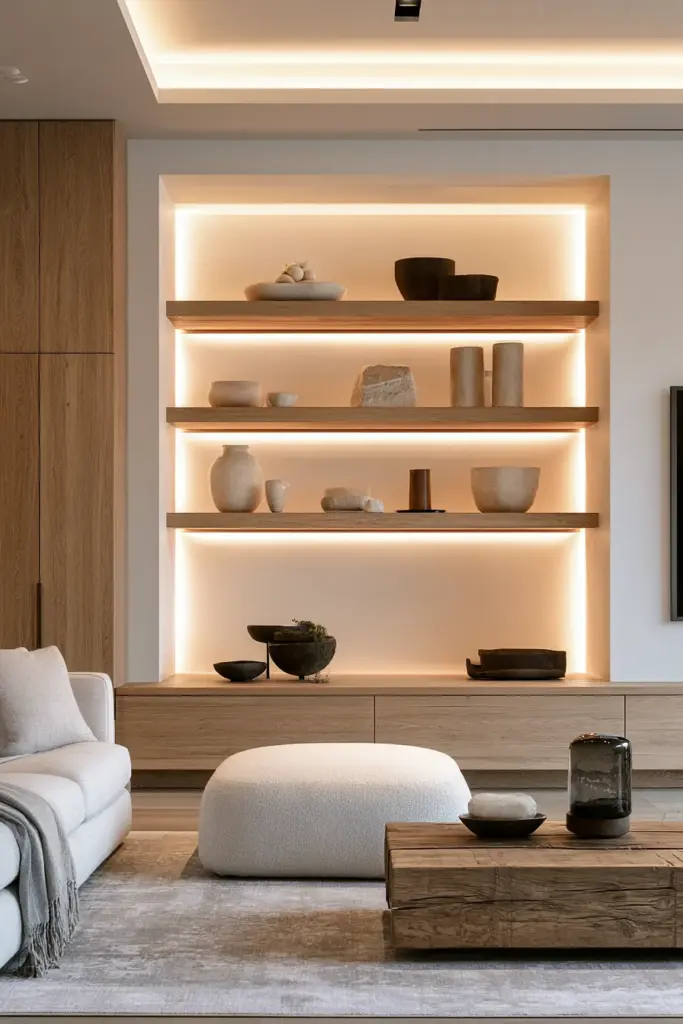
The media wall has moved from a niche choice to a mainstream arrangement anchor. Built-in cabinetry that wraps around a television — housing books, art objects, and discreet storage — gives the entire wall a purposeful, finished look.
For arrangement purposes, the key is positioning the sofa at the correct viewing distance. The general rule is 1.5 to 2.5 times the diagonal screen size in distance from the TV. For a 55-inch television, that places the sofa between 2 and 3.5 meters away.
Eye-level matters too: The center of the screen should sit at approximately seated eye level, around 100–110 cm from the floor.
7. Chair-Lamp-Table Vignettes
A trend that elevates any living room arrangement is the deliberate placement of a reading chair paired with a floor or table lamp and a small accent table. This vignette approach creates a secondary zone within the room — a quiet corner that signals rest and intention.
Position the chair near a window for natural light during the day. Choose a warm-toned lamp for evening. Set a small side table at arm height beside it. Together, these three elements create a moment of beauty that also functions beautifully.
Room-Type Arrangement Solutions
Small Living Rooms
In compact spaces, every piece needs to earn its place. Float furniture away from walls — a sofa pulled 30 cm from the wall actually makes a room feel larger because it creates depth and breathing room.
Choose a single sofa over a full sectional. Prioritize a glass or open-base coffee table to keep sightlines clear. Use vertical storage like tall shelving units to draw the eye upward.
Traffic clearance rule: Maintain at least 90 cm of walkway clearance between furniture pieces. In very tight spaces, 75 cm is the absolute minimum.
Long Narrow Living Rooms
The challenge with a narrow room is that standard arrangements push furniture flat against each wall, leaving a corridor in the middle. Instead, break the length into two zones — a conversation area near one end and a reading or work nook at the other.
Position a sofa perpendicular to the longest wall, facing inward. Use a console table or low bookshelf as a soft divider between zones.
Open-Plan Living Rooms
The biggest mistake in open-plan spaces is treating the living room like a furniture island — pieces floating in the center with no context. Ground the space with a generously sized rug, and let the furniture face inward rather than outward.
A sectional or curved sofa works well here because it naturally defines the boundary of the living zone. Pair it with a large pendant light to reinforce the sense of enclosure.
Square Living Rooms
Square rooms are beautiful to arrange because they allow for true symmetry. The conversation layout — two sofas or a sofa and two armchairs facing each other — works especially well here.
Resist the urge to push everything to the edges. Keep the grouping centered, leave equal space on all sides, and let the room breathe.
Essential Spacing Guide
| Clearance Point | Recommended Distance |
|---|---|
| Sofa to coffee table | 40–50 cm |
| Facing sofas | 90–120 cm |
| TV to sofa (55″ screen) | 200–350 cm |
| TV center height from floor | 100–110 cm |
| Walkway between furniture | 90 cm minimum |
| Rug beyond coffee table edge | 30–45 cm |
| Chair to adjacent furniture | 45–60 cm |
Common Arrangement Mistakes to Avoid
- Pushing all furniture against the walls. It creates a ring of furniture with a dead center. Pull pieces inward.
- Choosing a rug that is too small. A rug that only fits under the coffee table makes a room feel scattered.
- Ignoring scale and proportion. A loveseat in a large room disappears. A massive sectional in a small room suffocates.
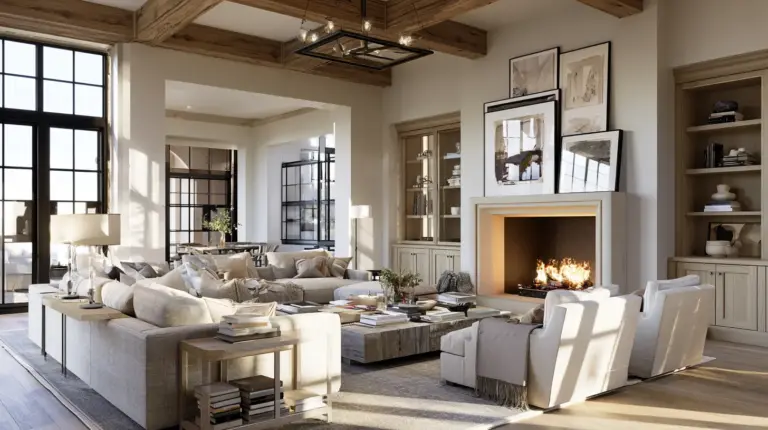
- Arranging around one focal point when you have two. If your room has both a fireplace and a TV, angle the seating to acknowledge both rather than turning its back on one.
- Forgetting about flow. Furniture should invite movement, not block it. Walk through your room mentally before committing to an arrangement.
Style-Specific Arrangement Notes
Modern Rustic
Layer warm wood tones with soft textiles. A reclaimed oak console, a linen sofa, and a chunky wool rug create an arrangement that feels grounded and alive. Leave deliberate empty space — it is not emptiness, it is calm.
Japandi
Japandi arrangement is guided by negative space. Low-profile furniture, minimal pieces, and at least one uninterrupted sightline are essential. Keep the palette quiet: raw linen, pale oak, muted clay. Every object in the room should be chosen, not accumulated.
Budget-Friendly Arrangement Updates
You do not need new furniture to refresh a layout. Rotate your sofa 90 degrees, bring it away from the wall, add a new rug, and rearrange your lighting. These three changes cost very little but completely transform how a room feels.
Thrifted accent chairs, secondhand side tables, and new throw cushions are the most effective budget tools for improving an arrangement without replacing anchor pieces.
Quick Checklist: Is Your Living Room Well-Arranged?
- Sofa is pulled at least 30 cm from the wall
- Coffee table is 40–50 cm from the sofa
- A rug anchors the entire seating group
- There is at least 90 cm of walkway clearance throughout
- The TV is at seated eye level, 2–3 m from the sofa
- Lighting has at least two sources: ambient and accent
- The room has a clear focal point and a clear conversation zone
- Empty space has been preserved, not filled
Conclusion
A well-arranged room does not shout for your attention. It welcomes you quietly and holds you there.
The most enduring living room arrangements are not the trendiest ones — they are the ones that fit the shape of your life. They make mornings feel gentle and evenings feel like a reward. They are arranged for conversation, for light, for the particular way your family moves through a home.
Use the trends as a language, not a prescription. Borrow the curve of a sofa from one inspiration, the low furniture line from another, the warm lamp-and-chair vignette from a third. Then let the room become something entirely your own.
That is the ERYLIN approach: beauty that is always, quietly, livable.
Frequently Asked Questions
How do you arrange living room furniture for a conversation area?
Position sofas or chairs facing each other with 90–120 cm of space between them, anchored by a rug and centered around a low coffee table. Avoid placing all seats against the wall — the conversation zone works best when it is pulled toward the room’s center.
What is the best layout for a small living room?
Float your sofa away from the wall, choose a single sofa over a large sectional, use an open-base or glass coffee table to keep sightlines clear, and size your rug so it extends beneath at least the front legs of all seating pieces.
Should a sofa face the TV or the window?
If the TV is your primary focal point, face it directly. If your room has a beautiful view or a fireplace, consider angling the sofa to acknowledge both, or create a primary conversation zone that is separate from the TV-viewing zone entirely.
How far should a coffee table be from a sofa?
The ideal distance is 40–50 cm — close enough to set down a cup comfortably, with enough room to move freely without bumping your knees.
How do you make a living room feel bigger with furniture placement?
Pull furniture away from walls, use a large area rug, keep the coffee table low and open-based, and choose furniture in lighter or natural tones. Vertical storage draws the eye upward and makes ceiling height feel more generous.