
Table of Contents
By ERYLIN — Your Guide to Calm, Curated Living
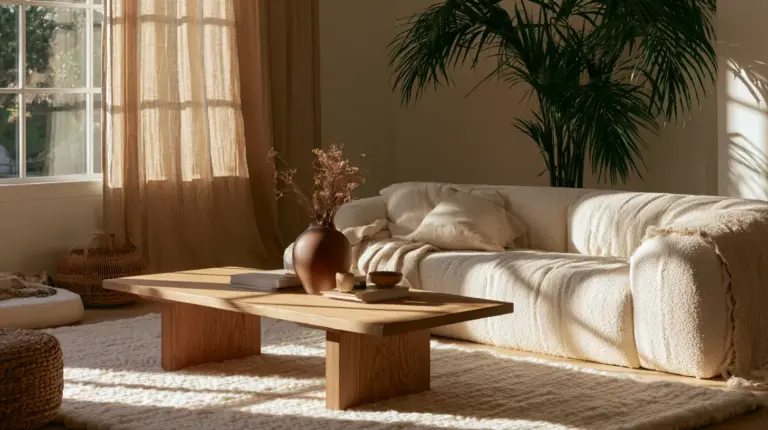
There is something deeply satisfying about a sectional that fits your room like it was always meant to be there. The generous curve of its arm, the way afternoon light falls across its cushions, the quiet invitation to settle in — it all begins with placement.
Arranging a sectional is not just a practical exercise. It is the act of shaping how your family moves, gathers, and rests. Get it right, and your living room breathes. Get it slightly off, and the whole space feels like a puzzle missing one piece.
At ERYLIN, we believe every home deserves to feel considered. Whether you are working with a compact apartment or an open-concept floor plan, this guide walks you through twelve sectional arrangements — with exact measurements, material suggestions, and the kind of sensory detail that turns a room into a haven.
Pull up your floor plan (or grab a tape measure). Let’s begin.
Understanding Sectional Types Before You Arrange
Before placing a single piece of furniture, it helps to know what kind of sectional you are working with. The shape of your sofa determines everything else.
L-Shaped Sectionals
The L-shaped sectional is the most versatile and widely loved configuration. One long sofa arm extends to meet a perpendicular chaise or loveseat, creating a natural corner that anchors the room.
L-shapes work beautifully in rooms where you want to define a conversation zone without closing it off. They feel open, airy, and easy to walk around — a natural fit for modern rustic spaces where linen, oak, and soft neutrals do the heavy lifting.
U-Shaped Sectionals
The U-shaped sectional wraps three sides of a seating area, creating an enclosed, cocoon-like atmosphere. It is ideal for larger rooms and families who gather in numbers.
Think of a U-shape as a built-in hug for your living room. Pair it with a chunky jute rug and a low walnut coffee table, and the space transforms into something that feels both intentional and deeply inviting.
Modular Sectionals
Modular sectionals offer individual pieces that connect and reconfigure as your needs change. They are the smartest choice for renters, growing families, or anyone who loves to refresh their space seasonally.
Because modules can be rearranged without tools, they offer the flexibility to shift from an L-shape in winter (pulled close to the fireplace) to a more open arrangement in summer (angled toward the garden view).
The 12 Best Sectional Arrangements
1. The Classic Corner L-Shape
Best for: Rooms 12 × 14 ft and larger
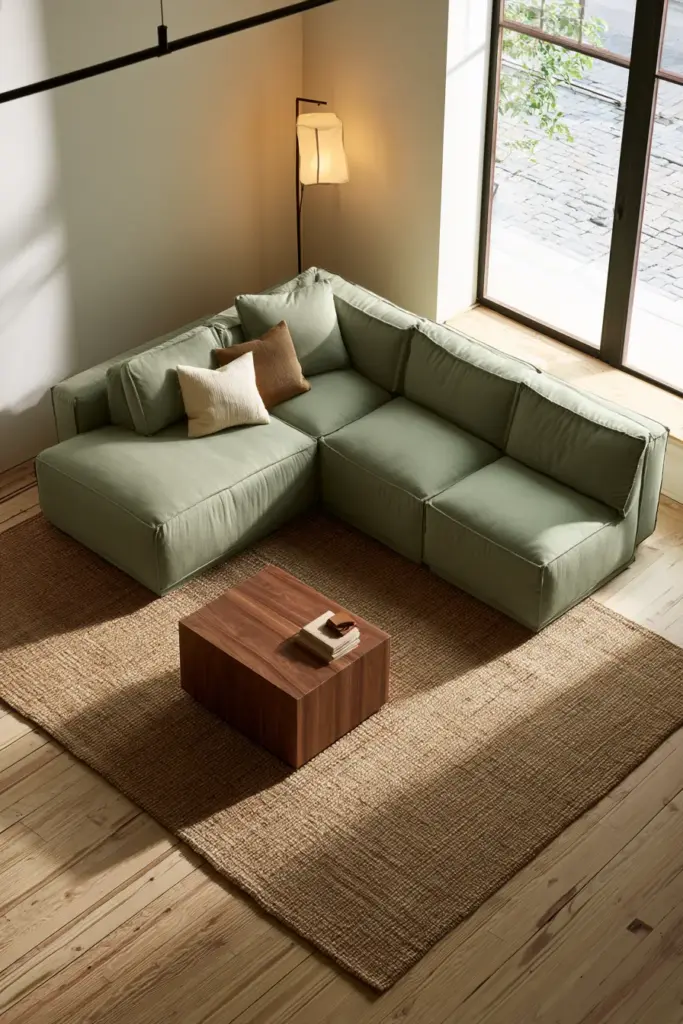
Place the sectional flush into one corner of the room, with the chaise extending along the longer wall. This arrangement immediately frees up two full walls for bookshelves, a console, or a gallery display.
Measurements to follow:
- Leave 30 inches of clearance between the sectional and any opposite wall or furniture
- Position the coffee table 18 inches from the sofa edge
- If placing a TV console opposite, allow at least 7–10 feet of viewing distance
The corner L-shape grounds the room’s focal point and keeps traffic flowing naturally along the perimeter. Dress it with a 9 × 12 rug in natural wool or woven cotton — the texture underfoot completing the sensory story.
2. The Floating L-Shape
Best for: Open-concept spaces and rooms over 200 sq ft
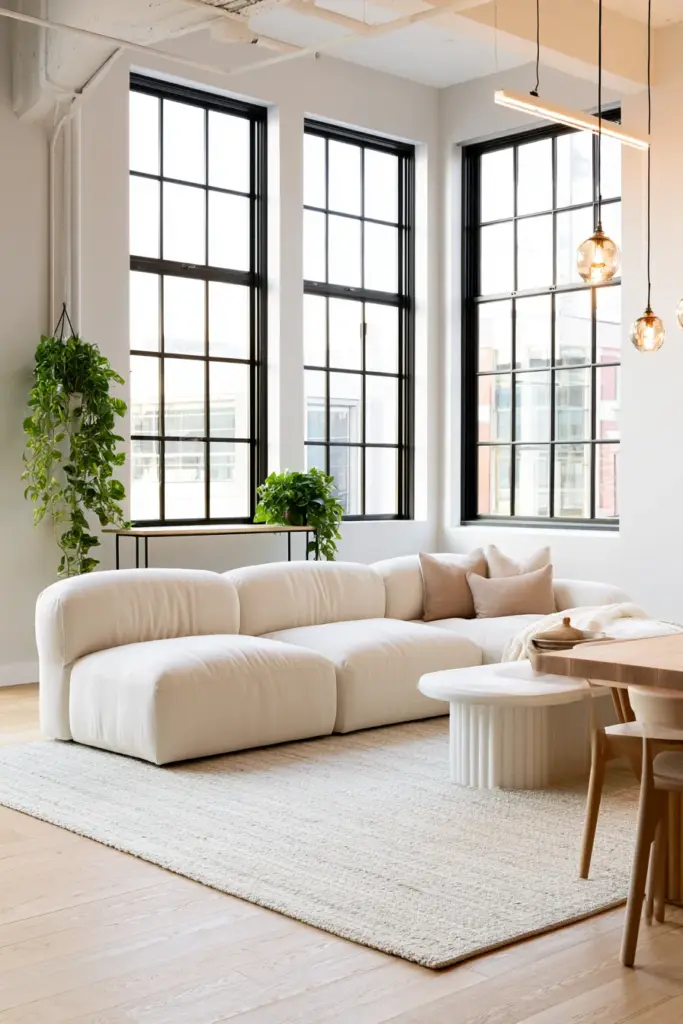
Pull the sectional away from the wall and float it in the center of the room. This configuration creates a defined living zone within an open floor plan, separating it from a dining area or home office without building a single wall.
The floating arrangement also allows you to place a slim console table directly behind the sofa — a practical ledge for books, a trailing plant, or a warm amber lamp that warms the space at dusk.
Tip: Use a rug that extends at least 6 inches beyond each side of the sectional. This visual frame is what makes a floating arrangement feel grounded rather than adrift.
3. The U-Shape Conversation Circle
Best for: Families, entertainers, large living rooms (15 × 18 ft or more)
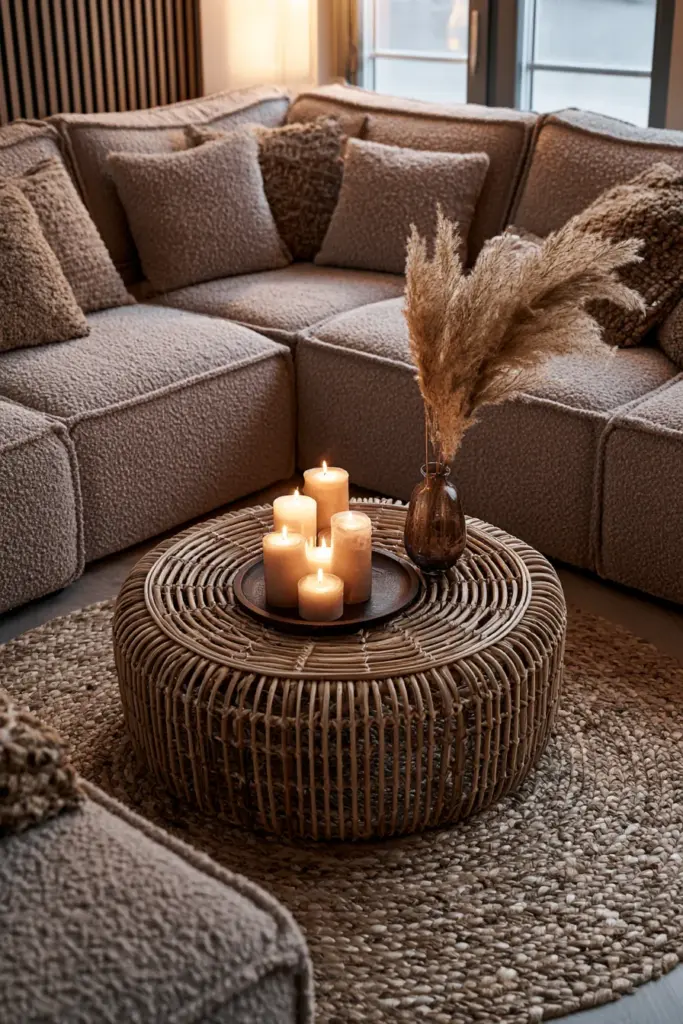
The U-shape wraps around a central coffee table, creating an intimate conversation area where everyone faces inward. It is one of the best arrangements for rooms where connection is the priority.
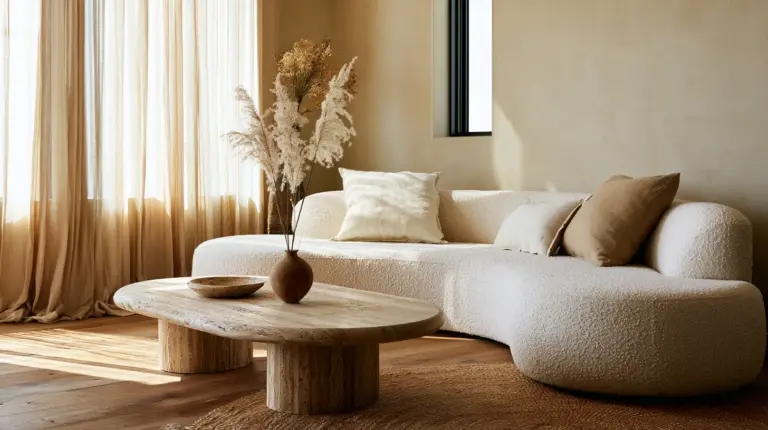
Place a round or oval coffee table at the center — ideally two-thirds the length of the sofa’s longest side. Hard edges feel out of place here; instead, opt for rattan, travertine, or a soft-edged wood with visible grain.
Leave 18–24 inches between the coffee table and each sofa section so guests can move freely without squeezing past knees.
4. The Open U-Shape
Best for: Rooms with a strong focal point — fireplace, TV wall, or large window
An open U-shape is simply a U-shape with one side removed, allowing the seating to face the room’s feature wall while still maintaining a sense of enclosure on three sides.
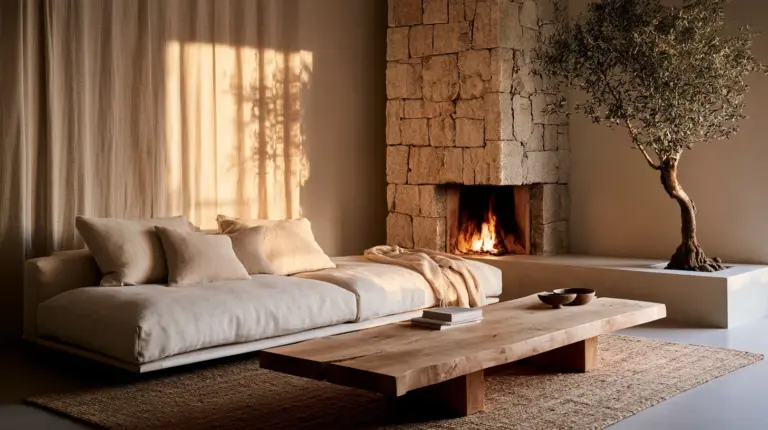
This is an especially beautiful arrangement for rooms with a fireplace. Imagine the warm flicker of flame, a mohair throw draped over the chaise arm, a low table holding a candle and a cup of tea. The open U holds all of that like a quiet frame.
5. The Angled Sectional
Best for: Awkward rooms, diagonal walls, or creating visual interest
Sometimes a room does not call for parallel lines. Placing a sectional at a 45-degree angle to the walls introduces movement and personality into a space that might otherwise feel rigid.
Angle the long side of an L-shape toward a focal point — whether that is a large window, a statement fireplace, or a gallery wall. Anchor the arrangement with a diamond-positioned rug to echo the diagonal energy.
Keep 24–30 inches of clearance on all walkable sides.
6. The Small Apartment Layout (Under 150 sq ft Living Area)
Best for: Studio apartments, compact rentals, urban living
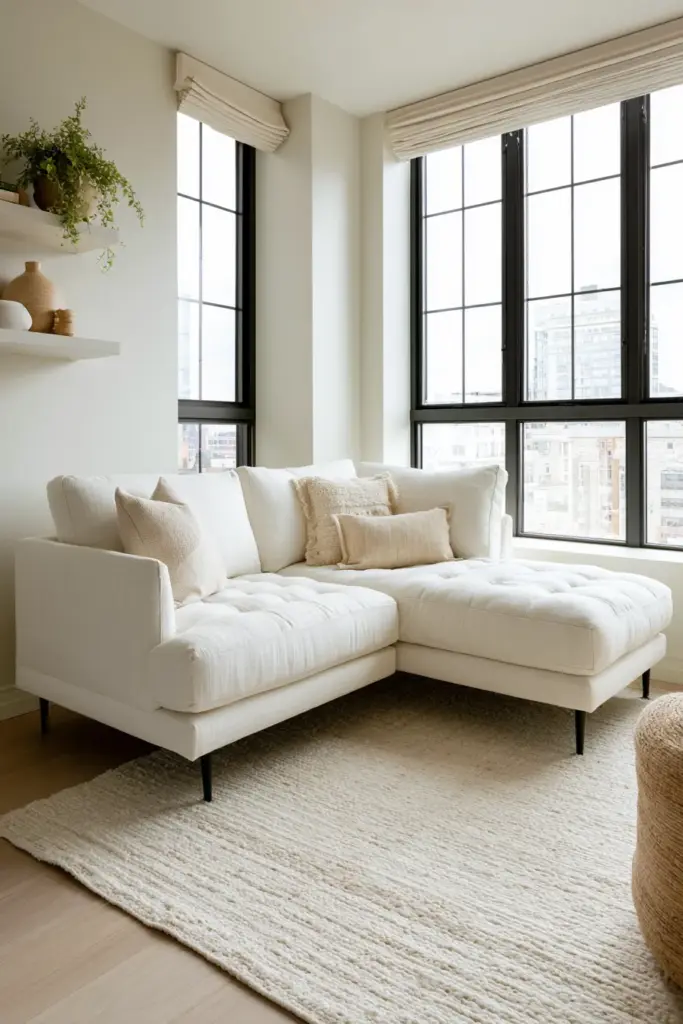
In a small space, the sectional must work harder. Choose a slim-arm, low-back L-shape in a light fabric — oatmeal, warm white, or soft sage — to keep the visual footprint light.
The tape test: Before purchasing, lay painter’s tape on your floor in the exact sectional dimensions. Live with it for a day. Walk around it. Sit on the floor where it will be. This simple test has saved hundreds of buyers from expensive mistakes.
Small space measurements:
- A 84-inch sectional works in a room as small as 10 × 12 ft
- Leave at least 24 inches of walkable space on open sides
- Use taller legs (4–6 inches) to create the visual illusion of more floor space
7. The Rental-Friendly Arrangement
Best for: Renters who cannot make permanent changes
Renters face a unique challenge: every arrangement must be reversible. No wall anchors, no permanent rug grips, no nails for artwork above the sofa.
Use removable rug pads beneath a large natural fiber rug to prevent slipping. Float the sectional away from walls to avoid scuff marks. If you have an L-shape, consider placing the chaise toward the center of the room rather than against a wall — this protects the wall’s paint and creates a more intentional layout.
Modular sectionals shine here. You can configure them to suit each new apartment without losing the investment.
8. The Sectional + Work Zone Layout
Best for: 2026 hybrid living, work-from-home households
The living room is increasingly doing double duty — hosting Netflix marathons by night and Zoom calls by day. A thoughtful sectional arrangement can honor both.
Place the sectional in its typical position facing the TV. Then, position a compact desk or console at the sectional’s open end, perpendicular to the sofa. This creates a natural visual division between rest and work without requiring a separate room.
Bring in a task lamp with a warm bulb (2700–3000K) to define the work corner. In the evening, it doubles as ambient lighting. Add a small trailing pothos on the desk to soften the transition between zones.
9. The Pet-Friendly Sectional Layout
Best for: Households with dogs, cats, or multiple pets
Pets move through a room on their own logic, and ignoring that creates friction. When arranging a sectional for pet-friendly living, build in dedicated pet traffic lanes — clear pathways of at least 24 inches where your animals can move without nudging furniture.
Choose sectionals in performance fabrics (tightly woven, stain-resistant textiles like bouclé, microfiber, or crypton blends). Position the chaise away from windows to reduce sun-bleaching on spots where pets tend to rest.
Place a washable cotton rug beneath the sectional — easy to remove, easy to clean, easy to replace seasonally.
10. The Biophilic Sectional Layout
Best for: Japandi interiors, plant lovers, light-filled rooms
A sectional arranged with biophilic design principles brings the outdoors into your daily rhythm. Position the sofa to face or frame a window, allowing natural light to fall across the seating throughout the day.
Plant placement guide:
- A tall floor plant (fiddle leaf fig, olive tree) belongs 24 inches from the sectional arm — close enough to feel present, far enough to breathe
- A hanging plant above the chaise adds vertical interest without occupying floor space
- Small trailing plants on a console behind the sofa soften the sofa’s back profile
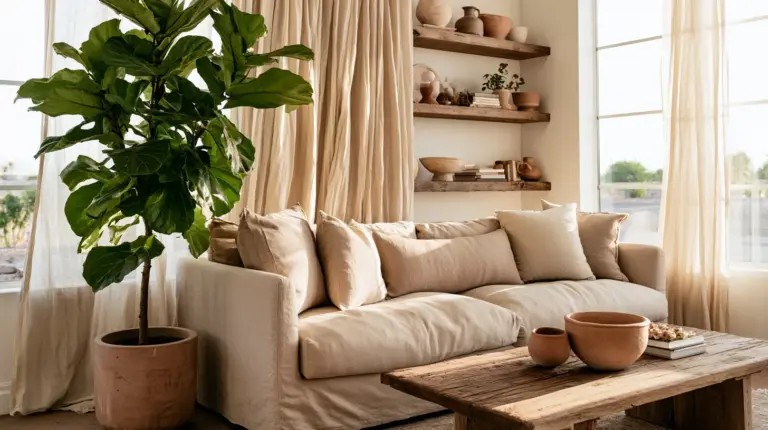
Use linen, hemp, or organic cotton upholstery in warm earth tones — terracotta, sage, bone — to echo the natural world around the sectional.
11. The Seasonal Arrangement (Summer vs. Winter)
Best for: Homes that want to refresh without buying new furniture
Your sectional does not need to stay in one place year-round. Seasonal rearrangement is one of the most cost-free ways to refresh a space.
Winter layout: Pull the sectional closer to the fireplace or interior wall. Add a thick wool or sherpa throw, a cluster of candles on the coffee table, and a darker, richer rug beneath.
Summer layout: Shift the sectional toward windows or sliding doors to invite light and air. Swap the rug for a lighter natural fiber weave (sisal, seagrass) and replace heavy cushion covers with linen in pale sand or dusty blue.
12. The Sensory-Calm Layout
Best for: Neurodivergent households, anxiety-sensitive spaces, quiet retreat rooms
This arrangement prioritizes predictability, softness, and the feeling of gentle enclosure. A U-shaped or wrap-around sectional placed against two walls creates a back-protected seating zone that many people find deeply calming.
Keep traffic pathways wide and unobstructed — at least 36 inches on all navigable sides. Avoid placing the sectional where it is directly in the line of foot traffic. Soft rugs, low-pile textures, and muted tones (warm grey, dusty rose, oat) contribute to a sensory environment that feels safe and still.
Avoid high-contrast patterns or very bright accent colors in this layout. Let the sectional be the room’s quiet anchor.
Sectional Sizing Guide by Room Dimension
| Room Size | Recommended Sectional | Clearance | Rug Size |
|---|---|---|---|
| 10 × 12 ft | 84″ L-shape | 24″ minimum | 6 × 9 ft |
| 12 × 14 ft | 96″ L-shape | 30″ on open sides | 8 × 10 ft |
| 14 × 16 ft | 108″ L-shape or small U-shape | 30–36″ | 9 × 12 ft |
| 16 × 18 ft | U-shape or large L-shape | 36″ minimum | 10 × 14 ft |
| 18 × 20 ft+ | Full U-shape or modular | 36–48″ | 12 × 15 ft |
Left-Facing vs. Right-Facing: How to Decide
This is one of the most searched and least-answered questions in sectional shopping. Here is a simple decision guide.
Stand at the entrance of your room and face the sofa’s intended position.
- If the chaise will extend toward your left hand, you want a left-facing sectional
- If the chaise will extend toward your right hand, you want a right-facing sectional
Consider your focal point. If your TV or fireplace is on the right wall, a left-facing sectional naturally angles more seating toward it. If you have a window on the left, a right-facing sectional opens the view to more people.
Consider your entry. Place the chaise on the far side from your entryway — this way, the open end of the sofa greets you as you walk in, creating an inviting rather than obstructing entrance.
Key Takeaways: Your Sectional Arrangement Checklist
- Define your focal point first — TV, fireplace, or view — then orient the sectional toward it
- Measure before you buy — use painter’s tape on the floor to test dimensions
- 18 inches between sofa and coffee table; 30 inches minimum walkway clearance
- Anchor with a rug — front legs on rug minimum; full rug preferred for floating arrangements
- Left vs. right facing — stand at the entryway and let the room’s focal point guide you
- Float it in open-concept spaces to define zones without walls
- Match your sectional to your life — pets, work-from-home, plants, and seasonal rhythms all deserve consideration
- Small spaces need slim profiles — low backs, taller legs, light fabric colors
- Modular is best for renters — reconfigurable, portable, adaptable
- Layer sensory details last — rugs, throws, plants, and lighting complete what arrangement begins
Conclusion
A well-arranged sectional is not simply furniture placed in a room. It is the quiet architecture of your daily life — the place where morning coffee happens, where stories are told, where children fall asleep mid-movie.
Every measurement, every inch of clearance, every rug placed just so — it all adds up to a feeling. And that feeling, when it is right, is unmistakable.
At ERYLIN, we call it coming home to yourself. We hope this guide helps you find that feeling in your own space — wherever that may be, and in whatever shape it takes.
Now, go rearrange something beautiful.
Frequently Asked Questions
Can I place a sectional sofa in the center of the room?
Yes — and often, it is the best choice. Floating a sectional away from walls creates a defined conversation zone, especially in open-concept spaces. The key is to anchor it with a rug large enough to ground all legs and leave at least 30 inches of walkable space on all sides.
How do I choose the right sectional configuration for my space?
Start with your room’s dimensions and your primary focal point (TV, fireplace, or view). L-shapes suit most rooms 12 × 14 ft and up. U-shapes work best in larger rooms 15 × 18 ft or more. Modular sectionals work everywhere and offer the most flexibility for renters or those who rearrange seasonally.
What is the best way to arrange a sectional in a small living room?
Choose a slim-arm, low-back L-shape in a light fabric. Use the tape test — lay painter’s tape on your floor in the sectional’s exact dimensions before purchasing. Keep at least 24 inches of walkable clearance, opt for taller furniture legs to lift the visual weight, and anchor with a rug sized 6–12 inches beyond the sofa on open sides.
u003cstrongu003eShould a sectional face the TV or the fireplace?u003c/strongu003e
Face whichever is your primary gathering focal point. If you use the fireplace more in daily life, orient toward it. If the TV is the household anchor, face that. In rooms with both, a slightly angled arrangement or a swivel chair at one end can honor both focal points without compromise.
What rug size goes under a sectional sofa?
For an L-shaped sectional, an 8 × 10 or 9 × 12 rug typically works well. The rug should extend at least 6–12 inches beyond the sectional’s open sides. For a U-shaped sectional, a 10 × 14 rug anchors the seating without disappearing underneath it. Always size up if uncertain — a too-small rug is the most common arrangement mistake.
How much space should be around a sectional sofa?
Follow the 30-inch rule for primary walkways and 18–24 inches for secondary paths (behind sofa or between sofa and side table). Leave 18 inches between the sofa and coffee table for comfortable leg room. These spacings follow standard interior design practice and ensure the room feels both beautiful and functional.
Left-facing or right-facing sectional: which is better?
Neither is inherently better — it depends on your room’s layout. Stand at the main entrance facing where the sofa will sit. If the chaise will be on your left, choose left-facing; if on your right, choose right-facing. Let your focal point and entryway guide the decision.
Can you put a sectional sofa in front of a window?
You can, but approach it thoughtfully. A low-back sectional in front of a window maintains light flow and the view. Avoid tall-backed sofas that block natural light or obstruct a meaningful outdoor view. If the window is a primary light source, floating the sectional several feet forward preserves brightness while still using the space.
How do you arrange furniture around a U-shaped sectional?
Center a round or oval coffee table within the U — two-thirds the length of the sofa’s longest side is ideal. Use side tables at each arm end. Keep the open side of the U accessible with at least 36 inches of clearance. Avoid adding too many additional chairs, which can crowd the natural openness.
What is the difference between an L-shaped and U-shaped sectional layout?
An L-shaped sectional has two sides meeting at a right angle — open on two sides, ideal for most room sizes and traffic flow. A U-shaped sectional wraps three sides around a central seating area, creating a more enclosed, social atmosphere. L-shapes suit everyday versatility; U-shapes suit rooms built for gathering.