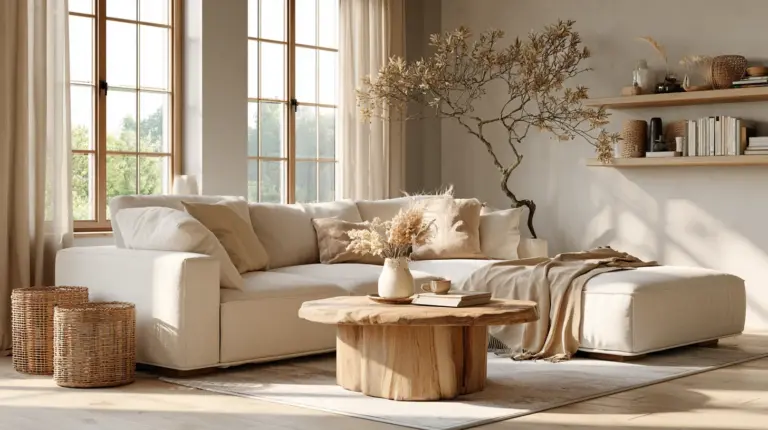

Table of Contents
By ERYLIN — Home Décor & Interior Styling
There is a particular kind of magic that happens when a living room holds everyone at once — a toddler rolling across a soft rug, a school-age child building towers near the window, and you, finally seated, with a warm cup in hand.
It is not chaos. It is life. And with the right furniture arrangement, it becomes something even more beautiful: a space that works.
At ERYLIN, we believe a family living room does not have to choose between style and childhood. The right layout — thoughtful, safe, and softly elegant — can carry both. This guide walks you through exactly how to get there.
Whether you are working with a compact apartment in Mandaluyong or a wide open sala in the suburbs, these layouts will help you breathe easier, play freely, and live beautifully.
Why Furniture Arrangement Matters More Than You Think
Most parents start with the furniture they already own and simply push it to the walls. It feels safer, more open. But this approach often creates a hollow, echo-y center and leaves no real zone for anything — not play, not rest, not connection.
Intentional furniture placement changes everything. It creates natural traffic flow, defines safe play areas without baby gates, and anchors the room with warmth. Think of each piece of furniture as a boundary — not a barrier — that gently shapes how your family moves and rests.
A well-arranged room also reduces accidents. Sharp corners become avoidable. Cords are hidden. Shelves stay anchored. And the whole room feels calmer, because everyone knows where to go.
Start with the Floor Plan: Zones First, Furniture Second
Before you move a single sofa, map out your room’s purpose zones. In a family living room with children, you typically need three distinct areas.
The Three Core Zones
Zone 1 — The Anchor (Adult) Seating Area
This is where your sofa, loveseat, or armchairs live. Position this toward the back of the room, away from the main doorway, facing the television or a focal wall. A soft area rug in a natural weave — jute, wool, or cotton — grounds the space and defines its edges.
Zone 2 — The Play Corner
Tuck this into a corner or along a wall with lower light. A low, washable foam mat in a neutral tone (sage, oatmeal, dusty rose) marks the territory gently. Accessible toy bins or a low bookcase keep everything reachable without adult help.
Zone 3 — The Transition Path
Leave a clear, unobstructed walkway of at least 90 centimeters between zones. Children move fast and unpredictably. A generous transition path prevents collisions and allows you to reach them quickly when needed.
Age-Specific Living Room Layouts
Children’s needs change dramatically from year to year. A layout that serves a crawling infant will frustrate a seven-year-old. Here is how to think about arrangement by age group.
For Toddlers (Ages 0–2): The Soft Perimeter Layout
At this stage, floor is everything. Your toddler spends most of their time crawling, pulling up, and tumbling. The priority is a padded, obstacle-free center.
Key arrangement principles:
- Push sofas and chairs to the perimeter, leaving the center open
- Add a large, thick area rug — at least 2 meters by 3 meters — to cushion falls
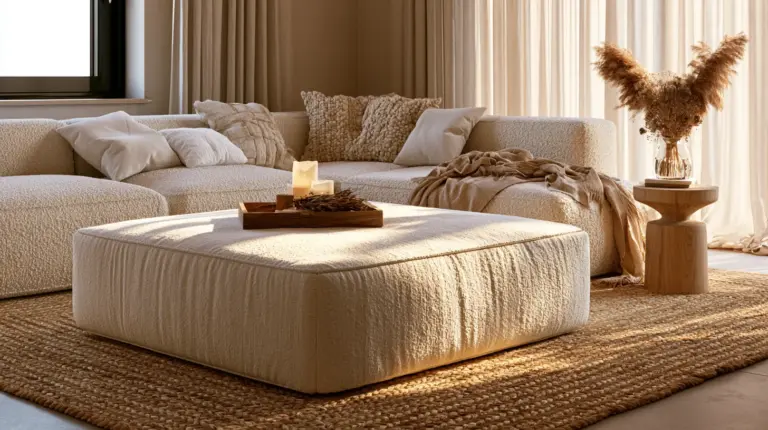
- Cover or remove coffee tables entirely; opt for a soft ottoman instead
- Use a U-shaped sofa arrangement so you can see the entire room from any seat
Safety checklist for 0–2:
- Anchor all bookshelves and tall furniture to the wall
- Cover electrical outlets with safety caps
- Tie up or conceal all cords behind furniture
- Choose furniture with rounded edges only
- Remove breakable décor from surfaces below 90 centimeters
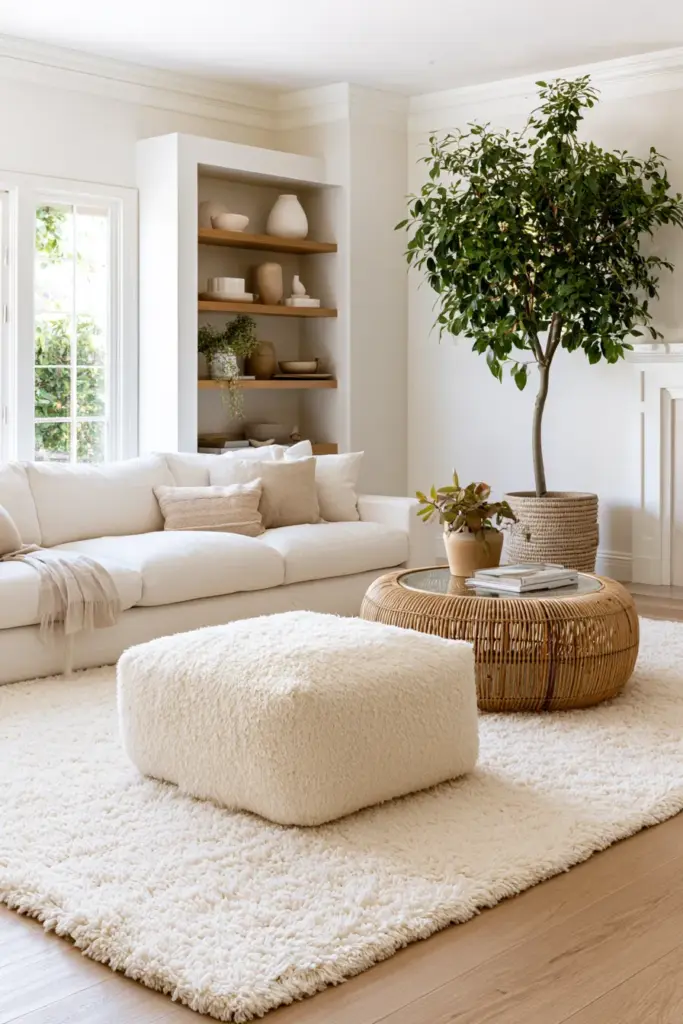
For Preschoolers (Ages 3–5): The Island Layout
Three- to five-year-olds need structured play space alongside room to run. They also begin to understand “their” corner — a child-sized space that belongs to them.
Key arrangement principles:
- Place a child-size table and two small chairs in the play corner (look for these at IKEA Manila or SM Home)
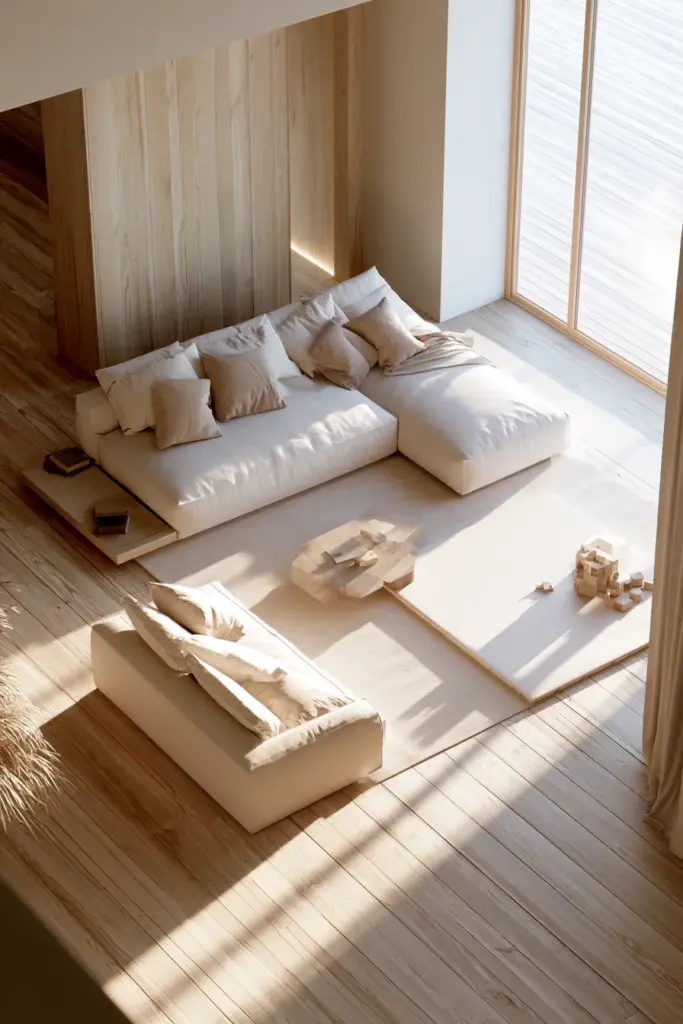
- Position the main sofa at a slight angle, creating a natural barrier between the play zone and the TV area
- Use a low, open bookcase (no higher than 80 centimeters) as a visual room divider
- Layer a smaller play mat inside the larger area rug to double-define the play zone
Furniture that works beautifully here:
A round coffee table in solid wood or rattan sits safely at the center of the adult seating — no sharp edges, and low enough for little hands to reach. A fabric storage ottoman doubles as a seat, a footrest, and a toy chest, keeping the room effortlessly tidy.
For School-Age Children (Ages 6–12): The Flexible Layout
Older children need space for homework, creative projects, and active play — sometimes all at once. The living room must now flex between family movie nights and afternoon art sessions.
Key arrangement principles:
- Introduce a homework nook near a window, using a narrow console table and a simple stool
- Position the main seating in an L-shape to open up more floor space
- Use a low media cabinet with closed doors for toy storage — books and games disappear, the room stays calm
- Add a tripod floor lamp near the reading nook; choose one with a weighted base for stability
Lighting for this stage matters deeply. Natural light from the window is your best study companion. Add a dimmable ceiling light for movie evenings and a soft task lamp for reading. Layered lighting transforms a living room into a genuinely multi-functional space.
Furniture Comparison: What Works Best for Family Living Rooms
Choosing the right pieces makes arrangement easier and keeps the space safer. Here is a quick comparison of the most common furniture types for family rooms.
| Furniture Type | Best For | Safety Rating | Ease of Cleaning | Approx. Price (PH) |
|---|---|---|---|---|
| Fabric Sofa (microfiber/performance) | All ages | ⭐⭐⭐⭐ | ⭐⭐⭐⭐ | ₱12,000–₱35,000 |
| Leather Sofa | School-age+ | ⭐⭐⭐ | ⭐⭐⭐⭐⭐ | ₱18,000–₱60,000 |
| Round Coffee Table (wood/rattan) | Toddlers, Preschoolers | ⭐⭐⭐⭐⭐ | ⭐⭐⭐ | ₱2,500–₱8,000 |
| Storage Ottoman | All ages | ⭐⭐⭐⭐⭐ | ⭐⭐⭐⭐ | ₱1,800–₱6,000 |
| Low Open Bookcase | 3 years and up | ⭐⭐⭐⭐ | ⭐⭐⭐⭐⭐ | ₱1,500–₱5,000 |
| Tall Closed Cabinet | School-age, Teens | ⭐⭐⭐ (anchor required) | ⭐⭐⭐⭐⭐ | ₱3,000–₱12,000 |
Local options: IKEA Manila, SM Home, Wilcon Depot, thrift and ukay-ukay shops in Cubao or Marikina
Toy Storage Arrangement: Hidden, Accessible, and Beautiful
Toy clutter is the single biggest challenge in a family living room — and the most solvable one.
Storage Solutions by Type
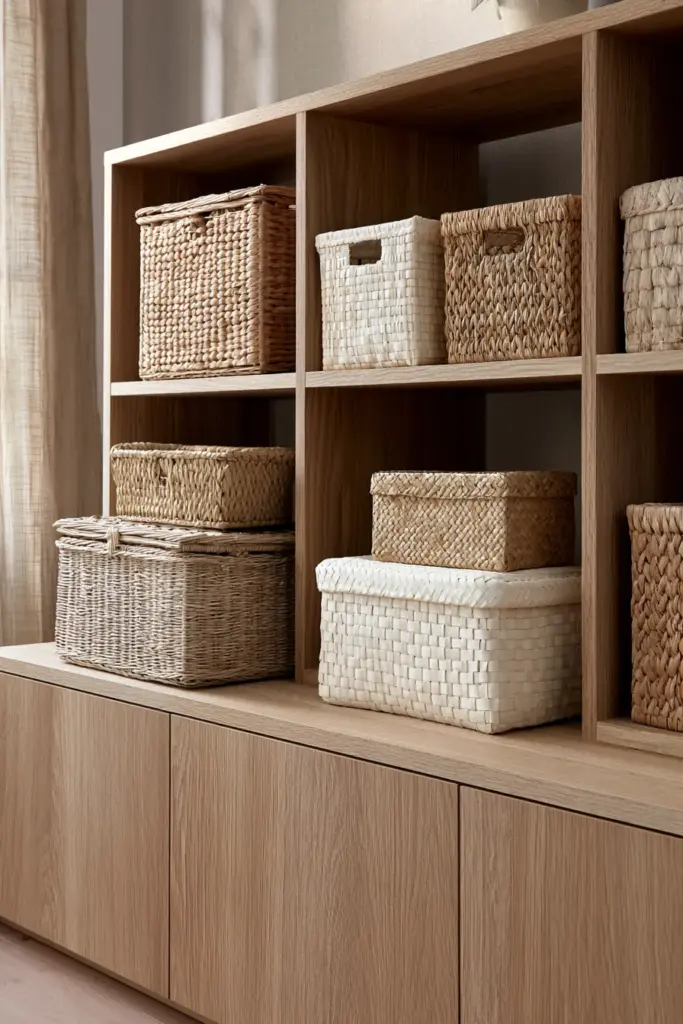
Open bins and baskets work beautifully for toddlers who need to see their toys to choose them. Natural rattan baskets in warm ivory or sand tones look elegant and blend seamlessly with a neutral room palette. Use them on the lower shelves of your bookcase.
Closed ottomans and benches are ideal for school-age children. Everything disappears behind a cushioned lid, and the piece doubles as extra seating when guests arrive. Look for ones with hinge stoppers so little fingers never get caught.
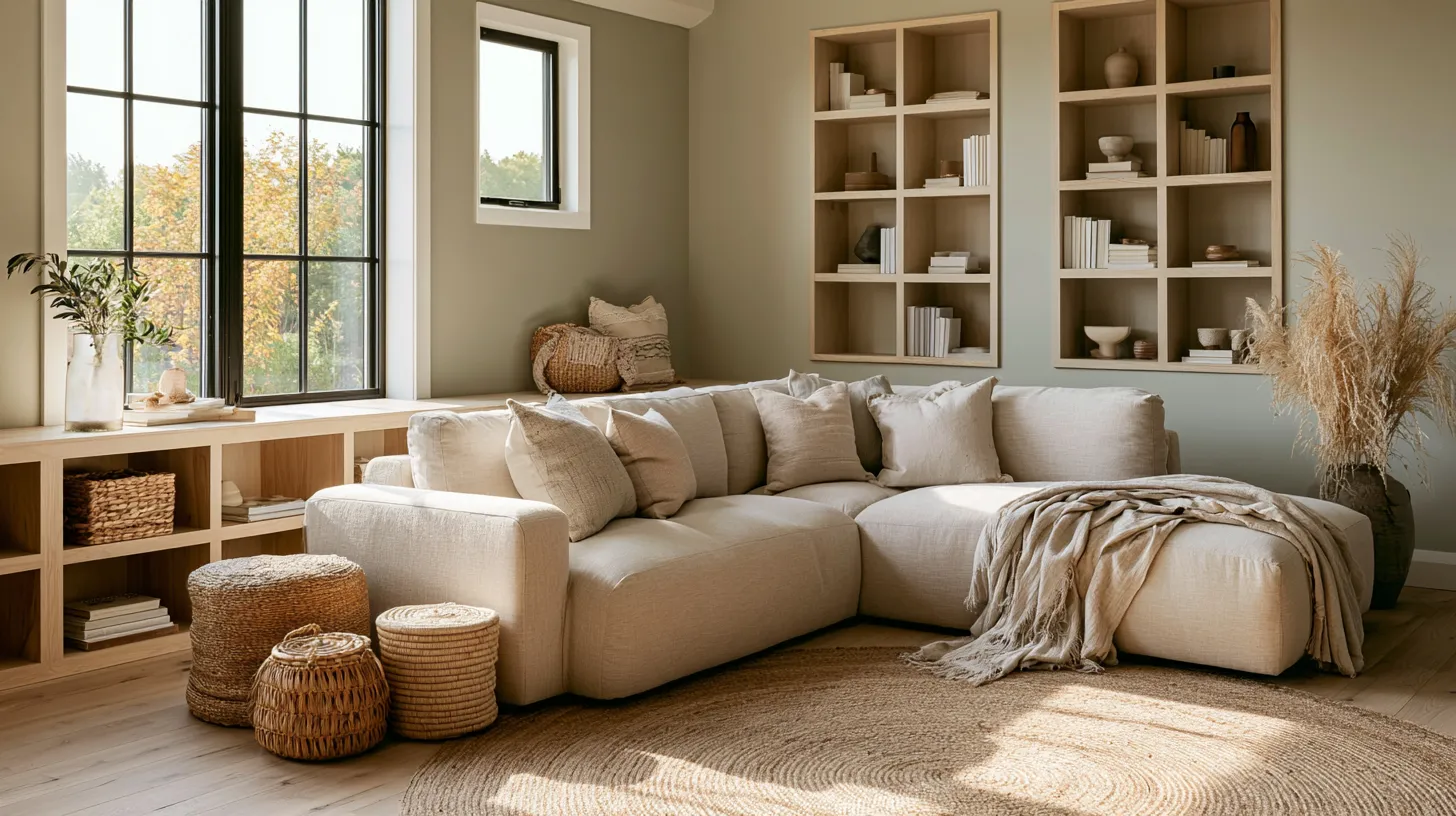
Built-in shelving or wall-mounted cubbies are the long-term investment that truly transforms a family room. At about 40 centimeters deep and mounted at 30–45 centimeters from the floor, they keep toys reachable for children and visually clean for adults.
The Toy Rotation Method
One of the most underrated living room strategies is keeping only some toys accessible at a time. Store half in closed bins or a bedroom, then swap every two to four weeks. Children engage more deeply with fewer toys, and your living room stays curated and calm.
Biophilic Design in the Family Living Room
Nature belongs in the living room — even with children around. The key is choosing the right plants.
Child-safe plants that thrive indoors:
- Spider plant (Chlorophytum comosum) — air-purifying, non-toxic, nearly impossible to kill
- Areca palm — gentle, feathery, and beautiful in corners
- Peperomia varieties — small, sculptural, and completely safe for curious hands
- Money plant (Epipremnum aureum) — keep out of reach; mildly toxic if chewed
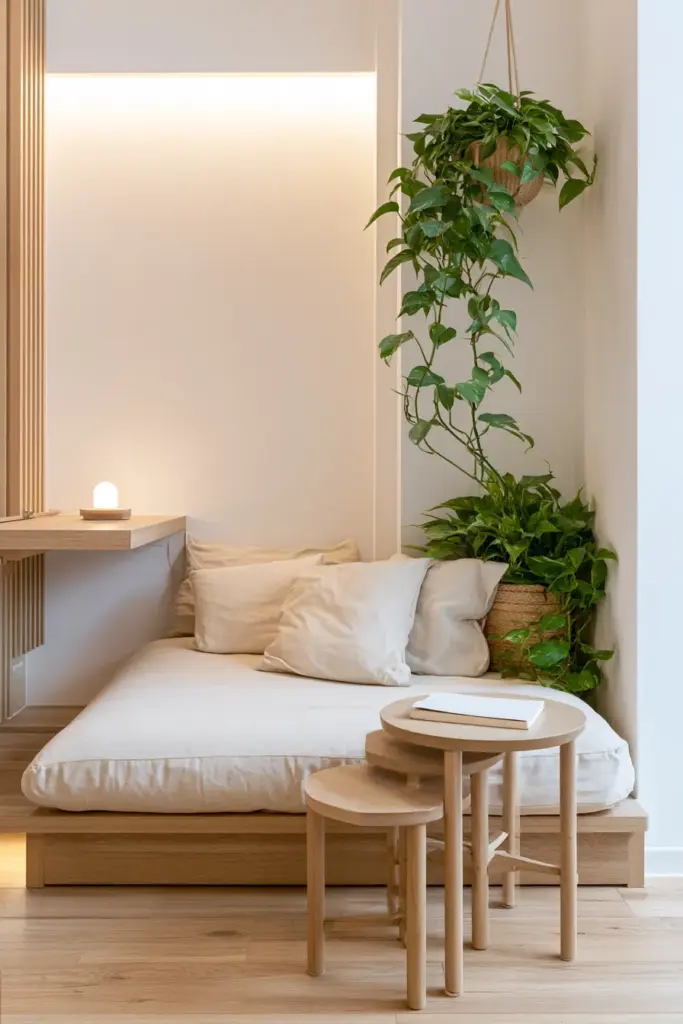
Place plants on high shelves, wall-mounted planters, or window ledges above the reach of toddlers. A trailing pothos in a woven hanging planter adds life to a corner without taking up floor space.
Small Space Solutions for Urban Families
For apartments in Metro Manila — where the sala often doubles as a study, a playroom, and a WFH office — every centimeter counts.
Multi-functional furniture to prioritize:
- A sofa bed or daybed along one wall serves as seating by day and a guest bed or reading nook by night
- A fold-down wall desk mounted at adult height gives you a work surface that folds away completely
- Nesting tables instead of a fixed coffee table free up floor space in minutes
- A low TV bench with integrated storage replaces the need for a separate media console and toy shelf
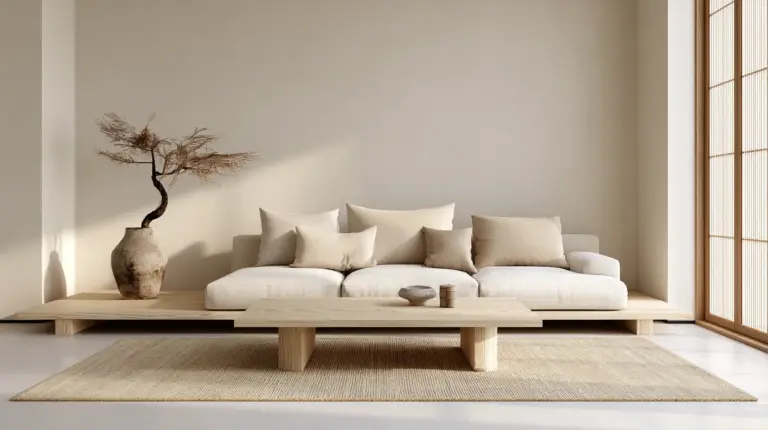
The Japandi approach to small family spaces — combining Japanese minimalism with Scandinavian warmth — is particularly well-suited for Philippine apartments. Think low-profile furniture in natural wood tones, clean lines, soft linen textiles, and an intentional reduction of visual clutter. Everything has a place. The room breathes.
A Quick Summary: Key Takeaways
- Zone your room first — anchor seating, play corner, and clear transition path before choosing furniture placement
- Match the layout to your child’s age — toddlers need open floor space; school-age children need flexible zones
- Round edges and low profiles are always the safer, softer choice for family rooms
- Layer your storage — open baskets for small children, closed ottomans and cabinets for older ones
- Rotate toys every 2–4 weeks to keep the room calm and your child engaged
- Anchor tall furniture to the wall; this is non-negotiable at every age
- Layer your lighting — natural light, ambient ceiling light, and a task lamp create a room that functions from morning play to evening rest
- Choose performance fabrics (microfiber, treated linen, slipcovers) for sofas and cushions — they clean easily and hold their beauty
- Incorporate safe plants at high or hanging positions to bring warmth and life to the room
- In small spaces, invest in fold-away and multi-functional pieces that serve more than one purpose
Conclusion
A living room that holds your children — truly holds them, safely and beautifully — is one of the quietest gifts you can give your family.
It does not need to be perfect. It needs to be intentional. A soft rug on a clean floor. A basket for the building blocks. A corner lamp that glows warm in the evening. A sofa everyone is welcome on.
That is the ERYLIN vision of a family room: not a showroom, not a playroom, but a living room — in every sense of the word.
Frequently Asked Questions
How do I arrange living room furniture with kids?
Start by identifying three zones: adult seating, a defined play corner, and a clear walkway between them. Position your sofa away from walls to create natural boundaries, and use a large area rug to anchor each zone. Choose furniture with rounded edges and keep the floor as open as possible, especially for toddlers and preschoolers.
What furniture is best for a kid-friendly living room?
Performance fabric sofas (microfiber or treated linen) clean beautifully and resist stains. Round coffee tables or soft ottomans replace sharp-edged pieces. Low open bookshelves give children access to their own things. Storage ottomans serve double duty as seating and toy storage. Prioritize pieces that are low-profile, durable, and easy to wipe down.
How do I keep my living room tidy with children?
The toy rotation method is your best tool — keep only half of your child’s toys accessible at a time and swap every few weeks. Use labeled bins and baskets at child height so children can help tidy up independently. A closed ottoman or media cabinet with doors keeps the room looking calm even on the busiest days.
What is the safest living room layout for toddlers?
For children aged 0–2, use a soft perimeter layout: furniture pushed toward the walls, a large thick rug covering the central floor area, no coffee tables (use a soft ottoman instead), and all bookshelves anchored to the wall. Cover all electrical outlets, hide or tie up cords, and remove breakable décor from any surface below 90 centimeters.
How do I create a play area in the living room without sacrificing style?
Define the play zone with a second, smaller rug inside your main area rug — this visually separates the zones without any partition or barrier. Use natural rattan baskets and neutral-toned storage that blend with your room’s palette. Choose child-size furniture in wood tones that complement your adult pieces. When toys are stored away, the space reads as a beautifully curated room, not a playroom.