
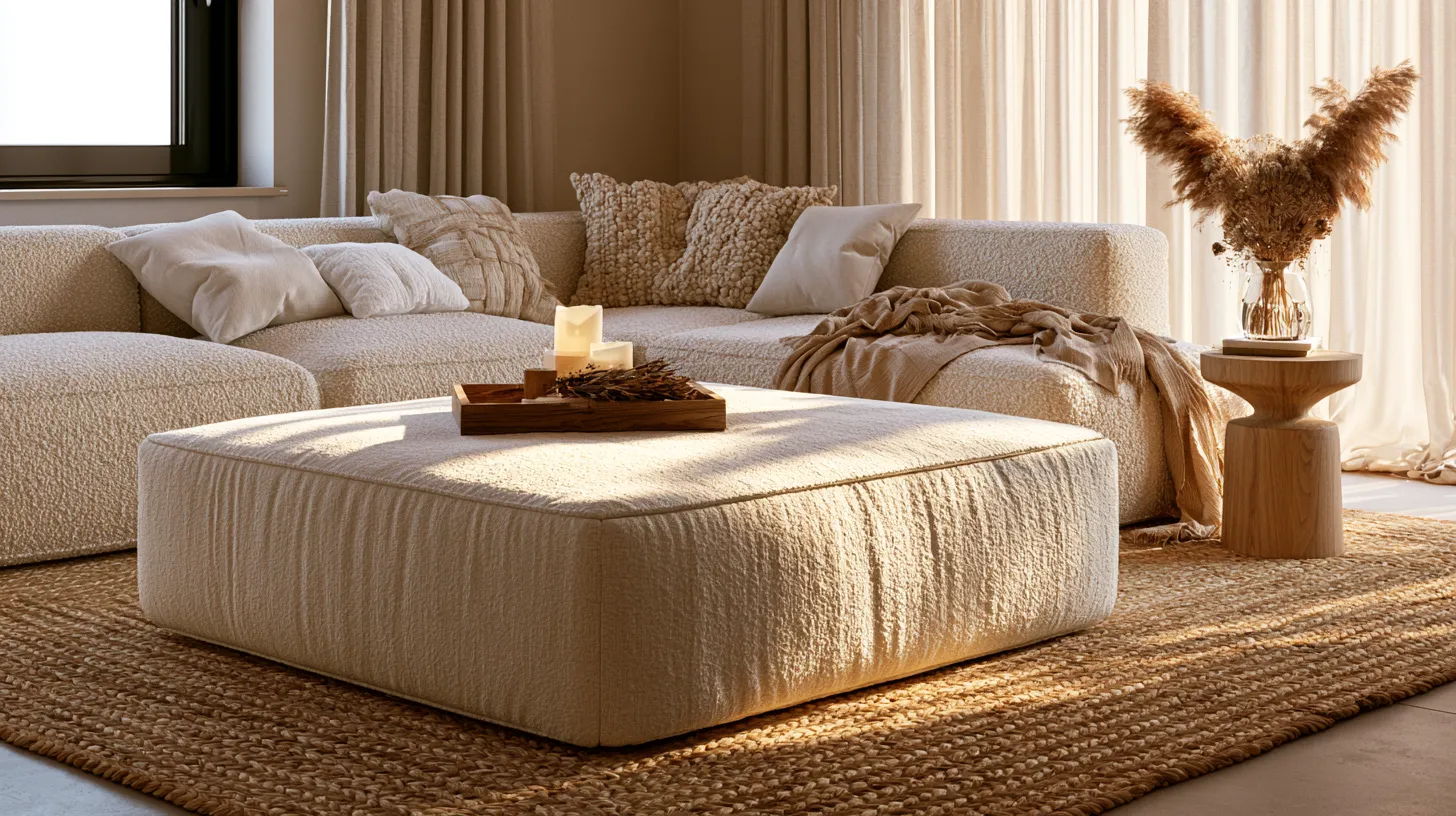
Table of Contents
By ERYLIN — Where comfort becomes art.
There is a moment, just after you’ve placed every piece of furniture and stepped back to take it all in, when a room finally breathes. An ottoman has a quiet power in that moment. It draws the eye, anchors the seating, and invites you to slow down.
More than a footrest, the right ottoman can replace a coffee table, create a second layer of seating, or hide a season’s worth of throw blankets in plain sight. It earns its place in a room the way a well-chosen candle does — through warmth, purpose, and presence.
But placement matters. An ottoman set too far from the sofa feels forgotten. One that’s too large crowds the conversation. This guide gives you the exact measurements, layout templates, and styling instincts you need to get it right — the first time.
Whether you’re working with a cozy 10×12 living room or an open-plan space with a sectional, we’ll walk you through it all. Think of this as your room-planning companion, written by someone who genuinely loves the way a well-arranged space feels.
The Golden Rules: Ottoman Placement Measurements
Before inspiration, there is math. And the good news is — the math here is simple.
Getting these numbers right is the difference between a room that functions and one that flows. Keep these close when you’re planning your layout.
| Rule | Measurement |
|---|---|
| Ottoman to sofa distance | 14–18 inches (comfortable reach for feet) |
| Main circulation path (front of seating) | 30–36 inches minimum |
| Ottoman depth vs. sofa seat depth | 60–70% of sofa seat depth |
| Ottoman as coffee table height | 16–18 inches (standard coffee table height) |
| Ottoman as footrest height | 15–17 inches (slightly lower than sofa seat) |
| Tray surface to ottoman edge clearance | 18–24 inches from the nearest seat |
| Ottoman width for 3-seater sofa | 36–48 inches |
These are your anchors. Every arrangement decision branches from here.
How Far Should an Ottoman Be from a Sofa?
The sweet spot is 14 to 18 inches. Close enough to rest your feet without stretching, far enough that you can stand up without nudging it with your knees.
In a small room, you can push it to 12 inches if the ottoman is low-profile and you use a tray on top. The goal is ease — nothing in this space should require effort.
What Size Ottoman Works Best for Your Sofa?
A general rule: match the ottoman’s width to the width of your sofa’s cushions, not the full sofa frame. For a standard 84-inch, three-cushion sofa, this means a rectangular ottoman between 36 and 48 inches wide.
For a sectional, consider two smaller ottomans rather than one oversized piece. They’re easier to move, more versatile as extra seating, and allow you to open up traffic flow.
Layout Templates for Common Room Sizes
Every room has its own rhythm. Here are three configurations that work — each one adapted to a real room size you might be living with right now.
Small Living Room Ottoman Layout (10×12 ft)
A small room is not a compromised room. It’s a curated one.
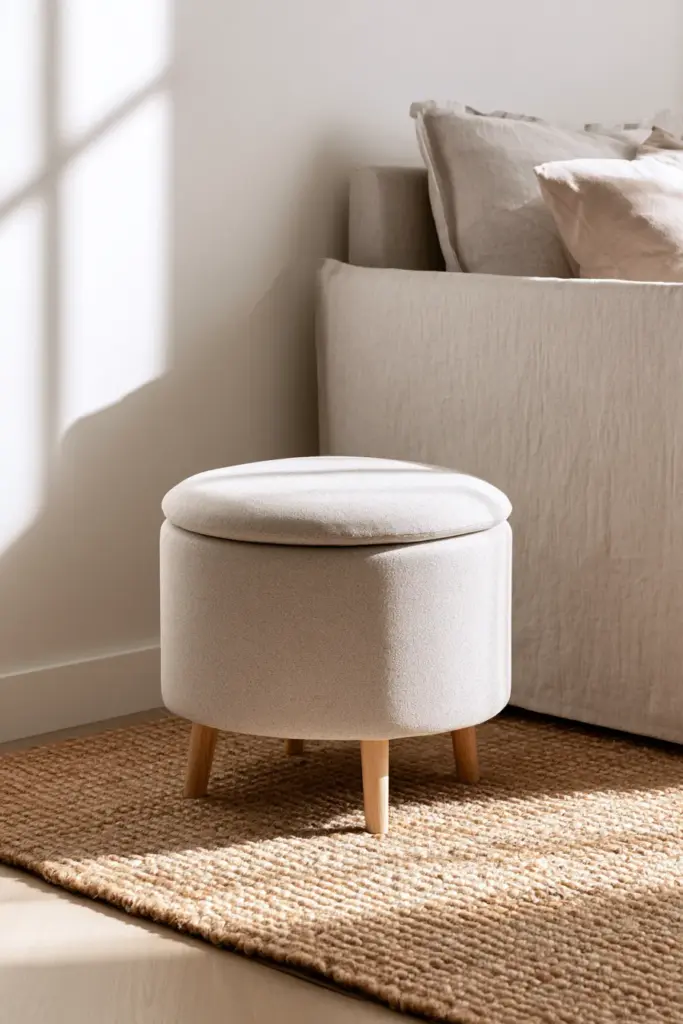
Place a round or square ottoman (24–30 inches) at the center of your seating area, roughly 16 inches from your sofa. This keeps the footprint compact while giving you a functional surface. A storage ottoman here is ideal — it earns double the square footage.
Keep the main path from the entry to the seating zone at least 30 inches wide. If that’s tight, push the sofa slightly toward the wall and use a low-profile pouf instead.
Small room tip: A tray-top ottoman styled with one candle, one small plant, and a book becomes your coffee table. You lose nothing and gain visual lightness.
Mid-Size Living Room Layout (12×14 ft)
This is the most common living room size, and it’s where ottomans get to shine fully.
Position a rectangular ottoman (36–42 inches) centered in front of your sofa, 16–18 inches out. If you have two armchairs flanking the sofa, the ottoman should sit comfortably within the triangle of all three pieces — anchoring the conversation area without blocking sightlines.
A tray on top transforms it into a coffee table during evenings. Remove the tray during gatherings and suddenly you have seating for two more guests.
Checklist for this layout:
- 30–36 inch clearance on the TV-facing side
- 18 inch minimum on both long sides of the ottoman
- Ottoman height within 1–2 inches of sofa cushion height for footrest comfort
Open-Plan Living Room with Sectional
Sectionals define space instead of being defined by it. An ottoman here plays a dual role: it closes the U-shape and signals where the living area ends.
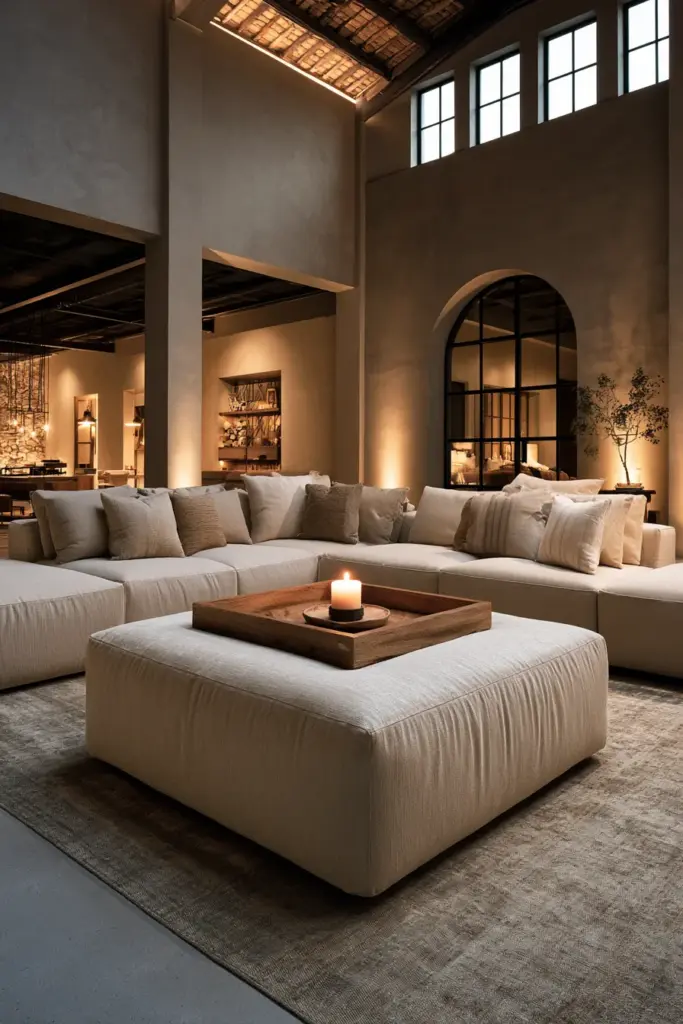
Place a large square ottoman (48 inches or more) in the open end of the sectional. This closes the seating composition and gives every seat a functional surface nearby. Use a sturdy tray on top so it can serve drinks and style easily.
If your sectional is L-shaped, a 36-inch square ottoman tucked into the L’s inner corner creates a natural focal point. It’s also an intuitive spot for guests to perch.
Can an Ottoman Replace a Coffee Table?
Yes — and in many cases, it’s the better choice.
A standard coffee table has one job. An ottoman as coffee table has three: it holds a tray with drinks and books, it gives guests somewhere to sit during parties, and it rests your legs at the end of a long day. A glass or acrylic tray on top makes the surface practical and still beautiful.
When to choose an ottoman over a coffee table:
- You have children or pets (no sharp corners)
- You want flexibility in your layout
- The room is on the smaller side and you need dual-purpose furniture
- You love the way texture looks at the center of a room
The one trade-off: an ottoman without a firm tray surface is not as stable for setting down drinks. Keep a 18×18 to 20×24 inch tray on hand — it makes all the difference.
Choosing the Right Ottoman by Function
Not all ottomans are the same. The one you choose should match how you actually live.
Storage Ottoman
Best for: families, small spaces, anyone who wants cozy living without clutter.
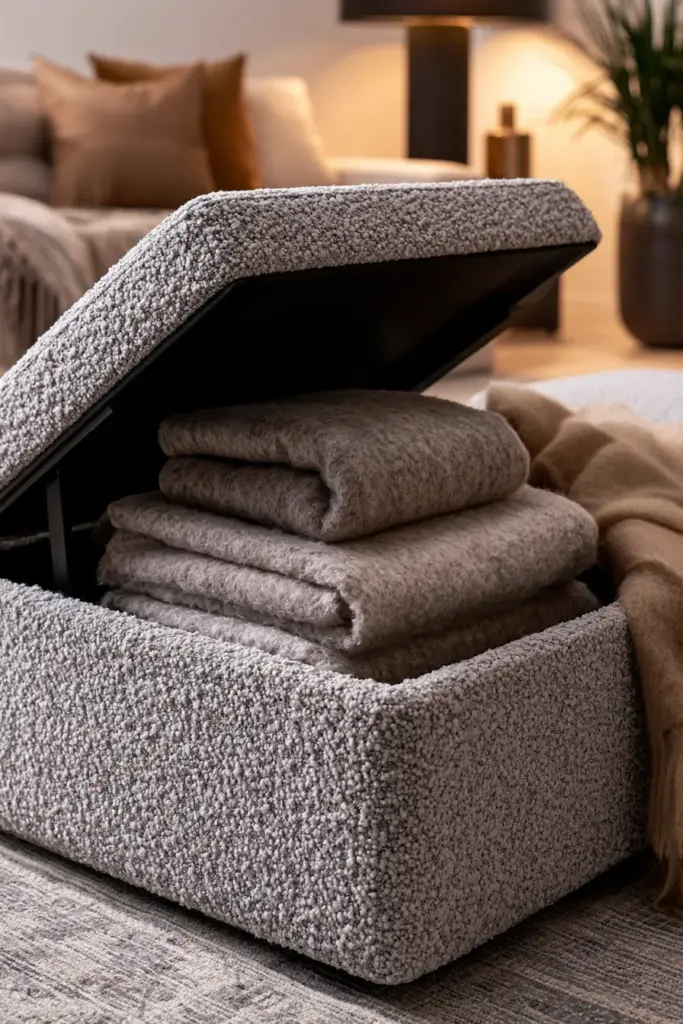
A storage ottoman with a lift-top lid is one of the most practical pieces in modern home design. It holds throw blankets, kids’ toys, extra pillows, and remote controls — and when closed, it looks like a thoughtful design decision.
Look for firm lids that can bear weight (usually noted in the product specs as weight capacity — aim for at least 200 lbs if guests will sit on it). Upholstered linen, boucle, or performance velvet all look beautiful and wear well.
Tray-Top Ottoman
Best for: those who want the function of a coffee table with the softness of upholstery.
A tray-top ottoman gets the job done without sacrificing texture. Style the tray with restraint — one low candle, a small stack of books, a single stem in a bud vase. Let the textile breathe around it.
Pouf vs. Ottoman
A pouf is lower, lighter, and more casual. It moves easily, making it great for small rooms or as a flexible seating accent near an armchair. A traditional ottoman is taller, more structured, and generally more versatile.
| Feature | Pouf | Ottoman |
|---|---|---|
| Height | 12–14 inches | 15–18 inches |
| Structure | Soft, floor-level | Firm, seat-height |
| Primary use | Footrest, casual seating | Coffee table, footrest, seating |
| Mobility | Very easy to move | Moderate |
| Storage option | Rare | Common |
Choose a pouf when you want ease and impermanence. Choose an ottoman when you want intention and longevity.
Japandi & Modern Styling: How to Dress Your Ottoman
The Japandi aesthetic — a blending of Japanese minimalism and Scandinavian warmth — is where texture and restraint meet. An ottoman in this space should feel grounded, natural, and quietly beautiful.
Japandi Ottoman Ideas
Materials to reach for: natural linen, undyed cotton, chunky wool boucle, seagrass, light oak legs. Stay within a palette of warm whites, soft oatmeal, clay, and muted sage.
What to avoid: high-gloss finishes, overly ornate legs, synthetic fabrics that catch the light artificially.
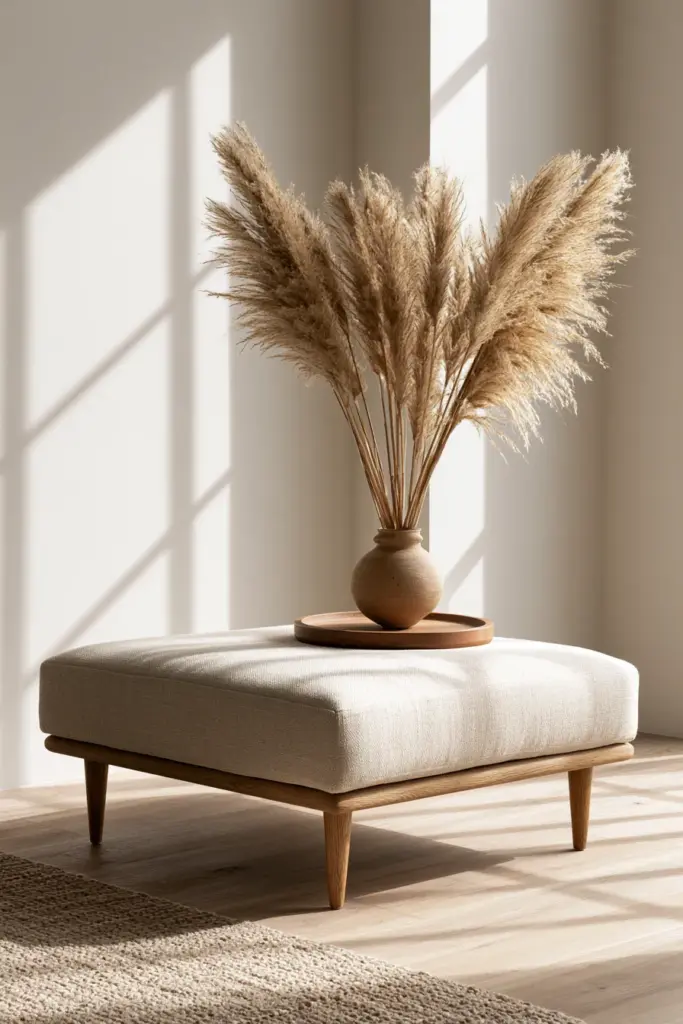
A low-profile rectangular ottoman in natural linen with tapered oak legs looks quietly elegant in a Japandi living room. Keep the tray simple — raw wood, a single stone object, a dried botanical. Let the negative space breathe.
Modern Living Room Ottoman Styling
In a modern space, the ottoman can introduce texture against clean lines. A boucle or ribbed fabric ottoman in ivory or warm grey softens the geometry of a room without disrupting it.
Pair with: matte metal legs, clean-lined sofas in neutral upholstery, simple pendant lighting overhead. The ottoman becomes the one soft, inviting element that keeps the room from feeling clinical.
Accessibility and Ergonomics
A beautifully arranged room should be comfortable for everyone in it.
For elderly users or those with mobility considerations, choose an ottoman that is firm (not collapsing under weight), at least 16 inches tall, and stable on all four legs. Avoid ottomans on casters without locking mechanisms.
For ottoman-as-coffee-table use, keep the height between 16–18 inches — the standard range for easy reach from a seated position on a sofa.
For footrest use, the ottoman should sit 1–2 inches below your sofa’s seat height, so legs rest at a natural, comfortable angle.
A Quick Decision Guide: Which Ottoman Type Is Right for You?
Ask yourself these three questions before you buy:
1. Do I need storage?
Yes → Choose a lift-top storage ottoman.
No → Move to question 2.
2. Do I need a coffee table surface?
Yes → Choose a firm rectangular ottoman with a tray.
No → Move to question 3.
3. Do I need flexible extra seating?
Yes → Choose a set of two smaller ottomans or a sturdy pouf.
No → A single decorative ottoman or low pouf works beautifully.
Your Ottoman Buying Checklist
Before you commit, run through this:
- Width: 60–70% of your sofa’s seat span
- Height: 15–18 inches for most uses; 16–18 if replacing a coffee table
- Fabric: Consider your lifestyle — linen is beautiful, performance velvet is practical
- Storage: Does the lid lock or stay lifted on its own?
- Weight capacity: At least 200 lbs if guests will sit on it
- Leg style: Tapered wood for warmth; metal for modern; hidden base for a grounded look
- Tray compatibility: Measure your ottoman top before buying a tray
- Cleaning: Look for removable, washable covers in busy households
Key Takeaways
- Place your ottoman 14–18 inches from the sofa for the most comfortable reach.
- Keep 30–36 inches of clearance on the main traffic path in front of your seating.
- An ottoman width of 60–70% of your sofa’s seat span looks proportional and balanced.
- A tray-top ottoman is the most versatile coffee table alternative in a living room.
- In small rooms, a round 24–30 inch storage ottoman saves space and hides clutter.
- For Japandi styling, choose natural linen or boucle in oatmeal, clay, or muted sage with tapered wood legs.
- Always prioritize firmness and stability if elderly guests or young children use the space.
Conclusion
A well-placed ottoman is one of those quiet decisions that shapes how a room feels to everyone in it. It says: come in, stay a while, put your feet up. It holds the space together without demanding attention.
At ERYLIN, we believe your home should feel like a deep exhale. Every arrangement, every texture, every piece of furniture is a small act of care — for yourself and for the people you love.
Take the measurements. Try the layout. Adjust until it feels right. And when you step back and the room finally breathes — that’s the moment we design toward.
Beautiful living isn’t a destination. It’s a practice.
Frequently Asked Questions
How do you arrange furniture in a living room with an ottoman?
Start with your sofa as the anchor, then place the ottoman 14–18 inches in front of it. Ensure there’s 30–36 inches of clear walkway between the ottoman and the TV stand or opposite wall. Round ottomans work well in smaller seating clusters; rectangular ottomans suit longer sofas and open-plan spaces.
Where should an ottoman be placed in a living room?
The most natural placement is centered in front of your main sofa, within easy reach of your feet. In L-shaped sectionals, tuck it into the inner corner. In rooms with multiple seating areas, place the ottoman where it anchors the primary conversation zone.
Can an ottoman replace a coffee table?
Absolutely. Use a firm wooden or metal tray on top to create a stable surface for drinks, candles, and books. An ottoman at 16–18 inches high sits at the same height as a standard coffee table, and offers the added benefits of extra seating and (sometimes) built-in storage.
What size ottoman works best for a 3-seater sofa?
For a standard three-cushion sofa (around 84 inches wide), choose a rectangular ottoman between 36 and 48 inches wide. This fills the visual space without overwhelming the room. Depth should be around 24–30 inches to maintain proportion.
Should an ottoman match the sofa?
It doesn’t have to — and often shouldn’t. A contrasting texture (say, a boucle ottoman with a linen sofa) adds visual depth and warmth. What matters is that the colors and materials feel cohesive. Stick within the same warm or cool tone family, and let the ottoman introduce one element of texture or tactile contrast.
Is a storage ottoman worth it?
For most homes, yes. A storage ottoman earns its price not just as furniture but as organization — blankets, books, remotes, and seasonal items all disappear inside it. Look for models with a firm, load-bearing lid so it doubles as seating without compromising.