
Table of Contents
There is a kind of quiet that feels intentional. A room where the air seems to slow, where every object earns its place, and where you exhale the moment you walk through the door. That is the promise of Japandi — and it is more achievable than you think.
Japandi is the gentle marriage of Japanese wabi-sabi and Scandinavian hygge. It honors imperfection, celebrates natural materials, and strips away the unnecessary without ever feeling cold. The result is a space that breathes.
If you have been scrolling through beautiful interiors feeling like they belong to someone else’s life — we want to change that. This beginner’s guide will walk you through every step of creating a DIY Japandi living room, even on a modest budget, even in a small apartment.
You do not need to gut your space or spend a fortune. You need intention, a soft palette, and the right textures. Let us begin.
What Is Japandi Style?
Japandi blends the warmth of Scandinavian design with the discipline of Japanese minimalism. Think warm whites, weathered wood, handmade ceramics, and a restrained layering of natural textures.
It is not stark. It is not sparse. It is considered — every piece has a reason to exist, and that reason is often beauty, function, or both.
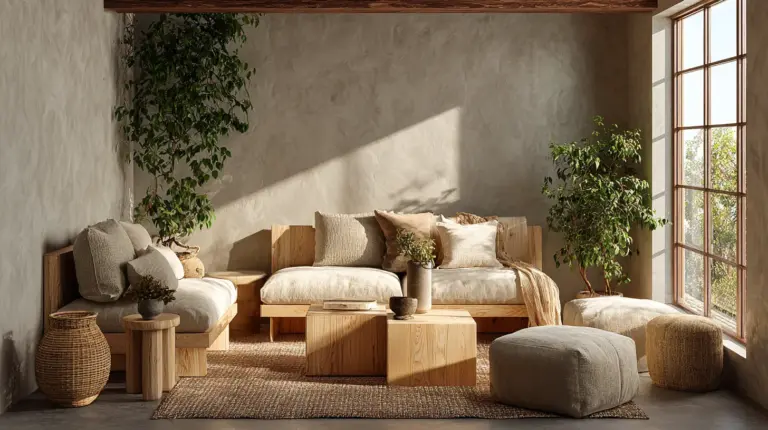
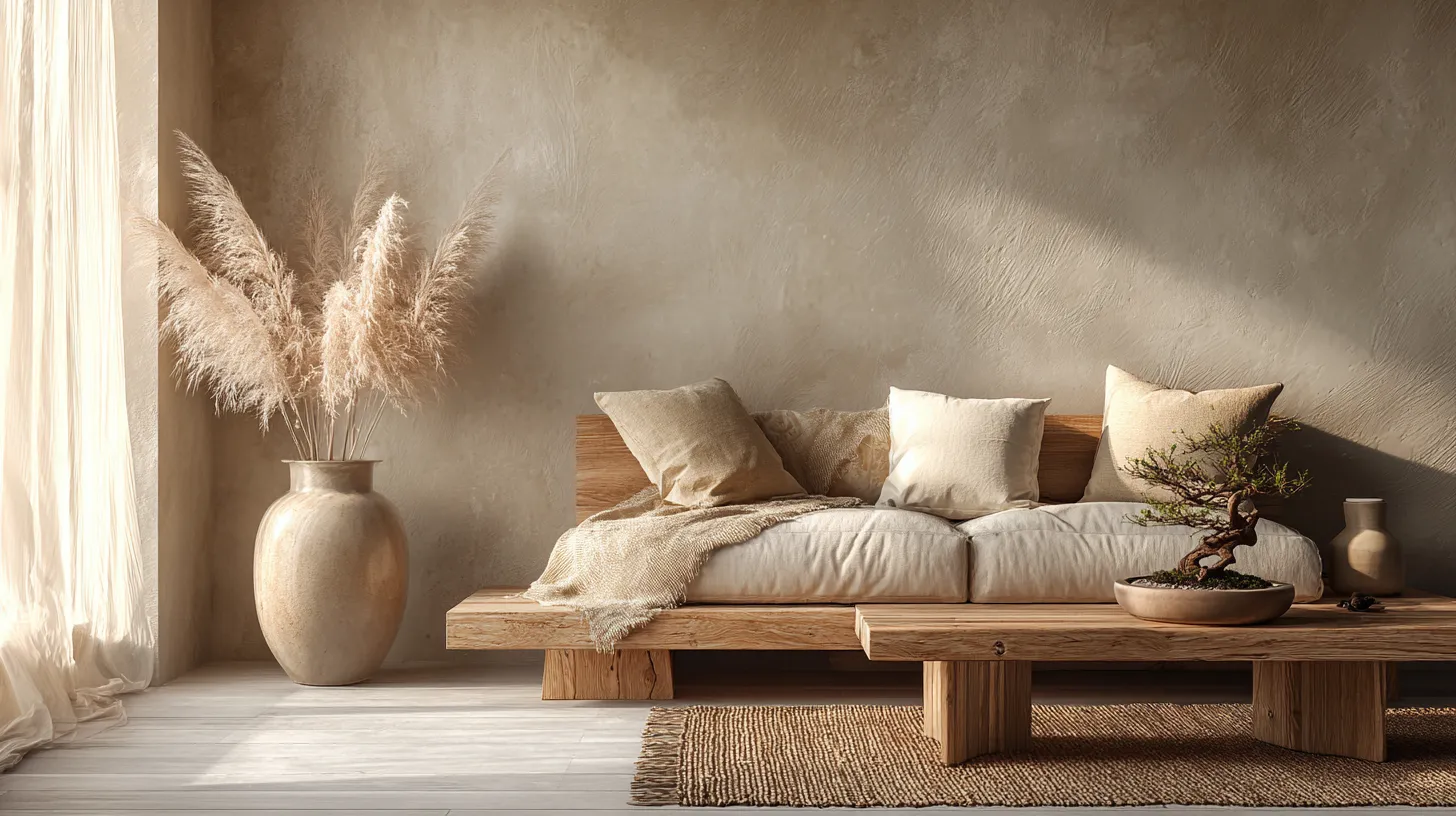
In a Japandi living room, you will find low-profile furniture, woven textiles, quiet lighting, and living greenery. The palette leans into beige, taupe, soft grey, and muted sage. Nothing shouts. Everything whispers.
Step 1: Start with a Calm Color Palette
What Colors Are Used in Japandi Living Rooms?
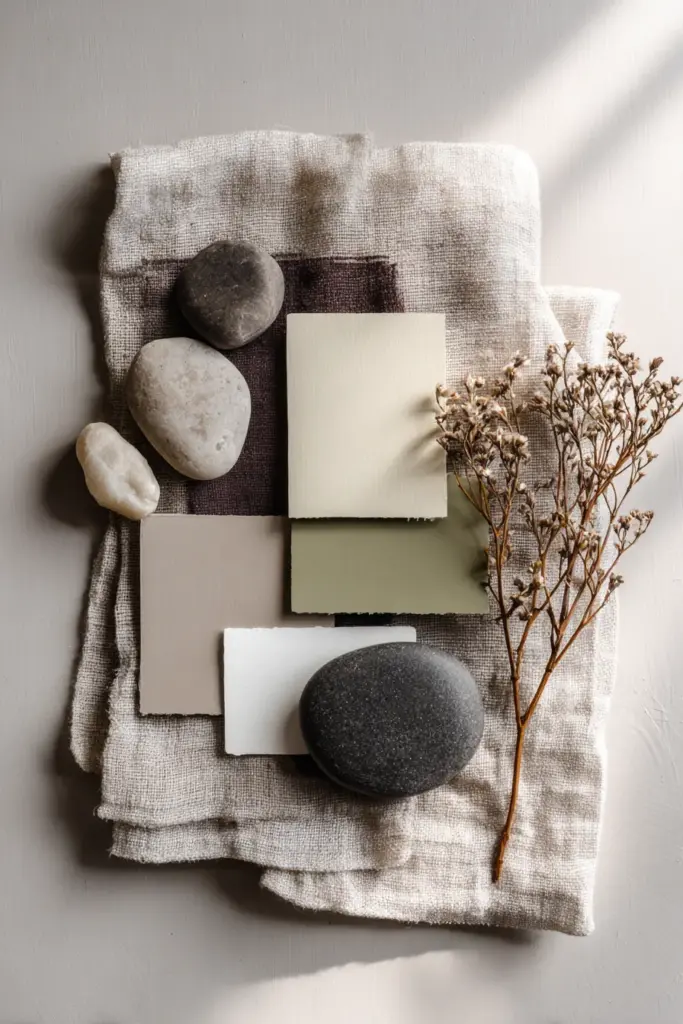
Color is the first language your room speaks. In Japandi design, the palette is built on calming neutrals — warm whites, taupes, soft greys, and muted earth tones that feel like sunlight through linen.
Your Japandi color foundation:
| Color Family | Examples | Mood It Creates |
|---|---|---|
| Warm whites | Cream, ivory, off-white | Spacious, serene |
| Earthy taupes | Sand, clay, mushroom | Grounded, natural |
| Soft greys | Stone, slate, silver birch | Clean, calm |
| Muted accents | Sage green, terracotta, charcoal | Depth, personality |
Avoid bright whites — they read as clinical. Instead, reach for tones that feel like a morning before it fully wakes up.
A practical starting point: paint your walls in a warm off-white or soft greige. Let the furniture and textiles carry the earthier tones. Add one or two muted accent colors through cushions or a single ceramic piece.
Step 2: Choose the Right Furniture
How to Create a Japandi Living Room with Low-Profile Pieces
Furniture in a Japandi space sits close to the ground. Low sofas, floor cushions, coffee tables at knee height — they create a sense of calm, of rootedness, of being close to the earth.
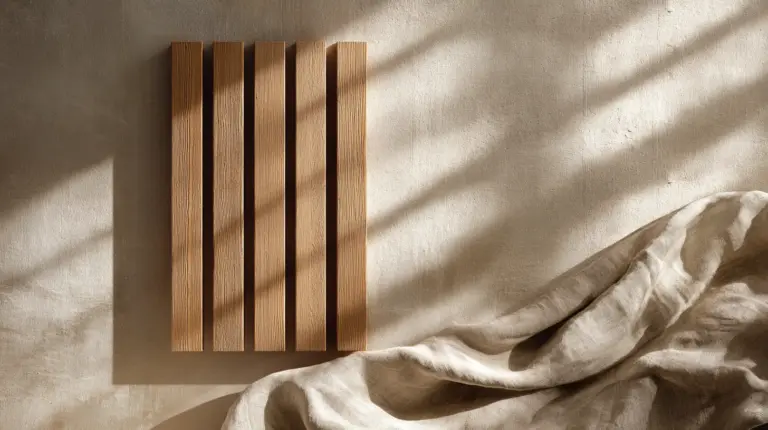
Look for pieces with clean lines and natural wood grain. Solid oak, bamboo, and rattan are ideal. In the Philippines, locally sourced narra wood and bamboo furniture offer an affordable and beautifully authentic alternative to imported pieces.
Furniture checklist for beginners:
- Low-profile sofa in a neutral linen or boucle fabric
- Simple wooden coffee table (round edges preferred)
- A rattan accent chair or floor cushion
- Minimalist open shelving in natural wood
- Multi-functional ottoman (storage inside, seating outside)
Avoid heavy, dark furniture with ornate legs. Japandi furniture is quiet, clean, and honest about what it is made of.
Pro tip for small spaces: Choose furniture that does double duty. A storage bench at the base of your sofa. A nesting table set. A lift-top coffee table. Every piece should earn its square footage.
Step 3: Layer Natural Textures
How to Decorate a Japandi Style Living Room with Texture
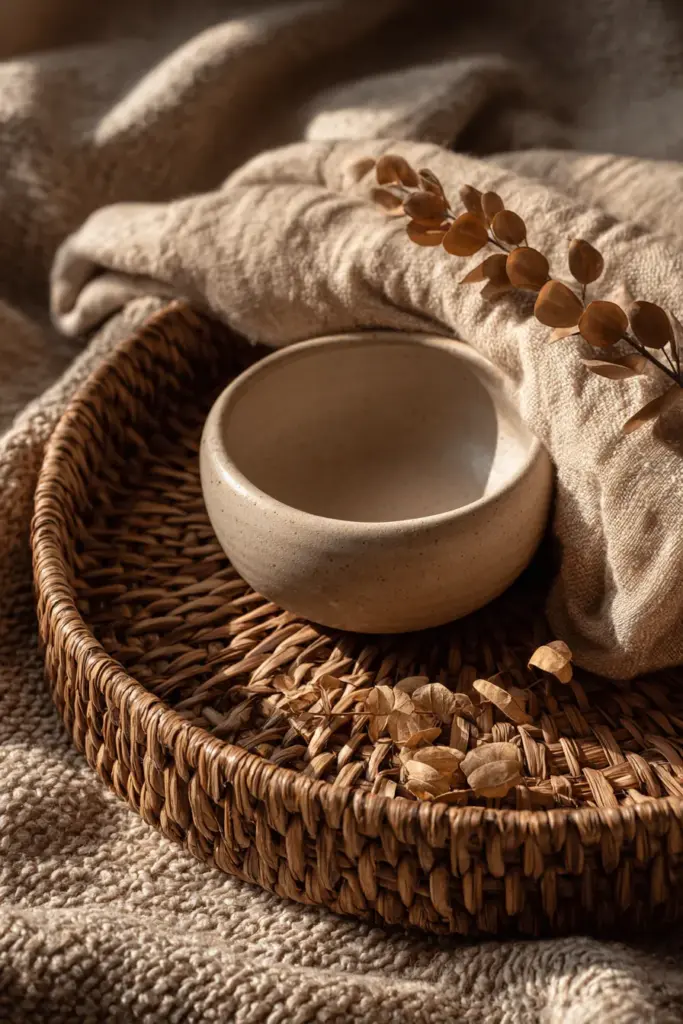
Texture is where Japandi becomes sensory. It is the rough weave of a jute rug underfoot, the cool smoothness of a stoneware mug on your coffee table, the soft give of a linen throw draped over the armrest.
You do not want too many layers — but you want enough to make the room feel alive and touchable.
Textures that define Japandi:
- Woven rugs — jute, sisal, or wool in natural tones anchor the space
- Linen cushions — in ivory, sand, or sage; mismatched is intentional
- Rattan or bamboo baskets — functional and beautiful for storage
- Ceramic or clay vessels — imperfect shapes, matte finishes
- Wooden trays — for coffee table styling with intentionality
The key is restraint. Choose three to four textures and let them breathe. Over-layering — too many throws, too many cushions, too many baskets — is one of the most common beginner mistakes in Japandi styling.
Step 4: Get the Lighting Right
Warm, Soft Lighting Is Everything
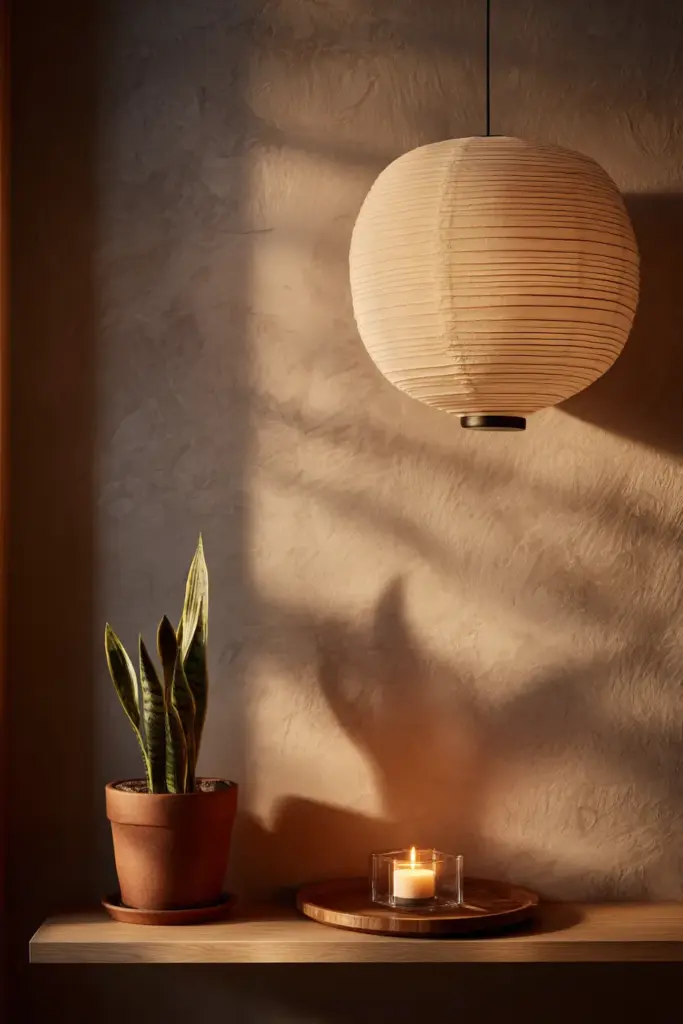
Light transforms a room the way nothing else can. In Japandi spaces, lighting is never harsh or overhead-dominant. It is warm, layered, and directional — like the glow of late afternoon filtering through rice paper.
What to use:
- Paper lanterns — classic, affordable, and beautifully Japandi in feel
- Warm Edison or globe bulbs — aim for 2700K color temperature; this is the sweet spot between cozy and clear
- Floor lamps with fabric shades — they cast a diffused, intimate light
- Candles and taper holders — natural beeswax candles add scent and warmth together
Avoid cool-white LED strips or overhead fluorescents as your primary light source. They flatten the texture and warmth you have worked so hard to build into the room.
If your budget allows one upgrade, make it your lighting. A single beautiful floor lamp can transform the entire mood of a space after 6pm.
Step 5: Add Living Greenery
What Plants Work Best in a Japandi Living Room?
Plants in Japandi interiors are not a trend — they are a philosophy. Living things remind us that beauty is not static; it grows, it changes, it breathes alongside us.
For beginners, choose low-maintenance, low-light plants that thrive in indoor conditions:
| Plant | Why It Works | Care Level |
|---|---|---|
| Sansevieria (Snake Plant) | Structural, sculptural, thrives in low light | Very easy |
| ZZ Plant | Deep green, architectural, drought-tolerant | Very easy |
| Pothos | Trailing softness, perfect for shelves | Easy |
| Bonsai | The ultimate Japandi statement piece | Moderate |
| Peace Lily | Elegant white blooms, air-purifying | Easy |
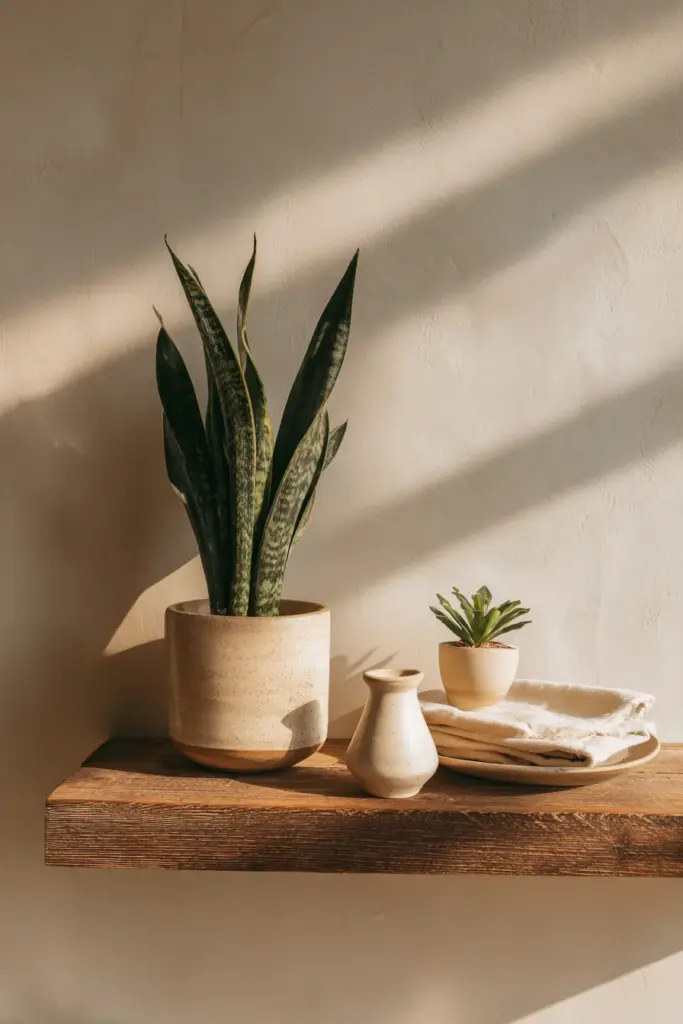
In humid Philippine climates, sansevieria and ZZ plants are especially excellent — they handle the heat and require minimal intervention. Place them in simple terracotta pots or matte ceramic vessels.
A single bonsai on your coffee table or a sculptural snake plant in the corner can do more for a Japandi room than a dozen decorative objects.
Step 6: Declutter and Curate
The Japandi Rule: If It Has No Purpose, It Has No Place
Decluttering is not about deprivation. It is about making space for what matters. In a Japandi living room, every visible object should either be functional or beautiful — and ideally, both.
Start by removing everything from your surfaces. Then return only what you consciously choose.
Surfaces to curate thoughtfully:
- Coffee table: One wooden tray holding a candle, a small ceramic, and perhaps a book. That is enough.
- Open shelves: Group items in odd numbers (1, 3, 5). Mix heights. Leave breathing room between objects.
- Floor: Keep it mostly clear. Let the rug be seen.
Hide cables, remote controls, and everyday clutter in rattan baskets or wooden boxes. The goal is a room that always looks like you just tidied it — not because it is performative, but because its baseline is calm.
Step 7: Add Japandi Details on a Budget
Budget-Friendly Japandi Upgrades Under ₱5,000
You do not need to spend heavily to achieve this look. Some of the most beautiful Japandi spaces are built on thrift store finds, upcycled furniture, and locally made pieces.
Budget Japandi wins:
- Upcycle wooden furniture with matte white or warm grey chalk paint
- Swap out cushion covers rather than buying new cushions — linen covers are widely available
- Shop local markets for handmade ceramics, woven baskets, and wooden trays
- Use glass bottles or jars as vases with dried pampas grass or eucalyptus branches
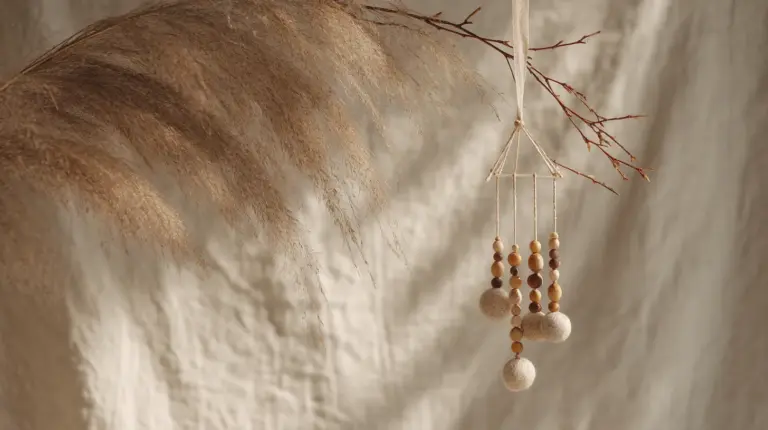
- Make your own paper lantern from parchment paper and a simple frame
For renters who cannot drill into walls: use tension rods, adhesive hooks, and leaning shelves to add vertical interest without damage. Japandi for renters is absolutely possible — the style leans naturally toward furniture-based, not wall-based, design.
Common Japandi Mistakes to Avoid
- Over-layering textiles — more than three throw blankets is too many
- Ignoring humidity — in tropical climates, choose mold-resistant natural materials and ensure ventilation
- Using too many accent colors — stick to one or two muted tones
- Mixing too many wood finishes — choose one dominant wood tone and keep it consistent
- Neglecting light temperature — cool light kills the Japandi mood instantly
Your Japandi Living Room Checklist
Here is your beginner’s summary at a glance:
- Neutral palette: warm whites, taupes, soft greys, one muted accent
- Low-profile furniture in natural wood, bamboo, or rattan
- Three to four complementary textures: woven rug, linen cushions, ceramic vessels, wood tray
- Warm lighting at 2700K — floor lamps, paper lanterns, candles
- One to three statement plants: snake plant, ZZ, pothos, or bonsai
- Decluttered surfaces with intentional, curated objects
- Hidden storage for everyday clutter
- Budget-friendly swaps: upcycled pieces, local ceramics, dried botanicals
Conclusion
A Japandi living room is not a destination you arrive at all at once. It is a practice — a slow, steady return to what is essential, what is beautiful, and what makes you feel genuinely at home.
Start with one corner. One lamp. One plant. One honest, beautiful thing. Then let the rest follow at its own pace.
At ERYLIN, we believe that a well-designed space is not a luxury — it is a form of self-care. And you deserve a room that holds you gently, every single day.
Take your time. The space will grow with you.
Frequently Asked Questions
What is Japandi style in simple terms?
Japandi is a design style that blends Japanese minimalism with Scandinavian warmth. It uses natural materials like wood and linen, a calm neutral color palette, and a u0022less is moreu0022 approach to decorating. The result is a space that feels serene, functional, and quietly beautiful.
How do I start a Japandi living room as a beginner?
Begin with your color palette — choose warm whites, taupes, or soft greys for your walls. Then add low-profile wooden furniture, a woven rug, and warm lighting around 2700K. Remove unnecessary clutter from surfaces and add one or two plants. You do not need to change everything at once; start small and build intentionally.
What colors work best for a Japandi living room?
The best Japandi colors are calming neutrals: warm whites, beige, taupe, mushroom, and soft grey. You can add one muted accent color like sage green, terracotta, or charcoal through cushions, a throw, or a ceramic piece. Avoid bright or saturated colors — they break the sense of calm Japandi is known for.
Can I do Japandi on a small budget?
Absolutely. Japandi is one of the most budget-friendly design styles because it values simplicity over quantity. Upcycle existing wooden furniture, swap out cushion covers, shop local markets for handmade ceramics, and use dried botanicals as decor. Many Japandi transformations have been achieved for under ₱5,000 with thoughtful swaps and decluttering alone.
What plants are best for a Japandi living room in the Philippines?
For Philippine climates, the best Japandi plants are sansevieria (snake plant) and ZZ plants — both handle heat, humidity, and low light with ease. Pothos is excellent for shelves, while a single bonsai makes a stunning statement piece. Always display plants in simple terracotta or matte ceramic pots to keep the aesthetic grounded and natural.