
Table of Contents
There is a particular kind of calm that settles into a room when green things grow along the walls. It is quiet and alive at once — a softness that no throw pillow or linen curtain can quite replicate on its own.
Japandi interiors are built on exactly this feeling. The philosophy draws from Japanese wabi-sabi and Scandinavian hygge — finding beauty in simplicity, imperfection, and nature. Plants are not decoration here. They are presence.
Climbing and trailing plants bring something uniquely valuable to Japandi spaces: vertical movement. They draw the eye upward, fill awkward corners with intention, and bring a sense of wild-yet-curated life to neutral rooms.
Whether you live in a compact Quezon City apartment or a sunlit studio in the city, this guide will walk you through the best Japandi climbing plants — and exactly how to style them.
What Makes a Plant Feel “Japandi”?
Not every leafy vine belongs in a Japandi room. The aesthetic calls for plants that feel understated but alive — nothing too theatrical, nothing too fussy.
A true Japandi climber tends to have simple leaf shapes, muted or deep greens, and a natural trailing or reaching habit. It grows the way a well-loved thing grows: without pretension.
The best Japandi climbing plants also complement the materials already in the room — raw wood, rattan, washi paper, linen, stone. They work with texture, not against it.
The Key Qualities to Look For
- Simple leaf shapes — avoid overly patterned or dramatic foliage
- Muted green tones — deep forest greens, sage, and waxy olive hues feel most aligned
- Low to moderate light tolerance — Japandi rooms tend toward soft, diffused light
- Air-purifying properties — cleaner air deepens the sense of peace in a space
- Low maintenance — in Japandi philosophy, ease is elegant
10 Best Climbing Plants for Japandi Interiors
1. Pothos (Epipremnum aureum)
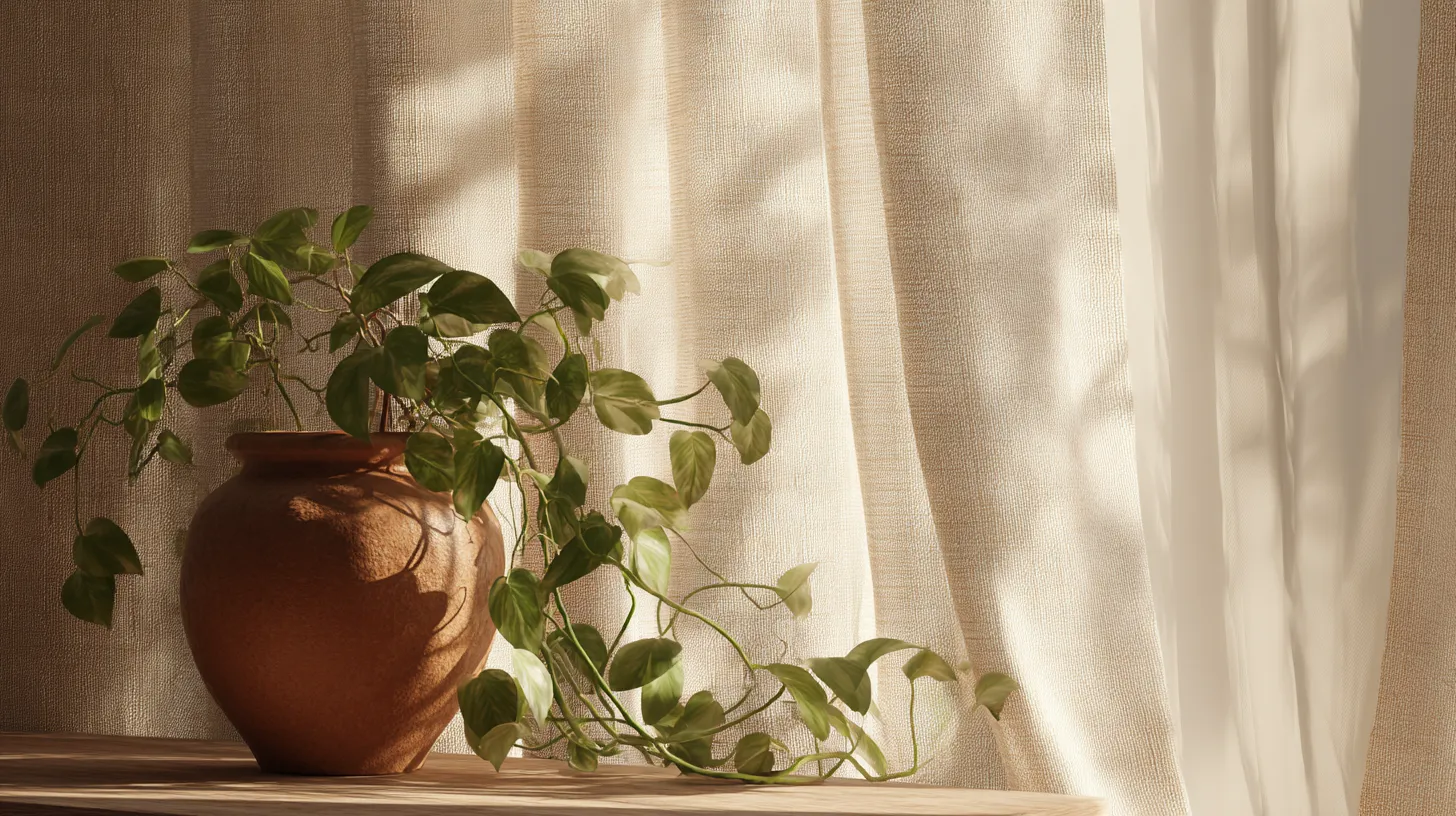
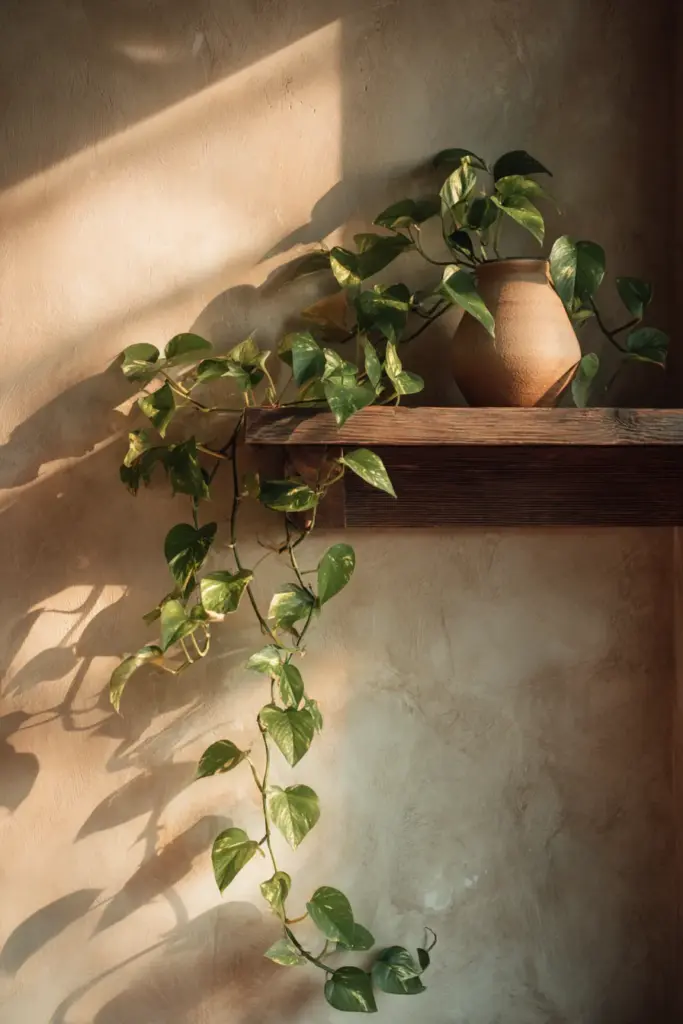
Pothos is arguably the most forgiving climbing plant you can bring into a Japandi space. Its heart-shaped leaves cascade from shelves and trail up bamboo poles with a graceful, unhurried rhythm.
In the Philippines’ humid climate — especially in Metro Manila — Pothos thrives with very little effort. It tolerates low light, irregular watering, and even a forgotten week. The golden and jade varieties both suit Japandi palettes beautifully.
Style tip: Let Pothos trail from a high shelf in a matte ceramic pot. Allow the vines to drape freely rather than forcing them into neat rows — imperfection is part of the aesthetic.
2. Heartleaf Philodendron (Philodendron hederaceum)
The Heartleaf Philodendron is close kin to Pothos but carries a slightly softer, more velvety quality. Its leaves catch light differently — a gentle sheen that shifts through the day.
It grows eagerly up a simple trellis or along a jute cord pinned to the wall. Placed near a window with soft, indirect afternoon light, it becomes a living artwork — breathing, growing, responding.
Style tip: Pair it with a slim wooden trellis or a bundle of bamboo stakes tied with raw twine. Keep the pot small and natural — terracotta or unglazed stoneware.
3. Hoya (Hoya carnosa and variants)
Hoya is a slow-growing, waxy-leaved climber that feels almost architectural in its precision. Its leaves are thick and succulent-like, and when it eventually blooms, the flowers arrive in small clustered stars that smell faintly sweet.
This plant is patient. It grows on its own schedule, which is very Japandi. Place it near a bright window and let it wind along a wire frame or up a simple pole.
Style tip: Hoya looks stunning trained along a minimal oval wire hoop or a half-moon trellis. The contrast between its dark waxy leaves and a pale wall creates a quiet tension.
4. String of Hearts (Ceropegia woodii)
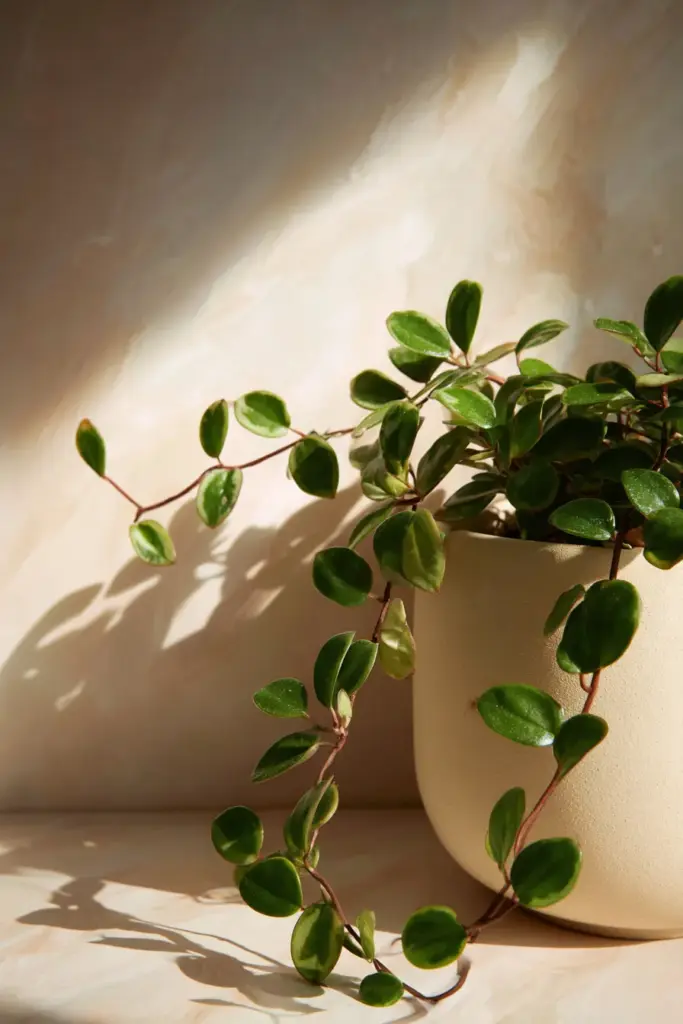
String of Hearts is delicate, trailing, and unmistakably poetic. Its small, heart-shaped leaves are dark green with silver markings — a subtle patterning that adds visual interest without breaking the room’s calm.
It is a drier-climate plant by nature but adapts well to indoor life in the Philippines with good drainage and a bright spot. The trailing vines can grow quite long, creating a cascading curtain effect.
Style tip: Hang it in a small woven basket near a window. Let the vines fall freely. The movement catches light beautifully in the morning hours.
5. English Ivy (Hedera helix)
English Ivy brings an older, more literary quality to Japandi spaces — it whispers of moss-covered walls and slow, cool mornings. Its lobed leaves and confident climbing habit make it ideal for training along walls, shelves, or frames.
Ivy appreciates cooler indoor temperatures and indirect light, which can be managed in air-conditioned rooms. It is one of the few plants proven to reduce airborne mold and particulates — a meaningful benefit in tropical urban settings.
Style tip: Train Ivy along a horizontal wooden shelf using small hooks and natural twine. The controlled wildness feels very wabi-sabi.
6. Devil’s Ivy (Epipremnum aureum ‘Marble Queen’)
A close relative of classic Pothos, Marble Queen has a more variegated, painterly leaf — soft white and green swirling together. In a neutral Japandi room, it adds tonal depth without color.
It climbs willingly up a moss pole or bamboo stake and grows well in the warm, humid air of Philippine interiors. Low light is fine; consistent moisture even more so.
Style tip: Use a moss pole in a tall cylindrical pot in a room corner. The vertical statement anchors the space and draws the eye upward.
7. Boston Fern (Nephrolepis exaltata)
Boston Fern does not climb in the traditional sense — it arches and cascades, creating a fountain of delicate fronds. Hung in a macramé or rattan hanger, it becomes a living sculptural element.
In high-humidity environments like Metro Manila, it flourishes. Mist it lightly every few days and keep it near a window with diffused light for best results.
Style tip: Hang at eye level or slightly above a reading chair. The arching fronds soften the geometry of furniture and add a whisper of the forest.
8. Ficus Pumila (Creeping Fig)
Ficus Pumila is a true wall-climber. Given the right surface, it will press itself flat against a wall and spread in an organic, almost meditative pattern. It is subtle and slow — perfect for Japandi sensibilities.
It needs consistent moisture and indirect light. In a bathroom or kitchen with a tiled wall, it can create a genuinely beautiful living surface.
Style tip: Let it self-adhere to a painted or tiled section of wall. Frame the area with a simple wooden border to keep it intentional.
9. Spider Plant (Chlorophytum comosum)
Spider Plant is a quiet classic — unassuming, resilient, and endlessly giving. It produces long arching leaves and sends out trailing “spiderettes” that hang on delicate runners.
It is one of the most air-purifying plants available, removing formaldehyde and xylene from indoor air. In a small apartment, that matters. It tolerates irregular watering and a range of light conditions.
Style tip: Place it on a high shelf and allow the spiderettes to trail freely downward. In a Japandi room, this gentle cascade reads as both organized and organic.
10. Monstera Adansonii (Swiss Cheese Vine)
Smaller and more delicate than its famous cousin, Monstera adansonii is a vigorous climber with fenestrated leaves — those distinctive natural holes that filter light like paper cut-outs.
It grows quickly up a bamboo trellis and adds an undeniably alive energy to a space without overwhelming it. The fenestration is a reminder that beauty sometimes involves subtraction.
Style tip: Train it up a slim bamboo trellis or a single thick wooden stake. Keep the pot low and earthy — something raw and handmade.
Quick Reference: Japandi Climbing Plants at a Glance
| Plant | Light Needs | Humidity Tolerance | Climbing Style | Japandi Suitability |
|---|---|---|---|---|
| Pothos | Low–Medium | High ✓ | Trails & climbs | ★★★★★ |
| Heartleaf Philodendron | Low–Medium | High ✓ | Trails & climbs | ★★★★★ |
| Hoya | Bright indirect | Medium | Slow climber | ★★★★☆ |
| String of Hearts | Bright indirect | Medium | Trailing | ★★★★☆ |
| English Ivy | Low–Medium | Low–Medium | True climber | ★★★★☆ |
| Marble Queen Pothos | Low–Medium | High ✓ | Trails & climbs | ★★★★★ |
| Boston Fern | Indirect | Very High ✓ | Arching cascade | ★★★★☆ |
| Ficus Pumila | Indirect | High ✓ | Wall-clinging | ★★★★☆ |
| Spider Plant | Low–Bright | Medium | Cascading | ★★★★☆ |
| Monstera Adansonii | Indirect | High ✓ | Vigorous climber | ★★★★★ |
How to Style Climbing Plants in a Japandi Living Room
Japandi styling is not about filling space — it is about placing with intention. A single climbing plant, correctly positioned, does more than a shelf crowded with small pots.
Vertical Space and Small Apartments
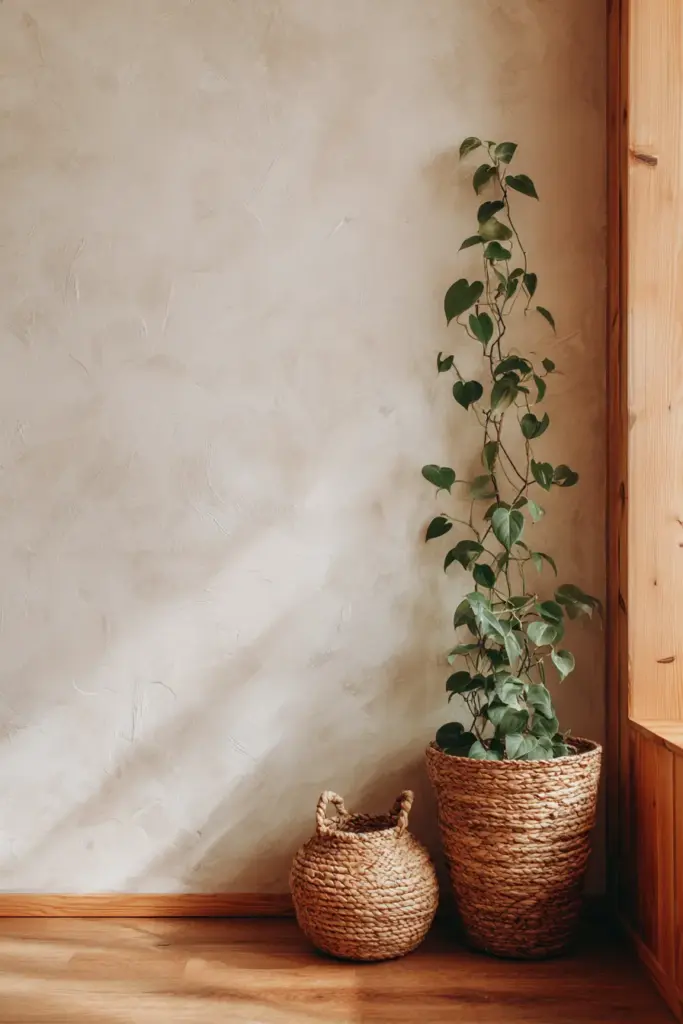
In a compact Quezon City apartment, vertical real estate is precious. Training a Pothos or Philodendron up a tall bamboo stake — rather than letting it sprawl horizontally — saves surface area and adds height to low-ceilinged rooms.
A corner moss pole arrangement draws the eye upward, making the room feel taller. The principle is the same as in Japanese garden design: suggest infinity within a small space.
Choosing the Right Trellis or Support
The support structure is part of the aesthetic — not just functional hardware.
- Bamboo stakes — the most naturally Japandi choice; raw, simple, sustainable
- Rattan hoops — beautiful with Hoya or String of Hearts
- Slim wooden trellises — suits Philodendron or Ivy in a more structured arrangement
- Washi-wrapped wire frames — for delicate climbers in a study or meditation corner
- IKEA HULTARP rail repurposed as a trellis wall — affordable and minimal
Containers That Belong
Japandi containers are understated. They do not compete with the plant.
Look for unglazed terracotta, raw stoneware, wabi-sabi crackle glazes in earth tones, or hand-thrown ceramics in off-white and grey. Avoid bright colors, shiny finishes, and novelty shapes.
Lighting and Placement
Most Japandi climbing plants thrive in bright, indirect light — the kind that filters through a sheer linen curtain on a south-facing window. This is also the most beautiful light for a Japandi room.
In lower-light spaces, Pothos, Philodendron, and Spider Plant are your most reliable partners. Pair them with a warm-toned floor lamp positioned nearby to extend their growing hours and deepen the room’s atmosphere.
Biophilic Benefits: Why Climbing Plants Belong in Japandi Spaces
The Japanese concept of shinrin-yoku — forest bathing — reminds us that proximity to living green things has measurable effects on our wellbeing. Heart rates slow. Cortisol drops. Attention sharpens.
In a Japandi home, climbing plants are not merely decorative. They are functional wellness tools.
Air purification is one of the most meaningful benefits. Plants like Pothos, Spider Plant, and Boston Fern actively remove toxins such as formaldehyde, benzene, and xylene from indoor air — compounds commonly found in urban apartments.
Increased humidity from transpiring plants also improves skin comfort and respiratory ease in air-conditioned rooms — a particular concern in the dry, recycled air of Philippine high-rises.
And there is something that cannot be quantified: the simple act of tending a living thing. Watering a plant is a form of mindfulness. Watching it grow is a daily reminder of patience.
Japandi Climbing Plant Care: Practical Tips for Tropical Climates
Living in the Philippines means working with naturally high humidity and warm temperatures year-round — conditions that many climbing plants find deeply agreeable.
Managing the March Rainy Season
As the dry season shifts toward the wet months (typically starting late May in Metro Manila), watch for overwatering. Reduce watering frequency when humidity rises; most climbing plants prefer their roots slightly dry between drinks.
Good drainage is essential. Ensure every pot has drainage holes and never allow roots to sit in standing water.
Pest Prevention in Minimalist Pots
Simple terracotta and stoneware pots offer less hiding surface for pests than ornate containers — a functional Japandi advantage.
- Inspect leaves weekly, especially undersides
- Wipe leaves with a damp cloth monthly to remove dust and deter spider mites
- Neem oil solution (available at local nurseries) is a natural and effective treatment
- Good air circulation around plants prevents fungal issues
Propagation: Grow Your Own Japandi Trellis Garden
Propagating your climbing plants is deeply satisfying and very budget-friendly.
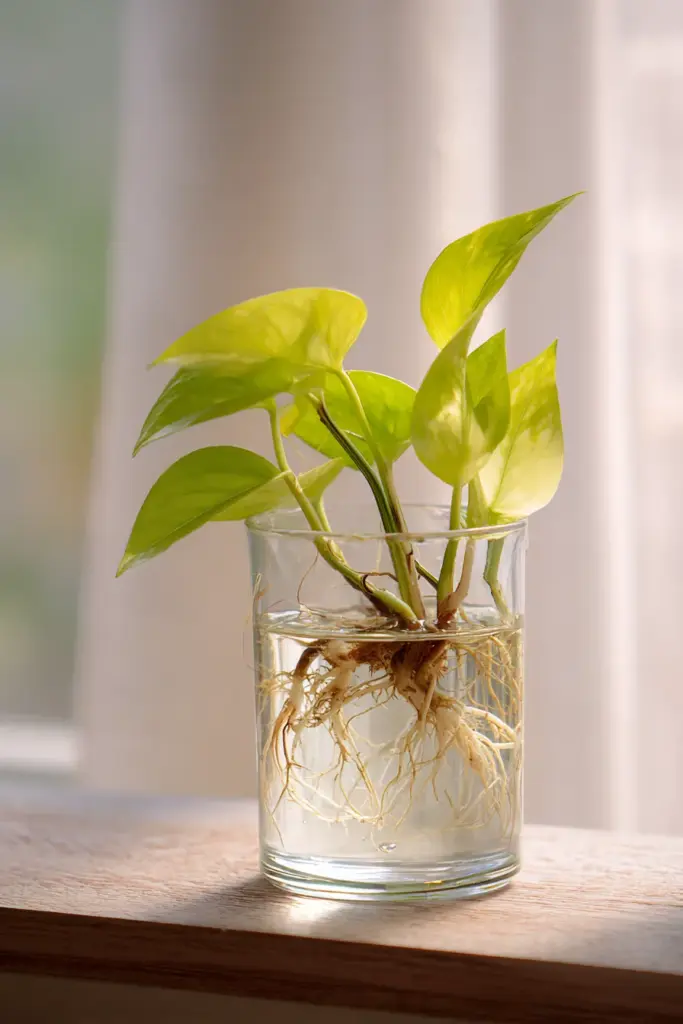
Most Pothos, Philodendron, and Hoya varieties root easily in water. Cut a stem just below a node, place it in a clear glass vessel on a bright windowsill, and change the water every few days. Roots appear within two to four weeks.
There is something quietly meditative about watching roots form in water — a reminder that growth is happening even when nothing appears to change.
Where to Source Plants in the Philippines
Supporting local nurseries aligns beautifully with Japandi values around sustainability and community.
- Quezon City: Maginhawa Street and nearby areas have several plant markets; QC Circle sometimes hosts plant fairs
- Manila area: Kartilya ng Katipunan, Marikina Greenhouses, and social media plant groups (Facebook and Instagram) are excellent sources
- Lazada and Shopee: A wide variety of climbing plants, bamboo supports, and pots available for delivery — look for sellers with verified ratings and clear photos
Look for locally propagated specimens over imported plants when possible. They are already acclimatized to Philippine conditions and require far less adjustment period.
Key Takeaways
- Climbing and trailing plants add vertical dimension to Japandi interiors — drawing the eye upward and bringing movement to still rooms
- The most Japandi-aligned plants share simple leaf shapes, muted greens, and low-maintenance needs: Pothos, Heartleaf Philodendron, Hoya, and Monstera adansonii are top choices
- Support structures matter — bamboo stakes, rattan hoops, and slim wooden trellises are the most aesthetically aligned choices
- Containers should be understated — raw terracotta, unglazed stoneware, and hand-thrown ceramics complement both plant and aesthetic
- In tropical climates like the Philippines, most Japandi climbers thrive with minimal intervention — reduce watering in rainy season and ensure excellent drainage
- Air purification, humidity, and the act of tending plants all contribute to the Japandi ideal of a calm, soulful home environment
- Propagation is both practical and poetic — grow your own from cuttings and stock trellises gradually over time
- Source locally when possible — locally propagated plants adapt faster and support community
Conclusion
A climbing plant growing quietly up a bamboo stake in the corner of a room — that is a small and perfect thing.
It does not demand attention. It simply is. And in its being, it transforms the quality of the air, the quality of the light, and somehow, the quality of the thoughts you have in that room.
Japandi design has always understood this. The objects and living things we bring into our homes shape who we are inside them. A trailing vine on a warm plaster wall is not decoration — it is an invitation to slow down, look closely, and feel at home in your own life.
Start with one plant. One pot. One quiet corner. The rest will grow from there.
Frequently Asked Questions
What plants look best in Japandi style home decor?
Plants with simple leaf shapes, muted greens, and a natural trailing or climbing habit suit Japandi aesthetics best. Top picks include Pothos, Heartleaf Philodendron, Hoya, Monstera adansonii, and Snake Plant. Avoid dramatically variegated or tropical statement plants — Japandi calls for understated presence.
Are there low-maintenance climbing plants for Japandi interiors?
Yes — Pothos, Marble Queen Pothos, Spider Plant, and Heartleaf Philodendron are all remarkably low maintenance. They tolerate irregular watering, low to medium light, and adapt easily to indoor conditions in the Philippines. These are ideal starting points for plant beginners.
What climbing plant grows fastest for Japandi walls?
Monstera adansonii and Pothos are among the fastest-growing Japandi-appropriate climbers. Given warm temperatures, indirect light, and consistent moisture — conditions easily met in Metro Manila — both can produce several new leaves per month. Train them up a bamboo pole or trellis for best vertical growth.
Which evergreen climbers fit Japandi aesthetics?
English Ivy, Ficus Pumila (creeping fig), and Hoya are all evergreen climbers well-suited to Japandi interiors. They maintain their foliage year-round, require minimal styling adjustments seasonally, and hold their muted-green presence through the room’s changing light.
How do I style trailing plants in a Japandi living room?
Place trailing plants on high shelves or in hanging baskets and allow them to cascade freely downward — do not force them into overly controlled shapes. Use natural containers (terracotta, stoneware, woven baskets) and simple bamboo or rattan supports. Pair with soft, diffused lighting — a linen shade floor lamp nearby creates warm, flattering light for both the plant and the room.