
Table of Contents
There is a moment — just after you water your snake plant, when the light slants golden through linen curtains — when your home exhales. The air softens. The room feels alive. That is Japandi Plant Feng Shui at work: the quiet alchemy of greenery, intention, and ancient energy wisdom woven into a modern, minimal space.
Japandi — the soulful union of Japanese wabi-sabi and Scandinavian hygge — has always spoken through texture, restraint, and the beauty of imperfection. Feng Shui, the Chinese art of harmonizing energy flow, or chi, asks us to place every object with purpose. Together, they create interiors that do not just look beautiful. They feel right.
At ERYLIN, we believe your home should hold you gently. This guide will walk you through exactly how to bring Japandi plants and Feng Shui principles together — room by room, corner by corner — so your space becomes a living sanctuary of calm, prosperity, and natural grace.
Whether you are styling a compact Manila apartment with high humidity and warm light, or a quiet bedroom in need of softness, this is your complete roadmap.
What Is Japandi Plant Feng Shui?
The Philosophy Behind the Fusion
Japandi design celebrates ma — the Japanese concept of meaningful negative space — and the Scandinavian love of raw, honest materials: pale woods, undyed linen, matte ceramics. Plants are not decorative afterthoughts in this world. They are living architecture.
Feng Shui maps your home through the bagua, an energy grid of eight life areas — wealth, career, relationships, health, creativity, knowledge, fame, and helpful people — each responsive to specific shapes, colors, and, yes, plants. When you choose plants that honor both Japandi’s sculptural restraint and Feng Shui’s energy intentions, you stop decorating and start curating a living energy field.
Why This Matters in 2026
Biophilic design studies confirm what our ancestors already knew: living plants reduce cortisol, improve focus, and increase feelings of well-being by up to 37%. Pairing that science with Feng Shui’s centuries-old spatial wisdom creates interiors that actively support your life — your sleep, your clarity, your abundance.
The gap most design guides miss is this: which plants to place where, and how to style them in a way that is unmistakably Japandi. That is precisely what we are here to solve.
The Japandi Feng Shui Bagua: 8 Plants for 8 Life Areas
This is the heart of your practice. The bagua overlays your home’s floor plan — or any individual room — like a living map. Below, we have matched each area to a plant that honors both Feng Shui energy and Japandi aesthetic.
| Bagua Area | Life Focus | Best Japandi Plant | Why It Works |
|---|---|---|---|
| North | Career & Path | Snake Plant (Sansevieria) | Upright, architectural, activates upward momentum |
| Southeast | Wealth & Abundance | Money Tree (Pachira aquatica) | Braided trunk, lush canopy — prosperous yet minimal |
| East | Health & Family | Bamboo Palm | Graceful vertical growth, air-purifying, deeply calming |
| South | Fame & Reputation | Olive Tree | Mediterranean warmth, silvery leaves catching light |
| Southwest | Love & Relationships | Peace Lily | Soft white blooms, gentle energy, low-light tolerant |
| West | Creativity & Children | ZZ Plant | Waxy sculptural leaves, resilient, quiet confidence |
| Northeast | Knowledge & Wisdom | Bonsai | Contemplative, asymmetrical, embodies wabi-sabi |
| Northwest | Helpful People | Jade Plant (Crassula) | Rounded leaves for welcoming energy, easy to maintain |
Place these plants intentionally — not just where they look good, but where they work energetically.
Choosing the Right Japandi Plants for Feng Shui
What Makes a Plant Truly Japandi?
Not every plant belongs in a Japandi interior. The aesthetic calls for sculptural silhouettes, restrained color palettes, and forms that feel both ancient and effortless. Think deep greens, matte surfaces, and leaves that cast interesting shadows on plaster walls.
The best Japandi Feng Shui plants share three qualities: they are low-maintenance (honoring simplicity), they have an organic, imperfect beauty (honoring wabi-sabi), and they actively improve the energetic or physical quality of the space around them.
Top Japandi Plants for Feng Shui — At a Glance
For sculptural presence:
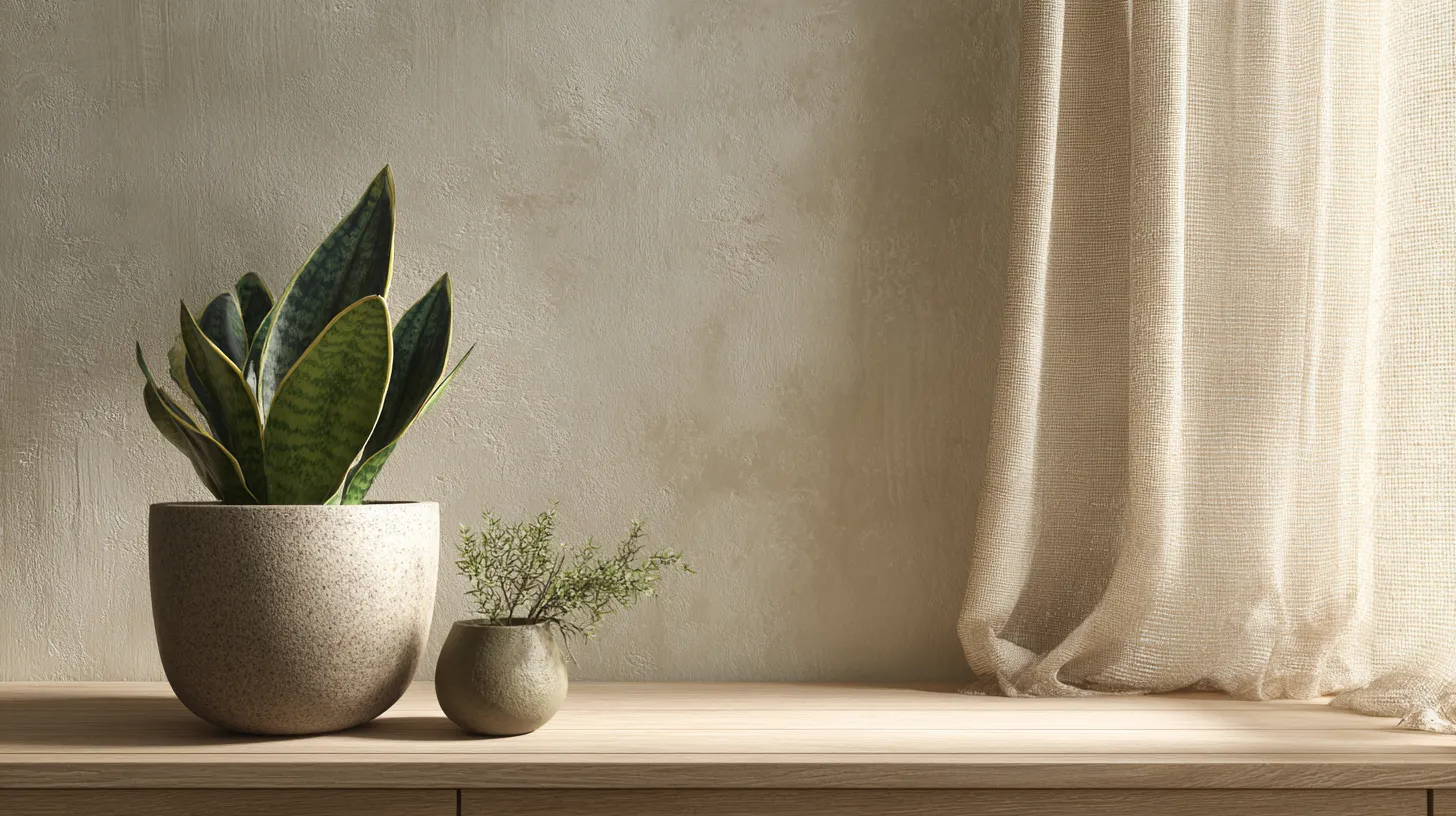
- Snake Plant — upright, graphic, nearly indestructible
- ZZ Plant — glossy arching stems, thrives in low light
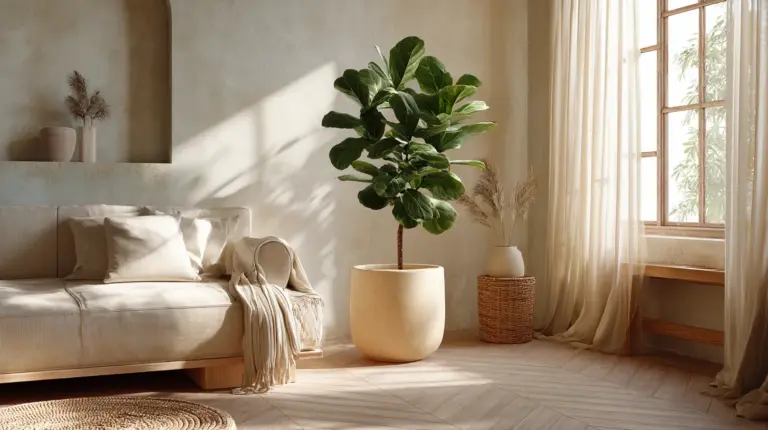
- Fiddle Leaf Fig — bold statement, pairs beautifully with warm oak
For soft, flowing energy:
- Peace Lily — white blooms against dark foliage, deeply calming
- Calathea — patterned leaves that move with the light, perfect for humid Manila homes
- Trailing Philodendron — cascades gently from shelves, activates wealth corners vertically
For wabi-sabi depth:
- Bonsai — the living embodiment of patience and imperfection
- Olive Tree — ancient, textured, quietly luminous
- Ficus Benjamina — delicate weeping branches, like a living sculpture
For air quality and chi activation:
- Bamboo Palm — one of NASA’s top air-purifying plants
- Money Tree — believed to attract financial chi, visually elegant
- Cornstalk Dracaena — tall, tropical, forgiving in humid climates
Plants to Avoid in Feng Shui
Feng Shui cautions against plants with sharp, spiky leaves — like cacti — in bedrooms and living areas, as they are said to create sha chi, or cutting energy. Wilting or dying plants anywhere in the home are considered energetically draining. In Japandi terms, they also break the visual calm. Choose plants you can genuinely care for — a thriving, modest snake plant outperforms a neglected fiddle leaf fig every time.
Chi Flow and Wabi-Sabi: Where Eastern Philosophies Meet
Embracing Asymmetry for Dynamic Energy
One of the most overlooked intersections of Japandi and Feng Shui is the role of asymmetry. Feng Shui warns that rigid, perfectly symmetrical arrangements can cause chi to stagnate — energy needs to move, to breathe, to find its path.
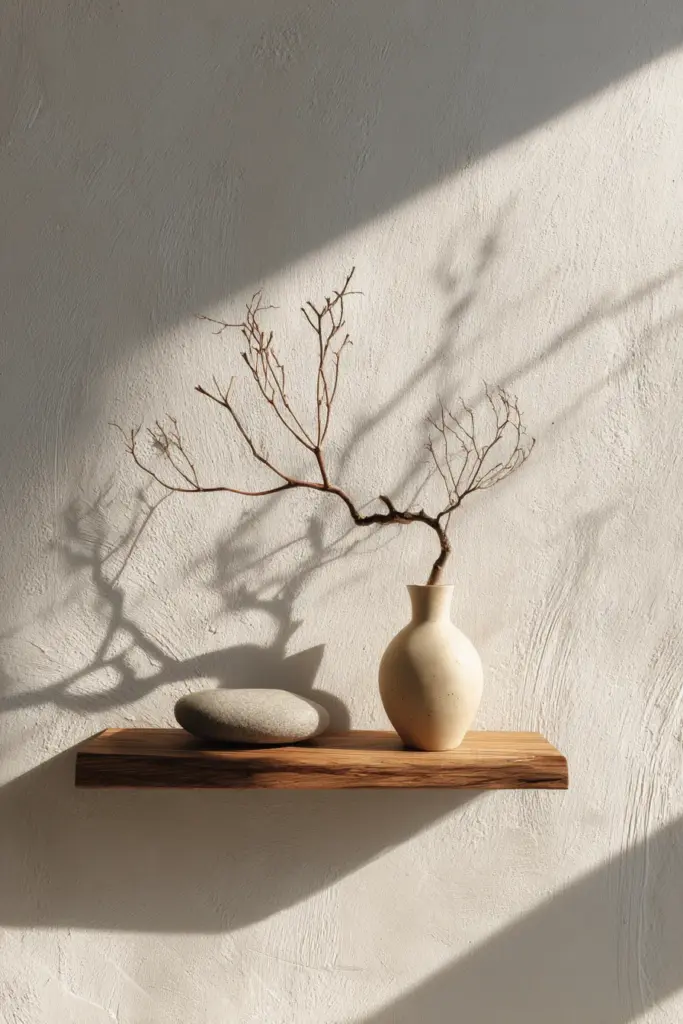
Japandi’s love of imperfection answers this beautifully. An asymmetrical bonsai on a low cedarwood shelf, paired with a smooth stone and a single dried stem in a matte vase — this is not random. This is dynamic energy through intentional imperfection. The eye travels, and so does the chi.
Styling Plants the Japandi Way
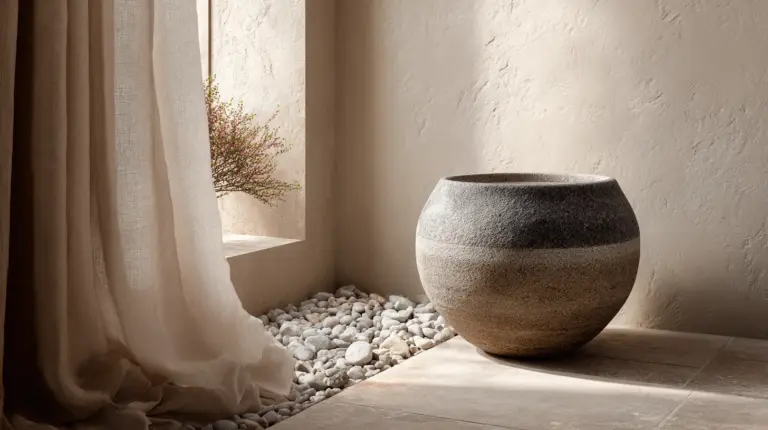
Ground your plants in natural materials: rattan baskets, matte terracotta, raw linen pot covers, polished river stones. These textures absorb and diffuse light warmly, creating the layered sensory quality that makes Japandi spaces feel so deeply inhabitable.
Pair tall, vertical plants like snake plants or dracaena with low, horizontal surfaces — a long, pale wood console or a tatami-level platform. This interplay of height activates vertical chi flow while keeping the visual weight anchored and serene. Explore our [cozy furniture ideas] for pieces that honor this balance.
Room-by-Room Japandi Feng Shui Plant Guide
Living Room: The Gathering of Chi
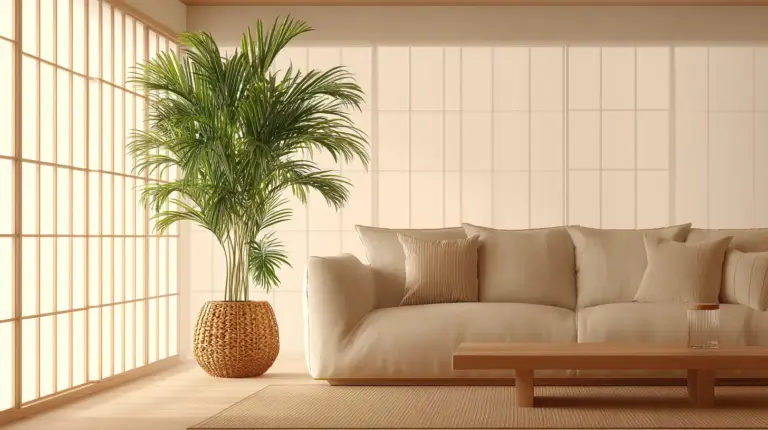
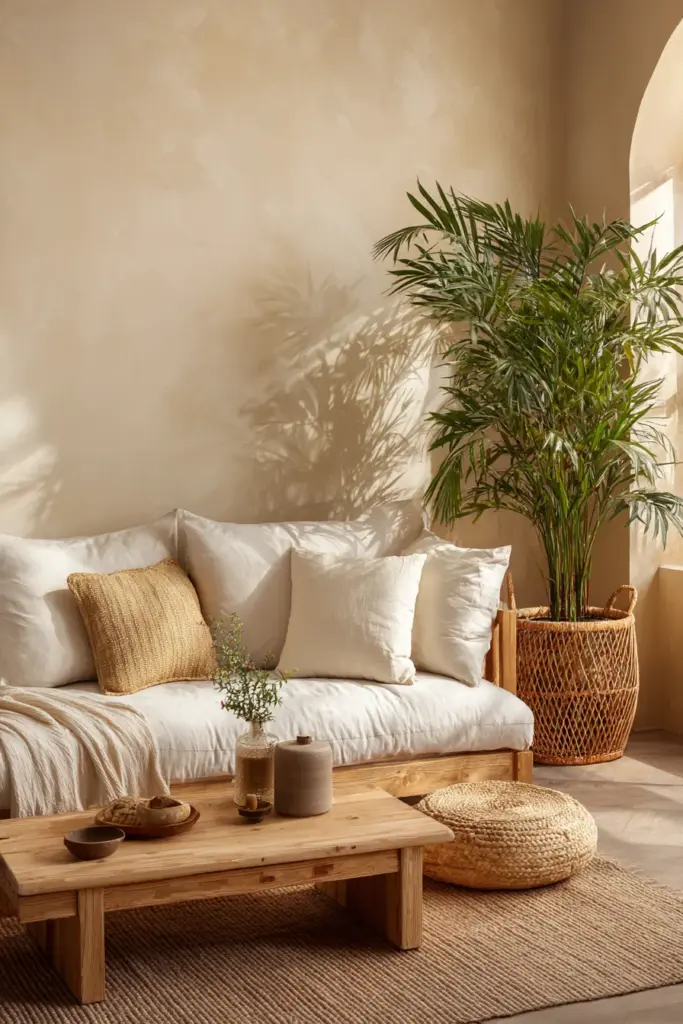
The living room corresponds to the center of the bagua — the health and balance zone. Here, you want plants that feel grounding yet alive. A tall bamboo palm in the corner softens the space without crowding it. A bonsai on a low coffee table invites contemplation.
Style your plants at varying heights — floor level, shelf level, and eye level — to encourage chi to circulate vertically through the whole room. Use [warm ambient lighting] behind large-leafed plants to cast organic shadow patterns on white or clay-toned walls. The effect is meditative and deeply beautiful.
Bedroom: Rest, Restoration, and Gentle Energy
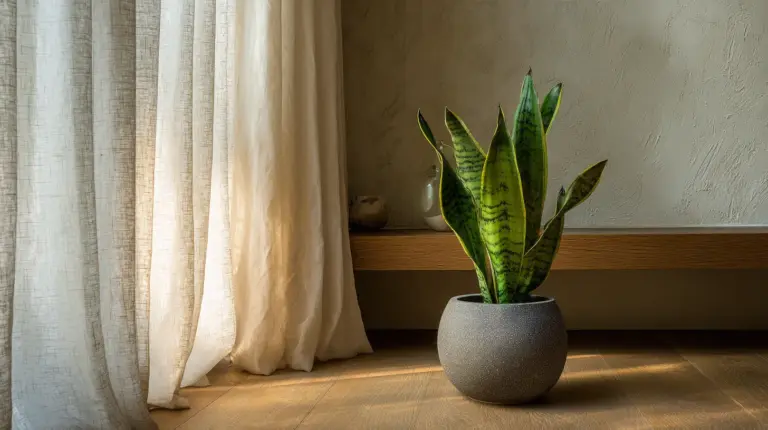
The bedroom calls for softness. Peace lilies and snake plants are the classic pairing — the lily for emotional harmony, the snake plant for clean air and upward, protective energy. Keep plant count low: one or two plants maximum, positioned away from the bed’s direct line to avoid any chi that is too active while you sleep.
In humid climates — and Manila’s warmth makes this especially relevant — a Calathea on an east-facing windowsill thrives beautifully and brings the water element of the east bagua into gentle activation. Its patterned leaves, which fold at dusk, feel almost ceremonial.
Home Office or Study: Activating Knowledge and Career Chi
This is where your snake plant earns its place in the north bagua (career) or northeast bagua (knowledge). Its straight, upward growth is a visual metaphor for ambition and clarity. Pair it with a small jade plant for welcoming, helpful energy — ideal if you receive clients or collaborate remotely.
Keep this space uncluttered. One or two intentional plants, a smooth pebble tray beneath for humidity and grounding chi, and clean lines everywhere else. Less is the Japandi promise. Less, but more alive.
Small Spaces and Apartments: Vertical Japandi Feng Shui
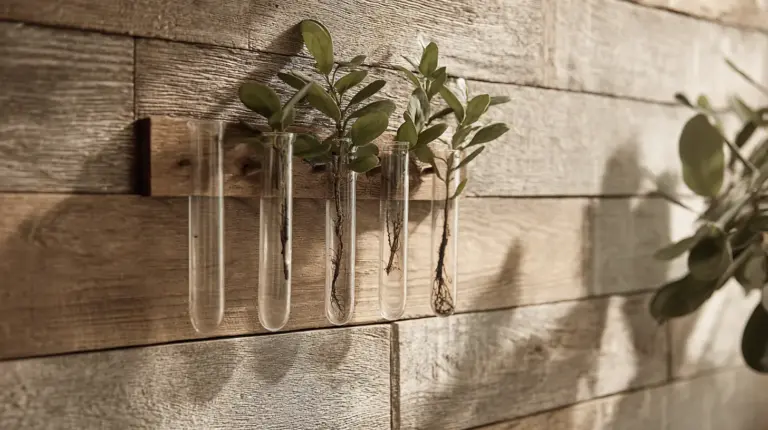
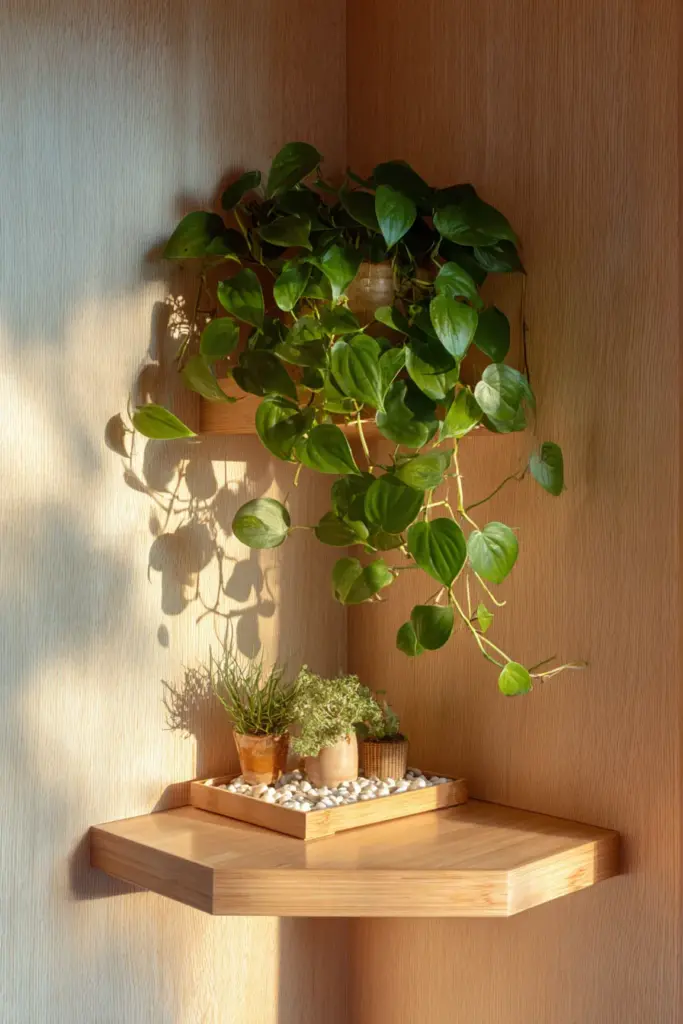
Small-space living does not limit your Feng Shui practice — it focuses it. Use vertical trailing plants like philodendron or pothos cascading from high shelves to activate wealth chi downward. Wall-mounted bamboo or wooden plant holders draw the eye up, expanding the perceived height of the room.
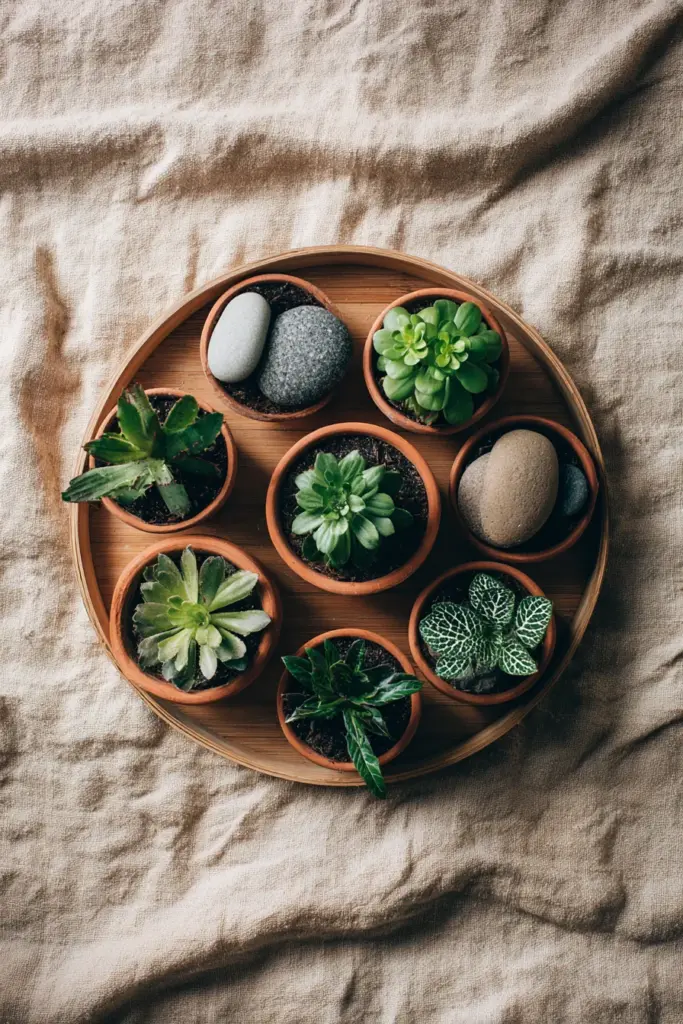
A pebble tray beneath clustered small plants does double duty: it raises local humidity (essential for tropical homes) and creates a micro-landscape of natural chi. This is budget Japandi Feng Shui at its most elegant — grounded, practical, genuinely beautiful.
DIY Japandi Feng Shui: Budget-Friendly Hacks
Upcycle with Intention
You do not need expensive planters to honor this aesthetic. A salvaged bamboo tray becomes a ceremonial plant display. A chipped ceramic bowl, filled with smooth pebbles and a small succulent, embodies wabi-sabi’s acceptance of imperfection — and the pebbles activate earth energy, stabilizing the space.
Paint terracotta pots in chalk white or warm clay tones to maintain Japandi’s muted palette. Style them in odd-numbered groupings — threes and fives — as Feng Shui considers odd numbers more dynamic and energizing than even.
2026 Trend: Smart Planters and Living Walls
The most forward-thinking Japandi Feng Shui spaces in 2026 are incorporating smart planters — self-watering systems in matte concrete or pale wood finishes that maintain plant health effortlessly. A small living wall panel in the east bagua activates family and health energy while becoming a textural focal point that no art piece could replicate.
These are not high-tech intrusions into the Japandi calm. Chosen thoughtfully, they honor the philosophy’s core promise: beauty that actually works for you.
Your Japandi Feng Shui Plant Checklist
- Identify your home’s bagua zones using a compass or floor plan overlay
- Choose one anchor plant per key area from the bagua table above
- Prioritize sculptural, low-maintenance species: snake plant, ZZ, peace lily, bonsai
- Style in natural containers — rattan, terracotta, raw ceramic, linen
- Use asymmetrical arrangements to keep chi flowing
- Add a pebble tray for humidity and grounding in small spaces
- Remove or compost any dying or wilting plants immediately
- For humid climates, favor Calathea, Dracaena, Bamboo Palm, and Philodendron
- Layer plant heights: floor, shelf, and eye level for full vertical chi activation
- Keep count minimal — three to five intentional plants outperform a cluttered collection
Conclusion
A home that breathes is a home that holds you. When you place a peace lily in your relationship corner, or let a trailing philodendron cascade slowly down a sun-warmed shelf, you are not just styling a room. You are participating in something older and quieter — a conversation between you, your space, and the living world.
Japandi Plant Feng Shui asks very little of you: a willingness to slow down, to choose with care, to let imperfect beauty be enough. In return, it offers a home that feels like a long exhale.
Let your space be your sanctuary. Let your plants be your quiet, rooted companions along the way.
Frequently Asked Questions
What plants are best for Japandi style?
The best Japandi plants have sculptural, organic forms and work in muted, natural palettes. Top choices include the snake plant, ZZ plant, bonsai, peace lily, fiddle leaf fig, and olive tree. All thrive in restrained, low-fuss styling that honors Japandi’s wabi-sabi sensibility.
Which plants are best for Feng Shui positive energy?
Feng Shui favors plants with rounded or upward-growing leaves for positive chi. The jade plant, money tree, peace lily, and lucky bamboo are classic choices. Pair them with their corresponding bagua area for the strongest energetic effect.
How do I style plants in a Japandi home?
Use natural containers — matte terracotta, rattan, raw ceramics. Group plants asymmetrically in odd numbers. Layer heights across floor, shelf, and table level. Keep the overall plant count intentional and minimal: three to five well-placed plants create more impact than many competing ones.
What plants are best for Japandi Feng Shui in small apartments?
In compact spaces, choose vertical growers like snake plants and dracaena, or trailing plants like philodendron on high shelves. Use pebble trays to boost humidity and activate earth energy. Wall-mounted bamboo plant holders maximize space while honoring the aesthetic.
Which plants should I avoid in Feng Shui?
Avoid cacti and plants with very sharp, spiky leaves in living and sleeping areas, as Feng Shui associates them with sha chi — cutting energy. Always remove wilting or dying plants promptly, as they are considered to deplete the energy of a space.