
Table of Contents
There is something quietly powerful about a home that feels as good as it looks. The air is clean and unhurried. Every surface holds intention. Every plant seems to belong — rooted, still, just right.
That is the heart of Japandi living. A philosophy borrowed from two of the world’s most thoughtful design cultures — Japan’s wabi-sabi reverence for imperfection, and Scandinavia’s embrace of warmth and function — Japandi is not just an aesthetic. It is a feeling you cultivate, breath by breath.
But for those of us who sneeze at the first sign of pollen, or whose sinuses rebel against mold and dust, bringing greenery indoors can feel like a gamble. The good news? It doesn’t have to be. Japandi hypoallergenic plants exist at the beautiful intersection of low-allergen living and minimalist elegance — and they are more stunning than you might expect.
At ERYLIN, we believe your home should hold you gently. So let’s find the plants that do exactly that.
What Makes a Plant “Hypoallergenic” — And Why It Matters Indoors
Before we style a single shelf, it helps to understand what we’re actually protecting ourselves from.
Most indoor allergy triggers fall into two categories: pollen (released by flowering or wind-pollinated plants) and mold and dust (which accumulate in overwatered soil or on broad, flat leaves). A truly hypoallergenic plant produces little to no airborne pollen, has smooth or waxy foliage that doesn’t trap dust easily, and thrives in conditions that don’t encourage mold.
The NASA Clean Air Study, while aging, still offers a foundational truth: certain houseplants actively filter airborne toxins like benzene, formaldehyde, and trichloroethylene. More recent research supports that plants like the Peace Lily and Areca Palm can also help reduce mold spore counts in enclosed spaces — a quiet act of care hidden inside something beautiful.
The Allergen Triangle to Avoid
When choosing plants for allergy-sensitive homes, watch for this trio of triggers:
- Airborne pollen — mostly from heavily flowering or wind-pollinated species
- Mold in soil — common when pots lack drainage or are overwatered
- Dust-trapping foliage — textured or fuzzy leaves collect allergens quickly
Japandi-style plants, by nature, tend to be smooth-leafed, sculptural, and low-maintenance — which means they already lean hypoallergenic before we even start selecting.
The Best Japandi Hypoallergenic Plants for Your Home
These plants were chosen not just for their allergy profile, but for their presence — the way they hold light, cast shadow, and bring a living stillness to a room.
Areca Palm (Dypsis lutescens)
Allergen level: Very low | Light: Bright indirect | Care: Easy
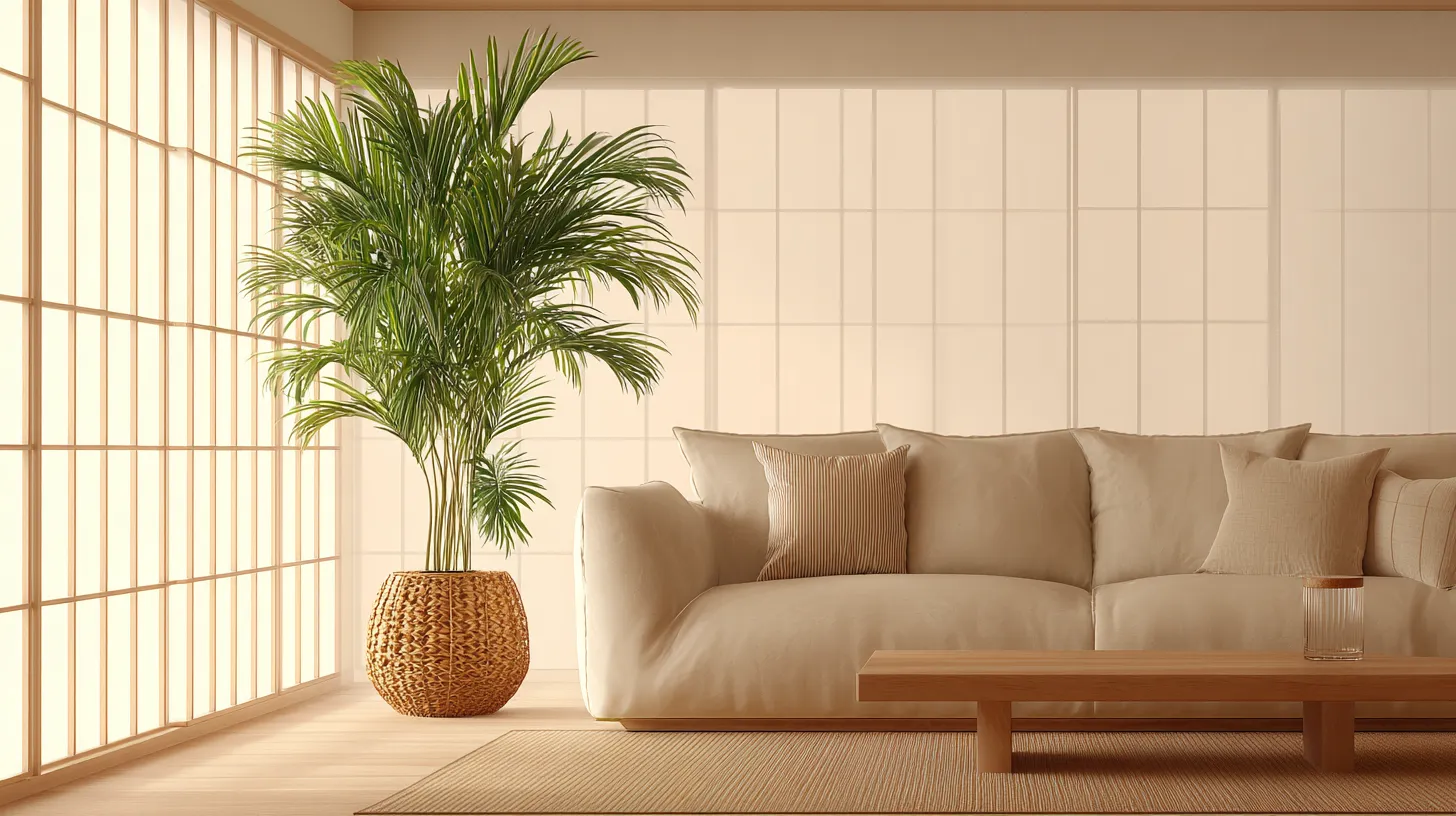
The Areca Palm is perhaps the most graceful large plant you can bring into a Japandi interior. Its feathery, arching fronds diffuse light softly — like sunlight through shoji screens — and fill vertical space with layered, natural texture.
Beyond beauty, it is a certified air-humidifying powerhouse. Studies show the Areca Palm releases significant moisture into dry indoor air, which actually reduces the concentration of airborne allergens. It produces no significant pollen indoors and its smooth leaflets discourage dust accumulation.
Style it in a tall woven rattan planter near a north-facing window, or beside a natural linen sofa to echo its warm, golden-green tones.
ZZ Plant (Zamioculcas zamiifolia)
Allergen level: Very low | Light: Low to bright indirect | Care: Very easy
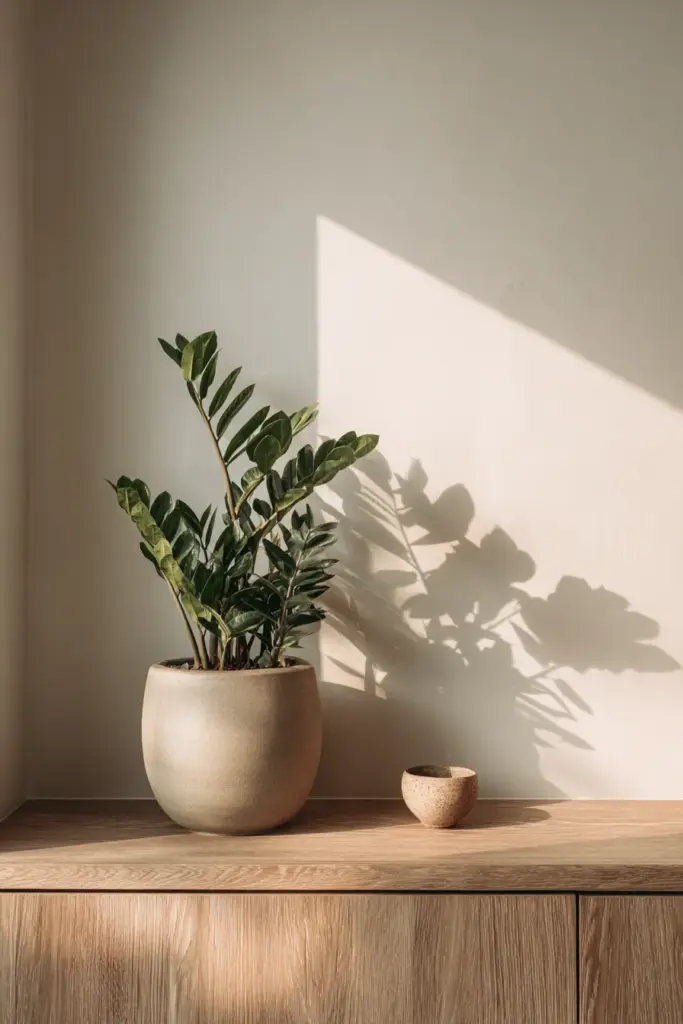
The ZZ Plant is practically made for Japandi living. Its glossy, deep green leaves reflect light with a quiet confidence, and its upright, architectural form reads almost like sculpture. It thrives in low light — ideal for the muted, diffused interiors that Japandi favors.
It produces no airborne pollen, and its smooth, waxy surface wipes clean with a damp cloth in seconds. If you tend to forget watering, the ZZ stores water in its rhizomes, meaning neglect is practically part of its care routine.
Style it on a low wooden credenza with a matte ceramic pot in warm grey or sand tones.
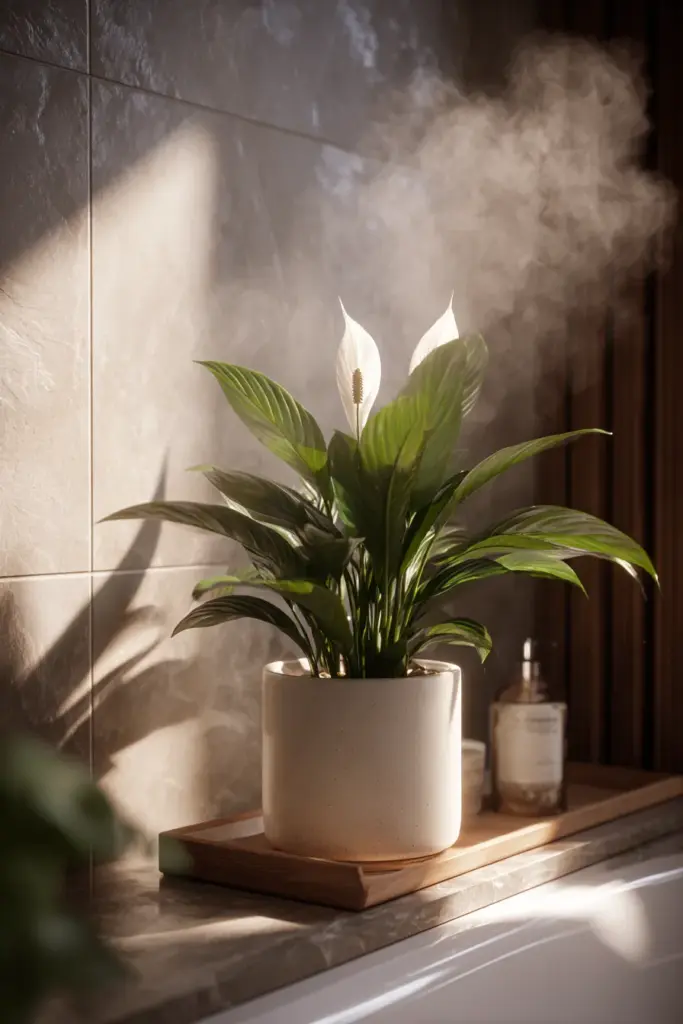
Peace Lily (Spathiphyllum wallisii)
Allergen level: Low (note: mild irritant for some) | Light: Low | Care: Easy
The Peace Lily deserves nuance. Its creamy white spathe flowers are not wind-pollinated, meaning they release very little airborne pollen — making them far safer than many flowering plants. Research has also linked Peace Lily to reducing airborne mold spores, particularly in humid rooms like bathrooms.
However, the plant does contain calcium oxalate crystals, which can mildly irritate skin or mucous membranes for very sensitive individuals. For most allergy sufferers, it is perfectly safe and deeply beautiful.
Style it in a low, round planter on a bathroom shelf or beside a freestanding bath, where its love of humidity and low light is returned with lush, dramatic blooms.
Chinese Evergreen (Aglaonema)
Allergen level: Very low | Light: Low to medium | Care: Easy
Few plants offer as much visual variety while asking so little in return. Chinese Evergreen comes in shades of deep forest green, silver, blush pink, and red — though for Japandi interiors, the cool greens and silvery varieties feel most harmonious.
It produces minimal pollen, tolerates irregular watering, and thrives in the lower light levels common in Japandi spaces. Its broad, smooth leaves wipe clean easily and add a sense of lush, quiet abundance to corners that need life.
Style it on a floating shelf with a simple terracotta or brushed concrete pot, letting one dramatic leaf curl into the light.
Parlor Palm (Chamaedorea elegans)
Allergen level: Very low | Light: Low to medium | Care: Easy
The Parlor Palm is one of the most allergy-safe plants documented — acknowledged for producing little to no allergenic pollen indoors. It is compact, slow-growing, and utterly elegant. Its slender canes and delicate fronds bring a refined, almost Japanese garden quality to small spaces.
It is especially suited to Japandi living rooms and reading nooks, where you want the suggestion of a tropical forest without its chaos.
Style it in a slim bamboo or white ceramic pot on a side table beside warm-toned cozy furniture and a low-lit candle.
Lady Palm (Rhapis excelsa)
Allergen level: Very low | Light: Low to bright indirect | Care: Easy
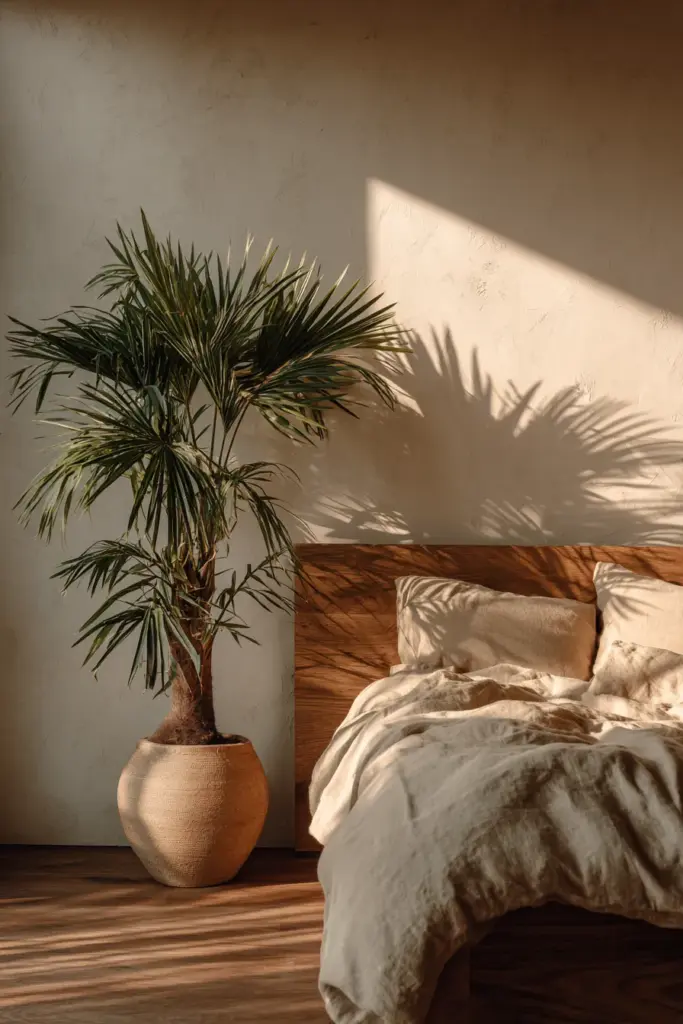
The Lady Palm is underused and utterly stunning. Its fan-shaped fronds fan outward like an open hand — bold, organic, and deeply architectural. It is one of the few palms that genuinely thrives in low indoor light, making it perfect for Japandi interiors that favor soft, layered lighting ideas.
It is non-allergenic, pet-friendly, and slow-growing enough that you won’t be repotting it every season. In the Philippines’ warm, humid climate, it actually flourishes with minimal intervention.
Style it beside a natural wood bookshelf or in the corner of a Japandi bedroom to anchor the room with grounded, organic height.
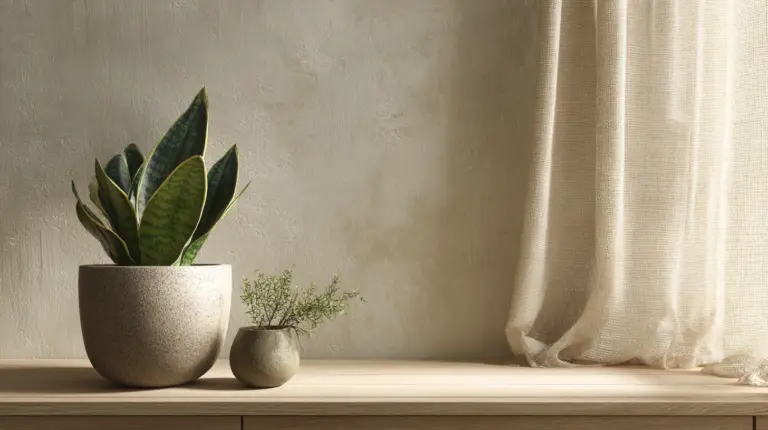
Snake Plant (Sansevieria trifasciata)
Allergen level: Low | Light: Any | Care: Very easy
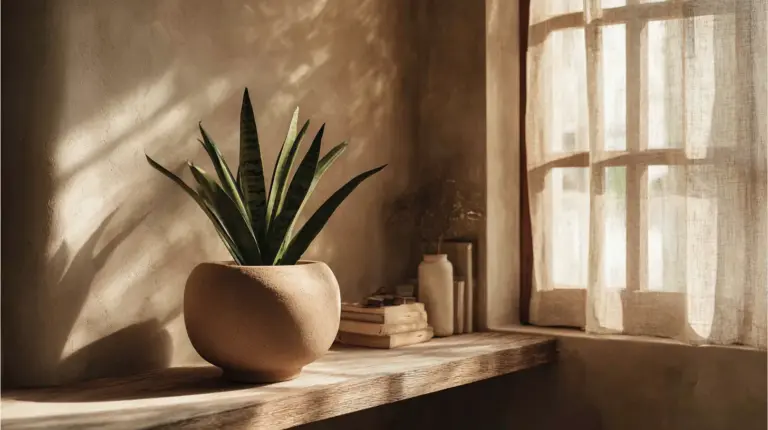
No Japandi plant list is complete without the Snake Plant. Its upright, sword-like leaves feel almost meditative — still, structured, quietly fierce. It tolerates nearly any light condition and goes weeks without water, making it one of the most forgiving plants in any collection.
While not entirely without allergen potential for extremely sensitive individuals, its pollen production is negligible, and its stiff, smooth leaves accumulate very little dust. It also filters air continuously, even at night.
Style it in a matte black or earthy terracotta pot for striking contrast against a white limewash wall or natural wood paneling.
Japandi Hypoallergenic Plant Styling Guide
| Plant | Allergen Level | Light Needs | Best Styled In | Pot Material |
|---|---|---|---|---|
| Areca Palm | Very Low | Bright indirect | Living room corner | Rattan, woven fiber |
| ZZ Plant | Very Low | Low–bright | Credenza, entryway | Matte ceramic, stone |
| Peace Lily | Low | Low | Bathroom, bedroom | White ceramic, wood |
| Chinese Evergreen | Very Low | Low–medium | Shelves, corners | Terracotta, concrete |
| Parlor Palm | Very Low | Low–medium | Reading nooks, side tables | Bamboo, white ceramic |
| Lady Palm | Very Low | Low–bright | Bedroom, bookshelf corners | Linen-wrapped, clay |
| Snake Plant | Low | Any | Entryways, office spaces | Black matte, terracotta |
DIY Japandi Pot Ideas for Allergy-Safe Styling
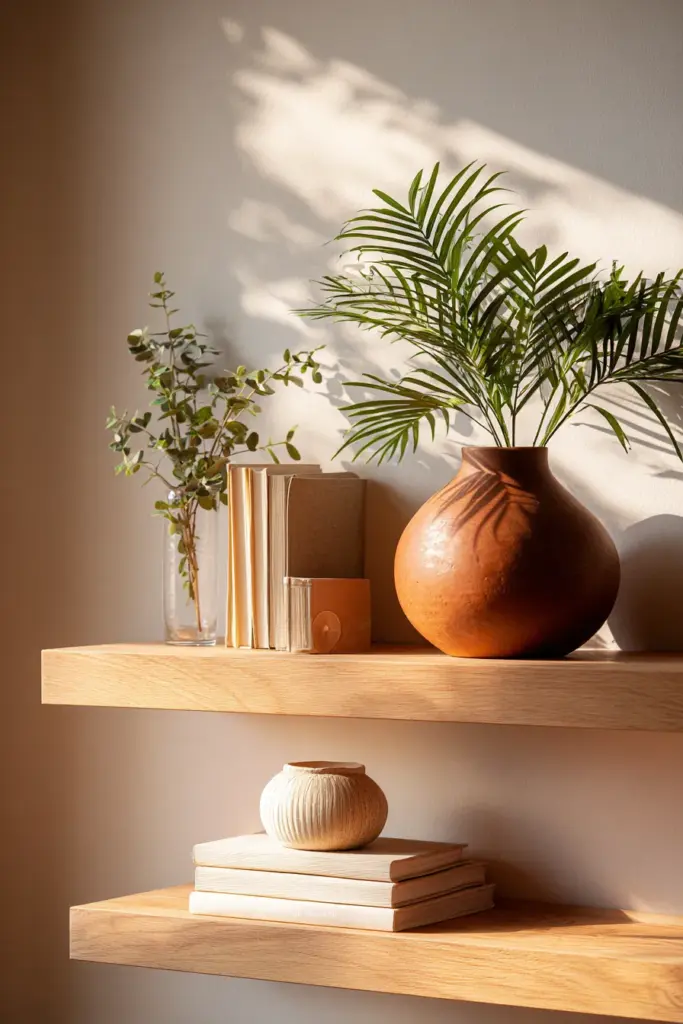
The pot is part of the plant’s story. And in Japandi interiors, it matters enormously.
For allergy-safe styling, avoid overly porous unglazed clay if you tend to overwater — mold can develop on the outer surface. Instead, opt for glazed ceramics, sealed concrete, or clean rattan sleeves over nursery pots with drainage.
Budget-Friendly Upcycling Ideas
- Wrap a plain nursery pot in a cut piece of natural jute or linen fabric, secured with twine
- Use wooden fruit crates or wine boxes as low risers for small plants on shelves
- Sand and seal an old terracotta pot with clear matte varnish to reduce porosity
- Line a rattan basket with a plastic liner and drainage layer of pebbles for palm-style plants
These small acts of making are wabi-sabi in practice — finding beauty in the imperfect, the repurposed, the yours.
Allergy-Safe Plant Care Tips for Japandi Homes
Choosing the right plant is only half the equation. How you care for it matters just as much.
Water mindfully. Overwatering is the number one cause of mold in indoor plant soil. Allow the top inch of soil to dry between waterings for most of these varieties.
Wipe leaves monthly. Use a soft, damp cloth to remove dust from smooth-leafed plants. This reduces allergen accumulation and keeps foliage looking luminous.
Use well-draining soil. Add perlite or coarse sand to potting mix to improve drainage and discourage mold growth at the root level.
Elevate where possible. Placing plants on shelves or pedestals reduces ground-level dust circulation — a subtle but effective allergy management strategy for small Japandi living rooms.
Rotate every few weeks. Even light rotation encourages even growth and prevents one-sided dust accumulation on leaves facing the room.
Key Takeaways: Japandi Hypoallergenic Plants Checklist
- Choose low-pollen, smooth-leafed plants — Areca Palm, ZZ Plant, Parlor Palm, Lady Palm, Chinese Evergreen
- Avoid heavy flowering or fuzzy-leafed plants for allergy-sensitive households
- Peace Lily is safe for most, but introduce slowly if you have very sensitive skin or airways
- Snake Plant and ZZ Plant are the most low-maintenance, resilient options for beginners
- Proper watering and drainage prevent mold — the hidden allergen in many plant setups
- Wipe leaves monthly to reduce dust accumulation on foliage
- Elevate plants on shelves or pedestals for cleaner airflow in small spaces
- Style with natural materials — rattan, ceramic, linen, bamboo — to complete the Japandi feel
A Final Word from ERYLIN
There is a kind of peace that comes from knowing your home is working for you — that the greenery you’ve placed so carefully isn’t just beautiful, but kind. Kind to your lungs, your mornings, the soft hours between waking and coffee.
Japandi has always been about intentionality. About choosing less, but choosing well. About letting the natural world inside without losing the calm you’ve worked so hard to build.
These plants are that invitation. Quiet, clean, alive — and completely, breathtakingly yours.
Bring them in. Let the air change. Feel the difference.
Frequently Asked Questions
Are there hypoallergenic plants suitable for Japandi style homes?
Yes — several plants align beautifully with Japandi aesthetics while producing very low pollen. The Areca Palm, ZZ Plant, Parlor Palm, Lady Palm, and Chinese Evergreen are all considered low-allergen and offer the sculptural, serene quality that Japandi interiors favor.
What indoor plants don’t cause allergies but fit minimalist decor?
Snake Plant, ZZ Plant, and the Parlor Palm are among the most allergy-safe options for minimalist spaces. They have smooth foliage, produce negligible pollen, and their clean architectural forms complement neutral, pared-back Japandi styling.
Do popular Japandi plants like ZZ or Peace Lily trigger allergies?
The ZZ Plant is widely considered safe for allergy sufferers — it produces no significant airborne pollen and its waxy leaves resist dust. The Peace Lily is generally low-risk for pollen allergies since it is insect-pollinated, not wind-pollinated. However, it contains calcium oxalate, which may mildly irritate very sensitive individuals.
How do I choose allergy-safe greenery for a small Japandi living room?
Focus on smooth-leafed, non-flowering or insect-pollinated plants. Keep one to three statement plants rather than many small ones to minimize soil surface area (and thus mold risk). Elevate plants on shelves to improve airflow, and always ensure pots have adequate drainage.
What causes indoor plant allergies — pollen or something else?
Both pollen and mold are common culprits. Wind-pollinated or heavily flowering plants release airborne pollen. Overwatered soil and pots without drainage create mold growth. Dust that accumulates on textured or fuzzy leaves also contributes. Choosing smooth-leafed, low-pollen plants and practicing proper watering habits addresses all three.