
Table of Contents
There’s a particular kind of stillness that settles into a well-designed room — the kind where nothing feels forced, where every object earns its place, and where a single green leaf can anchor an entire space.
That’s the quiet magic of Japandi plant styling. It’s where Japanese minimalism meets Scandinavian warmth, and nature becomes the thread that ties it all together. Plants aren’t decorations in a Japandi home. They’re collaborators.
If you’ve been drawn to the muted palette, the honest materials, and the sense of intentional calm that defines Japandi interiors, then understanding how to bring plants into this aesthetic is one of the most rewarding things you can do. This guide will show you exactly how.
Let’s begin — gently, the way a good room should welcome you.
What Is Japandi Plant Styling?
Japandi is the design philosophy born from the marriage of Japanese wabi-sabi — finding beauty in imperfection and impermanence — and Scandinavian hygge, the cozy contentment of simple pleasures. When applied to plants, this means choosing greenery that feels organic, unforced, and quietly alive.
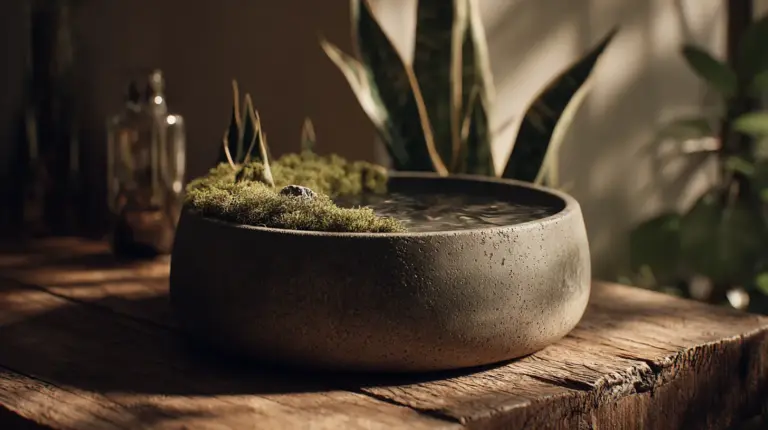
In Japandi interiors, plants don’t compete for attention. They breathe. A single sculptural bonsai on a shelf of warm timber. A trailing pothos in a matte terracotta pot near a linen-draped window. A snake plant standing upright in a corner, its geometric leaves echoing the clean lines of the furniture.
The goal is harmony between the organic and the intentional. Every plant you bring into your Japandi space should feel like it belongs — not placed, but arrived.
Best Plants for Japandi Interiors
The Classics: Sculptural, Calm, and Purposeful
Choosing the right plants is the foundation of Japandi plant styling. You’re looking for species with strong silhouettes, muted natural tones, and a presence that doesn’t overwhelm.
Snake Plant (Sansevieria trifasciata)
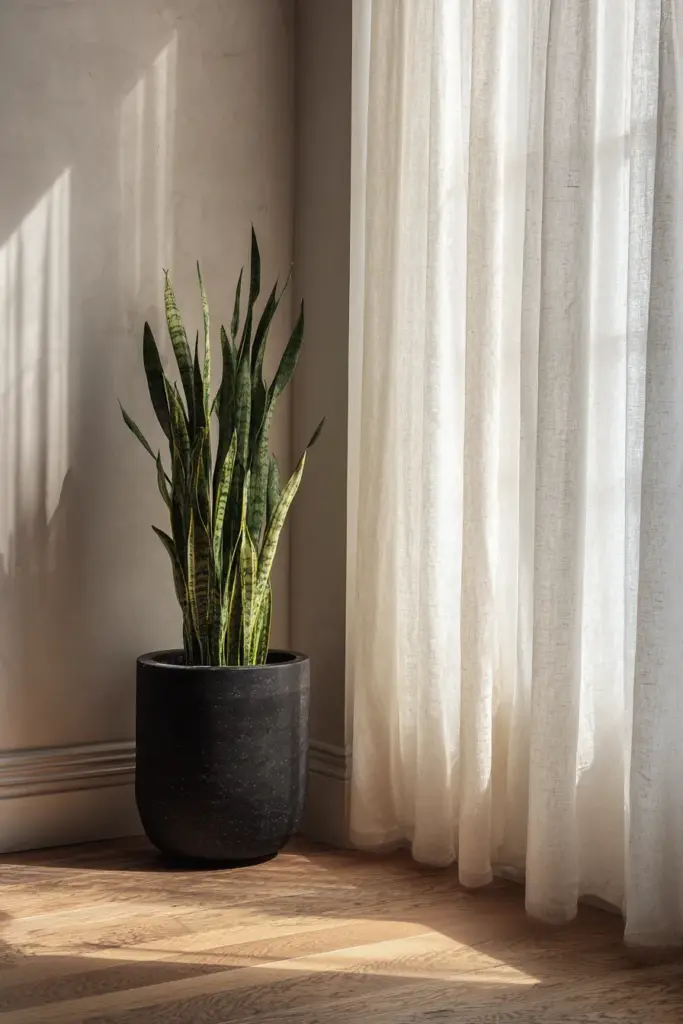
The snake plant is perhaps the most quintessentially Japandi plant in existence. Its upright, sword-like leaves in deep green with silvery margins bring architectural tension to a room without chaos. It thrives in low to indirect light, rarely needs watering, and purifies the air — three qualities that align perfectly with the low-maintenance, mindful Japandi lifestyle.
Place a snake plant in a slim ceramic vessel in charcoal or stone grey. Let it stand alone. It doesn’t need company.
ZZ Plant (Zamioculcas zamiifolia)
Glossy, waxy, and almost sculptural, the ZZ plant brings a quiet lustre to darker corners. Its oval leaflets catch and hold light in a way that feels intentional, even meditative. It tolerates neglect beautifully — an honest plant for an honest aesthetic.
The ZZ plant pairs beautifully with dark walnut wood furniture and neutral linen textiles.
Fiddle Leaf Fig (Ficus lyrata)
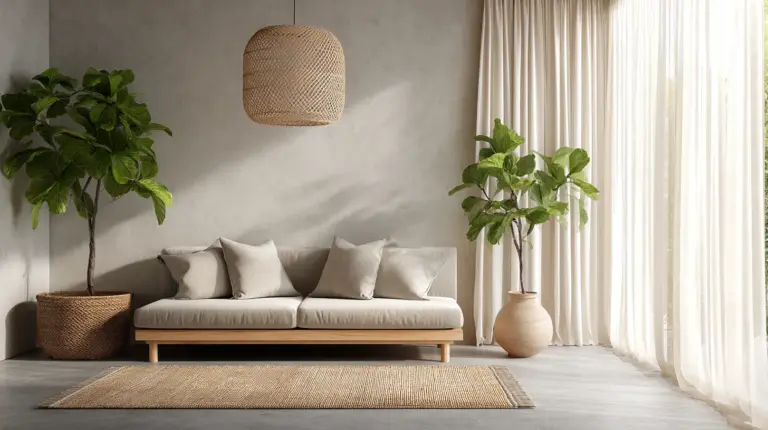
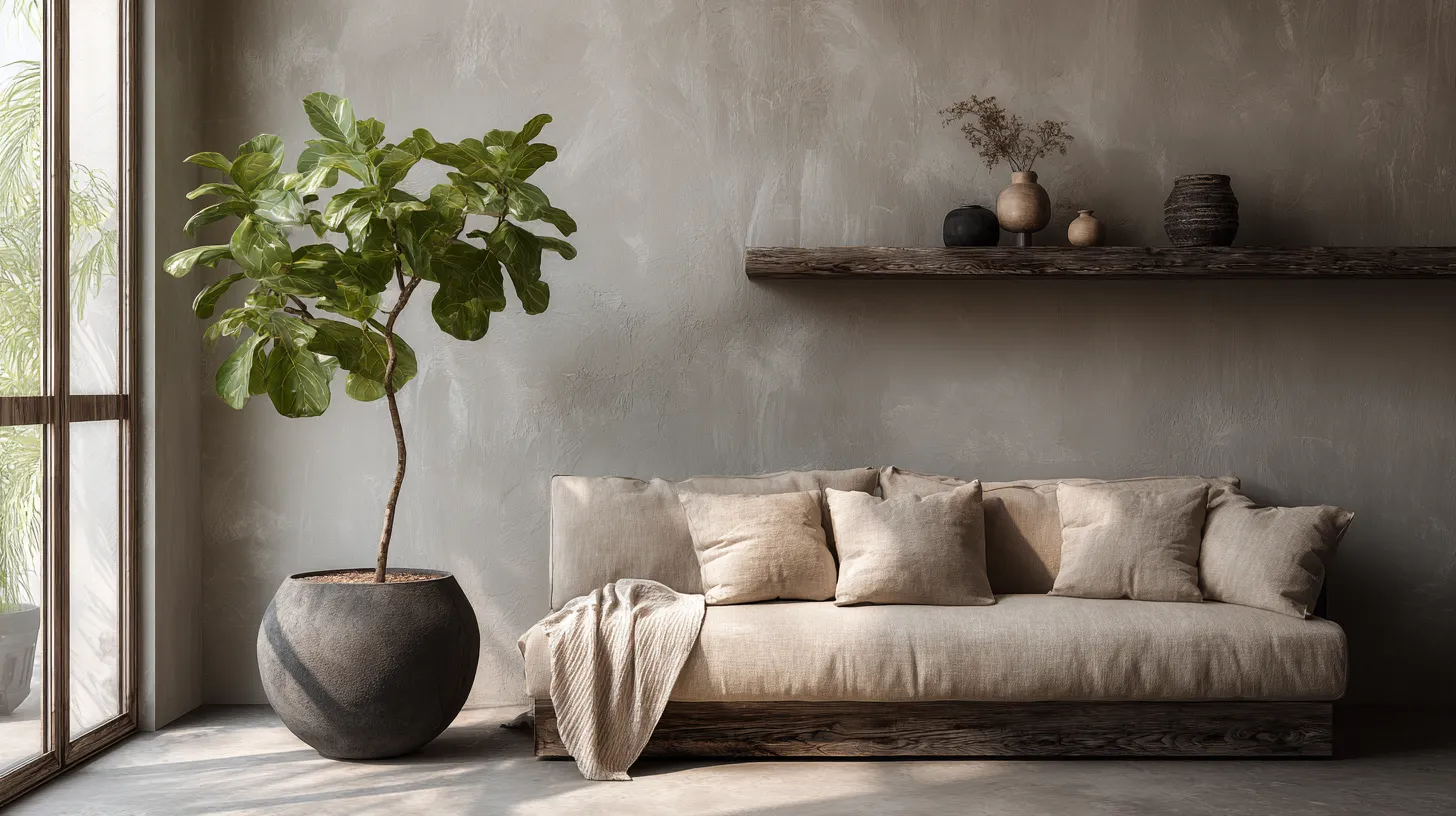
For those who want a statement without clutter, the fiddle leaf fig delivers. Its large, violin-shaped leaves bring drama through scale rather than color. Position it near a window with diffused afternoon light, in a woven seagrass pot or raw concrete planter, and it becomes the quiet focal point of the room.
Peace Lily (Spathiphyllum)
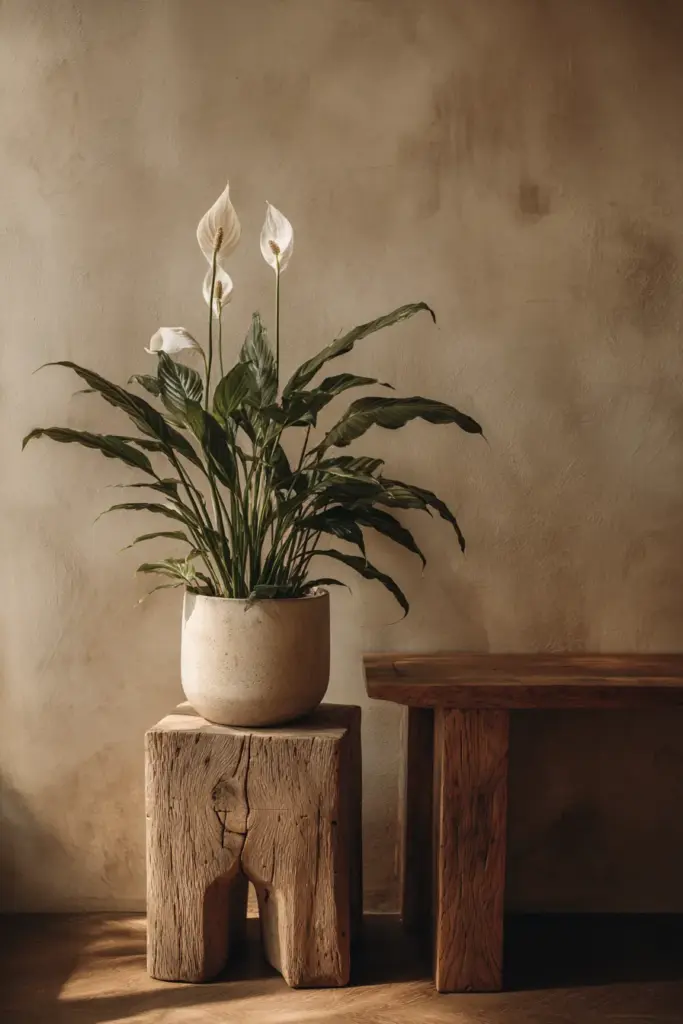
Soft, elegant, and gently drooping, the peace lily introduces a feminine softness that balances Japandi’s clean lines. Its white blooms appear seasonally, offering a natural rhythm to your space — a nod to the wabi-sabi appreciation of transience. It thrives in indirect light and slightly humid environments.
Bonsai
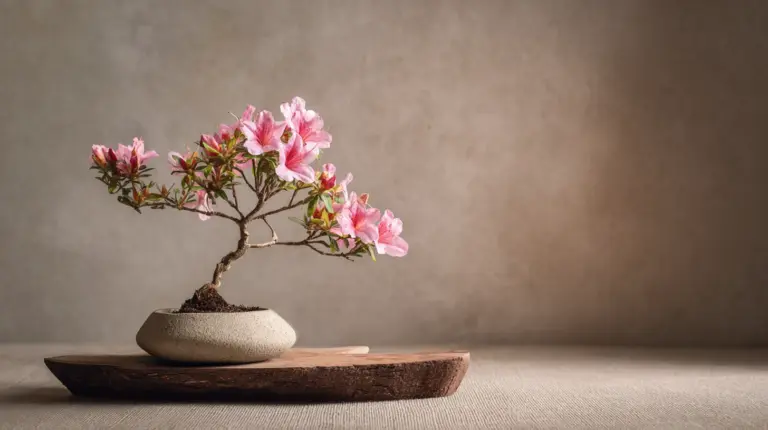
Few plants embody wabi-sabi more completely than bonsai. A carefully tended bonsai tree — whether juniper, ficus, or Japanese maple — is not just a plant. It’s a living sculpture, a practice in patience, and a daily reminder that beauty unfolds slowly. Place it on a raw-edge wooden shelf or a low bench. Give it space. Let it breathe.
Pilea (Pilea peperomioides)
Nicknamed the “Chinese money plant,” the pilea brings playful geometry to Japandi spaces. Its round, coin-shaped leaves on thin stems introduce lightness and movement. It’s compact, easy to propagate, and perfect for small shelves or windowsills.
Low-Maintenance Plants for Japandi Style
One of the core principles of Japandi living is simplicity — including the care of your space. The following plants align with this ethos beautifully.
| Plant | Light Needs | Watering | Best Placement |
|---|---|---|---|
| Snake Plant | Low to bright indirect | Every 2–6 weeks | Corner, shelf, entryway |
| ZZ Plant | Low to indirect | Every 2–3 weeks | Dark corners, office nook |
| Pothos | Low to bright indirect | Weekly | Hanging shelf, bookcase |
| Rubber Plant | Bright indirect | Every 1–2 weeks | Statement corner |
| Succulents | Bright indirect to direct | Every 2–4 weeks | Windowsill, table |
| Peace Lily | Indirect | Weekly | Bedroom, bathroom |
These plants thrive with minimal intervention — perfect for a life designed around intention, not maintenance.
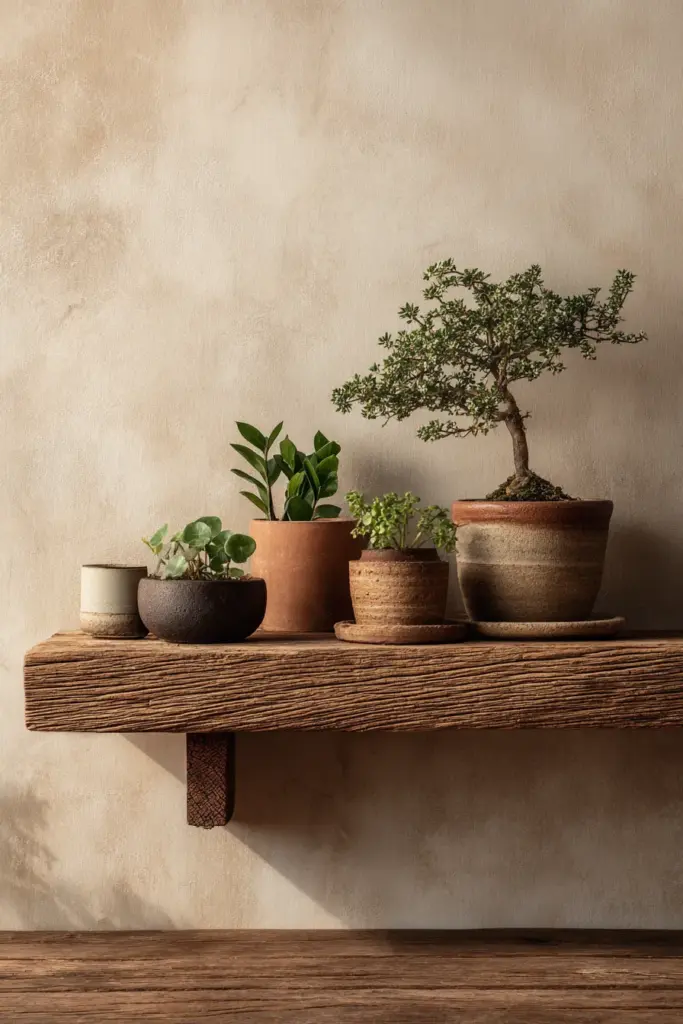
How to Style Indoor Plants in a Japandi Interior
Embrace Asymmetry
In Japandi design, symmetry can feel forced. Instead, embrace the Japanese concept of ma — negative space, the beauty of what is not there. Group plants in odd numbers: one tall, one medium, one small. Let them breathe. Let the space around them be part of the composition.
A fiddle leaf fig at floor level, a small bonsai on the shelf above and to the right, a trailing pothos hanging gently from a hook further left — this is not random. This is intentional asymmetry.
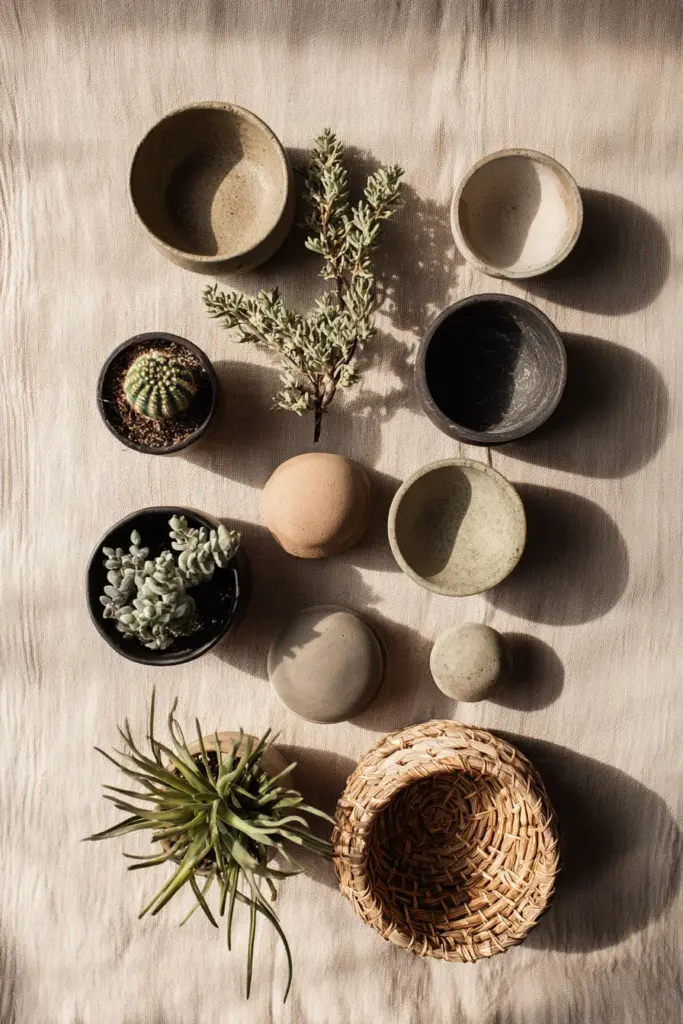
Choose Natural, Honest Planters
The container is as important as the plant. In Japandi spaces, reach for:
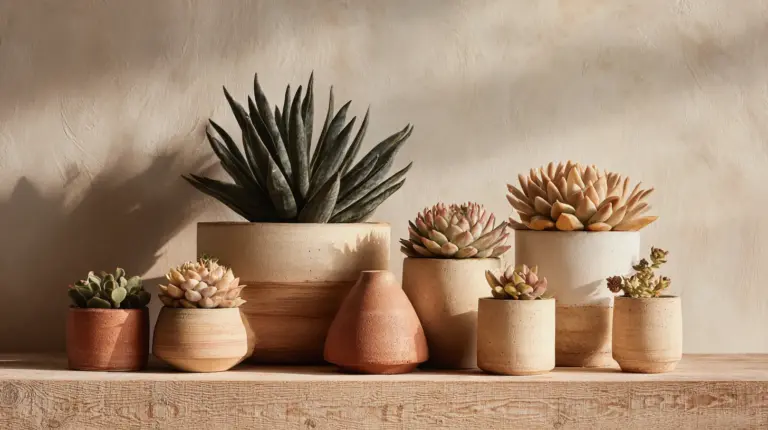
- Terracotta — unglazed, warm, earthy, timeless
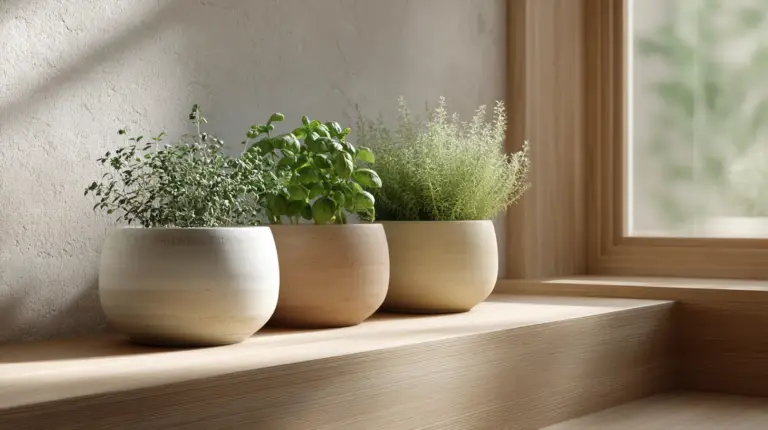
- Matte ceramic — in stone, sand, ash, or off-white
- Raw concrete — modern, grounded, architectural
- Woven seagrass or rattan — for texture and warmth
- Hand-thrown stoneware — irregular, artisanal, wabi-sabi in spirit
Avoid shiny glazes, metallic finishes, or overly ornamental pots. The vessel should recede so the plant can speak.
Work with Vertical Space
In smaller Japandi homes, vertical space is precious and underused. A bamboo ladder shelf holding plants at different heights draws the eye upward and creates a sense of intentional layering. Wall-mounted wooden brackets with small trailing plants — pothos, string of pearls, or ivy — bring life to bare walls without cluttering surfaces.
This approach is especially powerful in small-space Japandi styling, where every square centimeter counts.
Use Light as a Styling Tool
Japandi interiors are built on soft, diffused light — the kind that filters through sheer linen curtains and pools gently on timber floors. Place your plants where they can benefit from this light without being harshly exposed.
A snake plant near a frosted-glass window. A ZZ plant glowing softly in the amber warmth of an evening lamp. A peace lily in the pale morning light of a north-facing bedroom. Light is not just functional; it’s part of the composition.
For more ideas on creating the right atmosphere, explore our Japandi lighting ideas and cozy minimalist furniture guides.
Japandi Plant Styling for Small Spaces
Living in a compact home doesn’t mean compromising on the Japandi aesthetic. It means editing more carefully.
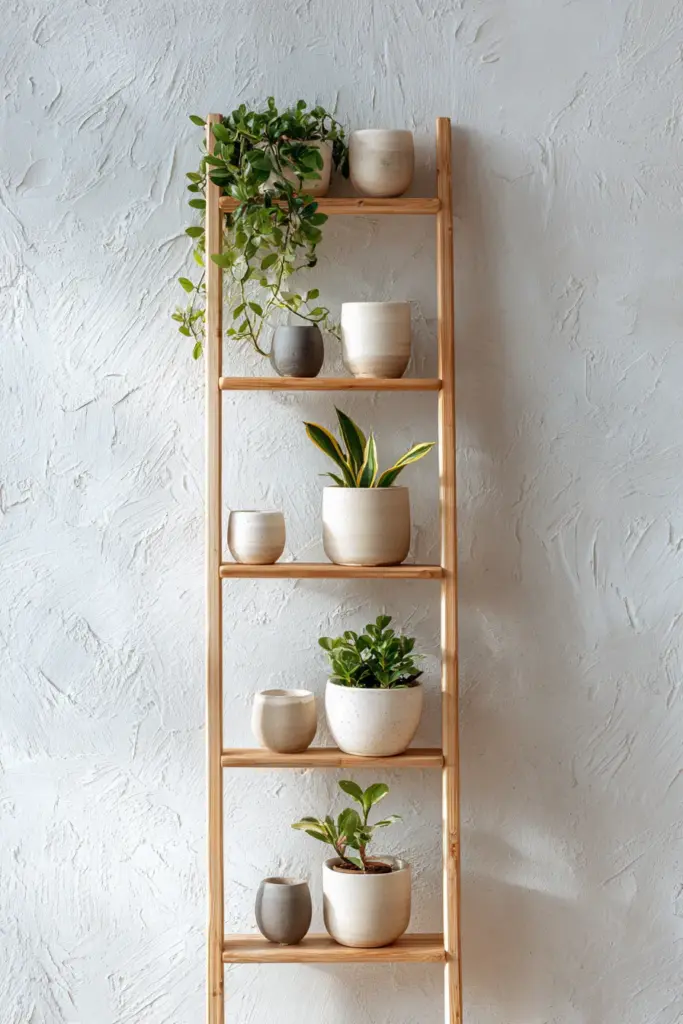
Vertical Wall Gardens
A small wall-mounted planter system — three or four ceramic wall pots in a staggered arrangement — transforms an empty wall into a living installation. Choose plants with different textures: the pointed leaves of a snake plant alongside the round softness of a pilea and the cascading trails of a pothos.
Windowsill Arrangements
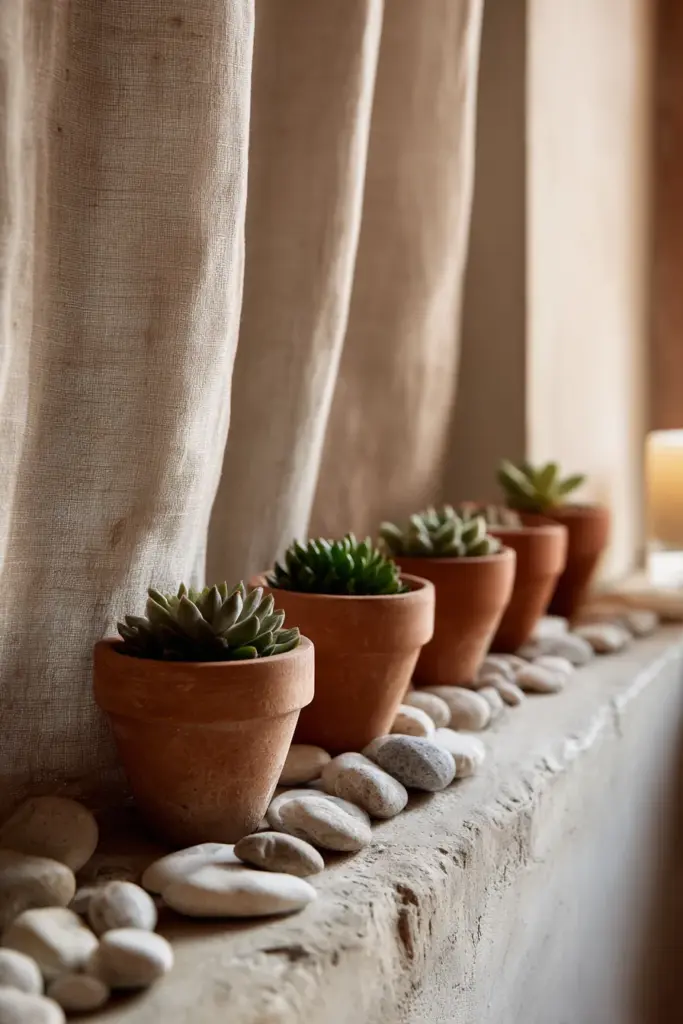
A deep windowsill is a natural Japandi vignette. Line it with small succulents in uniform terracotta pots, varying in height and species. Keep spacing generous. Add a smooth pebble or two. A single candle. Nothing more.
Upcycled Wood Stands
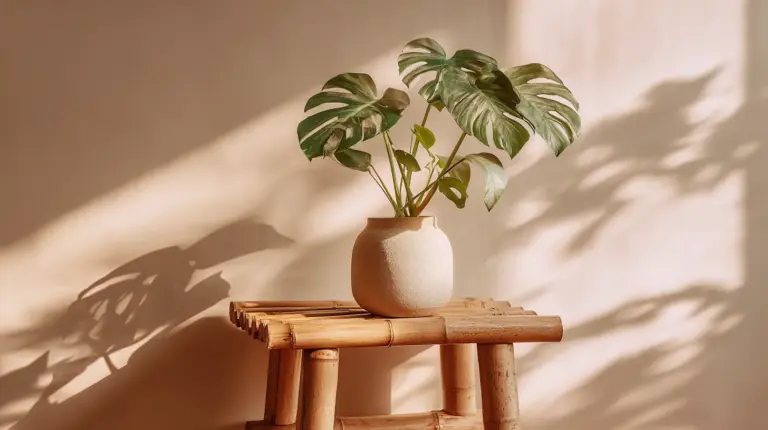
Reclaimed wood creates the most characterful plant stands. A sanded offcut of cedar or pine, raised on simple turned legs, becomes the perfect display for a single statement plant. It’s sustainable, budget-friendly, and full of the honest imperfection that wabi-sabi celebrates.
Japandi Plant Care: The Gentle Rules
Water Mindfully, Not Mechanically
Japandi plant care mirrors the philosophy of the aesthetic itself: slow down, observe, respond. Most Japandi-friendly plants prefer to dry slightly between waterings. Overwatering is the most common mistake. Touch the soil. If it’s still damp an inch below the surface, wait.
Indirect Light is Your Friend
Most of the plants that thrive in Japandi interiors — snake plants, ZZ plants, pothos, peace lilies — prefer bright indirect light over harsh direct sun. The same soft, filtered light that makes a Japandi room feel serene is exactly what these plants love.
Prune for Clean Lines
Japandi plant styling is not about wild, untamed growth. Prune your plants gently and regularly to maintain clean silhouettes. Remove yellowing leaves promptly. This isn’t just aesthetic — it’s respectful of the plant and the space it inhabits.
Pest Care the Natural Way
For common pests like fungus gnats or spider mites on calatheas and rubber plants, a diluted neem oil spray is a gentle, effective, and non-toxic solution that aligns with Japandi’s preference for natural materials. Inspect your plants monthly. Prevention is always more elegant than treatment.
Sustainable Japandi: Eco-Friendly Plant Choices
Japandi’s respect for nature extends beyond aesthetics into the way we source and care for our plants. Choosing sustainability is not a sacrifice — it’s an expression of the values already embedded in this design philosophy.
- Choose locally grown plants where possible — they’re adapted to your climate and require less intervention.
- Propagate instead of buy — a pothos cutting in a glass vessel of water is both beautiful and free.
- Use recycled or natural materials for planters — upcycled clay, reclaimed wood, or handmade ceramics from local artisans.
- Select drought-tolerant species suited to your region — in warm, humid climates, philodendrons and tropical species thrive naturally with minimal watering.
Sustainability and Japandi are not just compatible — they are, at heart, the same idea.
Japandi Plant Styling: Quick-Start Checklist
Use this as your guide when building or refreshing a Japandi plant corner:
- Choose 2–5 plants with strong, sculptural forms
- Vary plant heights to create visual rhythm
- Select natural, matte planters in neutral tones
- Embrace asymmetry — avoid perfectly symmetrical arrangements
- Leave generous negative space around plants
- Position plants in diffused, indirect light
- Choose low-maintenance species that suit your lifestyle
- Prune regularly for clean, intentional silhouettes
- Incorporate natural materials: timber, stone, rattan, linen
- Propagate where possible to reduce consumption
Conclusion
A single leaf in the right light. A terracotta pot worn smooth at the rim. The faint whisper of a trailing vine catching a breeze from an open window.
Japandi plant styling is not about filling a room. It’s about knowing when to stop. It’s the art of choosing one beautiful thing and giving it the space to mean something.
When you bring the right plant into a Japandi interior, you’re not just decorating. You’re creating a small living ecosystem — a reminder that beauty grows slowly, that nature doesn’t rush, and that the most meaningful spaces are the ones that breathe.
Start simply. Start with one plant. Let it teach you the rest.
With warmth and intention,
ERYLIN
Frequently Asked Questions
What plants are best for Japandi style?
The most beloved plants for Japandi interiors include the snake plant, ZZ plant, fiddle leaf fig, peace lily, bonsai, rubber plant, and pilea. Look for plants with sculptural forms, muted natural tones, and clean silhouettes. The goal is a plant that feels like it grew there naturally — purposeful, not placed.
How do I style indoor plants in a Japandi interior?
Group plants in odd numbers at varying heights, embracing asymmetry over symmetry. Use natural planters in terracotta, matte ceramic, or raw concrete. Allow generous negative space around each plant, and position them where they receive soft, diffused light. Less is always more in Japandi plant styling.
What are the best low-maintenance plants for Japandi?
Pothos, snake plants, ZZ plants, rubber plants, and succulents are all beautifully low-maintenance choices that suit the Japandi ethos perfectly. They tolerate some neglect, thrive in indirect light, and maintain their sculptural appearance with minimal intervention.
What are the key care rules for Japandi plants?
Water sparingly and only when the soil is dry — overwatering is the most common error. Place plants in bright indirect light rather than harsh direct sun. Prune gently and regularly to maintain clean lines. Use natural pest deterrents like diluted neem oil. Treat plant care as a mindful practice, not a chore.
Are there pet-safe options for Japandi plant styling?
Yes — several Japandi-friendly plants are non-toxic to pets. Pilea, spider plant, calathea, and Boston fern are all considered pet-safe and can be styled beautifully in minimalist settings. Always verify with your veterinarian for your specific pets, as sensitivities can vary.