
Table of Contents
By ERYLIN — your guide to soulful, intentional living spaces.
There is a particular kind of stillness that settles into a room when everything feels exactly right. The light is soft and golden. The air carries a faint trace of wood and greenery. Your hands rest on a surface that is cool, smooth, and honest. That feeling has a name — and a design philosophy behind it.
It is called Japandi biophilic design, and it is one of the most quietly powerful movements shaping modern interiors today. It does not shout. It does not perform. It simply breathes.
At ERYLIN, we believe your home should feel like an exhale. This guide will walk you through every element of Japandi biophilic design — from the philosophy behind it to the plants, materials, and small-space strategies that make it work in real life, including the warm and humid context of tropical homes across Southeast Asia.
Whether you are redesigning a full living room or simply refreshing a corner shelf, this is your invitation to bring nature in and let simplicity lead.
What Is Japandi Biophilic Design?
Japandi biophilic design is the seamless fusion of three powerful ideas: Japanese wabi-sabi (the beauty of imperfection), Scandinavian hygge (warmth and functional comfort), and biophilic design (the human need to connect with nature).
Japanese aesthetics teach us to honor the unfinished, the aged, the quietly beautiful. Scandinavian design adds gentle warmth and practical function. Biophilic design reminds us that we are not separate from nature — we are part of it, and our spaces should reflect that.
Together, these three philosophies create interiors that feel grounded, serene, and deeply human.
The Core Principles at a Glance
| Principle | What It Looks Like |
|---|---|
| Japanese wabi-sabi | Raw textures, imperfect ceramics, aged wood |
| Scandinavian hygge | Soft textiles, warm light, functional furniture |
| Biophilic connection | Indoor plants, natural materials, daylight |
| Neutral palette | Warm whites, muted greens, earthy taupes |
| Clean lines | Uncluttered surfaces, honest forms |
How Biophilic Design Enhances Japandi Style
Biophilic design is not simply about adding a plant to a shelf. It is a deliberate intention to weave nature into every layer of a space — the materials underfoot, the light overhead, the scent in the air.
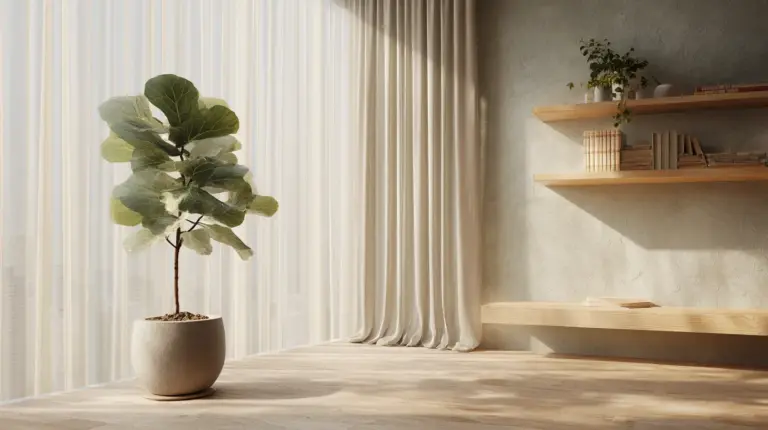
In a Japandi context, biophilic elements soften the minimalism without overwhelming it. A single ficus lyrata in a matte clay pot grounds an otherwise spare corner. A woven rattan pendant casts warm, dappled light the way sunlight filters through leaves.
Research consistently links nature-connected interiors with measurable wellbeing benefits — reduced stress, improved focus, and a calmer nervous system. In short: biophilic Japandi spaces do not just look beautiful. They feel better to live in.
Sensory Layers That Make the Difference
- Sight: Organic forms, living plants, soft natural light
- Touch: Linen, raw wood, cool stone, textured clay
- Scent: Cedarwood, dried botanicals, beeswax candles
- Sound: Water features, rustling leaves, intentional quiet
Key Elements of Japandi Biophilic Interiors
Natural Materials
The foundation of any Japandi biophilic space is honest materiality. Choose surfaces that reveal their origin — wood that shows its grain, stone that holds its veining, rattan that bends with memory.
Oak, teak, and bamboo are ideal wood choices. Bamboo is especially meaningful in tropical contexts: it grows fast, sequesters carbon, and brings an unmistakable organic warmth to furniture and shelving.
Pair wood tones with cool-touch stone — slate, travertine, or rough concrete — for contrast that feels elemental rather than designed.
Neutral and Nature-Inspired Color Palette
Japandi biophilic color is not beige for the sake of beige. It is the color of a morning fog, a dry riverbed, lichen on stone.
Ground your palette in warm whites, soft taupes, and deep charcoals. Then layer in muted greens — sage, eucalyptus, moss — which color psychology research links to measurable reductions in cortisol and stress.
Avoid stark, cold whites. Choose tones with a warm or slightly greenish undertone so the room feels like it is breathing.
Indoor Plants: The Living Element
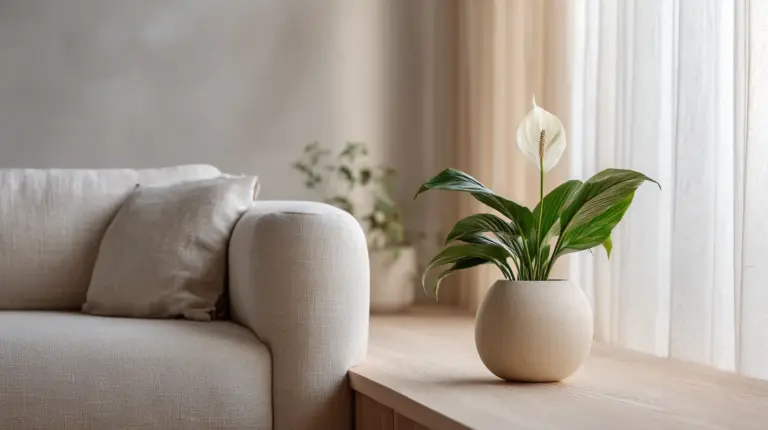
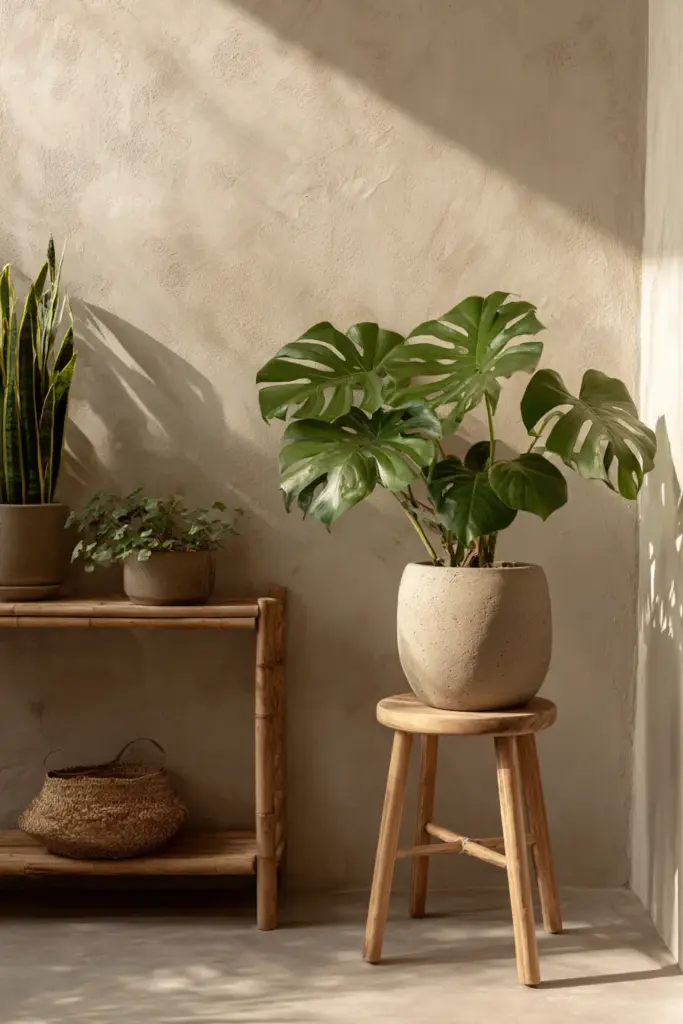
Plants are the heartbeat of biophilic design. In Japandi spaces, they are chosen with restraint — each one placed with intention, not abundance.
Best plants for Japandi biophilic interiors:
| Plant | Why It Works | Care Level |
|---|---|---|
| Ficus lyrata (Fiddle Leaf Fig) | Sculptural, bold, architectural | Moderate |
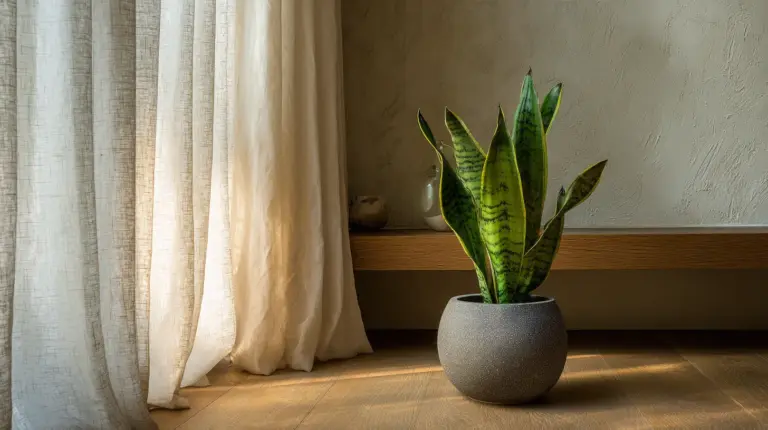
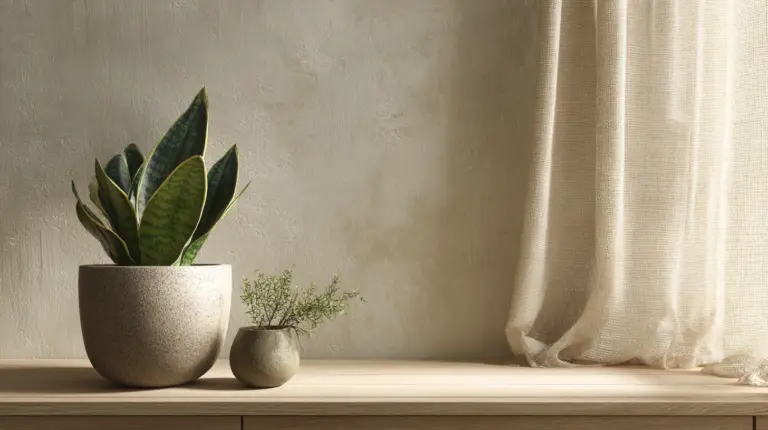
| Sansevieria (Snake Plant) | Graphic, hardy, air-purifying | Very easy |
| Monstera deliciosa | Lush, tropical, striking | Easy |
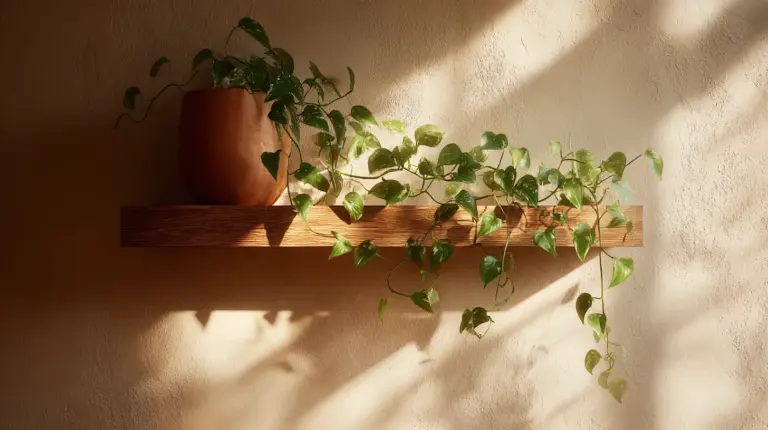
| Pothos | Trailing, adaptable, forgiving | Very easy |
| Bamboo palm | Brings vertical warmth | Easy |
For homes in tropical climates like the Philippines, monstera, pothos, and sansevieria thrive with minimal fuss. They tolerate humidity beautifully and ask very little in return — which is very much the Japandi spirit.
Lighting Ideas That Feel Like Nature
Light is the single most transformative element in any space. In Japandi biophilic design, it is treated as a material in its own right.
Prioritize soft, diffused natural light. Use sheer linen curtains rather than blinds to let daylight filter in gently, the way it moves through a forest canopy. Layer your artificial lighting: warm ambient light at ceiling level, a low pendant over a reading nook, a single candle on a wooden tray at dusk.
Smart LED bulbs that mimic natural daylight cycles — bright and cool in the morning, amber and warm by evening — are a powerful upgrade for windowless rooms or urban apartments. They support your circadian rhythm and make the space feel alive through every hour.
Cozy Furniture With Clean Lines
Japandi furniture is not stark. It is simply honest. Low-profile sofas with linen upholstery. A solid teak dining table worn smooth at the edges. A wooden bench that doubles as a side table.
Choose pieces that serve a clear purpose and carry a quiet beauty. Multifunctional furniture is especially important in smaller homes: ottomans with internal storage, extendable tables, wall-mounted shelving that lifts the floor visually.
The goal is not emptiness. It is thoughtful fullness — every object chosen, every surface considered.
Can Japandi Biophilic Design Work in Small Homes?
Absolutely — and in many ways, Japandi biophilic design thrives in compact spaces. The philosophy was never about scale. It was always about intention.
In a small living room, a single statement plant and one beautiful piece of natural wood furniture can carry the entire aesthetic. Vertical gardens on a balcony wall bring abundant greenery without consuming floor space. Mirrors placed opposite windows double the daylight and make a room breathe.
Small Space Strategies That Actually Work
- Go vertical: Wall-mounted shelves in bamboo or oak display plants and ceramics without crowding the floor
- Choose low furniture: Low-profile sofas and coffee tables create visual openness
- Layer light: Multiple soft light sources replace the need for one harsh overhead fixture
- Limit plants, maximize impact: Three well-chosen plants outperform a cluttered collection
- Use nature-inspired art: A single framed botanical print adds biophilic texture without taking up space
DIY Japandi on a Budget
You do not need to spend lavishly to create a Japandi biophilic space. Some of the most soulful interiors we have seen were built with thrifted finds, local materials, and patient hands.
Budget-friendly ideas:
- Sand and oil a secondhand wooden shelf in a warm walnut tone — it becomes a Japandi statement piece
- Source bamboo from local suppliers (particularly easy in tropical regions) for DIY planters and dividers
- Repot existing houseplants into matte terracotta or concrete pots from a local market
- Replace synthetic cushion covers with linen or cotton in neutral tones
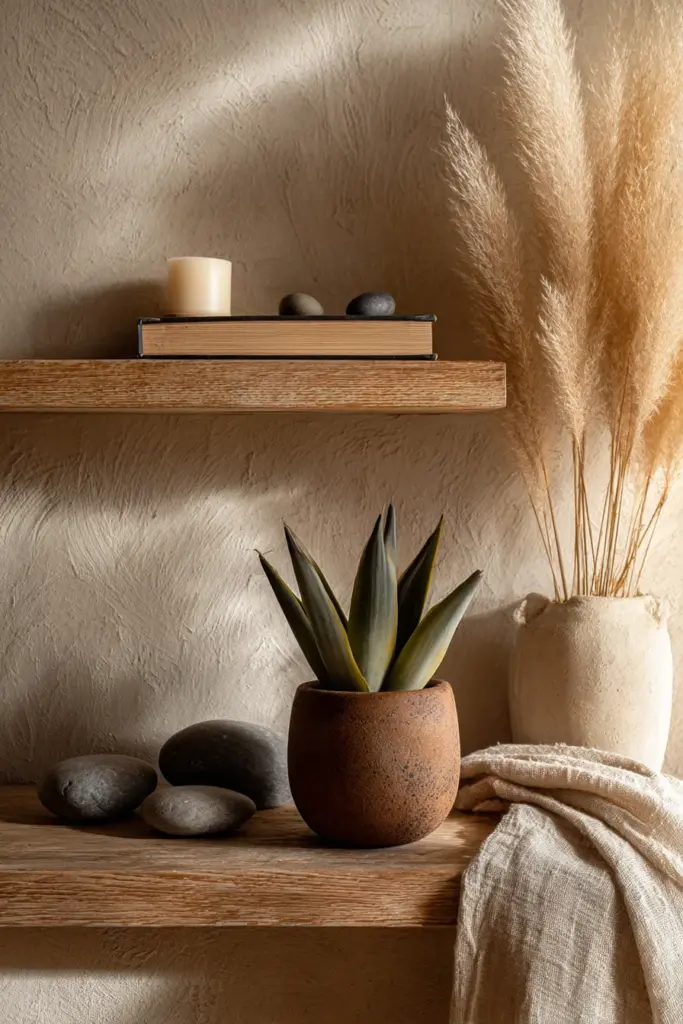
- Arrange river stones, dried grasses, and a single candle for a slow-living vignette that costs almost nothing
Japandi Biophilic Design: Room-by-Room Guide
Living Room
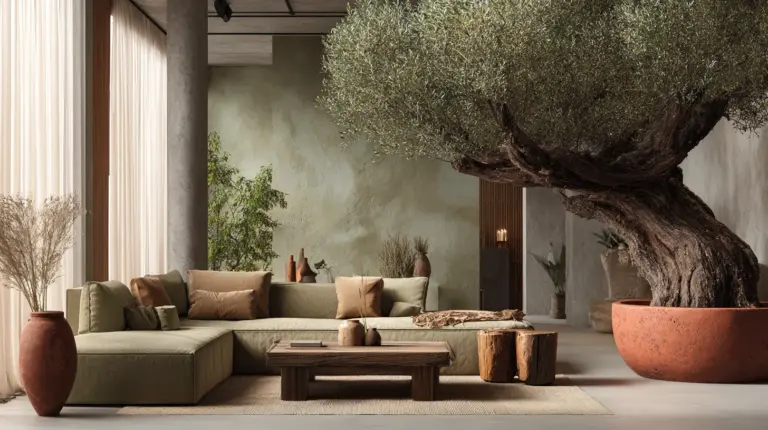
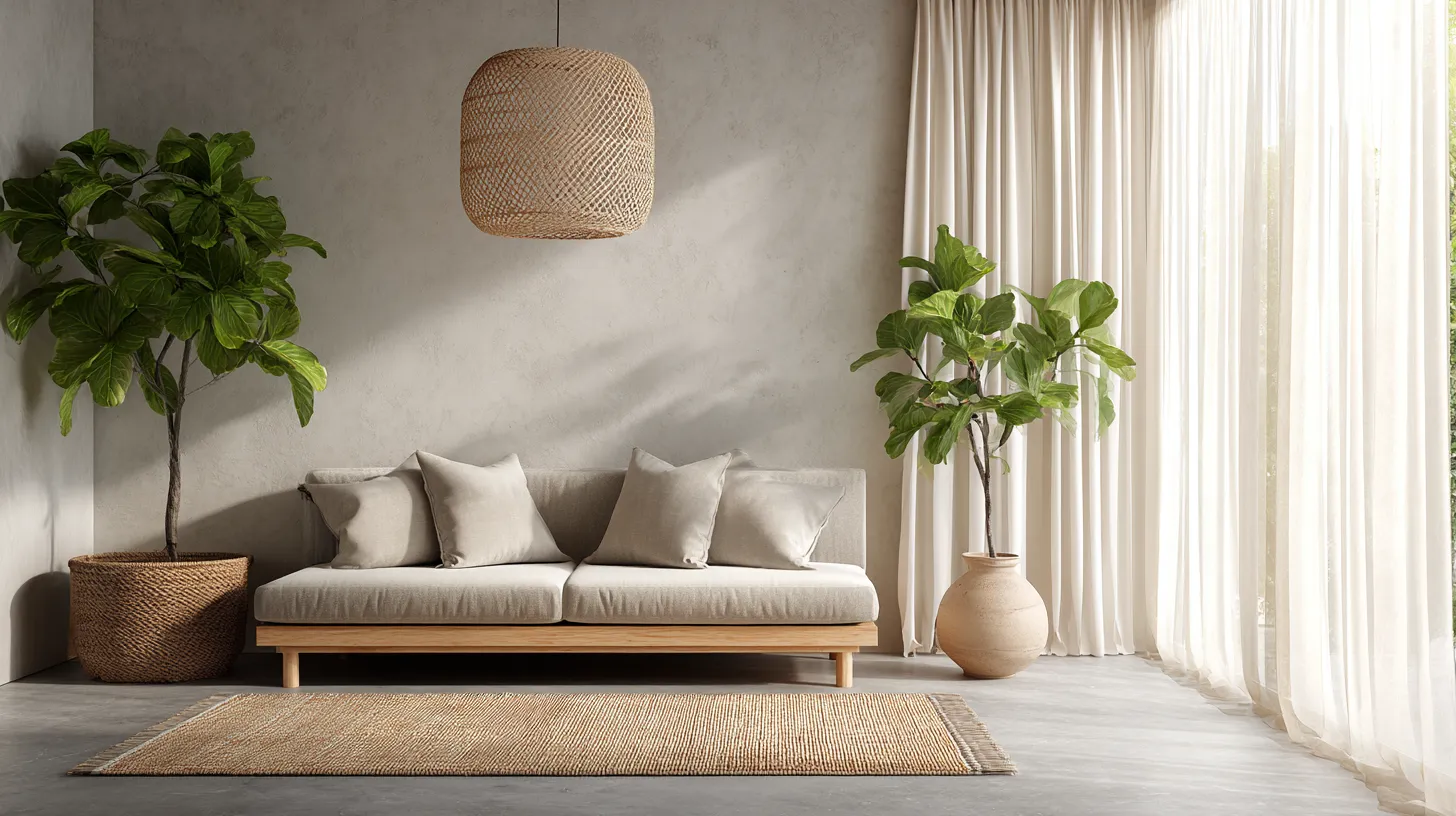
The living room is where Japandi biophilic design makes its fullest expression. Anchor the space with a low sofa in warm linen, a wooden coffee table with visible grain, and one large floor plant — a monstera or ficus lyrata works beautifully.
Add a woven rattan pendant over a reading corner, and layer the floor with a jute or wool rug in a muted tone. Keep surfaces deliberately spare: a ceramic bowl, a single book, a small vase with dried pampas.
Bedroom
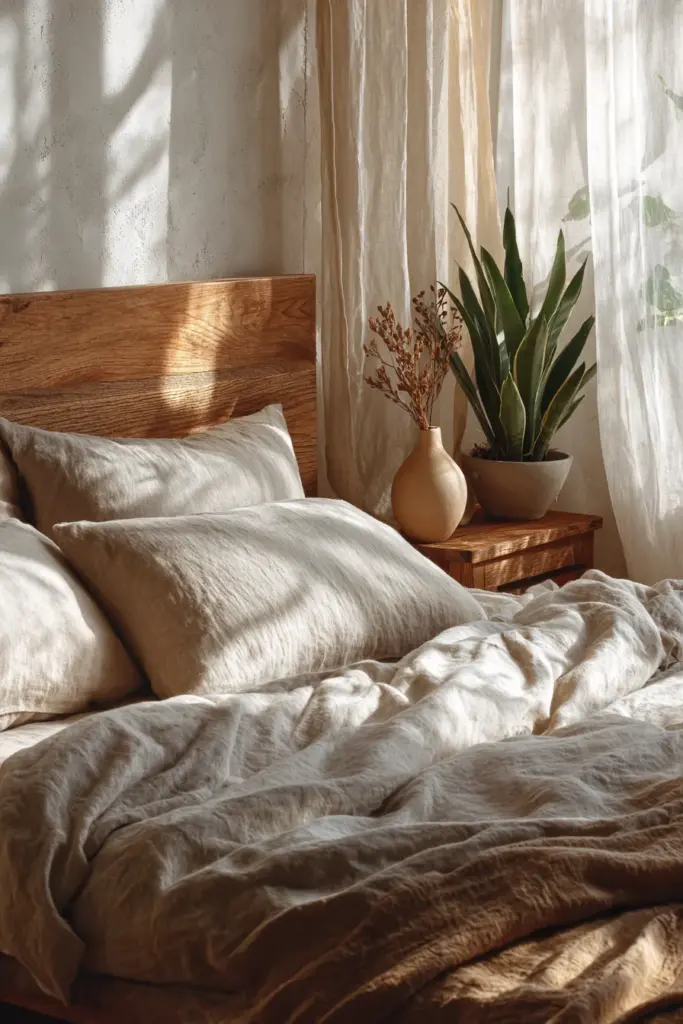
The bedroom calls for maximum softness. Choose organic cotton or linen bedding in oat, sage, or warm white. A low wooden bed frame — ideally without a headboard — keeps the silhouette clean.
Place a small plant on the bedside table: sansevieria is perfect here as it produces oxygen through the night. Keep artificial light warm and dimmable; avoid blue-toned bulbs in sleeping spaces.
Home Office
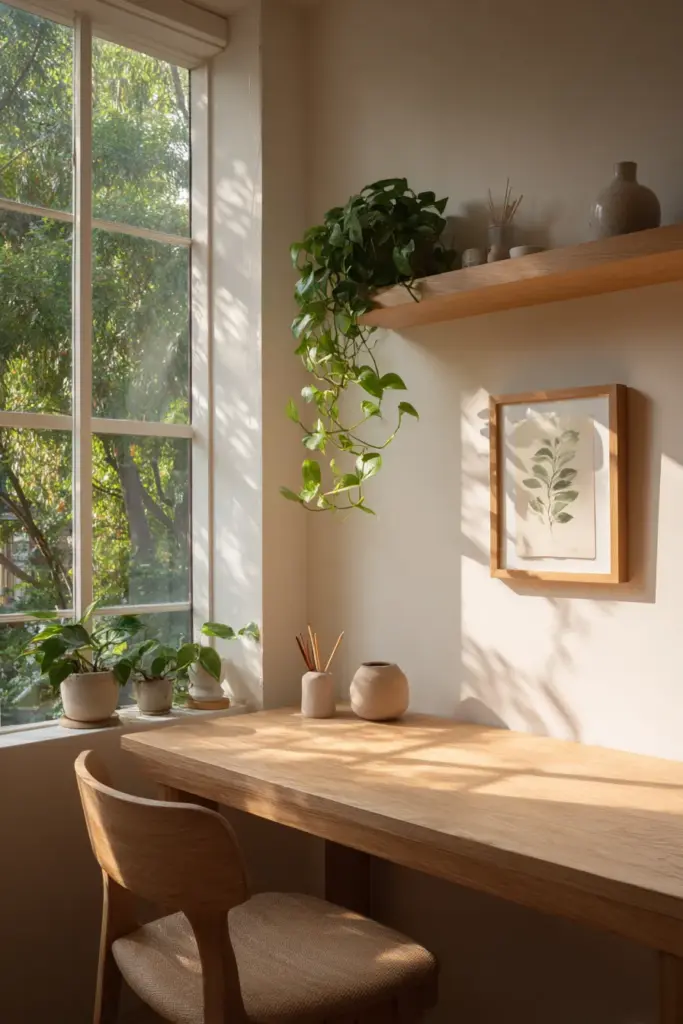
Natural light is essential in a workspace. Position your desk near a window and face toward the view rather than away from it. Add a small plant within your line of sight — even a single pothos trailing from a shelf has been shown to reduce mental fatigue.
Keep the desk surface clear. A ceramic pen holder, a wooden tray for essentials, and one framed piece of nature-inspired art are all you need.
Your Japandi Biophilic Design Checklist
Use this as your starting point — your room does not need everything at once. Begin with one layer and build slowly.
Materials & Furniture
- Natural wood furniture with visible grain (oak, teak, bamboo)
- Stone, slate, or concrete accents
- Linen, wool, or cotton textiles in neutral tones
- Rattan or woven elements (pendant lights, baskets, chair backs)
Plants & Nature
- At least one statement floor plant
- Smaller plants on shelves or windowsills
- Dried botanicals, pampas grass, or preserved moss for low-maintenance texture
- Natural scent through beeswax candles or cedarwood diffuser
Light
- Sheer linen curtains for diffused natural daylight
- Warm-toned bulbs (2700K–3000K) for evening atmosphere
- Layered sources: ambient, task, and accent lighting
Color & Palette
- Warm whites and soft off-whites as base tones
- Muted greens (sage, eucalyptus, moss) as accent
- Deep charcoals or earthy taupes for grounding contrast
Space & Layout
- Clear, uncluttered surfaces
- Low-profile furniture to open the visual field
- Vertical storage to protect floor space
- One intentional focal point per room
Conclusion
There is something deeply restorative about a home that feels rooted in nature. Not curated for a photograph, but genuinely alive — with texture you want to touch, light that shifts through the day, greenery that grows quietly beside you.
That is what Japandi biophilic design offers. Not a trend to chase, but a way of living to grow into. Slowly, honestly, beautifully.
At ERYLIN, we believe every home — however small, however humble — deserves that quality of stillness. Start with one plant. One natural surface. One warm light in a dark corner. Let the rest follow at its own pace.
Your home is already telling a story. Japandi biophilic design simply helps it speak more softly, and more truly.
Frequently Asked Questions
What is Japandi biophilic design?
Japandi biophilic design blends Japanese minimalism, Scandinavian warmth, and biophilic principles — the human need to connect with nature — into spaces that feel calm, grounded, and sensory-rich. It uses natural materials, indoor plants, soft neutral palettes, and clean lines to create interiors that support wellbeing.
How does biophilic design enhance Japandi style?
Biophilic elements — plants, natural light, wood, stone — soften the austerity of minimalism and add warmth and life. Studies link nature-connected spaces to reduced stress and improved focus, which aligns perfectly with Japandi’s goal of creating a peaceful, restorative home environment.
What are the key elements of a Japandi biophilic interior?
The core elements are natural materials (wood, stone, rattan, linen), a muted neutral color palette with green accents, layered warm lighting, indoor plants chosen with intention, and low-profile furniture with clean, honest lines. Every element should serve a purpose and carry quiet beauty.
Can Japandi biophilic design work in small apartments?
Yes — and beautifully so. Vertical gardens, wall-mounted shelving, low furniture, and a limited selection of well-chosen plants can bring the full spirit of Japandi biophilic design to even the most compact spaces. The key is intentionality over abundance.
What plants work best in Japandi biophilic spaces in tropical climates?
For humid, warm climates like the Philippines, monstera deliciosa, sansevieria (snake plant), pothos, and bamboo palm are excellent choices. They thrive with minimal care, handle tropical humidity with ease, and bring exactly the kind of sculptural, living energy that Japandi biophilic interiors call for.