
Table of Contents
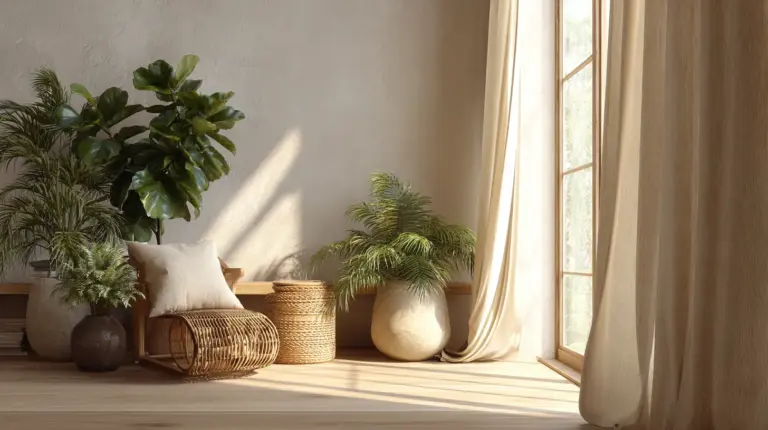
There is something quietly remarkable about a plant placed with intention.
A single bonsai on a wooden shelf. A snake plant standing tall in a corner washed with morning light. A trailing pothos catching the breeze near an open window. These aren’t just decorative choices — they are quiet declarations of meaning.
In Japandi design, plants are more than living décor. They carry stories. They speak in the soft vocabulary of Japanese wabi-sabi and Scandinavian hygge — a language of imperfection, resilience, and deep, unassuming beauty. When you choose a plant for your Japandi space, you’re not just choosing a color or a silhouette. You’re inviting a symbol into your home.
At ERYLIN, we believe a well-styled home is a felt experience. And nothing makes a space feel more alive — more inhabited — than greenery chosen with purpose. This guide explores the symbolism behind the most beloved Japandi plants, the cultural roots that give them meaning, and how to bring that meaning into your living spaces in the most beautiful, grounded way.
What Does Plant Symbolism Mean in Japandi Design?
Japandi is the design philosophy born from the meeting of two cultures that deeply revere nature. Japanese aesthetics honor mono no aware — the bittersweet impermanence of living things. Scandinavian design, rooted in the concept of hygge, finds comfort in natural textures, organic shapes, and the cozy embrace of the living world.
When these two philosophies converge, plants become more than decoration. They become anchors.
In Japandi interiors, every element is chosen with mindfulness. A plant’s shape, its color, its growth habit — all of these carry symbolic weight. A gnarled bonsai speaks of perseverance. A soft fern whispers of renewal. An olive tree reaching toward the light embodies peace. Understanding these symbols helps you create a home that doesn’t just look beautiful but means something.
The Core Symbolism Table: Japandi Plants and Their Meanings
Use this as your guide when selecting plants for your Japandi living room, bedroom, or meditation corner.
| Plant | Japanese Symbolism | Scandinavian Symbolism | Combined Japandi Meaning |
|---|---|---|---|
| Bonsai | Perseverance, mindfulness | Patience, mastery | Quiet strength through practice |
| Snake Plant | Protective energy | Clean air, resilience | Guardian of the home |
| Olive Tree | Peace, wisdom | Nordic harvest, abundance | Serene abundance |
| Philodendron | Growth, vitality | Warmth, living energy | Gentle expansion |
| Moss / Kokedama | Wabi-sabi, earthiness | Grounded simplicity | Imperfect beauty |
| Money Plant | Fortune, good luck | Prosperity | Flowing abundance |
| Peace Lily | Purity, rebirth | Calm, gentleness | Renewed stillness |
| Birch (potted) | — | Renewal, new beginnings | Nordic freshness |
| Fatsia Japonica | Elegance, endurance | Lush naturalness | Bold, quiet confidence |
Japandi Plants and Their Deep Symbolic Roots
Bonsai: The Art of Patient Perseverance
The bonsai is perhaps the most iconic Japandi plant — and the most deeply symbolic.
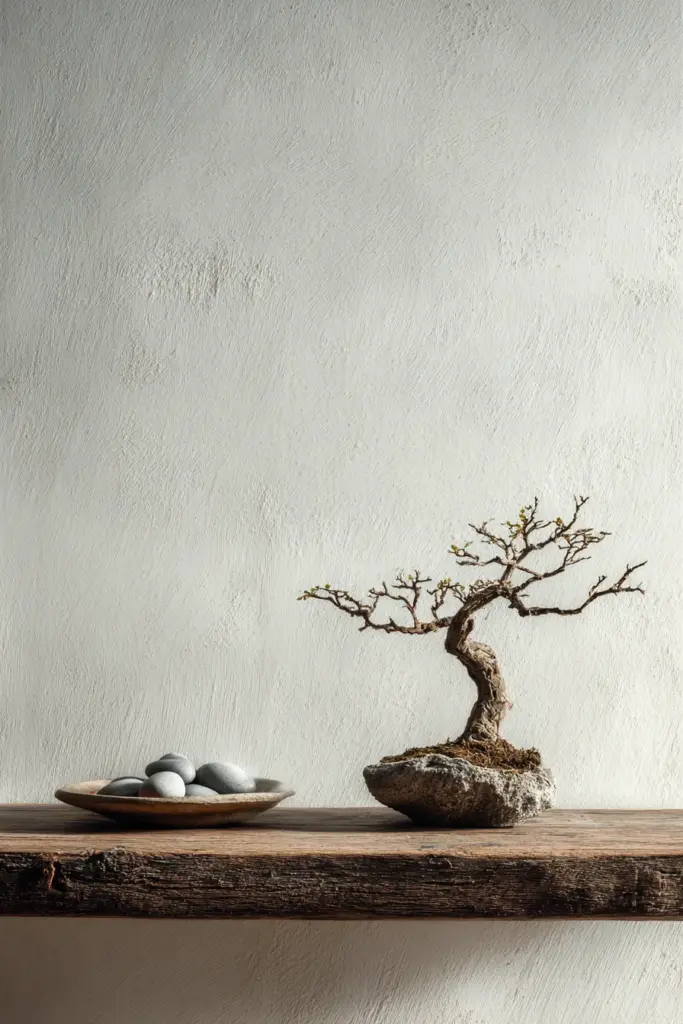
In Japanese culture, bonsai represents the mastery of patience. A bonsai is never rushed. It is tended, pruned, and shaped over years — sometimes decades — into a living sculpture of intention. The ancient, weathered appearance of a well-kept bonsai embodies wabi-sabi: the beauty of imperfection, transience, and the marks left by time.
In a Japandi space, a bonsai placed on a low wooden platform or beside a concrete vessel invites you to slow down. It reminds you that the most meaningful things in life cannot be hurried.
How to Style Bonsai in a Japandi Interior
- Place on a raw oak or walnut shelf, low to the ground.
- Pair with a single ceramic dish of smooth river stones.
- Let natural light fall across it from a north or east-facing window.
- Leave breathing room — no crowding, no clutter beside it.
Kokedama: Wabi-Sabi in Your Hands
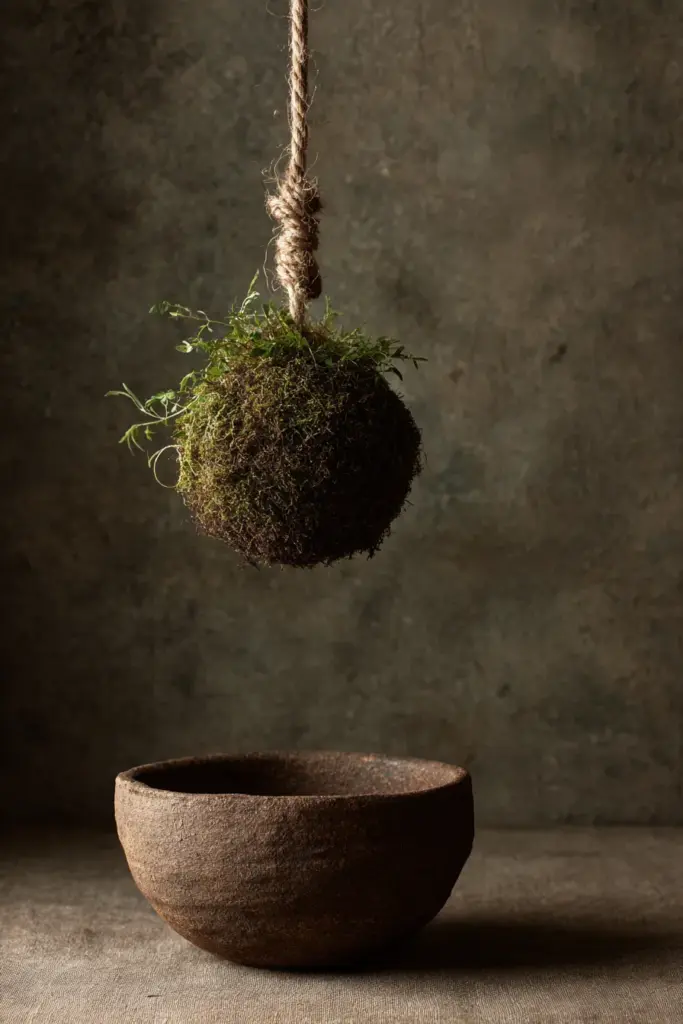
Kokedama — the Japanese art of growing plants in moss balls — is the physical embodiment of wabi-sabi.
The word wabi-sabi speaks to beauty found in the imperfect, the incomplete, and the natural. Kokedama makes this philosophy tangible. A plant nestled in a dark, mossy sphere, suspended by twine or resting in a ceramic bowl — it is rustic and refined at once.
In Japandi styling, kokedama introduces organic texture without chaos. The deep green of the moss against a linen backdrop, the soft earthiness of a terracotta bowl beneath it — these combinations feel ancient and alive.
DIY Kokedama: A Simple Starting Point
Making your own kokedama is a meditative practice in itself. You’ll need:
- Potting soil mixed with peat moss
- Sheet moss (soaked and pliable)
- Jute or hemp twine
- A small plant (ferns, pothos, or peace lily work beautifully)
Shape the soil into a ball around the roots, wrap firmly in moss, and bind with twine. Soak in water for 10 minutes to hydrate. Hang near indirect light and mist every 2–3 days. It is not perfect. That is the point.
Snake Plant: The Quiet Guardian
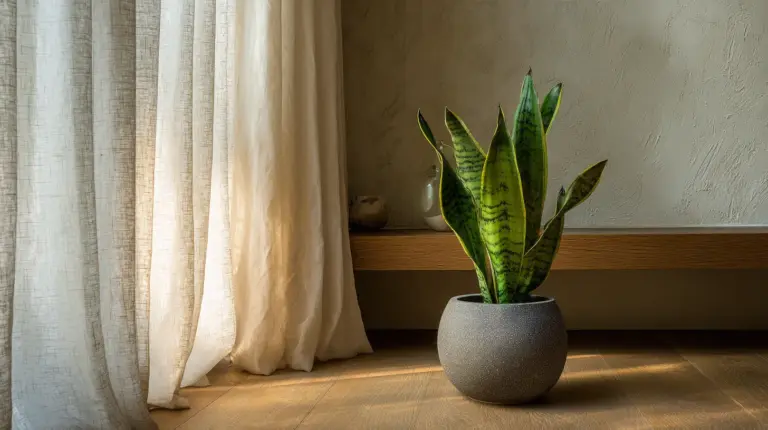
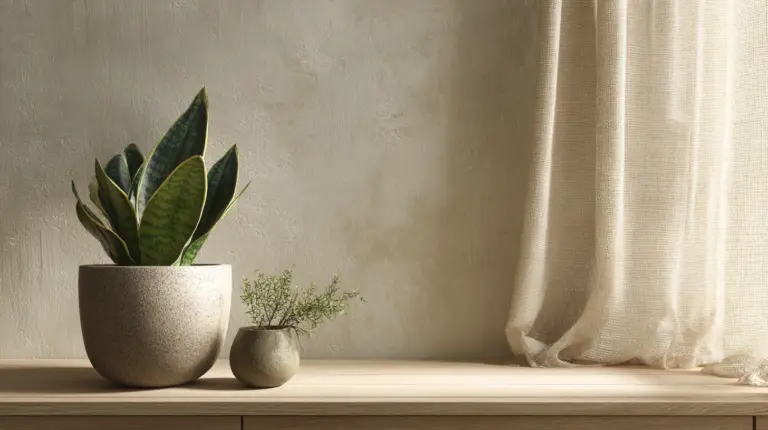
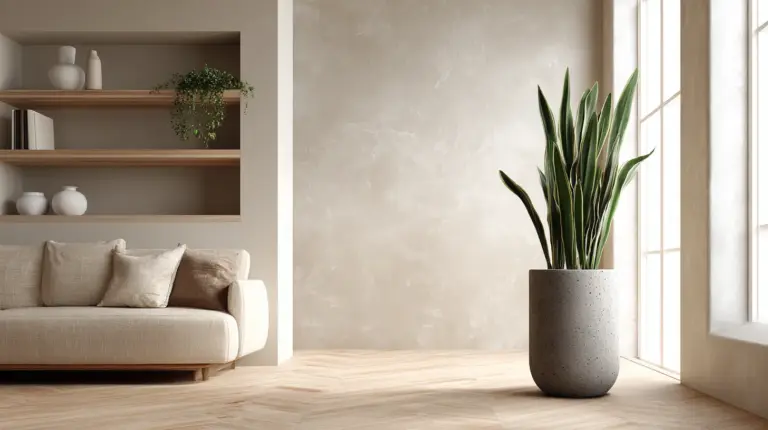
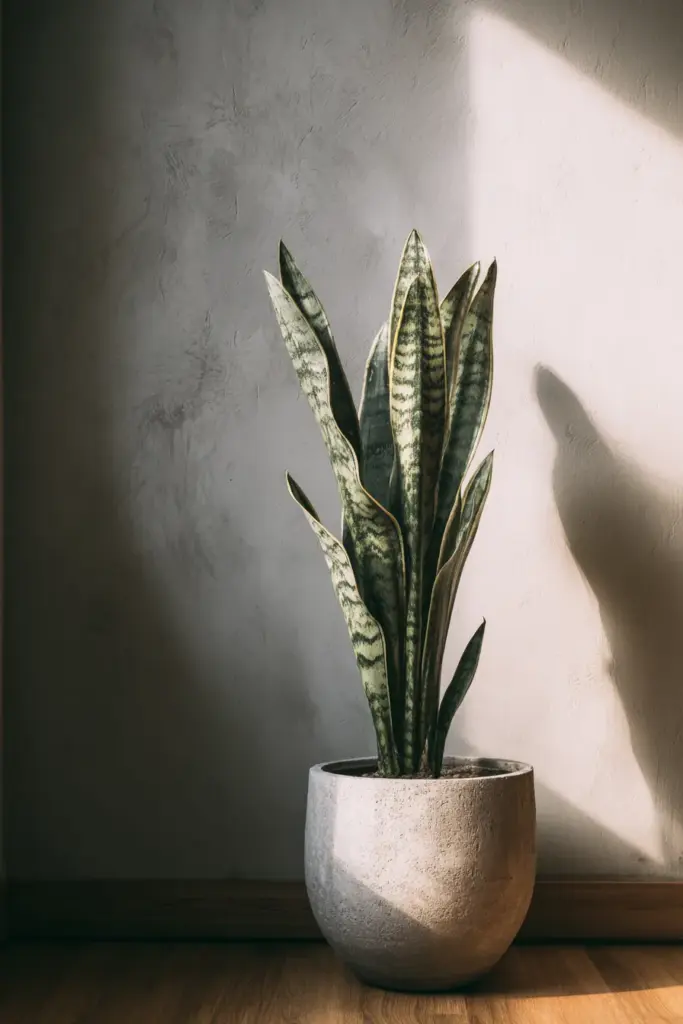
Few plants carry the quiet authority of a snake plant (Sansevieria) standing in a Japandi corner.
In Japanese tradition, plants with sharp, upright leaves are believed to ward off negative energy. The snake plant — with its architectural form and deep, sword-like leaves — is considered a protector of the home. In Scandinavian homes, where resilience and practicality are prized, the snake plant earns its place as the ultimate low-maintenance companion.
Together, in Japandi design, the snake plant represents both protection and ease. It thrives in low light — ideal for urban condos and compact city apartments. Its striped foliage in shades of olive, sage, and cream adds quiet visual interest without demanding attention.
The Olive Tree: Peace, Wisdom, and Nordic Harvest
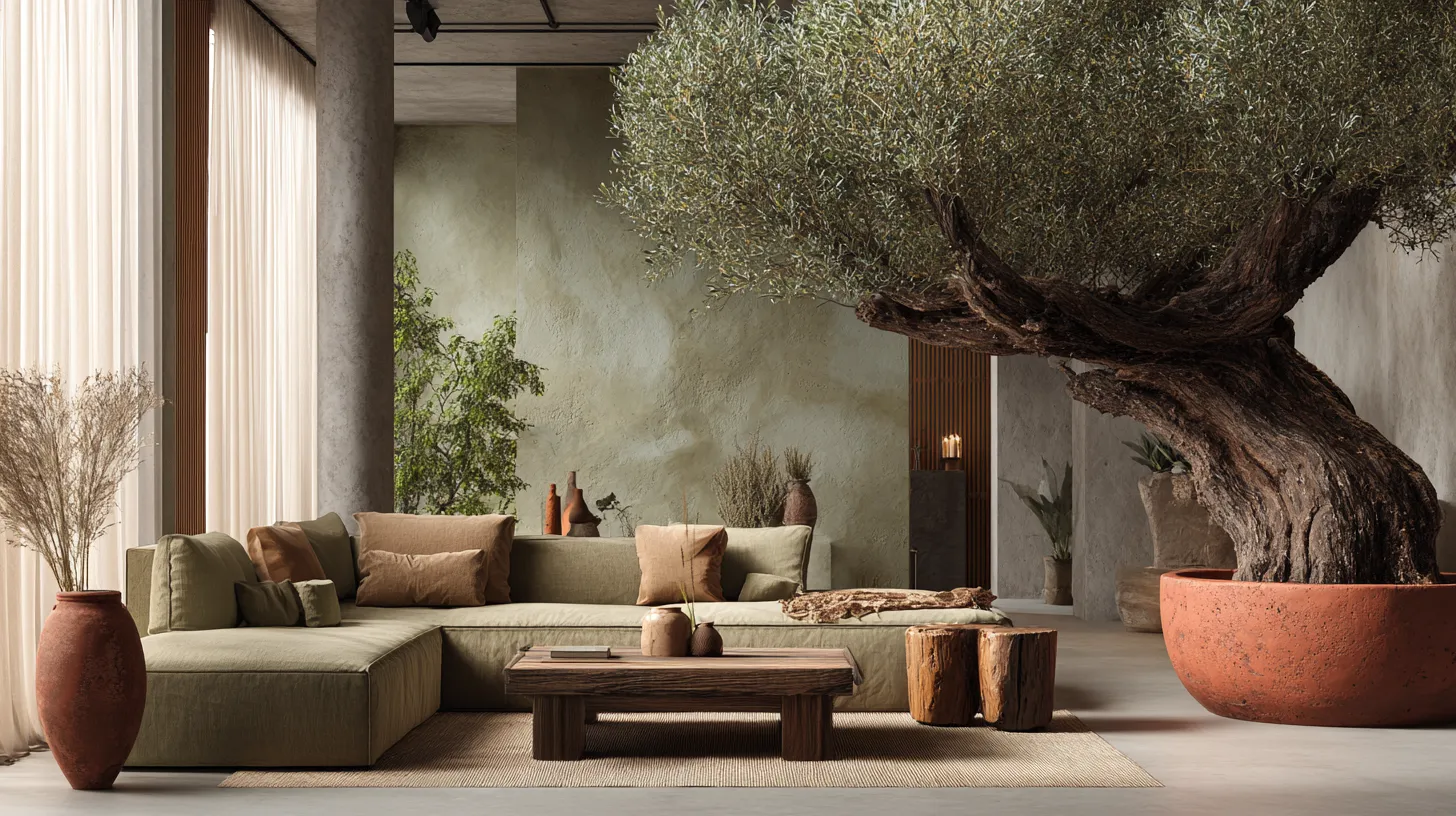
An olive tree in a terracotta pot is one of the most quietly powerful statements you can make in a Japandi living room.
In Japanese culture, the olive branch symbolizes peace and goodwill. In Scandinavian tradition, the olive tree carries the warmth of Mediterranean harvests — a reminder of abundance, nourishment, and the slow pleasures of life. Together, in Japandi terms, the olive tree represents serene abundance: prosperity without excess, beauty without effort.
Styled beside a linen sofa or beneath a warm pendant light, the olive tree’s silvery-green leaves catch light in a way that feels almost cinematic. It grows slowly and lives long — much like the relationships and rituals we build in a home we love.
Birch: The Nordic Symbol of Renewal
This is where Japandi plant symbolism often overlooks something essential — the deep meaning of Nordic plants.
Most guides focus entirely on Japanese symbols. But Japandi is a fusion, and Scandinavian plant symbolism deserves equal reverence. The birch tree, with its pale bark and trembling leaves, is one of the most beloved symbols in Nordic culture. It represents renewal, cleansing, and the arrival of light after a long winter.
A small potted birch or birch-branch arrangement — placed in a tall, minimal ceramic vase — brings this Nordic energy into your home. It speaks of beginnings. Of possibility. Of the quiet courage it takes to grow.
Philodendron: Gentle Growth, Living Warmth
The philodendron is a Japandi interior designer’s quiet favorite — and for good reason.
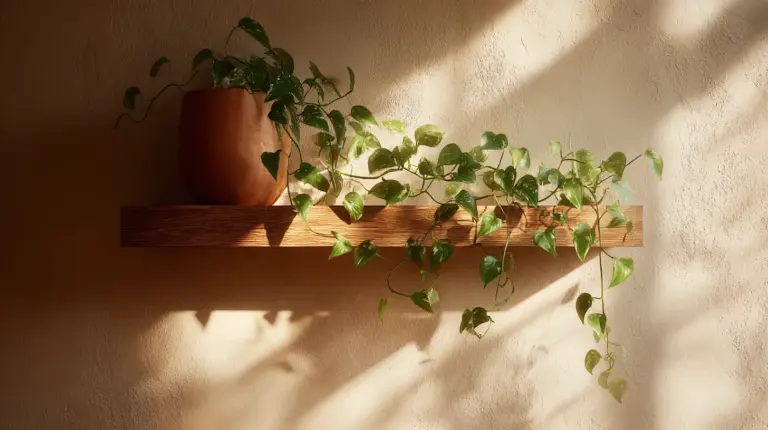
Its heart-shaped leaves carry a sense of vitality and warmth. In Japandi styling, the philodendron represents gentle, unhurried growth — the kind that happens when you create the right conditions and simply trust the process. Trailing from a rattan shelf or sitting in a stone pot on a side table, it adds softness without fussiness.
In low-light urban apartments — particularly in dense cities like Makati or Manila — the philodendron thrives. It is resilient, forgiving, and beautiful. Much like the best kind of home.
Color Symbolism: The Hidden Language of Leaf Tones
In Japandi design, the color of a plant’s foliage carries its own symbolic weight.
- Olive green — peace, groundedness, connection to the earth
- Deep, waxy green (like the snake plant or rubber plant) — protection, stability
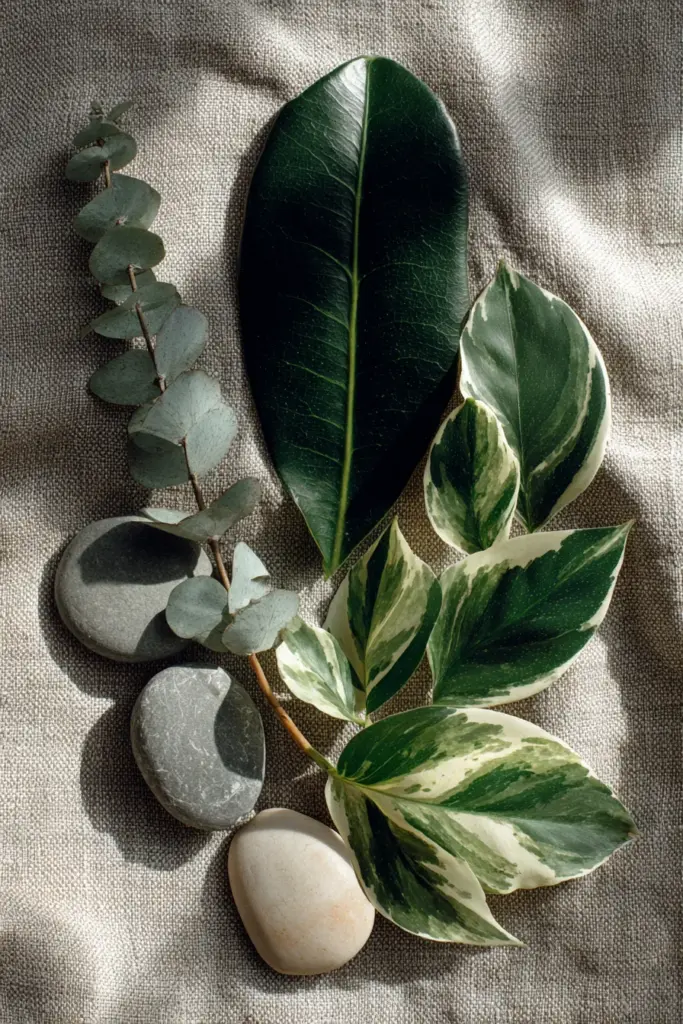
- Silver-green (olive tree, eucalyptus) — clarity, wisdom, calm
- Pale, variegated green (pothos, philodendron) — lightness, renewal, ease
- Moss green (kokedama, ferns) — wabi-sabi, raw earthiness, impermanence
When choosing plants for your Japandi space, think of color as mood. A room anchored by deep green foliage feels steady and grounding. A room with pale, variegated greens feels light and open. Let color be your guide as much as shape.
Placement and the Psychology of Japandi Plant Styling
Where You Place a Plant Changes What It Means
In Japandi interiors, placement is not an afterthought. It is part of the design intention.
- Entryway — A single snake plant or money plant here signals protection and welcome. First impressions matter.
- Living room corner — An olive tree or large philodendron anchors the space, creating a sense of living calm.
- Windowsill — Low, sculptural succulents or a kokedama catch light beautifully and invite daily attention.
- Bedroom — Peace lily or ferns encourage rest and renewal. Avoid sharp-leaved plants in sleep spaces (in Feng Shui tradition, they activate rather than calm).
- Meditation or reading nook — A bonsai here is perfect. Its quiet presence deepens stillness.
Feng Shui and Hygge: Two Philosophies, One Plant
Japandi plant styling naturally bridges Feng Shui principles and Scandinavian hygge sensibility.
In Feng Shui, plants activate positive qi (energy flow), purify air, and invite abundance. In hygge philosophy, plants bring the outside in, making a space feel warmer, softer, and more human. Together, these approaches ask the same thing: place your plants with love, and let them breathe.
2026 Japandi Plant Trends: What’s Coming
The next wave of Japandi plant styling leans into biophilic wellness and intentional living.
- Smart planters with built-in moisture sensors let you care for plants intuitively, without guesswork — very Japandi in its quiet efficiency.
- Native and regional plant swaps are growing in popularity. In the Philippines, Fatsia japonica offers a lush, bold alternative to imported varieties — with its own quiet elegance.
- Moss walls and living panels are entering Japandi interiors, bringing textured, immersive greenery without cluttering floor space.
- Upcycled wooden stands and handmade ceramic pots continue to rise — DIY styling that feels personal, sustainable, and soulful.
Key Takeaways: Your Japandi Plant Symbolism Checklist
- Choose plants with intention, not impulse — each plant carries meaning.
- Bonsai = perseverance and mindfulness; style on low wooden surfaces with breathing room.
- Snake plant = protection and resilience; ideal for low-light urban homes.
- Olive tree = peace and abundance; pair with warm linen and terracotta.
- Kokedama = wabi-sabi embodied; try making your own for a meditative experience.
- Birch = Nordic renewal; don’t overlook Scandinavian plant symbolism in Japandi spaces.
- Philodendron = gentle vitality; perfect for compact apartments with indirect light.
- Leaf color carries symbolic weight — choose tones that match the mood you want to create.
- Placement matters as much as the plant itself — entry, living room, bedroom, and meditation corners each have their own plant language.
- In 2026, watch for smart planters, native plant swaps, and sustainable DIY stands.
A Soft Conclusion: Growing a Home That Means Something
The most beautiful homes are not the ones that look perfect. They are the ones that feel true.
A Japandi space invites you to slow down, to notice, to care. When you choose a bonsai for its story of patience, or a peace lily for its whisper of renewal, you are doing something quietly radical: you are filling your home with meaning.
Plants grow. They change. They sometimes struggle and then come back stronger. In that way, they are the most honest companions a home can have.
At ERYLIN, we believe your space should reflect who you are and what you value. Let your plants be part of that story — rooted, symbolic, and beautifully alive.
Frequently Asked Questions
What plants symbolize good luck in Japandi style?
The money plant (Epipremnum aureum) is the most widely recognized symbol of fortune and good luck in Japandi interiors. The Malabar chestnut (Pachira aquatica) is also beloved for its associations with financial abundance and strength. Both carry flowing, rounded leaves that symbolize the smooth circulation of positive energy.
What do Japandi plants represent overall?
Japandi plants represent the union of Japanese and Scandinavian values: harmony, resilience, mindfulness, and a deep reverence for the natural world. Through the Japanese lens of wabi-sabi, plants remind us of impermanence and beauty. Through the Scandinavian hygge lens, they make our homes feel warmer, softer, and more deeply human.
Which houseplants fit Japandi aesthetics best?
The best Japandi houseplants are sculptural, low-maintenance, and visually calm. Top choices include the snake plant, bonsai, olive tree, philodendron, peace lily, and kokedama moss balls. For urban apartments with limited light, the snake plant and philodendron are especially well-suited.
Is a bonsai essential for a Japandi interior?
A bonsai is not essential, but it is deeply aligned with Japandi values. Its symbolism of perseverance, mindfulness, and patient mastery makes it a natural fit for the philosophy. If a bonsai feels too high-maintenance for your lifestyle, a kokedama or a well-placed snake plant carries similarly powerful symbolic weight.
Can I use native Philippine plants in a Japandi interior?
Absolutely — and this is an approach ERYLIN actively encourages. Fatsia japonica is an excellent Japandi-aligned plant with bold, sculptural foliage and quiet elegance. Ferns native to the Philippine highlands also bring lush, textured softness that aligns beautifully with wabi-sabi aesthetics. Choosing local plants is not only more sustainable — it makes your Japandi space uniquely, beautifully yours.