
Table of Contents
There is something quietly magical about a vine that spills over the edge of a shelf — unhurried, unplanned, and deeply alive. In Japandi design, that softness is everything. It balances the clean angles of natural wood, the coolness of ceramic, and the warmth of woven textures with something breathing and organic.
Trailing plants for Japandi shelves are not decoration. They are intention. Each tendril reaching downward is a small act of wabi-sabi — beauty found in imperfection, in growth that does not ask permission.
Whether you are styling a single floating oak shelf or an entire wall of open shelving, the right cascading greenery will make your space feel like a place of rest. Not just a room — a sanctuary.
This guide will walk you through the best trailing plants for Japandi shelves, how to style them with purpose, and how to care for them — especially in the warm, humid climates of tropical homes.
Why Trailing Plants Belong in Japandi Design
Japandi is the quiet marriage of Japanese minimalism and Scandinavian hygge. It values natural materials, negative space, muted palettes, and a deep respect for the handmade. Trailing plants speak this language fluently.
A cascading pothos on a low bamboo shelf brings the same energy as a perfectly placed stone or a linen cushion in a sun-warmed corner. It fills space without clutter, adds texture without noise, and introduces life without chaos.
The key is restraint. In Japandi interiors, one beautifully trailing plant outweighs ten mediocre ones. Choose mindfully. Place purposefully.
The Best Trailing Plants for Japandi Floating Shelves
Pothos (Epipremnum aureum)
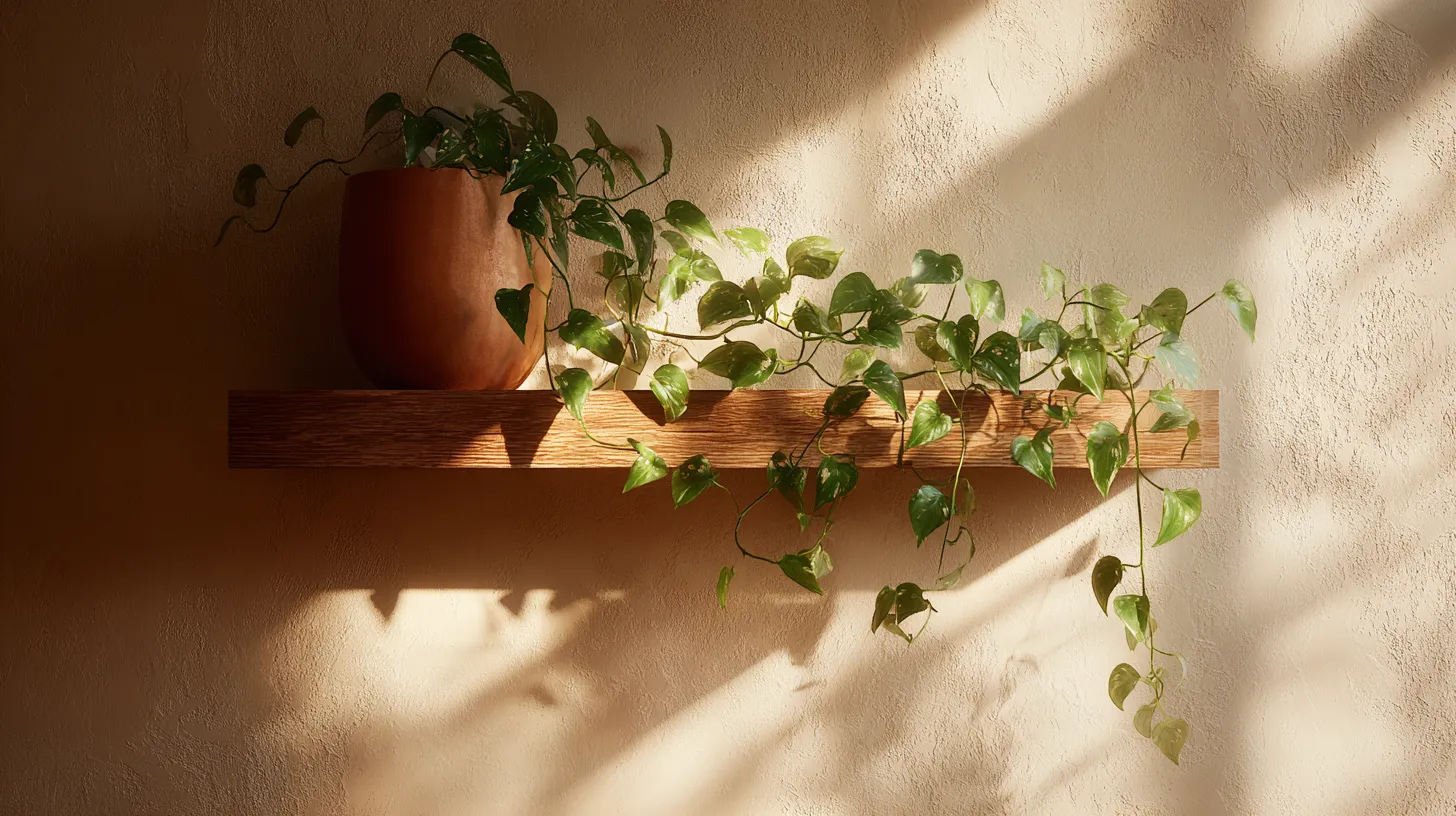
Pothos is perhaps the most forgiving plant in the world of indoor greenery, and for good reason. Its heart-shaped leaves in shades of deep green or marble white cascade beautifully from open shelving, creating long, graceful trails that feel effortless.
For Japandi shelves, choose the golden or jade variety — both complement muted earth tones and warm wood grains. Pothos thrives in low to medium light, making it ideal for living rooms with soft, diffused lighting.
Care tip: Water when the top inch of soil feels dry. In humid tropical climates, you may water less frequently than expected — the air does much of the work.
Heartleaf Philodendron (Philodendron hederaceum)
The heartleaf philodendron has a richness to its foliage that feels almost velvety. Its leaves are a deeper, more saturated green than pothos, and it trails with a slightly more dramatic sweep — perfect for taller Japandi shelves where you want the vine to reach and meander.
It tolerates low light gracefully, asking little and giving much. In a Japandi space, pair it with a matte black or raw clay pot and let it spill over the shelf edge in long, unhurried arcs.
String of Pearls (Senecio rowleyanus)
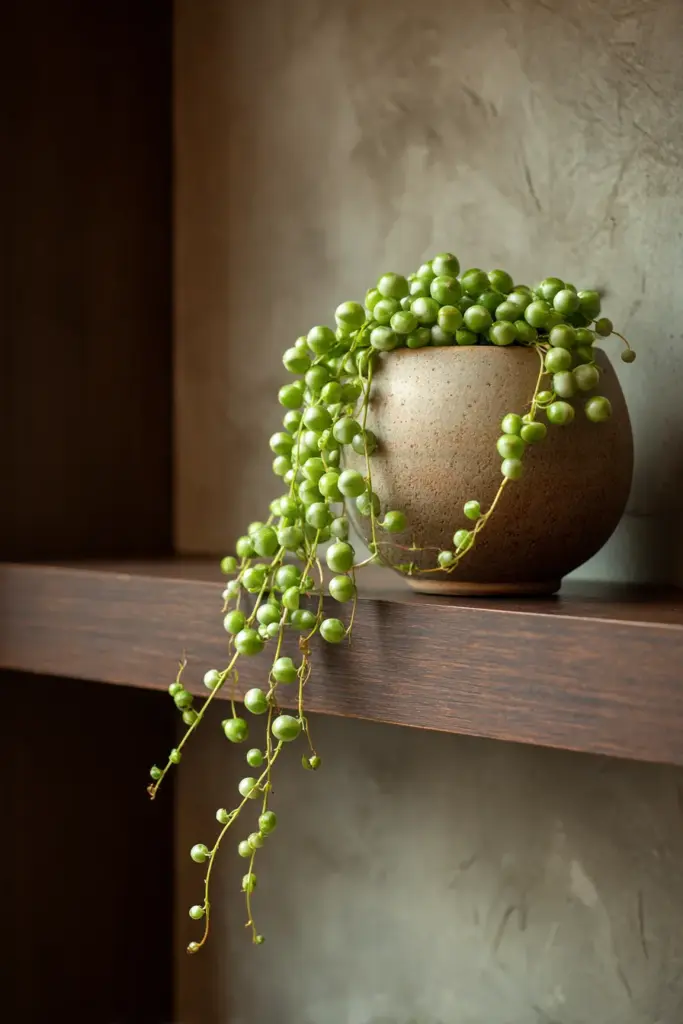
Few plants have the visual poetry of a String of Pearls. Those tiny, perfect spheres strung on delicate stems evoke something ancient and handcrafted — exactly the wabi-sabi spirit Japandi celebrates.
Place it on a higher shelf where its trails can hang freely without obstruction. It needs bright, indirect light and a well-draining pot — a small terracotta or unglazed ceramic works beautifully. In very humid homes, ensure airflow to prevent root rot.
Tradescantia Nanouk
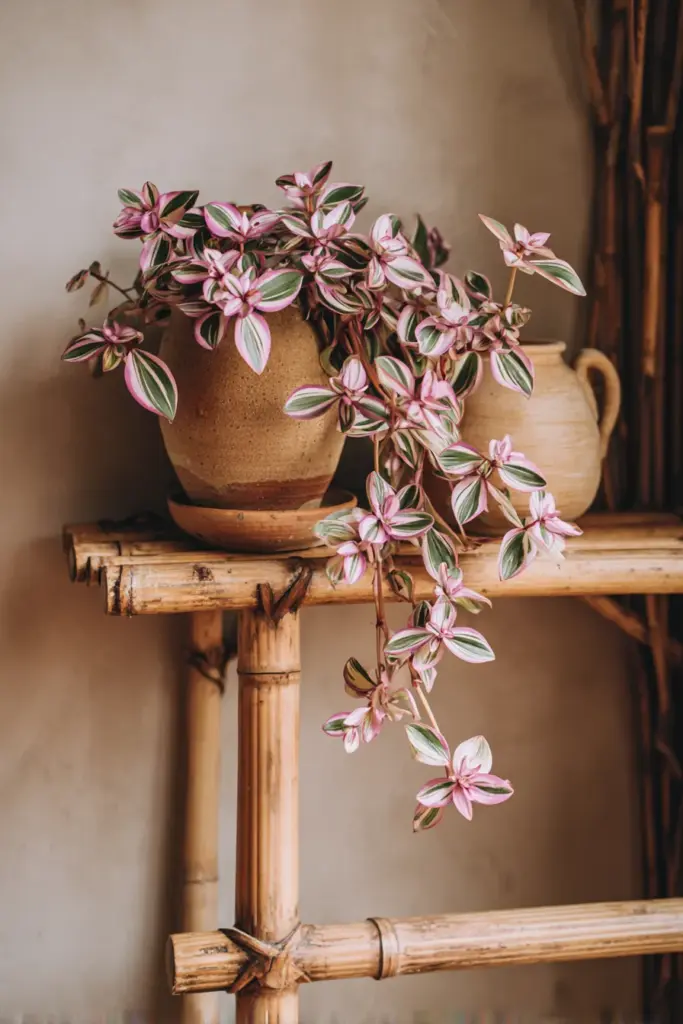
With its soft pink, white, and green variegation, Tradescantia Nanouk brings the only color you need in a Japandi palette. It is bold enough to be noticed, gentle enough not to overwhelm.
It trails quickly and densely, creating a lush, full cascade from even a modest pot. Group it with neutral-toned companions on a floating shelf for an arrangement that feels curated but alive.
Spider Plant (Chlorophytum comosum)
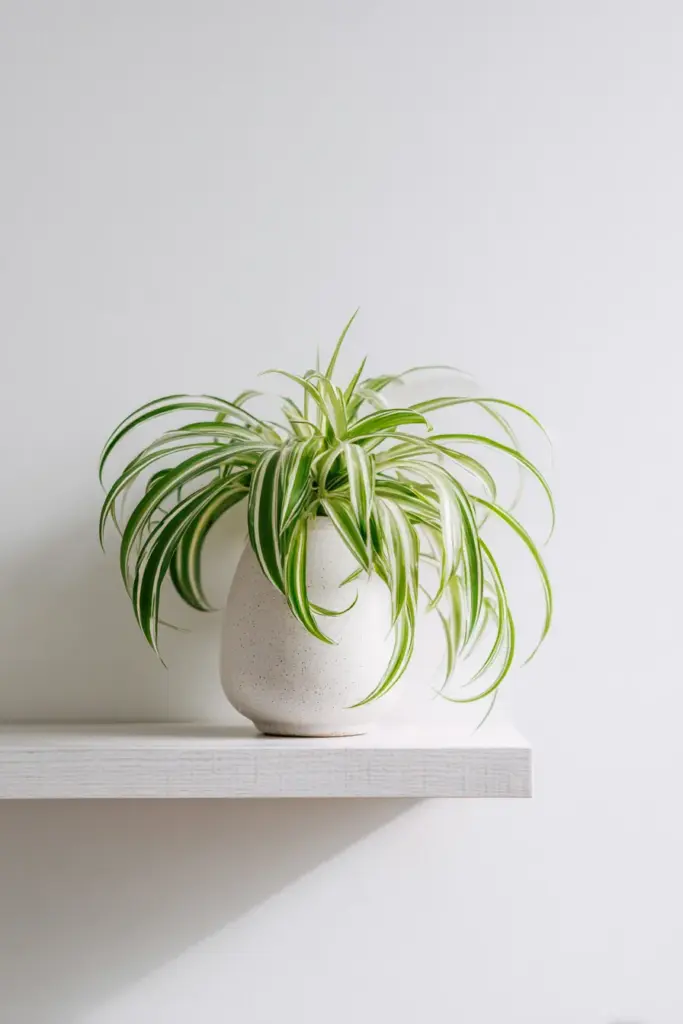
The spider plant is one of the rare trailing plants that is completely pet-safe, making it a thoughtful choice for homes with cats or dogs. Its arching green and white striped leaves and dangling plantlets carry a quiet, rhythmic beauty.
It is exceptionally low-maintenance and adaptable to various light conditions — from bright indirect light to shadier corners. It is also an excellent air purifier, which aligns with Japandi’s respect for a clean, healthful environment.
Native and Locally Sourced Alternatives
For homes in tropical climates like the Philippines, consider locally propagated varieties of ivy, creeping fig, or even smaller-leafed monstera cuttings. These are often available inexpensively at local markets or through community plant swaps, supporting both sustainability and budget-conscious styling.
Propagating from cuttings — a jar of water on a windowsill, a node slowly rooting — is itself a Japandi practice. Patient, deliberate, and deeply satisfying.
How to Style Trailing Plants on Japandi Shelves
Work in Odd Numbers
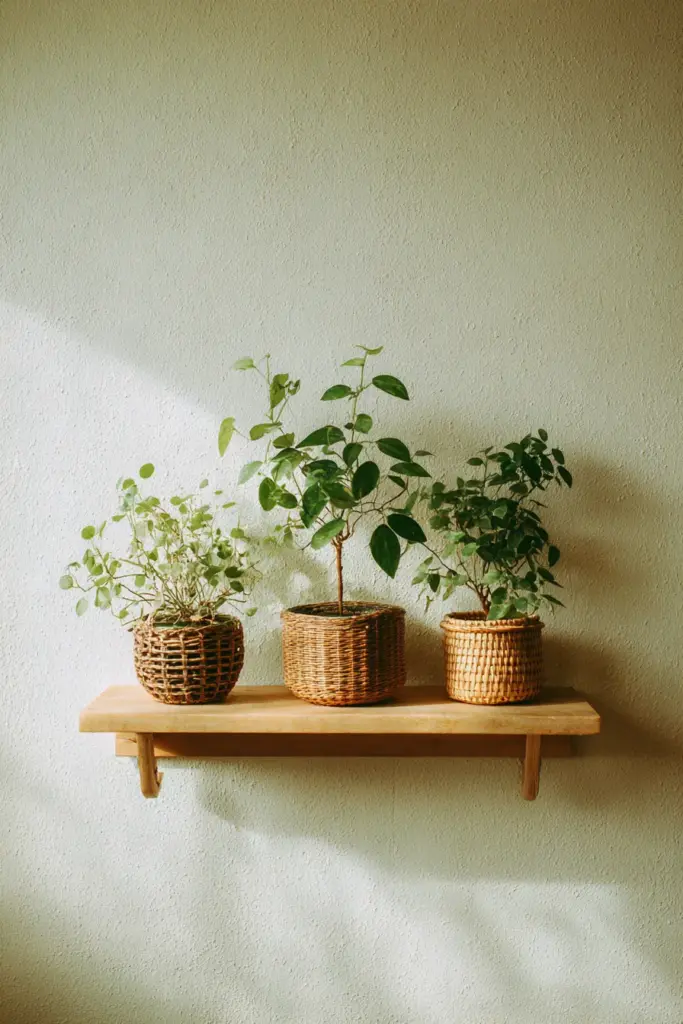
Three plants on a shelf will always feel more natural than four. Odd groupings create visual rhythm without symmetry, which aligns with Japandi’s organic sensibility. Try one taller plant, one trailing, and one small grounded accent — a stone, a ceramic vessel, a small stack of books.
Vary the Trail Length
Not every trailing plant should hang the same distance. Allow one vine to fall long and free, another to just kiss the shelf edge. This layered depth creates the sense of a living, growing composition rather than a static display.
Choose Pots That Breathe
For Japandi shelves, reach for unglazed terracotta, raw concrete, handmade ceramic, or woven baskets with liner inserts. Matte finishes in warm beige, pale grey, sand, and dusty sage all complement trailing plants without competing with them.
Avoid shiny or highly decorative pots. The plant should be the moment — the pot simply holds the stage.
Consider Your Shelf Material
| Shelf Type | Best Trailing Plant Pairings | Mood |
|---|---|---|
| Open oak or teak floating shelves | Pothos, Heartleaf Philodendron | Warm, grounded |
| Bamboo ladder shelves | Spider Plant, Tradescantia | Organic, relaxed |
| White or light ash wall shelves | String of Pearls, Marble Pothos | Clean, airy |
| Dark walnut shelves | String of Pearls, Philodendron | Moody, refined |
| Rattan or wicker shelving | Native ivy, Creeping Fig | Tropical, natural |
Layer with Light
Trailing plants on Japandi shelves look most alive in layered lighting. Consider warm-toned Edison bulbs or soft LED strips underneath shelves to cast gentle light through the trailing leaves, creating shadows that move with any breeze. This is the hygge element of Japandi — light as comfort, light as warmth.
If your shelf sits near a window, use sheer linen curtains to diffuse the light into something soft and even, protecting leaves from harsh midday sun while keeping the space luminous.
Trailing Plants That Won’t Drop Leaves on Your Japandi Floors
Leaf drop is one of the most common concerns for those styling minimalist spaces. A clean, bare floor is sacred in Japandi design — and certain plants respect that better than others.
Pothos and heartleaf philodendron rarely drop leaves unless severely underwatered or exposed to cold drafts. Spider plants and tradescantia are similarly tidy, making them excellent choices for shelf styling in high-foot-traffic areas.
String of Pearls, while stunning, can be more delicate — ensure the shelf is out of direct paths where the pot might be bumped. A small bamboo tray beneath it will catch any fallen pearls gracefully.
Pet-Safe Trailing Vines for Minimalist Shelves
If you share your home with pets, plant selection becomes a matter of care and love. These trailing plants are considered non-toxic to cats and dogs:
- Spider Plant — one of the most widely recommended pet-safe trailing plants
- Tradescantia — mildly irritating in very large quantities, but generally considered safe
- Boston Fern — trailing varieties make beautiful shelf companions and are fully pet-safe
- Peperomia — a slower trailer, but lush and completely non-toxic
Avoid String of Pearls and Pothos in homes with pets who tend to chew on plants, as both carry mild toxicity concerns. Place these higher up, well out of reach, or choose pet-safe alternatives with equal visual grace.
Caring for Trailing Plants on Shelves in Humid Tropical Climates
The Rainy Season (June to November)
In humid tropical environments with relative humidity often above 80%, trailing plants on shelves need less frequent watering. The air provides consistent moisture, so roots stay hydrated longer.
During this season, focus on airflow. Ensure shelves are not against walls that trap heat, and open windows when temperatures allow. Wipe leaves gently with a damp cloth to remove dust — clean leaves photosynthesize more efficiently and look more beautiful against the shelf backdrop.
Avoid overwatering. Root rot is the primary risk in high-humidity environments, and most trailing plants are far more forgiving of drought than of drowning.
The Dry Season (December to May)
When the air dries and indoor fans or air conditioning run frequently, trailing plants will need more attention. Mist the leaves of philodendrons and pothos lightly in the morning, or place a shallow tray of water and pebbles near the shelf to raise ambient humidity naturally.
Water more consistently, checking soil moisture every few days. String of Pearls and drought-tolerant trailers will continue to thrive with minimal intervention even through the dry months.
Propagation: A Zero-Waste Japandi Practice
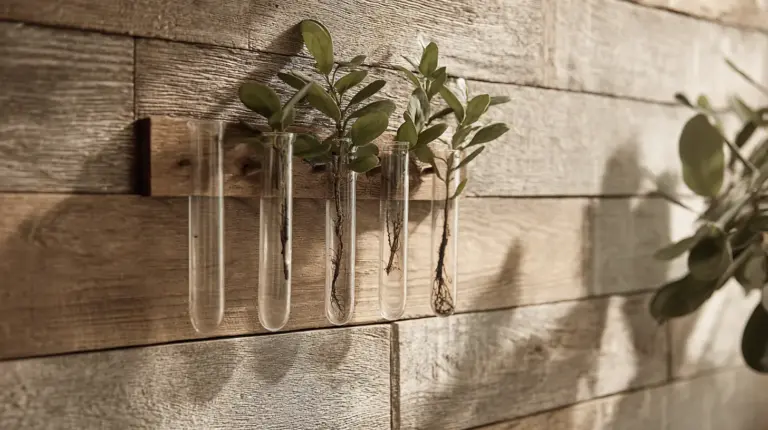
Snipping cuttings and rooting them in water is one of the most satisfying rituals in plant care. A few stems of pothos in a small glass jar become a new plant within weeks, ready for a new shelf or to share with someone whose home needs a little more green.
Use coco coir liners in hanging pots instead of plastic, and repot into recycled or locally sourced ceramic vessels when possible. This is sustainability as aesthetics — choices that look good and do good.
Budget-Friendly DIY Japandi Shelves for Trailing Plants
You do not need to spend a great deal to create a Japandi shelf that feels considered and beautiful. In the Philippines, raw materials for simple floating shelves can be sourced at Divisoria or local lumber shops for under PHP 2,000.
Unfinished wood planks sanded smooth and sealed with natural beeswax or raw linseed oil carry the warmth of expensive timber for a fraction of the cost. Pair these with simple black iron brackets for a clean, modern profile that trails your chosen plants with effortless grace.
Bamboo ladder shelves, widely available in local markets, are another sustainable option. They bring texture and a handcrafted quality that mass-produced shelving rarely achieves.
Key Takeaways: Trailing Plants on Japandi Shelves
- Choose trailing plants that complement your shelf material and room light — pothos and philodendron for low-light spaces, String of Pearls for bright corners
- Style in odd numbers with varied trailing lengths for a natural, layered composition
- Select pots in natural, matte materials — terracotta, raw ceramic, woven baskets
- In humid tropical climates, prioritize airflow and avoid overwatering during rainy seasons
- For pet-safe styling, reach for Spider Plant, Boston Fern, or Tradescantia
- Propagate cuttings for a zero-waste, cost-effective approach to expanding your plant collection
- Use layered lighting — warm bulbs beneath shelves or near trailing vines — to bring the space alive at night
- Budget-friendly local materials can create shelf setups that rival high-end Japandi interiors
Conclusion
A trailing plant on a Japandi shelf is not a finishing touch. It is a living philosophy — a daily reminder that beauty grows slowly, that imperfection is natural, and that the most serene spaces are ones that breathe.
Let the vine trail where it wants to go. Let the light fall through the leaves. Let the shelf hold both the handmade and the grown, the still and the slowly moving.
This is Japandi, at its quietest and most true. And it begins with a single trailing stem finding its way toward the light.
Welcome it home.
FAQs
What are the best trailing plants for Japandi shelves?
The best trailing plants for Japandi shelves include Pothos, Heartleaf Philodendron, String of Pearls, Tradescantia Nanouk, and Spider Plant. These varieties complement natural wood and neutral-toned shelving with minimal care requirements, and their cascading forms align beautifully with Japandi’s wabi-sabi aesthetic.
How do you style trailing plants on Japandi shelves?
Style trailing plants in groups of three using varied pot sizes and trail lengths. Combine one tall or grounded plant with one trailing variety and one small accent object such as a stone or ceramic piece. Choose matte, natural pots in terracotta, clay, or woven materials and allow vines to cascade at different heights for a layered, organic composition.
Which low-light trailing plants work best for Japandi living rooms?
Heartleaf Philodendron and Pothos are the most forgiving low-light trailing plants for Japandi living rooms. Both thrive in indirect or filtered light, require minimal watering, and trail gracefully from floating shelves without losing their lush, rich foliage.
Are there pet-safe trailing plants for Japandi decor?
Yes. Spider Plant, Boston Fern, and most Peperomia varieties are considered non-toxic and safe for homes with cats and dogs. They trail softly and suit Japandi aesthetics well. Avoid String of Pearls and Pothos in reach of pets, as both carry mild toxicity concerns for animals.
How do I care for trailing plants on shelves in a humid tropical climate?
In high-humidity tropical environments, water trailing plants less frequently during the rainy season and prioritize airflow to prevent root rot. During dry months, mist leaves lightly and check soil moisture more often. Wipe leaves regularly to remove dust, and propagate cuttings in water as a sustainable way to expand your plant collection throughout the year.