
Table of Contents
By ERYLIN — where calm design meets living beauty.
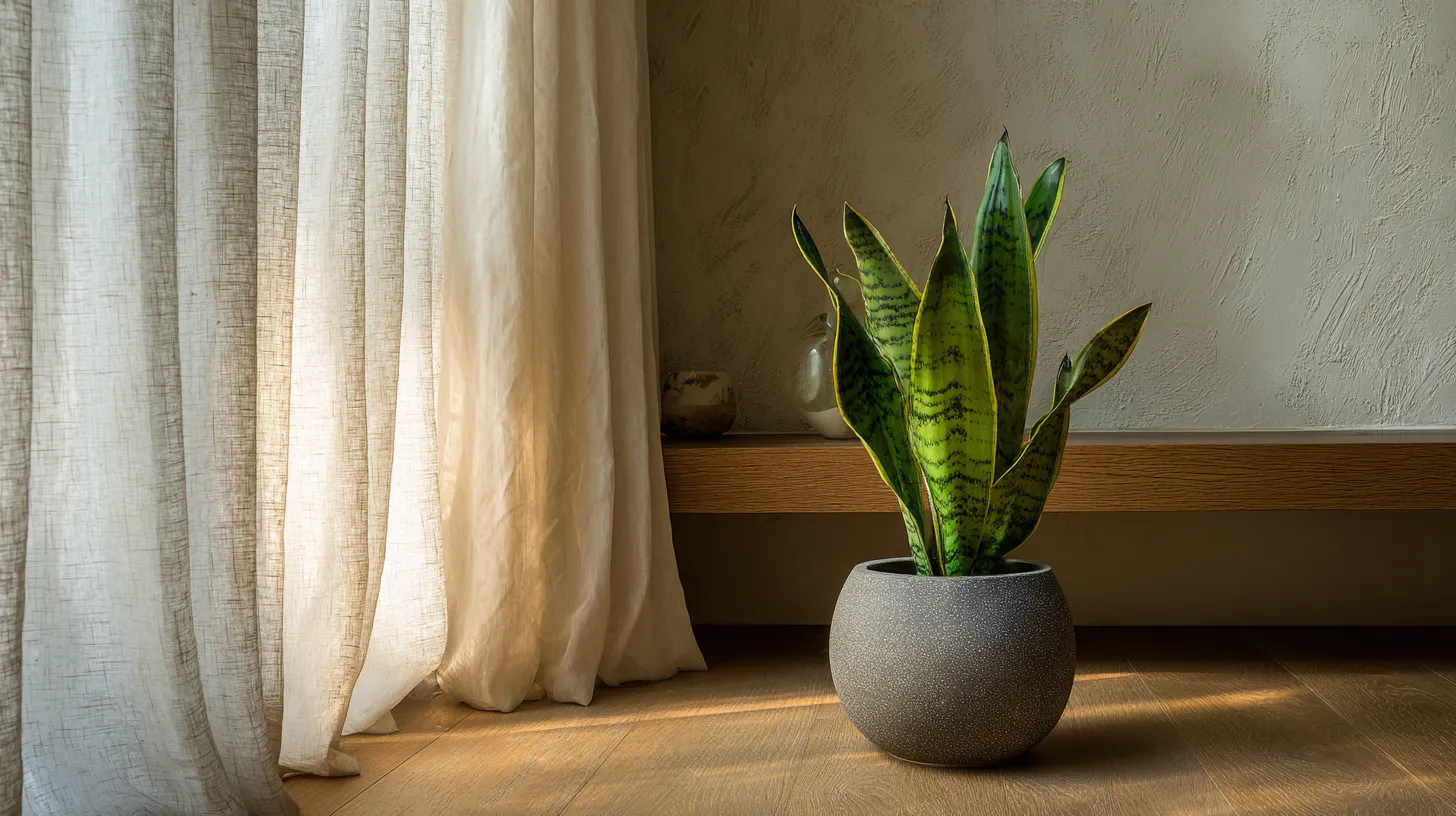
There is something quietly profound about a plant placed just so — in a stone-grey pot, beside a linen curtain catching the afternoon light. In a Japandi home, plants are not decoration. They are presence.
Japandi design draws from two soulful traditions: Japan’s wabi-sabi philosophy, which finds beauty in impermanence and imperfection, and Scandinavia’s hygge warmth, which reaches for coziness and ease. When a Snake Plant stands still in a corner, or a Peace Lily unfurls beside a wooden shelf, the whole room breathes differently.
But plants are living things — and living things change with the seasons. In the Philippines, where our climate swings between heavy monsoon rains, dry summer heat, and the in-between lull of ber-months, caring for your Japandi plants means understanding what they need right now, not just in general.
This guide is your seasonal companion. Whether you’re tending a small condo in Makati or a quiet garden flat in the south, we’ll walk through each season with you — gently, practically, and beautifully.
The Japandi Plant Philosophy: Beauty That Asks Little
Why Low-Maintenance Plants Belong in a Japandi Space
The best Japandi plants earn their place twice over: once through beauty, and once through ease. Clean silhouettes, natural textures, and quiet drama — these are the hallmarks of plants that feel at home in a minimalist, wabi-sabi interior.
Think glossy dark leaves against a matte clay pot. Think tall architectural stems beside a low teak bench. Think trailing Pothos softening the edge of a floating shelf. Each plant speaks simply and says enough.
The Core Japandi Plant Roster
Before we move through the seasons, let’s meet the plants that anchor a Japandi home most beautifully — and most forgivingly.
| Plant | Light Needs | Water Frequency | Japandi Quality |
|---|---|---|---|
| Snake Plant (Sansevieria) | Low to bright indirect | Every 2–4 weeks | Sculptural, air-purifying |
| ZZ Plant (Zamioculcas) | Low to indirect | Every 2–3 weeks | Glossy, drought-tolerant |
| Pothos (Epipremnum) | Low to medium indirect | Weekly | Trailing, soft texture |
| Peace Lily (Spathiphyllum) | Low to medium indirect | Weekly | Elegant, humidity-loving |
| Ficus Audrey (Ficus benghalensis) | Bright indirect | Weekly | Statement, architectural |
| Monstera Deliciosa | Bright indirect | Weekly | Bold leaf form, tropical |
| Bamboo Palm | Indirect | Weekly | Airy, Zen-inspired |
| Cast Iron Plant (Aspidistra) | Low | Every 2 weeks | Stoic, deeply wabi-sabi |
| Bird of Paradise (Strelitzia) | Bright indirect | Weekly | Grand, minimal pot pairing |
| Chinese Evergreen (Aglaonema) | Low to indirect | Weekly | Soft variegation, compact |
Seasonal Care Calendar: A Year of Tending Your Japandi Plants
🌿 Wet Season (June–October): Embrace the Monsoon with Care
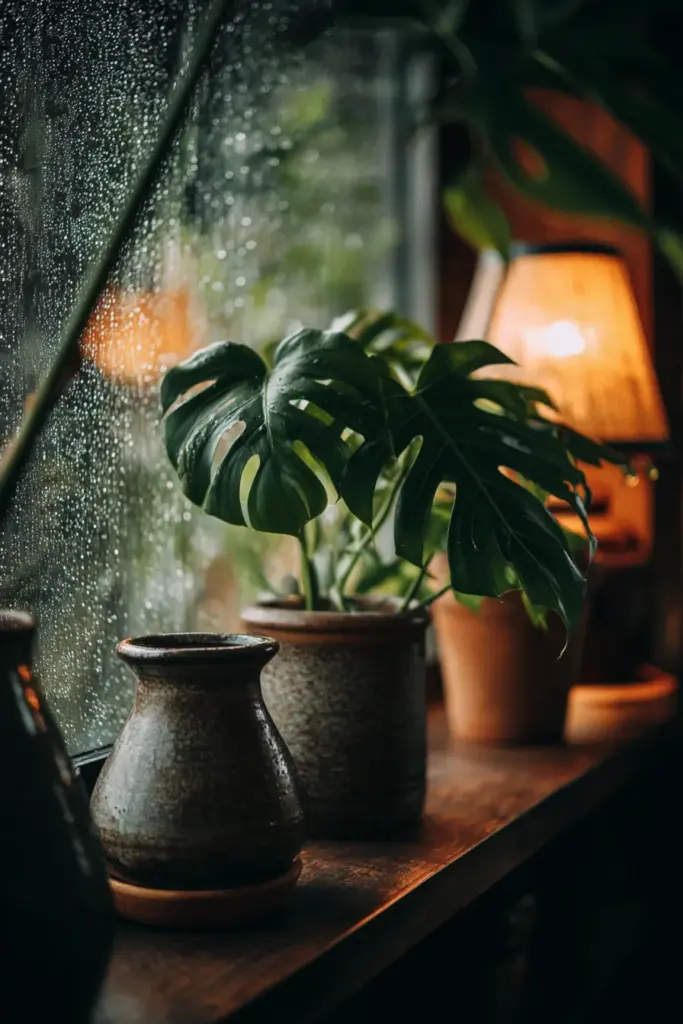
The rain arrives and the air thickens. Humidity climbs above 80% in Metro Manila, and everything — including your plants — responds to it.
This is the season of growth, but also of caution. High humidity encourages lush new leaves, but it also invites fungal issues, root rot, and pests that thrive in moisture.
Watering in the Wet Season
Reduce your watering frequency by 20–30%. The ambient humidity does much of the work. Before watering, press your finger an inch into the soil — if it still feels damp, wait another day or two.
Make sure every pot has drainage holes and sits on a saucer or riser. If water pools beneath your pots, root rot can set in quietly before you notice the leaves wilting.
Ventilation and Air Circulation
Open your windows during light rain mornings. Let air move through your space — this prevents the stagnant moisture that breeds mildew on soil and leaf undersides.
If your space tends to feel sealed (common in high-rise condos), a small desk fan set to low, angled away from your plants, can gently circulate air without drying them out.
Monsoon Fungal Care: A DIY Neem Oil Spray
This is the PH-specific step most guides forget.
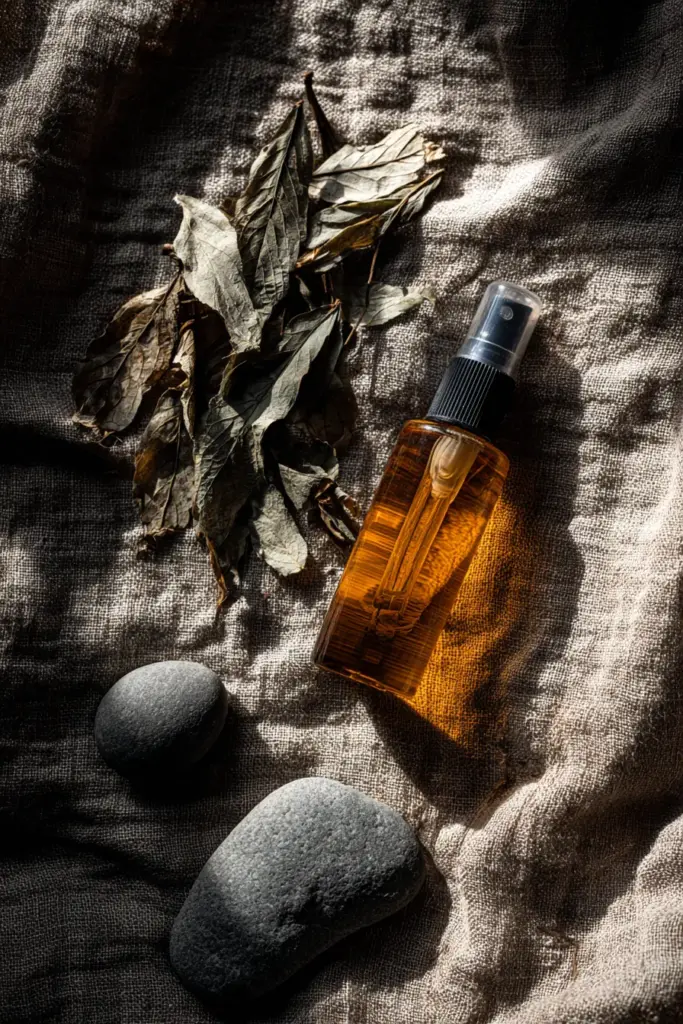
Mix 1 teaspoon of neem oil + a few drops of dish soap + 1 liter of water in a spray bottle. Apply lightly to the topsoil and leaf undersides every two weeks during heavy monsoon months. Neem oil is natural, gentle, and deeply effective against fungal spores and soft-bodied pests.
It smells earthy. It feels like tending.
Propagation Season
The wet season’s warmth and humidity make it ideal for propagating your Pothos, Chinese Evergreen, or Peace Lily. Take healthy stem cuttings, place them in water near a bright window, and watch them root within weeks. It’s a quietly satisfying ritual — and it costs nothing.
Typhoon Prep for Your Plants
If you live in a typhoon-prone area or have balcony plants, move them indoors before a storm. For floor plants in weighted stone or concrete pots — a quiet design choice that doubles as storm stability — simply move them away from windows.
☀️ Summer / Dry Season (March–May): Light, Heat, and Gentle Drought
The air shifts. Lighter, drier, sometimes dusty. The kind of heat that makes you want to draw your linen curtains halfway and sit very still with a glass of cold water.
Your plants feel it too.
Watering in the Dry Season
Increase your watering frequency slightly — but always, always check the soil first. ZZ Plants and Snake Plants can still go two weeks between drinks even in summer. Pothos and Peace Lilies will want water more often, perhaps every five to seven days.
Water deeply and slowly — let it soak through to the roots, then drain fully. Shallow watering encourages surface roots and weak growth.
Light Management
Summer light in the Philippines can be intense and direct. Most Japandi plants prefer bright indirect light — not the harsh midday sun streaming through south-facing windows.
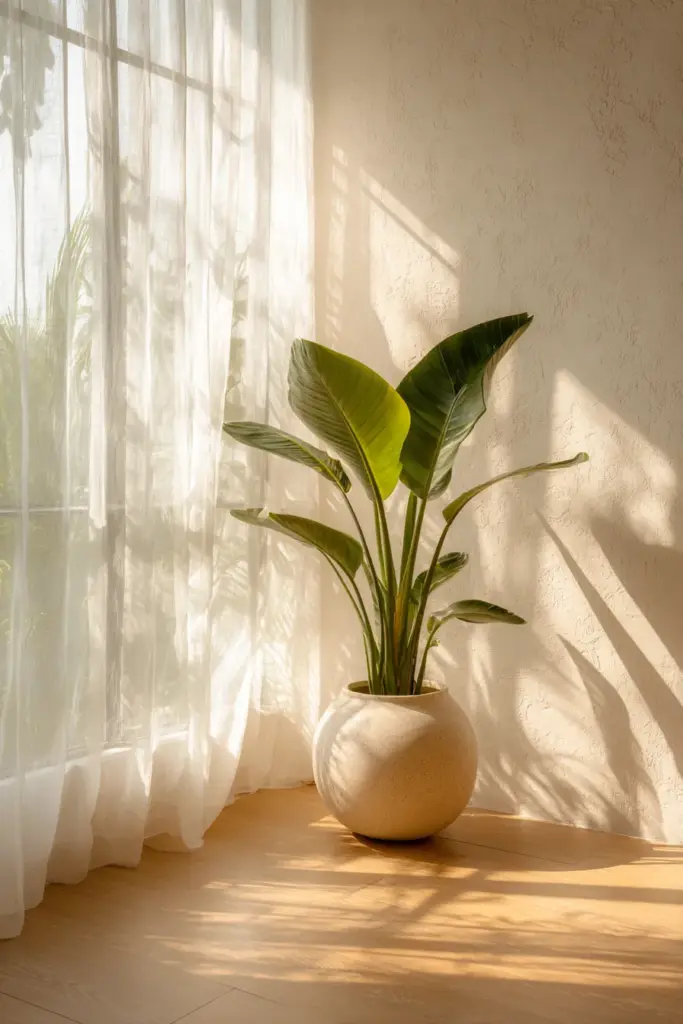
Sheer linen curtains are your best friend here. They diffuse light beautifully, protect leaves from scorching, and cast the most gorgeous soft shadows across your wooden floors. (They also happen to be a signature ERYLIN styling detail — explore our Japandi lighting ideas for curtain and lamp pairings.)
Humidity Tricks for Dry Months
- Group plants together — they create a microclimate of shared humidity
- Place a shallow tray of pebbles filled with water beneath your pots (the evaporation rises gently upward)
- Mist Peace Lilies and Bamboo Palms in the early morning, not at night
Dust and Leaf Care
Dry season brings dust. Wipe each leaf gently with a damp cloth every two to three weeks — this isn’t just aesthetic. Clean leaves photosynthesize more efficiently. There’s something deeply meditative about tending each leaf by hand.
🍂 Cool Ber Months (November–February): The Season of Stillness
Ber months — that gentle Filipino shorthand for the cooler, drier stretch from September to February — bring a subtle shift. Temperatures ease slightly. Light changes angle. The pace of growth slows.
This is the season of rest. Honor it.
Reduce Watering by 30%
Most Japandi plants slow their metabolism in cooler, lower-light months. Overwatering in this period is the number one cause of plant loss. The ZZ Plant especially — already a drought champion — may only need water once a month.
Let the soil dry out more fully between waterings. This isn’t neglect. It’s respect for the plant’s natural rhythm.
Light Boosting
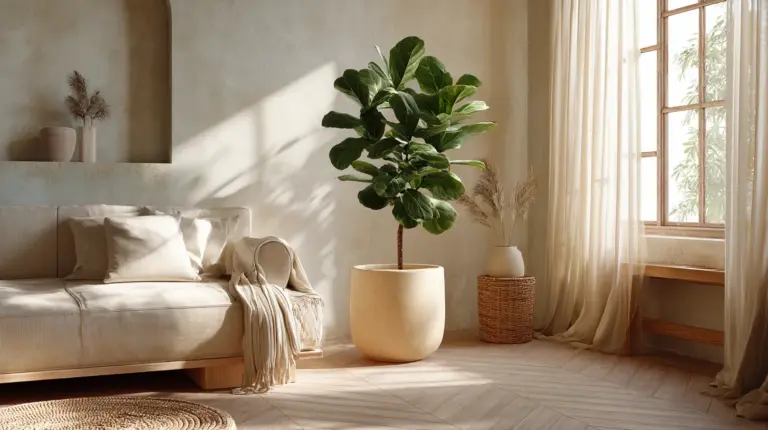
Days are slightly shorter, and the light feels softer. Move light-hungry plants like Ficus Audrey and Bird of Paradise closer to windows.
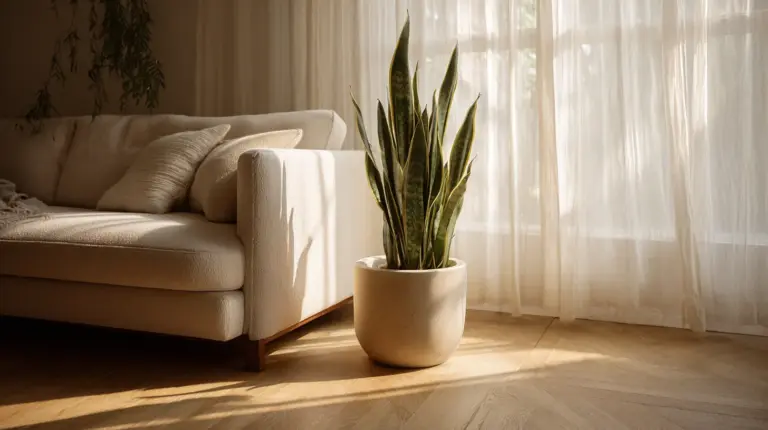
Layer your interior light with warm-toned bulbs near plant corners — this supplements natural light gently and adds a golden, hygge-warm atmosphere to your evenings. A floor lamp beside a tall Snake Plant creates one of the most quietly beautiful moments a Japandi room can offer.
Seasonal Pot Refreshes: Upcycle and Refresh
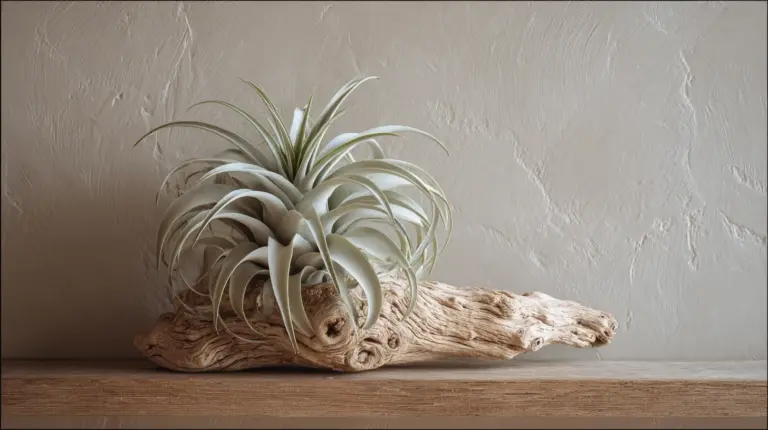
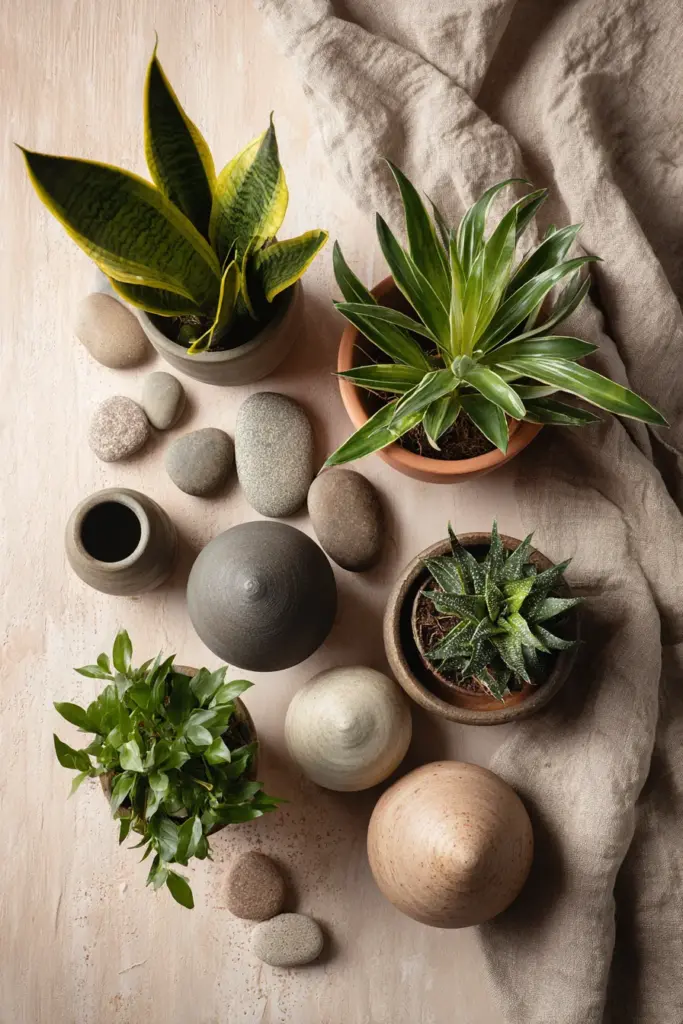
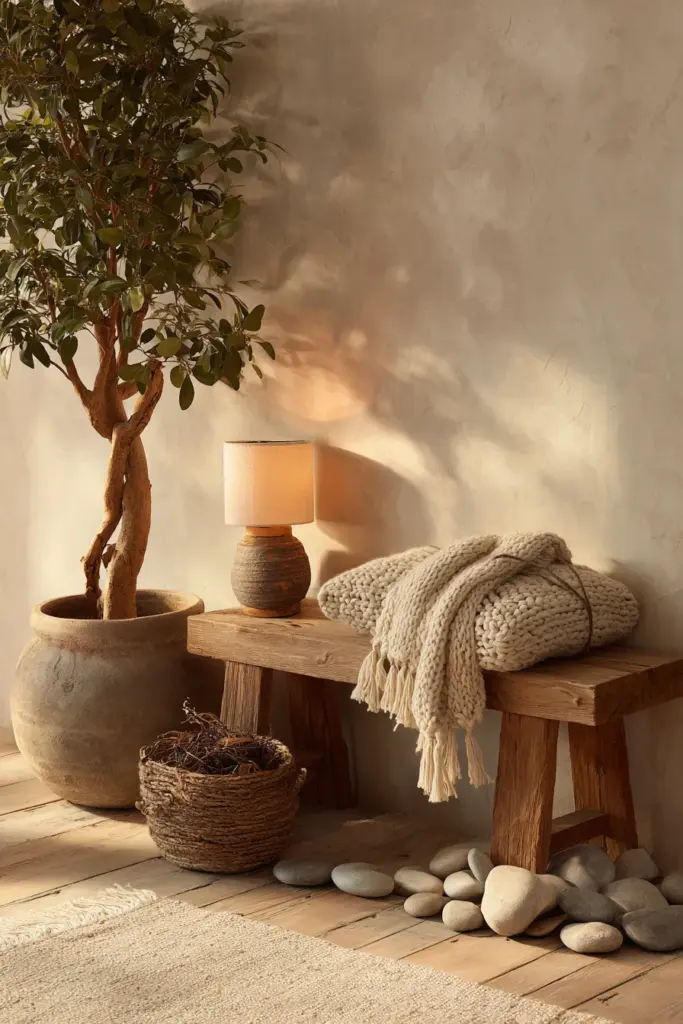
This is the perfect season for a quiet aesthetic reset. Consider refreshing your pots with natural materials — driftwood mulch on topsoil adds texture and warmth, slows moisture evaporation, and looks deeply considered. A handful of smooth river pebbles around the base of a ZZ Plant costs almost nothing and transforms the vibe entirely.
Swap plastic nursery pots for matte terracotta, pale stone, or unglazed ceramic. These materials breathe, regulate moisture, and age beautifully — pure wabi-sabi in a pot.
A Seasonal Care Summary: 10 Plants × 4 Seasons
| Plant | Wet Season | Dry Season | Ber Months |
|---|---|---|---|
| Snake Plant | Reduce water; check drainage | Water every 2–3 weeks | Water monthly; avoid cold drafts |
| ZZ Plant | Water every 3 weeks; watch for rot | Water every 2 weeks | Water every 4 weeks; low light fine |
| Pothos | Trim excess; propagate cuttings | Water every 5–7 days; mist lightly | Reduce to weekly; wipe leaves |
| Peace Lily | Watch for fungus; mist lightly | Mist + group with other plants | Move to brighter spot; reduce water |
| Ficus Audrey | Keep indoors during storms | Bright indirect light; water weekly | Move closer to window |
| Monstera | Wipe leaves; watch for pests | Water weekly; avoid direct sun | Reduce water; enjoy slow growth |
| Bamboo Palm | Ensure drainage; ventilate | Mist frequently; bright indirect | Keep away from cold aircon vents |
| Cast Iron Plant | Nearly maintenance-free | Water fortnightly | Water monthly; dust leaves |
| Bird of Paradise | Move from storm windows | Full bright indirect; water deeply | Brightest window available |
| Chinese Evergreen | Neem spray preventively | Mist; avoid drafts | Reduce water; stable temperature |
Styling Your Seasonal Plants the Japandi Way
Pots, Stands, and Natural Materials
A plant in the wrong pot is like a beautiful sentence in the wrong font. The vessel matters.
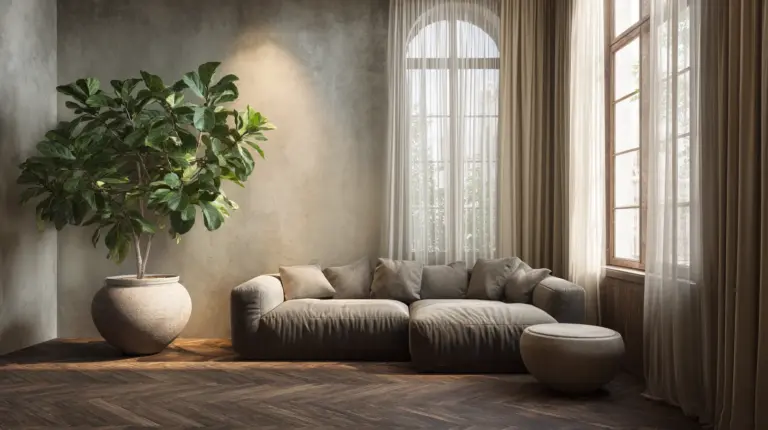
Choose matte over glossy, neutral over bright. Pale grey, warm white, natural terracotta, and weathered clay all feel at home in a Japandi space. For larger floor plants, consider our Japandi plant stands guide — the right stand lifts a plant from furniture to focal point.
Grouping and Negative Space
Resist the urge to fill every corner. One beautifully placed plant says more than five crowded ones. Let negative space breathe around your plants — it’s the silence between notes that makes the music.
If you do group plants, vary height intentionally: a tall Snake Plant, a mid-height ZZ Plant, and a trailing Pothos at the base creates a layered, natural composition without chaos.
Budget PHP 300–800 Japandi Plant Setup
You don’t need to spend lavishly to create something beautiful.
- PHP 150–250 — a Snake Plant or ZZ Plant from a local nursery
- PHP 80–150 — a matte terracotta pot (check Divisoria or Shopee local sellers)
- PHP 50–100 — pebbles or driftwood mulch for topsoil dressing
- PHP 30–50 — neem oil concentrate (lasts months)
A complete, serene Japandi plant corner for under PHP 600. That’s a corner that will outlast trends.
Air Purification: What Your Plants Are Actually Doing
Your Japandi plants are working while you rest.
| Plant | Air Benefit |
|---|---|
| Snake Plant | Reduces benzene by up to 40%; produces oxygen at night |
| Peace Lily | Filters ammonia, benzene, formaldehyde |
| Pothos | Removes carbon monoxide and formaldehyde |
| Bamboo Palm | Excellent formaldehyde and CO removal |
| ZZ Plant | Low-toxin emission cleaner; filters xylene |
Note: Always keep toxic plants (Peace Lily, Pothos) out of reach of pets and children.
Seasonal Plant Care Checklist
Wet Season (June–October)
- Reduce watering by 20–30%
- Apply neem oil spray every two weeks
- Ensure all pots have drainage
- Run gentle air circulation
- Propagate cuttings in the warmth
Dry Season (March–May)
- Water deeply but check soil first
- Hang sheer curtains to diffuse harsh light
- Group plants for shared humidity
- Wipe dust from leaves every 2–3 weeks
- Use pebble tray for moisture rise
Ber Months / Cool Season (November–February)
- Reduce watering by 30%
- Move light-hungry plants closer to windows
- Add warm-toned supplemental lighting
- Refresh pots with driftwood mulch or pebbles
- Swap nursery pots for natural materials
Closing Thoughts: A Living Home
A Japandi home is not a showroom. It is a sanctuary — one that breathes, grows, and changes with the seasons alongside you.
The plants you choose and tend are not accessories. They are quiet companions. They ask for attention in the most gentle, unhurried way: check the soil, wipe the leaves, move me toward the light.
When you tend them with that same unhurried care, something shifts in the room — and in you. The air feels different. The morning light means something. The imperfect leaf on your Snake Plant catches the evening glow, and you find yourself thinking: yes, this is exactly right.
That is the ERYLIN way. Not perfect. Perfectly considered.
Frequently Asked Questions
How do you care for Japandi plants in the Philippines?
In the Philippine climate, Japandi plant care centers on managing humidity. During the wet season (June–October), reduce watering frequency by 20–30%, ensure good drainage, and apply a neem oil spray every two weeks to prevent fungal issues. In the dry months, water more deeply, use sheer curtains to filter harsh direct sun, and group plants together to maintain ambient humidity around the leaves.
What plants are best for Japandi style?
The best Japandi plants combine clean silhouettes with low-maintenance needs. Top choices include the Snake Plant, ZZ Plant, Pothos, Peace Lily, and Ficus Audrey. These plants offer sculptural beauty, thrive in indirect light, and pair naturally with the neutral pots and natural materials central to Japandi interiors.
How often should I water Japandi plants?
It depends on the season and the plant. As a general rule, allow the top inch of soil to dry out completely before watering. In the wet season, most Japandi plants need water every two to three weeks. In the dry season, water every five to seven days for moisture-loving plants like Peace Lily, and every two weeks for drought-tolerant ones like ZZ Plant and Snake Plant.
Can Japandi plants survive Philippine monsoon season?
Yes — many Japandi staples are naturally humidity-tolerant. The key is managing the excess moisture, not fighting it. Ensure drainage holes are clear, apply neem oil spray preventively, allow air to circulate around leaves and soil, and reduce watering since ambient humidity compensates. Avoid leaving plants in standing water at any point.
What pots work best for a Japandi plant aesthetic?
Choose pots that feel quiet and grounded: matte terracotta, unglazed ceramic, pale stone, or neutral-toned concrete. Avoid glossy or brightly colored pots — they compete with the plant’s natural form. As a budget tip, plain terracotta pots from local Divisoria sellers or Shopee start at PHP 80–150 and age beautifully over time, which is very much in the wabi-sabi spirit.