
Table of Contents
There is something quietly powerful about a single bonsai placed on a wooden shelf — the way it holds stillness, the way it asks you to slow down. In a Japandi home, that feeling is everything.
Japandi is the art of blending Japanese wabi-sabi with Scandinavian hygge. It is about raw textures, honest materials, and intentional beauty. And nothing embodies this philosophy more naturally than a flowering bonsai — alive, impermanent, and deeply grounding.
At ERYLIN, we believe your home should feel like a sanctuary. A flowering Japandi bonsai is not just décor. It is a living ritual, a quiet reminder that beauty grows slowly, and that less, when chosen well, is always more.
Whether you live in a compact Manila apartment or a cozy Nordic-inspired flat, this guide will help you choose, style, and care for the flowering bonsai that belongs in your space.
What Is Japandi Style — and Why Bonsai Fits So Perfectly
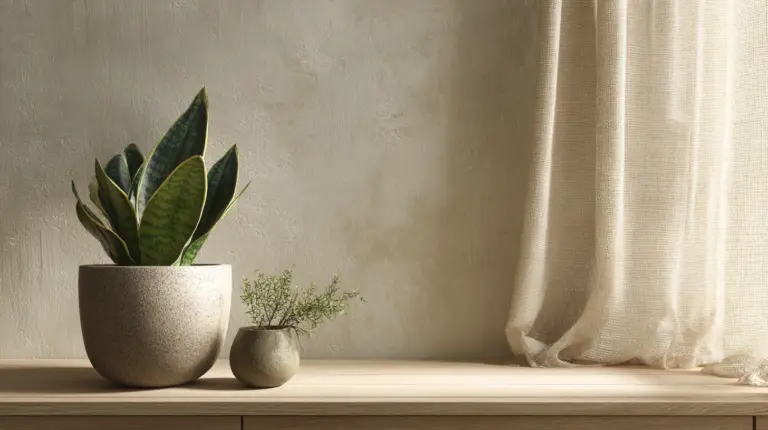
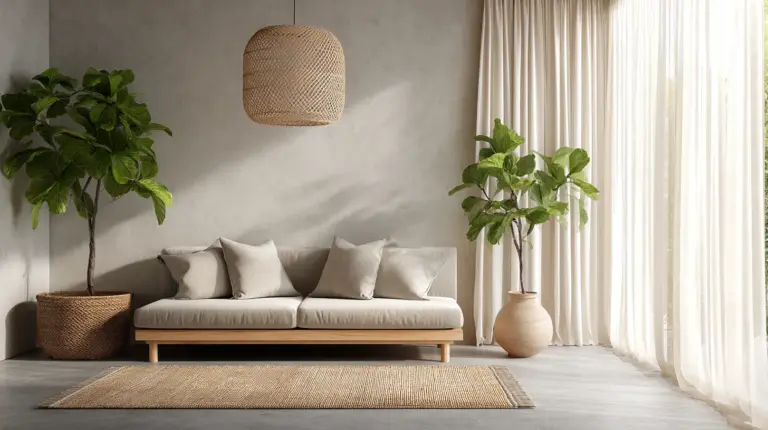
Japandi style centers on simplicity, nature, and calm. Think unfinished oak, undyed linen, muted ceramics, and light that arrives softly through sheer curtains.
The Philosophy Behind the Aesthetic
Wabi-sabi, the Japanese concept of finding beauty in imperfection, is at the heart of Japandi design. A bonsai — gnarled, ancient-looking, shaped by patient hands — is wabi-sabi made visible.
Hygge, the Scandinavian counterpart, adds warmth. It says: light a candle, keep things close, make the space feel lived-in and loved. Together, these two philosophies create an interior that breathes.
Why Flowering Bonsai Elevates the Style
A flowering bonsai brings a moment of color and fragrance into an otherwise neutral palette. The soft blush of an azalea, the papery white petals of a cherry blossom, the deep red of a pomegranate flower — each one creates a focal point that feels earned rather than forced.
The flowers do not shout. They whisper. And in a Japandi room, that is exactly right.
Best Flowering Bonsai Trees for Japandi Homes
Choosing your bonsai is like choosing a slow companion. You want a species that rewards patience, thrives with care, and looks beautiful doing it.
Satsuki Azalea (Rhododendron indicum)
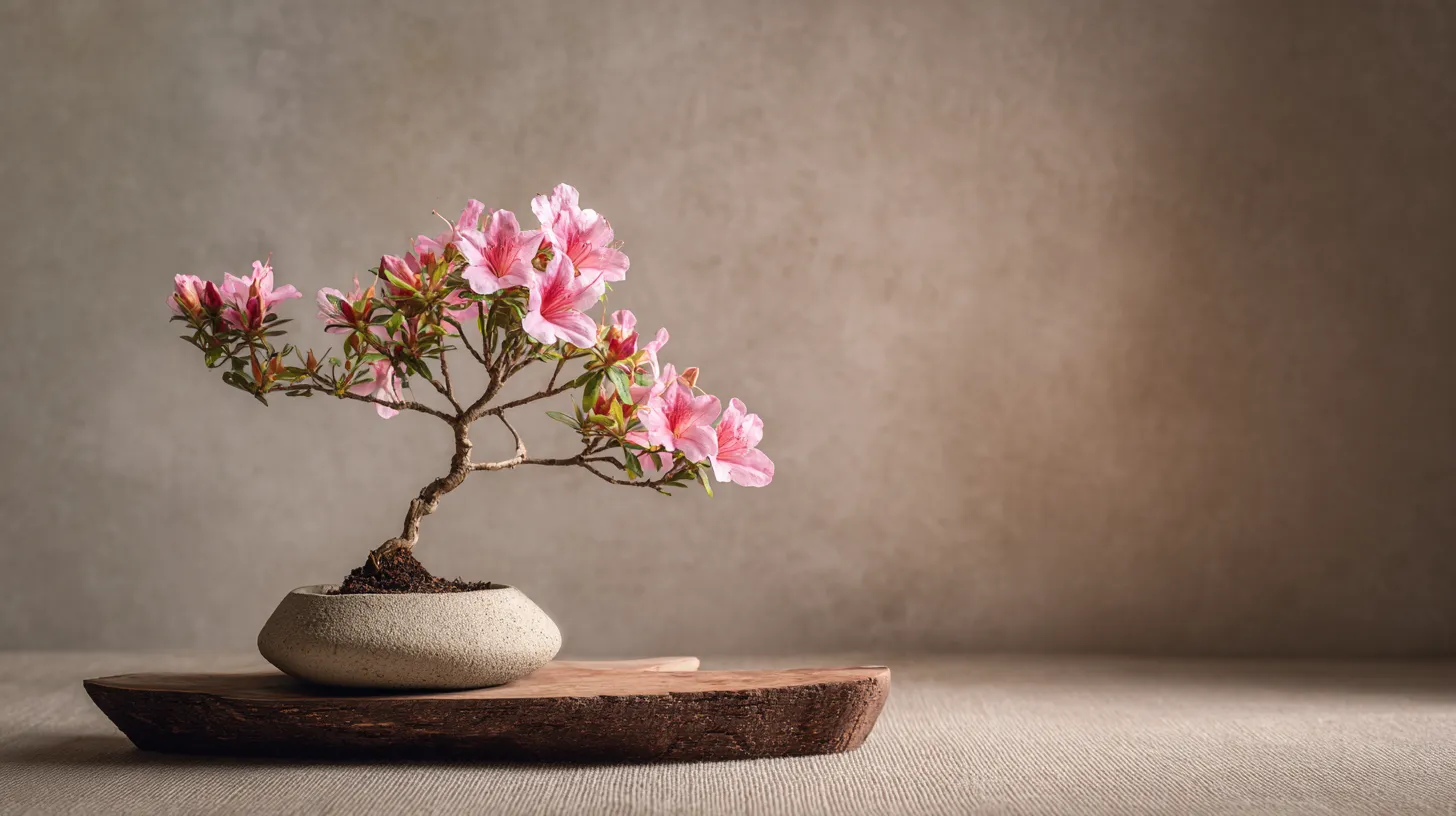
The Satsuki azalea is perhaps the most beloved flowering bonsai in Japanese culture, and for good reason. Its blooms — ranging from soft pink to deep magenta — arrive in late spring and cover the entire tree in color.
It pairs beautifully with a matte sand-colored ceramic pot or a hand-thrown stoneware bowl. Place it near a north-facing window or under a soft LED grow light in humid climates like Manila, and it will thrive.
Japanese Cherry Blossom (Prunus mume)
Prunus mume, often called the Japanese apricot or flowering plum, blooms in late winter — a quiet act of defiance against the cold. Its petals are delicate and faintly fragrant, arriving before the leaves and creating a silhouette that feels almost calloused with beauty.
In a Japandi interior, this species belongs on a solid oak or walnut stand, displayed alone against a white or warm grey wall. Let it be the only thing in the room that demands attention.
Wisteria (Wisteria sinensis)
Wisteria bonsai is a dramatic choice — cascading clusters of violet or white blooms that hang like quiet lanterns. It needs full sun and careful pruning after flowering, but the payoff is extraordinary.
Style it in a shallow, wide ceramic tray in stone grey or deep charcoal. The contrast of its romantic blooms against such an austere vessel is classic Japandi tension: soft meets structured.
Pomegranate (Punica granatum)
The pomegranate bonsai is underrated in Western interiors but deeply respected in Japanese bonsai tradition. Its flame-orange flowers appear in early summer, followed — if you are patient — by tiny jewel-like fruit.
This species handles warmth and humidity well, making it an excellent choice for Filipino homes. Pair it with a terracotta-washed pot or a handmade bamboo tray for a look that feels both earthy and refined.
Gardenia (Gardenia jasminoides)
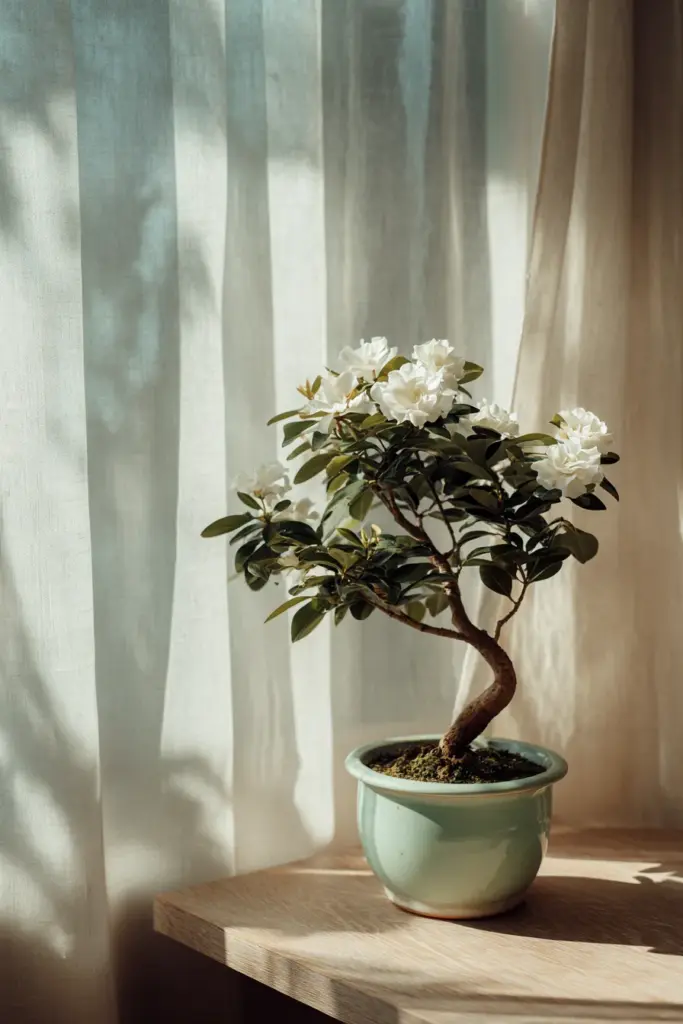
For a bonsai that engages all the senses, the gardenia is unmatched. Its waxy white flowers carry a rich, sweet fragrance that fills a room without effort.
It needs consistent moisture and warm temperatures — conditions naturally present in tropical climates. Style it in a pale celadon or cream glaze pot and place it in your reading corner where its scent can drift over you as you sit.
Bougainvillea
Bougainvillea brings bold color — magenta, coral, white — but in bonsai form, that boldness becomes elegant. Its papery bracts catch light in the most beautiful way, especially near a south-facing window.
In a Japandi space, choose the white-blooming variety for restraint, or the deep pink for a single curated pop of warmth. A raw concrete or unglazed clay pot grounds it perfectly.
Flowering Japandi Bonsai Species at a Glance
| Species | Bloom Season | Bloom Color | Pot Pairing | Light Needs |
|---|---|---|---|---|
| Satsuki Azalea | Late Spring | Pink to Magenta | Matte stoneware | Indirect / LED grow light |
| Prunus mume | Late Winter | White / Pale Pink | Oak or walnut stand | Bright indirect |
| Wisteria | Spring | Violet / White | Stone grey ceramic | Full sun |
| Pomegranate | Early Summer | Orange-Red | Terracotta / bamboo | Full sun |
| Gardenia | Summer | White | Celadon / cream glaze | Bright indirect |
| Bougainvillea | Year-round (tropical) | Magenta / White | Raw concrete / clay | Full sun |
How to Care for Flowering Bonsai Indoors
Care is where Japandi philosophy becomes practice. There is no shortcut to a healthy bonsai — but there is a rhythm, and once you find it, it becomes meditative.
Watering and Humidity
Flowering bonsai generally prefer consistent moisture without waterlogging. Water when the top layer of soil feels just dry to the touch — not bone-dry, not saturated.
In the Philippines, where humidity is naturally high, you may need to water less frequently but watch for fungal issues around the roots. Elevate your pot on a humidity tray filled with pebbles and water to maintain ideal airflow.
Light and Indoor Positioning
Most flowering bonsai need bright, indirect light for at least four to six hours daily. In Manila apartments with limited natural light, a full-spectrum LED grow light placed 30–40 cm above the canopy works beautifully.
Position your bonsai near a sheer-curtained east-facing window if possible. Morning light is gentle and consistent — ideal for species like azalea and gardenia that prefer stable temperatures.
Fertilizing for Blooms
Flowering bonsai need different nutrition than foliage bonsai. Use a low-nitrogen fertilizer during the growing season to encourage flower production rather than excessive leaf growth.
A balanced organic fertilizer every two weeks during spring and summer is sufficient. Reduce feeding in autumn and stop entirely in winter to allow the tree its natural rest period.
Pruning After Flowering
Prune your bonsai immediately after the flowering period ends — not before, not months later. This encourages new growth that will carry next season’s buds.
Use clean, sharp bonsai shears and make cuts just above a healthy node. Think of pruning not as cutting back but as editing — revealing the shape that was always there.
How to Style a Japandi Bonsai Display
The bonsai is the soul of the display. Everything around it should serve the bonsai, not compete with it.
Choosing the Right Pot
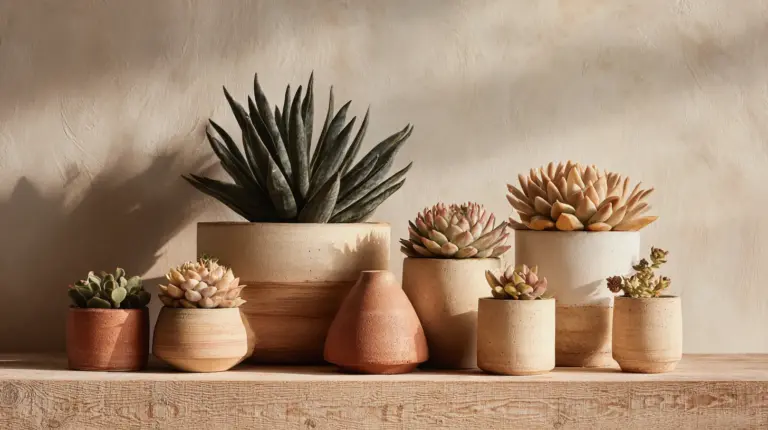
A Japandi pot should feel handmade, honest, and understated. Look for matte ceramics in warm sand, soft grey, weathered white, or earthy terracotta. Avoid glossy finishes, bright colors, or patterned surfaces.
The pot should be proportionate — roughly two-thirds the width of the canopy. Too large and the tree looks lost; too small and the display feels strained.
Selecting a Stand or Surface
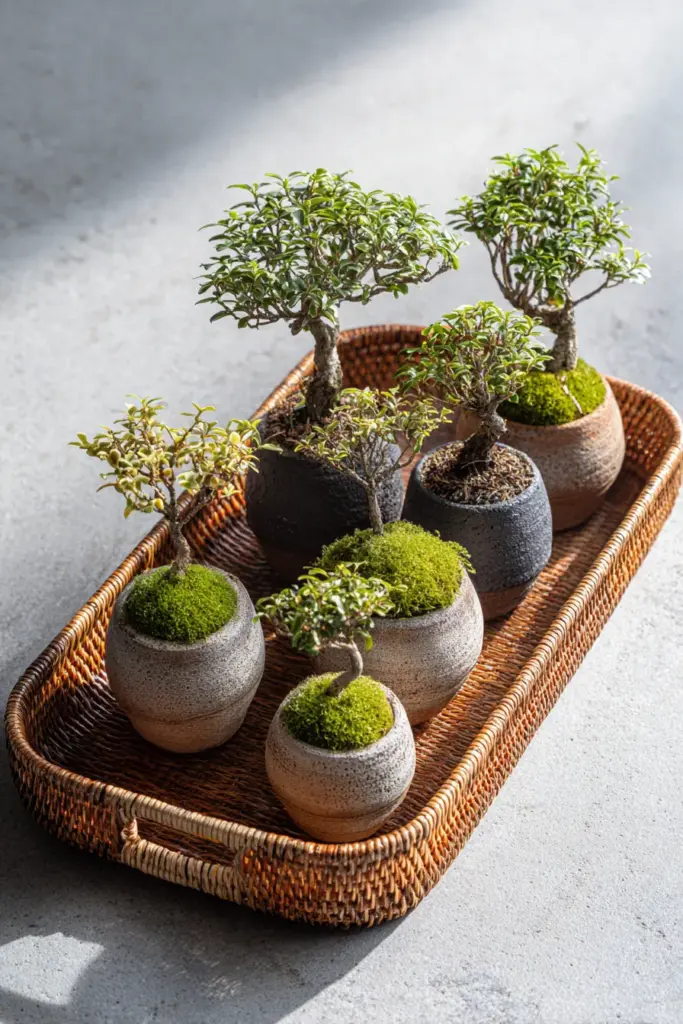
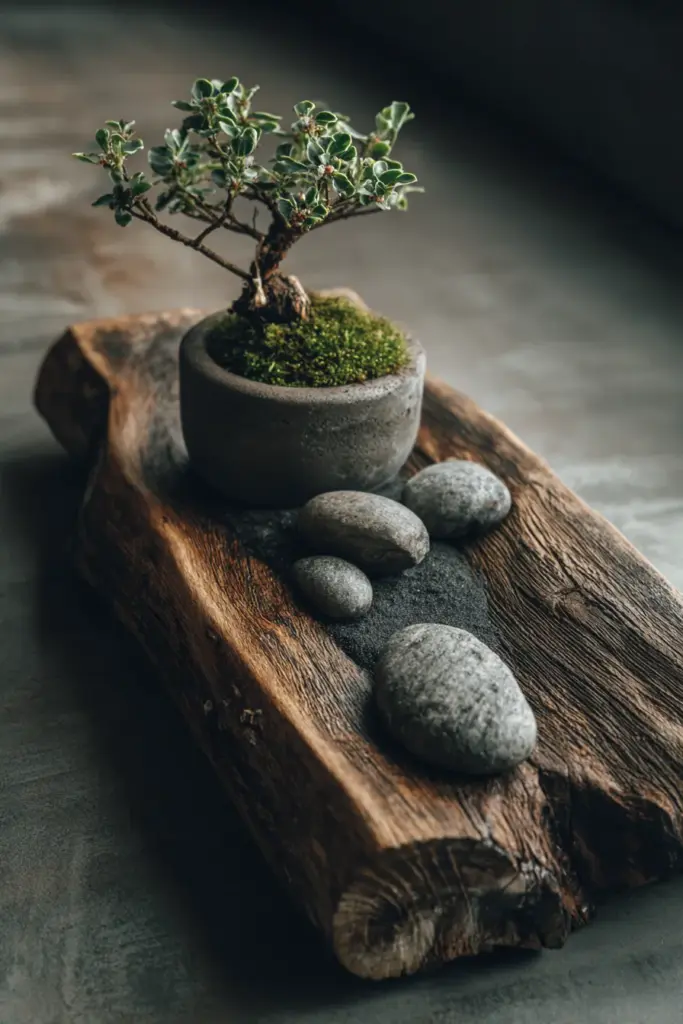
An oak slab, a rattan tray, or a raw wood slice all make excellent surfaces for a Japandi bonsai. The grain of the wood adds texture while keeping the palette neutral.
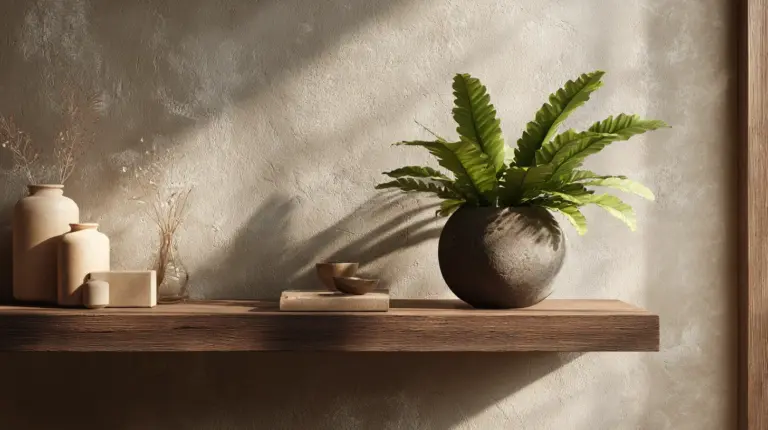
For wall shelves, choose floating shelves in light ash or white oak. Layer your bonsai with a small moss pot, a smooth river stone, or a single dried branch for a display that feels curated but not contrived.
Small-Space Styling Ideas
In compact homes, your bonsai can do more than decorate — it can define. Place a bonsai on a room divider shelf between a living area and a workspace to create a natural visual boundary.
A trio of small bonsai at staggered heights creates rhythm without clutter. Vary the species — one flowering, one foliage, one moss-covered stone — to build a living tableau.
DIY Japandi Bonsai Stands for Small Budgets
You do not need to spend a fortune to create a beautiful bonsai display. With a few simple materials and some patience, you can build a Japandi-worthy stand for under PHP 1,000.
Upcycled Oak or Rattan Stand
Visit a local timber shop and ask for off-cut slabs of oak, acacia, or molave wood. Sand the surface smooth, apply a thin coat of raw linseed oil, and let it dry for 24 hours.
The result is a stand that looks both artisan and ancient — exactly the kind of imperfect beauty that Japandi celebrates.
Moss Tray Display
A shallow terracotta or concrete tray filled with living moss creates an instant zen garden base for your bonsai. Source sheet moss from local plant nurseries or wet markets; it requires little maintenance and keeps humidity around the tree naturally elevated.
This setup works particularly well for small Ficus or Portulacaria (elephant bush) bonsai in rooms with lower natural light.
Sustainable Pot Options in the Philippines
Philippine nurseries increasingly stock bamboo and coconut husk pots that are fully biodegradable and beautiful in their own right. These pair exceptionally well with Japandi aesthetics — rough, natural, and honest in texture.
Look for locally sourced azalea, quince, and ficus bonsai at plant markets in Quezon City, Marikina, and Tagaytay. Supporting local growers keeps your practice sustainable from root to shelf.
Key Takeaways: Your Japandi Bonsai Checklist
- Choose a species that suits your light conditions — azalea and gardenia for indirect light, wisteria and bougainvillea for full sun
- Use matte, handmade-looking pots in neutral tones — sand, grey, terracotta, celadon
- Place your bonsai on oak, rattan, or raw wood surfaces to add warmth and texture
- Water consistently but never excessively; elevate on pebble trays for humidity in tropical climates
- Use low-nitrogen fertilizer during growing season to encourage flowering
- Prune immediately after blooming to set up next season’s buds
- In low-light homes, use a full-spectrum LED grow light placed 30–40 cm above the canopy
- For small spaces, use bonsai as shelf dividers or as part of a staggered three-piece display
- Build your own stand from off-cut oak or rattan for under PHP 1,000
- Source locally — Philippine nurseries and plant markets offer beautiful, affordable specimens
A Closing Thought
There is a particular kind of morning that belongs to people who keep bonsai. You wake up, you make your tea, and before anything else — before the noise of the day arrives — you pause in front of that small living tree and look.
You look at the new bud forming at the tip of a branch. You notice the way light crosses the bark. You remember that you watered it two days ago and it is doing well.
That pause — that small, intentional moment of noticing — is what Japandi is really about. Not the furniture. Not the pots. Not the carefully curated neutral palette. It is about building a home that invites you to be present.
Your flowering bonsai is not just a plant. It is a practice. And at ERYLIN, we think that is the most beautiful kind of décor there is.
Frequently Asked Questions
What are the best flowering bonsai trees for a Japandi home?
The best choices are Satsuki azalea, Prunus mume (Japanese apricot), wisteria, gardenia, and bougainvillea. Each brings a seasonal bloom, a natural form, and a quiet presence that complements Japandi’s neutral, texture-rich palette. Pair them with matte ceramic pots in sand, grey, or terracotta tones for the most cohesive look.
How do I care for a flowering bonsai indoors?
Water when the top soil layer is just dry to the touch, fertilize with a low-nitrogen formula during the growing season, and prune immediately after flowering ends. Place near a bright, indirect light source — or use a full-spectrum LED grow light if natural light is limited. Most flowering bonsai thrive with four to six hours of light daily.
Can bonsai trees flower indoors?
Yes — with the right conditions. Species like azalea, gardenia, and bougainvillea adapt well to indoor environments when given adequate light, consistent watering, and appropriate humidity. In tropical climates like the Philippines, most flowering bonsai actually benefit from the warmth and natural humidity of indoor spaces.
What is Japandi style, and how does it apply to bonsai displays?
Japandi combines Japanese wabi-sabi — the love of imperfection and natural materials — with Scandinavian hygge, the feeling of warmth and comfort. Applied to bonsai, this means choosing handmade-looking pots in muted tones, displaying trees on oak or rattan surfaces, and letting the bonsai be the quiet focal point of a calm, uncluttered space.
What are the best flowering bonsai options for beginners in the Philippines?
For Philippine beginners, bougainvillea and pomegranate bonsai are the most forgiving — both handle tropical heat and humidity well and respond positively to regular pruning. Azalea is also accessible if given morning light and consistent moisture. Source starter specimens from local nurseries in Quezon City or Tagaytay, where selections are both affordable and well-suited to the local climate.