
Table of Contents
There’s a particular kind of calm that settles over a Japandi space — the kind that feels earned, not staged. It’s the hush of warm wood tones, the breath of open corners, the quiet confidence of a single well-chosen plant standing in filtered light.
But what if that plant was doing more than looking beautiful? What if it was quietly working — pulling toxins from the air, balancing humidity, helping you breathe a little easier?
That’s the quiet brilliance of pairing Japandi design with air purifying plants. One philosophy clears visual clutter. The other clears the air itself. Together, they create something rare: a home that feels as good as it looks.
In this guide, we’ll walk you through the best Japandi air purifying plants, how to place them room by room, and how to style them so they feel like they’ve always belonged there.
Why Japandi and Air Purifying Plants Belong Together
Japandi design is rooted in ma — the Japanese concept of meaningful negative space — and the Scandinavian love of hygge, that deep coziness found in simplicity. Both traditions honor nature. Both resist excess.
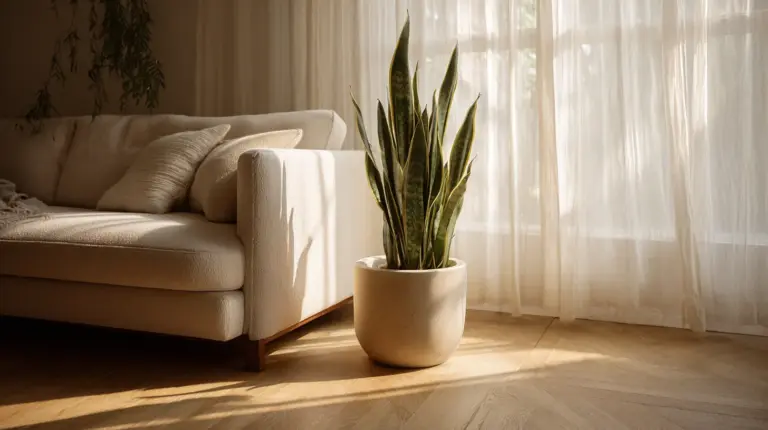
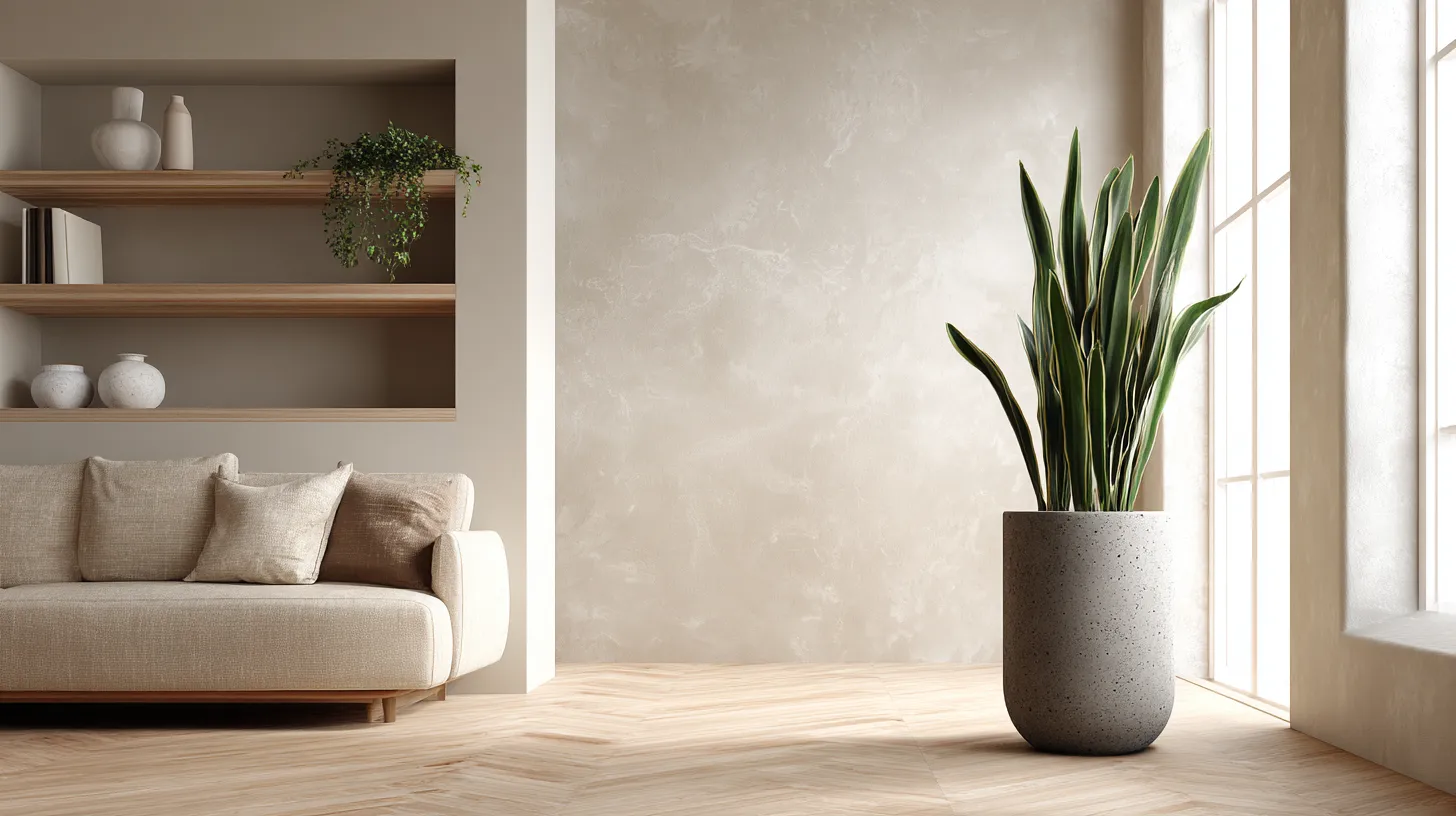
Air purifying plants speak the same language. They don’t shout. They simply are — sculptural, patient, alive. A snake plant in a stone-grey ceramic pot isn’t decoration; it’s a design statement and a quiet air filter in one.
Research (including the widely cited NASA Clean Air Study) shows that indoor plants can help reduce concentrations of pollutants like benzene, formaldehyde, ammonia, and trichloroethylene — common in paints, furniture, and cleaning products. In a sealed, well-styled Japandi room, that matters.
It’s worth saying clearly: plants alone are not a replacement for ventilation or air filtration systems. But as part of a mindful home — with cracked windows, low-VOC paints, and natural materials — they become a meaningful layer of wellness.
The Japandi Air Purifying Plant Guide: 13 Plants That Earn Their Place
At a Glance: Japandi Plant Wellness Table
| Plant | Toxins Removed | Japandi Role | Light | Pet Safe | Best Room |
|---|---|---|---|---|---|
| Snake Plant | Formaldehyde, benzene, xylene | Tall architectural anchor | Low–bright indirect | No | Living room, bedroom |
| Peace Lily | Formaldehyde, ammonia, benzene | Soft, graceful accent | Low | No | Bathroom, bedroom |
| ZZ Plant | Xylene, toluene | Bold, sculptural | Low | No | Office, living room |
| Pothos | Formaldehyde, benzene, CO | Cascading softness | Low–medium | No | Shelf, bedroom |
| Spider Plant | Formaldehyde, CO | Light, airy texture | Indirect | Yes | Kitchen, bathroom |
| Boston Fern | Formaldehyde, xylene | Lush, humid-loving | Indirect | Yes | Bathroom, hallway |
| Rubber Plant | Formaldehyde | Statement structure | Bright indirect | No | Living room, office |
| Aloe Vera | Formaldehyde, benzene | Minimal, functional | Bright | Yes | Kitchen, office |
| Parlor Palm | Formaldehyde, benzene | Relaxed, tropical-meets-zen | Indirect | Yes | Living room, bedroom |
| Dracaena | Benzene, trichloroethylene | Tall, linear drama | Low–indirect | No | Office, hallway |
| Pilea | — | Compact, graphic | Bright indirect | Yes | Desk, windowsill |
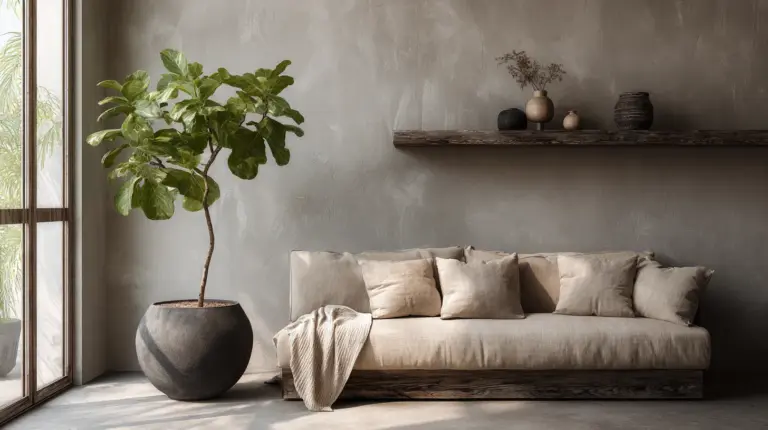
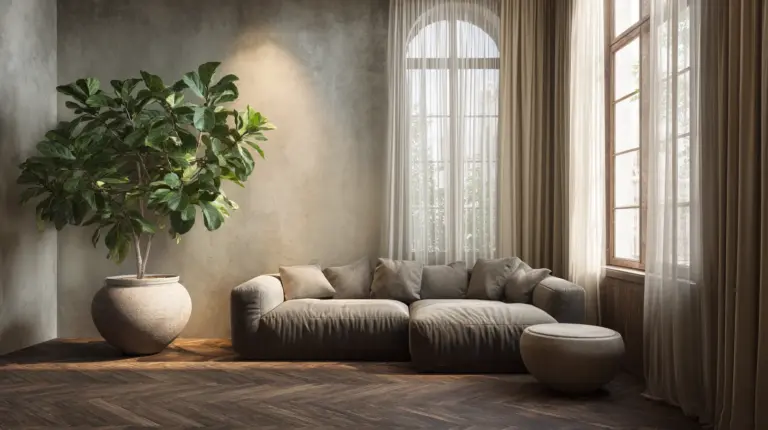
| Ficus Benjamina | Formaldehyde, xylene | Organic, sculptural tree | Bright indirect | No | Living room corner |
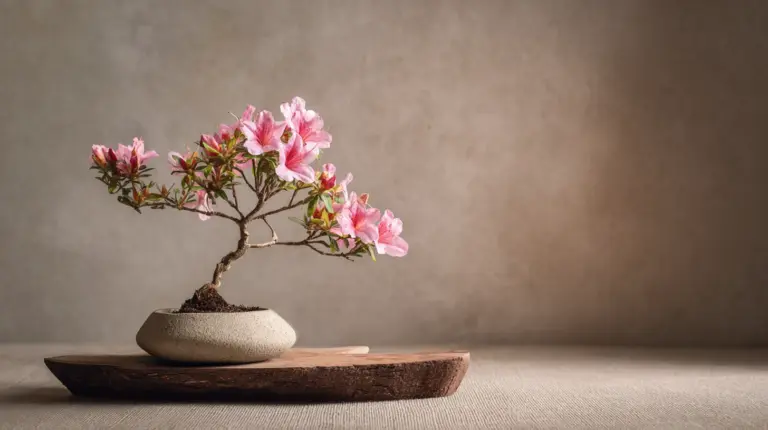
| Bonsai | — | Wabi-sabi focal point | Bright | Varies | Console, meditation nook |
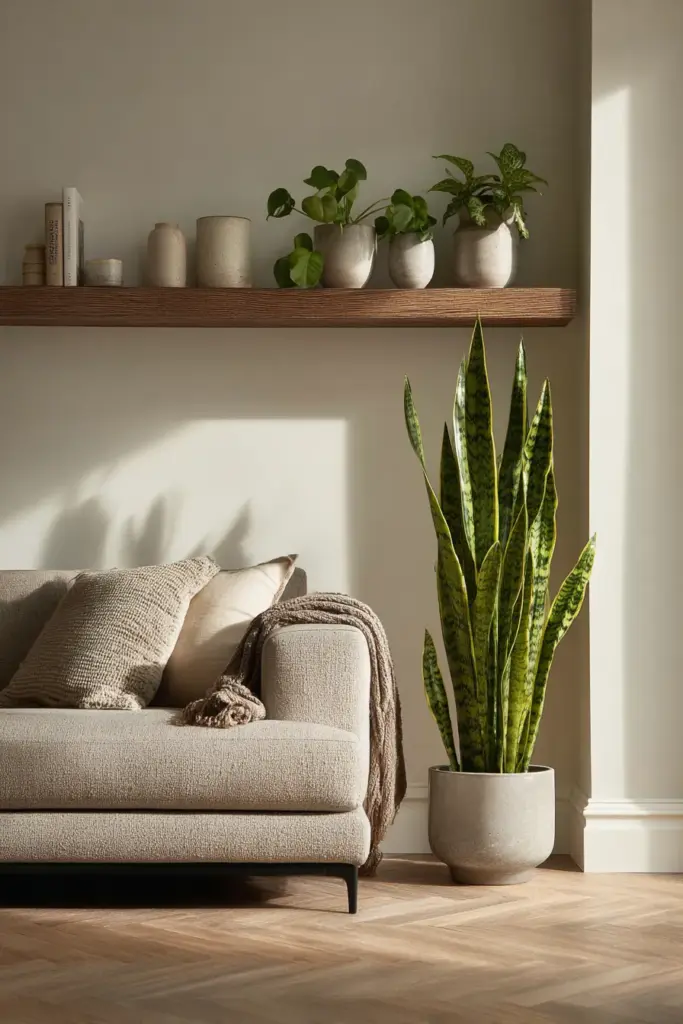
Room-by-Room: Your Japandi Air Strategy
Living Room
The living room is the lungs of a Japandi home — it breathes, it opens, it gathers.
Place one tall Snake Plant in a matte stone or terracotta pot in an unused corner. Its vertical lines echo Japandi’s love of clean geometry, and it filters formaldehyde and benzene released by furniture and finishes.
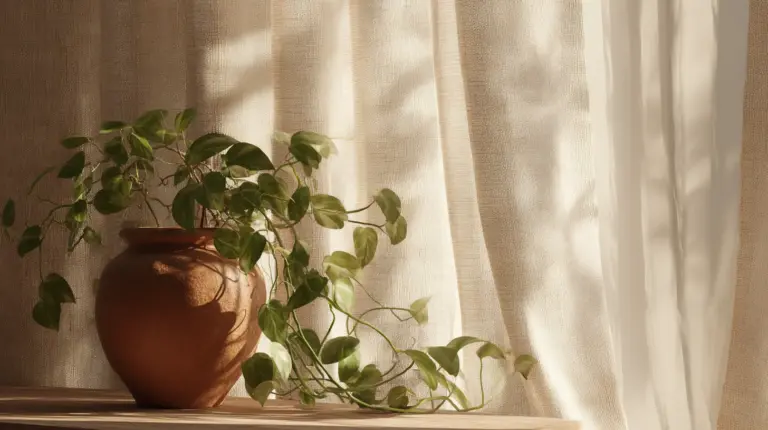
Pair it with a trailing Pothos on a low shelf or floating console — something cascading to soften all that beautiful structure. Together, they create height contrast and a layered air-cleansing effect without crowding the room.
Style note: Choose pots in warm grey, off-white, or dark charcoal. Avoid high-gloss finishes; matte and textured ceramics feel truest to the Japandi spirit.
Bedroom
A bedroom should slow the breath, not tax it. Fragrance and fuss belong elsewhere.
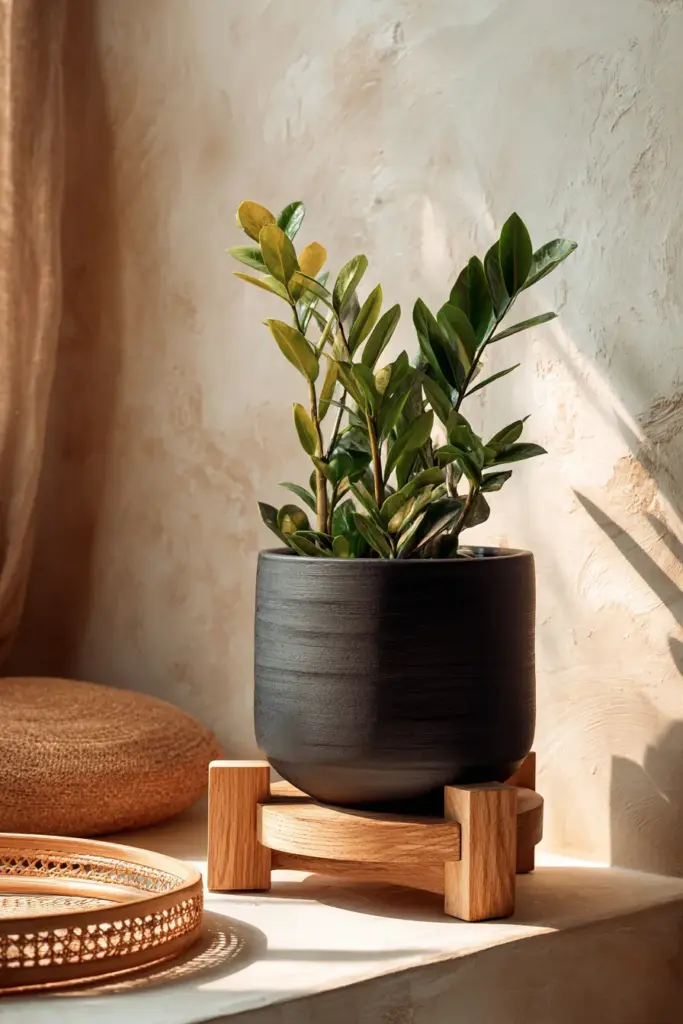
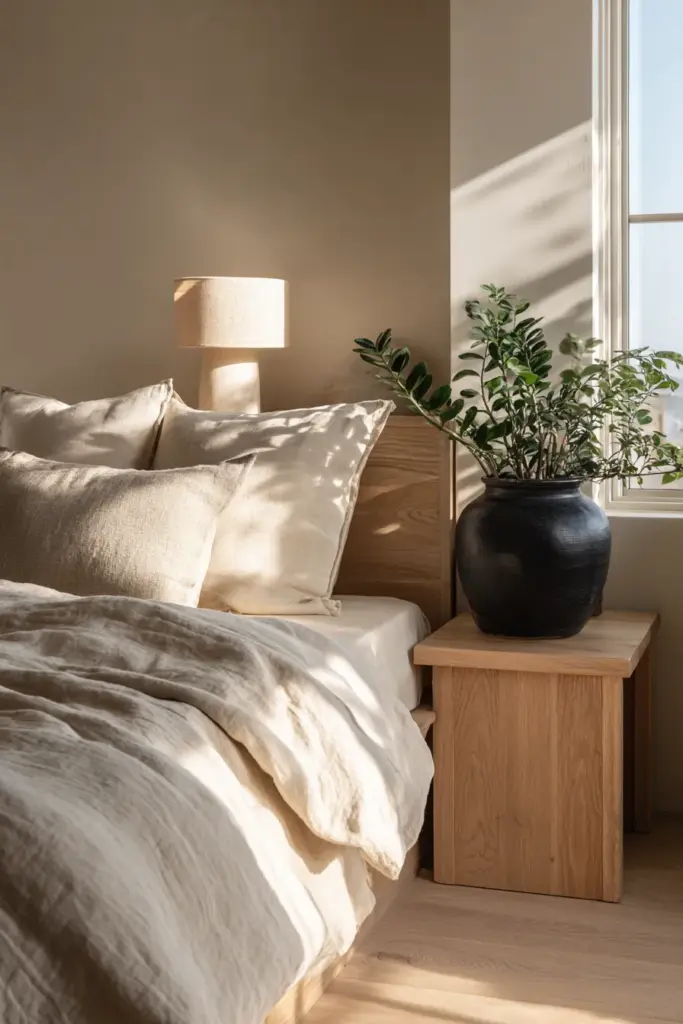
The ZZ Plant is ideal here — nearly indestructible, elegant in its deep glossy green, and content in low light. It removes xylene and toluene and asks almost nothing in return. Place it on a low bedside table or a slim floor stand.
Pothos also earns a place in the bedroom, particularly near a window or trailing from a high shelf. Its soft, heart-shaped leaves bring warmth without weight.
Avoid heavy-scented plants near the bed. The bedroom is for stillness; let the plants work quietly.
Bathroom
The bathroom is often overlooked as a design space, but in a Japandi home, it’s a sanctuary.
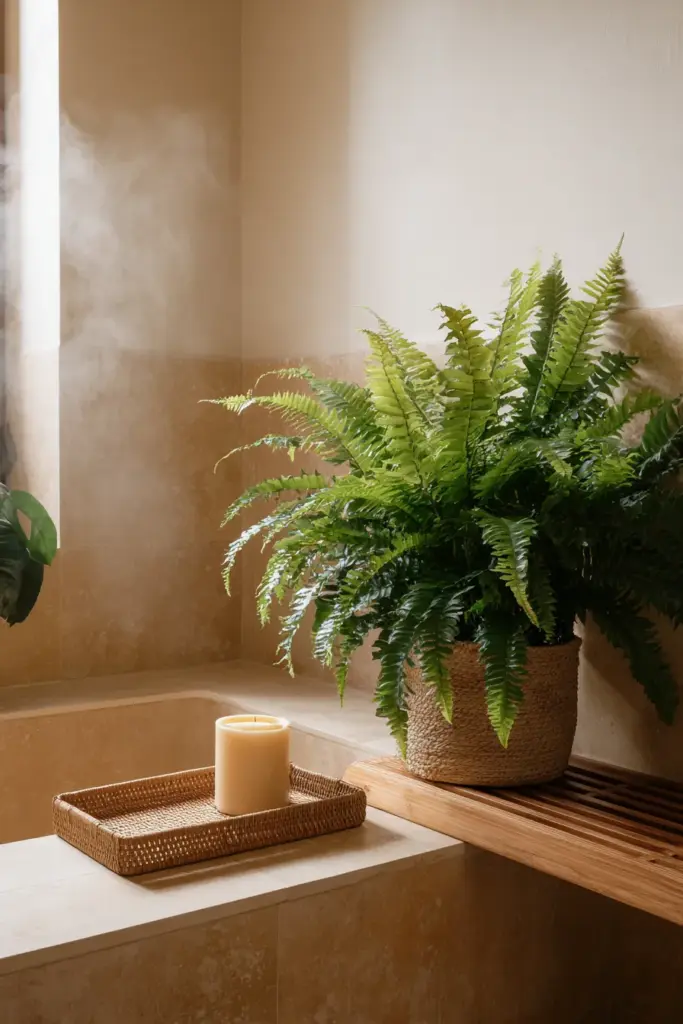
Boston Fern loves humidity and low light — it’s practically made for the bathroom shelf. It filters formaldehyde and xylene and brings a lush, spa-like softness that contrasts beautifully with clean tile and raw wood accents.
Peace Lily is another perfect choice. It thrives in shade and moisture, filters ammonia (common in cleaning products) and formaldehyde, and produces those quiet white blooms that feel almost meditative. Note: Peace Lily is toxic to pets, so keep it elevated if you have curious animals.
Style tip: Rest pots on a slice of light wood or a woven rattan tray to anchor them to the Japandi palette.
Home Office
A clear mind and clean air share more than metaphor.
The Rubber Plant makes a strong, architectural statement beside a desk — broad leaves, deep burgundy-green tones, and a proven ability to filter formaldehyde from the air. It pairs well with warm-toned wood desks and linen desk accessories.
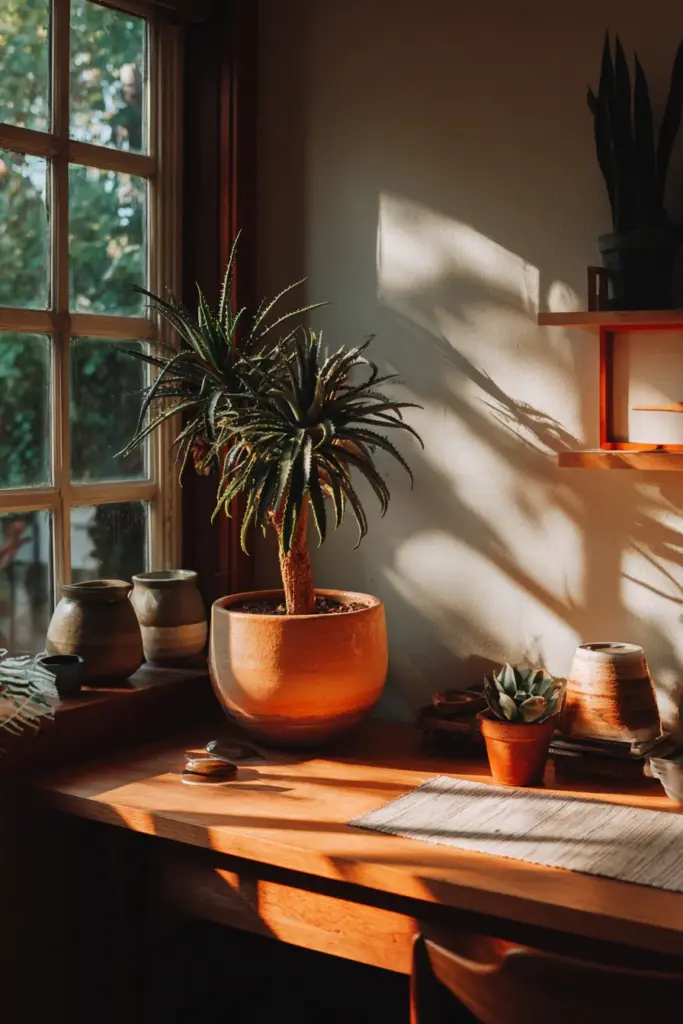
Add a small Aloe Vera on the windowsill. It’s functional (soothing gel for dry skin from too many keyboards), beautiful in its structural simplicity, and gently filters benzene and formaldehyde. A small Pilea on the desk corner adds a graphic, coin-shaped charm without demanding space.
Best Japandi Air Purifying Plants for Hot, Humid Climates
Most plant guides are written for temperate Western homes. If you’re styling a Japandi space in the Philippines or a similar hot-humid climate, the rules shift a little.
Snake Plant, ZZ Plant, and Pothos are your best friends — they tolerate heat and humidity without fuss. Boston Fern thrives beautifully in tropical settings, though it needs consistent moisture and indirect light to avoid browning.
Watch for overwatering in sealed, air-conditioned rooms — the biggest threat to Japandi plants in humid climates isn’t dryness, it’s root rot from stagnant moisture. Choose pots with drainage, and let the top inch of soil dry between waterings.
Parlor Palm is wonderfully suited to warm interiors — graceful, non-fussy, and deeply at home in a Japandi living room with rattan accents and warm-toned floors.
Avoid placing Ficus Benjamina near air conditioning vents; it dislikes drafts and temperature changes and will drop leaves in protest.
How to Style Japandi Air Purifying Plants Like a Designer
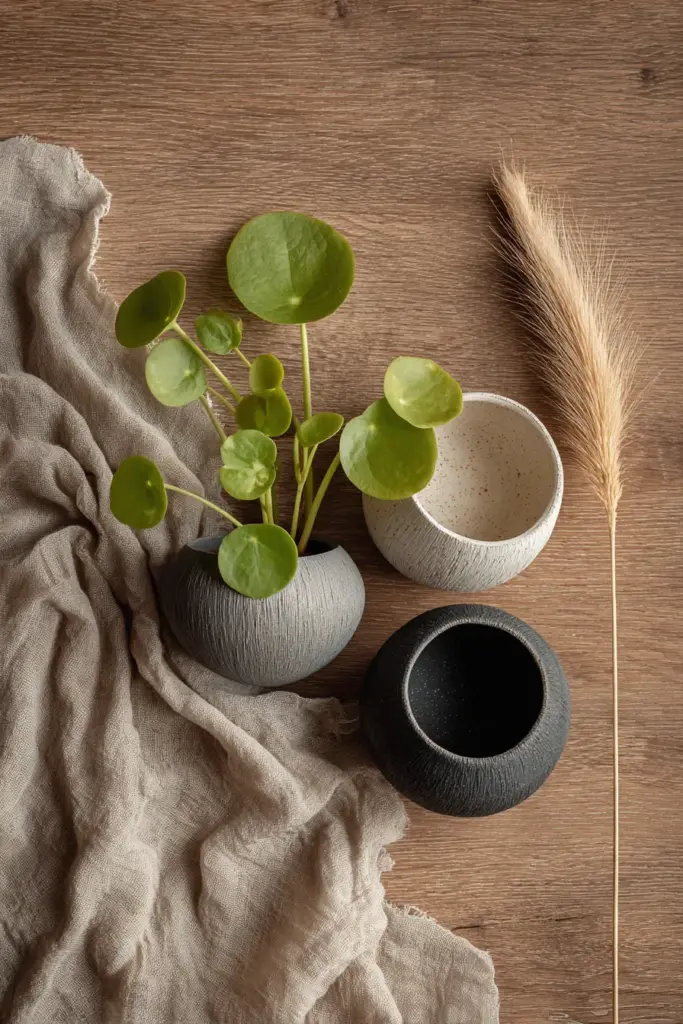
Choose the Right Pot
The pot is as important as the plant. In Japandi interiors, reach for:
- Matte ceramic in stone grey, warm white, or earthy terracotta
- Handthrown stoneware with visible texture — it carries the wabi-sabi spirit beautifully
- Dark charcoal or black pots for contrast against light walls and pale wood
Avoid bright colors, high-gloss finishes, or overly decorative patterns. The pot should recede slightly, letting the plant’s natural form take center stage.
Think in Heights and Asymmetry
Japandi is never perfectly symmetrical. One tall plant, one low plant, one trailing plant — that trio creates visual rhythm without rigidity.
Use plant stands in natural wood or blackened metal to vary heights on a shelf or in a corner grouping. The goal is curated, not crowded.
Lighting as a Design Partner
Position plants where natural light grazes their leaves — the way afternoon sun catches the texture of a snake plant is genuinely beautiful. For darker corners, warm-toned LED grow lights on a dimmer can double as ambient lighting, especially in a home office or reading nook. Explore our lighting ideas guide for pairing plant placement with intentional light design.
Japandi Air Care Tips: Keeping Your Plants (and Air) Healthy
Clean the leaves. Dust settles on broad-leafed plants like rubber plants and ZZ plants and reduces their ability to absorb light and filter air. Wipe them gently with a damp cloth every few weeks.
Rotate for airflow. Don’t cluster all your plants in one corner. Spread them through the room so air can circulate between them and the space breathes more evenly.
Open windows when possible. Plants are a complement to ventilation, not a replacement. A few minutes of cross-breeze each morning does more for air quality than a dozen pothos.
Pair with low-VOC choices. Natural fiber rugs, water-based paints, and solid wood cozy furniture reduce the toxins your plants need to work against. Give them an easier job.
3 Signs Your Japandi Plants Are Struggling
- Yellow leaves: Overwatering or insufficient light. Let the soil dry and find a brighter spot.
- White mold on soil: Poor drainage or overly humid conditions. Repot with fresh, well-draining mix.
- Leggy growth: Not enough light. Move closer to a natural light source or add a grow light.
The Japandi Wellness Checklist: Your Ideal Plant Collection
Build your Japandi air strategy around these four roles:
- 1 tall architectural plant for toxin removal and visual anchoring (Snake Plant, Rubber Plant, Dracaena)
- 1 humidity-loving plant for moisture balance (Boston Fern, Peace Lily, Parlor Palm)
- 1 sculptural focal plant for wabi-sabi character (Bonsai, ZZ Plant, Ficus Benjamina)
- 1 soft, cascading plant for texture and warmth (Pothos, Spider Plant)
Together, they work the room — visually and functionally. This is Japandi done right: intentional, layered, quietly alive.
Conclusion
There’s something deeply comforting about choosing a plant not just for how it looks, but for what it does. A snake plant standing in the corner of your Japandi living room isn’t just beautiful — it’s working. Breathing with you. Filtering the invisible, carrying the aesthetic.
This is what ERYLIN believes home design can be: purposeful beauty. Every choice earning its place. Every element giving something back.
Bring a little green into your Japandi space. Let it anchor a corner, soften a shelf, breathe life into a room that already knows how to be calm. The air will be cleaner. The space will feel warmer. And you’ll wonder how the room ever felt complete without it.
Explore more of our Japandi living room guides, flooring inspiration, and cozy furniture edits to keep building a home that holds you.
Frequently Asked Questions
What are the best Japandi houseplants?
The best Japandi houseplants combine minimalist form with easy care. Top choices include the Snake Plant, ZZ Plant, Rubber Plant, Pothos, and Parlor Palm — all of which have sculptural appeal, neutral tones, and fit beautifully into a Japandi palette of wood, stone, and linen.
Are Japandi air purifying plants enough for a small apartment?
Plants meaningfully support air quality, but they work best alongside good ventilation — open windows, airflow, and low-VOC materials. In a small apartment, aim for at least 2–3 air purifying plants per room, and supplement with occasional fresh air and a quality air purifier if needed.
Which Japandi plants are safe for pets?
Spider Plant, Boston Fern, Parlor Palm, Aloe Vera, and Pilea are generally considered pet-safe. Avoid Snake Plant, Peace Lily, ZZ Plant, Rubber Plant, and Dracaena if you have cats or dogs that like to nibble. Always verify with your vet for specific concerns.
How many air purifying plants do you need per room?
A general guideline is 1–2 plants per 10 square meters for a noticeable contribution to air quality. In a Japandi space, this aligns naturally with the aesthetic — enough to feel intentional, not so many that the room feels crowded.
Can you grow Japandi plants in low light?
Yes — several Japandi-friendly plants thrive in low light. Snake Plant, ZZ Plant, Pothos, Peace Lily, and Dracaena all perform well with minimal natural light, making them ideal for compact apartments or rooms with north-facing windows.
Which Japandi plants are best for bedrooms?
Choose non-scented, low-maintenance plants for the bedroom. The ZZ Plant and Pothos are top picks — calm, sculptural, effective, and content in lower light conditions. Avoid strongly fragrant plants near the sleeping area.