
Table of Contents
There is something quietly powerful about walking into a room where a single plant catches the morning light. No clutter. No noise. Just a living thing, breathing gently in a corner, softening every surface around it.
That feeling is Japandi — a design philosophy that marries Japanese wabi-sabi with Scandinavian hygge. It is the art of finding beauty in simplicity, warmth in restraint, and life in nature.
Plants are the heartbeat of this aesthetic. Chosen thoughtfully, they bring texture, oxygen, and soul into a home without demanding much in return. And when paired with natural light — even the soft, diffused kind streaming through sheer linen curtains — they complete a room in a way no accessory ever could.
Whether you live in a sun-drenched studio or a cozy apartment with north-facing windows, this guide will help you choose the right Japandi plants, style them with intention, and care for them through every season.
What Makes a Plant “Japandi”?
Not every plant belongs in a Japandi space. The philosophy is selective, almost meditative in its choices.
A true Japandi plant earns its place through sculptural silhouette, restrained color, and quiet resilience. Think bold, graphic leaves rather than delicate florals. Think deep greens, dusty grays, and muted variegation over bright tropical hues.
The best Japandi plants also share a practical quality: they do not demand constant attention. They thrive in the background, growing slowly, requiring little — a perfect metaphor for the lifestyle itself.
The Three Pillars of Japandi Plant Design
Form. The plant’s shape should feel intentional. A snake plant rising like a brushstroke. A ZZ plant arching with architectural confidence. A fiddle leaf fig commanding the corner of a room.
Restraint. One or two well-placed plants speak louder than a dozen crammed together. Negative space — the deliberate emptiness around a plant — is as important as the plant itself.
Harmony. The pot, the surface, the wall color, the light — everything should feel like it belongs together. Neutral ceramic. Raw terracotta. Woven rattan. These materials ground a plant in its environment.
Best Japandi Plants for Natural and Low Natural Light
Statement Plants for Bright Indirect Light
These plants love the soft, filtered glow that pours through sheer curtains or bounces off light walls. They do not want direct sun — just that warm, golden diffusion that makes a room feel alive.
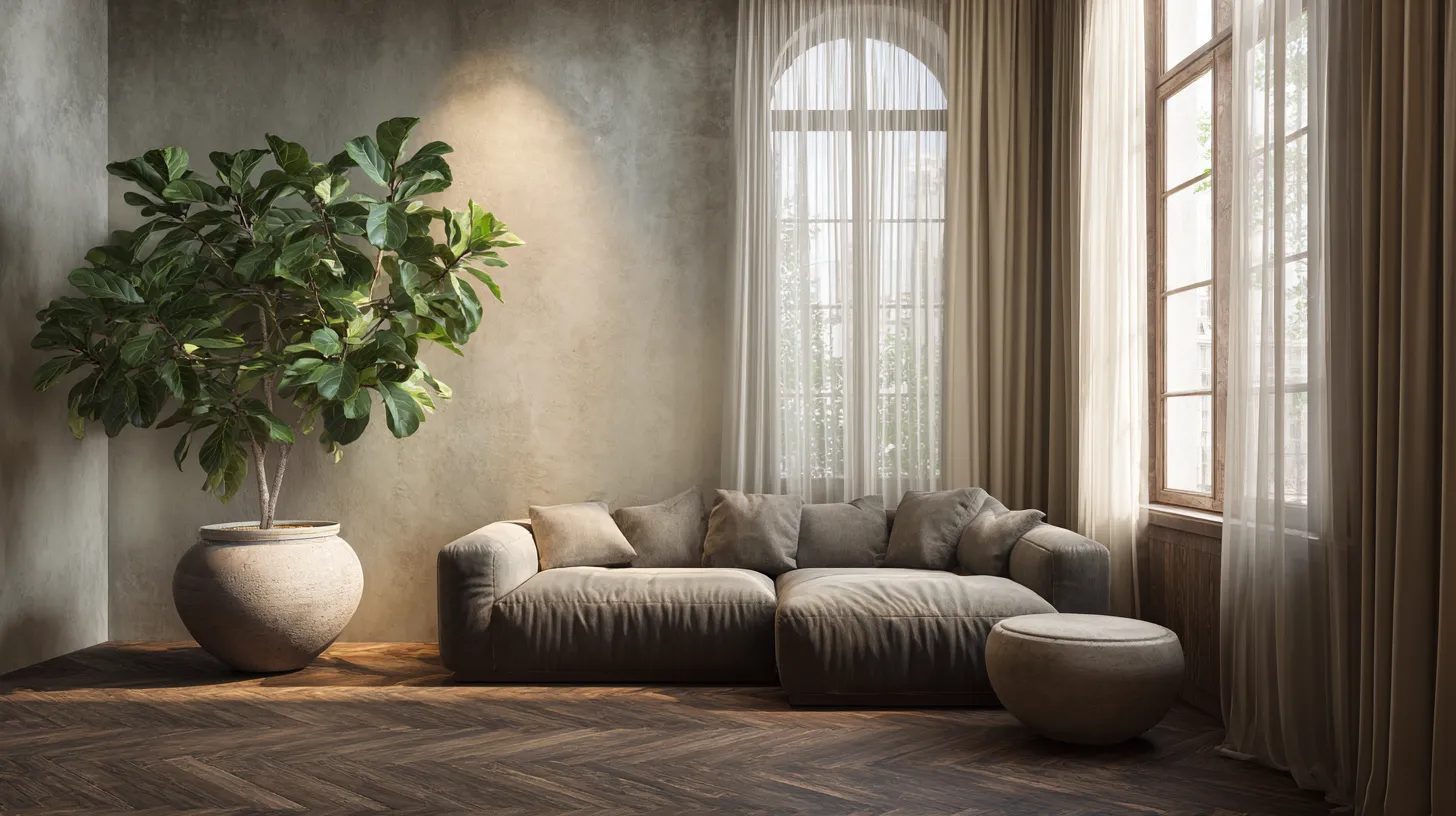
Fiddle Leaf Fig (Ficus lyrata)
Few plants carry a room the way a fiddle leaf fig does. Its large, deeply veined leaves are almost theatrical — bold enough to anchor a corner, sculptural enough to stand alone.
Place it near an east- or west-facing window where light falls gently across its leaves. It rewards consistency: keep it in one spot, water it when the top inch of soil dries out, and it will reward you with steady, graceful growth.
Rubber Plant (Ficus elastica)
The rubber plant’s glossy, dark leaves absorb light and reflect it back with a quiet shine. It looks expensive in the best possible way — particularly in a sleek matte pot of slate gray or warm cream.
It tolerates bright indirect light beautifully and forgives occasional neglect. Wipe its leaves with a damp cloth every few weeks to keep them gleaming and dust-free.
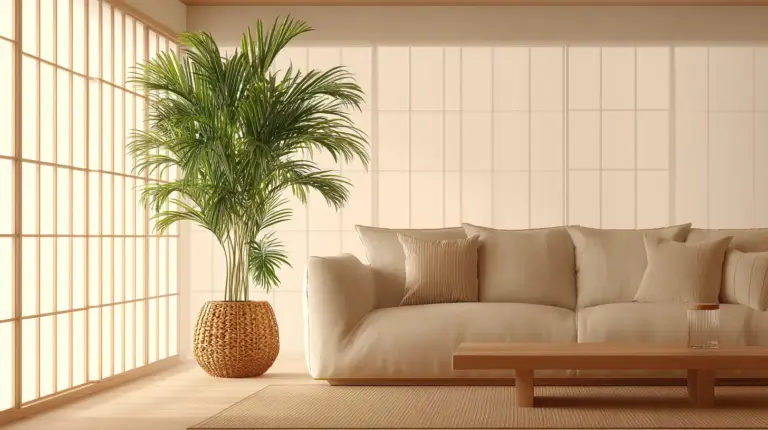
Parlor Palm (Chamaedorea elegans)
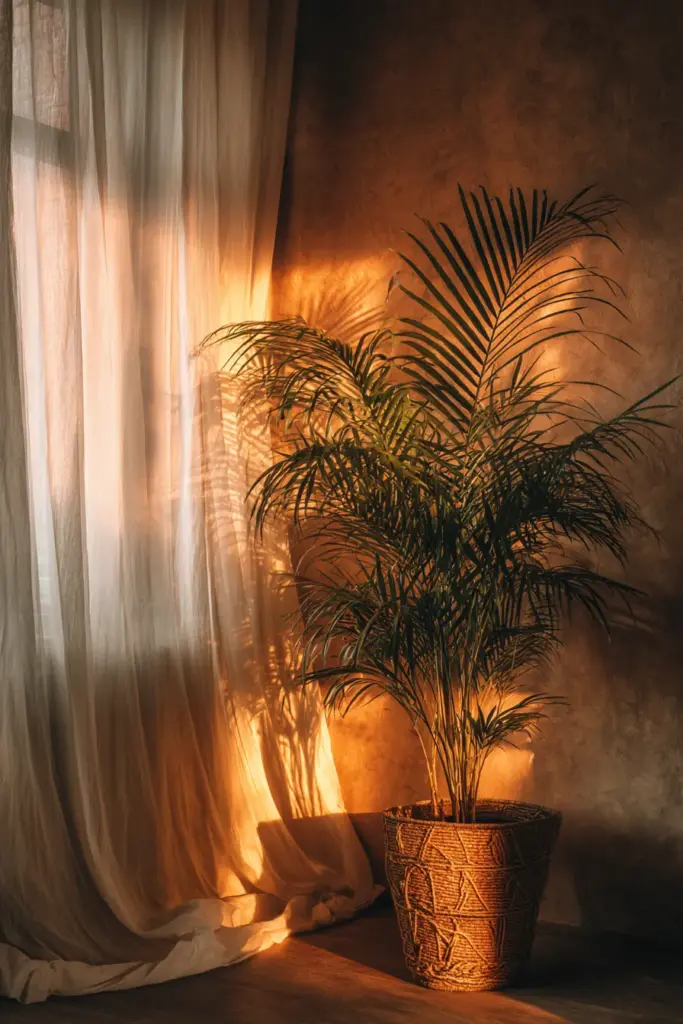
The parlor palm brings softness to a Japandi space — its feathery fronds creating gentle movement and texture without drama. Near a sheer linen curtain, it catches diffused light like watercolor.
It thrives in low to medium indirect light, making it ideal for living rooms and bedrooms where direct sun rarely enters. It also appreciates humidity, so grouping it near other plants or placing a pebble tray beneath its pot helps immensely.
Low-Light Champions for Shaded Corners
Not every room is bathed in light. In humid tropical homes — or in apartments with small or north-facing windows — these plants are your most reliable companions.
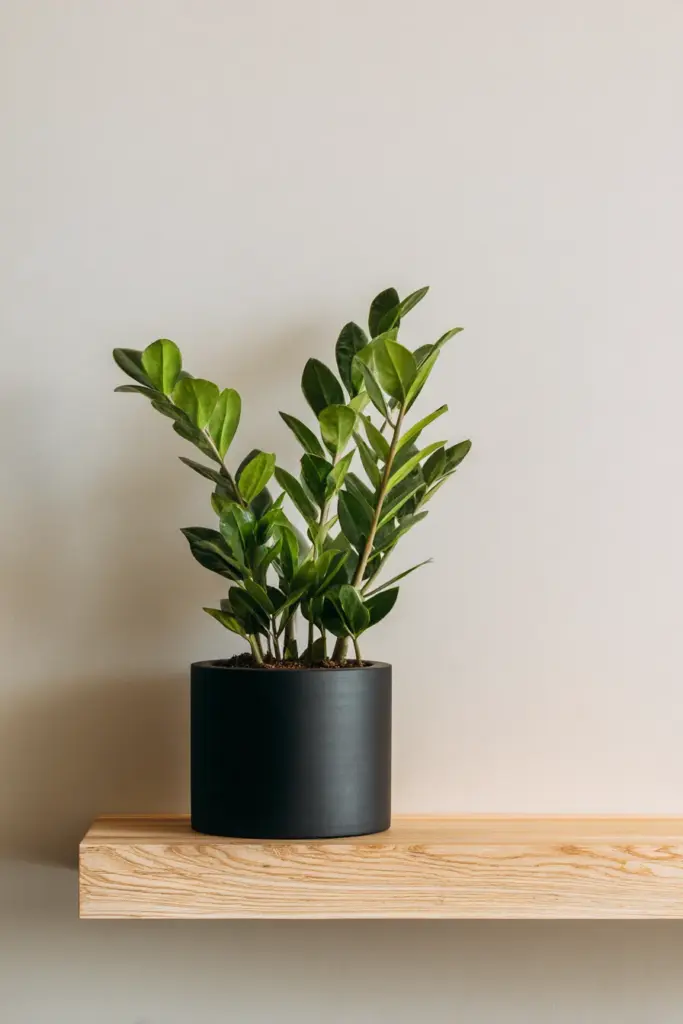
ZZ Plant (Zamioculcas zamiifolia)
The ZZ plant is practically indestructible. Its waxy, dark green leaves catch even the dimmest light and reflect it back with a quiet gleam. It thrives on neglect, surviving weeks without water, making it ideal for busy households.
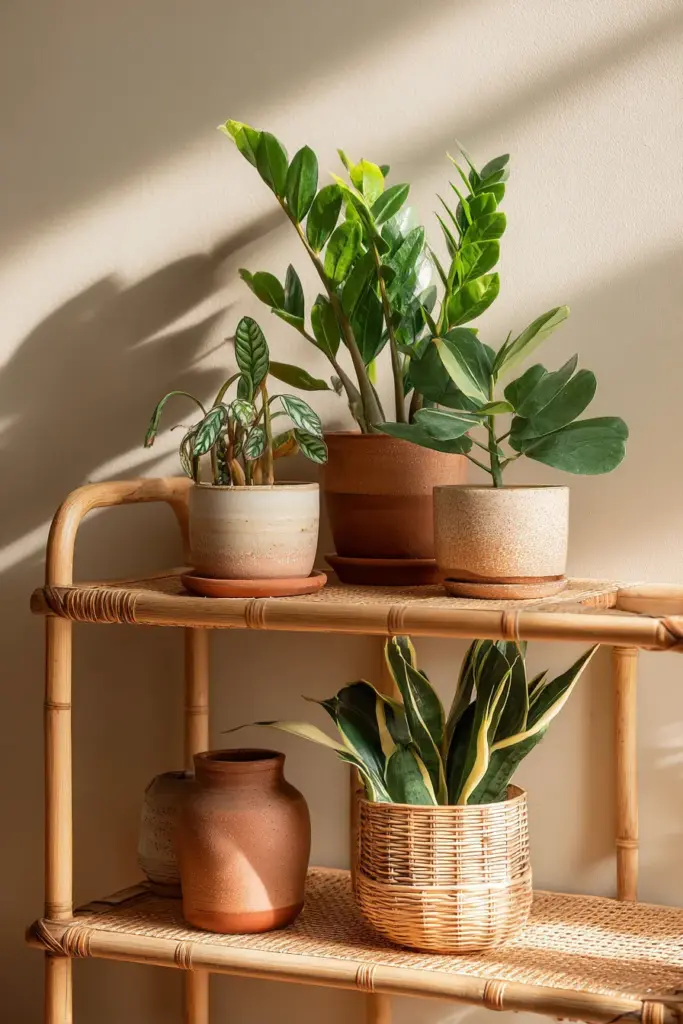
In a Japandi setting, pot it in a tall cylindrical vessel of matte black or off-white. Let it stand alone on a bare shelf. Let the negative space around it do the work.
Snake Plant (Sansevieria trifasciata)
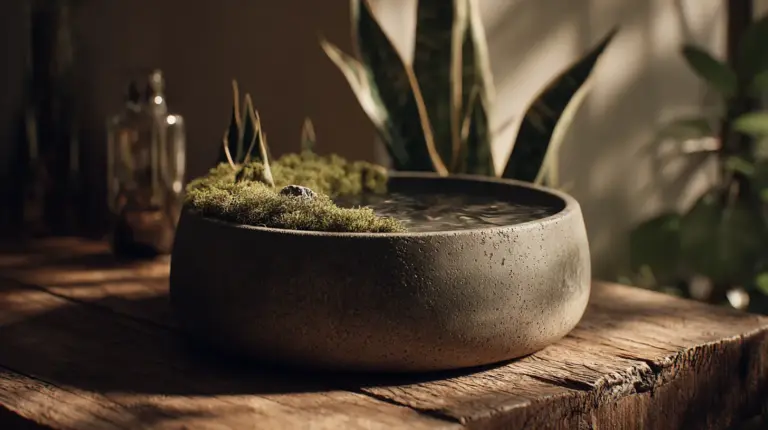
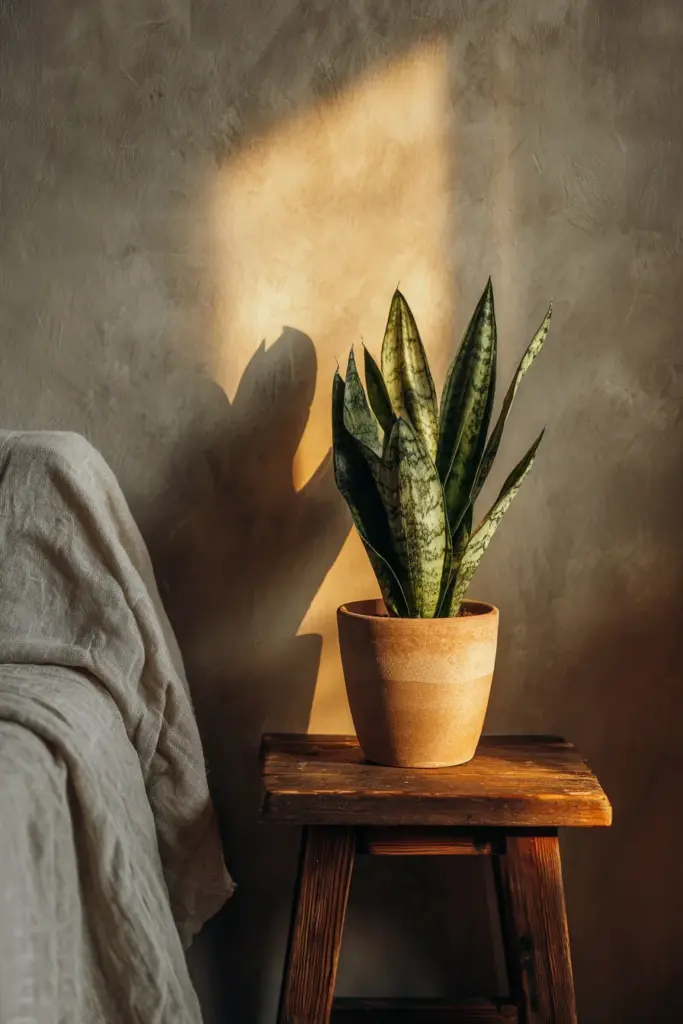
Clean lines. Upright posture. Striking variegation. The snake plant is perhaps the most Japandi plant that exists — it looks like it was designed by a minimalist architect.
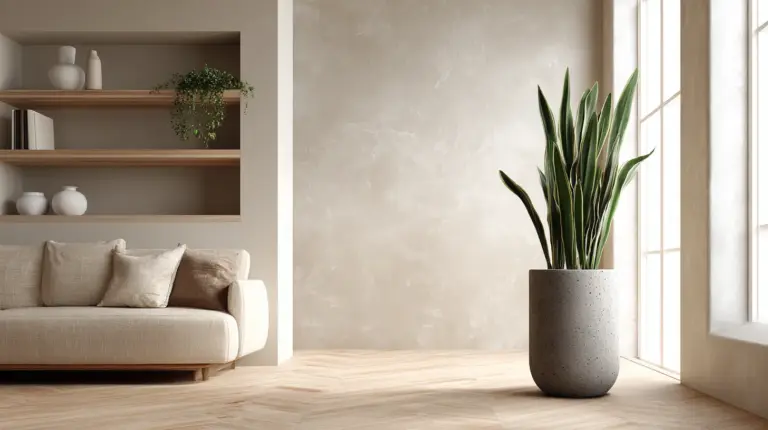
It purifies the air, tolerates low light, and asks very little of its caretaker. A single snake plant in a slim stone pot near a dim hallway transforms a forgotten corner into something intentional.
Cast Iron Plant (Aspidistra elatior)
True to its name, the cast iron plant endures. Deep shade, irregular watering, imperfect soil — it handles all of it with grace. Its long, arching leaves carry a deep, matte green that feels grounded and earthy.
It is particularly beautiful in a wabi-sabi setting: a slightly asymmetrical pot, a worn wooden surface, a single stem left to grow outward at its own angle.
Peace Lily (Spathiphyllum)
The peace lily is the one flowering exception in a Japandi space. Its white spathes — simple, unfussy, elegant — bloom in even the lowest light, offering a moment of quiet ceremony.
It also tells you when it needs water by drooping slightly, then perking back up within hours of a good drink. It is communicative in the gentlest way.
Light Level Plant Guide
| Plant | Light Needs | Water Frequency | Best Placement |
|---|---|---|---|
| Fiddle Leaf Fig | Bright indirect | Every 7–10 days | Near east/west window |
| Rubber Plant | Medium to bright indirect | Every 7–14 days | Living room corner |
| Parlor Palm | Low to medium indirect | Every 7–10 days | Bedroom, shaded nook |
| ZZ Plant | Low to medium indirect | Every 14–21 days | Shelf, hallway |
| Snake Plant | Low to bright indirect | Every 14–28 days | Bedroom, bathroom |
| Cast Iron Plant | Deep shade to low light | Every 14–21 days | Dark corners, entryways |
| Peace Lily | Low to medium indirect | Every 7 days | Any low-light room |
| Bird’s Nest Fern | Medium indirect, high humidity | Every 5–7 days | Bathroom, kitchen |
Styling Japandi Plants with Natural Light
The Art of Placement
In Japandi design, where a plant lives is as considered as which plant you choose. Placement is intentional — never decorative for its own sake.
The rule of negative space: Allow at least twice the plant’s width of empty space around it. A ZZ plant on a shelf should have room to breathe on either side. That emptiness is not wasted — it is the frame that makes the plant visible.
Distance from windows: For low-light plants, 3–6 feet from a north or east window provides enough ambient glow without harsh rays. For plants that love bright indirect light, 1–3 feet from a sheer-curtained window strikes the balance.
The corner anchor: A tall snake plant or fiddle leaf fig placed in the corner where two walls meet creates a visual anchor point. It grounds the room without crowding it.
Pots and Vessels That Speak Japandi
The pot is part of the plant’s identity in this aesthetic. It should feel like it grew alongside the plant — not purchased as an afterthought.
Materials to reach for: Matte ceramic in warm whites, grays, or blush tones. Unglazed terracotta with its rough, earthy texture. Woven rattan baskets — particularly striking with trailing plants or palms. In the Philippines, locally sourced bamboo pots or upcycled coconut shell vessels add beautiful regional authenticity for under ₱200, and align perfectly with Japandi’s sustainability ethic.
What to avoid: Anything plastic, glossy, brightly colored, or patterned. The vessel should recede, allowing the plant to speak.
Layering Natural and Artificial Light
In tropical climates like the Philippines, evenings arrive early and natural light fades fast. This is where layered lighting becomes essential.
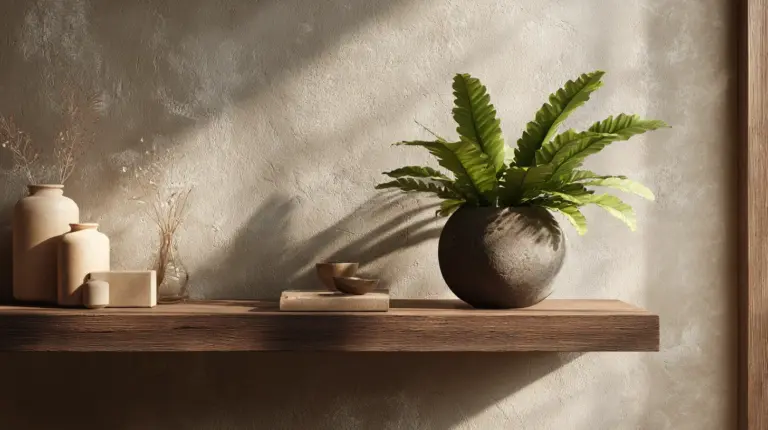
Place a parlor palm or bird’s nest fern near your sheer curtains during the day to catch diffused afternoon light. In the evening, position a warm-toned LED floor lamp behind the plant — the glow through the fronds creates a living, breathing shadow play on the wall.
String lights wound loosely around the base of a tall plant add warmth without weight. The key is always warm color temperatures — 2700K to 3000K — which mirror the quality of golden-hour light and feel completely at home in a Japandi space.
Caring for Japandi Plants in Tropical Climates
Humidity and the Philippine Home
Most Japandi plants were designed — by nature — for temperate or subtropical environments. But in a warm, humid tropical home, many of them actually thrive more readily than they might in dry Western climates.
Humidity-loving plants like Bird’s Nest Fern (Asplenium nidus) and Calathea prefer 60–80% relative humidity — a range that is simply the natural state of indoor air in the Philippines, especially during the rainy season. No humidifiers needed.
For plants that prefer slightly drier conditions, like the ZZ plant or snake plant, good drainage and terracotta pots help prevent root rot during the wet months.
Grouping plants together — even just two or three — raises the local humidity around them through transpiration. It is a beautiful, functional arrangement that also creates a sense of considered abundance.
Monsoon Season Care
The rainy season in the Philippines brings generous moisture but also low light. During this period, water your indoor plants less frequently — the high humidity means soil dries more slowly.
Watch for fungal issues on plants with broad, flat leaves like the rubber plant or fiddle leaf fig. Wipe leaves gently with a dry cloth after particularly humid nights and ensure good air circulation around each plant.
Dry Season Care
When the dry season arrives and air conditioning runs continuously, humidity drops sharply. Place pebble trays filled with water beneath your more sensitive plants — parlor palms, bird’s nest ferns, and calatheas — to maintain local moisture.
Increase watering slightly for thirsty plants, but always check the soil first. The finger test — press one inch into the soil; if it is dry, water — remains the most reliable guide.
Sustainable and Budget-Friendly Tips
Japandi’s philosophy is inherently sustainable. Here are some ways to live that value in your plant practice:
- Propagate rather than buy. Rubber plants and Pilea (Pilea peperomioides) propagate easily from stem or leaf cuttings. Local markets in the Philippines, including Divisoria, carry these at a fraction of nursery prices.
- Upcycle vessels. Coconut shells, bamboo segments, and repurposed ceramic mugs make beautiful, characterful pots.
- Snake plants absorb approximately 0.5kg of CO₂ per year — a small but meaningful contribution to indoor air quality.
- Rattan and recycled ceramic pots carry a significantly lower carbon footprint than plastic containers and age beautifully over time.
Quick Takeaways
- Choose plants with sculptural, graphic leaves — snake plants, ZZ plants, rubber plants, fiddle leaf figs
- Honor negative space: allow twice the plant’s width of empty space around it
- In low-light rooms, reach for ZZ plant, cast iron plant, snake plant, and peace lily
- In bright indirect light, fiddle leaf fig, rubber plant, and parlor palm thrive
- Use matte ceramic, terracotta, or rattan pots in neutral tones
- In tropical climates, humidity-loving plants like bird’s nest fern and calathea need little extra care
- Layer natural and warm LED light to extend the beauty of your plants into the evening
- Propagate and upcycle to keep your practice sustainable and budget-conscious
- Water less during monsoon season, add pebble trays during dry season air conditioning
- One well-placed plant, given room to breathe, always outperforms a dozen crowded together
A Closing Thought
There is no rigid formula to Japandi. It is a feeling — of coming home to a space that is quiet, alive, and completely itself.
A single snake plant in a worn terracotta pot by a north-facing window. Morning light falling across its striped leaves. A cup of something warm in your hands.
That is enough. That is everything.
Let your plants be slow. Let your space breathe. And trust that the most beautiful rooms are the ones that know when to stop.
At ERYLIN, we believe a home is not finished — it is lived in, slowly and with intention.
Frequently Asked Questions
What plants thrive in low natural light for Japandi style?
The ZZ plant, snake plant, cast iron plant, and peace lily are the most reliable choices for low-light Japandi interiors. They tolerate indirect, ambient, or filtered light without losing their sculptural form, and all require minimal watering — ideal for both beginners and busy households.
Which indoor plants fit Japandi aesthetics best?
Plants with bold, architectural leaves work best in Japandi spaces. The fiddle leaf fig, rubber plant, parlor palm, and snake plant each carry a visual presence that feels deliberate and grounded. Avoid plants with small, fussy, or highly colorful foliage — simplicity is the guiding principle.
How do I style plants in a Japandi living room with natural light?
Place plants near sheer curtains where light diffuses softly rather than entering directly. Use the rule of negative space — allow the area around each plant to remain clear and uncluttered. Choose neutral matte pots, and limit yourself to one or two statement plants per room rather than filling every surface.
Are there good Japandi plants for humid tropical homes like in the Philippines?
Yes — many Japandi plants actually thrive in the Philippines’ naturally humid climate. Bird’s nest fern and calathea love the 60–80% humidity common in tropical homes. ZZ plants and snake plants handle the warmth easily. During dry season, place pebble trays with water beneath more sensitive plants to compensate for air conditioning.
What are the best Japandi plants for small apartments or rentals?
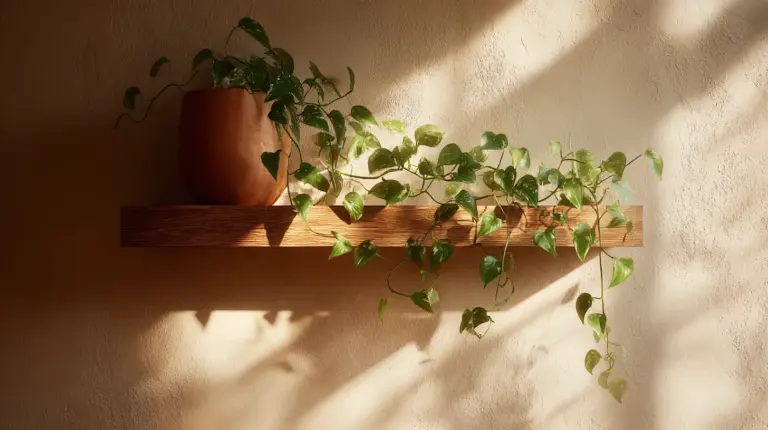
For small spaces, prioritize vertical plants like the snake plant or a single tall fiddle leaf fig that draws the eye upward without consuming floor space. Trailing pothos on a high shelf adds softness without clutter. The key is one statement plant per zone, chosen for its form, given room to breathe.