
Table of Contents
There is a particular kind of quiet that settles into a room dressed with greenery. Not silence, exactly — more like a held breath. The kind you feel when morning light filters through a frond and casts its lace-like shadow across a pale linen wall.
That is the feeling Japandi design chases. And ferns — soft, ancient, endlessly graceful — are one of the most beautiful ways to bring it home.
Japandi is the union of Japanese wabi-sabi and Scandinavian hygge, two philosophies that share a deep love for imperfect beauty, natural materials, and the warmth of an uncluttered space. Ferns fit this world not just aesthetically, but spiritually. They have been growing on this earth for over 360 million years. They do not ask for much. They simply are.
In this guide, we explore the best ferns for Japandi interiors, how to style them with intention, and how to care for them — especially in the warm, humid climate of the Philippines. Whether you are in a sun-drenched home in Silang or a cozy apartment in the city, there is a fern here for you.
Why Ferns Belong in a Japandi Home
Japandi interiors are defined by restraint. Every object earns its place. Every texture tells a story.
Ferns earn their place beautifully. Their fronds bring organic movement to still spaces — a counterpoint to the clean lines of low furniture and raw wood shelving. They soften corners without cluttering them. They breathe life into rooms that might otherwise feel spare.
The Biophilic Case for Ferns
Beyond beauty, ferns carry real, measurable benefits. Many varieties act as natural air purifiers, absorbing formaldehyde and other household pollutants. Their transpiration process gently humidifies the air — a quiet gift in any home.
Studies in biophilic design show that indoor plants reduce stress and increase focus. In a Japandi space — already designed to calm the nervous system — a well-placed fern deepens that effect. It is not just décor. It is wellbeing, rooted.
Ferns as Sculptural Elements
In Japandi styling, plants are not accessories. They are architecture.
The right fern placed in the right spot functions like a piece of living sculpture — drawing the eye, filling negative space, and anchoring a vignette. Choose a fern with interesting form: one with sweeping arched fronds, a bold rosette shape, or fine, thread-like leaves. Let it be the statement. Let everything around it breathe.
The Best Ferns for Japandi Interiors
Not every fern belongs in a Japandi room. The aesthetic calls for plants with presence — structural, calm, and unfussy. Here are the varieties that speak the language of this design world most fluently.
Bird’s Nest Fern (Asplenium nidus)
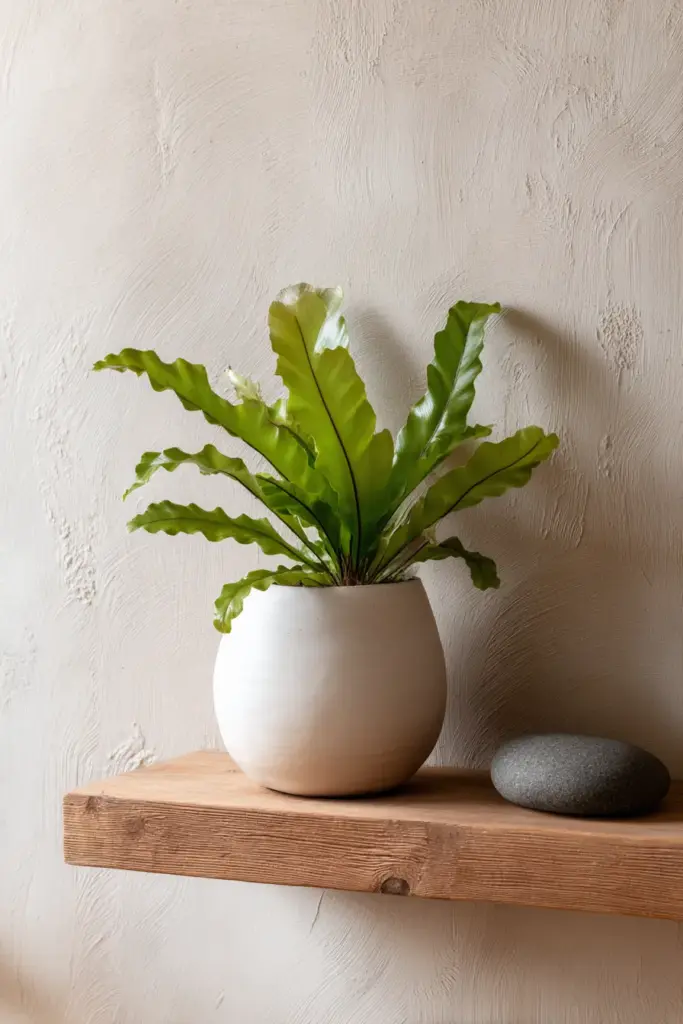
If there is one fern made for Japandi shelving, it is the Bird’s Nest Fern.
Its broad, glossy fronds unfurl from a central rosette in a way that feels both organic and architectural. No wild sprawl here — just clean, confident form. Place it on a low walnut shelf, a concrete plinth, or a woven rattan stand, and watch it transform the corner into a vignette.
It thrives in indirect light and loves humidity, making it a natural fit for Philippine homes. In Calabarzon’s warm, moisture-rich air, this fern practically flourishes on its own.
Care tips:
- Light: Bright to medium indirect light
- Water: Keep the soil consistently moist; never let it dry out completely
- Humidity: High — bathrooms and kitchens are ideal
- Pot: A matte ceramic in warm white, clay beige, or charcoal
Asparagus Fern (Asparagus setaceus)
The Asparagus Fern is the poet of the fern world — delicate, feathery, and impossibly fine.
Its soft, needle-like fronds cascade in layers that catch light like a watercolor wash. In a Japandi space, it brings movement — a gentle contrast to the solidity of linen, stone, and reclaimed wood. Hang it in a macramé planter by a window or let it trail from a high shelf above a reading nook.
Despite its delicate appearance, this fern is surprisingly resilient. It handles slightly drier conditions than most ferns, making it forgiving for those newer to plant care.
Care tips:
- Light: Bright indirect light; tolerates some direct morning sun
- Water: Allow the top inch of soil to dry between waterings
- Humidity: Moderate to high
- Pot: A hanging ceramic or woven basket in neutral tones
Japanese Painted Fern (Athyrium niponicum)
Named for its homeland, the Japanese Painted Fern feels like it was designed for this aesthetic.
Its fronds are silvery-green with hints of burgundy and purple — subtle, painterly, and quietly extraordinary. Against a background of raw wood or light-toned plaster, it reads like a brushstroke. Pair it with darker moss and smooth river stones for a grounded, earthy composition.
This fern prefers cooler, shadier spots — perfect for a dimly lit entry hallway or a shaded corner in a reading room.
Care tips:
- Light: Low to medium indirect light
- Water: Consistent moisture; do not allow to dry out
- Humidity: High
- Pot: A shallow stoneware dish or tall, slim ceramic cylinder
Kimberly Queen Fern (Nephrolepis obliterata)
For those who want presence without fuss, the Kimberly Queen delivers.
Its upright, sword-shaped fronds stand tall and symmetrical — more structured than the classic Boston Fern, and far tidier. It does not shed. It does not droop dramatically when thirsty. It simply stands, composed and beautiful, like a well-dressed guest who never overstays.
This fern works beautifully flanking an entryway, framing a sofa, or anchoring a floor arrangement beside a daybed.
Care tips:
- Light: Bright indirect light; some morning sun is welcome
- Water: Regular watering; allow top soil to dry slightly between
- Humidity: Moderate to high — adapts well to Philippine climates
- Pot: A tall matte pot in terracotta, sage, or warm stone
Maidenhair Fern (Adiantum)
The Maidenhair Fern is the most poetic choice — and the most demanding.
Its tiny, fan-shaped leaflets tremble on dark, wiry stems with a kind of quiet theatricality. In a Japandi room, it adds softness and movement in a way no other plant quite replicates. It is the fern equivalent of a silk pillow on a linen sofa.
Be prepared to give it attention. It wants humidity, consistent moisture, and protection from drafts. But for those willing to nurture it, the reward is a plant of genuine, arresting beauty.
Care tips:
- Light: Bright, diffused indirect light — never harsh direct sun
- Water: Keep consistently moist; never allow to dry out
- Humidity: Very high — a pebble tray with water works beautifully
- Pot: A small, elegant ceramic in white, slate, or aged bronze
Fern Comparison at a Glance
| Fern Variety | Light Needs | Humidity | Maintenance | Best Placement |
|---|---|---|---|---|
| Bird’s Nest Fern | Medium indirect | High | Low | Shelves, tabletops |
| Asparagus Fern | Bright indirect | Moderate–High | Low | Hanging, high shelves |
| Japanese Painted Fern | Low–Medium | High | Moderate | Dim corners, entries |
| Kimberly Queen Fern | Bright indirect | Moderate–High | Low | Floor, entryways |
| Maidenhair Fern | Bright diffused | Very high | High | Humid rooms, bathrooms |
How to Style Japandi Ferns in Your Home
Knowing which fern to choose is only half the story. The other half is placement — and in Japandi design, placement is everything.
Choosing the Right Pot
The pot is not a supporting character. It is part of the composition.
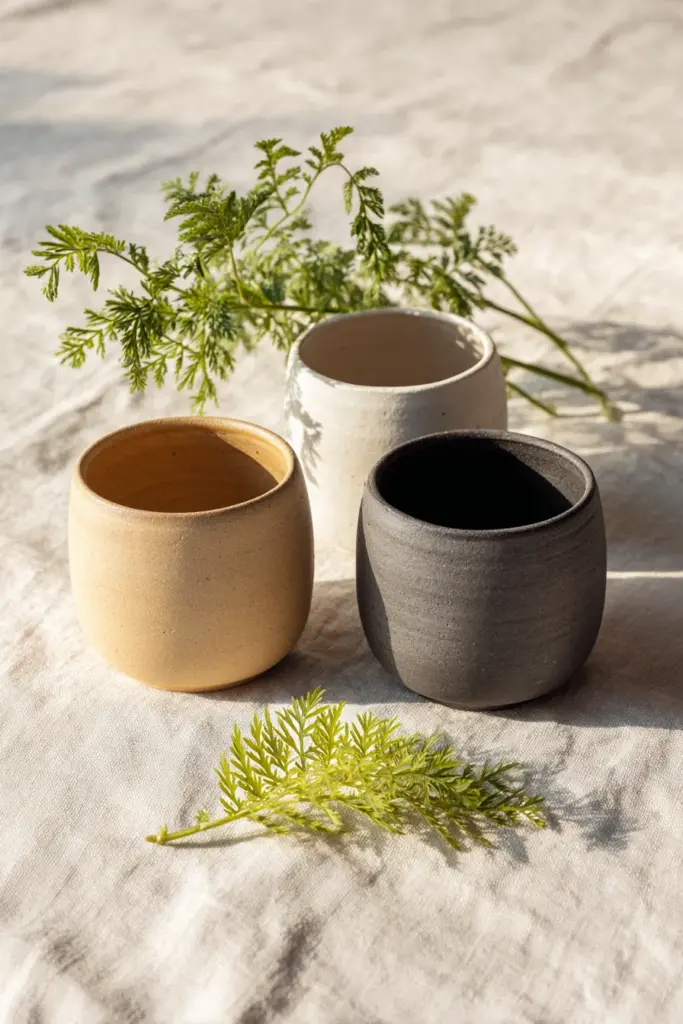
For Japandi styling, reach for handmade ceramics in matte finishes — warm whites, soft greys, clay beiges, and earthy terracottas. Avoid anything glossy or ornate. The pot should let the plant lead. Look for slight irregularities: a thumbprint in the clay, a slightly uneven rim. That imperfection is wabi-sabi in its purest form.
Creating a Japandi Plant Vignette
A vignette is a small, curated scene — and ferns anchor them beautifully.
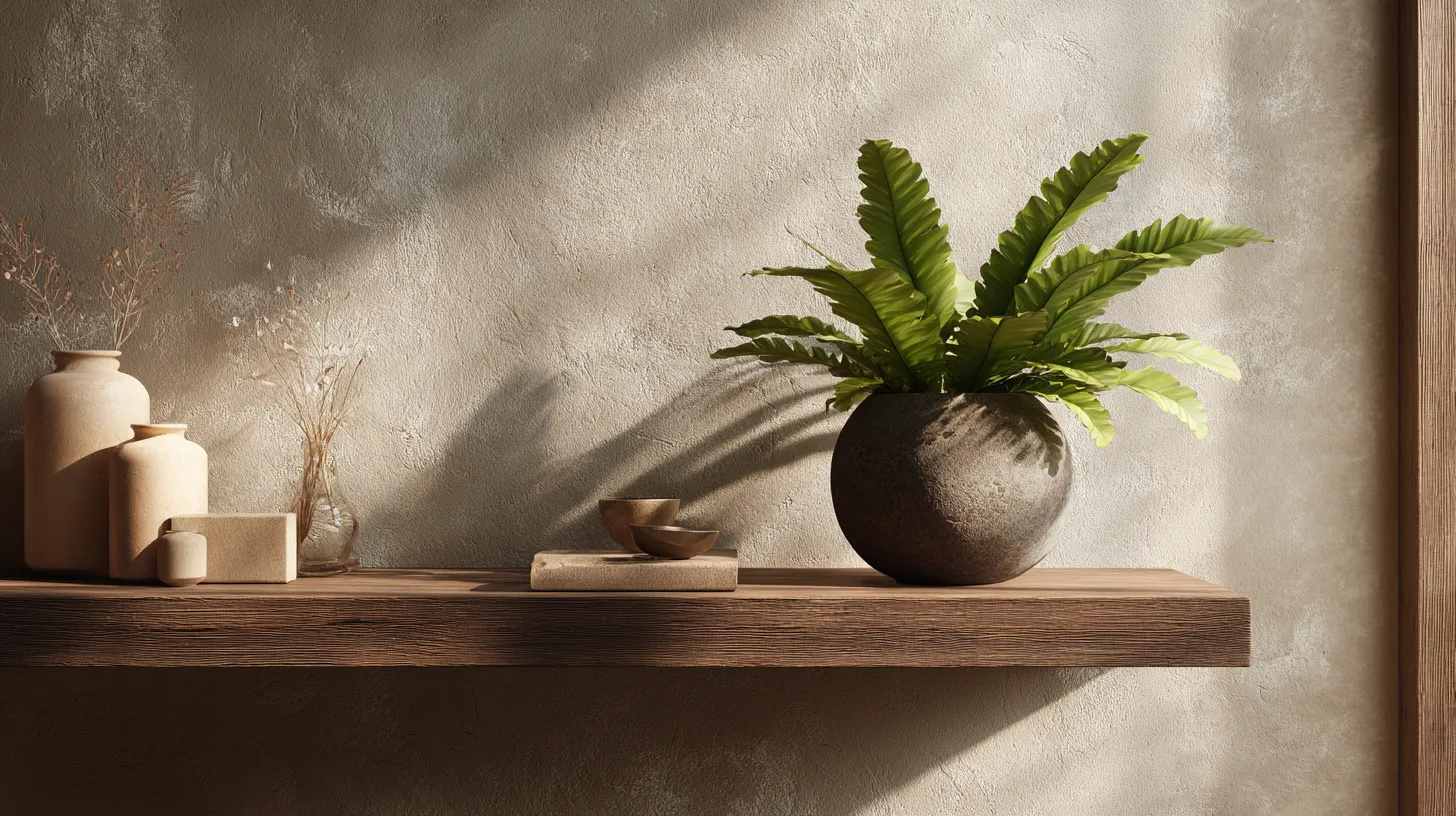
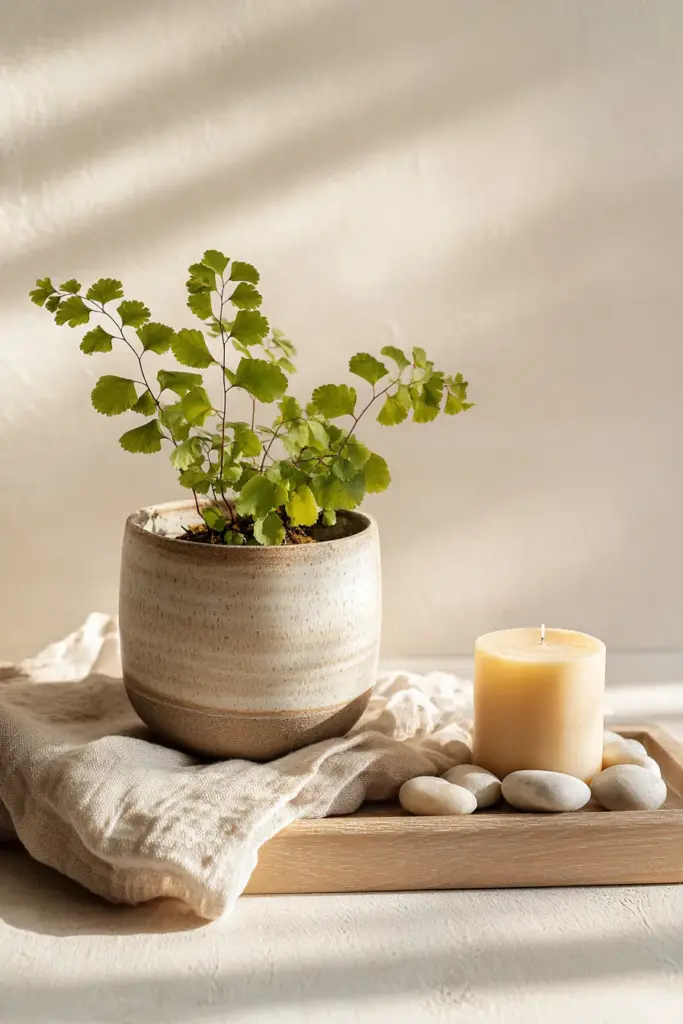
Try pairing a Bird’s Nest Fern with a smooth river stone, a tiny clay vessel, and a folded linen cloth on a low wooden shelf. Or place a Kimberly Queen Fern beside a tall beeswax candle and a single ceramic bowl. Let there be space between objects. In Japandi design, what you leave out matters as much as what you put in.
Ferns and Lighting
Ferns respond to light the way linen responds to breeze — with gentle, visible movement.
Position your ferns where they catch soft, diffused natural light. A north-facing window, a spot beside a sheer curtain, or a corner that receives reflected light from a pale wall — these are ideal. For rooms with lower natural light, consider a simple, warm-toned grow light that blends into the aesthetic rather than disrupting it.
Small-Space Japandi Fern Styling
You do not need a large home to create a serene, fern-filled space.
A single Bird’s Nest Fern on a floating shelf transforms a blank wall. A trailing Asparagus Fern in a corner nook softens what would otherwise be a hard, forgotten edge. In small Philippine apartments and townhouses, ferns are some of the most powerful design tools available — they take up little floor space but contribute enormous visual warmth.
Caring for Japandi Ferns in the Philippine Climate
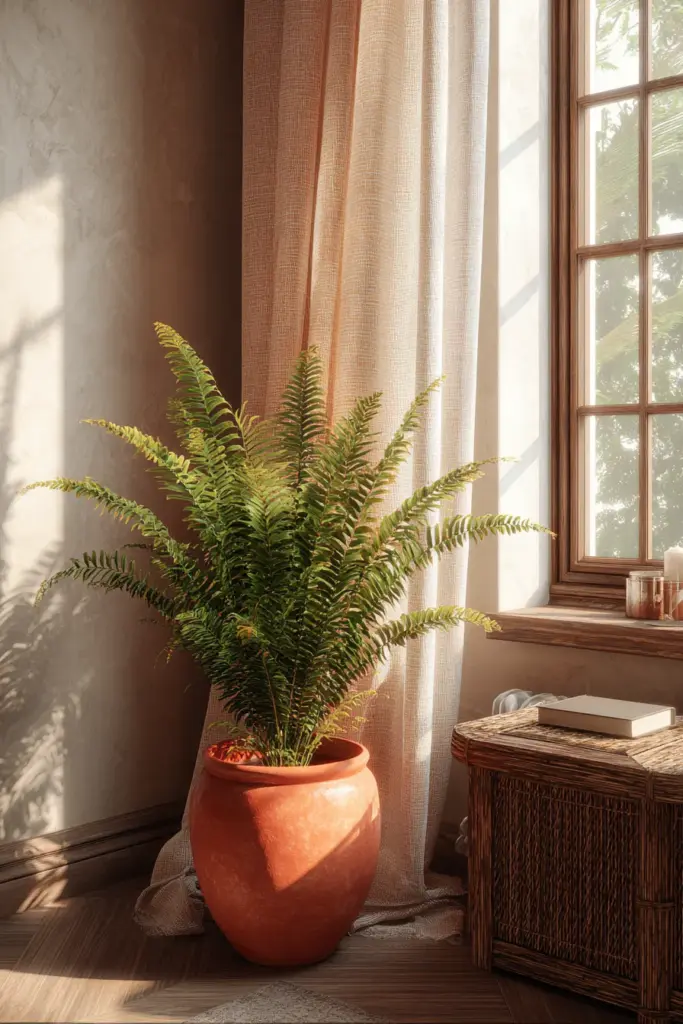
The Philippines is, in many ways, a fern’s paradise. Our warm temperatures, high humidity, and rich soil create natural growing conditions that most ferns adore.
Watering Wisdom
The most common mistake with ferns is inconsistency — either too much water at once or long periods of neglect.
For most varieties, aim for consistently moist (not soggy) soil. In the dry season, water more frequently and consider misting the fronds lightly in the morning. During wetter months, ease back slightly and ensure your pots have proper drainage. A cozy furniture setup matters here too — avoid placing ferns directly on sealed floors without a drainage saucer.
Humidity Hacks
Even in a humid country like the Philippines, air conditioning can dry out your indoor air significantly.
Group your ferns together — plants naturally release moisture and raise the humidity around them. Place pots on a tray filled with pebbles and a shallow layer of water. Or keep your ferns in naturally humid rooms: bathrooms, kitchens, and laundry areas near windows are all excellent.
Seasonal Care Calendar
| Season | Focus | Key Actions |
|---|---|---|
| Dry Season (Mar–May) | Hydration | Water more frequently; mist fronds; move away from AC vents |
| Wet Season (Jun–Oct) | Drainage | Reduce watering; check for overwatering; improve airflow |
| Cool–Ber Months (Nov–Feb) | Maintenance | Trim dead fronds; repot if root-bound; fertilise lightly |
Pet and Child Safety
This is a question worth answering directly: most common Japandi ferns are non-toxic.
Bird’s Nest Ferns, Japanese Painted Ferns, and Kimberly Queen Ferns are considered safe for cats, dogs, and children. The Asparagus Fern is the exception — its berries can cause mild stomach upset if ingested, so place it out of reach of curious pets and little hands. When in doubt, always verify with your veterinarian or paediatrician before introducing a new plant to your home.
Sourcing Ferns in the Philippines
You do not need to travel far to find beautiful, healthy ferns for your Japandi home.
Local nurseries in Cavite, Laguna, and Batangas carry a wonderful range of fern varieties, especially during the wetter months. Weekend plant markets in Tagaytay and Santa Rosa are also excellent sources — and you will often find locally thrown ceramic pots that pair beautifully with the Japandi aesthetic. For rarer varieties like the Japanese Painted Fern, check specialty online plant shops that ship nationwide.
When buying, choose plants with deep green colour, firm fronds, and no signs of yellowing or pest damage. A healthy fern is a generous fern.
Japandi Ferns: Your Quick Checklist
- Choose ferns with sculptural form — Bird’s Nest, Asparagus, Kimberly Queen, Japanese Painted, or Maidenhair
- Pot in matte ceramics with warm, neutral tones — no gloss, no ornamentation
- Place in bright, diffused indirect light; avoid harsh direct sun
- Water consistently — moisture without sogginess
- Boost humidity with pebble trays, grouping, or placement in naturally humid rooms
- Style in vignettes with natural objects: river stones, linen, unscented candles, raw wood
- In the Philippines, embrace the climate — it is already a fern-friendly environment
- Keep Asparagus Fern away from pets and small children
- Source locally from nurseries in Calabarzon for fresh, affordable options
Conclusion
A fern placed with intention is not just a plant. It is a daily reminder to slow down — to notice the way light changes across a frond in the afternoon, the quiet rustle when a breeze passes through, the deep, living green against pale linen.
Japandi design is ultimately an act of editing. Of choosing what truly matters and letting everything else go. Ferns, with their ancient, unhurried grace, understand this perfectly.
Bring one home. Give it a beautiful pot, a quiet corner, and a little consistent care. Then step back, take a breath, and let your space settle into something that feels, at last, like you.
Warmly,
The ERYLIN Studio
Frequently Asked Questions
What plants go with Japandi style?
Japandi style pairs beautifully with plants that have clean, sculptural forms — ferns, snake plants, peace lilies, bonsai, and monstera all work well. Among ferns specifically, the Bird’s Nest Fern and Kimberly Queen Fern are top choices for their structured, architectural fronds and low-maintenance nature.
What are the best low-light ferns for indoors?
The Japanese Painted Fern and Bird’s Nest Fern are excellent low-light performers. Both thrive in bright indirect or filtered light and handle the shadier corners of a home gracefully — making them ideal for Japandi rooms that favour soft, ambient lighting over harsh direct sun.
Are ferns good for Japandi interiors?
Absolutely. Ferns bring exactly what Japandi design calls for: organic texture, sculptural beauty, and a quiet, grounding presence. Their varied forms — from the bold rosette of the Bird’s Nest to the feathery cascade of the Asparagus Fern — add visual interest without disrupting the calm, minimal aesthetic.
How do I care for Japandi ferns at home?
Most Japandi ferns need bright indirect light, consistently moist soil, and high humidity. In the Philippines, the warm and humid climate naturally supports fern growth. Avoid direct harsh sunlight, keep away from air conditioning vents, and water regularly with good drainage to prevent root rot.
Which Japandi ferns are safe for pets and children?
Bird’s Nest Fern, Kimberly Queen Fern, and Japanese Painted Fern are generally considered non-toxic for cats, dogs, and children. The Asparagus Fern, however, can cause mild digestive upset if its berries are ingested — keep it elevated and out of reach as a precaution.