
Table of Contents
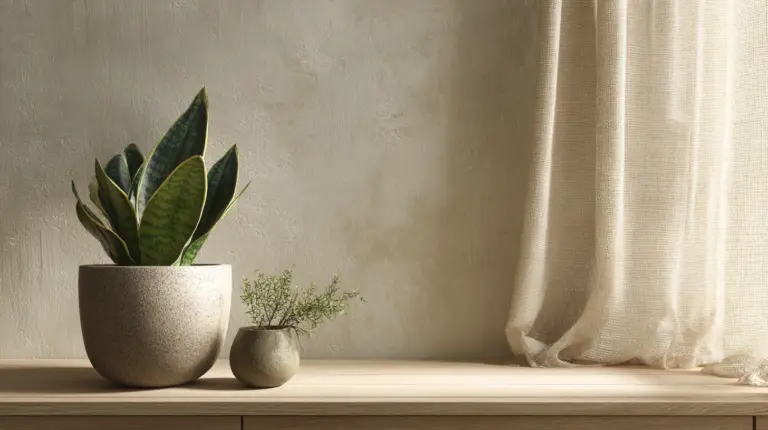
There is something quietly sacred about a Japandi home. The warm grain of light wood, the soft hush of neutral linen, the deliberate stillness — and nestled within it all, a single sculptural plant catching the afternoon light. Plants are not decoration in a Japandi space. They are presence.
But even the most serene shelfscape can be interrupted by a yellowing leaf, a drooping stem, or a pot that smells faintly of soggy soil. And when your plant begins to struggle, it can feel deeply unsettling — as if the harmony of the whole room has shifted.
The good news? Most Japandi plant problems have simple, soulful fixes. You don’t need a greenhouse or a horticulture degree. You need attention, a little knowledge, and the willingness to slow down and listen to what your plant is telling you.
This guide is your calm companion through every droop, spot, and pale leaf. We’ll walk through the most common Japandi plant troubles — and how to bring your green companions gently back to life.
Choosing the Right Plants for a Japandi Space
Why Plant Choice Matters for Troubleshooting
Before we diagnose, let’s talk about prevention. Not every plant belongs in a Japandi interior — and choosing well means fewer problems down the line.
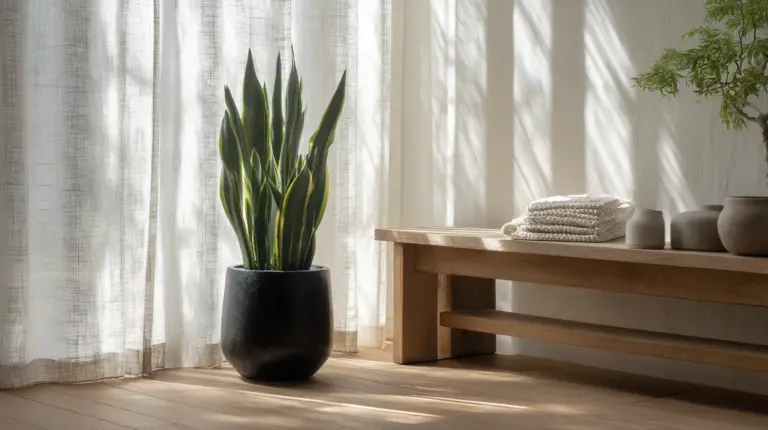
The Japandi plant palette leans toward sculptural forms, muted greens, and low-fuss temperaments. Think Snake Plants standing like calm sentinels, Pilea Peperomioides with their coin-shaped leaves catching diffused light, or a ZZ Plant glowing with waxy resilience in a dim corner.
Here are some of the most Japandi-aligned plants and their temperaments:
| Plant | Light Needs | Water Frequency | Common Issues |
|---|---|---|---|
| Snake Plant (Sansevieria) | Low to bright indirect | Every 3–6 weeks | Root rot from overwatering |
| Pilea Peperomioides | Bright indirect | Weekly (in growth season) | Yellow leaves, leggy stems |
| ZZ Plant | Low to indirect | Every 2–3 weeks | Yellowing from overwatering |
| Fiddle Leaf Fig | Bright indirect | Weekly | Brown edges, leaf drop |
| Fatsia Japonica | Indirect to shade | Moderate | Transplant shock, drooping |
| False Aralia | Bright indirect | Moderate | Leaf drop in dry AC air |
| Rubber Plant | Bright indirect | Every 1–2 weeks | Dusty leaves, drooping |
| Bonsai (Juniper/Ficus) | Bright light | Carefully monitored | Drying out, bud failure |
| Monstera Deliciosa | Indirect | Weekly | Yellow leaves, root rot |
| Pothos | Low to indirect | Every 1–2 weeks | Leggy, pale leaves |
Choosing plants that match your home’s actual light and humidity — not your aspirational version of it — is the single most powerful troubleshooting step you can take.
The Most Common Japandi Plant Problems (and How to Fix Them)
Yellowing Leaves
Yellow leaves are the most universal distress signal, and the most misread.
Overwatering: The Most Common Culprit
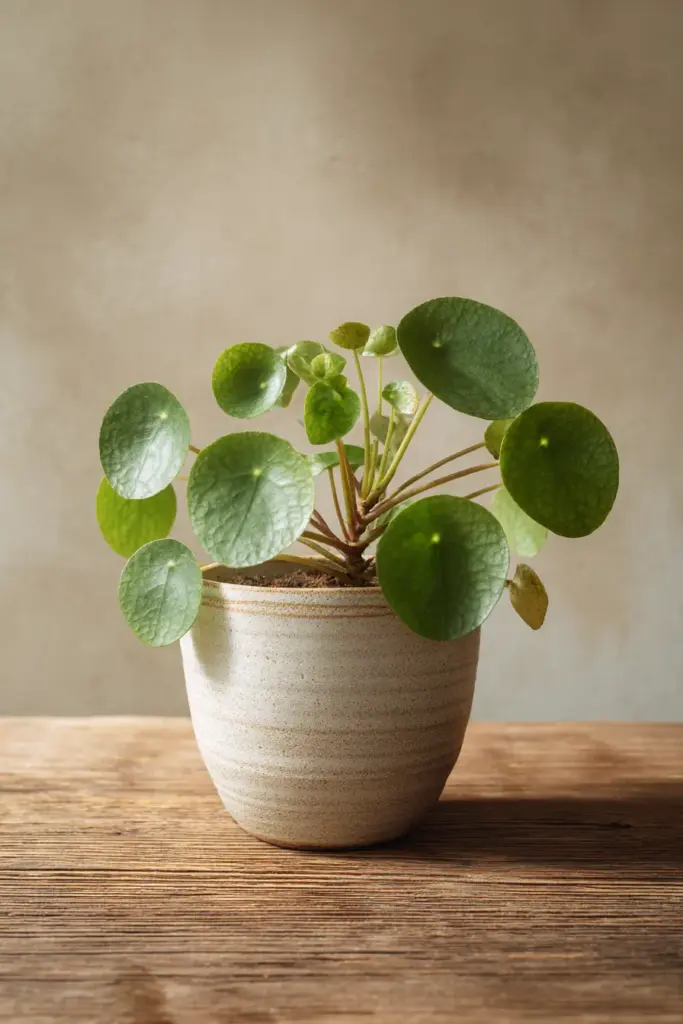
In a Japandi home, the temptation to nurture can become overwatering. If your soil feels perpetually damp and the leaves of your ZZ Plant, Pilea, or Snake Plant are turning soft and yellow, root rot may already be setting in.
How to fix it:
- Remove the plant from its pot and inspect the roots. Healthy roots are white or light tan; rotten roots are brown, mushy, and smell sour.
- Trim away any rotten sections with clean scissors.
- Let the roots air-dry for a few hours on a clean cloth.
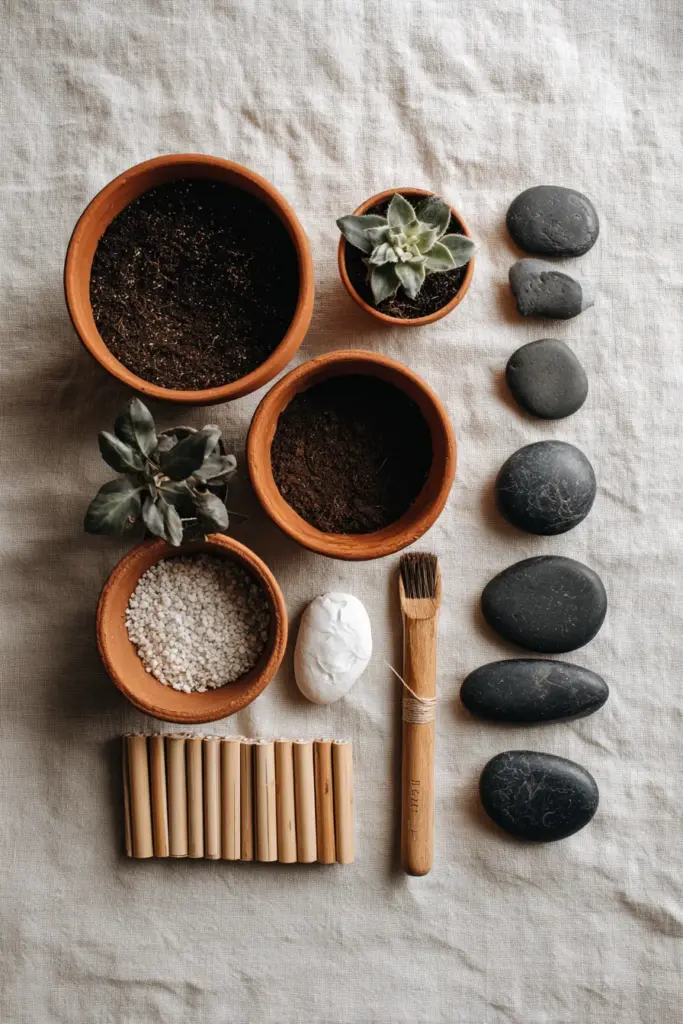
- Repot into fresh, well-draining soil — a mix of potting soil, perlite, and a handful of coarse sand works beautifully.
- Choose a neutral ceramic or terracotta pot with drainage holes. Terra cotta breathes, making it an ideal Japandi-friendly choice that also prevents overwatering.
- Wait at least a week before watering again.
.
Underwatering: The Forgotten Cause
If the yellowing leaves are also dry, crispy at the edges, and the soil pulls away from the pot’s sides, your plant is thirsty. Puckered or curling leaves on a Pilea often signal this before the yellow even begins.
Give the pot a deep, slow soak — let the water run through until it drains freely. Then establish a consistent watering rhythm based on your plant’s needs and your home’s humidity.
Pro tip: A bamboo moisture meter is a beautiful and practical addition to a Japandi plant corner. It tells you exactly when to water — no guessing, no guilt.
Drooping and Wilting
Why Is My Japandi Snake Plant Drooping?
A drooping Snake Plant is almost always a watering problem — but the direction of the droop tells you which one.
- Soft, mushy drooping → Overwatering or root rot. Follow the repotting steps above.
- Stiff but leaning drooping → The plant is reaching for light. Rotate the pot a quarter turn every week.
- Dry, brittle drooping → Underwatering. Soak thoroughly and allow to drain.
Drooping in Fatsia Japonica and False Aralia
These two plants are beloved for their dramatic, hand-like leaves and deeply Japandi silhouettes. But they are sensitive to transplant shock and dry air, especially in rooms with constant air-conditioning.
If you’ve recently repotted a Fatsia and it’s drooping, resist the urge to water more. Give it a week to settle. Keep it in indirect light, away from vents, and mist the leaves lightly to boost humidity.
False Aralia thrives when the air around it holds some moisture. In dry AC rooms, a small pebble tray filled with water placed beneath the pot creates a gentle humidity microclimate — invisible but transformative.
Brown Edges and Leaf Burn
Brown tips speak quietly but urgently. Here’s how to listen.
Brown, crispy leaf edges on a Fiddle Leaf Fig or Rubber Plant usually point to one of three causes:
| Cause | Signs | Fix |
|---|---|---|
| Low humidity | Crispy tips, dry soil | Pebble tray, misting, humidifier |
| Direct sun exposure | Brown patches on leaf surface | Move away from direct sun |
| Over-fertilizing (edema) | Brown tips + swollen spots on leaves | Flush soil with water; skip fertilizer |
| Fluoride/salt buildup | Tips only, not whole leaf | Use filtered or rainwater |
Japandi interiors often feature large windows with sheer linen curtains — this is actually ideal plant light. It filters harsh rays into the soft, diffused brightness that most Japandi plants crave.
Pests: The Uninvited Disruption
No conversation about plant troubleshooting is complete without addressing pests. They arrive quietly — and in a minimalist home where plants are few but meaningful, even one infested stem feels like a crisis.
Common Pests on Japandi Plants
- Mealybugs: White, cottony clusters in leaf joints. Common on Jade Plants, Pothos, and Rubber Plants.
- Spider mites: Fine webbing on underleaves, usually in hot, dry conditions. Watch your Fiddle Leaf Fig and Aralia closely.
- Scale insects: Brown, waxy bumps on stems. Easy to miss against dark bark or sculptural trunks.
- Fungus gnats: Tiny flies hovering around the soil — a sign of overwatered, organically rich compost.
Organic Remedies for Japandi Plant Pests
You don’t need harsh chemicals near your natural linen throws and hand-glazed ceramics. These gentle, effective treatments align beautifully with the Japandi philosophy of working with nature:
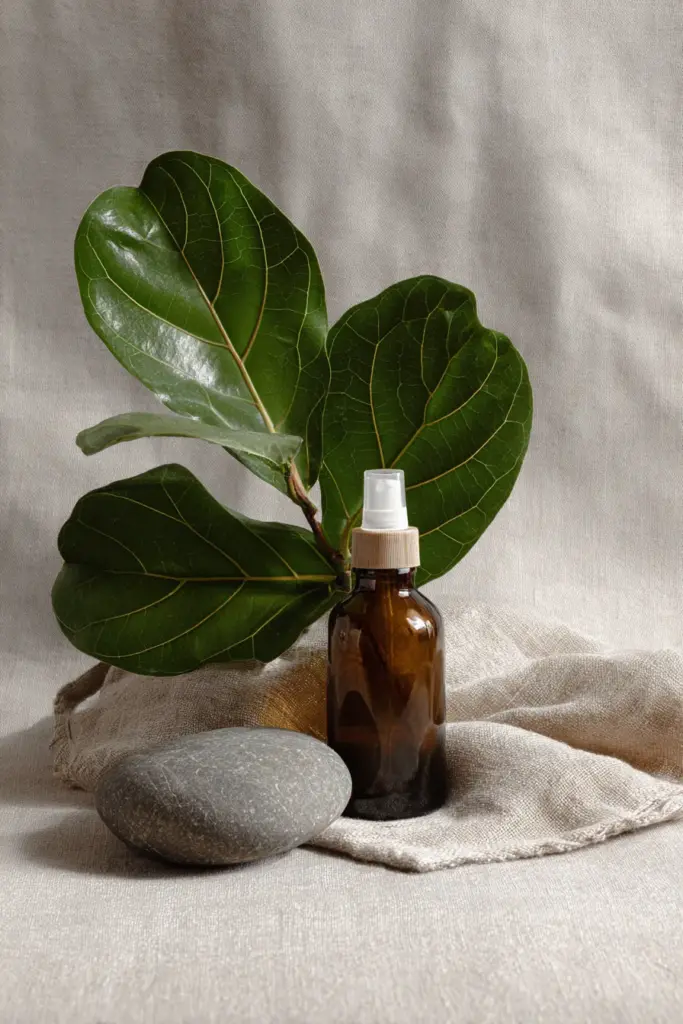
- Neem oil spray: Mix 2 tsp neem oil, a few drops of mild dish soap, and 1 litre of water. Spray on all leaf surfaces, including undersides. Repeat weekly for 3–4 weeks.
- Isopropyl alcohol swabs: For mealybugs and scale, dab directly with a cotton swab dipped in 70% isopropyl alcohol.
- Sticky yellow traps: For fungus gnats, these sit discreetly in the soil and interrupt the egg-laying cycle.
- Cinnamon powder: Dusted lightly on topsoil, it acts as a natural antifungal and gnat deterrent.
Isolate any affected plant immediately — move it to a separate room while treating. Think of it as plant quarantine with intention.
Etiolation: When Your Plant Reaches for Light
Etiolation is the long, pale stretching a plant does when it isn’t receiving enough light. A Pilea with long, spindly stems. A Pothos with widely-spaced, small leaves. A Jade Plant leaning dramatically toward the window.
In a Japandi space, where form is everything, an etiolated plant looks out of place — it loses that compact, sculptural quality that drew you to it.
How to fix etiolation:
- Gradually move the plant closer to a light source over 1–2 weeks. Sudden moves can cause leaf burn.
- Trim leggy stems to encourage bushier, denser new growth.
- Propagate the trimmed cuttings in water or soil — a budget-friendly, wabi-sabi approach to renewal.
Seasonal and Regional Troubleshooting
Monsoon Season and Root Rot (Tropical Homes)
If you’re styling a Japandi home in a warm, humid climate — think the lush monsoon months of Metro Manila — outdoor humidity can dramatically affect indoor plants. When humidity rises and air circulation drops, the soil in your Aralia or Monstera stays wet for far longer than expected.
Monsoon-proof your Japandi plants:
- Switch to a perlite-heavy soil mix during rainy months.
- Increase drainage by elevating pots on small wooden risers or smooth river stones — both utterly Japandi.
- Skip watering for 1–2 extra days after heavy rain, as the ambient humidity does the work.
- Run a small fan on low nearby to improve air circulation without disturbing the serenity of the room.
Dormancy in Cooler Months
Tropical plants placed near glass windows in cooler months can experience a pseudo-dormancy — slowed growth, pale new leaves, and general quietness. This is not failure. It is rest.
Reduce watering frequency. Hold off on fertilizer entirely. Let your plants be still, just as the season is still.
Styling Through the Recovery
A recovering plant can still be beautiful. Wabi-sabi teaches us this.
When a plant loses leaves or looks sparse during treatment, resist the urge to hide it away. Instead, lean into wabi-sabi — the Japanese philosophy of finding beauty in imperfection and impermanence.
- Place the recovering plant in a handmade ceramic pot with an interesting texture. The vessel elevates the moment.
- Group it low, at floor level, alongside smooth stones and a piece of driftwood. The asymmetry becomes intentional.
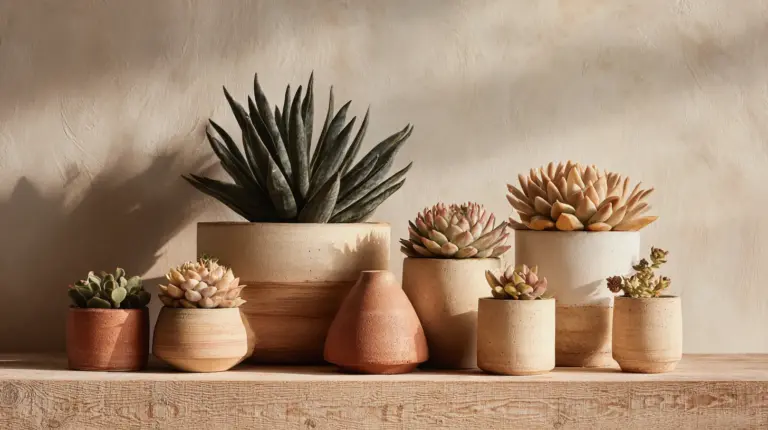
- Repot without disrupting your neutral palette — choose pots in raw white, muted terracotta, sage, or the soft grey of unglazed stoneware.
Even a bare stem has beauty. A plant growing back from near-loss carries a quiet story — and Japandi spaces are built on quiet stories.
Japandi Plant Troubleshooting Checklist
Quick Diagnostic Reference:
- Yellow leaves, soft stems → Check for root rot; let soil dry out
- Yellow leaves, dry soil → Water more consistently
- Brown crispy tips → Increase humidity; check for fertilizer buildup
- Drooping + mushy base → Overwatering; repot with fresh mix
- Drooping + dry soil → Underwatering; soak thoroughly
- White cottony clusters → Mealybugs; treat with neem oil or alcohol swab
- Fine webbing under leaves → Spider mites; neem oil spray weekly
- Long, pale, stretched stems → Insufficient light; move plant gradually
- Flies around soil → Fungus gnats; allow soil to dry; use yellow sticky traps
- Leaf drop after repotting → Transplant shock; give time, indirect light, no fertilizer
- Swollen spots + brown tips → Edema from overfertilizing; flush and pause feeding
Conclusion
A Japandi home breathes with intention. Every object, every plant, every patch of filtered morning light is placed with care. When your plants struggle, it isn’t a failure — it is an invitation to pay closer attention to the living world you’ve cultivated.
Troubleshooting is, in its way, a form of mindfulness. You observe. You feel the soil. You trace the edge of a yellowed leaf with your fingertip and ask: what does this need? That question, asked gently and consistently, will carry you through every plant crisis with grace.
Tend slowly. Adjust quietly. And trust that the calm you’ve built into your space will find its way back — one green, unfurling leaf at a time.
Frequently Asked Questions
What causes yellowing leaves in Japandi plants like Pilea or Fatsia Japonica?
Yellowing is most commonly caused by overwatering or underwatering. Check the soil moisture first — if it’s soggy, hold off and check roots for rot. If it’s bone dry, water deeply. Fatsia yellowing can also follow transplant shock; give it a week of stillness before intervening.
How do I fix root rot in low-maintenance Japandi indoor plants?
Remove the plant, trim all brown and mushy roots, let them air dry, and repot into fresh, well-draining soil. Use a terracotta or ceramic pot with drainage holes, and hold off watering for at least a week. A perlite-heavy mix helps prevent recurrence.
Why is my Japandi Snake Plant drooping?
Soft drooping usually signals overwatering. Stiff leaning typically means it needs more light or rotation. Dry, brittle drooping means underwatering. Identify the soil moisture and root condition first, then address accordingly.
What is the best way to prevent overwatering in minimalist Japandi greenery?
Use a moisture meter to check soil before watering — never water on a schedule, but on need. Choose pots with drainage holes, and elevate them slightly to allow airflow beneath. Perlite and coarse sand in your soil mix dramatically improve drainage.
How do I identify and treat pests on Japandi-friendly plants?
Look for white cottony clusters (mealybugs), fine webbing (spider mites), or brown waxy bumps (scale). Treat organically with neem oil spray — 2 tsp per litre of water with a drop of dish soap — applied weekly to all leaf surfaces. Isolate affected plants immediately to protect your other greenery.