
Table of Contents
There is something quietly revolutionary about growing your own herbs indoors. The act itself — pinching a sprig of rosemary, breathing in thyme, watching a small pot of basil lean toward morning light — is an everyday ritual that grounds you.
In a Japandi home, that ritual becomes something more. It becomes part of the design itself.
Japandi — the seamless blend of Japanese wabi-sabi and Scandinavian hygge — is built around the idea that beauty and function are never separate. What you keep in your kitchen should earn its place, both visually and practically. Herbs do exactly that.
This guide blends Japandi design principles with real, practical herb care. Whether you have a sun-drenched kitchen or a dim studio apartment, you’ll find a setup here that feels calm, intentional, and deeply livable.
What Makes Herbs “Japandi”?
Not every plant belongs in a Japandi space, and that’s the point. The Japandi aesthetic is about restraint — choosing fewer things, but choosing them well.
Herbs earn their place because they are functional decor. They are not decorative objects pretending to be useful. They grow, they smell, they feed you. That honest utility is very Japandi.
The Principles That Guide Every Choice
Simplicity. A single herb in a well-chosen pot says more than five mismatched plants crowded on a windowsill. Limit your collection to what you actually cook with.
Natural materials and earthy tones. Unglazed terracotta, matte ceramic, light wood, linen, rattan — these textures carry the warmth of the Japandi palette. Glossy plastic and bright-colored pots break the spell immediately.
Functional imperfection. Wabi-sabi embraces the slightly asymmetric, the naturally weathered, the imperfect leaf. A basil plant that leans a little toward the window is not untidy — it’s alive.
Negative space. Give each plant room to breathe. Cramming pots together feels chaotic. Two herbs with space between them feel considered.
Best Herbs for Japandi Spaces
Each herb below has been chosen for both its aesthetic fit within a Japandi palette and its practical use in everyday cooking. They are low-fuss enough to keep your space calm, not cluttered.
Herb Profiles: Aesthetic + Care at a Glance
| Herb | Leaf Texture & Shape | Japandi Aesthetic Fit | Light Needs | Water Needs | Difficulty |
|---|---|---|---|---|---|
| Basil | Soft, rounded, bright green | Warmth and lushness; pairs with light wood | Full sun (south-facing) | Moderate; keep moist | Easy |
| Rosemary | Needle-like, silvery-green | Sculptural and architectural; very minimal | Full sun | Low; drought-tolerant | Easy |
| Thyme | Tiny, delicate, trailing | Softens hard surfaces; fills negative space gently | Full to partial sun | Low to moderate | Easy |
| Parsley | Curly or flat, deep green | Dense texture; grounding visual weight | Partial sun | Moderate | Easy |
| Chives | Upright, grass-like | Clean lines; very Japandi in form | Partial sun | Moderate | Very easy |
| Mint | Broad, textured, aromatic | Full and sensory; best in its own contained pot | Partial sun to shade | Moderate to high | Easy |
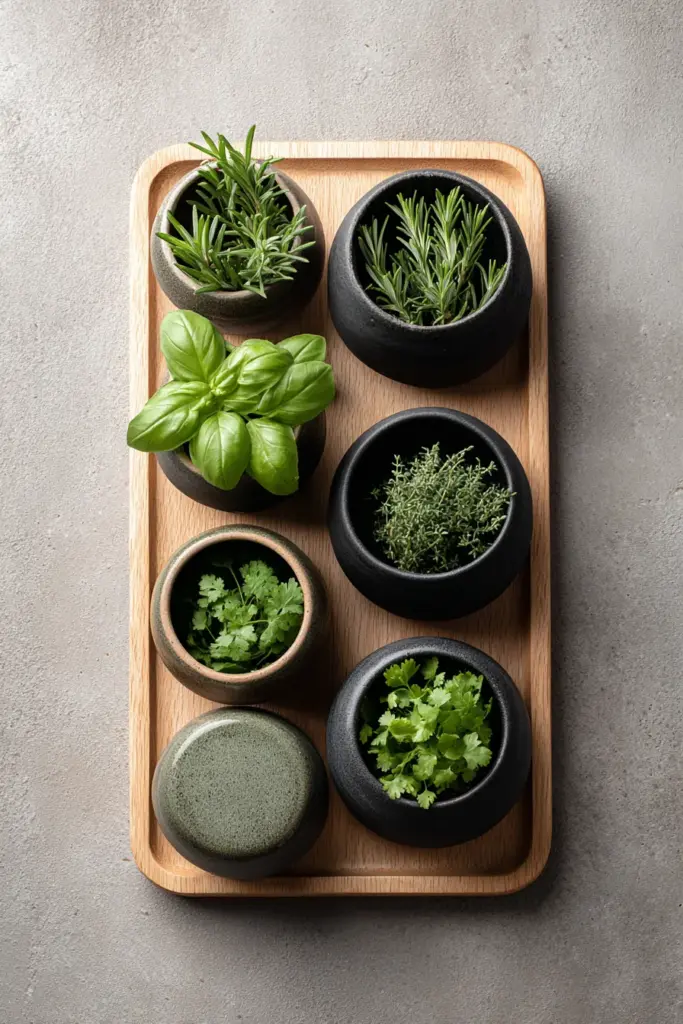
Basil
Basil’s broad, velvety leaves and warm green color bring a sense of summer even in winter kitchens. Placed near a south-facing window in a small terracotta pot, it becomes a quiet focal point.
Use it to finish miso soup, dress a simple salad, or stir into pasta. Pinch from the top regularly — it keeps the plant full and the countertop clean of dropped leaves.
Rosemary
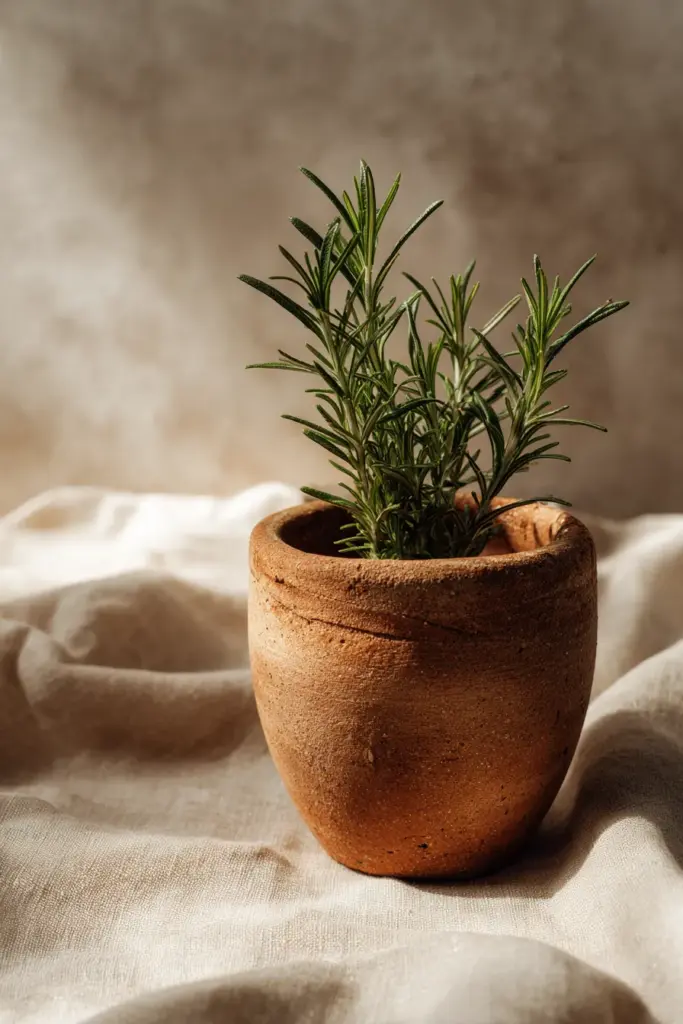
Rosemary is perhaps the most architectural herb you can grow. Its upright, needle-like form has a sculptural quality that suits the clean lines of Japandi interiors beautifully.
It thrives in dry, sunny conditions and asks very little of you. One rosemary plant in a matte stone pot, placed in a corner of the windowsill, anchors an entire herb setup.
Thyme
Thyme grows low and trailing, its tiny leaves spilling softly over the edge of a pot. In a Japandi kitchen, it adds organic texture without visual noise.
It is deeply drought-tolerant, which makes it one of the most forgiving herbs for indoor growing. Use it with roasted vegetables, simple broths, and slow-cooked grains.
Parsley
Flat-leaf parsley has a deep, saturated green that grounds a collection of lighter herbs. Its dense, upright growth feels deliberate and structured — qualities that align naturally with Japandi sensibility.
It tolerates partial shade better than most culinary herbs, making it an excellent choice for kitchens that don’t receive full sun throughout the day.
Chives
Chives are the most visually Japandi herb on this list. Their tall, slender, grass-like form embodies the clean vertical lines that define Japanese-influenced interiors.
They grow easily, regrow quickly after cutting, and ask for very little. Snip them over miso soup, eggs, or noodle dishes for a garnish that feels effortless.
Mint
Mint is generous, fragrant, and fast-growing — which means it needs its own pot, always. Plant it alone in a glazed ceramic or sealed container to prevent it from spreading into neighboring soil.
Keep mint for your tea ritual. A small pot of mint near the kettle, paired with a ceramic mug and a linen cloth, is the quietest kind of Japandi luxury.
Layout Ideas for Small Kitchens and Apartments
The way you arrange your herbs matters as much as the herbs themselves. Here are five layout scenarios designed for real spaces.
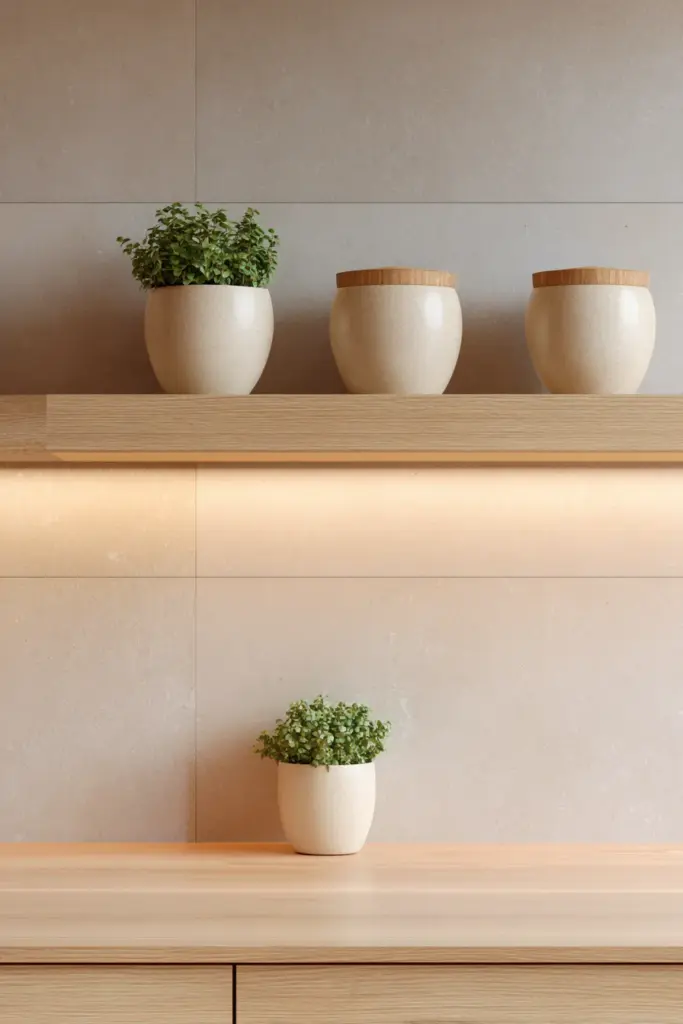
One-Wall Kitchen
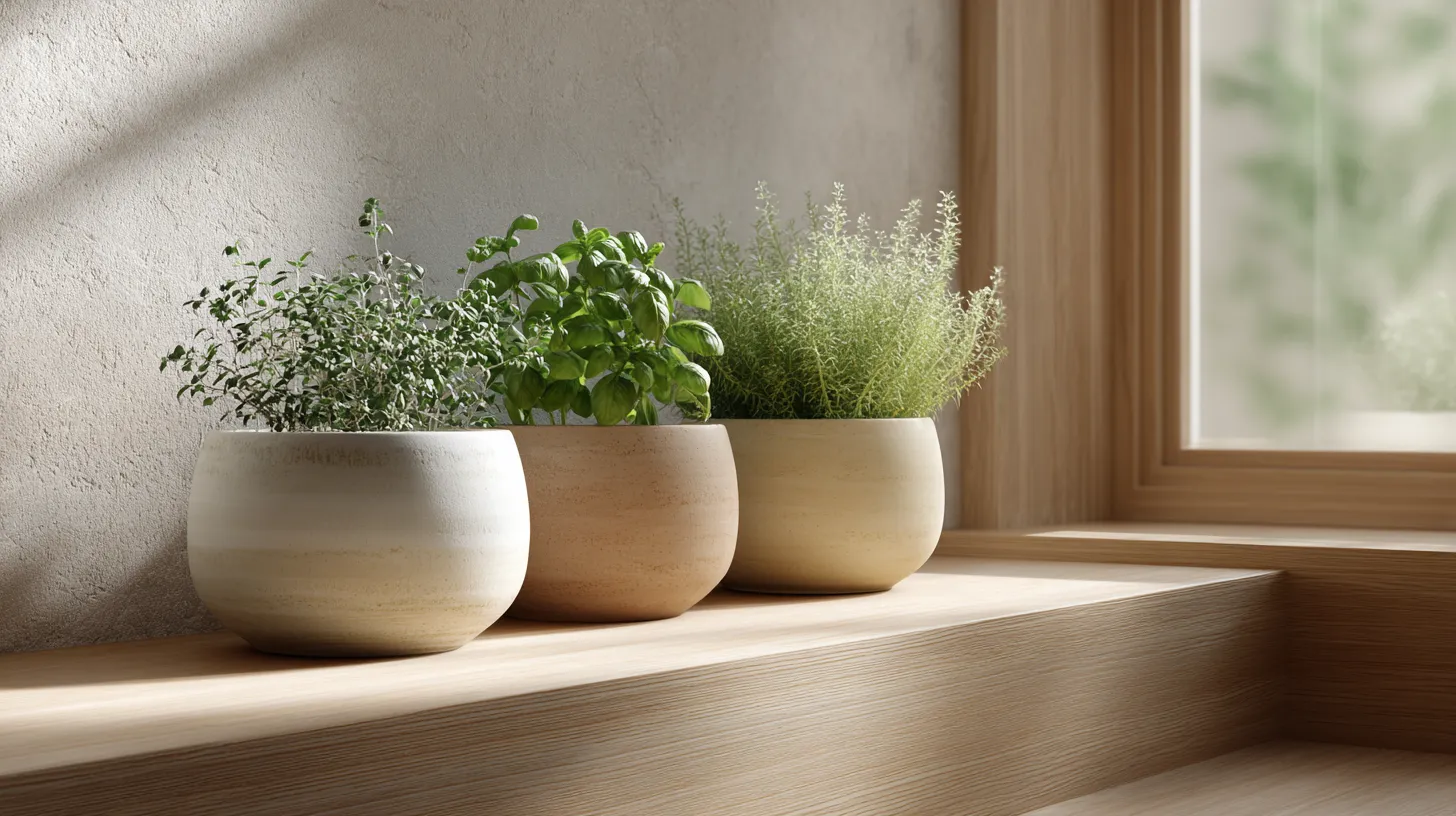
Place a narrow floating shelf above the backsplash, around 40–50 cm wide, at eye level. Line it with three small matching ceramic pots — chives, parsley, thyme — in two colors only (stone white and warm beige work beautifully). Keep the shelf otherwise empty. That negative space is the design.
Studio Apartment, No Dedicated Kitchen
Use a single wooden tray on the counter, 40–60 cm long. Arrange three herbs in matching terracotta pots of the same height. This creates a contained “herb zone” that reads as intentional rather than scattered. Move the tray to the dining table when guests arrive.
Dark or North-Facing Kitchen
Choose shade-tolerant herbs: parsley, chives, and mint thrive with minimal direct light. Add a single slim grow light — matte black or brushed brass finish — mounted discreetly under an upper cabinet. It gives your herbs what they need without disrupting the aesthetic.
Rental Apartment (No Drilling)
A slender ladder shelf in natural wood holds three to four herb pots at varying heights, creating gentle asymmetry. Place it near the window and move it freely as seasons change. Magnetic mini planters on the refrigerator door, in matte finishes, add a second herb “wall” with no damage.
Open-Plan Living Space with Kitchen Island
Place one large, low wooden planter box on the island — wide enough for three herbs divided by small stone inserts. The planter becomes a design object as much as a functional garden, visible from the living area and connecting both spaces with greenery and scent.
Containers, Trays, and Tools That Keep the Look Minimal
Your pots are not an afterthought. In a Japandi kitchen, they are design decisions.
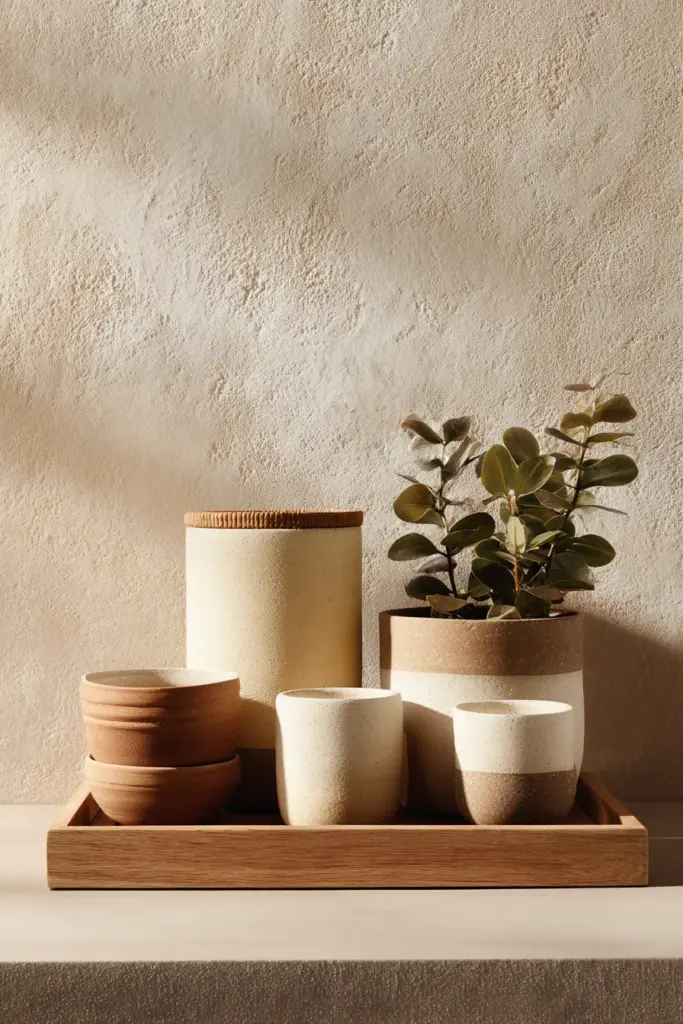
Materials That Belong
Unglazed terracotta breathes with the plant, develops a natural patina, and carries warmth. Matte ceramic in stone, ash, or pale clay tones feels elevated without being cold. Light wood — for trays, planter boxes, and shelf liners — ties herbs visually to the rest of the kitchen. Rattan and linen work as pot sleeves to soften hard ceramic edges.
The Formula for Visual Calm
Follow these simple rules and your herb setup will always feel considered, never cluttered.
- One tray + three matching pots. The tray unifies; the matching pots create rhythm.
- Two colors only. Stone white and terracotta. Or ash grey and warm beige. Limit it.
- Two heights maximum per cluster. Varying heights add life. Too many heights add chaos.
- No labels, no busy prints, no logos. Decant soil bags into plain containers. Hide the clutter.
Protecting Your Surfaces
Always use saucers under terracotta pots — they are porous and will leave water rings on wooden counters. Choose saucers in the same material family as the pot. Keep a small linen cloth nearby to wipe bases after watering.
Low-Maintenance Care That Keeps Your Kitchen Calm, Not Messy
The Japandi approach to herb care is the same as its approach to everything: do less, but do it well.
Weekly Maintenance Checklist
- Check soil moisture before watering — most herbs prefer to dry slightly between waterings
- Remove any yellowed or dead leaves immediately; they break the visual calm
- Wipe water rings from saucers and wooden trays
- Rotate pots a quarter turn toward the light for even growth
- Pinch back basil and mint to encourage bushy, contained growth
Preventing the Common Problems
Fungus gnats come from overwatering and wet soil surfaces. Let the top inch of soil dry before watering again, and consider a thin layer of fine gravel or sand on top of the soil — it looks intentional and deters gnats beautifully.
Mold on soil is a ventilation issue. Ensure pots have drainage holes and that saucers don’t hold standing water for more than an hour after watering.
Overcrowding is the fastest way to make your herb setup feel chaotic. If a plant outgrows its pot, repot it — or replace it. Keep the visual edit clean.
Rotating Herbs by Season
One of the most overlooked ideas in indoor herb gardening is the seasonal rotation. Herbs have natural rhythms, and working with them keeps your kitchen feeling fresh without requiring new pots or new shelves.
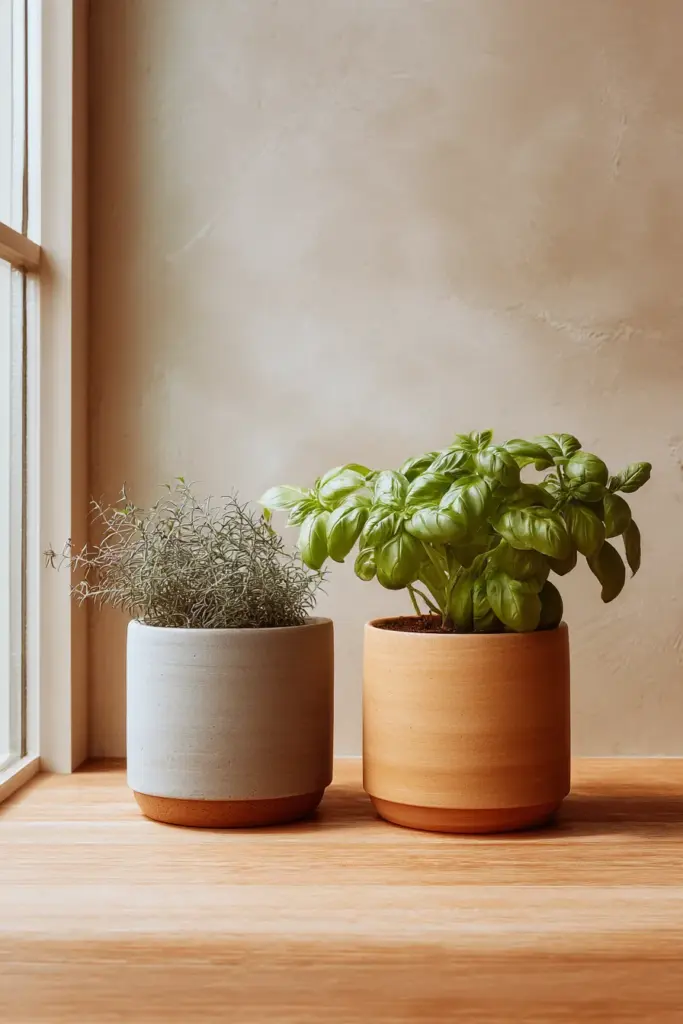
A Simple Seasonal Rotation Plan
Cool season (autumn and winter): Parsley, chives, and thyme thrive in lower temperatures and shorter days. This is also tea season — a small pot of mint or lemon balm near the kettle invites a daily ritual of warmth.
Warm season (spring and summer): Basil comes into its own in bright, warm conditions. Rotate it to the sunniest spot and let it lead the herb setup.
The rule: Keep your pots the same. Swap only the plants. This way, the overall design stays cohesive through every season.
Mini Rituals and Recipes to Use Your Herbs
Japandi living is about connecting beauty to daily rhythm. Here are four simple moments that bring your herb garden into everyday life.
Morning miso ritual. Snip a few chives over a quiet bowl of miso soup. The act itself — the small snip, the gentle steam, the green against pale broth — is a full sensory moment.
Evening roasted vegetables. Scatter fresh thyme and rosemary over root vegetables before roasting. The scent that fills the kitchen as they cook is the Japandi definition of hygge.
Afternoon tea. Steep fresh mint leaves in hot water in a clear glass or pale ceramic mug. No bags, no fuss. This is the ritual that makes having a mint plant feel worth every effort.
Simple pasta or grain bowls. Tear basil over warm pasta, noodles, or a grain bowl dressed with good olive oil. It is almost too easy, and entirely enough.
Japandi Herb Setup: Quick Checklist
- Choose three to five herbs that reflect your actual cooking habits
- Select pots in two complementary neutral tones, consistent material
- Use a wooden tray to contain and unify the setup
- Ensure every pot has drainage and a saucer
- Keep two heights maximum per cluster
- Remove dead leaves immediately after you notice them
- Rotate herbs by season using the same pots
- Leave deliberate negative space between plants
- Add a slim grow light in matte finish if your kitchen lacks direct sun
- Limit your herb garden to one defined zone — windowsill, shelf, or tray
Conclusion
A Japandi herb garden is not about perfection. It is about presence.
It is the smell of rosemary on a Tuesday morning. The way chives catch the light near the window. The quiet satisfaction of snipping something you grew yourself into a meal you made with your hands.
When your herb setup is calm and considered, your kitchen feels calmer too. That is the quiet promise of Japandi design — that the spaces we tend begin, gently, to tend us back.
Tend your herbs. Set your table. Light a candle. This is where beauty lives.
Frequently Asked Questions
Which herbs grow best with low light?
Parsley, chives, and mint are the most shade-tolerant culinary herbs for indoor growing. They thrive in indirect light and are ideal for north-facing kitchens or dim apartments. If you have no natural light at all, a slim, discreet grow light mounted under a cabinet can support almost any herb without compromising the Japandi aesthetic.
How many herb pots is too many for a Japandi kitchen?
Three to five pots is the sweet spot for most kitchens. More than five starts to feel like a collection rather than a considered setup. Group them on a single tray or shelf, and prioritize the herbs you actually cook with. If a pot sits untouched for two weeks, it has outgrown its place.
Can I use grow lights without ruining the aesthetic?
Yes, absolutely. Choose a grow light with a matte black or brushed metal finish, mounted under a cabinet or above a shelf. Thin LED strip lights are nearly invisible during the day. Avoid clip-on grow lights in bright colors or bulky designs — those will disrupt the visual calm you’re creating.
What pots work best for a Japandi herb garden?
Unglazed terracotta and matte ceramic in neutral tones — stone white, warm beige, ash grey — are the most Japandi-compatible choices. Keep all pots in the same material family and limit yourself to two colors. Avoid glossy finishes, bright prints, and plastic containers, which read as too casual for the elevated simplicity of Japandi style.
How do I keep my indoor herb setup looking clean and minimal?
Remove dead or yellowed leaves immediately. Wipe water rings from trays and saucers after every watering. Use a thin layer of fine gravel on top of the soil — it prevents gnats, looks intentional, and keeps the soil surface tidy. Pinch back fast-growing herbs like basil and mint regularly to maintain a contained, purposeful shape.