
Table of Contents
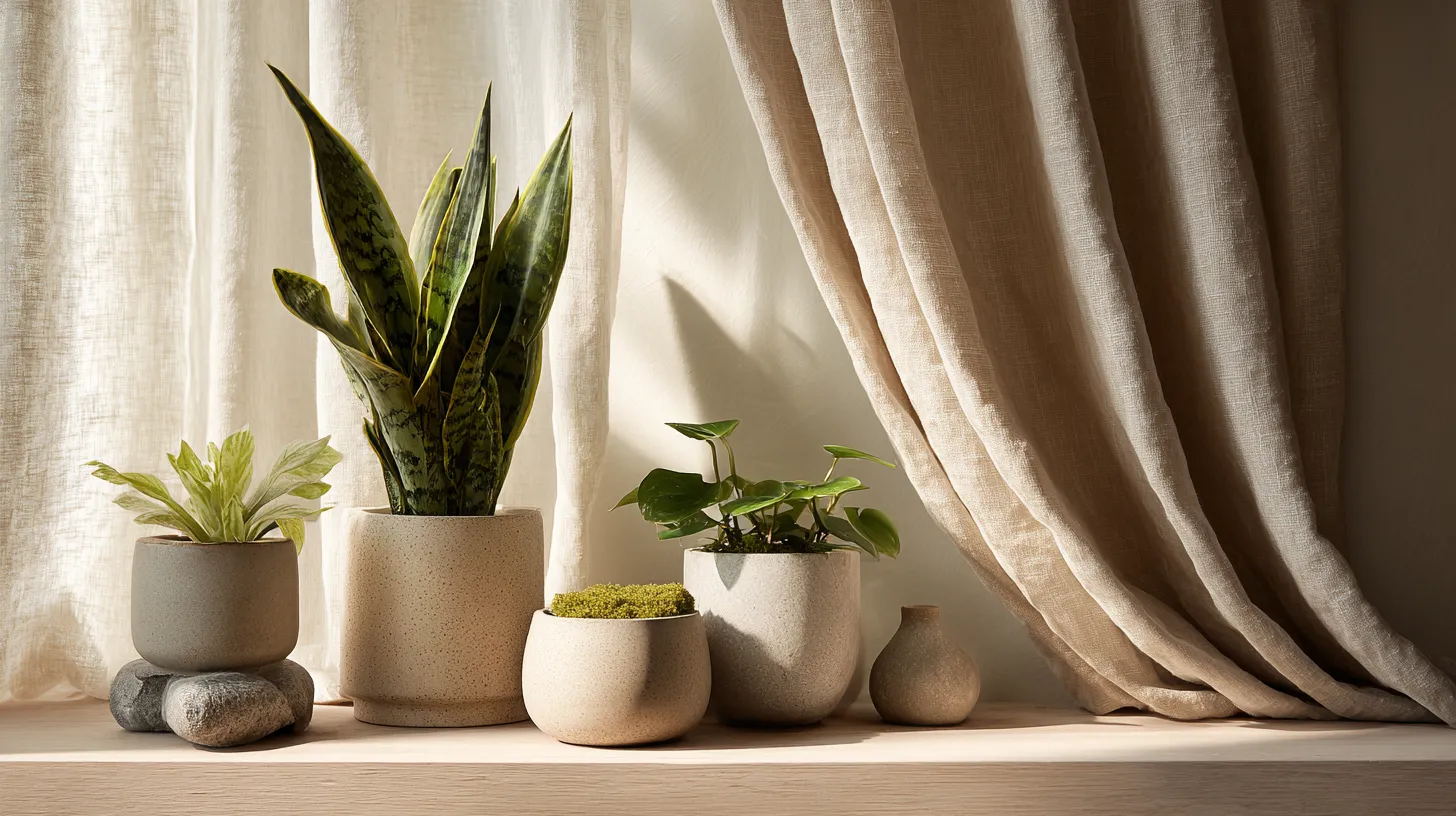
There is something deeply grounding about a Japandi home — the hush of linen, the warmth of raw wood, a single leafy stem catching afternoon light. Plants are not just decoration here. They are breathing companions in a space built around quiet intentionality.
But even the most serene interior can be interrupted. A white cottony cluster on your peace lily. Tiny webs threading across your snake plant. A cloud of gnats rising from your pothos pot. Pests do not care about aesthetics. They only care about survival.
The good news? Japandi plant pest control does not have to mean harsh chemicals, cluttered spray bottles, or breaking the calm you have worked so hard to create. The Japandi philosophy — rooted in wabi-sabi mindfulness and Scandinavian pragmatism — actually gives us the perfect framework for thoughtful, natural pest management.
This guide is for the plant lover who refuses to let pests disrupt the peace. We will walk through the most common pests on beloved Japandi plants, how to identify them, how to treat them gently, and how to weave prevention into your daily rituals without losing an ounce of beauty.
Why Japandi Homes Are Uniquely Vulnerable to Plant Pests
Japandi interiors tend to favor low-light rooms, natural materials, and a certain stillness in the air. These same qualities — beautiful as they are — can quietly invite pests in.
Low airflow is a significant factor. Minimalist spaces often have fewer open windows, creating the warm, humid pockets that spider mites, fungus gnats, and mealybugs love. In climates like Calabarzon in the Philippines, where humidity peaks between March and June, this risk multiplies considerably.
Natural materials like wood shelves, rattan baskets, and bamboo trays can retain moisture and harbor pest eggs undetected. A beautiful woven planter may look serene, but it can become a home for gnats if the drainage is poor.
Grouping plants together — a hallmark of Japandi layering — can also accelerate pest spread. One infected leaf touching another is all it takes.
Understanding this is not cause for alarm. It is simply an invitation to be more intentional — which, as any Japandi devotee knows, is always the right answer.
The Most Common Japandi Plants and Their Pests
Most pest guides focus on generic houseplants. We are going deeper — directly to the plants you are most likely styling in your minimalist corners.
Snake Plant (Sansevieria trifasciata)
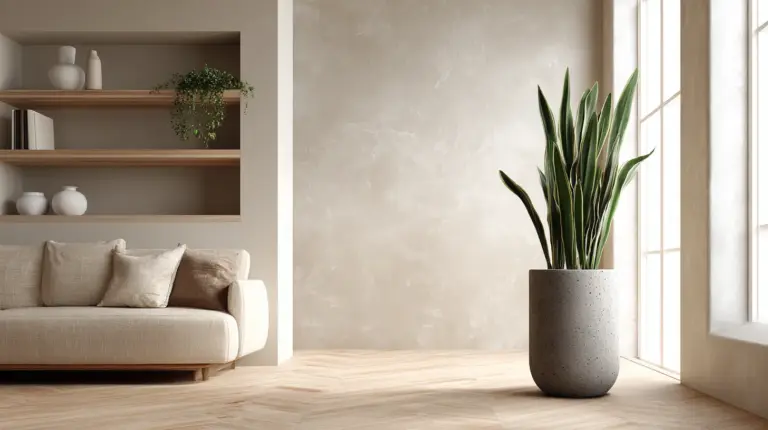
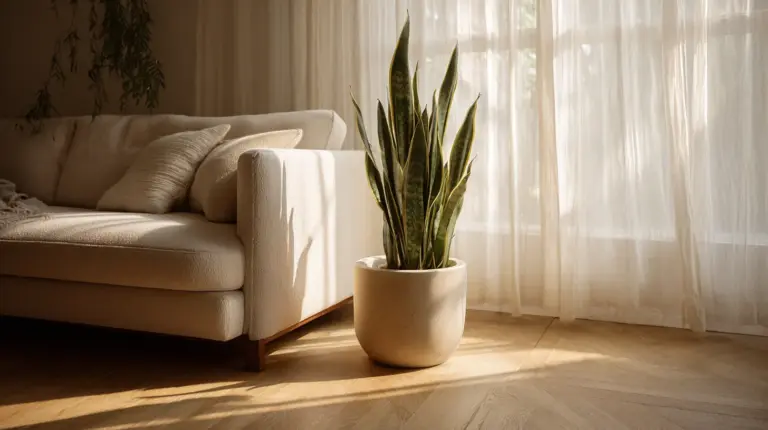
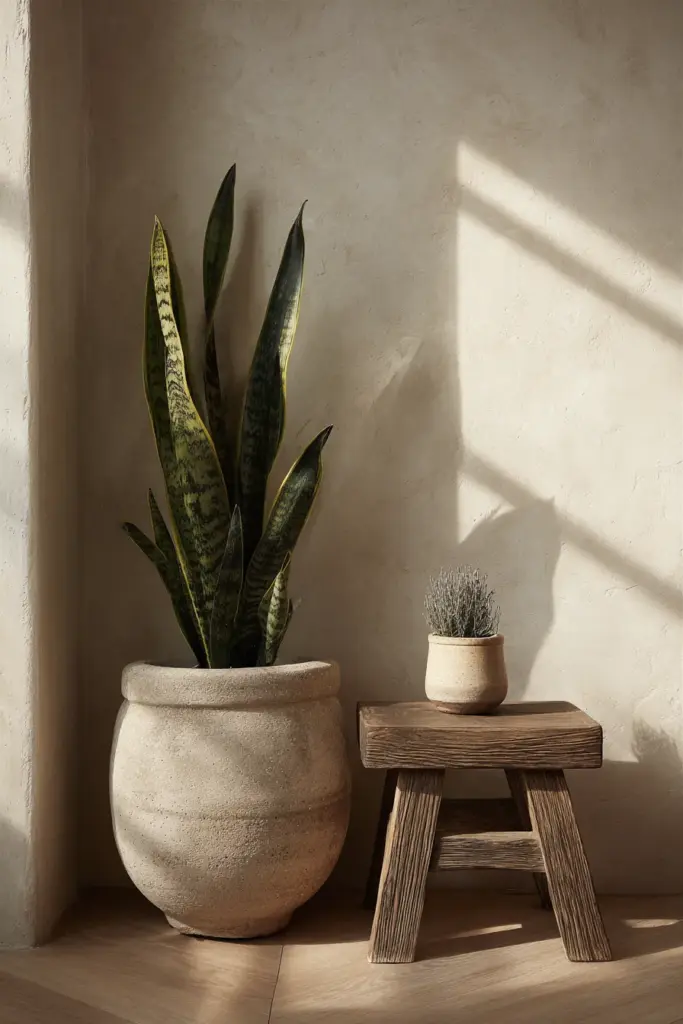
The snake plant is a Japandi icon: architectural, low-maintenance, and endlessly elegant in a matte ceramic pot. But it is not immune.
Spider mites are the snake plant’s most common threat. Look for yellow stippling on the leaves — tiny pale dots that make the surface look dusty or faded. Hold a white sheet of paper under a leaf and tap. If you see small moving specks, you have mites.
Treatment: Mix one teaspoon of neem oil with a drop of mild dish soap in 500ml of water. Wipe every leaf surface with a soft cloth dampened in this solution. Repeat weekly for three weeks.
Prevention: Keep leaves dust-free with a dry linen cloth. Mites thrive in dusty, dry conditions.
Pothos (Epipremnum aureum)
Trailing pothos adds effortless softness to Japandi shelves and hanging corners. Its lush, low-fuss nature makes it a go-to — but its moist soil is a magnet for fungus gnats.
Fungus gnats are more annoying than harmful, but their larvae feed on roots and can weaken the plant over time. The adult gnats — tiny dark flies hovering near the soil — are the first sign.
Treatment: Allow the top two inches of soil to dry completely between waterings. Apply a layer of fine pebbles or coarse sand on top of the soil. This breaks the gnat’s breeding cycle and maintains the clean, textured look Japandi aesthetics call for.
Prevention: Avoid overwatering. Use well-draining soil with perlite. A pebble top-dressing is both functional and beautiful.
Peace Lily (Spathiphyllum)
The peace lily brings a quiet drama to any Japandi space — white blooms against deep green, catching soft filtered light. It is, however, particularly susceptible to mealybugs.
Mealybugs appear as white cottony clusters in leaf joints and along stems. They secrete a sticky substance called honeydew, which leads to sooty mold — a black fungal growth that dulls your plant’s natural sheen.
Treatment: Dip a cotton swab in 70% isopropyl alcohol and dab each mealybug directly. For larger infestations, mix one tablespoon of rubbing alcohol per cup of water in a small spray bottle and apply to affected areas. Follow with a neem oil mist two days later.
Prevention: Inspect peace lilies weekly, especially during humid months. Wipe leaves with a linen cloth lightly dampened in water — a ritual that aligns beautifully with wabi-sabi attentiveness.
ZZ Plant (Zamioculcas zamiifolia)
Glossy, sculptural, and practically indestructible — the ZZ plant earns its place on Japandi sideboards and reading nooks. But scale insects occasionally take a liking to its shiny stems.
Scale looks like tiny brown or tan bumps, almost like a blister or a small seed stuck to the stem. Unlike most pests, scale does not move once settled. It feeds by piercing the plant tissue and extracting sap.
Treatment: Scrape scale off with a soft toothbrush dipped in soapy water. Follow up with a neem oil wipe-down. For stubborn cases, use an alcohol-soaked cloth on stems.
Prevention: Inspect new plants before bringing them home. Quarantine any new addition for two weeks in a spare corner.
Rubber Plant (Ficus elastica)
The rubber plant’s broad, burgundy-green leaves make it one of the most striking Japandi statements. Aphids occasionally cluster on new growth — soft-bodied, pear-shaped insects in green, black, or yellow.
Aphids reproduce rapidly, so early detection matters. Look for curled or yellowing new leaves, or a sticky residue on surfaces beneath the plant.
Treatment: Blast aphids off with a gentle stream of water in a sink or shower. Follow with a diluted neem oil spray. Repeat every five days until clear.
Prevention: Avoid over-fertilizing with nitrogen-heavy feeds, which encourages the soft new growth aphids prefer.
A Quick Reference: Japandi Plants, Pests & Natural Fixes
| Plant | Common Pest | Symptoms | Natural Treatment |
|---|---|---|---|
| Snake Plant | Spider Mites | Yellow stippling, fine webbing | Neem oil + water wipe-down |
| Pothos | Fungus Gnats | Hovering flies near soil | Dry soil + pebble top-dressing |
| Peace Lily | Mealybugs | White cottony clusters | Alcohol swab + neem oil mist |
| ZZ Plant | Scale | Brown bumps on stems | Soapy brush scrub + neem oil |
| Rubber Plant | Aphids | Curled new leaves, sticky residue | Water rinse + neem oil spray |
DIY Japandi-Safe Pest Control Recipes
These recipes use ingredients that are gentle on your plants, your home, and your aesthetic. No plastic spray canisters with garish labels. Decant into a small amber glass bottle, and it becomes part of the shelving.
Neem Oil All-Purpose Spray
- 500ml warm water
- 1 tsp cold-pressed neem oil
- 2–3 drops mild castile soap
Shake well before each use. Apply to leaves and soil surface. Effective against mites, mealybugs, aphids, and gnats.
Tea Tree Mite Spray
- 500ml water
- 5 drops tea tree essential oil
- 1 drop dish soap
Mist directly onto affected leaves. Do not overuse — tea tree is potent. Once per week is enough.

Alcohol Dip for Scale and Mealybugs
- 70% isopropyl alcohol
- Cotton pads or swabs
Apply directly to pests. Do not dilute further — the concentration is necessary to dissolve the waxy coating on scale and mealybugs.
Preventive Japandi Rituals: Pest Care as Mindfulness
In wabi-sabi philosophy, tending to imperfection is not a burden — it is a practice. These weekly habits protect your plants while deepening your connection to them.
Sunday Leaf Baths: Every week, wipe your plant leaves with a barely damp linen or cotton cloth. This removes dust (which harbors mites), improves the plant’s ability to photosynthesize, and gives you a quiet moment to inspect for early signs of trouble.
Biweekly Soil Checks: Press two fingers into the soil of each plant. Note the moisture level. Look for unusual discoloration, tiny flies, or soil that smells sour (a sign of overwatering and root rot risk). This takes five minutes and prevents most fungal and gnat issues.
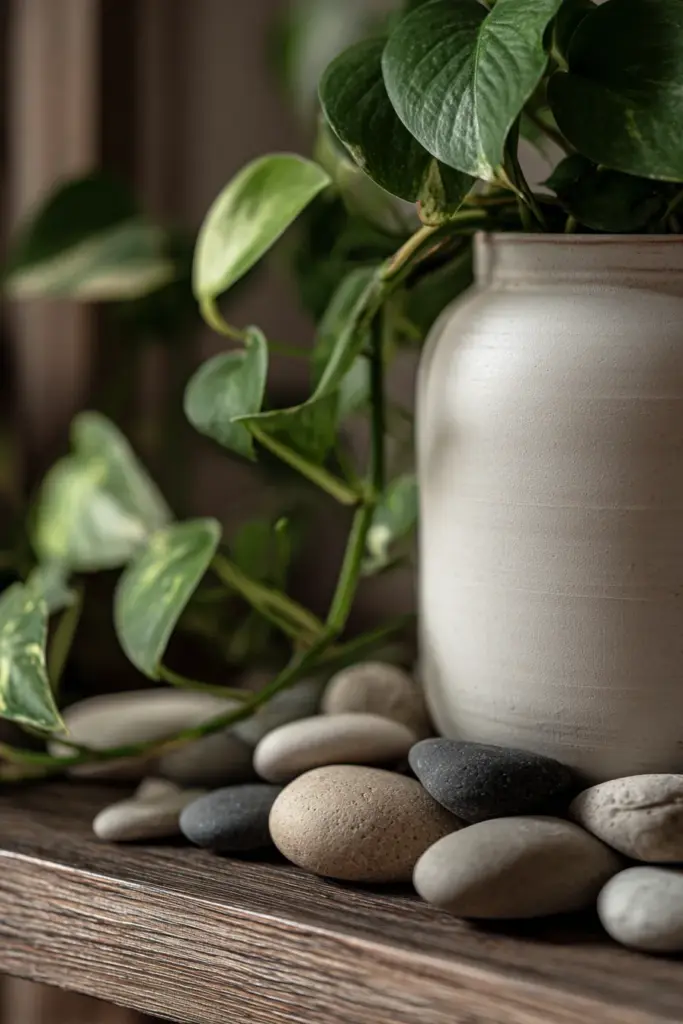
Pebble Top-Dressing: A thin layer of smooth river pebbles or coarse sand over the soil does double duty — it deters fungus gnats from laying eggs and elevates the look of any pot. This is the kind of detail that makes a Japandi shelf feel considered.
Humidity Monitoring: In high-humidity environments like Silang or Calabarzon generally, a small bamboo-framed humidity monitor near your plant shelf is both functional and beautiful. Keep indoor humidity between 40–60%. Above that, mites and mold thrive. A compact dehumidifier tucked behind a low shelf solves this quietly.
New Plant Quarantine: Any new plant should rest in a separate room for two weeks before joining your collection. Set it on a bamboo tray near natural light. Observe. Only then welcome it into the fold.
Pest-Repelling Companion Plants for Japandi Spaces
Certain plants naturally deter common pests — and happen to look stunning in Japandi settings.
- Lavender — deters aphids, moths, and fleas. Place near entryways or on open shelves. The scent is subtle and calming.
- Mint — repels aphids and gnats. Keep in a small ceramic pot on a kitchen shelf. It doubles as a cooking herb.
- Lemongrass — repels mosquitoes and certain flying insects. Tall and architectural, it suits Japandi corners beautifully.
Key Takeaways
- Identify your pest before treating — different pests need different approaches.
- Neem oil is the most versatile, Japandi-safe treatment available.
- Pebble top-dressing deters fungus gnats and elevates pot aesthetics simultaneously.
- Quarantine all new plants for two weeks before adding to your collection.
- Biweekly leaf baths prevent mites and connect you to your plants through mindful attention.
- High humidity (above 60%) dramatically increases pest risk — use a dehumidifier in tropical climates.
- Pest-repelling companion plants like lavender and mint add fragrance, function, and beauty.
Conclusion
A pest on a leaf does not mean you have failed. It means your plant is alive, your space is inhabited, and the natural world is doing what it always does — finding a way in.
The Japandi approach invites us to respond with calm and care rather than panic. To observe before we act. To choose solutions that honor both the plant and the space around it.
When you wipe a leaf with a linen cloth, dab a mealybug with a cotton swab, or scatter river pebbles across a pot of pothos soil — you are not just managing pests. You are tending to something. And that quiet tending is exactly what makes a house feel like a home.
From our shelves to yours — may your leaves stay clean, your light stay soft, and your space always feel like rest.
Frequently Asked Questions
How do I get rid of pests on indoor plants naturally?
The most effective natural approach combines neem oil spray for active infestations, rubbing alcohol for mealybugs and scale, and preventive habits like dry soil intervals and pebble top-dressing. Consistency matters more than intensity — weekly attention prevents most issues before they escalate.
What plants repel bugs in Japandi homes?
Lavender, mint, and lemongrass are the most effective and aesthetically compatible choices for Japandi interiors. Lavender works beautifully on open shelves, mint thrives in small ceramic pots near windows, and lemongrass adds tall, sculptural interest to corners while deterring flying insects.
Are spider mites common on snake plants in Japandi decor?
Yes — snake plants are one of the most common hosts for spider mites in minimalist interiors, especially in low-humidity or dusty environments. The first signs are pale yellow stippling on leaves and fine webbing near the base. A weekly neem oil wipe-down and regular dusting of leaves prevent most infestations.
What is the best organic pest control for low-maintenance Japandi plants?
Cold-pressed neem oil mixed with water and a drop of castile soap is the gold standard for organic pest control. It treats mites, mealybugs, aphids, and gnats without harming plants, people, or the integrity of your interiors. Decant into a small amber glass spray bottle for a solution that belongs on your shelf.
How do I prevent fungus gnats in pothos pots Japandi style?
Allow the top two inches of soil to dry between waterings, add a layer of pebbles or coarse sand over the soil surface, and ensure your pot has drainage holes. In high-humidity climates, consider placing a small dehumidifier nearby. These steps eliminate the conditions gnats need to lay eggs — without touching the plant’s natural beauty.