
Table of Contents
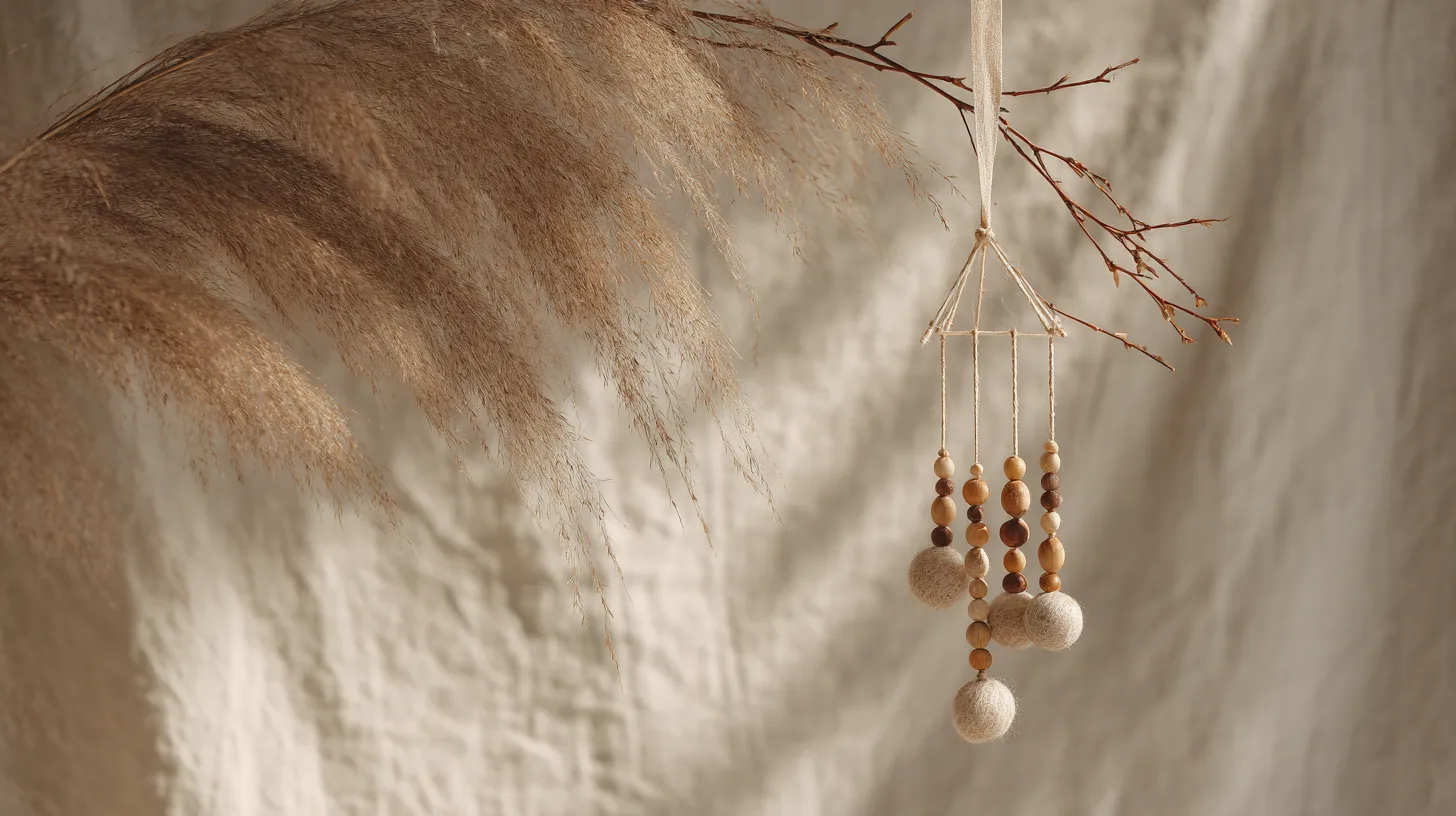
There is something quietly magical about a mobile. It moves with the air in the room — catching light, casting shadows, breathing life into a still corner. A Japandi mobile takes this a step further, blending the warmth of Scandinavian hygge with the intentional imperfection of Japanese wabi-sabi into one beautiful, handcrafted object.
You do not need a design degree or a big budget to make one. You need a few natural materials, a calm afternoon, and a little patience. Most of what you need may already be waiting in your home.
At ERYLIN, we believe the most meaningful pieces in a space are the ones you made yourself — objects that carry your energy and your eye. This tutorial is our love letter to slow making, natural texture, and the kind of beauty that does not shout.
Whether you are styling a nursery, a minimalist living room, or a small apartment corner, this DIY Japandi hanging mobile will bring movement, warmth, and a grounded kind of elegance to your space.
What Is a Japandi Mobile?
Japandi is the design philosophy born from the meeting of Japanese minimalism and Scandinavian simplicity. It values natural materials, muted tones, handmade imperfection, and negative space. A Japandi mobile carries all of these values into a hanging, kinetic object.
Unlike a brightly colored nursery mobile or a boho macramé installation, a Japandi mobile is restrained and intentional. It uses earthy palettes — soft beige, warm taupe, ash gray, and forest green — alongside textures like linen, raw wood, rattan, and dried botanicals.
The result is something that feels alive without being loud. It moves gently in the room’s airflow, catching natural light and creating a quiet focal point that anchors the eye without overwhelming it.
Materials You Will Need
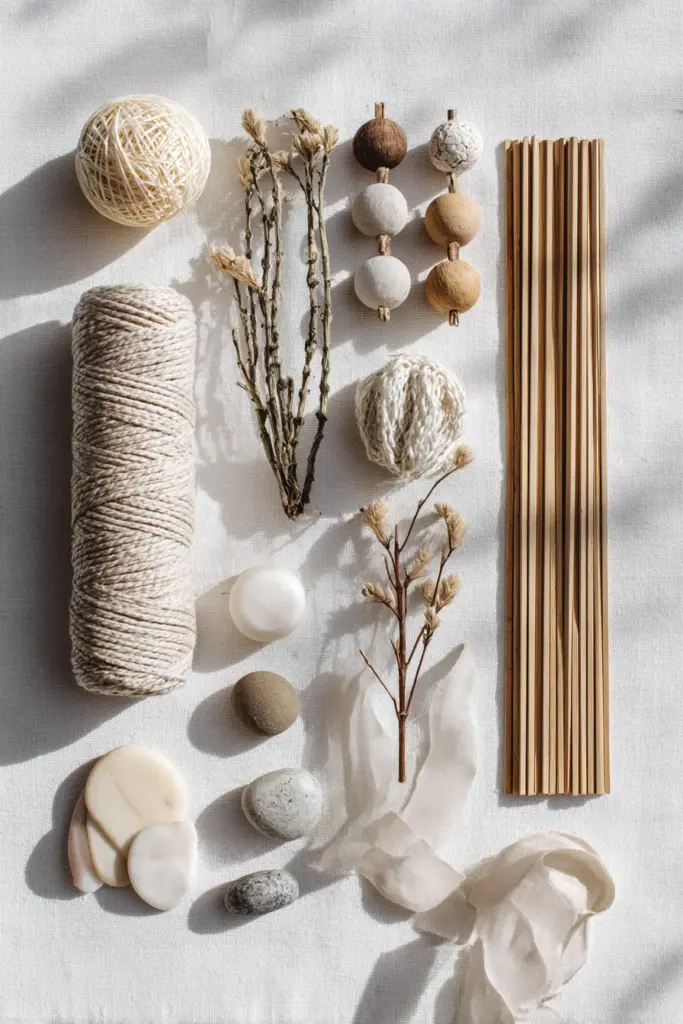
The beauty of a Japandi mobile is that it draws from what already exists in nature. Most materials can be sourced locally, thrifted, or even foraged.
Core Structure Materials
- Driftwood, a foraged branch, or a bamboo dowel — approximately 30–40 cm long
- Natural twine, abaca rope, or linen ribbon — for hanging and tying elements
- Thin wire or sturdy thread — for attaching smaller elements
- A ceiling hook or curtain rod — for hanging the finished mobile
Decorative Elements (Choose Your Style)
| Element | Japandi Quality | Mood It Brings |
|---|---|---|
| Dried pampas grass | Soft, feathery, muted gold | Warmth, softness |
| Rattan or wooden beads | Smooth, earthy, organic | Grounding, natural |
| Air plants or preserved moss | Living texture, biophilic | Freshness, life |
| Linen or clay tags | Matte, handmade, quiet | Calm, artisanal |
| Capiz shells or flat stones | Cool, translucent, foraged | Movement, serenity |
| Paper origami cranes | Folded, clean, geometric | Lightness, intention |
| Dried leaves or pressed botanicals | Fragile, veined, natural | Impermanence, wabi-sabi |
PH-friendly tip: Abaca rope, capiz shells, and dried tropical leaves are locally abundant and deeply aligned with Japandi’s natural material values.
Estimated Budget
A full Japandi mobile can be made for under ₱500 (roughly $8–9 USD), especially if you use foraged branches, repurposed ribbon, or thrifted beads. The investment is mostly in your time and your eye.
Step-by-Step: How to Make a DIY Japandi Hanging Mobile
Follow these steps for a classic single-branch mobile. The whole process takes 20–30 minutes once your materials are gathered.
Step 1: Prepare Your Branch or Dowel
Find a branch that has character — a gentle curve, an interesting knot, a slightly weathered surface. Sand any rough edges lightly if needed, but do not over-refine it. The imperfections are part of the beauty.
If you prefer a cleaner look, use a bamboo dowel or a piece of reclaimed wood cut to your preferred length. Wipe it with a damp cloth and let it dry fully before you begin.
Step 2: Cut Your Hanging Strings
Cut three to five lengths of twine or linen ribbon in varying lengths — somewhere between 15 cm and 45 cm. The variation in length creates the layered, airy visual that makes a mobile feel dynamic rather than flat.
Tie each string loosely around the branch at evenly spaced points, adjusting placement as you add elements. Do not tie them permanently yet — you will want to rebalance as you go.
Step 3: Attach Your Decorative Elements
Thread your chosen elements onto the strings. A simple pairing that works beautifully: two rattan beads + one dried botanical stem + one linen tag. This gives each strand visual rhythm without clutter.
For heavier elements like clay tags or stones, use wire or secure double knots. For lighter pieces like dried leaves or paper cranes, a simple overhand knot holds well. Mix textures deliberately — smooth beads beside rough twine, silky dried grass beside matte clay.
Step 4: Balance Your Mobile
Hold the branch up by its center string and observe the natural lean. If one side is heavier, slide the elements along the string slightly or adjust the hanging point left or right along the branch.
Balance tip: The goal is not perfect symmetry — it is pleasing asymmetry. A slight lean reads as natural and hand-crafted, which is entirely in the Japandi spirit.
Step 5: Tie the Central Hanging String
Once you are happy with the balance, cut a length of twine about 30–50 cm long and tie it securely around the center of the branch. Make a loop at the top for hanging.
Test the balance one final time before securing the knot completely.
Step 6: Hang and Style
Hang your mobile from a ceiling hook, curtain rod, wooden beam, or even a decorative wall nail. Place it near a window where it can catch light and gentle airflow. Watch it move.
Step back. Adjust the height if needed. Let it breathe.
5 Japandi Mobile Variations to Try
Once you have the basic structure down, the possibilities are wonderfully wide.
1. Nursery Japandi Mobile (Montessori-Inspired)
For a baby 0–3 months, focus on high contrast and gentle movement rather than color. Use black linen ribbons, natural wooden rings, and soft white felt shapes. Keep elements large enough to be safe and spaced so they move independently. Avoid loose beads or small parts for very young babies.
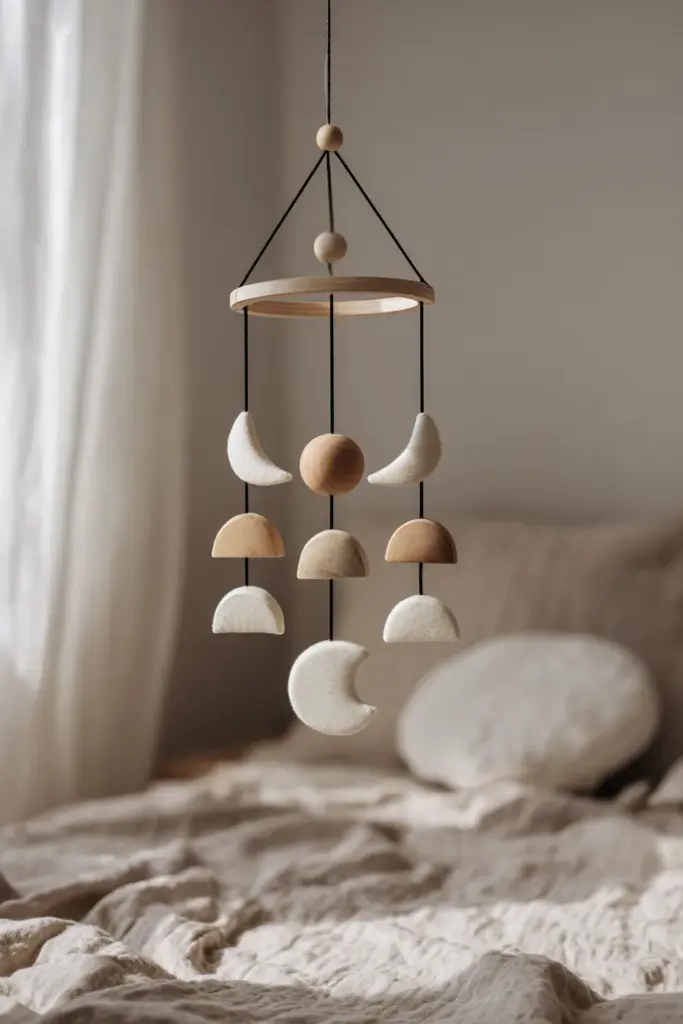
2. Minimalist Living Room Mobile
Lean into muted geometry — clay discs, flat river stones, and a single dried botanical stem. Hang it in a corner above a reading chair or over a low console table. It becomes art without taking up surface space.
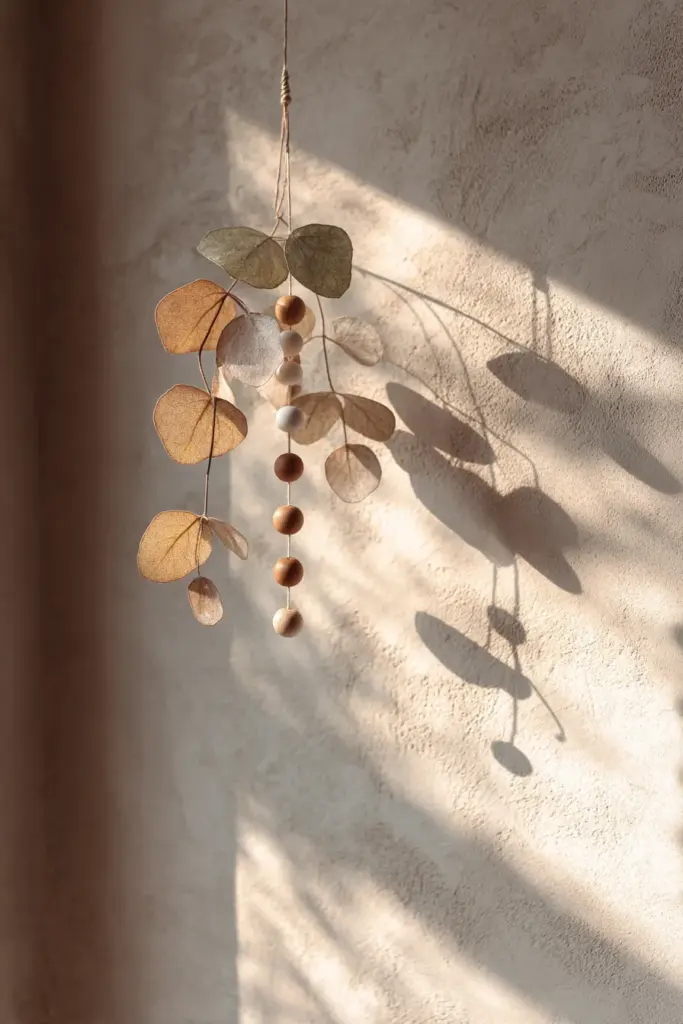
3. Botanical and Biophilic Mobile
For the plant lover, combine air plants, preserved eucalyptus, dried lotus pods, and foraged seed heads. This version changes gently over time as the botanicals dry further — embracing wabi-sabi’s love of impermanence.
4. Small Space / Wall-Hanging Variant
Instead of a ceiling hook, attach your branch horizontally to the wall with two small nails. The mobile hangs flat against the wall like living wall art — ideal for apartments where ceiling space is limited or hooks are not permitted.
5. Lighted Mobile
Weave a strand of warm LED fairy lights through the hanging strings before attaching your elements. When lit in the evening, the mobile casts the softest, most atmospheric glow. Pair with unscented candles and a wool throw for a full hygge moment.
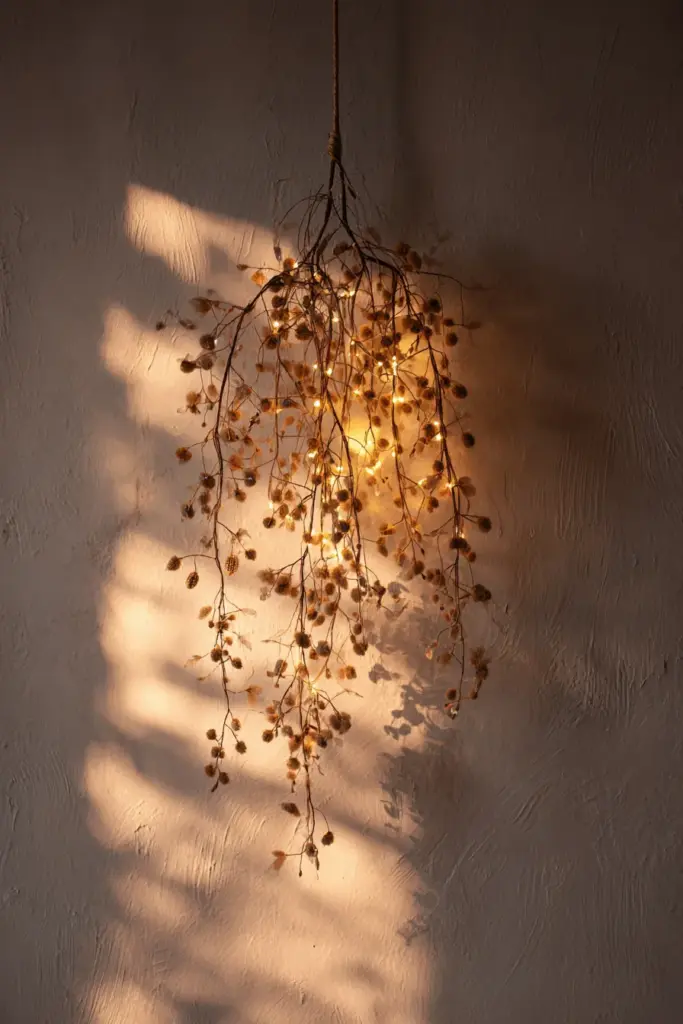
Styling Your Japandi Mobile in a Room
Where and how you hang a mobile matters as much as the mobile itself.
Light: Place it where morning or late afternoon light can pass through it. A window-adjacent position allows shadows to move across the wall — one of the most quietly beautiful effects in interior styling.
Height: Hang it so the lowest element sits just above eye level when seated. This keeps it visible and present without being obstructive.
Surroundings: Let the mobile breathe. Avoid hanging it against a busy wall or over a cluttered surface. A clean wall in a soft neutral tone — warm white, plaster, pale linen — allows the mobile’s textures to read clearly.
Pairing: A Japandi mobile works beautifully above a low wooden shelf, a meditation corner, a bedside table, or a plant-filled windowsill. It belongs wherever you want to slow down and notice.
Quick-Reference Checklist
- Choose a branch, dowel, or driftwood piece with natural character
- Gather natural materials: twine, rattan beads, dried botanicals, linen tags
- Cut strings in varying lengths for visual depth
- Attach elements in balanced, intentional clusters
- Adjust balance by sliding strings before final knotting
- Hang near natural light for maximum effect
- Style against a neutral wall with surrounding breathing room
- Consider a lighted version for evening atmosphere
- For nurseries, keep all elements large, smooth, and securely tied
- Embrace asymmetry — it is intentional, not a mistake
Conclusion
There is a kind of quiet pride that comes from making something with your hands — especially something that moves, catches light, and becomes part of the daily rhythm of your home. A DIY Japandi mobile is not just décor. It is a small, deliberate act of creating beauty in the way you live.
You chose the branch. You tied each knot. You decided what belonged and what did not. That is the heart of Japandi design: intentionality expressed through restraint, and beauty discovered in the natural world around you.
Hang it somewhere you love. Let it move. Let it be imperfect. Let it be yours.
Frequently Asked Questions
What materials do I need for a DIY Japandi mobile?
The essentials are a natural branch or bamboo dowel, abaca rope or linen twine, and a mix of organic decorative elements like rattan beads, dried botanicals, clay tags, or capiz shells. Stick to muted, natural tones — beige, taupe, ash, and forest green — to stay true to the Japandi palette.
How do I make a hanging mobile in Japandi style?
Start with a foraged branch or bamboo dowel as your base. Cut linen strings in varying lengths and tie them at intervals along the branch. Attach natural elements like wooden beads, dried leaves, or paper cranes to each string. Adjust balance, secure your knots, and hang from a ceiling hook near a light source.
Can I make a Japandi mobile for a nursery?
Yes — and it makes a beautiful, calming addition. For babies 0–3 months, use a Montessori-inspired approach: high-contrast elements in black and white, large wooden rings, and soft linen ribbons. Avoid small beads or loose parts, and ensure every element is securely tied.
What are easy DIY Japandi décor projects for beginners?
A hanging mobile is one of the most beginner-friendly Japandi DIY projects because it requires no special tools, uses inexpensive natural materials, and comes together in under 30 minutes. Other easy projects include a driftwood wall hanging, a simple rattan wreath, or a dried botanical arrangement in a minimalist ceramic vase.
How much does a DIY Japandi mobile cost to make?
With locally sourced or foraged materials, you can make a beautiful Japandi mobile for under ₱500 (approximately $8–9 USD). The main investment is a small roll of linen twine and a handful of rattan beads — both widely available at craft stores, local markets, or online.