
Table of Contents
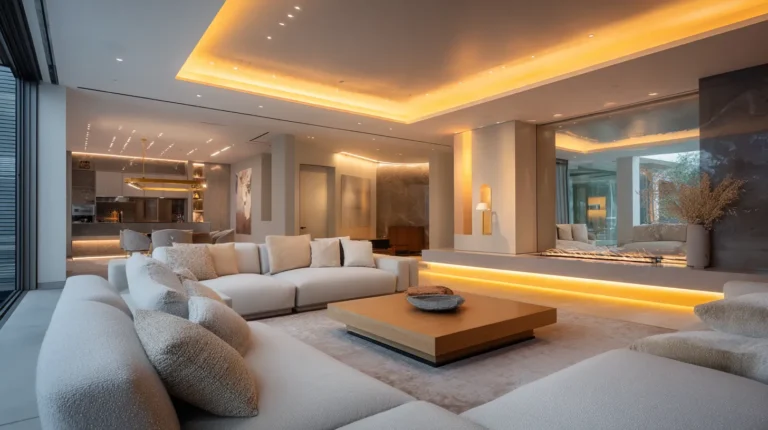
There’s a certain magic that happens when light falls just right across a room. It settles into corners, pools beneath lampshades, and stretches across walls in soft, deliberate ways. This isn’t accident—it’s layered lighting, the quiet architecture that transforms spaces from merely functional to deeply felt.
Think of lighting as a conversation between three voices: ambient, task, and accent. Each plays its part, and together they create harmony. When you understand how to orchestrate these layers, you’re not just illuminating a room—you’re shaping moods, defining moments, and building a home that feels intentionally yours.
Today, we’re exploring this essential design principle. Whether you’re rethinking your living room or finally addressing that too-bright kitchen, this guide will walk you through the art and science of layering light with warmth and clarity.
Understanding the Three Layers of Light
What Is Ambient Lighting?
Ambient lighting is your foundation—the soft, even glow that fills a room without demanding attention. It’s the gentle baseline that makes a space feel open and navigable, replacing the harshness of overhead glare with something more forgiving.
This is your general illumination: ceiling fixtures, recessed lights, chandeliers with diffused shades. Ambient light should reach every corner without creating dramatic shadows or bright spots. It sets the overall mood and color temperature of your space, establishing the emotional baseline before other layers add depth.
For living rooms, consider dimmable ceiling fixtures or wide-casting pendant lights. In bedrooms, flush-mount fixtures with fabric shades soften the light beautifully. The goal is even distribution—aim for 1,500 to 3,000 lumens depending on room size, with a warm color temperature between 2700K and 3000K for residential spaces.
What Is Task Lighting?
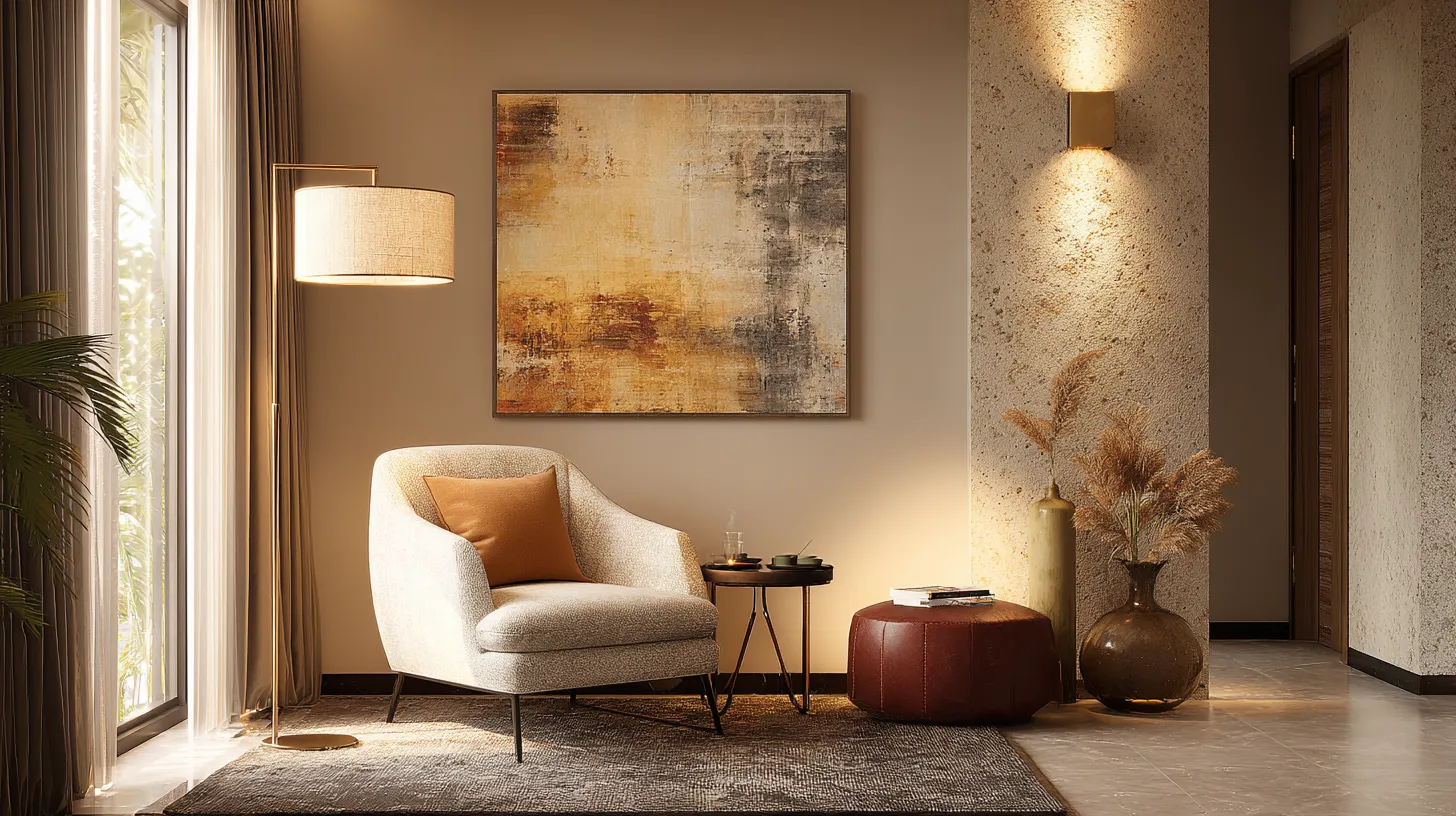
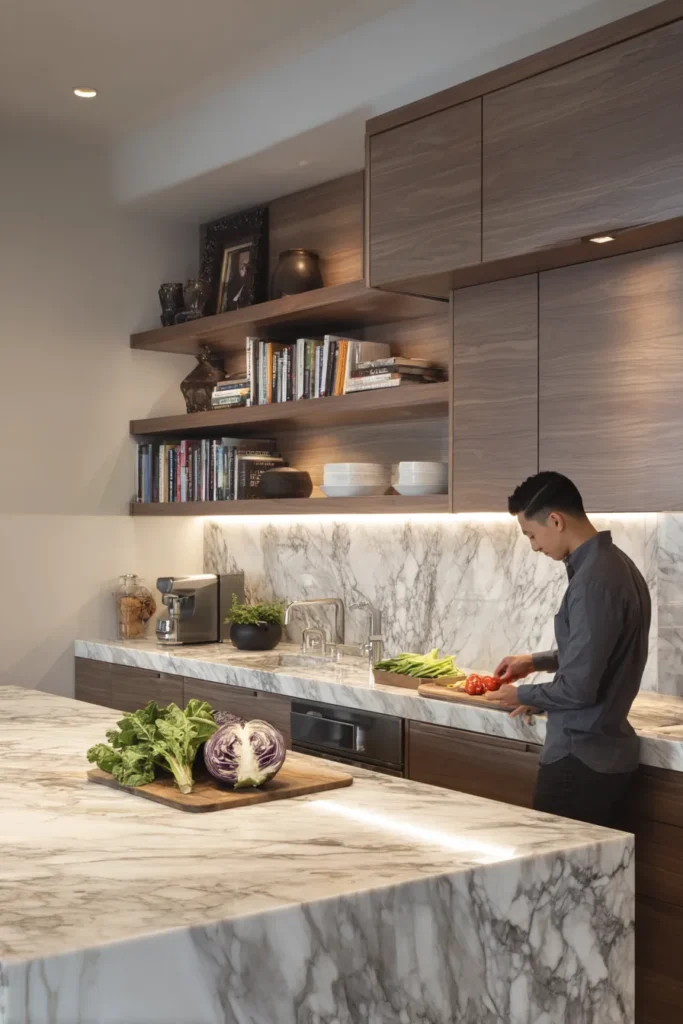
Task lighting is purpose-driven and precise. This layer brings focused illumination exactly where you need it—over kitchen counters, beside reading chairs, at bathroom mirrors. It’s the practical hero of layered lighting.
Unlike ambient light that washes broadly, task lighting concentrates brightness in work zones. Think under-cabinet lights illuminating chopping boards, adjustable desk lamps pooling light over paperwork, or sconces flanking bathroom mirrors to eliminate shadows during morning routines.
The key is positioning. Task lights should be bright enough to prevent eye strain—typically 300 to 700 lumens for reading or detailed work—but not so harsh they create glare. Adjustable fixtures offer flexibility, and cooler color temperatures around 4000K to 5000K can enhance focus and clarity for work-intensive tasks.
What Is Accent Lighting?
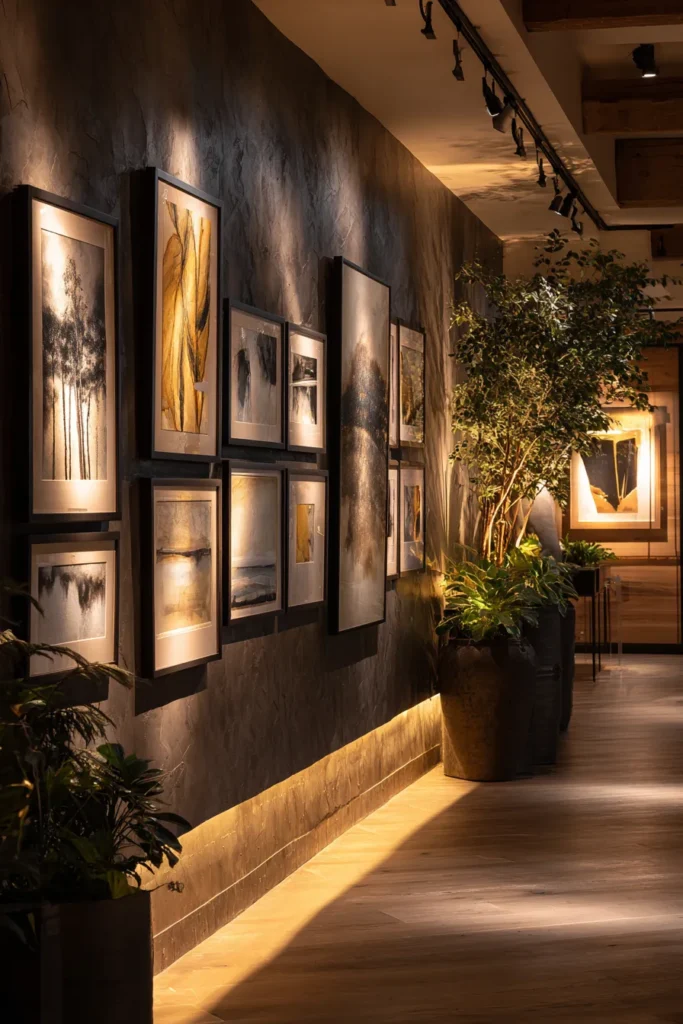
Accent lighting is where personality lives. This layer adds drama, highlights what you love, and creates visual interest by drawing eyes to specific features—artwork, architectural details, textured walls, or cherished collections.
It’s the spotlight on your favorite painting, the uplighting behind a fiddle-leaf fig, the LED strip beneath floating shelves. Accent lighting creates contrast and depth, making spaces feel curated rather than uniform. It whispers, “Look here,” inviting moments of visual pause.
Generally, accent lighting should be three times brighter than surrounding ambient light to create effective contrast. Use spotlights, track lighting, picture lights, or wall-washers. Warm temperatures work beautifully for cozy accents, while cooler tones can highlight modern art or metallic finishes with striking clarity.
Why Layered Lighting Transforms Spaces
Creating Depth and Dimension
Single-source overhead lighting flattens a room, making it feel one-dimensional and uninviting. Layered lighting adds depth by creating multiple points of illumination at different heights and intensities. This dimensional quality makes spaces feel larger, more interesting, and infinitely more comfortable.
When light comes from various sources—a floor lamp in the corner, under-cabinet strips in the kitchen, a table lamp on the console—your eye travels through the space rather than landing flatly on surfaces. Shadows become softer and more intentional. The room breathes.
Supporting Every Activity and Mood
Life in our homes is rarely uniform. You read, cook, entertain, work, rest—all in the same spaces at different times. Layered lighting accommodates this fluidity by offering flexibility through multiple light sources and dimmer controls.
Bright task lighting helps you dice vegetables safely. Dimmed ambient lighting sets the stage for dinner parties. Accent lights showcasing artwork create conversation starters. With thoughtful layering, your lighting adapts to your needs rather than forcing you to adapt to harsh, unchanging illumination.
Enhancing Circadian Rhythm and Wellbeing
Modern lighting design increasingly considers our biological responses to light. Cooler, brighter light in morning work areas supports alertness and focus. Warmer, dimmer light in evening spaces encourages relaxation and better sleep preparation.
By layering different color temperatures and intensities throughout your home, you can support your natural circadian rhythm. Task lighting in home offices can energize during work hours, while warm ambient and accent lighting in bedrooms and living areas helps you wind down as evening approaches.
How to Layer Lighting Room by Room
Living Room Layering
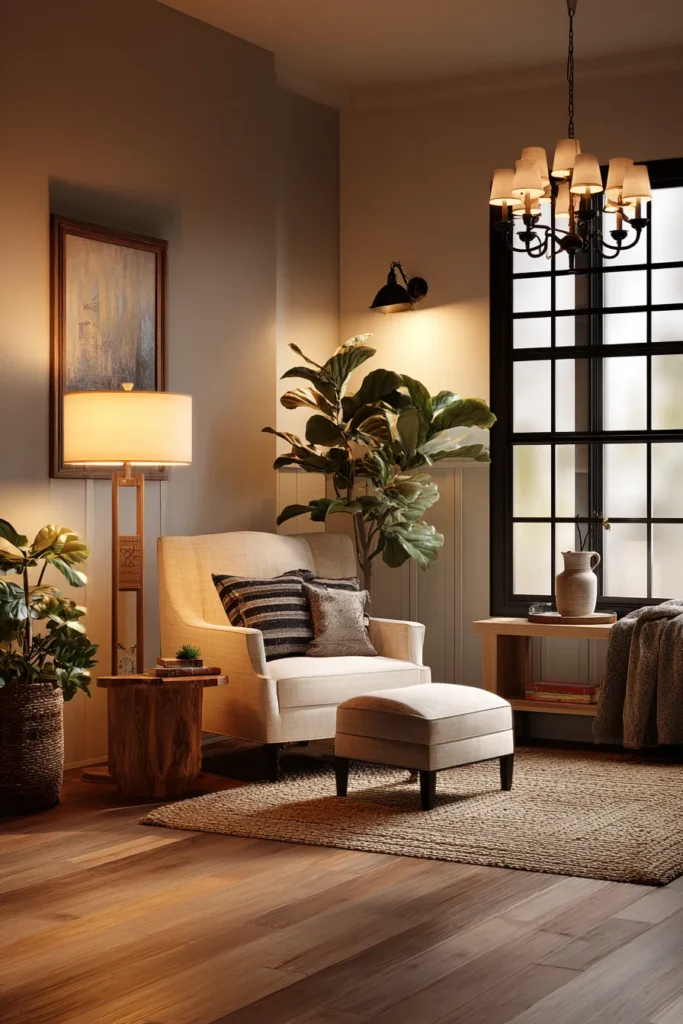
Start with ambient lighting from a statement chandelier or ceiling fixture—something that establishes the room’s character while providing general illumination. Add dimmer switches for evening flexibility.
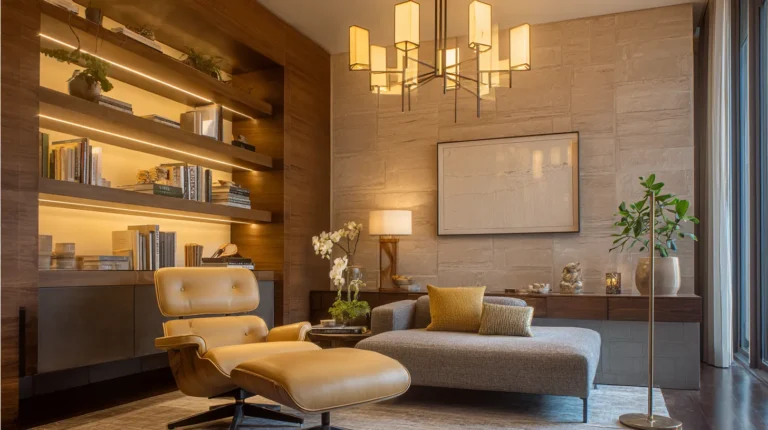
Introduce task lighting through floor lamps beside reading chairs and table lamps flanking the sofa. These create functional zones for activities while adding warmth at eye level. Choose fixtures with fabric or frosted shades to soften the light quality.
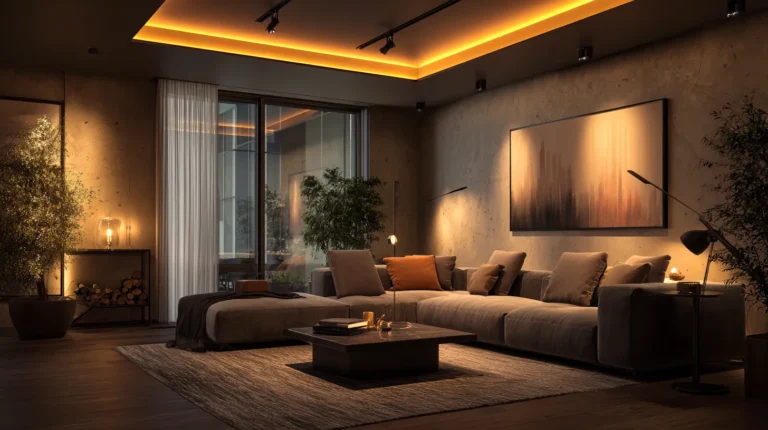
Accent lighting completes the picture. Install track lighting to highlight artwork, use uplighting behind plants to cast dramatic shadows on walls, or add LED strips beneath floating shelves. These touches create visual interest and make the space feel intentionally designed.
Kitchen Functionality and Warmth
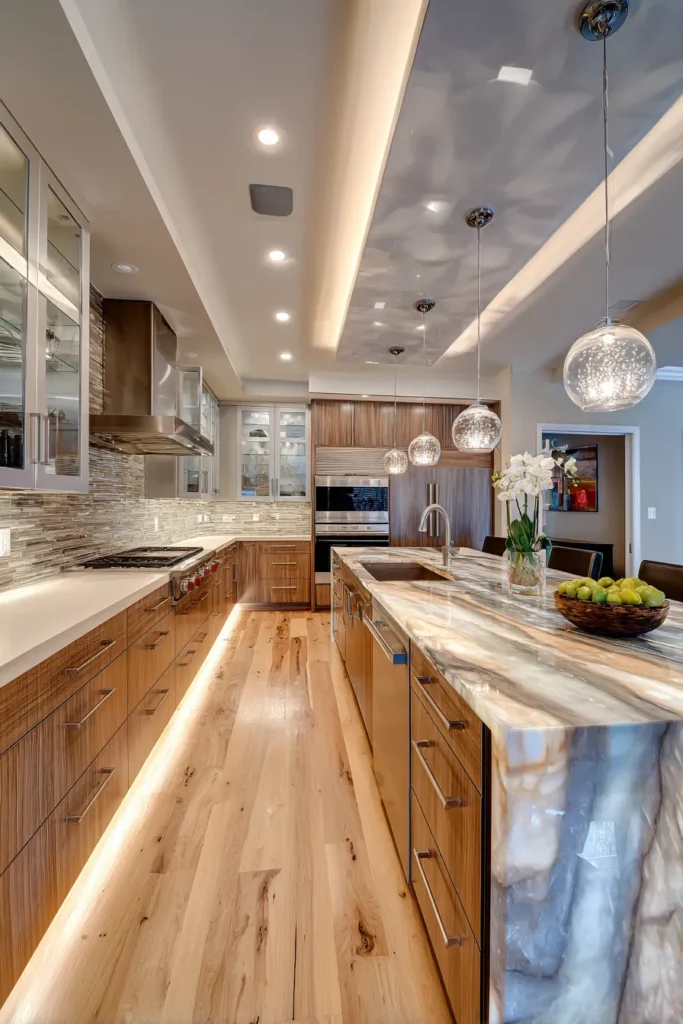
Kitchens demand excellent task lighting. Under-cabinet LED strips are essential, eliminating shadows on countertops where you prep and cook. Aim for 400 to 800 lumens per linear foot of counter space, with cooler temperatures around 4000K for accurate color rendering when handling food.
Ambient lighting often comes from recessed ceiling lights or a central pendant over an island. Space recessed lights 4 to 6 feet apart for even coverage. If you have an island or breakfast bar, pendant lights serve double duty—providing task lighting for the work surface while adding ambient warmth and style.
Don’t forget accent lighting. Illuminate glass-front cabinets from within to showcase dishware, or install toe-kick lighting beneath lower cabinets for subtle nighttime navigation. These details elevate a purely functional kitchen into something that feels warm and complete.
Bedroom Serenity Through Light
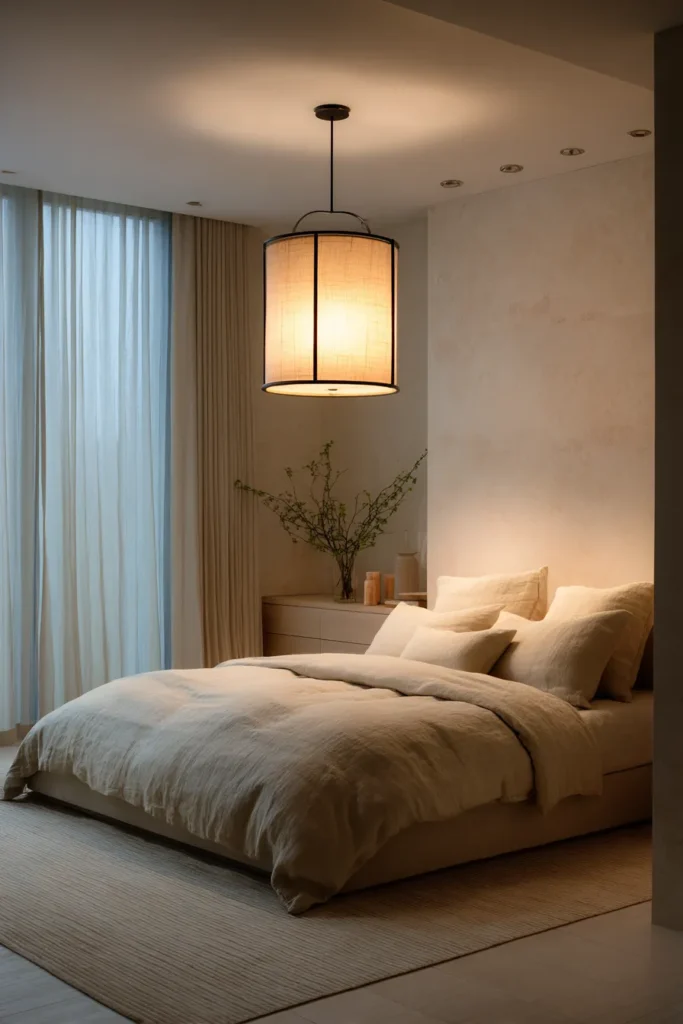
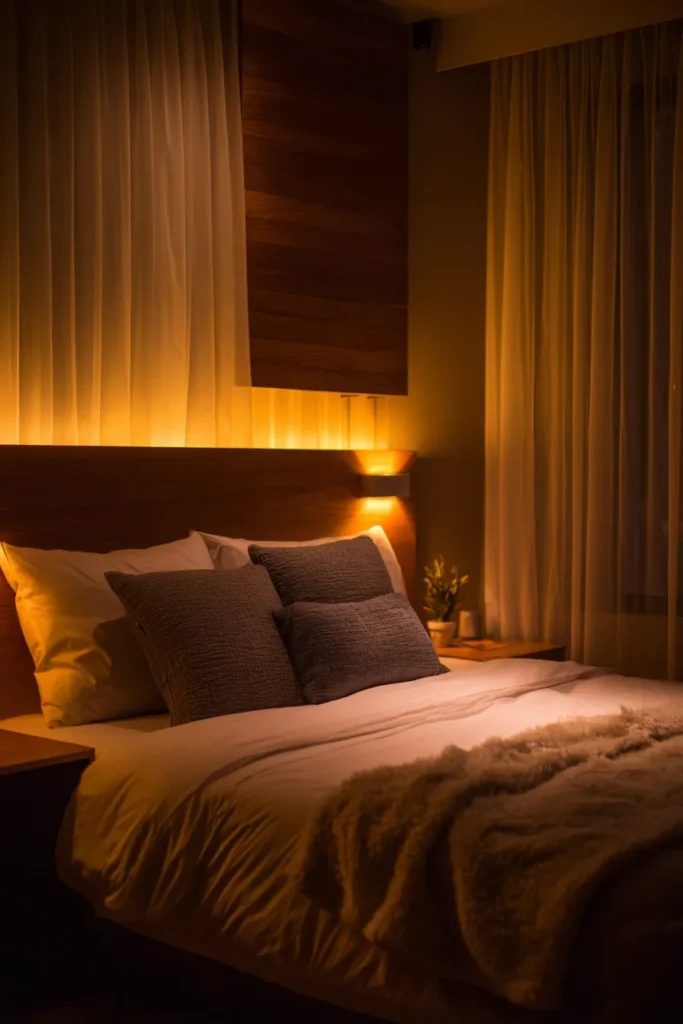
Bedrooms benefit from layered lighting that supports both function and relaxation. Overhead ambient lighting should be warm (2700K or lower) and dimmable, creating a soft envelope rather than stark brightness.
Task lighting lives in reading lamps on nightstands or wall-mounted swing-arm fixtures beside the bed. These should be adjustable and positioned to illuminate books without disturbing a partner. Table lamps with three-way bulbs offer flexibility for different evening activities.
Accent lighting might highlight a textured wall, architectural niche, or favorite painting. Consider LED strips behind the headboard for gentle backlighting, or picture lights over artwork. The goal is creating a sanctuary—light that soothes rather than stimulates.
Bathroom Precision and Ambiance
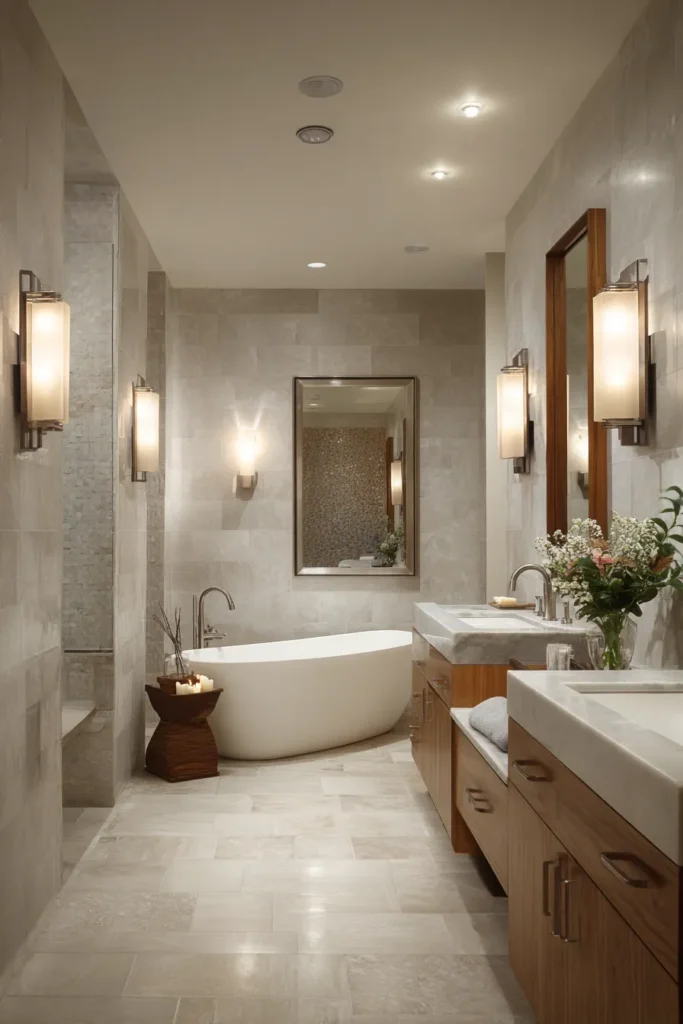
Bathroom task lighting is critical, especially around mirrors. Wall sconces mounted on either side of the mirror at 60 to 65 inches from the floor provide shadowless illumination for grooming. Avoid overhead-only lighting, which casts unflattering shadows under eyes and chin.
Ambient lighting comes from ceiling fixtures or recessed lights. In bathrooms, 5,000 to 10,000 lumens total is typical for adequate brightness. Choose fixtures rated for damp locations, especially near showers and tubs.
Accent lighting can be surprisingly effective in bathrooms. Illuminate a freestanding tub with nearby floor uplights, install toe-kick lighting for nighttime safety, or add a small chandelier for unexpected elegance. These touches transform a utilitarian space into a spa-like retreat.
Smart Lighting and Modern Integration
Voice-Activated Control and Automation
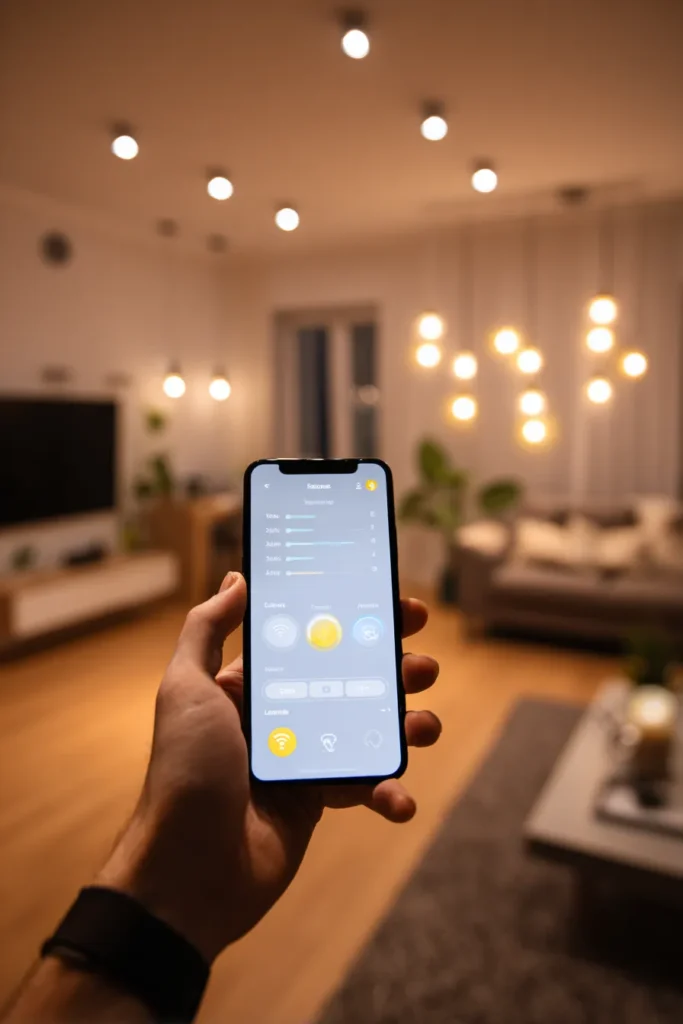
Smart bulbs and systems like Philips Hue, LIFX, or Lutron Caseta bring unprecedented flexibility to layered lighting. Control brightness, color temperature, and even specific hues through voice commands or smartphone apps. Set scenes that activate multiple layers simultaneously—”movie night” dims ambient lights while leaving subtle accent lighting active.
Automation takes this further. Schedule lights to gradually brighten in the morning, mimicking sunrise to support natural waking. Program evening routines that dim lights progressively, signaling your body it’s time to wind down. Smart technology makes layered lighting responsive to your lifestyle without manual adjustment.
Energy Efficiency Through LED Innovation
Modern LED technology makes layered lighting more sustainable and cost-effective than ever. LEDs use 75% less energy than incandescent bulbs while lasting up to 25 times longer. This efficiency matters when you’re running multiple light sources throughout your home.
Look for Energy Star-rated fixtures and bulbs. Choose LEDs with high CRI (Color Rendering Index) ratings above 90 for accurate, natural color representation. Dimmable LEDs offer flexibility across all three lighting layers, and their minimal heat output makes them safe for enclosed fixtures and close-contact applications.
Circadian-Supportive Lighting Systems
Some smart systems now offer circadian rhythm support, automatically adjusting color temperature throughout the day. Morning light starts cool and bright (5000K+), transitioning to neutral during midday, then warming to 2700K or lower by evening.
This biologically appropriate lighting supports better sleep, improved mood, and enhanced focus. While more advanced systems can be pricey, even basic smart bulbs with tunable white capabilities allow manual adjustments that support your natural rhythms.
Common Lighting Mistakes to Avoid
Over-Reliance on Overhead Lighting
The single biggest mistake is depending solely on overhead fixtures. This creates flat, uninviting spaces with harsh shadows and no visual interest. Always supplement ceiling lights with eye-level and low sources—floor lamps, table lamps, wall sconces—to create dimension and warmth.
Ignoring Color Temperature Consistency
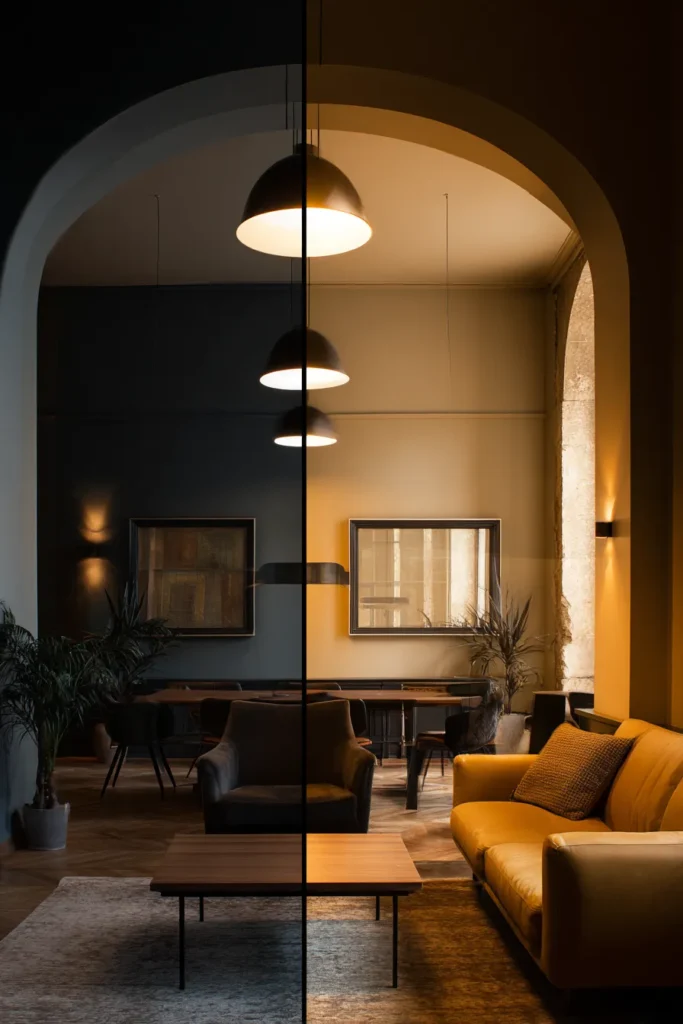
Mixing wildly different color temperatures in one space feels chaotic and uncomfortable. While you might use cooler task lighting in a home office, ambient and accent lighting in that same room should remain relatively cohesive. Aim for color temperatures within 1000K of each other unless deliberately creating zones with distinct purposes.
Inadequate Dimming Control
Fixed-brightness lighting offers no flexibility for mood or activity changes. Install dimmer switches on ambient and accent lighting at minimum. Modern LED-compatible dimmers are affordable and transformative, allowing one fixture to serve multiple purposes throughout the day.
Forgetting the Human Scale
Lighting placed only at ceiling height ignores the layers we actually experience at eye level. Incorporate lighting at multiple heights—floor lamps, table lamps, mid-wall sconces—to create intimacy and human-scaled comfort.
Essential Layered Lighting Checklist
- Establish ambient lighting first: Ensure even, comfortable general illumination throughout the space
- Identify task areas: Add focused lighting wherever specific activities occur—reading, cooking, grooming, working
- Highlight what you love: Use accent lighting to showcase artwork, architecture, textures, or collections
- Install dimmer controls: Add flexibility for mood and time-of-day adjustments
- Layer heights strategically: Combine ceiling, eye-level, and low lighting sources for dimensional depth
- Consider color temperature: Choose warm lights (2700K-3000K) for living spaces, cooler (4000K-5000K) for task areas
- Calculate appropriate lumens: Match light output to room size and purpose—more for kitchens, less for bedrooms
- Plan for flexibility: Use multiple switches or smart controls so layers can operate independently
- Include sustainable options: Choose LED fixtures and Energy Star-rated products for efficiency
- Test before finalizing: Live with lighting for a few days and adjust placement or intensity as needed
Emerging Trends in Layered Lighting
Sustainable and Eco-Conscious Fixtures
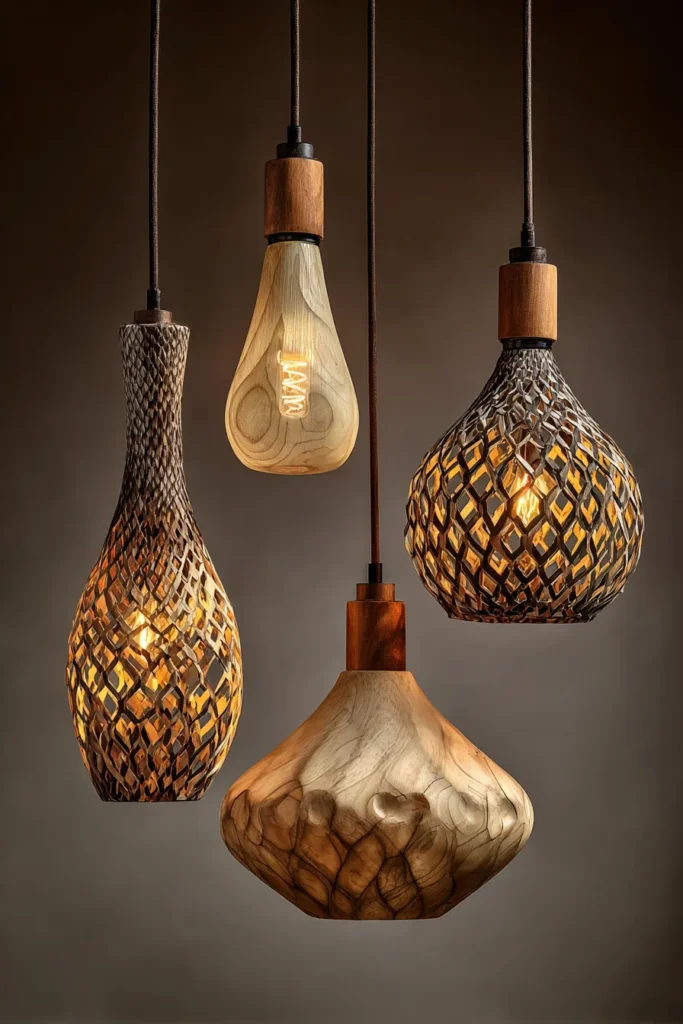
Design-conscious homeowners increasingly seek fixtures made from reclaimed wood, recycled metals, and natural materials like bamboo or linen. These choices align aesthetic beauty with environmental responsibility, creating lighting that looks good and feels good to own.
Solar-powered outdoor accent lighting and fixtures with replaceable LED modules extend sustainability beyond just bulb choices. The best modern lighting designs consider the entire lifecycle, from manufacturing through eventual recycling or reuse.
Architectural Integration
Contemporary lighting design often integrates fixtures directly into architecture—recessed linear LEDs in coffered ceilings, edge-lit panels replacing traditional windows, toe-kick lighting that appears seamless with cabinetry. This approach makes lighting feel intrinsic rather than added, creating clean, minimalist aesthetics.
Channel systems and track lighting have evolved beyond utilitarian origins into sleek, customizable solutions that blend with modern interiors while offering maximum flexibility for accent and task lighting placement.
Wellness-Focused Design
Beyond basic circadian support, lighting design increasingly considers human-centric lighting principles. This includes flicker-free LEDs to reduce eye strain, customizable color temperatures for different activities, and even research-backed lighting levels that support concentration, creativity, or relaxation.
Wellness-focused lighting recognizes that illumination profoundly affects mood, productivity, and health. The best layered lighting designs now consciously support these biological and psychological needs.
Bringing It Home
Layered lighting isn’t about following rigid rules—it’s about understanding principles and adapting them to how you actually live. It’s the reading lamp that makes your favorite chair perfect for Sunday afternoons. The under-cabinet glow that makes evening cooking feel less like a chore. The spotlight that turns your grandmother’s painting into a focal point.
When you layer light thoughtfully, you’re not just making rooms brighter. You’re creating spaces that feel intentional, comfortable, and unmistakably yours. You’re building moments—the golden hour that lasts all evening, the focused morning that carries energy into your day, the soft retreat that welcomes you home.
Start small. Add one task light where you need it most. Install a dimmer on your overhead fixture. Notice how these small shifts change not just visibility but feeling. Lighting is one of the most powerful tools in your design arsenal, and layered lighting is how you wield it with grace.
Your home deserves light that lives and breathes with you. Now you know how to give it exactly that.
Frequently Asked Questions
What is the difference between ambient, task, and accent lighting?
Ambient lighting provides general, even illumination throughout a space—your baseline glow. Task lighting offers focused brightness for specific activities like reading or cooking. Accent lighting highlights architectural features, artwork, or design elements to create visual interest and depth.
How many layers of lighting does a room need?
Most rooms benefit from at least two layers (typically ambient plus task), but three layers create the most flexibility and visual interest. Smaller spaces like powder rooms might work with just ambient and accent, while kitchens and living rooms thrive with all three layers working together.
What color temperature is best for ambient lighting in homes?
Warm color temperatures between 2700K and 3000K work best for residential ambient lighting, creating cozy, inviting atmospheres. These warmer tones are flattering to skin tones and furnishings while supporting relaxation in living areas and bedrooms.
How do you use accent lighting effectively?
Position accent lights to create contrast—they should be approximately three times brighter than surrounding ambient light. Focus on what you want to showcase: artwork, textured walls, plants, or architectural details. Use adjustable fixtures like track lights or picture lights for flexibility.
Can I add layered lighting to an existing room without major renovation?
Absolutely. Start with plug-in floor and table lamps for task lighting, add battery-operated or plug-in LED strips for accent lighting under shelves or behind furniture, and consider smart bulbs in existing fixtures for better ambient control. Dimmer switches are relatively easy installations that dramatically increase flexibility.