
Table of Contents
The living room has always been the heart of the home — a place where life unfolds in layers. But today, that heart beats to a different rhythm. It’s no longer just where we gather for conversation or sink into the sofa after a long day. It’s where we work, create, play, rest, and reinvent ourselves daily.
The rise of multifunctional living rooms reflects how we’ve learned to honor every square foot. Urban living constraints, changing lifestyles, and the work-from-home revolution have transformed our relationship with space. We’re no longer designing rooms for single purposes; we’re crafting flexible living spaces that adapt to our evolving needs.
This shift isn’t about compromise — it’s about intelligence. It’s about choosing a velvet ottoman that conceals blankets, or a console table that doubles as a standing desk when the afternoon light is just right. It’s the art of space optimization wrapped in beauty.
Let’s explore how to create a living room that works as hard as you do, without sacrificing an ounce of soul.
Why Multifunctional Living Rooms Have Become Essential
The Evolution of How We Live
Our homes have become our sanctuaries, offices, gyms, and creative studios all at once. The pandemic accelerated what was already unfolding: the need for multipurpose rooms that serve multiple aspects of our lives. Work-from-home setups are no longer temporary solutions but permanent fixtures in our daily routines.
Urban living solutions demand creativity. When square footage comes at a premium, every piece of furniture must earn its place. A living room that can transform from a productive workspace by day to an entertainment haven by evening isn’t a luxury — it’s a necessity for modern life.
The Psychology Behind Flexible Design
There’s something deeply satisfying about a space that anticipates your needs. Multifunctional living rooms reduce mental clutter by eliminating the chaos of dedicated, underused spaces. When your living room can seamlessly shift functions, you experience a sense of control and calm that ripples through your entire day.
Research shows that adaptable environments improve productivity and reduce stress. By creating zones within a single space, you’re giving your brain clear signals: this corner is for focus, that nook is for rest. The result? Better mental health, enhanced creativity, and a home that truly supports how you live.
Key Elements of Successful Multifunctional Living Rooms
Space-Saving Furniture That Doesn’t Sacrifice Style
The foundation of any multipurpose room lies in choosing furniture that works twice as hard. Gone are the days when multifunctional furniture meant clunky, utilitarian pieces that disrupted your aesthetic.
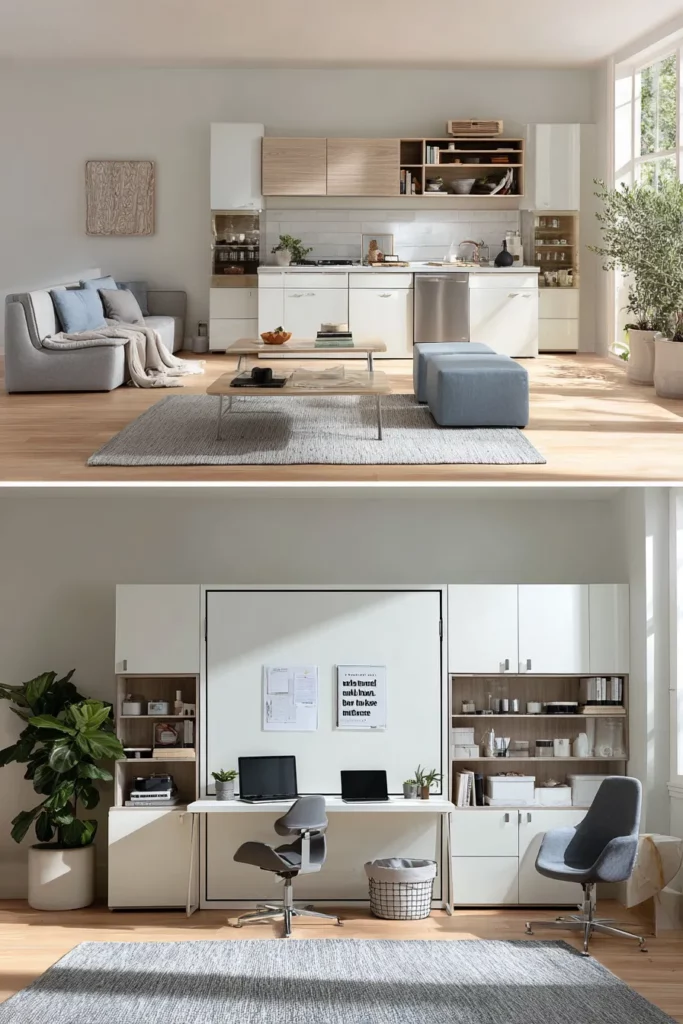
Today’s modular furniture is a revelation. Think sectional sofas with built-in storage compartments, coffee tables that lift to dining height, and sleek murphy beds tucked behind elegant paneling. These pieces honor both form and function, allowing you to maintain your design vision while maximizing utility.
Consider these transformative furniture choices:
- Nested tables in warm wood tones that separate when you need surface space and tuck away when you don’t
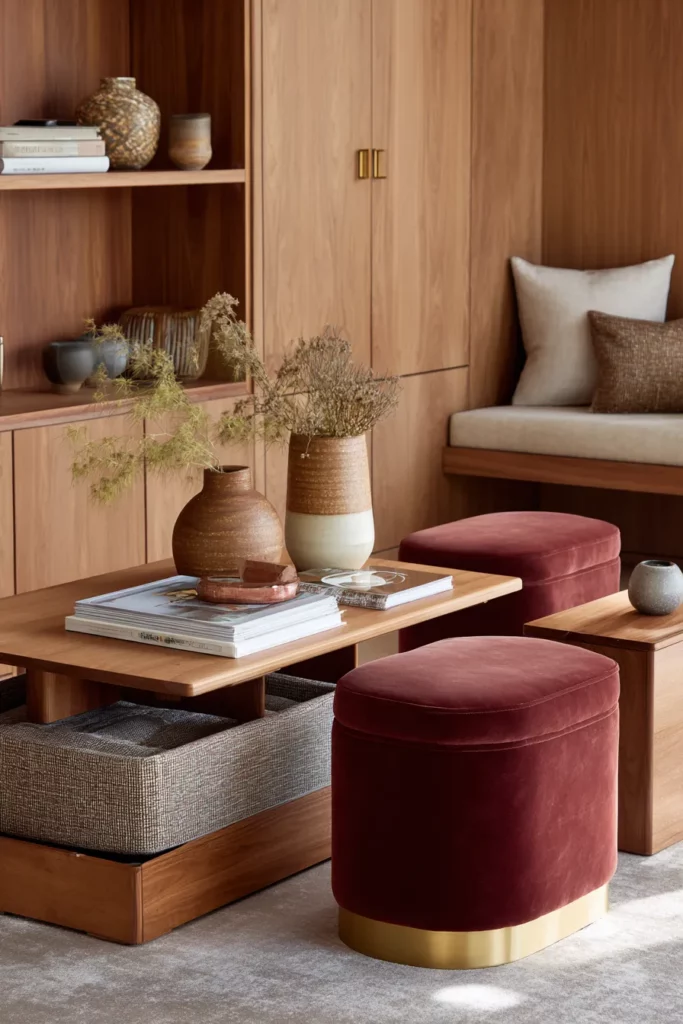
- Storage ottomans upholstered in rich textures that serve as extra seating, footrests, and hidden repositories for throws and magazines
- Convertible sofa beds with memory foam mattresses that welcome overnight guests without the bulk of a dedicated guest room
- Wall-mounted drop-leaf desks that fold up when the workday ends, disappearing into your design
- Modular shelving systems that can be reconfigured as your needs evolve
Zoning Your Living Room: Creating Rooms Within a Room
The magic of flexible design lies in intelligent zoning. Even in an open-plan space, you can create distinct areas that signal different functions without erecting physical barriers.
Use rugs to define territories. A plush wool rug anchors your seating area, while a flat-weave runner delineates your workspace. The tactile difference beneath your feet subconsciously shifts your mindset as you move between zones.
Lighting plays an equally crucial role. Ambient overhead lighting washes the entire room, but task lighting — a brass desk lamp, a reading sconce, dimmable LED strips — tells the story of each zone’s purpose. Layer your lighting ideas to create atmosphere and functionality in equal measure.
Smart Storage Solutions for Visual Calm
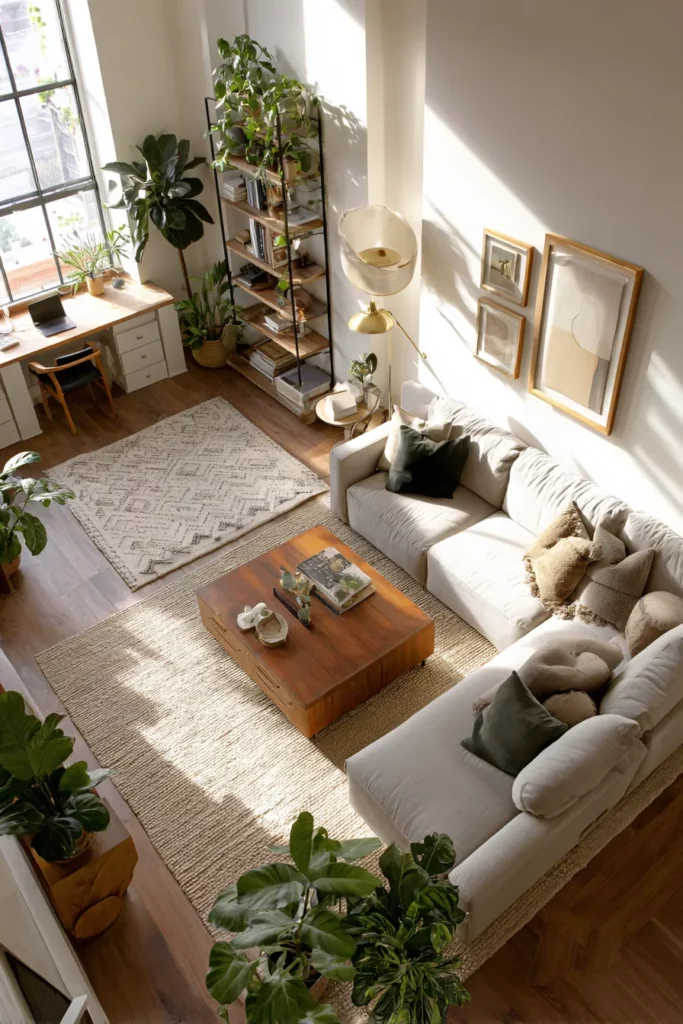
A multifunctional living room only works if it doesn’t feel cluttered. Custom built-ins offer the most elegant solution, wrapping storage into the architecture itself. Floor-to-ceiling shelving in soft whites or natural wood creates vertical interest while housing everything from books to baskets.
Consider furniture with hidden compartments: console tables with drawers, benches with lift-top storage, TV stands with closed cabinets. When everything has a home, transitioning between the room’s different functions becomes effortless.
Modular storage systems allow you to adjust as your life changes. Cube organizers with fabric bins can be rearranged seasonally, while floating shelves can be added or removed without damaging walls — perfect for renters navigating urban living constraints.
Designing for Multiple Functions Without Visual Chaos
The Art of Cohesive Aesthetics
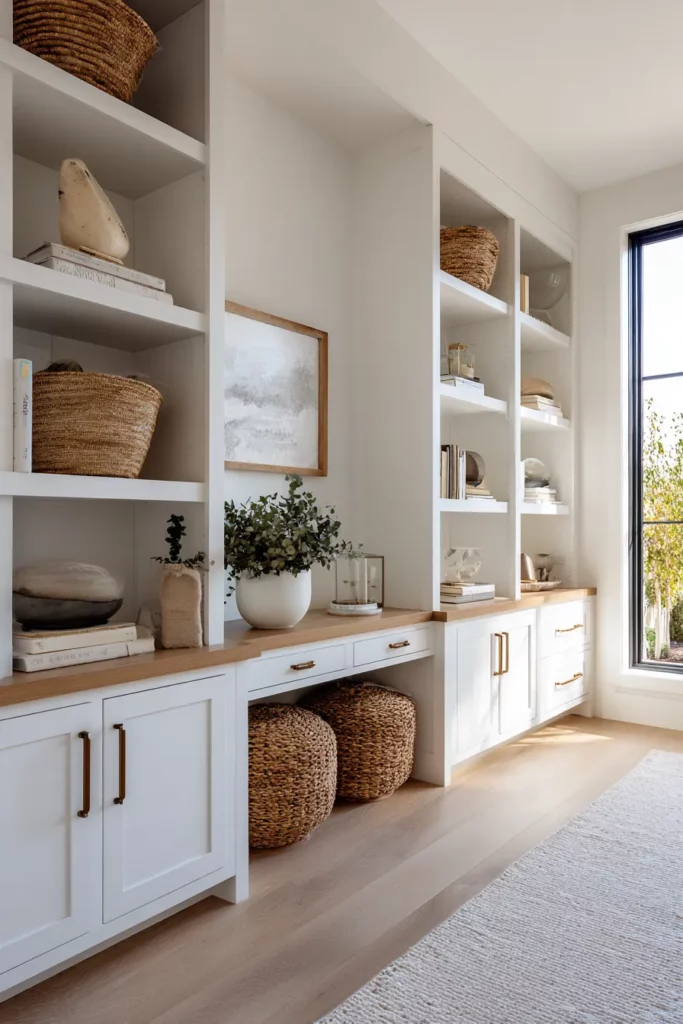
Here’s the secret: a successful multipurpose room doesn’t look like it’s trying to be everything. It maintains a unified design language while quietly accommodating diverse needs.
Choose a consistent color palette that flows through all your functional zones. Soft neutrals — warm grays, creamy whites, gentle beiges — create a calming backdrop that doesn’t compete with the room’s various purposes. Introduce warmth through natural materials: linen curtains, leather accents, woven baskets, live-edge wood.
Your furniture should speak the same design dialect. Whether your style leans toward modern minimalism or rustic elegance, ensure each piece — even the most utilitarian — honors that aesthetic. A home office conversion doesn’t mean sacrificing beauty for an ugly desk chair; it means finding an ergonomic seat upholstered in fabric that complements your sofa.
Incorporating Technology Seamlessly
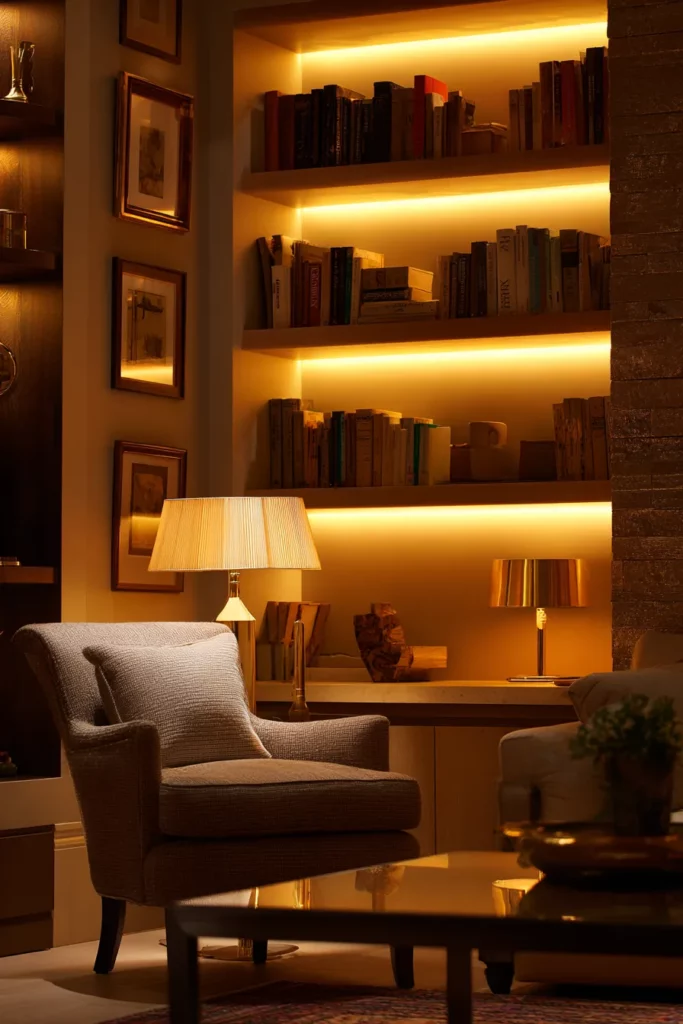
Smart home technology has revolutionized how we create adaptable spaces. Motorized blinds that respond to natural light, wireless charging stations built into side tables, and voice-activated lighting systems allow your room to transform with minimal effort.
But technology should never dominate the visual landscape. Invest in cable management systems that hide cords, choose wireless options when possible, and incorporate tech into furniture rather than letting it clutter surfaces. A sleek docking station built into a console table or a TV that displays artwork when not in use keeps your space feeling intentional, not accidental.
Room Function Transformations: Practical Examples
From Living Room to Home Office
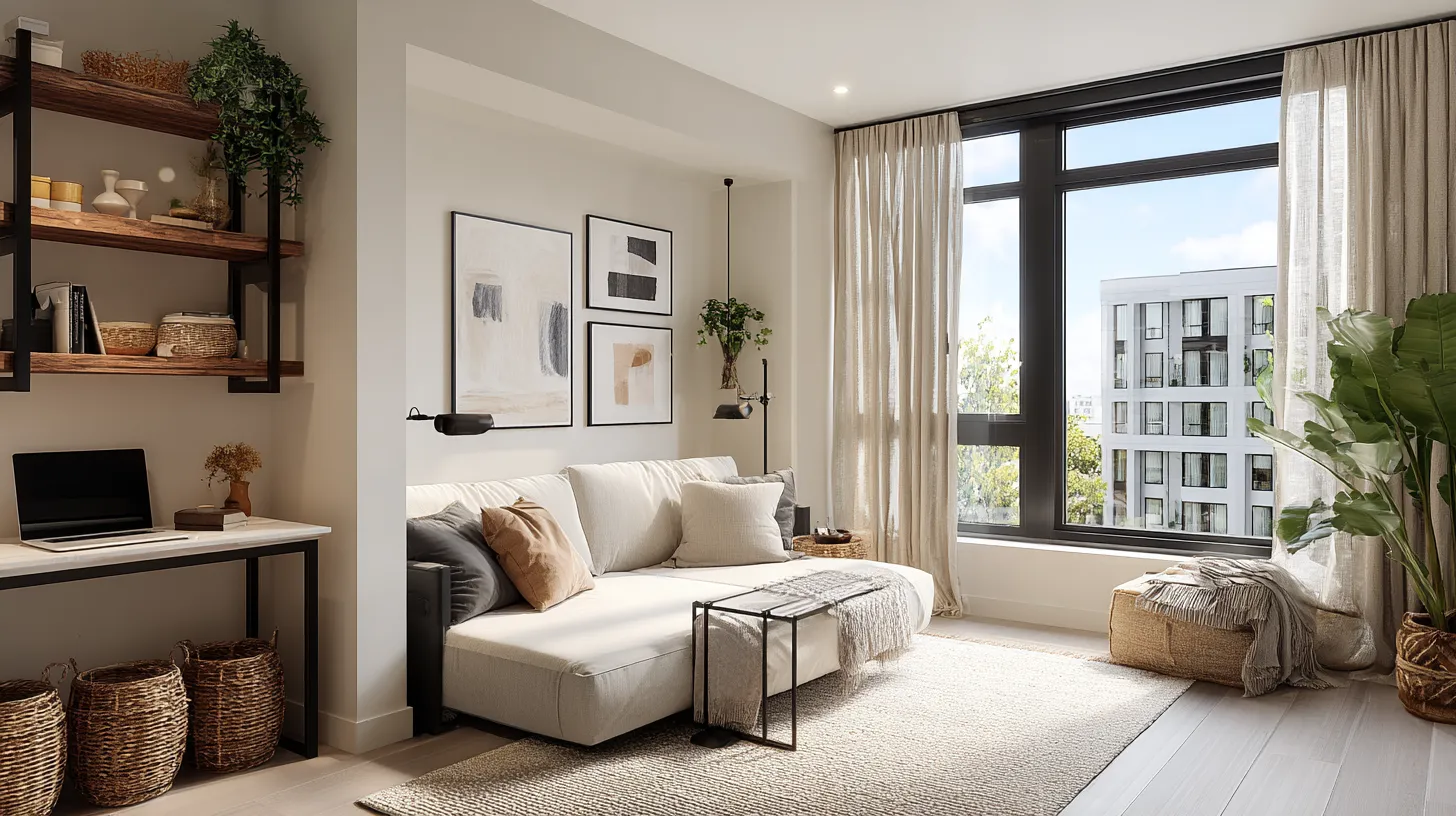
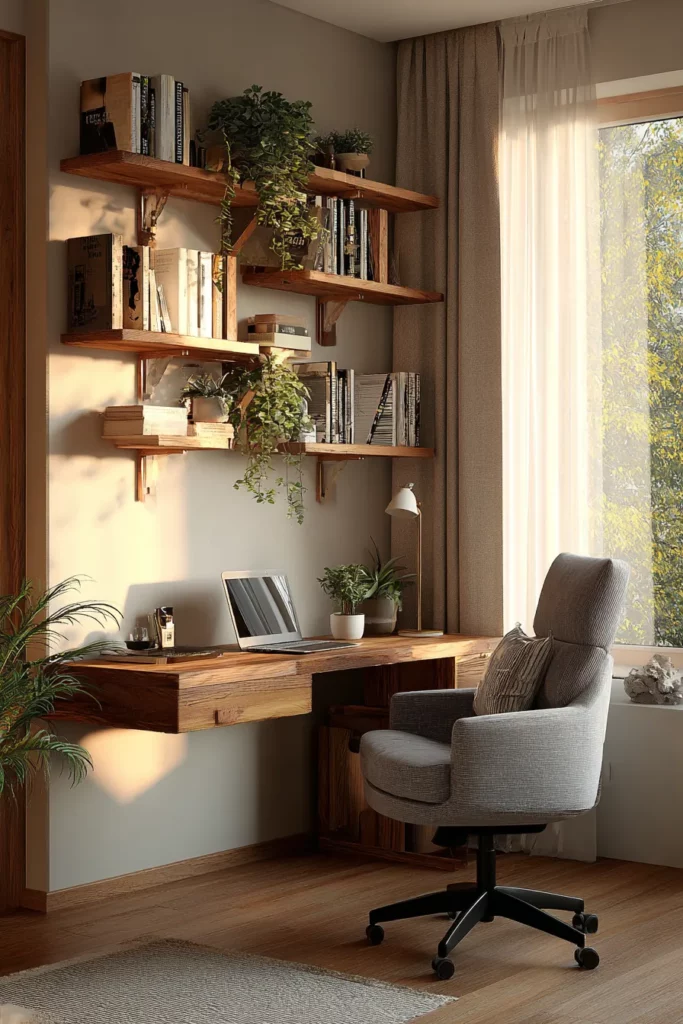
The work-from-home revolution requires dedicated focus space, even within a shared room. Position a narrow desk behind your sofa, creating a workspace that faces a wall for concentration. When 5 PM arrives, close your laptop and turn around — you’ve literally left work behind.
Alternatively, a secretary desk offers the romance of traditional furniture with modern functionality. The drop-front creates a workspace that disappears when closed, and the interior cubbies organize office supplies out of sight.
Natural light matters enormously for productivity. Position your workspace near windows when possible, and supplement with full-spectrum task lighting that reduces eye strain. Add a small plant — perhaps a trailing pothos or a sculptural snake plant — to bring life to your work corner.
Living Room Meets Guest Room
Hosting overnight visitors doesn’t require a dedicated guest bedroom. A quality sleeper sofa or daybed provides comfortable sleeping space without advertising itself as a bed during waking hours.
Layer your “guest bed” like you would any cozy furniture: throw pillows during the day, proper bed pillows stored in that beautiful ottoman. Keep a basket nearby with fresh linens, extra blankets, and small luxuries like lavender linen spray and a carafe for water.
For truly flexible design, consider a murphy bed system with a front-facing desk or shelving. When guests arrive, the desk folds away and a full bed descends — future-proof home design that adapts to your evolving needs.
Creating a Fitness and Wellness Corner
Carve out a wellness zone in your living room without installing a home gym. A yoga mat stored in a decorative basket, resistance bands hanging from sculptural wall hooks, and a meditation cushion that doubles as floor seating create possibilities for movement and mindfulness.
Use a room divider or tall plant to create visual separation when you need focus. A standing mirror serves both fitness and decorative purposes, bouncing light and making your space feel larger while providing feedback during workouts.
Sustainable and Budget-Friendly Approaches
Choosing Eco-Friendly Materials
Future-proof home design considers environmental impact. When selecting multifunctional furniture, prioritize pieces crafted from sustainable materials: FSC-certified wood, natural latex foam, organic textiles, and non-toxic finishes.
Vintage and secondhand furniture often surpasses new pieces in both quality and character. A mid-century credenza offers storage and style while keeping furniture out of landfills. Reupholstering a classic chair in eco-friendly fabric gives you custom beauty at a fraction of new furniture costs.
Look for modular pieces that can be repaired and reconfigured rather than replaced. Investing in quality now — even if the initial cost is higher — proves more economical and environmentally responsible over time.
DIY Ideas for Multifunctional Living Room Setups
Budget-friendly solutions abound for the creatively minded. Transform a narrow console table into a standing desk by adding a keyboard tray beneath. Mount a fold-down table to the wall for workspace that disappears when not needed.
Create custom built-ins using affordable cube organizers arranged thoughtfully and topped with a wooden plank for a cohesive look. Add fabric bins in complementary colors for concealed storage. The result rivals expensive cabinetry at a fraction of the cost.
Repurpose furniture you already own. That dining table rarely used for meals? It might be perfect positioned behind your sofa as a desk. Those floating shelves from your old apartment? They create visual separation between zones when mounted strategically.
Multifunctional Living Room Design at a Glance
| Function | Furniture Solution | Design Tip |
|---|---|---|
| Work from Home | Wall-mounted desk, secretary desk, or console table | Position near natural light; use task lighting |
| Guest Sleeping | Sleeper sofa, daybed, or murphy bed | Store linens in decorative baskets or ottomans |
| Dining | Expandable coffee table or fold-down wall table | Choose pieces that complement existing furniture |
| Fitness | Foldable equipment, yoga mat storage | Use room dividers or plants for visual separation |
| Entertainment | Modular seating, hidden media storage | Incorporate tech seamlessly with cable management |
| Children’s Play | Storage ottomans, low shelving | Choose durable, washable fabrics; rotate toy access |
The Future of Multifunctional Living Spaces
Emerging Trends and Innovations
The future promises even more sophisticated space-saving solutions. We’re seeing furniture with integrated wireless charging, AI-powered lighting that adjusts to activities, and modular pieces that reconfigure with minimal effort.
Biophilic design — integrating nature into interiors — will become increasingly important in multipurpose rooms. Living walls, circadian lighting systems, and natural materials help multifunctional spaces feel restorative rather than utilitarian.
Expect furniture that responds to your needs in real-time: desks that adjust height automatically, seating that monitors posture, and storage systems that suggest organization based on usage patterns. Technology and design will merge more seamlessly, creating truly intelligent spaces.
Long-Term Value of Flexible Living Spaces
Investing in multifunctional design isn’t just about solving today’s challenges — it’s about creating resilience for tomorrow’s unknowns. A home that adapts preserves its value as lifestyle needs shift.
Whether you’re welcoming a new baby, launching a business, caring for aging parents, or embracing remote work, your living room can evolve without requiring renovation. This adaptability represents both financial wisdom and emotional peace, knowing your home grows with you rather than constraining you.
Essential Checklist for Your Multifunctional Living Room
Before you begin transforming your space, consider these foundational elements:
- Assess your actual needs: What functions must your living room serve daily versus occasionally?
- Measure carefully: Know your dimensions before purchasing furniture; use painter’s tape on floors to visualize placement
- Prioritize quality over quantity: Fewer, better pieces serve you longer than many mediocre items
- Plan for storage: Every multipurpose room needs 30% more storage than you think
- Consider sight lines: Ensure each zone feels intentional from every angle in the room
- Invest in proper lighting: Layer ambient, task, and accent lighting for flexibility
- Choose durable, cleanable materials: Multifunctional spaces work harder, so they need resilient finishes
- Create visual breathing room: Don’t fill every inch; negative space allows the eye to rest
- Select a cohesive color palette: Limit yourself to 3-4 main colors plus neutrals
- Build in flexibility: Choose pieces you can easily move or reconfigure as needs change
- Plan for technology: Include adequate outlets, charging stations, and internet access points
- Honor aesthetics equally with function: A beautiful space invites more use and brings daily joy
Conclusion
The rise of multifunctional living rooms isn’t a trend — it’s a thoughtful response to how we actually live. These spaces honor the reality that life is fluid, needs are diverse, and home should support our whole selves.
Creating a living room that serves many purposes without sacrificing beauty requires intention, yes, but also trust in your own instincts. You know how you move through your days, what brings you peace, which moments need support.
Start small if the transformation feels overwhelming. Add one piece of space-saving furniture. Create one designated zone. Layer one new function into your existing room. Each small change compounds, and soon you’ll find yourself in a space that feels less like accommodation and more like alchemy — that rare magic of a room that anticipates and embraces everything you need it to be.
Your living room is waiting to become more. Let it.
Frequently Asked Questions
How do you create a multifunctional living room without it feeling cluttered?
The key lies in smart storage and visual consistency. Choose furniture with hidden storage compartments, maintain a cohesive color palette, and use zoning techniques like rugs and lighting to define different areas. Keep surfaces clear by giving everything a designated home, and embrace vertical storage solutions that draw the eye upward rather than creating visual clutter at eye level.
What furniture works best in multifunctional living rooms?
Prioritize pieces that serve multiple purposes: sleeper sofas for guest accommodation, ottomans with internal storage, coffee tables that lift to dining or desk height, and modular shelving that can be reconfigured. Look for furniture with clean lines and neutral colors that won’t clash as you change the room’s function. Quality matters more than quantity — invest in fewer, better pieces that will serve you for years.
How can you add a workspace to your living room without it looking like an office?
Choose desks that blend with residential furniture styles, such as console tables, secretary desks, or wall-mounted drop-leaf options. Position your workspace thoughtfully — perhaps behind the sofa or in an alcove — and use decorative accessories like a beautiful desk lamp, a ceramic pen holder, and art above the desk to make it feel intentional. When work ends, close your laptop and add a small plant or decorative object to signal the space has shifted purpose.
What are the best space-saving furniture options for small multifunctional living rooms?
Wall-mounted and foldable pieces maximize floor space: murphy beds, drop-leaf tables, and wall desks that fold up when not needed. Nested tables separate when you need surface area and tuck away afterward. Furniture with vertical storage — tall bookcases, floor-to-ceiling cabinets — utilizes often-wasted space. Transparent furniture like acrylic chairs or glass tables creates function without visual weight, making small rooms feel more spacious.
How do you organize different zones in an open multifunctional living room?
Use area rugs to define each zone’s boundaries, creating visual and tactile distinction between spaces. Layer lighting so each area has appropriate illumination for its function. Furniture placement naturally creates zones — position a sofa to create a “back” where you might place a desk or console table. Low bookcases, plants, or decorative screens provide separation without blocking light or making the space feel closed off. Maintain consistent design elements across zones so the room still feels unified despite serving multiple purposes.