
Table of Contents
There’s something profoundly intimate about a luxury apartment living room. It’s not merely about square footage or price tags—it’s about how light catches velvet at golden hour, how a carefully chosen armchair becomes your Saturday morning refuge, how every surface tells a story of intention.
In the heart of the city, where space is precious and life moves quickly, your living room becomes more than a gathering place. It transforms into a sanctuary that reflects modern luxury living rooms at their finest: thoughtful, sensory, and deeply personal.
We’re living in an era where luxury means something new. It whispers rather than shouts. It prioritizes sustainability alongside beauty, wellness alongside style, and smart functionality wrapped in timeless elegance.
Let’s explore how to craft a luxury living room that honors both your space constraints and your desire for something extraordinary.
Understanding Modern Luxury Living Rooms
Luxury today isn’t about excess—it’s about essence. Modern luxury living rooms embrace what truly matters: quality over quantity, sustainability over trend-chasing, and personal meaning over generic opulence.
The most compelling upscale apartment styling begins with a fundamental shift in perspective. Instead of asking “what can I fit in this space,” consider “what deserves to be here?” This single question transforms everything.
High-end furniture in apartment settings demands both beauty and intelligence. A bespoke sofa that doubles as a guest bed, artisanal accent tables with hidden storage, or a console that morphs from work surface to entertaining bar—these are the hallmarks of sophisticated interior design for urban living.
The Foundation: Space Planning for Luxury Apartments
Working With Your Square Footage
Small apartment living rooms can absolutely achieve luxury when you understand proportions. Measure your space carefully—not just dimensions, but how natural light moves through the room, where eyes naturally land when entering, and which corners feel inviting versus overlooked.
A standard 12×14 foot living room can accommodate a 78-inch sofa, two accent chairs, and a coffee table with proper spacing. But luxury isn’t about filling every inch—it’s about creating breathing room that allows each piece to shine.
Consider vertical space as your secret advantage. Floor-to-ceiling curtains draw the eye upward, making ceilings feel loftier. Tall bookshelves or statement lighting fixtures create the illusion of grandeur that horizontal arrangements alone cannot achieve.
The Art of Furniture Arrangement
Flow matters more than you might imagine. Position your primary seating to face the room’s focal point—whether that’s a statement art piece, a fireplace, or a dramatic window view. Leave at least 30 inches of walking space around furniture for an uncluttered feel.
Multi-functional furniture becomes your greatest ally in luxury apartment living. An ottoman that stores blankets, nesting tables that expand for entertaining, or a sculptural room divider that creates zones without walls—these choices honor both form and function.
Anchor your seating arrangement with a substantial area rug that extends at least six inches beyond furniture edges. This grounds the space and defines your living room as a distinct sanctuary within an open-concept layout.
Sustainable Luxury: Eco-Friendly Materials That Elevate
The most meaningful luxury living room decor today considers environmental impact. Sustainable materials no longer mean sacrifice—they represent the pinnacle of thoughtful design.
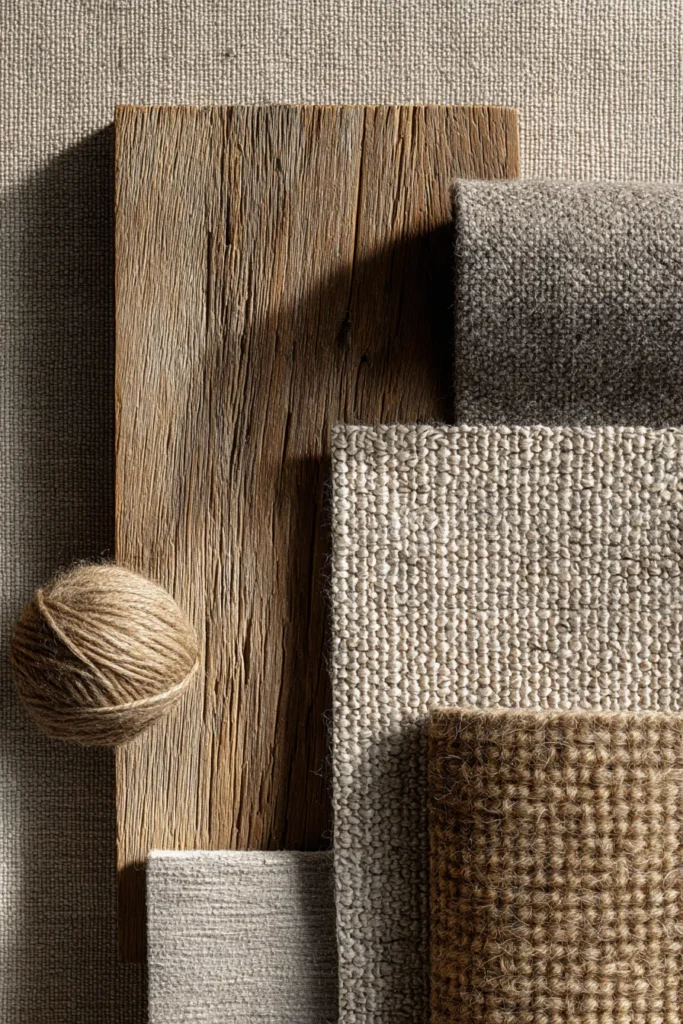
Seek furniture crafted from FSC-certified wood, organic linen upholstery, or reclaimed materials with visible history. These choices carry stories that mass-produced pieces cannot replicate. Natural materials like jute rugs, wool throws, and clay pottery connect your urban space to something elemental and grounding.
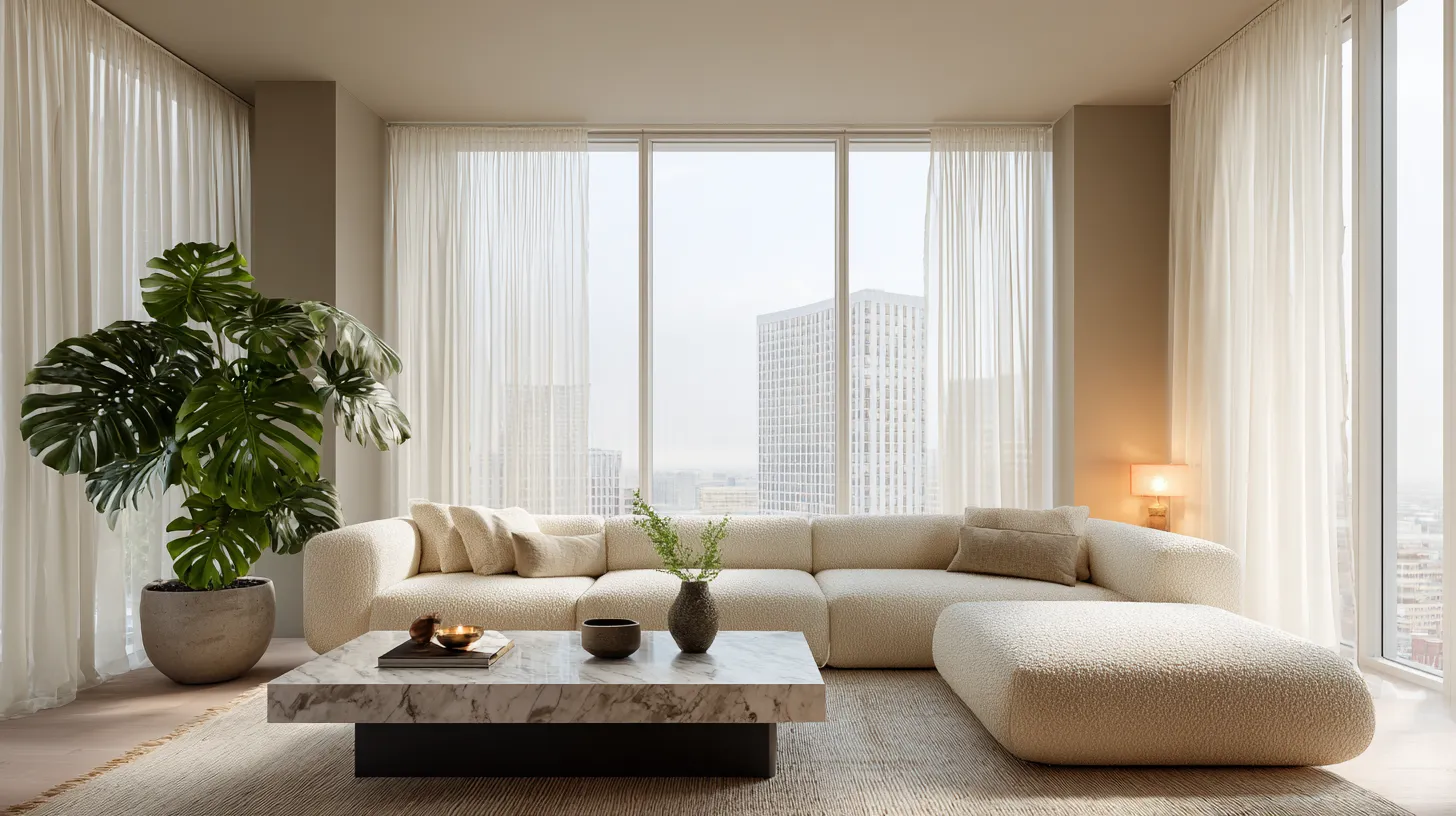
Bouclé sofas made from recycled fibers, coffee tables hewn from salvaged timber, or vintage accent chairs reupholstered in organic velvet—these sustainable choices elevate rather than compromise your aesthetic. They represent modern luxury’s evolution toward conscious consumption.
Biophilic Design: Bringing Nature Into Urban Living
Why Plants Transform Apartment Spaces
Biophilic design elements aren’t decorative afterthoughts—they’re essential to wellness in urban environments. Studies show that incorporating natural elements reduces stress, improves air quality, and creates psychological connections to the outdoors that apartment dwellers desperately need.
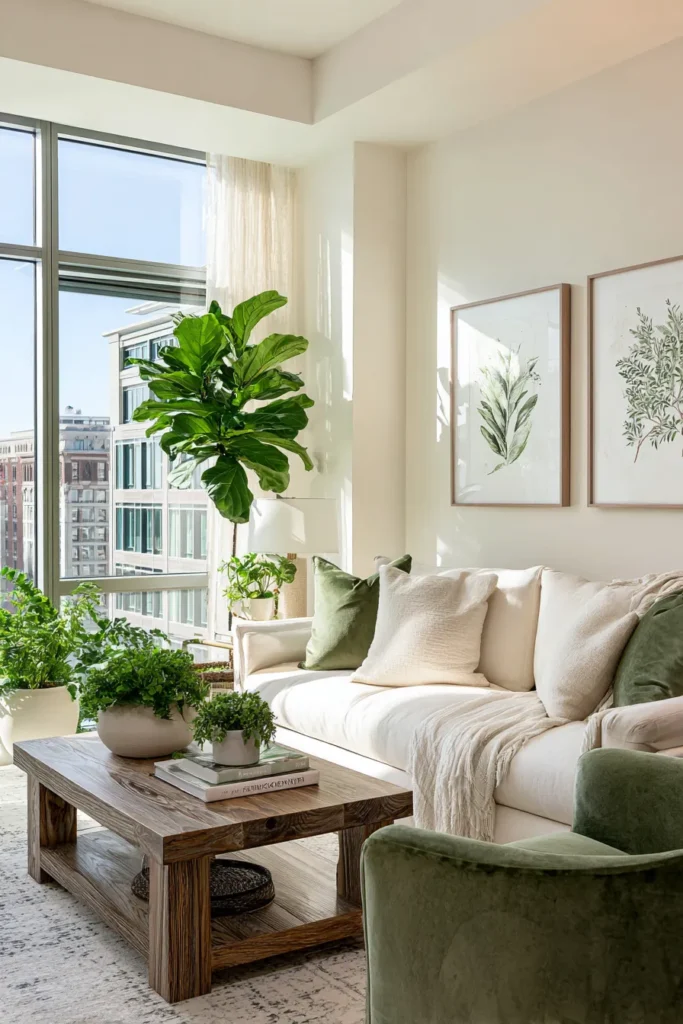
Large-leafed plants like fiddle leaf figs or monstera deliciosa become living sculptures in corners. Trailing pothos or ivy soften hard edges of shelving. Even a single dramatic plant in a beautiful ceramic planter can shift a room’s entire energy from sterile to alive.
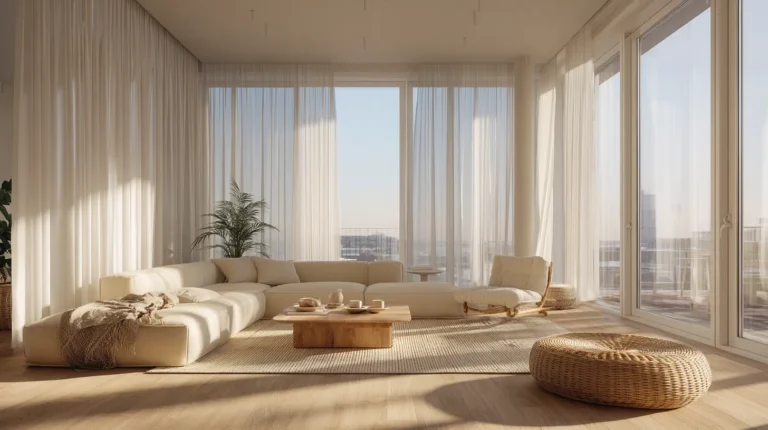
Maximize natural light wherever possible. Sheer curtains filter harsh sun while maintaining brightness. Position mirrors opposite windows to amplify daylight throughout the space. Consider the view from your windows as borrowed landscape—part of your design even if you can’t control it.
Creating Green Moments
Build small ecosystems throughout your living room. A collection of succulents on a coffee table, herbs growing in a sunny window, or a vertical garden wall transform air quality while adding visual interest.
Choose planters that complement your overall aesthetic—matte black ceramics for modern spaces, terracotta for warm tones, or woven baskets for textural depth. The vessels matter as much as the greenery they hold.
Statement Lighting: The Crown Jewel of Luxury Interiors
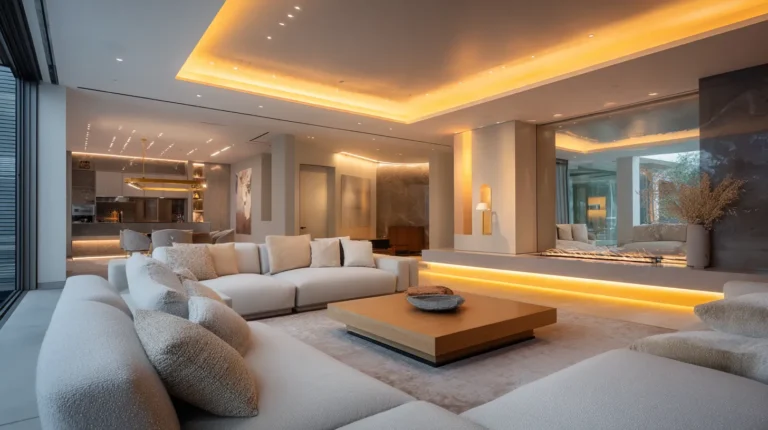
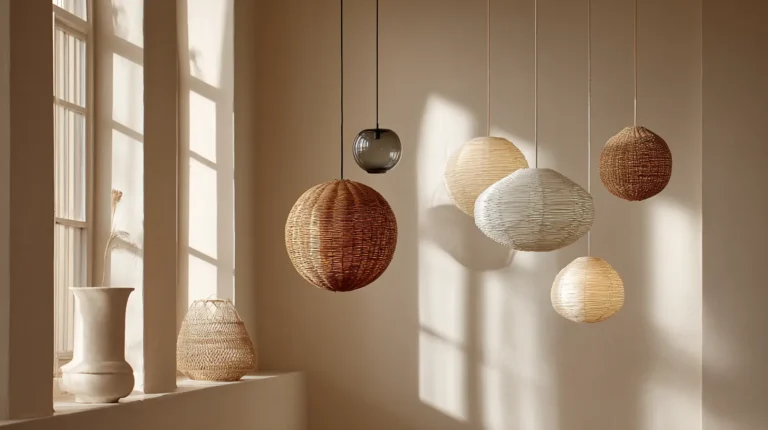
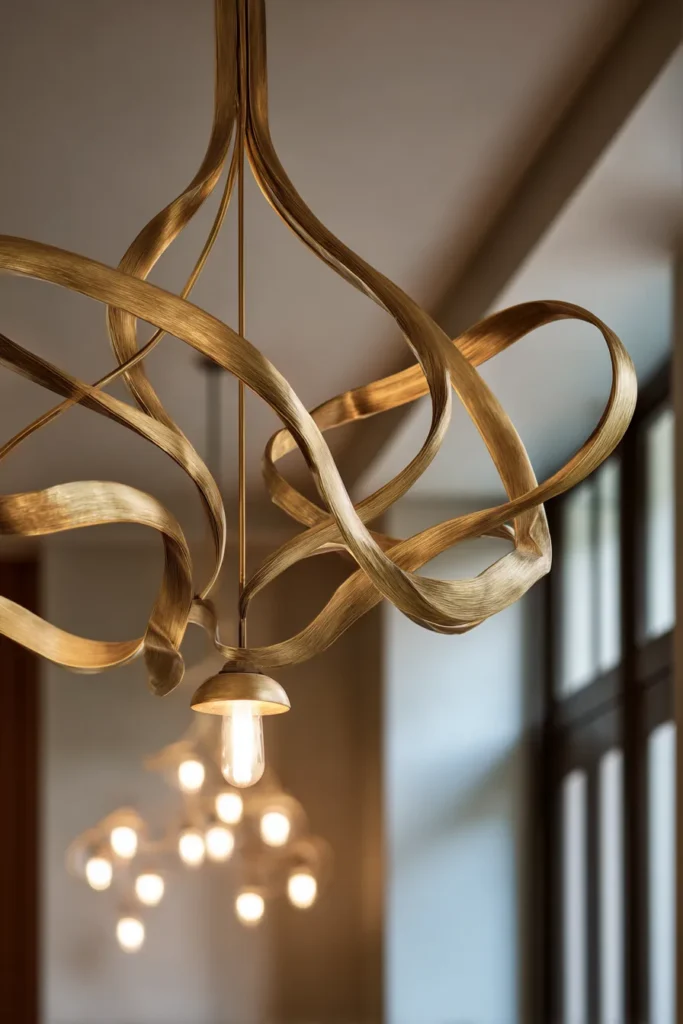
Nothing elevates a space quite like thoughtfully layered lighting. Statement lighting fixtures become functional art—sculptural chandeliers, artisan-crafted sconces, or minimalist pendant lights that float like jewelry in the air.
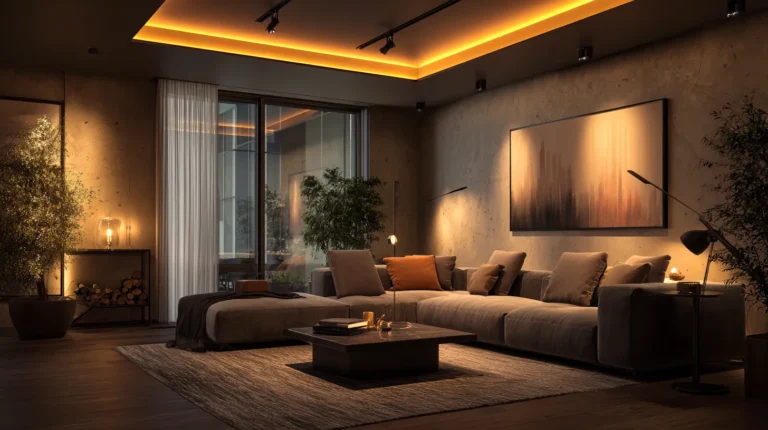
Create three layers of illumination: ambient lighting for overall brightness, task lighting for reading or working, and accent lighting to highlight art or architectural features. Dimmer switches allow you to orchestrate mood throughout the day.
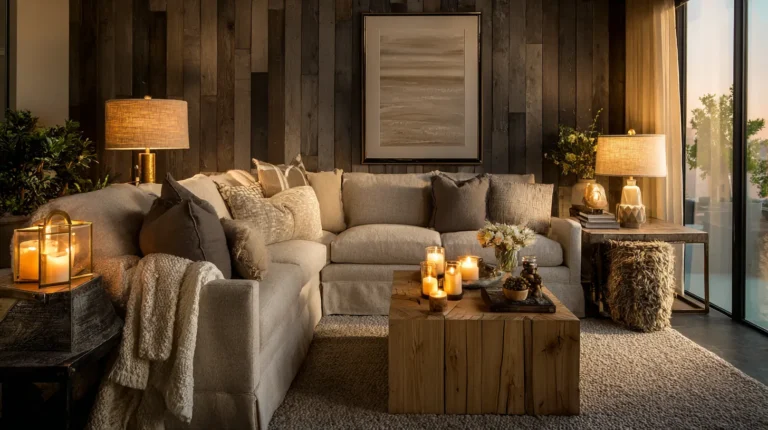
Consider the golden hour effect—warm-toned bulbs (2700-3000K) create the flattering, cozy glow that makes everyone and everything look better. Avoid harsh overhead lighting alone; it flattens dimension and kills ambiance.
Rich Textures: The Sensory Language of Luxury
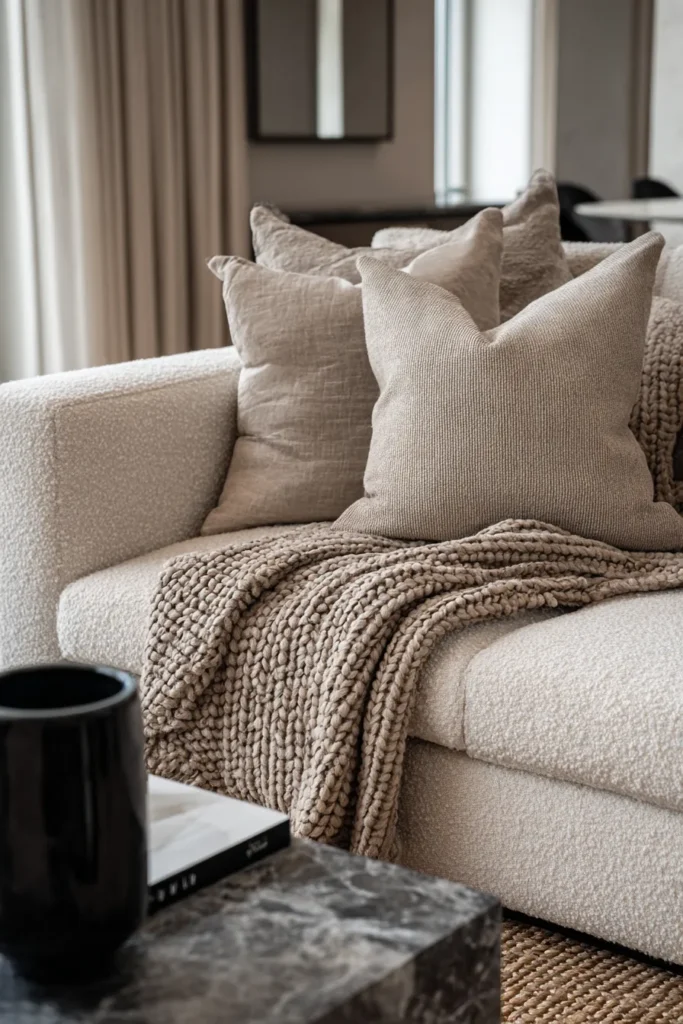
Luxury lives in textures you want to touch. Cashmere throws draped over linen sofas. Velvet cushions against bouclé armchairs. The cool smoothness of marble side tables contrasting with rough-hewn wood coffee tables.
Layer different materials within a cohesive color palette. A neutral base of creams, taupes, and soft grays allows you to play with textural contrast without visual chaos. Introduce one or two accent colors through textured elements—perhaps a deep emerald velvet chair or terracotta clay vessels.
Don’t forget underfoot luxury. A hand-knotted wool rug, plush shag, or natural jute provides tactile pleasure that elevates everyday moments. Your feet know the difference between cheap and quality—honor that knowledge.
Smart Technology: Invisible Luxury
The most sophisticated interior design integrates technology seamlessly. Smart thermostats, voice-controlled lighting, and motorized window treatments should enhance luxury without announcing their presence.
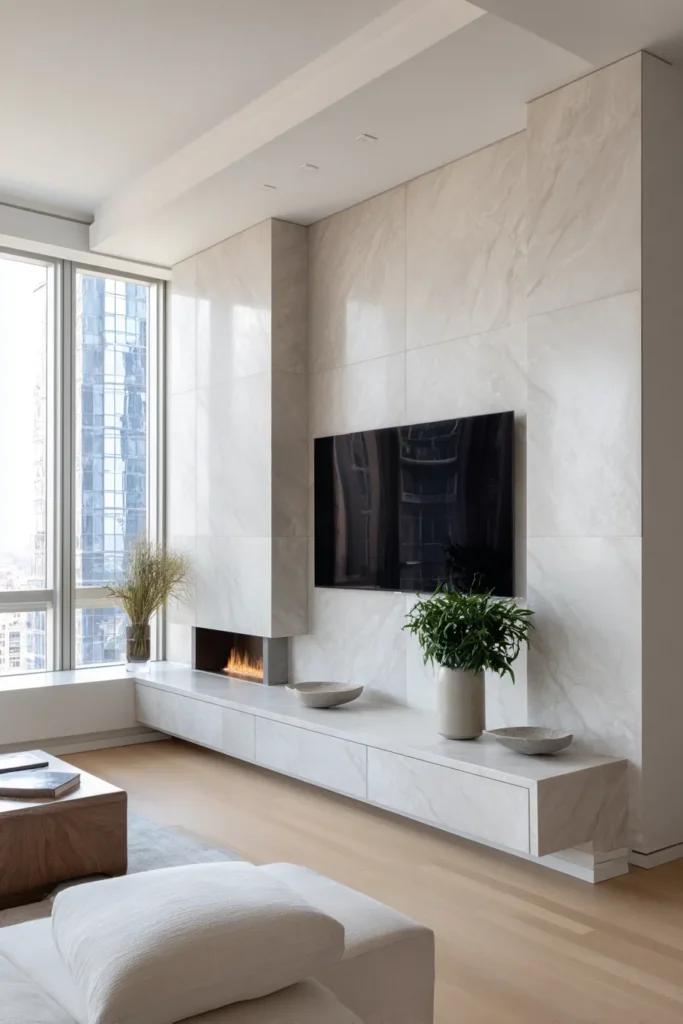
Hide charging stations inside decorative boxes. Conceal sound systems within furniture. Choose sleek, minimalist smart home hubs that disappear into your aesthetic rather than dominating it.
Consider acoustic design as invisible luxury—sound-absorbing panels disguised as art, strategically placed rugs and curtains that dampen city noise, and furniture arrangements that create quiet conversation zones away from street-facing windows.
Curated Art and Personal Expression
Making Your Mark
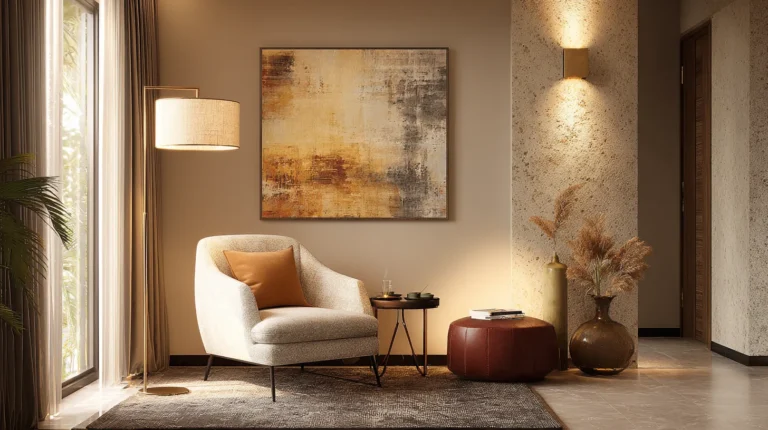
Personality transforms a beautiful room into your room. Curated art shouldn’t match your sofa—it should move you. Invest in pieces that spark conversation, evoke emotion, or connect to meaningful memories.
Gallery walls work beautifully in apartments, creating visual impact without requiring single large-scale pieces. Mix mediums—photography, paintings, textile art—and frame styles for collected-over-time authenticity. Maintain consistent matting or frame finishes to unify diverse pieces.
Don’t overlook three-dimensional art. Sculptural objects, ceramic vessels, or found objects arranged on shelves become personal museums. The luxury lies in curation—editing down to only what truly resonates.
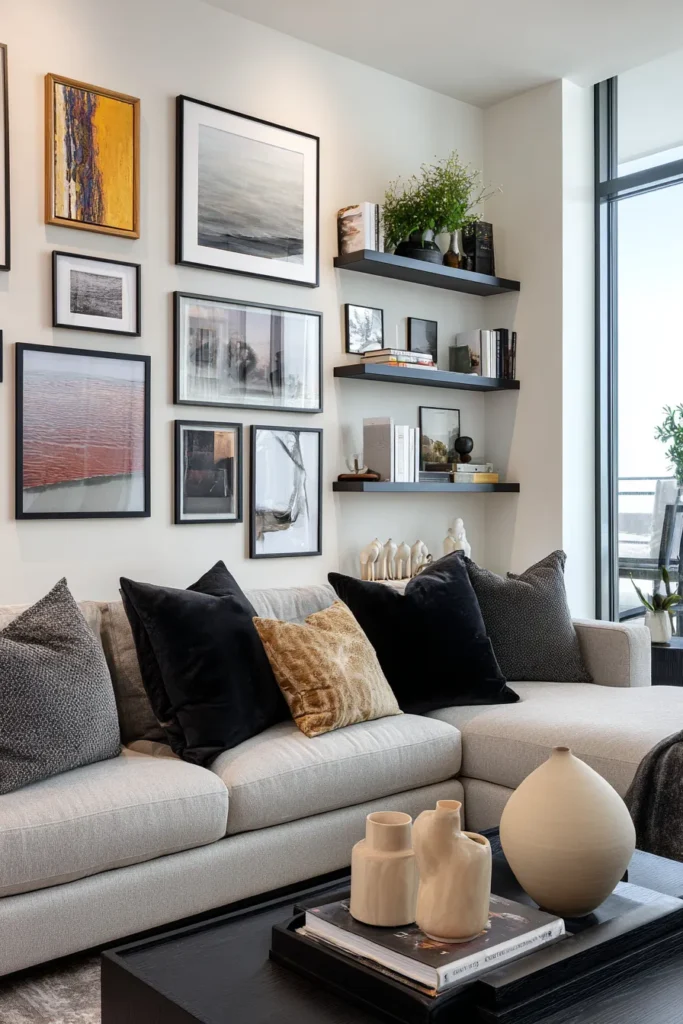
Creating Focal Points
Every luxury living room needs an anchor—something that draws the eye and grounds the space. This might be a dramatic accent wall in rich paint or textured wallpaper, an oversized piece of art, or an architectural element like exposed brick or distinctive molding.
Build your color palette and furniture arrangement around this focal point. Let it dictate where guests’ attention naturally flows when they enter your space.
Color Palettes for Sophisticated Apartment Interiors
Timeless Neutrals with Depth
The most enduring luxury living room decor relies on layered neutrals. Think beyond basic beige—explore warm taupes, soft grays with purple undertones, creamy ivories, and rich browns that shift with changing light.
Create depth by using multiple shades within the same color family. A cream sofa, ivory walls, and taupe curtains provide subtle variation that reads as sophisticated rather than flat.
Introduce warmth through undertones. Cool grays can feel sterile in small apartments; instead, choose grays with warm beige or brown bases that create coziness.
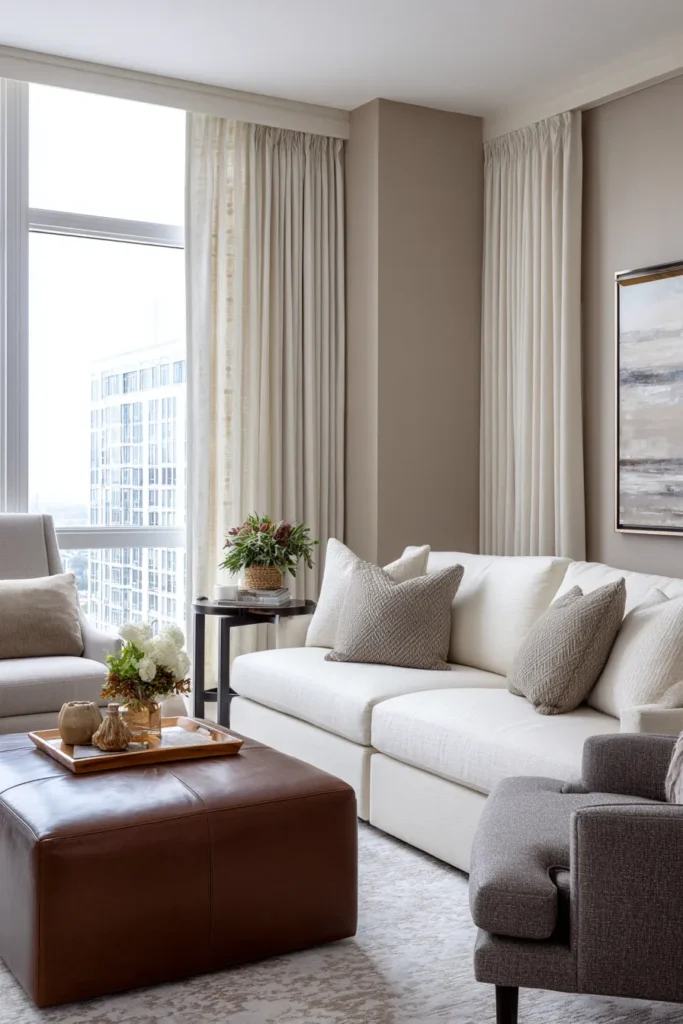
Strategic Color Accents
When you’re ready for color, introduce it through easily changeable elements first—throw pillows, artwork, plants, or decorative objects. This allows you to experiment without commitment.
Deep jewel tones work beautifully in small spaces: emerald green, sapphire blue, or burgundy create richness without overwhelming. Use these as 10-20% accents against your neutral base.
Consider the psychological impact of color. Blues promote calm, greens connect to nature, warm terracottas create groundedness—choose intentionally based on how you want to feel in your sanctuary.
Storage Solutions That Disappear
Hidden Organization Systems
Luxury and clutter cannot coexist. The trick is creating abundant storage that vanishes into your design. Built-in shelving painted to match walls, ottomans with hidden compartments, or console tables with concealed drawers maintain clean lines.
Floating shelves display your most beautiful objects while keeping them dust-free and curated. Choose closed storage for anything that doesn’t earn its visual place in your room.
Multi-functional furniture becomes essential in apartments. A beautiful bar cart that also stores books. A coffee table with lift-top storage for blankets. A media console that houses entertainment equipment behind elegant doors.
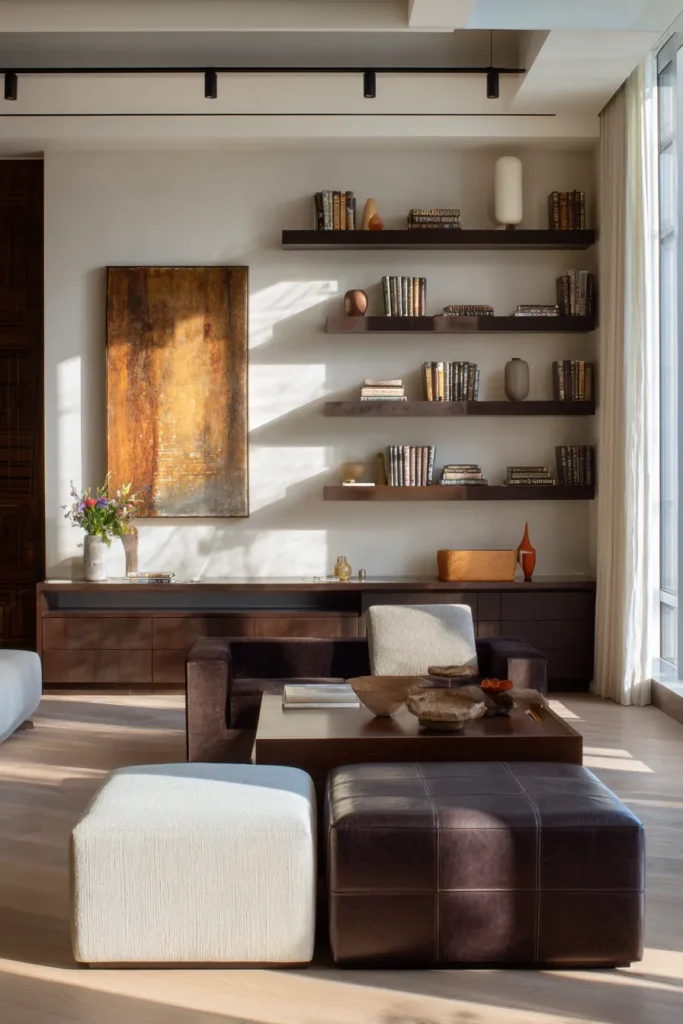
Balancing Bold Design with Minimalist Elegance
The tension between statement pieces and restraint creates the most compelling luxury living rooms. Follow the 80/20 rule: 80% calm neutrality, 20% bold personality.
If you choose a dramatic chandelier, keep furniture lines clean and simple. If you invest in a show-stopping velvet sofa, let lighting and accessories remain understated. One or two hero pieces per room prevent visual competition.
Negative space—the areas you intentionally leave empty—is as important as what you include. Breathing room around furniture and artwork creates a sense of spaciousness that no amount of clever arrangement can achieve when spaces are overcrowded.
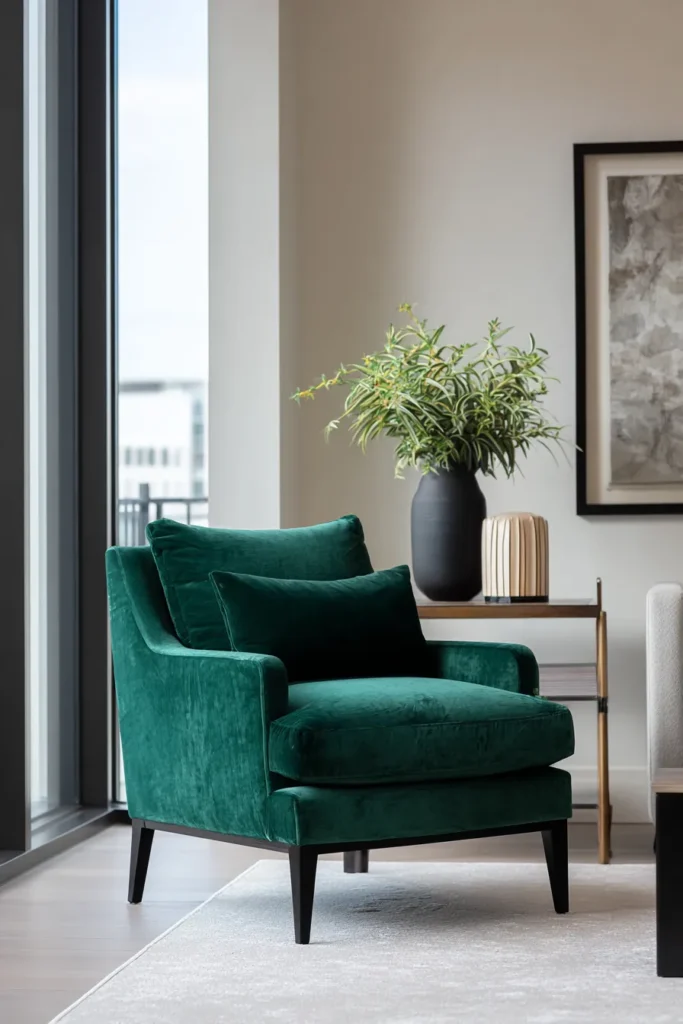
Wellness Through Design: Creating Stress Reduction Sanctuaries
Your apartment living room should actively reduce stress, not merely house your belongings. Consider air quality first—plants, air purifiers, and frequent ventilation matter more than we realize.
Choose furniture that supports physical comfort. Ergonomic seating for working hours, plush cushioning for evening relaxation, and proper task lighting to prevent eye strain all contribute to wellness.
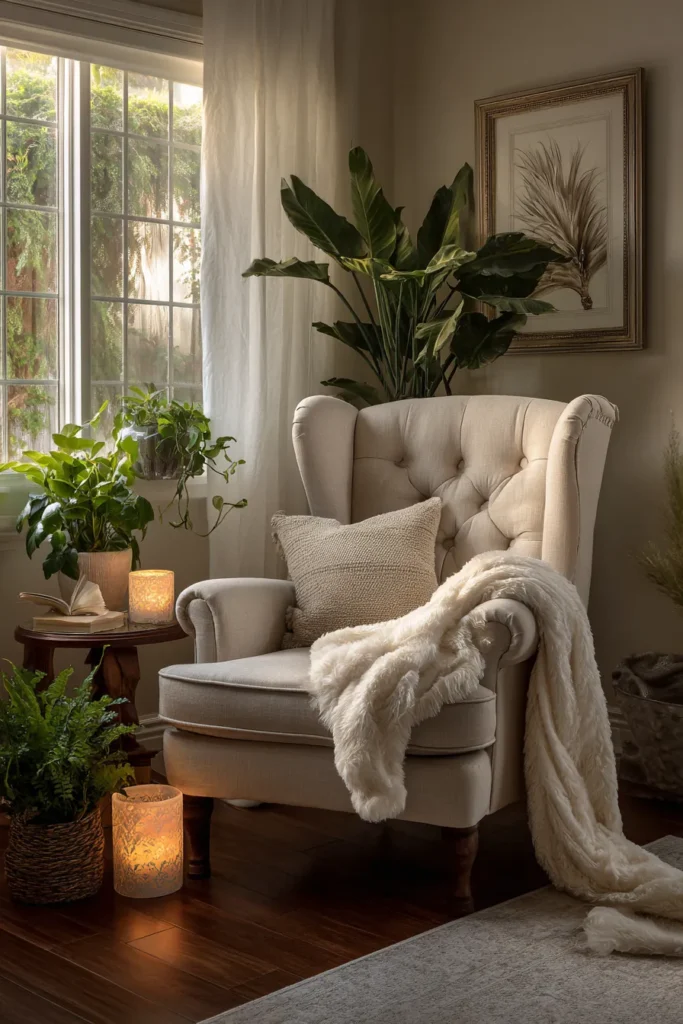
Create sensory rituals within your space. A candle you light each evening. A soft throw you wrap yourself in. A particular armchair that signals “rest time.” These small acts of luxury become daily wellness practices.
Key Takeaways for Your Luxury Apartment Living Room
- Quality over quantity: Invest in fewer, exceptional pieces rather than filling space
- Layer textures: Combine velvet, linen, wool, and natural materials for sensory depth
- Prioritize natural light: Position furniture to maximize daylight and add strategic mirrors
- Integrate biophilic elements: Plants and natural materials reduce stress in urban settings
- Create zones: Use area rugs and furniture arrangement to define spaces in open layouts
- Hide technology: Smart home features should enhance, not dominate, your aesthetic
- Embrace sustainable luxury: Choose eco-friendly materials that tell stories
- Design for wellness: Consider air quality, acoustics, and psychological comfort
- Curate, don’t accumulate: Display only what truly moves you
- Plan for flexibility: Multi-functional furniture honors apartment living realities
Bringing It All Together
The most beautiful luxury apartment living rooms aren’t designed in a day. They evolve as you discover what truly serves your daily life, what brings you peace, and what makes your heart lift when you walk through the door.
Start with the foundations—quality seating, proper lighting, and a cohesive color palette. Build slowly, choosing each addition intentionally. Let your space breathe between purchases. The luxury is in the editing, the restraint, the confidence to leave space unfilled.
Remember that luxury in apartment living isn’t about recreating a penthouse aesthetic in limited square footage. It’s about honoring your space exactly as it is while elevating it with thoughtful choices that reflect your values, support your wellbeing, and create beauty you can feel.
Your living room is where life happens—morning coffee in gentle light, evening conversations with people you love, quiet moments of solitude that restore you. Design it as the sanctuary it deserves to be.
Frequently Asked Questions
How do you decorate a luxury apartment living room on a budget?
Focus on strategic investments rather than comprehensive overhauls. Prioritize one exceptional piece—a quality sofa or statement lighting—and build around it with budget-friendly textiles and accessories. Shop vintage for unique accent furniture, DIY your art through frame shops, and invest in professional-quality paint for walls. Luxury is about curation and intentionality, not price tags on every element.
What are must-have elements for a luxury living room in an apartment?
Essential elements include: layered lighting (overhead, task, and accent), at least one substantial textile piece (quality rug or curtains), comfortable seating scaled appropriately, multifunctional storage solutions, biophilic elements (plants or natural materials), and one statement piece that reflects your personality. The key is balance—each element should serve both function and beauty.
Which colors work best for luxury apartment interiors?
Layered neutrals provide the most versatile foundation: warm taupes, soft grays, creamy ivories, and rich browns create sophisticated depth. Introduce personality through jewel-tone accents (emerald, sapphire, burgundy) in textiles and accessories. Avoid stark whites in small spaces; instead choose warm whites with yellow or beige undertones that create warmth rather than sterility.
How can small apartment living rooms look luxurious despite limited space?
Embrace vertical design with floor-to-ceiling curtains and tall shelving. Choose fewer, larger pieces rather than many small items—a substantial sofa reads more luxurious than multiple small chairs. Use mirrors strategically to amplify light and create depth. Maintain clear walking paths and resist overcrowding. Luxury in small spaces comes from restraint, not maximalism.
What are the latest trends in luxury living room decor for 2025-2026?
Sustainable materials lead current trends—reclaimed wood, organic textiles, and artisan-crafted pieces with visible maker’s marks. Biophilic design continues expanding beyond plants to include natural stone, clay, and wood elements. Subtle smart home integration that disappears into design, curved furniture softening modern lines, and warm minimalism replacing stark contemporary aesthetics all define the current moment in luxury interiors.